Home Blog Page 3154

SBP brings new mechanism for banks to ensure better housing financing

KARACHI, Oct 07 : State Bank of Pakistan has introduced a mechanism of incentives and penalty for banks to promote housing and construction financing in pursuance of its policy of setting mandatory target for banks to extend mortgage loans and financing for developers and builders.

Under this new mechanism, against incentives offered to banks for their increased financing in housing and construction industry, they will be penalized for a shortfall in the financing targets set for them, said SBP statement here on Wednesday.

To be implemented from Dec. 31,2020, this mechanism will provide the banks with an incentive of maintaining reduced Cash Reserve Requirement with State Bank, in the next quarter, in case they achieve or exceed the target of financing for housing and construction of buildings set for the quarter.

The amount of CRR to be maintained for the forthcoming quarter will be reduced by an amount equal to increase in housing and construction finance from June 30, 2020 to the end of the relevant quarter. This incentive, however, will be subject to a ceiling of 1 percent of the total demand and time liabilities based on which CRR was calculated. Further, the banks shall continue to maintain daily minimum CRR, which is currently at 3 percent.

Conversely, if the banks fail to meet the target, they will be penalized by requiring to maintain extra CRR by an amount equal to the shortage from the target. It would be pertinent to mention here that banks do not earn any return on the amount of CRR maintained. Therefore, a decrease in amount of CRR works as an incentive for banks, whereas an increase in amount of CRR serves as a penalty for banks. Further details of the incentive mechanism are provided in the circular issued to banks and available at: https://www.sbp.org.pk/dmmd/2020/CL3.htm

SBP has been actively working with banks to support finance for the promotion of housing and construction of building activities in the country. The growth of the housing and construction sector is vital for the economy, due to its linkages with a number of allied industries and potential for jobs creation and Pakistan has lower private sector credit to GDP than many comparable countries. In order to enhance the flow of financing towards this sector, SBP has required banks to achieve mandatory targets, equivalent to 5 percent of their domestic private sector credit by December 31, 2021, to finance the housing and construction activities. Accordingly, quarterly targets from December 31, 2020 till December 31, 2021 have been agreed with the banks.

The Central Bank expects that this incentive mechanism, through changes in the CRR structure, will encourage the banks to increase their emphasis on housing and construction finance.

Changan automobiles launches Karvaan MPV Plus – A Complete Family MPV

DNA

KARACHI, OCT 7 – Changan Automobiles launches Karvaan MPV Plus, giving an enhanced driving experience to its customers. Indeed, Changan Pakistan is driving forward with us by continuously introducing innovation and hi-tech products to the local market. Hence, this vehicle is exceeding people’s expectations with its dynamic design and upgraded features.

Karvaan MPV Plus is a 7-seater spacious and luxurious vehicle, which is perfect to accommodate the whole family. It is powered by a 1000cc C10 engine with a 5-speed manual transmission. This MPV has an impressive range of features; premium dual-tone interior, electric power steering, dynamic Bluetooth audio, deluxe fabric seats, and convenient power windows with central locks and keyless entry.

That’s not all, the exterior of Karvaan MPV Plus has curved rear glass, exquisite side mirrors, a center antenna, and beautiful character lines. Also, the project headlamps, attractive rear LED lamps, sophisticated front chrome grill, and adjustable headlamps have made Changan Karvaan MPV Plus the people’s first choice.

It is pertinent to mention here that Changan is the number 1 automotive brand in China for the past ten years and is globally recognized for its automotive technology. Moreover, Changan International Corporation has initially invested $100 Million in a joint venture with Master Motors in Pakistan to set up a state-of-the-art vehicle assembling facility, along with a vastly growing 3S dealership network across Pakistan.

Moreover, Changan invests 5% of its sales revenue in R&D. Every model is driven and tested on the Dianjiang test track. It is an international standard vehicle testing facility, spread over an area of 2,240,000 square meters, with a 150 km long track, making it the 2nd largest vehicle testing facility, globally; a prime example of Changan’s high-quality preference for its customers.

Over the last year, Changan vehicles have had an overwhelming response and as a resultthey have taken majority market share in their respective segment. This serves as a testament to Changan’s disruptive go-to-market strategy which is presenting customers with a complete all-rounder package.

So without further ado, if you wish to avail the vehicle of your choice in an unmatchable monetary offer make sure to contact Changan’s authorized dealers before all the pre-bookings are filled.

COMSTECH announces award winners of year 2019

DNA

ISLAMABAD, OCT 7 – COMSTECH confers awards biennially in ‘Basic Sciences’ and in ‘Excellence in Science and Technology’ to recognize outstanding research work carried out by scientists who are citizen of, and working in, OIC member states.

In the category of basic sciences, awards are given in Biology, Chemistry, Physics and Mathematics. COMSTECH confers awards in two fields alternating biennially. Each award carries a cash prize of US$5000, a shield of honor and certificate.

Basic sciences award of the year 2019, in the field of Mathematics won by Prof. Khalil Ezzinbi of Morocco and Dr. Sajad Jafri of Iran jointly, and Prof. Amer Iqbal of Pakistan won the award in Physics in this category.

Best young researcher award, best scientific book award, best research paper award and the award for patent are conferred under the category of excellence in science and technology.

The award of the year 2019 in the category of best young researcher won by Dr. Shafaqat Ali of Pakistan, best scientific book won by Prof. Ali Akhaddar of Morocco, and the patent award won jointly by Prof. Salman Alrokayan of Saudi Arabia and Prof. Sepideh Khoee of Iran.

Best research paper award, in biology won by Dr. Hammad Naveed of Pakistan, in Chemistry won by Prof. Farid Harraz of Egypt, in Mathematics won by Prof. Utkir A. Rozikov of Uzbekistan, and in Physics won by Dr. Seyed Hossein Hendi of Iran.

Awards for best researcher, best scientific book and the award for patent carry a cash prize of US$ 3000 whereas the best research paper award carries a cash prize of US$ 2000 along with a certificate and a shield of honor.

FPCCI delegation congratulates newly elected cabinet members of Abbotabad, Haripur chambers

PESHAWAR, Oct 07 :A delegation of the Federation of Pakistan Chamber of Commerce and Industry (FPCCI) and Vice President SAARC Chamber of Commerce Haji Ghulam Ali on Wednesday visited Abbotabad, Haripur chamber and Hittar Industrial Estate Association and congratulated the newly elected members of their cabinets.

The delegation included FPCCI vice president and in-charge capital office Qaiser Khan Daudzai, former vice president and former MPA Fazal Elahi and President Mohmand Chamber of Commerce Arbab Muhammad Farooq Jan besides other members.Addressing a reception, Vice President Saarc Chamber of Commerce Haji Ghulam Ali and others underlined the need for the government totake tangible measures for resolving problems being faced by the traders’community. They said prices of gas and electricity were increased with each passing day which added to woes for the trade and commerce sector.

They were of the view that loadshedding had badly impacted the industrial sector like other departments and added that smooth power supply should be ensured for better output of the sector.He said that the industrial sector also suffered due to the coronavirus pandemic and the government needed to facilitate and support the traders and industrialists.They also appreciated the role of the FPCCI president MianIftikhar Nisar and his cabinet, saying they performed well despite Covid 19 situation. They recalled that the 14 percent interest rate was strongly opposed and a struggle was launched in this regard.

The government was told that that wheel of the country’s Industry could not be kept moving with such a high interest rate at 14 percent.They said that the interest rate in neighboring countries was lower as compared to Pakistan, as result the country’s industry could not progress. Owing to such efforts of the FPCCI, after all the government realized the reality and now the interest rate stands at 7 percent.They said that the Businessmen Panel would continue to struggle to get the interest rate further down and as result the trade and commerce would progress, they added.In this regard, they said that cooperation of chambers and associations was vital. They said that in the past people would spend millions of rupees on hoteling and foreign visits out of FPCCI funds, but this year President FPCCI and his cabinet had made a history by spending not a single penny out of the FPCCI funds.The FPCCI also provided contributions towards Covid-19 fund sand decreased annual charges of chambers and associations by 20 percent.

Govt has nothing to do with FIR against Nawaz, PML-N leaders: Shibli

DNA

ISLAMABAD – Information Minister Shibli Faraz on Wednesday reiterated that the government and Prime Minister Imran Khan did not have anything to do with the FIR against former premier Nawaz Sharif and 40 other PML-N leaders for “conspiring” against the state.

Responding to a question while speaking to the media in Karachi, he said: “We have nothing to do with the incident you are mentioning. Anyone in this country can get up and file an FIR against someone.

“The government is not [involved] in this. It is focused on working for the people and their welfare.”

The minister’s comments come days after Lahore police registered an FIR against Nawaz , his daughter Maryam Nawaz and other top PML-N leaders for sedition among other charges.

The opposition was quick to blame the government for what it perceived as another attempt at political victimisation. It also emerged that the complainant in the case had a criminal record and is allegedly the ruling PTI’s Labour Wing office-bearer.

Azad Jammu and Kashmir Prime Minister Raja Farooq Haider was also initially nominated in the case. However, the Punjab government said on Tuesday it had decided to strike off Haider’s name from the FIR but would proceed as per the law against the remaining people nominated in the case.

During today’s media talk, Faraz said that the purpose of the rallies announced by the opposition under the Pakistan Democratic Movement (PDM) had one goal: to divert attention away from the corruption of their leaders and to pressurise the government into giving them relief.

“While we have managed to effectively deal with the effects of the Covid-19 pandemic, our economy has suffered. If an opposition party wants to start such a campaign during the current scenario, then it can’t be [a friend of the country].”

The minister added that opposition parties were the ones responsible for the ruin of state institutions and the economy. “We have been in power for two years. They spent 10 years in government.”

When asked about the recent war of words between the Centre and the Sindh government over Islamabad’s move to take over the twin islands of Bundal and Buddo through a presidential ordinance, he replied that the government was only trying to foster economic activity in the area.

“The industries of Sindh and Karachi will benefit from this [and] it will create employment. We are bringing in development and foreign investment to benefit Sindh’s people.” He added that those who will be affected by the development work will be compensated.

“The government will not do anything that is unconstitutional,” he added.

‘Stop distributing certificates of treason’

Shortly after the information minister’s media talk, PML-N leader Shahid Khaqan Abbasi lashed out at the government for handing out “certificates of treason”.

“How will you fight for the Kashmir cause by declaring two former premiers, a former defence minister and three retired lieutenant generals traitors?”

He also advised the government to focus on solving the problems being faced by the people instead of distributing certificates of patriotism and treason. “That is why the PDM has been formed.”

He added that this was the first time the names of former premiers and the AJK prime minister had been included in such a case. He said that the recent revelations made by the former Federal Investigation Agency (FIA) director general were proof the premier wanted the opposition behind bars.

“Have the problems of the people ever been discussed during cabinet meetings? They talk about bringing Nawaz back, increasing drug prices and gas prices but not about solving the people’s problems.” He added that India was laughing at the way Pakistan was being ridiculed today.

Separately, newly appointed spokesperson for Nawaz and Maryam, Mohammad Zubair accused the prime minister of giving “direct instructions” that cases be filed against the opposition.

While speaking to media in Lahore outside the Shahdara police station, Zubair said: “We are not here to blame the SHO or even Usman Buzdar, because he doesn’t even know what’s going on in his own office. These are direct instructions from Imran Khan, the selected prime minsiter, that cases be filed.

He thought we would be scared. There are cases against me, against [Ataullah] Tarrar, we are here ourselves, if you want to arrest us, you can.”

The former Sindh governor told the government to “compete on political grounds” instead of “stopping down to lowly tactics”.

“When [the other side] has no argument left, that’s when such cases are filed.”

Govt notifies Economic Outreach Apex Committee

ISLAMABAD : The federal government notified on Wednesday the formation of Economic Outreach Apex Committee and Coordination Group.

According to a notification, Prime Minister Imran Khan will be the chairperson of the Economic Outreach Apex Committee that comprises 13 federal ministries, the chief ministers of all the provinces, and the Azad Jammu and Kashmir premier.

The premier’s advisers on finance and trade have been named members of the committee. The federal ministers for science and technology, information, industries, information technology, and food security will be part of the committee.

Special Assistant to the PM on National Health Services and Overseas Pakistanis will also be part of the committee.

The committee will review the country’s economic indicators, set fiscal targets, and work out a strategy to achieve them.

On September 24, PM Imran had decided to form the Economic Outreach Apex Committee to promote economic diplomacy and foster coordination among federal ministries, and provincial governments for timely achievement of economic goals set by the government.

The premier said promoting economic diplomacy is the need of the hour, which will not only strengthen bilateral relations with other countries but existing potential can also be explored to the maximum level in the field of economy.

Japan provides assistance for building disaster resilient school’s infrastructure in KP Province

DNA

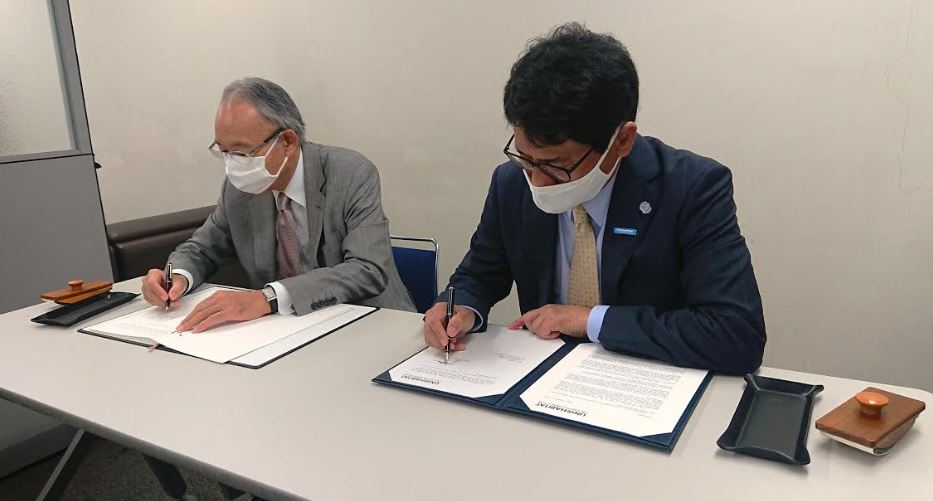
ISLAMABAD, OCT 7 – The Government of Japan has agreed to provide grant assistance of 471 million Japanese Yen to UN-Habitat for the project of “The Improvement of Disaster Resilient Schools Infrastructure” in Khyber Pakhtunkhwa (KPK) province, aiming to provide a safe and stable educational environment to the students as well as the teachers.

Notes to this effect were signed and exchanged between H.E Mr. MATSUDA Kuninori, Ambassador of Japan to Pakistan and Mr. KORESAWA Atsushi, Regional Representative, Regional Office for Asia and the Pacific of UN-Habitat in Fukuoka, Japan. A Grant Agreement (G/A) on the details of implementation of the project was signed and exchanged between Mr. SAKAMOTO Takema, Director General, South Asia Department of Japan International Cooperation Agency (JICA) and Mr. KORESAWA Atsushi.

DNA 7-1

The grant amount of 471 million Japanese Yen will be utilized by UN-Habitat for the improvement of Disaster Resilient Schools Infrastructure in the province of Khyber Pakhtunkhwa. The project will support reconstruction and retrofitting and repairing of 150 schools and construction of 12 new schools.

Expressing his views at the signing of the project, Ambassador MATSUDA has said that “This project will not only provide disaster-resistant infrastructure of schools in KP province but will also prove a disaster prevention hub for the region. The Ambassador, while emphasizing the need of disaster-preparedness, stated that it is extremely important to prepare and well-equip to effectively handle the disaster emergencies.  The Ambassador also reaffirmed that Japan will continue to support Pakistan for further strengthening its institutions for disaster management and also improving the facilities in education sector.

2nd Round of Bouznika Inter-Libyan Dialogue: Global Agreements on Criteria for Filling Positions of Sovereignty

BOUZNIKA, (DNA) – The delegations of the Libyan High Council of State and the House of Representatives participating in the second round of the inter-Libyan dialogue in Bouznika stressed, Tuesday, that this round ended with comprehensive agreements on the criteria and mechanisms for filling sovereignty positions, provided for in Article 15 of the Libyan Political Agreement concluded in December 2015 in Skhirat.

The two delegations specified, in a final declaration issued at the end of this round, held from 02 to 06 October in the Kingdom, that “the outcome of the dialogue between the two delegations constitutes a contribution on which it is possible to capitalize, to establish stability in the country and put an end to the institutional division”.

In the final declaration read at a press conference by Driss Omran of the Libyan House of Representatives, in the presence of minister of Foreign Affairs, African Cooperation and Moroccan Expatriates, Nasser Bourita, both parties expressed “their determination to continue their consultative meetings, in the Kingdom of Morocco, in order to coordinate the action of political, executive and control institutions, thus ensuring the end of the transitional period”.

Aware of the importance of sovereign institutions in the management of the country and the preservation of the values of the Libyan people, the delegations stressed that “the dialogue sessions were marked by a spirit of national responsibility that gave priority to the general interest, with the aim of overcoming the current political division”.

The two delegations put at the disposal of the Libyan High Council of State and the House of Representatives the minutes of the agreements they reached during the 1st and 2nd rounds, in order to proceed with the measures of renewal of the structures of the sovereign institutions, stressed the declaration.

On this occasion, the same source added, both parties reiterate their thanks to the efforts of the Kingdom of Morocco “which have helped overcome the obstacles, in order to achieve real Libyan agreements, in harmony with the provisions of the Libyan Political Agreement”.

They also welcomed the “positive interaction” of the acting United Nations envoy to Libya, Stephanie Williams, who has worked to build complementarity between the various efforts of the dialogue, with a view to establishing a comprehensive political process.

The holding of the Berlin Conference last January was an international wager for the political resolution of the Libyan crisis, the two delegations added, noting, however, that the political process remains “awaiting clear and concrete support from the international community”.

Newly-appointed Hemp aims to take Pakistan into top four teams in world

Karachi : Pakistan women’s team newly-appointed head coach David Hemp has aimed to take Pakistan in the top four teams in the world under his mentorship.

Ex-Bermudian cricketer, who is set to arrive in Pakistan on October 18, talked exclusively in the Pakistan Cricket Board’s (PCB) recent podcast and stated his ambitions with the side.

“I want to see consistency in performances, making individuals improve their games and personal stats. Apart from stats, I want to see the change in character too,” Hemp said.

“I wish to improve the rankings and aspirationally feature in the top four sides in the world. When we take part in the world cups, opposition and media are talking about us,” he added.

The 49-year-old revealed that he decided to take up the role after witnessing women’s team in the T20 World Cup held in Australia earlier this year.

“I got the idea of squad’s talent from that tournament and when the opportunity arrived to coach international team, it was a straight-forward decision,” he maintained

“I am excited to work for the next two years and hopefully adding some value collectively and individually,” he added.

It must be noted that Hemp is based in Australia now and has previously coached the Melbourne Stars’ and Victorian women’s cricket teams in Australia’s Women’s Big Bash League.

He is a qualified UK level four coach who has had a coaching role with Australia’s team for cricketers with an intellectual disability called ‘Premier Cricket’s Prahran’ and was the director of coaching at Scotch College.

President Bashar al-Assad’s Interview with Russian Zvezda TV Station

DAMASCUS (DNA) – President Bashar al-Assad gave an interview to the Russian Zvezda TV Station, following is the full text:

Journalist: Mr. President, thank you very much for giving us this opportunity and meeting with us. We are here in Syria on the fifth anniversary of the start of Russian military operations on the territories of your country, the operation which aimed at liberating Syria from terrorism. That’s why we want to discuss with you and sum up the outcomes of these events.

President Assad: You are welcome in Syria. It’s my pleasure to meet you today and to give this interview to your respectable TV station.

Question 1: Mr. President, if we look back at the events which happened five years ago, how do you describe the situation which existed in Syria in 2015? Did you hope to get outside help then?

President Assad: In order to sum up the position at that time, I can say that it was very dangerous.  The terrorists were advancing in different regions of Syria and occupying cities, with direct support from the United States, France, the UK, Qatar, and Saudi Arabia; in addition to the indirect support from other Western countries.

This dangerous situation in Syria was the subject of discussions between us and the Russian military and political leadership, particularly after 2014 when ISIS started operating and occupying large areas in the Syrian steppe.  We were hoping, of course, to receive help for a number of reasons.  First, the political position of Syria is important, and consequently any disturbance in this region will spread throughout the Middle East and also affect other regions.  The struggle for Syria dates back to prehistoric times because of its importance, this is nothing new.  The other reason is that the terrorism, which Syria is fighting, is the same terrorism which kidnapped the children of the Beslanschool in 2004, and it is the same terrorism which attacked the Moscow theater and killed innocent people.  This is a global terrorism and therefore it is in Russia’s interest, first to strike at this terrorism in Syria, and second to preserve this stability which might affect other countries’ interests, including Russia’s own.

Question 2:  If we compare the situation that existed five years ago with the situation now, what is your assessment of what Russia is doing, the role of the Ministry of Defense, and what the Russian troops are doing, operating here for the past five years on the frontline in the war on terrorism?

President Assad:  There is no doubt that the Russian Army is highly advanced technically, this has been proven and has become evident during the war.  It is also highly professional, in terms of identifying its goals accurately and proceeding with determination to achieve them.  With regards to the Russian military personnel that we have engaged with at all levels from officers to soldiers, they have worked incessantly; for example, when the battles were fierce, Russian pilots would start their air raids at three in the morning, before sunrise, and would sometimes continue late into the night.  They had no time to rest.  The Russian Army has of course made sacrifices, some of its members have been martyred on Syrian territory.

The Russian Ministry of Defense – which is the umbrella under which these fighters operate – in its military and political capacity, has shown a great degree of credibility.  It would have been difficult to carry out these joint military operations between our two armies, had it not been for the credibility of the Russian Defense Ministry which was made evident by their transparency, clarity and integrity in everything that we agreed and implemented together during the past five years.  This sums up the impressions of many Syrian military personnel in their relations with their Russian counterparts.  I would like to add a final point: The Russian people have always been proud of their army, but after all these battles, they have every right to be even prouder of its great achievements.

Question 3:  Thank you very much for these words. Let’s go back to the cooperation between the Russian and the Syrian armies. Since we have talked about this, the Syrian Army has also changed a lot during the past five years. What are the areas of expertise which the Syrian experts, the Syrian military, have acquired through their interaction with the Russian military and the Russian Defense Ministry?

President Assad:  There is no doubt that the Russian Army possesses a wide range of expertise.  This dates back to the Great Patriotic War during which it acquired military expertise in a conventional war, in addition to the expertise it acquired during the Chechen War.  That was an unconventional war and similar to the one we are fighting today, in the sense that it was supported by foreign powers in order to weaken Russia and perhaps even with the objective of dividing it.  It involved terrorist groups which appeared in different forms as sleeper cells; everything in the Chechen War was unconventional.

We also have a lot of experience, albeit different.  Our experience in fighting terrorism dates back to the second half of the 1970s and continued into the early 1980s; it was also a fight against extremist terrorist groups.  However, the war we are currently fighting is similar to the Chechen War in that it is unconventional and they are being supported by foreign powers; they are less than an army but more than sleeper cells.

Therefore, merging the Russian and Syrian expertise in dealing with terrorism was undoubtedly very important, especially since during this time (past five years), the terrorists have developed their techniques in ways which are outside of our expertise.  This means that there are lessons for both armies to learn from in dealing with terrorism.  It is safe to say that militarily it was a very rich experience; and since terrorism has not ceased, there are always new lessons to learn, especially since no battle is the same.  No doubt that bringing together the vast experience and expertise of both the Syrian and Russian Armies proved to be very useful, especially for us in Syria.

Question 4: You know that in the end there are similarities between our two countries in many ways. Syria has for many centuries been at the crossroads of the interests of different countries, or let’s say different powers. Russia, too, throughout its history, has fought many wars. But we have never started a war. The enemy has always come to us. Since you have touched on this subject, our country celebrates this year the 75th anniversary of victory in the Great Patriotic War. In that war, which had a horrible impact on the Russian people, the turning point was the battle for Stalingrad, after which the offensive started westward. We were able to expel (excuse me for the expression) the fascists from our country. Can we compare that to what happened to the Syrian people, I mean the battle for liberating Aleppo, which is often described as the Syrian Stalingrad. What is the impact of liberating Aleppo on the process of liberating Syria from terrorism?

President Assad: You are asking about a very important juncture in the Syrian war – the battle for Aleppo.  The comparison you are making is familiar to Syrians because Aleppo was besieged for more than two years.  During most of that time it was a complete siege, and so if it was possible to bring in foodstuffs or basic necessities, it was done at a high risk through corridors that were constantly under terrorist fire with no certainty of delivery.  There was no electricity, no water, no basic supplies; nevertheless, the people of Aleppo were steadfast throughout the battle.

So, I believe that the importance of the comparison lies first in the siege and also in the steadfastness of the people.  When you referred to Stalingrad, you highlighted the steadfastness of the people before you mentioned the military victory; in other words, without the steadfastness of the people of Stalingrad, the Russian army wouldn’t have been able to launch a great offensive.  The same also applies to Syria; without the steadfastness of the people of Aleppo, it wouldn’t have been possible for the Syrian Army to prepare for such a major battle.

Coincidentally, a further comparison is that in Stalingrad, the army kept moving west until the end of World War II.  In Aleppo too, the army moved west; and to continue the process of liberation towards Idleb, we must also continue to move westward.

Both Aleppo and Damascus are the two largest Syrian cities, and so Aleppo has a political, economic, and military importance.  There is no doubt that in terms of strategic outcomes, the battle of Aleppo was very important, regardless of the surface area or the number of fighters.  Its outcome was decisive and changed the course of the war in Syria; and therefore, I believe that militarily and politically, the situation after the battle of Aleppo, was very different to that before the battle.  So, the comparison you have made is correct, after taking into account of course the difference in surface areas between the two countries.

Question 5: This battle had great dimensions for Syria, and also incurred huge losses. It played an essential role in changing the course of events. Mr. President, based on the agreement which was signed between Russia and Syria in your country, today there are two Russian military bases, Hmeimim and Tartous. In your opinion, what is the role that these two bases will play in providing security in Syria today? And what is the role that they will play in the future?

President Assad:  The Russian military role in Syria –particularly the role of military bases – can be viewed from two perspectives; the first is fighting terrorism, which we call international terrorism.  This will end one day or at least it will be weakened as a result of the continuing battles to eliminate it; so, what comes after this terrorism? The other perspective is related to the role of Russia in the world. Today, we live in an international jungle; we do not live under international law.  The reason why we live in this jungle is that for a quarter of a century there has been no international balance.  International balance requires a Russian role: politically – in international organizations, and militarily – through military bases.

How do we benefit from this situation?  Syria, as a small country and like many small countries, and possibly even most countries around the world, will all benefit from this international balance.  In that sense, Syria will benefit indirectly from this new balance.

Therefore, we shouldn’t have a narrow view of the Russian presence to only fighting terrorism, because the time frame of the base, or the agreement, is 45 years.  Terrorism will not continue to exist for 45 years, so what comes after terrorism?  There is an important Russian role necessary for international balance in which military presence in different parts of the world plays an essential part.  Of course, when the West abandons the use of military force to create problems around the world, Russia might not need these bases, but for now, Russia and the world need the balance that I have mentioned.

Question 6: Mr. President, let’s talk about those who constantly violate and ignore international law, and you know who I’m talking about. You are the elected President of the Syrian Arab Republic. You led the war on terrorism. The law is on your side, and the people are behind you; nevertheless, we constantly hear some Western leaders making bad statements such as: “Assad must leave.” We remember very well how Barack Obama talked about this. Unfortunately, the same is being repeated now by Donald Trump. Recently, a book was published in the United States, Fear: Trump in the White House, by famous American journalist Bob Woodward, in which he states that in 2017, after the missile attack on Syria, Trump wanted to assassinate you, and I quote: “Let’s kill him! Let’s go in. Let’s kill the lot of them.” How do you comment on that? What did you do? Why do they demonize you?

President Assad:  First of all, regarding the statements which always call for the removal of the president: The United States is used to having presidents – let’s say, as American agents, in the sense that it appoints them – and consequently it tells them: now you stay.  And when their role comes to an end, it tells them: go.  They are used to that.  I am not one of those (presidents), and consequently all the statements they make do not concern us at all.  They do not bother us, and we do not care about them.  This is an American discourse directed at the Americans themselves.

Question 7: Aren’t you vexed by the West’s disregard for its relationship with you, which can sometimes be rude?

President Assad: No, no, because it is less important than warranting one’s concern about it and I’ll tell you why.  If we look at Trump’s recent statements quoted in the book you mentioned, they are neither surprising nor new.  The American policy since the Cold War, and even since the end of World War II up until today, is a policy of hegemony, of coup d’états, of assassinations and wars.  So, this is normal, Trump hasn’t said anything new.

On the contrary, we have to recognize that Trump has an important merit, which is exposing the American regime.  For us, it was already exposed, but it was hiding behind some pretty masks – like democracy, human rights, and other similar things.  Trump is frank.  He says, “this is what we do.”  So even if Trump doesn’t say it, we must know that it is part of their policy and part of their thinking.  The United States does not accept partners in the world, and consequently does not accept independent states, including in the West.  The West is a satellite of the United States, not its partner.  They are not independent.  The Americans do not accept an independent individual or an independent state.  They do not even accept Russia, which is a superpower, to be independent.  They do not accept you even in history; they even deny your role in eliminating Nazism, as if Russia had no role in that.

So, if they haven’t accepted Russia in the past, why would they accept it in the present?  And if they haven’t accepted the large Russian state as independent, would they accept Syria, a smaller country, as an independent state?  This is the problem with the Americans: they do not accept any individual who acts in the best interest of his country, any individual who respects himself, or maintains an independent national decision.

Question 8: Yes, this is another similarity between our two countries. Well, can we talk about the process of granting amnesty to members of the armed groups. How is the process of reconciliation between the opponents going? In July, parliamentary elections were held in which the ruling coalition won. We congratulate you on that, but it is clear that the problem of the opposition is still there.

I still remember when the Geneva talks were conducted, representatives of the government and the opposition were brought into the meeting halls from different doors, so that they do not fight among themselves. How is this process going now? What is new about the constitutional committee? What is the role of the international mediators in this process? The role of the United Nations? What is the role of Russia? And whom do you personally trust in this process?

President Assad: Concerning the negotiations, Russia and Iran play an important role in supporting these negotiations and moving them forward in order to try and achieve something, albeit partially – because the negotiations will take a long time.  But let’s be frank.  When we talk about another party which we call “the opposition” – and you have opposition in your country – a prerequisite of the opposition is that it should be patriotic, and it should come from within the Russian people and represent at least part of them.  However, when you, as a Russian citizen, know that this opposition, or this individual, is linked to a foreign intelligence agency, you do not call them opposition, because opposition is linked to patriotism.

With regards to what is happening in the negotiations, there is a party supported by the Syrian government because it represents its views.  However, there is another party which has been chosen by Turkey, which is not a Syrian party.  Turkey, and those countries behind it, like the United States and others, have no interest in reaching any genuine results in the deliberations of the committee.  They are seeking to weaken and dismantle the state; this is exactly what has happened in other regions where the United States interferes and imposes a constitution that leads to unrest and chaos instead of stability.

This is something we do not accept and we will not negotiate over things which undermine Syria’s stability.  That’s why if we really want the negotiations to produce results, all those individuals need to take their cue from what the Syrian people, in their different sections and political affiliations, want.  I believe that the coming rounds of negotiations will show this more clearly.  If the dialogue is Syrian-Syrian, it will succeed.  But as long as there is foreign interference, the negotiations cannot succeed.

Question 9: If you don’t mind, I would like to ask you a number of personal questions which have to do with the past in one way or another. Can you please tell us if you have thought, throughout all the horrible events that you and your country have experienced throughout the war, that you are hanging between life and death? Have you thought about that at any point in time?

President Assad:  If you had come to Damascus before 2018, for instance, we would have been sitting here with shells falling around us from time to time.  Death was a probability for any citizen, anyone walking in the street or riding a bus, in their car, going to work or going anywhere.  They could have been hit by shells that could have caused death or injury.  That was a probability during the war.  But I think that humans, by nature, are capable of adapting to this situation, in any country or any place in the world.  That’s why life carried on in Damascus, and I personally went to work every day, never stopped at any time, even under the shelling.  There was no other choice.  One cannot hide; otherwise the terrorists would have achieved their objectives.  Our strength is that life continued.  That’s why I think that with the passing of time, you stop thinking about it.  Maybe, it becomes part of your subconscious mind, but not part of your daily thinking; it becomes something you get used to.

Question 10: Looking at your life today, as president of a state leading the fight against terrorism, is that the life you dreamt of at a certain point in time when you had a different type of life?

President Assad:  This terrorism we are experiencing today has been attacking us since the 1950s.  At every stage, it developed its techniques.  In the 1950s it created chaos but it wasn’t armed, in the 1960s it started to become armed.  In the 1970s and 80s it became organized, and today this same terrorism has developed its tactics and gained political support, with backing from countries and banks.

Our fate with terrorism has existed even before I, and most Syrians, were born and therefore it should always remain in our minds.  Even if we defeat this terrorism, we should always think that it could come back.  For the simple reason that first and foremost, it is not about individuals in as much as it is about ideology; as long as the West continues to take reference from its colonial past and continues to think of hegemony, it is inevitable that it will continue to bring this terrorism back to life in other forms.  We must think realistically that even if it was eliminated, it could appear later in different forms.  That’s why the battle for us, is against terrorist ideology before it is a battle against terrorists as individuals; when this ideology is eliminated, the West and Syria’s enemies, will no longer have the tools to resurrect it.

Journalist: Do you think so?

President Assad:  I do think so, because the West will not change in the foreseeable future.  And also, because the intellectual war is more difficult than a military war and it takes longer to rehabilitate and equip new generations with the right kind of thinking: with non-extremist thought, non-fanatic thought, with open-mindedness.  Just as this terrorist ideology has been developed since the 1960s; it took 50 years to reach the stage we are at.  It does not appear and spread throughout the world overnight.  Hundreds of billions have been spent to establish it and the West has been supporting it since the days of British rule, even before the American presence.  They have supported religious extremism since the beginning of the 20th century; so, fighting it needs time.

Journalist: We hope for the best, and that with the help of God, and with open-mindedness, we will win together. Mr. President, thank you for meeting with us, and for the time that you have taken to answer our questions. Allow us to wish you and your family good health and well-being, and to wish Syria peace and prosperity. Thank you.

President Assad:  Thank you; and I would like to take this opportunity to send my regards, through your programme, to the families of the Russian fighters in Syria.  As I mentioned at the beginning, the Russian people are proud of what their army has achieved in Syria, but these families certainly have the right to be even prouder, than any other citizen, of the great achievements made by their sons in Syria; they have not only protected the Syrian people, but they have also protected their own families and their Russian compatriots.

Once again, you’re welcome in Syria, and thank you.

Journalist: Thank you very much for these kind words.

Stay Connected

64FansLike
60FollowersFollow

Latest Reviews

Exchange Rates

USD - United States Dollar
EUR
1.17
GBP
1.36
AUD
0.72
CAD
0.73