Home Blog Page 311

Field Marshal Asim Munir welcomed in US

Field Marshal Asim Munir welcomed in US

COAS Munir is visiting the US for a week, reportedly at the invitation of US military leadership

DNA

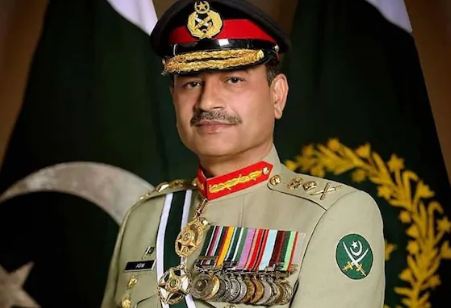
LONDON/NEW YORK: Chief of Army Staff (COAS) Field Marshal Asim Munir has been welcomed in the United States with an appreciation campaign going live on the iconic Times Square billboard in New York City (NYC).

Field Marshal Munir is visiting the US for a week, reportedly at the invitation of US military leadership. The billboard at Times Square shows pictures of COAS Munir, who was promoted to the rank of Field Marshal last month, along with Pakistan’s flag.

The field marshal is also seen in the video with a group of US senators as well as with Pakistani children. The video shows Pakistan as a progressive nation, interested in education, technology and peace.

The Times Square campaign will run for a week. It has been launched by the local administration to welcome the Pakistan military leader who has won wide praise over his role in the recent conflict with India.

Ahead of COAS Munir’s visit to Washington, Commander of the United States Central Command (Centcom) General Michael Kurilla praised Field Marshal Munir and the Pakistan Army.

Testifying before the House Armed Services Committee, General Kurilla called Pakistan a “phenomenal partner in the counterterrorism world” as he underscored Islamabad’s role in the operations against Daesh-Khorasan.

“Through a phenomenal partnership with Pakistan, they have gone after Daesh-Khorasan, killing dozens of them. Through a relationship we have with them, providing intelligence, they have captured at least five Daesh-Khorasan high-value individuals,” he said.

Kurilla mentioned Mohammad Sharifullah alias Jafar, allegedly involved in the 2021 Kabul airport suicide bombing that killed 13 American military personnel and over 160 civilians. He said that after the arrest of Jafar, “the first person Munir called was me and said, ‘I’ve caught him, I’m willing to extradite him back to the US. Please tell the secretary of defence and the president”.

COSA hosts farewell golf for outgoing diplomats from 3 nations

COSA hosts farewell golf for outgoing diplomats from 3 nations

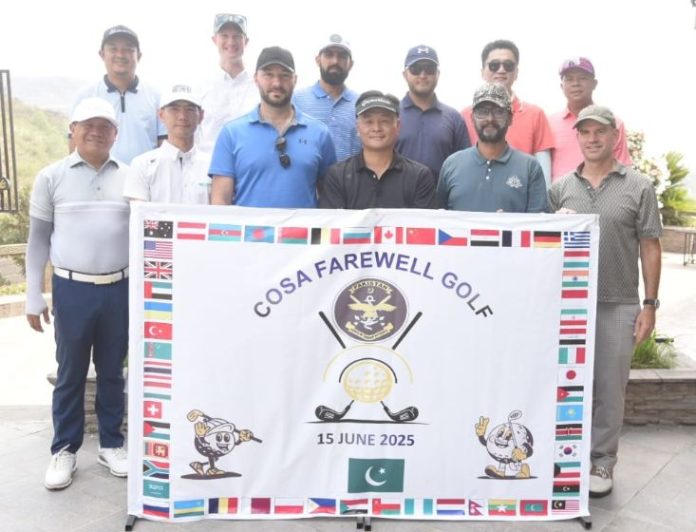
ISLAMABAD, JUN 15 /DNA/ – Islamabad Corps Of Service Attache(COSA) hosted farewell Golf FOR outgoing DA’s OF South Korea, Czech Republic & Maldives.

DA of Malaysia , USA, Japan, Bangladesh Philippines, Kazakhstan, and Diplomats of Vietnam attended the Event=DNA

Israel’s Narrative War: Laying the Groundwork to Attack Pakistan’s Nuclear Assets

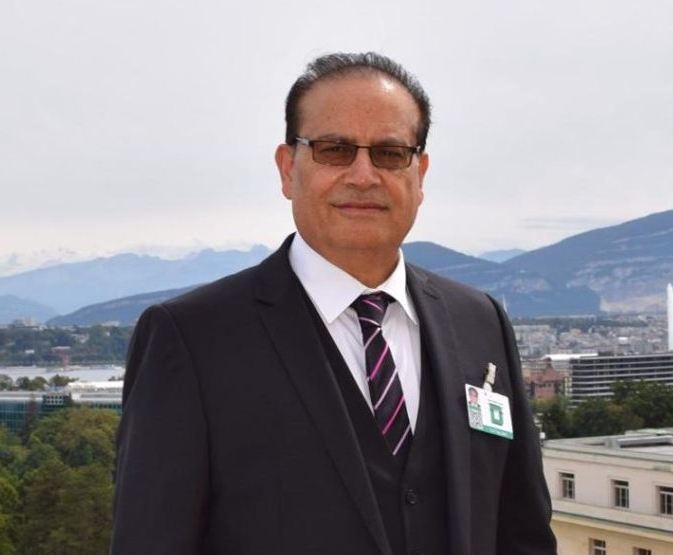
Qamar Bashir

By Qamar Bashir

In the fog of war, truth is often the first casualty. As the Israel-Iran conflict intensifies, a dangerously false narrative is being pushed by Israeli-linked media outlets—one that falsely accuses Pakistan of issuing nuclear threats and aligning militarily with Iran. It alleges that Pakistan warned the United States and France that it would retaliate if Iran is attacked with nuclear weapons. These claims have no basis in reality—no official statements, no credible sources, no historical precedent. Yet, amplified by a sophisticated propaganda network, these unsubstantiated claims are being given the weight of fact, threatening to create justification for future aggression.

This narrative collapses under strategic scrutiny. Pakistan’s missile program is regionally focused, designed only to counter threats from India. Its delivery systems are not capable of reaching Israel, and Pakistan has never developed the long-range missile capability or refueling infrastructure needed for such operations. Furthermore, Pakistan lacks the aerial refueling capacity to sustain long-range missions, making any such threat logistically impossible. The very suggestion that Pakistan could or would launch nuclear weapons toward Israel is not only implausible—it is militarily impossible.

Likewise, comparing Pakistan to the United States as a strategic threat is absurd. Pakistan is a struggling economy with limited global influence, whereas the U.S. remains a superpower. By any metric—military strength, economic capacity, or diplomatic reach—Pakistan is not in a position to challenge U.S. interests. These claims are not only false; they are constructed to incite fear, provoke conflict, and shift the global narrative in Israel’s favor.

What we are witnessing is not misinformation—it is information warfare. For the first time in modern history Iranian missiles rained down on major Israeli cities, shattering the long-held illusion of invincibility. In response, Israel pivoted toward narrative control. By framing itself as a victim and targeting Pakistan with baseless accusations, it seeks to expand the war narrative and preemptively neutralize any potential Muslim voice of dissent.

Pakistan’s record stands in direct opposition to this manufactured threat. Time and again, it has demonstrated military restraint and strategic maturity. From the Kargil conflict to the Pulwama-Balakot standoff and ot the recent standoff between Pakistan and India after Pahalgam terrorists attack, Pakistan has shown that it acts defensively—even when provoked. The capture and swift return of an Indian pilot in 2019 reflected its desire to de-escalate, not inflame, conflict. Its nuclear doctrine is deterrence-based and region-specific. It has never engaged in offensive nuclear signaling beyond the India-Pakistan context. Pakistan does not seek global military entanglements; its entire military posture is defensive and grounded in regional stability.

Internally, Pakistan faces serious challenges—economic volatility, inflation, political instability, and a worsening poverty crisis. These conditions alone make foreign military engagement an untenable proposition. Pakistan is focused on survival, not strategic adventurism. The idea that it would involve itself in a Middle Eastern war—especially one involving Israel, the U.S., and possibly NATO—is not just far-fetched, it is suicidal. It lacks the resources, alliances, and intent to fight such a war.

The urgency of caution became even more pronounced after President Donald Trump fired his National Security Advisor, Mike Waltz, on allegations of collusion with Israeli interests. Waltz was reportedly briefing Israeli officials from within the White House and encouraging the impression that the United States was fully backing Israel’s military operations.

His dismissal revealed how deeply Israel’s influence has penetrated not just Congress, but the American executive and intelligence establishment. This same covert lobbying network that engineered political consent for Israel’s attack on Iran could easily be redirected against Pakistan. The machinery that shaped U.S. perception of Iran can be repurposed to vilify Pakistan, manufacturing a threat where none exists. In light of this, Pakistan must tread with extreme care—strategically, diplomatically, and rhetorically.

Despite Trump’s official distancing from Israel’s unilateral strikes, his language betrays alignment. He reminded the world that the United States possesses “the most lethal weapons on earth” and added that Israel has “plenty of them.” While claiming non-involvement, the United States continues to support Israel with funding, military hardware, intelligence, and diplomatic protection. The public stance of neutrality contrasts sharply with the reality of strategic complicity.

It is within this shadow war of narratives that Pakistan is being framed. Its historic support for oppressed Muslim populations is being twisted into alleged military threats. Sympathy is being rebranded as hostility. Moral clarity is being turned into strategic posturing. This narrative war is not only aimed at distraction—it is laying the foundation for potential aggression.

The real threat to regional and global peace is not from Pakistan’s imaginary long-range nuclear capacity, but from Israel’s disinformation offensive and the West’s silent acquiescence. This manipulation of global opinion—via planted stories, distorted facts, and fabricated threats—is a deliberate campaign to manufacture consent for unjust wars. The world must recognize it, confront it, and reject it.

In these dangerous and volatile times, words can be more destructive than weapons. Pakistani leadership—civilian and military—must exercise extreme caution in public messaging. Statements made in Parliament, at press conferences, or in international forums can be manipulated and reframed by hostile actors.

Pakistan must not rise to this bait. It must remain anchored in its own national interest, grounded in realism, and focused on internal consolidation. The cost of strategic miscalculation at this juncture could be catastrophic. Diplomacy, backchannel engagement, and regional coordination should remain Pakistan’s only tools of influence. There is neither the space nor the mandate for military signaling.

Power without truth is tyranny. Military strength without accountability is chaos. In this dangerous moment, Pakistan’s most potent weapon is not force—but restraint, neutrality, and unwavering commitment to the truth.

By Qamar Bashir

Press Secretary to the President (Rtd)

Former Press Minister at the Embassy of Pakistan to France

Former MD, SRBC

Macomb, Michigan, USA

Pakistan extends felicitations to Bulgaria on 60th anniversary of diplomatic ties

Pakistan extends felicitations to Bulgaria on 60th anniversary of diplomatic ties

ISLAMABAD, Jun 15 (DNA): Pakistan on Sunday extended the warmest felicitations to the leadership and people of Bulgaria on the landmark occasion of the 60th anniversary of diplomatic relations between Pakistan and Bulgaria.

“This special occasion is a testament to the cordial and enduring friendship between our two nations over the decades,” Foreign Office Spokesperson said in a press release.

To commemorate this occasion, the Foreign Ministers of Pakistan and Bulgaria exchanged congratulatory messages celebrating our shared achievements.

The messages emphasized their commitment to expanding bilateral cooperation across various sectors in the interests of both nations.

What is the likely future of Isarel-Iran war

What is the likely future of Isarel-Iran war

“The most profound tragedy would be if the Muslim world failed to read the writing on the wall. Unity, not division, is the need of the hour. Because if Iran falls today, the fire may spread—and tomorrow’s target could be much closer to home”

Opinion

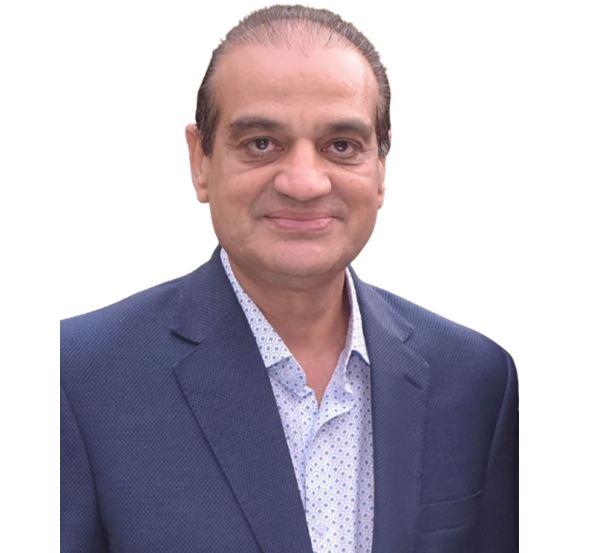
Ansar Mahmood Bhatti

As the specter of war looms over the Middle East, the world watches with anxious eyes the unfolding confrontation between Israel and Iran. On the surface, the conflict appears to be a direct military standoff between two long-time adversaries. But dig deeper, and the fingerprints of global powers—chiefly the United States—become unmistakably visible. Former U.S. President Donald Trump, in his characteristic style, declared that the United States was “not involved” in Israel’s military strikes against Iran’s nuclear facilities. Yet this statement rings hollow. The notion that Israel could launch such a complex and far-reaching operation without American support strains credulity.

Israel’s military capabilities, though formidable, are heavily reliant on U.S. intelligence, logistics, and high-tech weaponry. The targeting of Iranian nuclear infrastructure—often buried deep underground and protected by cutting-edge defense systems—would require not only precision-strike capabilities but also satellite data, cyber-intelligence, refueling logistics, and advanced radar-jamming support. These are capabilities Israel does not possess independently in sufficient volume.

The question is why the blatant denial from Trump and the cautious language from the current administration? The answer lies in Washington’s balancing act. By denying involvement, the U.S. seeks to preserve its role as a potential mediator in any future Iran-Israel de-escalation effort. Admitting complicity in the strikes would undermine America’s diplomatic leverage not only with Iran but also with many of its regional partners. Moreover, it would open the floodgates of international condemnation and possibly even retaliatory attacks on U.S. assets in the Middle East.

However, Trump’s threat that if “U.S. facilities were attacked, America would respond with full force” reveals the inherent contradiction in Washington’s narrative. If the United States is not involved, why issue such a warning? The subtext is clear: the U.S. is indeed involved—at least tacitly, if not operationally. Washington’s true concern is managing the blowback.

At the core of this conflict is not just Israel’s security, but a broader geopolitical ambition shared by many in the West: regime change in Iran. For decades, the Islamic Republic has been a thorn in the side of both American and European foreign policy establishments. Its clerical leadership, rooted in anti-Western ideology, has refused to integrate into the liberal international order. The U.S. and EU have grown increasingly frustrated with Iran’s nuclear ambitions, its support for regional militias, and its suppression of dissent.

Thus, the current military campaign is not just about neutralizing nuclear threats; it is also about weakening the Iranian regime’s grip on power. A destabilized Iran, the thinking goes, might give way to a more liberal, democratic leadership—more amenable to Western interests. Europe’s muted response to Israel’s aggression reinforces this theory. Rather than issuing a strong condemnation, EU leaders have merely called for “non-escalation.” The absence of real diplomatic pressure on Israel suggests tacit approval of its objectives.

Equally concerning for Iran is the presence of internal fissures within its establishment. The success of Israeli strikes has reportedly been aided by intelligence leaks from within Iran—leaks that point to moles embedded in the political and military hierarchy. This internal betrayal hints at a deeper rot: a lack of national cohesion and rising disaffection among segments of the Iranian populace and establishment alike.

Some observers argue that the clerical regime’s dwindling popularity has made it more vulnerable to both foreign attack and internal dissent. Years of economic sanctions, political repression, and broken promises have taken their toll on public morale. The current crisis, therefore, is not just external but deeply internal. Iran’s government finds itself fighting a war on two fronts—against Israel abroad and against discontent at home.

This situation should ring alarm bells across the Muslim world. As Pakistan’s Defence Minister Khawaja Asif rightly pointed out in his address to the National Assembly on June 14, 2025: “If today is Iran, tomorrow it may be Pakistan or any other Muslim country.” His words serve as a stern warning and a clarion call for unity among Muslim nations. It is no longer sufficient to view this as a localized Iran-Israel conflict. This is a broader campaign that could target any Muslim country seen as resisting Western or Israeli interests.

Minister Asif’s suggestion that Muslim countries maintaining diplomatic ties with Israel should reconsider their positions is both timely and urgent. While diplomacy should never be abandoned lightly, engagement with a state that undertakes unilateral military aggression against another Muslim country demands a moral reckoning. Maintaining ties while turning a blind eye to such actions sends the wrong message: that economic and political expediency trumps principles of sovereignty, justice, and solidarity.

The road ahead is fraught with peril. If Iran chooses to retaliate directly against Israeli or U.S. assets, the region could spiral into a full-scale war with global ramifications. Already, regional militias aligned with Iran—such as Hezbollah and the Houthis—have begun mobilizing, and any miscalculation could light the fuse of a wider conflagration. Conversely, if Iran absorbs the blows and avoids a kinetic response, it risks emboldening its enemies and further weakening internal morale.

In either case, the situation is untenable unless addressed through comprehensive regional diplomacy. But for that to happen, the U.S. must first come clean about its role and choose whether it wants to be a participant in war or a broker of peace. As it stands, its current duplicity undermines its credibility.

The Israel-Iran war is not just a regional showdown—it is a flashpoint in a global struggle for influence, ideology, and identity. With America deeply implicated despite its denials, and Europe silently complicit through inaction, Iran finds itself isolated and under siege. Its internal vulnerabilities and external threats have converged into a perfect storm. But the most profound tragedy would be if the Muslim world failed to read the writing on the wall. Unity, not division, is the need of the hour. Because if Iran falls today, the fire may spread—and tomorrow’s target could be much closer to home.

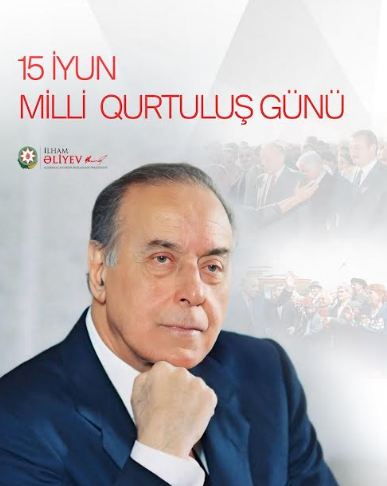
JUNE 15 — National Day of Salvation of Azerbaijan

JUNE 15 — National Day of Salvation of Azerbaijan

Despite the fact that Azerbaijan declared the restoration of its independence in 1991, the political crisis caused by the incompetence of the government, activities of internal and external destructive forces aimed at undermining the foundations of the state, the emergence of separatist tendencies in different regions, and severe socioeconomic situation put the country face-to-face with the threat of civil war and the loss of independence. The situation was further exacerbated by Armenia’s aggression and occupation of Azerbaijan’s lands.

And in such a fateful moment, the Azerbaijani people trusted their future to outstanding statesman Heydar Aliyev. After returning to Baku by popular demand, Heydar Aliyev was elected as chairman of the Supreme Council of the Republic of Azerbaijan on 15 June 1993 and as President of the Republic of Azerbaijan on 3 October of the same year.

It was thanks to Heydar Aliyev’s salvation mission that the processes threatening the state independence of Azerbaijan were thwarted and state-building issues were put in the focus of attention. Thus, 15 June went down in the history of Azerbaijan as the National Salvation Day.

The key priorities of National Leader Heydar Aliyev’s policy included achieving a ceasefire with Armenia, establishing public and political stability, building a democratic system and liberal economy, ensuring national army building and security, implementing a new oil strategy, accelerating Azerbaijan’s integration into the international arena, and achieving a fair settlement of the Armenia-Azerbaijan Nagorno-Karabakh conflict.

1995 marked the launch of drastic reforms in all spheres of public life, a new Constitution was adopted, a multi-party system was built, political pluralism became a norm of society, freedom of speech and press was ensured. In parallel, significant steps were taken to build a market economy, the world`s leading companies were involved in exploiting the hydrocarbon resources in the Azerbaijani sector of the Caspian Sea, routes for the transportation of oil to the world market were defined and resources to ensure Azerbaijan’s development were made available in a short period of time.

Heydar Aliyev pursued a consistent and purposeful policy to transform Azerbaijan into a reliable partner in the system of international relations, raising the world community`s awareness of the material, spiritual and intellectual values of the country, secure the interests of the Azerbaijani state both in the region and in the world by taking into account the key aspects of national security and development.

The 1993-2003 time period, when Heydar Aliyev was in power and was elevated to the status of National Leader for his unparalleled services to the Azerbaijani people and state, marked a historic stage when Azerbaijan emerged as a state, formed and transformed into a full-fledged subject of the international community. These 10 years saw the implementation of the national development strategy of the Republic of Azerbaijan, and the people of Azerbaijan benefited from a rare historic opportunity and made their independence everlasting and irreversible at the cost of great suffering.

Since 2003, Azerbaijan has been implementing the policy of Heydar Aliyev, continuing and enriching it under the leadership of H.E. Mr. Ilham Aliyev, the President of the Republic of Azerbaijan. Thus, the successful foreign policy of Azerbaijan, conducted under President Ilham Aliyev’s leadership, reflects a commitment to the above-mentioned course of the comprehensive development of mutually beneficial relations with members of the world community. This policy is designed to enhance the prosperity and welfare of the Republic of Azerbaijan while ensuring ongoing development and well-being for its citizens.

In 2020, under the leadership of the Supreme Commander-in-Chief of the Azerbaijani Armed Forces, President Ilham Aliyev, Azerbaijan liberated its internationally recognized territories from the almost 30-years occupation by Armenia, implementing UN Security Council 4 resolutions of 1993. In order to prevent further large-scale provocations by Armenian forces in the Karabakh economic region of Azerbaijan and to restore the constitutional order, the Azerbaijani Army conducted an anti-terror operation on September 19, 2023, which lasted just 23 hours, forced the enemy to surrender. This victory fully restored Azerbaijan’s sovereignty, and today, the Azerbaijani flag flies proudly in all territories where Azerbaijani sovereignty is established. Thus, Azerbaijan has officially declared 2025 as the Year of Constitution and Sovereignty.

Over the past years, the Republic of Azerbaijan has successfully chaired several important organizations such as the UN Security Council, the Non-Aligned Movement, the Organization of Turkic States, and many others.

It should also be highlighted that Azerbaijan`s successful hosting of the COP29 conference, which not only underscored the nation’s growing leadership in global climate action but also provided a vital platform for international cooperation.

All of the points mentioned above reflect Azerbaijan`s robust global diplomacy, the foundations of which were laid by the National Leader Heydar Aliyev, and its reputable standing as a reliable partner in multilateral negotiations.

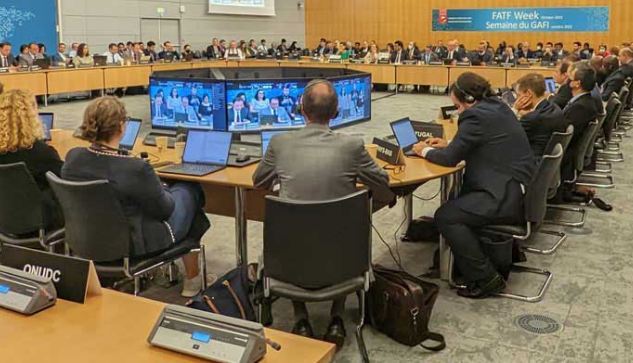
India fails to ‘push Pakistan back’ onto FATF grey list

India fails to 'push Pakistan back' onto FATF grey list

New Delhi, JUN 14: India suffered a diplomatic setback in its bid to have Pakistan re-listed on the Financial Action Task Force (FATF) grey list amid “strong opposition from member states”, sources said on Saturday.

Diplomatic sources told Geo News that the Indian delegation made a “concerted push” to place Pakistan back on the grey list, citing concerns related to financial regulations and counter-terror financing.

However, China took a firm stance in Pakistan’s favour, advocating for continued relief and acknowledging the country’s progress on FATF requirements.

Turkiye and Japan also extended their full support to Pakistan, further undermining India’s effort.

Ties between the two nuclear-armed neighbours plunged following a recent standoff over the killing of 26 tourists in Pahalgam, Indian Illegally Occupied Jammu and Kashmir, that New Delhi blamed on Islamabad.

Pakistan categorically rejected the allegation while offering a transparent probe into the incident, and drew the international community’s attention to Indian proxies involved in terrorism inside the country.

Following India’s unprovoked attacks, Pakistan armed forces launched a large-scale retaliatory military action, named “Operation Bunyan-um-Marsoos” and targeted several Indian military installations across multiple regions.

Pakistan downed six IAF fighter jets, including three Rafales, and dozens of drones. After at least 87 hours, the war between the two nuclear-armed nations ended on May 10 following US President Donald Trump’s announcement of a ceasefire.

In October 2022, the FATF — a global money laundering and terrorism financing watchdog — removed Pakistan from a list of countries under “increased monitoring”, also known as the “grey list”.

Islamabad has played an active role in promoting the principles and purposes of the UN Charter and has made significant contributions to international peace and security, including its role as one of the leading troop-contributing countries to UN peacekeeping missions across the world. It was elected to the UN Security Council in June 2024 and replaced Japan in the Asian seat.

Pakistan is one of the worst victims of terrorism for over two decades, as the country has lost more than 80,000 lives.

Pakistan has time and again raised the issue of India sponsoring and backing terrorist groups such as Tehreek-e-Taliban Pakistan (TTP) and Baloch Liberation Army (BLA) to carry out attacks inside Pakistan.

Erdogan, PM Sharif plot diplomatic push against Israeli strikes

Erdogan, PM Sharif plot diplomatic push against Israeli strikes

ISLAMABAD, JUN 14 /DNA/ – Prime Minister Muhammad Shehbaz Sharif held a telephone conversation with President Recep Tayyip Erdogan of Turkiye, this evening.

During their most warm and cordial conversation, both leaders discussed the deeply worrying situation in the region in the wake of Israel’s unprovoked and unjustified aggression against Iran.

The two leaders agreed that Israel’s military strikes had violated Iran’s sovereignty and territorial integrity, in clear contravention of the UN Charter and international law, while seriously jeopardizing regional and global peace and stability. They also denounced Israel’s brazen military aggression against the brave Palestinian people, that continued with complete impunity.

The two leaders emphasized that the international community and the United Nations must act collectively and urge Israel to immediately end its aggressive posturing and illegal actions against Iran, Palestine and other countries in the region.

While renewing Pakistan’s firm and unwavering commitment to upholding international peace, security and stability, the Prime Minister said that Pakistan would continue to play a constructive role for peace, both as member of the UN Security Council, as well as in other forums such as the OIC.
In this regard, the Prime Minister said that Deputy Prime Minister & Foreign Minister Mohammad Ishaq Dar would represent Pakistan at the upcoming OIC CFM meeting in Istanbul. He also congratulated President Erdogan for being decorated by the Islamic Cooperation Youth Forum (ICYF).

Both leaders apprised one another about their country’s diplomatic outreach in the prevailing regional situation. They agreed to remain in close touch to coordinate peace efforts.

Uzebekistan Airlines flies inaugural Pakistani route: PAA

Uzebekistan Airlines

Tashkent, JUN 14: Uzbekistan Airlines on Saturday flew its inaugural Pakistani route from Islamabad to Tashkent, marking a key moment in connectivity between the two nations, a statement from the Pakistan Airports Authority (PAA) said.

Uzbekistan announced earlier this year that air routes between Karachi, Samarkand and Bukhara would be launched, describing it as a significant step to foster closer ties between the two nations.

According to a PAA statement, the flight took off at 1:09pm with 126 passengers on board, with Zone 1 of Islamabad International Airport specially adorned with colourful balloons for the milestone.

“The event was graced by the esteemed ambassadors of Uzbekistan, Tajikistan, Kazakhstan and Azerbaijan,” the statement read, adding that the Chief Operating Officer of Islamabad Airport, the managing director of Pakistan Tourism Development Corporation and the Country Manager of Uzbekistan Airlines also attended.

“Guests warmly welcomed passengers at Stand 3 and a formal cake-cutting ceremony was held in the upper lounge area (A5) to commemorate the launch,” the statement added. “The entire event was seamlessly organised with the dedicated support and coordination of airport teams under the Pakistan Airports Authority.”

In February this year, Pakistan and Uzbekistan agreed to expand bilateral trade to $2 billion as Prime Minister Shehbaz Sharif met with Uzbekistan President Shavkat Mirziyoyev in Tashkent.

Addressing a joint press conference with PM Shehbaz, President Mirziyoyev said: “We came to the conclusions on different spheres and mutual trade turnover had exceeded $400 million, and we have plans to increase that to $2bn.”

He termed the negotiations between them “very fruitful”, adding that there was a “new direction” for future goals.

PM Shehbaz reaffirms Pakistan’s solidarity with Iran against Israel

Shehbaz Sharif

ISLAMABAD, JUN 14: /DNA/ – Prime Minister Shehbaz Sharif Spoke with President Dr. Masoud Pezeshkian of Iran today to express Pakistan’s unwavering solidarity with the brotherly people of Iran in the face of Israel’s unprovoked aggression.

Strongly condemned the violation of Iran’s sovereignty and territorial integrity —an affront to international law & the UN Charter. Iran has every right to self-defence under Article 51 of the UN Charter.

Grateful to President Pezeshkian for appreciation of Pakistan’s unwavering and principled position at the UN Security Council calling out  Israel’s blatant aggression against Iran, Palestine and others in the region.

We agreed that the international community, particularly the Ummah, must act together to halt these grave violations.

Stay Connected

64FansLike
60FollowersFollow

Latest Reviews

Exchange Rates

USD - United States Dollar
EUR
1.17
GBP
1.34
AUD
0.67
CAD
0.73