Home Blog Page 310

‘Baseless propaganda’: Pakistan denies supplying ballistic missiles to Iran

'Baseless propaganda': Pakistan denies supplying ballistic missiles to Iran

ISLAMABAD, JUN 15: Security sources have strongly rejected reports claiming Pakistan provided non-nuclear ballistic missiles to Iran, terming them baseless, frivolous, and part of a propaganda campaign led by Indian media and its affiliated foreign outlets.

The development came after a statement started circulating on social media regarding Pakistan’s involvement in the Israel-Iran standoff, which was shared with images of the Iranian and Pakistani flags.

Diplomatic sources termed the statement ‘fake’ and said it falsely attributed a claim to Pakistan about delivering a “nuclear response” against Israel in support of Iran.

They also clarified that the assertion regarding Pakistan’s military joining the war alongside Iran was entirely baseless.

Israel and Iran launched fresh attacks on each other overnight into Sunday, as the US president said the conflict could be easily ended while warning Tehran not to strike any US targets.

Israeli rescue teams combed through the rubble of residential buildings destroyed in strikes, using flashlights and sniffer dogs to look for survivors after at least seven people were killed, including children, authorities said.

Tehran has called off nuclear talks that Washington had said were the only way to halt Israel’s bombing, while Prime Minister Benjamin Netanyahu said the attacks by Israel so far were nothing compared with what Iran would see in the coming days.

According to the Iranian media, the death toll from Israeli attacks on Friday and Saturday was at least 128, including women and children, reporting hundreds more wounded.

At least “128 people were martyred in these military attacks, and around 900 injured individuals were admitted to” hospitals, said Etemad daily, citing the health ministry.

The report said the deaths include at least “40 women”, adding that the “number of martyred children is significant”.

‘Baseless propaganda’: Pakistan denies supplying ballistic missiles to Iran

'Baseless propaganda': Pakistan denies supplying ballistic missiles to Iran

ISLAMABAD, JUN 15: Security sources have strongly rejected reports claiming Pakistan provided non-nuclear ballistic missiles to Iran, terming them baseless, frivolous, and part of a propaganda campaign led by Indian media and its affiliated foreign outlets.

Water Crisis? CDA’s New ‘Liquid Gold’ plan revealed

Water Crisis? CDA’s New ‘Liquid Gold’ plan revealed

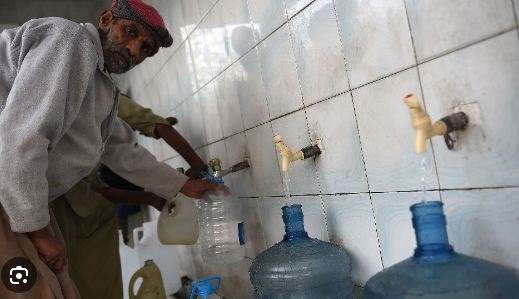
Water saves life which is a great blessing from Allah Almighty (SWT). Every individual to play its due role in saving water as every drop of water counts. Muhammad Ali Randhawa

ISLAMABAD, JUN 15 /DNA/ – Chairman, CDA Chief Comkisdioner Islsmabad and DG Civil Defence Muhammad Ali Randhawa, presided over a meeting. The meeting was attended by CDA Board Members, along with other relevant senior officers of CDA.

During the meeting, Chairman CDA, Muhasmmad Ali Randhawa said that Water is a great blessing from Allah Almighty, and it is the responsibility of every individual to play its due role in saving water as saving water saves life and every drop of water counts. The CDA is fully committed to addressing the water-related challenges faced by the citizens of Islamabad on a priority basis. We are making our best efforts to ensure uninterrupted access to clean and safe water to all the citizens of Islamabad.

Chairman CDA highlighted the establishment of the Islamabad Water Agency, which is now being made fully equipped with the necessary resources, including water experts, modern equipments, and trained manpower. He said that the Islamabad Water is a testament to our vision for sustainable water in future. We are strengthening its administrative and governance structure to ensure its effectiveness in addressing the water needs of the residents of the Federal Capital Islamabad.

Chairman CDA urged CDA, MCI and ICT and all other segments of the society to play its due role in conserving water, waste of water by repairing leaks, using water-efficient appliances, and adopting mindful water consumption habits, thus we all can collectively make a significant difference and impact in this regard. Secondly, through effective awareness campaigns about the importance of water and its usage among students of colleges and universities as well as teachers and other segments of society, we may be able to ensure the sustainable management of our water resources as per our needs.

It was briefed that CDA is actively exploring new avenues to meet the future water demands of Islamabad. During the meeting, various proposals were discussed, including alternative water supply sources and the modernization of the water distribution network.
In line with its long-term strategy, the CDA is also engaging with local and international donors and development partners to secure funding for viable water supply projects. It was briefed that CDA is working on various feasibility studies and consulting with stakeholders to ensure the successful implementation of these projects.

Chairman CDA affirmed that his goal is to provide safe and clean water to every citizen of Islamabad, today and in the future. He said that water plays an important role in our lives and the urgent need is to protect this vital resource. The CDA calls upon all stakeholders, including citizens, to join hands in safeguarding water resources for future generations.

Chairman CDA concluded the meeting with the message that individuals as well as collective efforts of all stakeholders could make a difference in achieving our targets in persevering water in order to address our future needs of water including ensuring safe drinking to its citizens, cultivation of agriculture lands as well as utilization of water for other needs. Let us work together to ensure that everyone has access to safe and clean water.

Dar, Turkish FM discuss rising tensions over Israel-Iran conflict

Dar, Turkish FM discuss rising tensions over Israel-Iran conflict

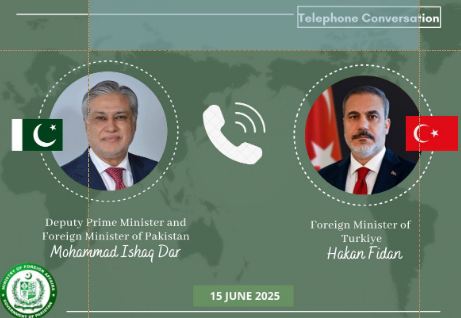
ISLAMABAD, JUN 15 /DNA/ – Deputy Prime Minister/Foreign Minister, Senator Mohammad Ishaq Dar @MIshaqDar50, today received a telephone call from the Foreign Minister of Türkiye, Hakan Fidan @HakanFidan.

The two leaders expressed deep concern and anguish over the deteriorating regional situation due to Israel’s unjustified attacks on Iran.

The DPM/FM also confirmed his participation in the forthcoming meeting of OIC Council of Foreign Ministers (CFM), and at the Islamic Cooperation Youth Forum’s (ICYF) ceremony to honour President Recep Tayyip Erdoğan, both scheduled to be held next week in Istanbul.

OIC’s silence on Iran: a grave omission

OIC’s silence on Iran: a grave omission

The ongoing Israeli attacks on Iran’s nuclear facilities and military infrastructure have sparked global debate and concern—yet from the Organization of Islamic Cooperation (OIC), there has been nothing but deafening silence. This lack of response is not just disappointing—it is alarming. As the second-largest intergovernmental organization after the United Nations, and one that claims to represent the collective voice of the Muslim world, the OIC’s continued silence in the face of blatant aggression against a fellow Muslim nation reflects a deep moral and political failure.

The OIC was established to protect the interests and sovereignty of Muslim countries, yet its actions—or rather, its inaction—reveal a disjointed and increasingly irrelevant alliance. Many of its member states today appear more aligned with Western powers and the United States than with their fellow Muslim nations. This growing detachment from its core objectives has rendered the OIC a passive observer in times when bold leadership is most needed.

What is happening to Iran today cannot be viewed in isolation. If Israel, with the tacit support of the U.S. and the silence of Europe, can launch direct military strikes against Iran without facing condemnation or collective resistance, what is to stop similar actions against any other Muslim country tomorrow? As Pakistan’s Defence Minister Khawaja Asif recently warned in his June 14 address to the National Assembly: “If today it is Iran, tomorrow it may be Pakistan or any other Muslim country.” These are not mere rhetorical flourishes—they are grounded in historical precedent and strategic realities.

The Muslim Ummah must recognize this moment for what it is: a test of unity, sovereignty, and collective resilience. Iran, regardless of differences in sectarian or political viewpoints, remains a crucial member of the Muslim world. To abandon it at this time sets a dangerous precedent that weakens all Muslim nations collectively. The notion that aligning closely with the West will ensure safety or prosperity is a myth. History has shown that alliances of convenience often turn into instruments of subjugation when national interests clash.

The OIC must urgently convene a special session to address the crisis and send a strong, unified message to the international community. It must unequivocally condemn the Israeli attacks, demand accountability, and extend political, diplomatic, and moral support to Iran. Anything less would be a betrayal of its foundational principles and the trust placed in it by over a billion Muslims around the globe.

The time has come for the OIC to rise beyond symbolic statements and routine meetings. It must reclaim its relevance, act decisively, and assert its role as a true representative of the Muslim world. The future security, dignity, and unity of the Ummah may well depend on what the OIC chooses to do—or not do—today.

Businessmen reject federal budget: FBR powers draw fire

Businessmen reject federal budget: FBR powers draw fire

The business community has strongly rejected the federal budget for the fiscal year 2025–26, particularly objecting to the controversial proposal granting arrest powers to Federal Board of Revenue (FBR) officials. Terming the move “draconian,” several trade and industry bodies have warned the government of a nationwide strike if the provision is not immediately withdrawn. This backlash is not surprising. At a time when businesses are already reeling under inflation, high energy costs, and economic uncertainty, this additional threat of arbitrary arrest has only deepened their sense of insecurity and alienation.

Business leaders argue—rightfully—that the move will further erode confidence and deter investment. The FBR, they say, already has a reputation for harassment and overreach. Giving its officials unchecked authority to arrest businessmen without due process could open the floodgates for abuse, vendettas, and corruption. While the intent behind the move may be to tighten the noose around habitual tax evaders, in practice, it may end up targeting genuine taxpayers—those who are already contributing to the national exchequer and struggling to stay afloat.

The reality is that Pakistan’s tax base is narrow not because of a lack of legislation, but because of inconsistent implementation and selective accountability. There is no doubt that tax evasion is a serious problem. It has long plagued the country, depriving the national treasury of critical revenues needed for infrastructure, health, and education. But blanket punitive measures against the entire business class are not the solution. They risk alienating key economic players who are vital to job creation and growth.

Reports indicate that the government is reconsidering this proposal after severe backlash, which is a step in the right direction. However, a mere rollback is not enough. There must be a clear and transparent mechanism to distinguish between habitual tax dodgers and compliant taxpayers. Technology, data analytics, and third-party audits can play a vital role in achieving this without infringing on individual rights or disrupting economic activity.

Moreover, the FBR itself needs institutional reform. Without improving internal accountability, training, and efficiency, no legislative change will yield long-term results. Trust between the tax authorities and the business community is essential—and that can only be built through transparency, fairness, and dialogue, not intimidation.

Ultimately, while tax reform is crucial for Pakistan’s financial future, it must be pursued with wisdom and balance. Policies that scare away business will only deepen the economic crisis. The government must adopt a consultative approach, address genuine concerns, and ensure that any anti-evasion measures are implemented with justice and due process. A thriving business community and an efficient, accountable tax system are not mutually exclusive—they are two sides of the same coin.

Field Marshal Asim Munir welcomed in US

Field Marshal Asim Munir welcomed in US

COAS Munir is visiting the US for a week, reportedly at the invitation of US military leadership

DNA

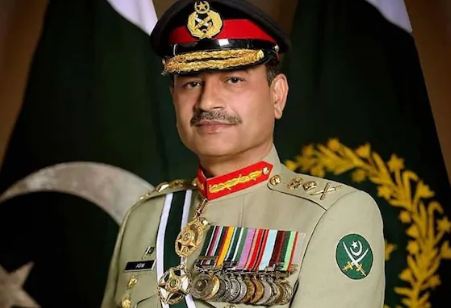
LONDON/NEW YORK: Chief of Army Staff (COAS) Field Marshal Asim Munir has been welcomed in the United States with an appreciation campaign going live on the iconic Times Square billboard in New York City (NYC).

Field Marshal Munir is visiting the US for a week, reportedly at the invitation of US military leadership. The billboard at Times Square shows pictures of COAS Munir, who was promoted to the rank of Field Marshal last month, along with Pakistan’s flag.

The field marshal is also seen in the video with a group of US senators as well as with Pakistani children. The video shows Pakistan as a progressive nation, interested in education, technology and peace.

The Times Square campaign will run for a week. It has been launched by the local administration to welcome the Pakistan military leader who has won wide praise over his role in the recent conflict with India.

Ahead of COAS Munir’s visit to Washington, Commander of the United States Central Command (Centcom) General Michael Kurilla praised Field Marshal Munir and the Pakistan Army.

Testifying before the House Armed Services Committee, General Kurilla called Pakistan a “phenomenal partner in the counterterrorism world” as he underscored Islamabad’s role in the operations against Daesh-Khorasan.

“Through a phenomenal partnership with Pakistan, they have gone after Daesh-Khorasan, killing dozens of them. Through a relationship we have with them, providing intelligence, they have captured at least five Daesh-Khorasan high-value individuals,” he said.

Kurilla mentioned Mohammad Sharifullah alias Jafar, allegedly involved in the 2021 Kabul airport suicide bombing that killed 13 American military personnel and over 160 civilians. He said that after the arrest of Jafar, “the first person Munir called was me and said, ‘I’ve caught him, I’m willing to extradite him back to the US. Please tell the secretary of defence and the president”.

COSA hosts farewell golf for outgoing diplomats from 3 nations

COSA hosts farewell golf for outgoing diplomats from 3 nations

ISLAMABAD, JUN 15 /DNA/ – Islamabad Corps Of Service Attache(COSA) hosted farewell Golf FOR outgoing DA’s OF South Korea, Czech Republic & Maldives.

DA of Malaysia , USA, Japan, Bangladesh Philippines, Kazakhstan, and Diplomats of Vietnam attended the Event=DNA

Israel’s Narrative War: Laying the Groundwork to Attack Pakistan’s Nuclear Assets

Qamar Bashir

By Qamar Bashir

In the fog of war, truth is often the first casualty. As the Israel-Iran conflict intensifies, a dangerously false narrative is being pushed by Israeli-linked media outlets—one that falsely accuses Pakistan of issuing nuclear threats and aligning militarily with Iran. It alleges that Pakistan warned the United States and France that it would retaliate if Iran is attacked with nuclear weapons. These claims have no basis in reality—no official statements, no credible sources, no historical precedent. Yet, amplified by a sophisticated propaganda network, these unsubstantiated claims are being given the weight of fact, threatening to create justification for future aggression.

This narrative collapses under strategic scrutiny. Pakistan’s missile program is regionally focused, designed only to counter threats from India. Its delivery systems are not capable of reaching Israel, and Pakistan has never developed the long-range missile capability or refueling infrastructure needed for such operations. Furthermore, Pakistan lacks the aerial refueling capacity to sustain long-range missions, making any such threat logistically impossible. The very suggestion that Pakistan could or would launch nuclear weapons toward Israel is not only implausible—it is militarily impossible.

Likewise, comparing Pakistan to the United States as a strategic threat is absurd. Pakistan is a struggling economy with limited global influence, whereas the U.S. remains a superpower. By any metric—military strength, economic capacity, or diplomatic reach—Pakistan is not in a position to challenge U.S. interests. These claims are not only false; they are constructed to incite fear, provoke conflict, and shift the global narrative in Israel’s favor.

What we are witnessing is not misinformation—it is information warfare. For the first time in modern history Iranian missiles rained down on major Israeli cities, shattering the long-held illusion of invincibility. In response, Israel pivoted toward narrative control. By framing itself as a victim and targeting Pakistan with baseless accusations, it seeks to expand the war narrative and preemptively neutralize any potential Muslim voice of dissent.

Pakistan’s record stands in direct opposition to this manufactured threat. Time and again, it has demonstrated military restraint and strategic maturity. From the Kargil conflict to the Pulwama-Balakot standoff and ot the recent standoff between Pakistan and India after Pahalgam terrorists attack, Pakistan has shown that it acts defensively—even when provoked. The capture and swift return of an Indian pilot in 2019 reflected its desire to de-escalate, not inflame, conflict. Its nuclear doctrine is deterrence-based and region-specific. It has never engaged in offensive nuclear signaling beyond the India-Pakistan context. Pakistan does not seek global military entanglements; its entire military posture is defensive and grounded in regional stability.

Internally, Pakistan faces serious challenges—economic volatility, inflation, political instability, and a worsening poverty crisis. These conditions alone make foreign military engagement an untenable proposition. Pakistan is focused on survival, not strategic adventurism. The idea that it would involve itself in a Middle Eastern war—especially one involving Israel, the U.S., and possibly NATO—is not just far-fetched, it is suicidal. It lacks the resources, alliances, and intent to fight such a war.

The urgency of caution became even more pronounced after President Donald Trump fired his National Security Advisor, Mike Waltz, on allegations of collusion with Israeli interests. Waltz was reportedly briefing Israeli officials from within the White House and encouraging the impression that the United States was fully backing Israel’s military operations.

His dismissal revealed how deeply Israel’s influence has penetrated not just Congress, but the American executive and intelligence establishment. This same covert lobbying network that engineered political consent for Israel’s attack on Iran could easily be redirected against Pakistan. The machinery that shaped U.S. perception of Iran can be repurposed to vilify Pakistan, manufacturing a threat where none exists. In light of this, Pakistan must tread with extreme care—strategically, diplomatically, and rhetorically.

Despite Trump’s official distancing from Israel’s unilateral strikes, his language betrays alignment. He reminded the world that the United States possesses “the most lethal weapons on earth” and added that Israel has “plenty of them.” While claiming non-involvement, the United States continues to support Israel with funding, military hardware, intelligence, and diplomatic protection. The public stance of neutrality contrasts sharply with the reality of strategic complicity.

It is within this shadow war of narratives that Pakistan is being framed. Its historic support for oppressed Muslim populations is being twisted into alleged military threats. Sympathy is being rebranded as hostility. Moral clarity is being turned into strategic posturing. This narrative war is not only aimed at distraction—it is laying the foundation for potential aggression.

The real threat to regional and global peace is not from Pakistan’s imaginary long-range nuclear capacity, but from Israel’s disinformation offensive and the West’s silent acquiescence. This manipulation of global opinion—via planted stories, distorted facts, and fabricated threats—is a deliberate campaign to manufacture consent for unjust wars. The world must recognize it, confront it, and reject it.

In these dangerous and volatile times, words can be more destructive than weapons. Pakistani leadership—civilian and military—must exercise extreme caution in public messaging. Statements made in Parliament, at press conferences, or in international forums can be manipulated and reframed by hostile actors.

Pakistan must not rise to this bait. It must remain anchored in its own national interest, grounded in realism, and focused on internal consolidation. The cost of strategic miscalculation at this juncture could be catastrophic. Diplomacy, backchannel engagement, and regional coordination should remain Pakistan’s only tools of influence. There is neither the space nor the mandate for military signaling.

Power without truth is tyranny. Military strength without accountability is chaos. In this dangerous moment, Pakistan’s most potent weapon is not force—but restraint, neutrality, and unwavering commitment to the truth.

By Qamar Bashir

Press Secretary to the President (Rtd)

Former Press Minister at the Embassy of Pakistan to France

Former MD, SRBC

Macomb, Michigan, USA

Pakistan extends felicitations to Bulgaria on 60th anniversary of diplomatic ties

Pakistan extends felicitations to Bulgaria on 60th anniversary of diplomatic ties

ISLAMABAD, Jun 15 (DNA): Pakistan on Sunday extended the warmest felicitations to the leadership and people of Bulgaria on the landmark occasion of the 60th anniversary of diplomatic relations between Pakistan and Bulgaria.

“This special occasion is a testament to the cordial and enduring friendship between our two nations over the decades,” Foreign Office Spokesperson said in a press release.

To commemorate this occasion, the Foreign Ministers of Pakistan and Bulgaria exchanged congratulatory messages celebrating our shared achievements.

The messages emphasized their commitment to expanding bilateral cooperation across various sectors in the interests of both nations.

Stay Connected

64FansLike
60FollowersFollow

Latest Reviews

Exchange Rates

USD - United States Dollar
EUR
1.17
GBP
1.34
AUD
0.67
CAD
0.73