Home Blog Page 307

Wales, Malaysia Qualify for 5th-6th Position Match in Nations Cup Hockey Tournament

Malaysia

DNA

KUALA LUMPUR: Two important classification matches were decided on Friday in the ongoing FIH Nations Cup Hockey Tournament being played in Malaysia, with Wales and host nation Malaysia registering convincing victories over their respective opponents.

In the first match of the day, Wales thrashed Japan with a dominant performance, securing a victory. The Welsh side displayed clinical attacking play, capitalizing on Japan’s defensive weaknesses and maintaining control throughout the match. With this win, Wales not only ended their group stage campaign on a high note but also confirmed their place in the 5th-6th position playoff.

Later in the evening, hosts Malaysia kept the home crowd cheering as they outclassed South Africa 4-2 in an entertaining contest. Malaysia showed great composure and teamwork to overcome the physically strong South African side. The Malaysians, who narrowly missed out on qualifying for the final due to goal difference, played with flair and determination to keep their hopes alive for a respectable finish.

With these results, both Wales and Malaysia have now secured their spots in the 5th and 6th position match, which will be played on Saturday, June 22. The match promises to be an exciting battle between two well-matched sides aiming to finish the tournament on a high.

Meanwhile, the grand final of the Nations Cup is also scheduled for Saturday, June 22, at 6:00 PM Pakistan Standard Time. Pakistan, despite losing to New Zealand in their last group match, qualified for the SEMIfinal on better goal difference. Pakistan will face France, who remained unbeaten in the group stage.

The winner of the Nations Cup will earn a coveted spot in the 2025 FIH Pro League, one of the most prestigious competitions in international hockey. This has raised the stakes significantly for the finalists, with both teams looking to secure their place among the hockey elite.

As the tournament reaches its climax, the Nations Cup has delivered intense and high-quality matches, showcasing the rising talent and competitive spirit of participating teams. All eyes are now set on Saturday’s final showdown and classification matches, which will bring the tournament to an exciting conclusion.

Pak, Belgium vow to cement ties in law, governance fields

Belgium

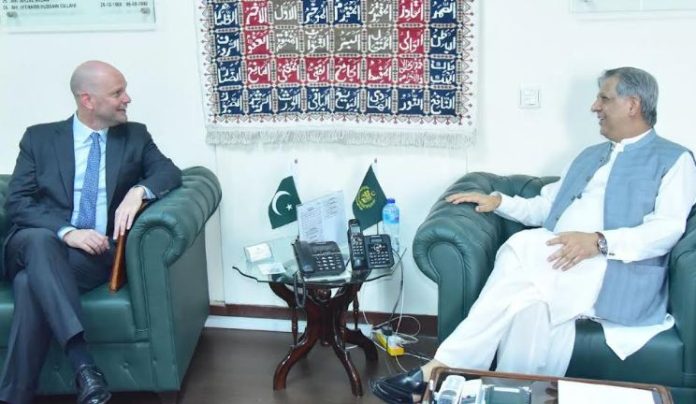
Idesbald Van der Gracht, Ambassador of the Kingdom of Belgium to Pakistan, met with Senator Azam Nazeer Tarar, Federal Minister for Law & Justice and Human Rights

Mahnoor Ansar   

ISLAMABAD, JUN 20: Idesbald Van der Gracht, Ambassador of the Kingdom of Belgium to Pakistan, met with Senator Azam Nazeer Tarar, Federal Minister for Law & Justice and Human Rights, to reaffirm the strong and friendly ties between Belgium and Pakistan.

The meeting reflected the mutual desire to strengthen cooperation in the fields of law, human rights, and governance.

During the meeting, both sides reviewed recent developments in Pakistan’s human rights landscape.

The Minister shared that the overall situation has shown marked improvement, with a visible decline in rights-related violations and increased institutional responsiveness.

The Ministry of Human Rights, in coordination with relevant departments and stakeholders, is actively engaged in strengthening legal protections and enhancing mechanisms for redress and accountability.

The Minister highlighted recent legislative reforms, including over 110 amendments to the Criminal Procedure Code (CrPC), aimed at improving access to justice for ordinary citizens. These reforms reflect the government’s strong commitment to legal modernization and inclusive governance.

The Minister also informed the Ambassador about the recently enacted Islamabad Capital Territory Child Marriage Restraint Act, 2025, which sets the minimum age of marriage at 18 for both boys and girls. This legislation represents a significant step toward aligning Pakistan’s legal framework with international child rights standards, and efforts are underway to encourage similar reforms across all provinces.

The Minister also addressed the findings of the Global Gender Gap Report 2025, expressing concern that the data presented does not fully or accurately reflect the realities on the ground, owing to methodological limitations and gaps in data collection. To address this, the Ministry is actively engaging in consultations with relevant stakeholders, research institutions, and development partners to identify and correct disparities in national data. This collaborative approach aims to ensure that future reporting is based on comprehensive and verified indicators, aligned with the progress being made across sectors.

The Minister further shared that discussions are ongoing in Parliament regarding a potential policy shift on the death penalty, including consideration of a bill proposing life imprisonment in place of capital punishment for select offences. This reflects the government’s openness to aligning national laws with evolving global human rights principles.

Ambassador Van der Gracht appreciated Pakistan’s positive reform trajectory and welcomed the recent enactment of the National Commission for Minority Rights Act, 2025, which establishes a statutory body to safeguard the rights of religious minorities.

He expressed Belgium’s continued support for Pakistan’s efforts to strengthen democratic institutions, protect vulnerable communities, and advance social justice.

Both sides agreed to continue close collaboration in areas of mutual interest, particularly in promoting human rights, legal development, and inclusive policy reform.

Israel Controls America: Ted Cruz’s Revealing Confession

Qamar Bashir

By Qamar Bashir

In a political interview that will be studied for years, Senator Ted Cruz—a close confidant of President Donald J. Trump and one of the most prominent Republican voices in Congress—sat down with Tucker Carlson and offered a candid window into the uncomfortable reality of U.S.-Israel relations. His words, wrapped in rationalizations and ideological talking points, confirmed what critics have long warned: the United States is no longer a sovereign actor in the Middle East, but a subordinate executing the will of Israel through lobbying networks like American Israel Pbulic Affair Committee (AIPAC) covert intelligence alignments, and religious manipulation.

Carlson’s questions were pointed. His tone was incredulous. “Do they [Israel] spy domestically in the United States?” he asked. Ted Cruz replied, without hesitation, “Oh, they probably do—and we do as well… Friends and allies spy on each other.” Rather than condemning the breach of national sovereignty, Ted leaned on ideological dogma: “One of the things about being a conservative is you’re not naive… Every one of our friends spies on us.”

But this was no ordinary espionage. Carlson pressed harder: “Including on the President?” Ted did not flinch. “They’re going to anyway,” he said. “I’m not mad at them.” This was not a defense—it was a surrender.

This tacit approval of foreign surveillance on American soil, targeting even the Commander-in-Chief, is a staggering admission. It confirms the deep entrenchment of Mossad within American political and security institutions. From the 1980s Jonathan Pollard case—where a U.S. Navy analyst passed classified secrets to Israel—to the discovery of Israeli surveillance devices near the White House in 2019, the pattern is clear. Israel not only spies on the United States—it does so with impunity, and American lawmakers, far from resisting, justify it.

In Ted’s worldview, this espionage is outweighed by the benefits of the alliance. “It is in America’s interest to be closely allied with Israel,” he claimed, “because we get huge benefits from it.” But that rationale dissolves under scrutiny.

The “benefits” come at a staggering cost. According to the Congressional Research Service, Israel has received more than $150 billion in U.S. aid since its founding, with $3.8 billion annually locked in under a 10-year Memorandum of Understanding signed by the Obama administration. These are taxpayer dollars—used to fund Israeli military expansion, missile defense systems like Iron Dome, and intelligence capabilities that now turn inward on America itself.

The results have been catastrophic. Israel championed the Iraq, Lybia, Syria, Lebanon and Afghanistan Wars. These wars resulted in deaths of over 4,500 American soldiers and over $2 trillion in U.S. spending. Israel paid nothing, sent no troops, and bore no consequences—yet emerged strategically stronger with a fractured Iraq off the map.

This cost does not include billions more in indirect subsidies: loan guarantees, joint weapons research, tax-exempt contributions to Israeli causes, and cooperative agreements that flow predominantly one way. Meanwhile, American citizens shoulder the financial burden of wars launched in Israel’s interest and fought under the American flag.

Ted’s framing of Israel and the United States as having “overlapping interests” reveals a dangerous doctrine: that America’s enemies are whoever Israel designates. Under this logic, countries like Iran, Syria, Lebanon, and even critics within Europe are reflexively treated as adversaries—not based on threat assessments, but on Israeli strategic paranoia.

Carlson laid bare the contradiction: U.S. intelligence says Iran is years away from weaponization, yet the Israeli-driven narrative claims it’s only “days.” When Carlson asked  if he would oppose Israeli spying or military manipulation, the senator replied flatly: “They’re going to do it anyway.” It was a stunning concession of powerlessness.

Driving this surrender is AIPAC—the American Israel Public Affairs Committee—a lobbying juggernaut that acts less like an interest group and more like a shadow foreign ministry. Ted admitted that AIPAC “raised a lot of money” for him, though he insisted it came from “individuals” not the organization itself—an evasion that fails to obscure the reality. AIPAC cannot legally donate directly, but its donor network ensures that candidates who tow the Israeli line are richly rewarded by ploying back USA aid, while dissenters are crushed.

In 2022 alone, pro-Israel PACs and donors spent over $100 million in U.S. elections. The result is bipartisan paralysis—where Republicans and Democrats alike refuse to criticize Israel, even as it bombs civilian hospitals, targets nuclear scientists, or spies on the U.S. government.

Layered over this political machinery is a spiritual manipulation that binds millions of American Christians to Israel through theological fantasy. According to this belief—promoted by televangelists, Zionist pastors, and AIPAC-sponsored pilgrimages—supporting Israel is a divine mandate, essential for the return of Christ and personal salvation. Ted embraced this religious overlap as a political asset, noting that American Christians see support for Israel not as a geopolitical choice, but as a spiritual obligation.

Carlson, himself a conservative Christian, rebuked this manipulation. “Is it the job of a U.S. senator to represent the interests of a foreign country?” he asked. The silence in response was louder than any denial.

This alliance is not without consequence. The wars waged at Israel’s behest have produced millions of refugees, destabilized entire regions, and eroded U.S. credibility around the world. From Yemen to Afghanistan, the perception is no longer of America as a peace-broker, but as a military enforcer of Israeli policy.

At the United Nations, the United States routinely vetoes resolutions condemning Israel—even when global consensus is near-unanimous. This has alienated allies in Europe, Africa, and Asia. Meanwhile, countries like China, Russia, Turkey, and Brazil step into the diplomatic vacuum, offering an alternative order free from Israeli hegemony.

The most tragic irony is that the costs—financial, moral, and reputational—are borne by the United States. Israel walks away stronger, more emboldened, and free of accountability. It receives billions in aid, shields itself behind American vetoes, and sends lobbyists to Washington to extract more. Meanwhile, American cities crumble, veterans are left homeless, and the middle class bears the tax burden of imperial overreach.

The Iran conflict marks a tipping point. The world watches as the U.S. prepares to bleed again—militarily, diplomatically, and economically—for a war that serves no American interest. It is not just the Middle East at stake—it is the soul of American democracy.

Senator Ted’s confessions, though cloaked in conservative realism, unmask a deeper betrayal. America is not defending a friend—it is financing its manipulator. It is not acting in its interest—it is acting in fear of political reprisal. It is not leading—it is being led.

If the United States is to reclaim its sovereignty, it must reassert control over its foreign policy, disentangle itself from theological fantasies, and end the unchecked power of foreign lobbies operating on Capitol Hill. This is not antisemitism—it is patriotism. It is the duty of a republic to defend its institutions, its people, and its future from external domination—no matter how sacredly disguised.

The question now is whether America has the courage to reclaim its sovereignty, or whether it will continue to play the role of a global enforcer for a foreign master cloaked in the language of friendship.

The time has come for Americans—Democrats, Republicans, Independents—to question whether the alliance with Israel is indeed serving their interests, or whether it is merely serving the interests of a foreign state cloaked in biblical prophecy, financial influence, and political manipulation.

By Qamar Bashir

 Press Secretary to the President (Rtd)

 Former Press Minister at the Embassy of Pakistan to France

 Former MD, SRBC

 Macomb, Michigan, USA

Trump and Munir: A Strategic Embrace or a Dangerous Gamble?

Qamar Bashir

By Qamar Bashir

In a move as unprecedented as it is consequential, U.S. President Donald Trump hosted Pakistan’s Army Chief, Field Marshal Asim Munir, at the White House on June 18, 2025. The meeting—free of any accompanying Pakistani civilian officials—signals a radical shift in Washington’s diplomatic conduct and casts a long shadow over the fragile equilibrium in South and West Asia.

On the surface, the visit was framed as a gesture of appreciation. Trump lauded Munir for his role in halting the brief but dangerous May standoff between Pakistan and India. He even credited both Munir and Indian Prime Minister Narendra Modi for “preventing a nuclear war.” But beneath the diplomatic pleasantries lies a web of geopolitical maneuvering that could thrust Pakistan into the heart of another foreign war—this time, one against Iran.

Never before has a sitting U.S. President hosted Pakistan’s military chief as a sole representative of the country. In diplomatic protocols, heads of state meet heads of state—not generals. Yet Trump not only met Munir but accorded him a presidential reception and hosted him for a formal feast, elevating the meeting beyond ceremonial. Munir’s image and the Pakistani flag displayed in Times Square during the U.S. Armed Forces National Day celebration in New York further emphasized the significance Washington has placed on this interaction.

This raises serious questions: Why now? Why the Army Chief? And why with such unprecedented fanfare? While the official narrative highlights Munir’s role in halting the May 7–10 India-Pakistan conflict—which began with India’s bombing of alleged “terrorist infrastructure” and ended in mutual missile and drone strikes—the timing of this meeting suggests that Iran, not India, was the primary focus.

The recent escalation between Israel and Iran, where Tehran retaliated forcefully against Israeli airstrikes, has pushed the region to the brink of wider war. The United States, while maintaining an ambiguous stance publicly, is deeply entangled behind the scenes. Should it decide to intervene militarily against Iran, it will require strategic logistics—and here, Pakistan becomes indispensable.

The U.S. is likely to ask Pakistan to replicate its past cooperation during the Cold War and the post-9/11 War on Terror. That could include: Providing air corridors and airbases for U.S. and Israeli aircraft operating near or within Iranian territory. Hosting drone operations, much like the Shamsi airbase was used for targeting inside Pakistan and Afghanistan. Permitting the storage of military hardware—tanks, helicopters, ammunition—on Pakistani soil for logistical support. Enabling overland and aerial supply routes for equipment from the U.S. and NATO to operational theaters near Iran. Offering intelligence and surveillance infrastructure, including satellite uplinks and cyber espionage platforms. Preventing any strategic assistance to Iran, including refusal of refuge, military goods, or moral support.

Such demands, while plausible in Washington’s strategic playbook, would come at an exorbitant cost for Pakistan—economically, politically, and militarily. Internally, such alignment would unleash chaos. Pakistan has a large and politically active Shia population, deeply connected with Iran’s religious leadership. Any military action against Iran involving Pakistan—directly or indirectly—could provoke widespread sectarian unrest, leading to mass protests, civil disobedience, and potentially insurgency-like resistance in major cities.

The political ramifications would be no less severe. Religious and ideological parties such as Jamaat-e-Islami, which vocally support oppressed Muslim populations, especially in Palestine and Gaza, will view any alliance with Israel or its backers as betrayal. Iran, being the most consistent supporter of Palestinian resistance, holds immense moral weight in these circles.

Moreover, the general public sentiment across Pakistan—still bruised from past foreign entanglements—would turn sharply against both the military and the civilian government. The Army, which only recently regained national respect after effectively neutralizing Indian aggression in May, risks becoming the people’s enemy once again if it is seen as dragging Pakistan into another foreign war.

Given this explosive domestic environment, the Pakistani military might explore clandestine cooperation with Washington—using its intelligence services, particularly the ISI, to monitor Iranian activities, restrict arms flows, and deny strategic depth to Tehran without making public commitments. But even covert assistance risks exposure. Iran is not Afghanistan. Its counterintelligence and cyber capabilities are robust, and any Pakistani duplicity could result in severe retaliation.

More importantly, even hidden cooperation could further alienate Pakistan from the Muslim world. Countries that recently hailed Pakistan’s restraint and military professionalism in the India-Pakistan conflict would reconsider their support if Pakistan is seen as enabling Western attacks on a fellow Muslim nation.

The most chilling possibility arises from the nuclear dimension of the Israel-Iran conflict. Given Israel’s demonstrated policy of neutralizing perceived existential threats—be it Iraq’s Osirak reactor, Syria’s alleged nuclear facility, or Hezbollah’s arsenals—if Iranian missile attacks were to intensify and overwhelm Israeli defenses, Tel Aviv could resort to tactical or even strategic nuclear strikes to eliminate the Iranian regime once and for all.

Israel has never confirmed nor denied its nuclear arsenal, but its doctrine has always indicated readiness to escalate when cornered. In such a scenario, Iran’s annihilation becomes not a distant threat, but an immediate possibility.

A further complication arises from a widely circulated—but unverified—claim that Pakistan would consider a retaliatory nuclear response if Iran is attacked with atomic weapons. While Islamabad has not officially endorsed this position, its mere circulation has amplified Pakistan’s strategic relevance in the global discourse. It may well be one of the key reasons Trump summoned Munir. In Washington’s calculus, Munir is perceived as the only decision-maker in Pakistan capable of influencing such outcomes swiftly and decisively.

This latent threat—that a nuclear exchange could expand from a bilateral conflict to a regional catastrophe—is what places Pakistan at the most sensitive juncture in its modern history.

Pakistan finds itself on a knife’s edge. Cooperation with the United States may offer short-term gains—economic concessions, military aid, or diplomatic favor—but will cost long-term sovereignty, regional stability, and domestic cohesion. Refusing U.S. demands, on the other hand, may invite economic sanctions, international isolation, or worse—covert destabilization.

This is not the first time Pakistan has been placed in such a conundrum. During the Soviet invasion of Afghanistan, it allied with the U.S. under General Zia-ul-Haq. During the War on Terror, General Pervez Musharraf made Pakistan a frontline state. Both times, the Pakistani people paid the heaviest price, and both generals were ultimately discarded by their U.S. allies once their utility was exhausted. Now, another general stands alone at the center of foreign policy, with a weakened civilian government in tow and a volatile neighborhood in every direction.

What Pakistan can do as this critical moment  is to dole out difficult decision making to the parliament and let it churn out possible option to deal with this compelling and overwehlming qualdrum. Even if not very relevant, debates in the parliament and resolution passed by it might give some legitimacy to whatever decision is made. Pakistan must position itself as a peace-broker—not a launchpad—for war. Any support to either side must be conditional on diplomacy. The government must brief the nation on any agreements or negotiations with foreign powers. Silence will breed suspicion and unrest. Pakistan should align with like-minded countries—Turkey, Malaysia, Qatar—that are advocating for de-escalation and multilateral dialogue.

Trump’s meeting with Field Marshal Asim Munir was more than symbolic—it was strategic. But strategy without sovereignty is submission. Pakistan has the chance to avoid being pulled into another U.S.-engineered quagmire, but it must tread carefully, courageously, and conscientiously.

The stakes are not only territorial or tactical—they are existential. A single misstep could cost Pakistan its hard-won respect, its internal stability, and even its future. If history teaches us anything, it is this: when a superpower smiles too often at a weaker state, it’s never just diplomacy—it’s demand in disguise.

Let Pakistan choose wisdom over obedience, peace over provocation, and dignity over disaster.

By Qamar Bashir

Press Secretary to the President (Rtd)

Former Press Minister, Embassy of Pakistan to France

Former MD, SRBC | Macomb, Michigan, USA

President Asif Ali Zardari visits POF Wah

President Asif Ali Zardari visits POF Wah

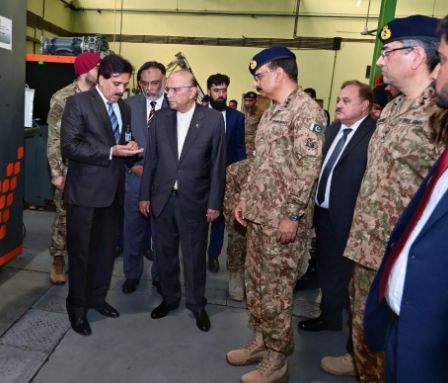
ISLAMABAD, JUN 18 /DNA/ – President Asif Ali Zardari, visited Pakistan Ordnance Factories (POF) Wah today. Upon his arrival, he was received Chairman POF Wah, Lieutenant General Syed Tahir Hameed Shah. Federal Minister for Defence Production, Mohammed Raza Hayat Harraj and Secretary Defence Ministry of Production, Lt General Muhammad Chiragh Haider (Retd) were also present during the visit.

The Chairman briefed the President on the various production units of POF and highlighted the organization’s pivotal role in fulfilling the defence requirements of the country. He also highlighted POF’s capabilities, technological advancements, and its contributions towards achieving self-reliance in defence manufacturing.

President Zardari visited various manufacturing  factories and appreciated the technical expertise, commitment, and professionalism of the workforce. He commended POF’s significant role in strengthening Pakistan’s defence production.

The President emphasized the importance of further enhancing the country’s defence capabilities in light of prevailing and future security challenges. He reiterated that strengthening national defence remains a top priority for Pakistan.

Experts call India’s water policies “Environmental Terrorism” against Pakistan

Experts call India’s water policies

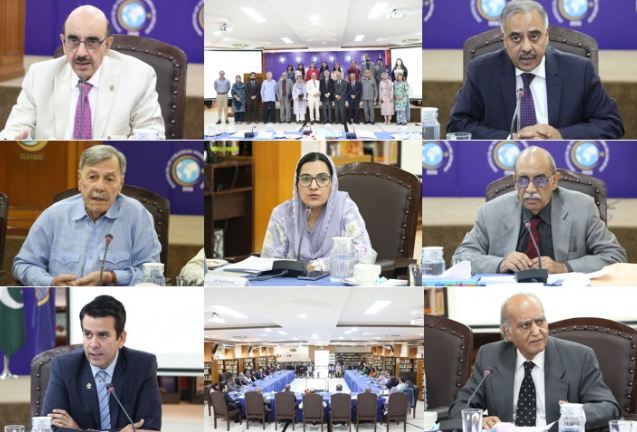
ISLAMABAD, JUN 18 /DNA/ – The Institute of Strategic Studies Islamabad (ISSI), in collaboration with the Centre for Law and Security (CLAS), hosted a joint seminar titled “Weaponizing Water: The Indus Waters Treaty and Future of Regional Stability.” The seminar brought together eminent experts, diplomats, legal scholars, and policymakers to discuss the deteriorating regional water security landscape in the aftermath of India’s unilateral and illegal holding of the Indus Waters Treaty (IWT) ‘in abeyance.’ Ambassador Sohail Mahmood, Director General, ISSI delivered welcome remarks. Others speakers included: Ambassador Sardar Masood Khan, President, TMUC, MiTE & Centre for Law and Security (CLAS); Ambassador Shafqat Kakakhel, Member Board of Governors, SDPI; Mr Ashfaq Mahmood, Former Federal Secretary, Ministry of Water and Power; Mr Rehman Azhar, Executive Director, Centre for Law and Security (CLAS); and Dr. Bushra Bibi, Head of Department, Bahria Law School, Bahria University, Islamabad.

Ambassador Sohail Mahmood stated that the weaponization of water is a grave regional threat, particularly following India’s unilateral and illegal step to hold the Indus Waters Treaty (IWT) ‘in abeyance.’ He linked India’s actions to the ideological underpinnings of the BJP-RSS, manifest in the notions of Hindu Rashtra and Akhand Bharat. He described this as part of New Delhi’s so-called ‘muscular’ approach and pan-securitization of the India-Pakistan relationship. He highlighted that India’s blockage of water and construction of several dams in the past years had not only violated the Treaty terms but also affected ecosystems and endangered the lives of millions. His key recommendation was for Pakistan to anchor its response in international law and diplomacy. He urged the government to engage all relevant multilateral forums, mobilize water-stressed nations, and work closely with other regional stakeholders like China and South Asian states having trans-boundary rivers with India. He called for strengthened water governance internally and greater focus on the National Water Policy 2018 for enhanced water security.

Ambassador Masood Khan underlined that India has carefully timed its actions, building a cascade of dams that give it strategic advantage. He warned that Pakistan’s legal position needs to be firmly grounded in international principles. He pointed out potential obstacles in bringing India to arbitration, including provisions in the Vienna Convention and India’s ability to avoid ICJ jurisdiction on issues related to Commonwealth nations. Ambassador Masood recommended Pakistan to apply pressure through the World Bank, the UN Security Council, and key powers like the P5. He called for an assertive international campaign, while also urging Pakistan to maximize domestic water efficiency. Ultimately, Pakistan must choose between maintaining the status quo or pursuing a high-risk, proactive approach to safeguard its water future.

Ambassador Shafqat Kakakhel highlighted the crucial link between Kashmir and water, emphasising that Pakistan’s rivers flow through the disputed region. He reminded that the IWT was not a water-sharing agreement but a river division arrangement heavily influenced by Indian demands. India, he claimed, enjoys uncontested control over the eastern rivers, while seeking to maximize its use of the western ones while ignoring Treaty constraints. Ambassador Kakakhel dismissed the claim that Pakistan opposes all Indian projects and pointed to India’s non-compliance with the Court of Arbitration’s decisions. He recommended activating Article IX of the Treaty to initiate formal dispute resolution and appropriately raising the issue in the UN Security Council. He emphasized preserving the IWT as a legal shield for Pakistan’s water security and promoting sustained international diplomacy.

Mr. Ashfaq Mahmood focused on the strategic objectives behind India’s moves, arguing that India seeks to both hegemonize water and prevent third-party involvement by insisting on bilateralism. He underscored the dangerous narrative linking terrorism with water rights. Mr Ashfaq recommended a stronger legal posture from Pakistan, including strict enforcement of the IWT and referral to the Court of Arbitration. He called for improved water data collection, climate-related research, and internal technical preparedness. Most importantly, he urged Pakistan to compel India to be transparent about the demographic and climate factors it cites and to push for structured dialogue.

Mr Rehman Azhar viewed India’s actions as part of a broader domestic political strategy, likening the suspension of the IWT to the revocation of Articles 370 and 35A. He argued that water-related rhetoric and actions of the BJP serve its domestic electoral purposes. He noted that legal and military options are limited, and called for a robust media and diplomatic campaign to expose India’s unilateralism. Mr Rehman recommended framing India’s actions as violations of international norms, linking the issue to environmental and nuclear risks, and involving global actors like China and the U.S. He emphasized the need for an immediate and louder response to raise global awareness and pressure.

Dr. Bushra Bibi warned that future wars will likely be fought over water, as only 0.3% of the world’s surface water is usable. She characterized India’s suspension of the IWT as a form of “environmental terrorism” and highlighted the growing risks of drought and floods in Pakistan. She recommended fighting Pakistan’s case internationally by engaging global water and environmental organizations, building collaboration with China and Afghanistan, and exploring the legal recognition of rivers as ‘persons’—a concept that would offer enhanced environmental protection and global attention to the issue.

The panellists’ presentations were followed by a wide-ranging question-and-comments session.

In his closing remarks, Ambassador Khalid Mahmood recalled the World Bank’s recent stance that the Treaty is not subject to alteration unilaterally. He also highlighted the growing challenges posed by climate change and increasing pressure on water resources. He emphasized that the emerging issues cannot be overlooked—and the central challenge now is finding effective ways to address them within the existing framework.

Pakistan Navy evacuates injured Indian sailor from distressed tanker

Pakistan Navy evacuates injured Indian sailor from distressed tanker

ISLAMABAD, JUN 18 /DNA/ – The Joint Maritime Information and Coordination Centre (JMICC) of Pakistan Navy received a distress call from the Liberian-flagged oil/chemical tanker, MT HIGH LEADER, with all Indian crew onboard, requesting medical evacuation for one of its injured crew members.

JMICC immediately activated its established maritime coordination protocols to ensure a rapid and effective response. Consequently, Pakistan Maritime Security Agency (PMSA) promptly evacuated the injured seafarer from MT HIGH LEADER and transferred him to a local hospital in Karachi for emergency medical care.

The successful medical evacuation is yet another testament to the operational readiness and responsiveness of Pakistan’s maritime safety apparatus. The coordination and swift execution reflect Pakistan Navy’s resolve to fulfill its international obligations for the safety of life at sea, irrespective of the nationality of the seafarers involved.

PN JMICC is the principal node for generating a coordinated response to any maritime incident by involving a wide range of stakeholders.

Chairman Senate lauds HEC’s National Outreach Programme for Universities Faculty, Staff

Chairman Senate lauds HEC’s National Outreach Programme

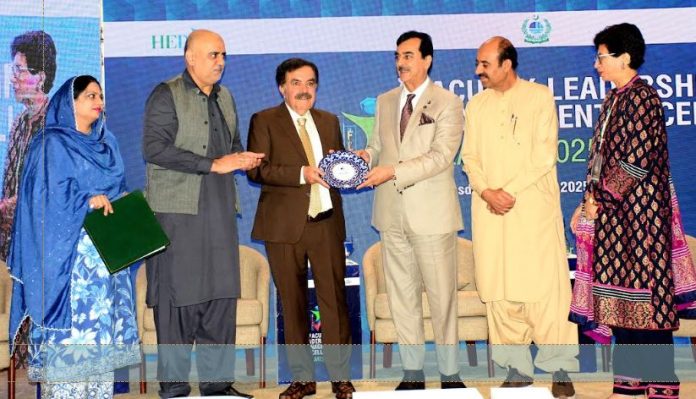
ISLAMABAD, JUN 18 /DNA/ – Higher Education Commission (HEC), Pakistan organised on Wednesday a flagship conference entitled Faculty Leadership & Management Excellence (FLAME) 2025 to showcase the success of National Outreach Program, a capacity building initiative executed by National Academy of Higher Education (NAHE) in 85 public sector universities. Over 4,000 faculty and management staff members have benefited from the program.  

Chairman Senate Syed Yusuf Raza Gilani graced the closing ceremony of the conference as chief guest, whereas Federal Minister for Federal Education and Professional Training Mr. Khalid Maqbool Siddiqui honored the opening of the event. Governor Balochistan Sheikh Jaffar Khan Mandokhail also attended the conference alongside a big assembly of Vice Chancellors from across Pakistan.

It is pertinent to mention here that NAHE designed the flagship initiative of National Outreach Program under Higher Education Development in Pakistan (HEDP). The program aimed at bringing high quality professional development directly to university campuses across Pakistan, ensuring accessibility and impact.

Under two sub-components of the program, viz. National Outreach Program for Faculty and Capacity Building of University Management, NAHE conducted overall 66 faculty training program and 45 management training programme, in addition to holding three-month pilot mentorship program in 18 women universities under Women Empowerment and Mentorship Program (WEMP). As many as 71 public sector universities hosted four-week Tier-I faculty training program for Lecturers and Assistant Professors, while 50 universities conducted five-day management training program for early career officers including Assistant Registrars, Controllers, and Treasurers.      

Addressing the conference, the Chairman Senate appreciated HEC, NAHE and HEDP for creating and strengthening the culture of capacity building of higher education institutions. He highlighted the role of academia in nation building, saying that the faculty members are the architects of future, while the university representatives carry forward the vision and pursuit of progress. 

He emphasized the role of education in development of nation, stating that education is the foundation upon which nations are built. He underlined that the nation must proceed with unity of purpose, courage in leadership, and faith in the transformative power of education. He also lauded NAHE’s Women Empowerment and Mentorship Programme (WEMP), stating that Pakistan cannot reach its full potential until all the women have access to playing their part in the country’s socio-economic development. “Women Empowerment and Mentorship Programme is very close to my heart,” he added.

Federal Minister Mr. Khalid Maqbool Siddiqui expressed his pleasure for being part of FLAME-2025. He underlined that an education system aligned with the prevailing and future needs of the nation is a need of the hour. He also highlighted the importance of skill-based education in the socio-economic development of the country. He maintained that having a firm will is the key measure to set the direction and drive progress.

In his address, Governor Balochistan Mr. Mandokhail said that the university leadership and faculty are the torch-bearers of excellence, adding that initiatives like FLAME-2025 are pivotal to achieve teaching excellence and administrative effectiveness. He emphasized the role of academic leadership in transforming the higher education landscape. He stressed the need for strenuous efforts to effectively utilize the potential and capabilities of Pakistani PhDs. Solid steps are required to lead universities to excellence, he underlined. He asserted that collaboration among universities will strengthen national solidarity and sovereignty. He affirmed that by harnessing our strengths, we can ensure a safe future for our coming generations.

Chairman HEC Dr. Mukhtar Ahmed emphasized that the survival of Pakistan lies in reaching excellence in education, research, and innovation. He stressed the need for making significant investment in higher education to enable the educational institutions to play a more effective role in the development of Pakistan. He stated that the youth of Pakistan have a great potential that needs to be tapped. He underlined that the Pakistani youth graduated from the local universities are playing a pivotal role in the development of this country. He noted that there is a sheer need for qualified faculty around the world.

Project Coordinator HEDP Mr. Awais Ahmad said that National Outreach Programme is a critical component of the HEDP, as it focuses strengthening of faculty expertise and effective academic management and directly supports national goals of innovation, quality, and competitiveness. He also shed light on the objectives of HEDP to enhance the quality and capacity of Pakistan’s higher education sector. 

The conference paid tribute to the module developers, trainers and mentors, and the universities for their contributions to make National Outreach Programme a success while congratulating the programme beneficiaries.

During the conference, detailed plenaries were held on ‘Empowering Faculty and Management Leadership through Professional Development’ and ‘Women’s Empowerment in Higher Education’. Renowned academic leaders and academicians shared their thoughtful insights. The panelists of first plenary appreciated the outcomes achieved under National Outreach Programme and stressed the need for continuity of capacity building initiatives for sustainable outcomes. They admired NAHE for developing well-structured modules and effectively executing them across the universities. They were of the view that the growth of faculty and staff through such trainings will strengthen the universities and will lead towards having quality graduates. The panelists of the second plenary shared experiences of their respective universities with regard to the execution of WEMP. They expressed their views in support of the NAHE programme WEMP, highlighting that the programme has brought about a huge change, built up confidence of faculty, and nurtured mutual understanding among the faculty members from around the universities countrywide. They emphasized the need for sustainability of this programme at both the HEC and university levels. The panelists of the two plenaries also drafted and presented their recommendations in view of the experience and outcomes of the NAHE programme.

Managing Director NAHE Dr. Noor Amna Malik concluded the conference with a vote of thanks to the participants while acknowledging the contribution of NAHE team, module developers, and universities in the success of National Outreach Programme. She stated that National Outreach Programme brought a remarkable change in the ecosystem.

Israel’s offensive aims to undermine Iran’s potential and overshadow Gaza

Israel’s offensive aims to undermine Iran's potential and overshadow Gaza

ISLAMABAD, JUN 18 /DNA/ – The recent Israeli unprovoked offensive on Iran is not an isolated event but a reflection of deeper, long-standing strategic fault lines and geopolitical dynamics. While Israel, backed by the US, seeks to neutralize Iran’s potential and regional relevance, Iran is asserting its strategic autonomy and ideological stance.

This unfolding escalation not only risks further destabilizing the region but also strategically diverts international focus from the ongoing humanitarian crisis in Gaza. Amidst these tensions, Pakistan must maintain its tactful and diplomatically prudent approach, given its historical ties with Iran and evolving regional alignments.

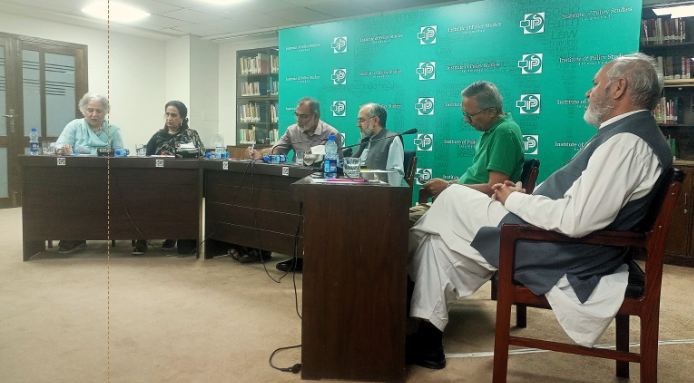
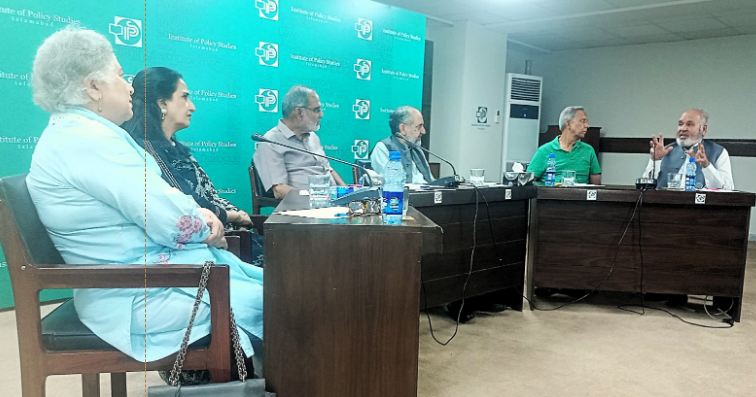
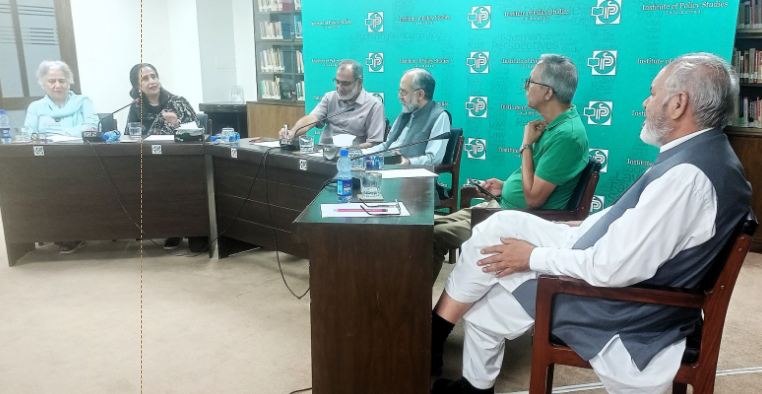
This was discussed during a session on “Israeli Aggression on Iran and the Dynamics of the Middle East,” held at the Institute of Policy Studies (IPS), Islamabad. The session featured insights by Khalid Rahman, chairman, IPS, Ambassador (r) Syed Abrar Hussain, vice chairman, IPS, Ambassador (r) Nasrullah Khan, Ambassador (r) Riffat Masood, Ambassador (r) Naila Chohan, and Brig (r) Tughral Yamin.

The discussion shed light on the historical evolution of Iran-Israel relations. Both countries were notably cooperative during the Shah’s regime when Iran’s nuclear program was initially established under US support, said Ambassador (r) Naila Chohan.

However, following the 1979 revolution and Iran’s ideological shift, Tehran’s opposition to the two-state solution to the Palestinian question and its firm stance against Israel’s expansionist agenda have since positioned it as a key adversary in Israel’s strategic calculus.

The speakers noted that, as exemplified by the Abraham Accords, Israel aims to gain favor with all Middle Eastern states and exert regional influence. Iran stands as a major obstacle to this agenda. Moreover, with its high literacy rate, advancing scientific capacity, and abundant natural resources, Iran holds the potential to emerge as a regional power base.

Ambassador (r) Riffat Masood observed that Israel’s primary objective is to undermine this potential by seeking regime change and obstructing Iran’s nuclear development. This, she noted, persists despite Iran being a signatory to the Nuclear Non-Proliferation Treaty (NPT) and not actively pursuing a weapons-grade nuclear program.

Ambassador (r) Nasrullah noted that Iran faces discrimination in the NPT, suggesting a deep mistrust from the West. He noted that Israeli objectives align with those of the US in the region, although the two countries employ different strategies. Despite this alignment, the US appears increasingly uncertain in its Middle East approach, while Israel continues to face resistance and strategic setbacks, as both miscalculated the scale of Iran’s response.

It is noteworthy that the attack on Iran and subsequent escalation are not merely a regional flashpoint but also serve as a deliberate distraction from the ongoing humanitarian crisis in Gaza, said Khalid Rahman. By dominating global headlines, it risks sidelining the global media coverage of the Israeli aggression on Gaza and the plight of Palestinians.

The speakers noted that this war between Iran and Israel is likely not to continue as Israel has faced an unprecedented setback. Moreover, while Israel is driven by Zionist ambitions such as the “Greater Israel” project, Iran has its strength in its enduring identity, unity in the face of heavy odds, and regional relevance. Unlike Israel, which lacks civilizational depth, Iran has both the will and the means to endure pressure, speakers noted.

In terms of Pakistan’s response, the leadership has adopted a prudent stance, said Brig (r) Tughral Yamin. Given Pakistan’s historical ties with Iran, including Tehran’s support during the 1965 war and India’s growing alignment with Israel, any regional escalation would require Islamabad to act with heightened diplomatic sensitivity.

Ambassador (r) Abrar Hussain reinforced this sentiment, noting that Pakistan is clear in its stance of supporting Iran against Israel, as it is also a matter of strategic necessity. He urged a posture of ‘tactful handling,’ with strategic foresight to safeguard national interests.

Field Marshal Asim Munir to meet President Trump today

Field Marshal Asim Munir to meet President Trump today

WASHINGTON, JUN 18: Field Marshal Asim Munir will meet President Donald Trump on Wednesday during his official visit to the United States, according to security sources.

The lunch meeting between Trump and Chief of Army Staff (COAS) Asim Munir is scheduled to take place at 10pm Pakistan Standard Time (PST) later today in the White House Cabinet Room, according to the president’s daily public schedule.

The development came during the army chief’s US visit wherein he met overseas Pakistanis in Washington DC a day earlier.

The army chief lauded the diaspora contributions to the country’s economy, and global reputation by contributing actively through remittances, investments and higher achievements in other domains, as per the ISPR.

Field Marshal Munir’s visit holds significance in the context of Trump administration’s role in brokering ceasefire between Islamabad and New Delhi following the last month’s armed clashes that broke out following the Pahalgam attack in Indian Illegally Occupied Jammu and Kashmir — which the New Delhi blamed on Islamabad without offering any evidence.

The 87-hour-long conflict between the two nuclear-armed neighbours — which included cross-border strikes by both countries — left 40 civilians and 13 armed forces personnel martyred in Pakistan

Pakistan had launched Operation Bunyan-um-Marsoos after downing six Indian Air Force jets, including three Rafales in response to Indian aggression.

After days of cross-border strikes, the war between the two nuclear-armed nations ended on May 10 with a ceasefire agreement brokered by the US.

Besides brokering ceasefire, Trump has also offered to mediate longstanding Kashmir dispute Pakistan and India.

Since the US-brokered ceasefire — where President Trump played a key role, both Islamabad and New Delhi have undertaken a diplomatic outreach initiative globally to present their respective stance on the recent clashes between the arch-rivals.

For Pakistan, former foreign minister and Pakistan Peoples Party (PPP) Chairman Bilawal Bhutto-Zardar is leading a nine-member high-level parliamentary delegation across several countries to present to the world Pakistan’s stance on the recent military confrontation with India and to challenge New Delhi’s narrative at the international level.

The visit also came in the backdrop of heightened tension in the Middle East involving an ongoing war between Israel and Iran triggered by the former’s attack on Tehran and followed by the latter’s retaliation.

Apart from the Kashmir issue, terrorism is also a key domain of cooperation between Pakistan and the US.

Recently, Central Command (Centcom) Chief General Michael Kurilla fact lauded Pakistan as a “phenomenal partner” in global counter-terrorism efforts, highlighting its successful operations against Daesh-Khorasan and the ongoing fight against terrorism.

General Kurilla’s remarks, which came during a congressional hearing, echoed President Trump’s commendation for Pakistan for apprehending and handing over a Daesh terrorist responsible for the deadly Abbey Gate bombing which resulted in the deaths of 13 American service members and around 170 Afghans who were desperately trying to escape Kabul after the Taliban takeover in 2021.

Stay Connected

64FansLike
60FollowersFollow

Latest Reviews

Exchange Rates

USD - United States Dollar
EUR
1.17
GBP
1.34
AUD
0.67
CAD
0.73