Home Blog Page 306

Clean water – A necessity for healthy life

Clean water

By Fakhar-e-Alam

PESHAWAR, JUN 22 (APP/DNA): As the early morning sun casts a golden hue over Peshawar’s dusty roads, the 40-year-old rickshaw driver from Lala Kala village loads six large tanks of clean drinking water from Chamkani, hauling them back home for his extended family of 15.

For many might be taking it as a burden, but Abdul Waheed had been beginning his day with this practice for the past three years, to provide clean drinking water for his family as a necessity of life.

“My brother died of cardiac arrest in 2022, and I took it upon myself to provide clean water for both of our families,” Waheed shared, wiping beads of sweat trailing down his face. “Our local water has turned toxic. And it is not just about thirst anymore but about our survival.”

Waheed is not alone in this struggle. Thousands of residents from Peshawar’s peripheral villages including Tarnab, Akbarpura, Taru, Amankot, Khuderzai, Babay Jadeed, Tarkha, Korvi and Khushmaqam face similar struggles daily in sizzling heat.

Contaminated water is resulting in diseases like cholera, hepatitis A and diarrhea in areas where untreated human and industrial waste and agricultural runoff seep into groundwater supplies and water courses.

The 2022 floods dealt a lasting blow to Khyber Pakhtunkhwa’s water systems, altering water tables and contaminating wells. Today, nearly 90% of Peshawar’s population reportedly relies on unfiltered water, exposing them to a range of serious health risks.

Even in affluent urban areas like Hayatabad and University Town, clean water is hard to come by. Despite paying municipal taxes, many residents resort to purchasing water from private tankers due to outdated infrastructure and rusted pipelines—some of which haven’t been replaced in decades.

In 2020, KP passed the Water Act to regulate water management and resource allocation. But according to experts, the lack of an operational Water Resources Regulatory Authority and red tapism have hindered its enforcement.

“Clean drinking water has emerged as a major crisis in Peshawar these days,” said Dr. Naeemur Rehman Khattak, former Chairman Economics Department at University of Peshawar. “Despite legislation, poor implementation and weak institutional capacity in KP have turned availability of clean water a daily life challenge.”

Citing declining rainfall, over-extraction by car wash centers, and poor planning as compounding factors, he said, “we’ve seen Pakistan’s per capita water availability falling from 5,260 cubic meters in 1951 to barely 1,000 today. This is water scarcity, plain and simple.”

Amidst this grim scenario where clean drinking water and overall per capita water availability continues to be a challenge, he said new water storage and energy projects are now offering a glimmer of hope for people.

Construction on the Mohmand Dam, one of the largest hydropower projects in Pakistan, is well underway. This 213 meters high dam to be completed by 2027-28 is poised to store 1.29 million acre-feet water, irrigate 18,233 acres of new land and support 160,000 acres of existing farmland. Critically, it will provide 300 million gallons of clean drinking water per day to Peshawar, a game-changer for the city’s residents.

“This dam would not just provide water and power—it will protect districts like Charsadda and Nowshera from floods. It is a lifeline,” said Engr Zahoor, Director at WAPDA.

In tandem with Mohmand Dam, the provincial government is pushing forward with multiple small and medium-sized dam projects to address water and energy woes of the people.

According to Engr Tariq Sadozai, Special Assistant to the Chief Minister on Energy, 56 small dams have already been completed in KP with a total storage capacity of 281,410 acre-feet, irrigating over 300,000 acres of land.

“Unlike mega dams, small dams can be constructed within two to three years and are ideal for the topography of KP,” Sadozai explained. “We are targeting areas like Kohat, Karak, Lakki Marwat, Swabi and Nowshera with 30 more small dams projects, many in the final stages.”

The push for renewable energy is also gaining ground. Eight hydroelectric projects have been completed, generating 172 MW of power and earning the province over Rs five billion annually.

Projects like 84 MW Gorkin Matiltan in Swat and 40.8 MW Koto HPP in Dir are expected to come online this year, contributing to KP’s clean energy goals and providing revenue to fund further water infrastructure.

Despite this progress on the water and energy front, experts caution against viewing dams as a silver bullet. “New storage projects must be environmentally sustainable,” warned Dr. Naeem. “Sedimentation, displacement of communities, and water rights must be addressed carefully.”

Others highlight the need for regulatory enforcement and public education on water conservation. “If unchecked car wash centers and illegal groundwater extraction continue, even our best infrastructure efforts may fall short,” said Dr Nafees Ahmad, Chairman Environmental Sciences Department, Peshawar University.

For now, he hoped that a blend of large-scale infrastructure, community-level interventions, and better governance will steer KP out of its water crisis.

But for people like Abdul Waheed, every rickshaw ride is a reminder of continued struggles that underpin Pakistan’s looming water emergency.

“We need clean water like we need clean air,” Waheed said. “It is not a luxury but a necessity for healthy life.”
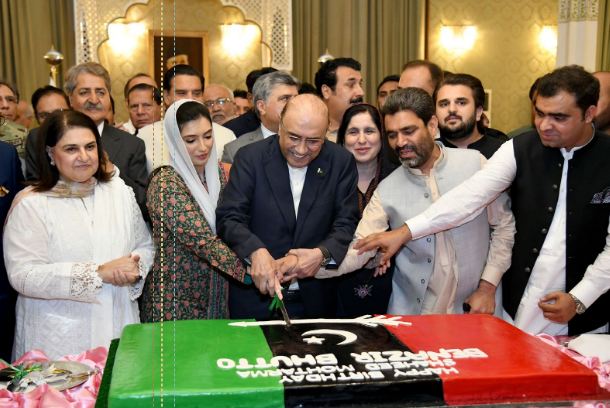

President Zardari launches ‘Benazir Hunarmand Programme’ to empower skilled workforce

President Zardari
ISLAMABAD, Jun 21 (APP/DNA):President Asif Ali Zardari formally launched the Benazir Hunarmand Programme at a ceremony held at Aiwan-e-Sadr on Saturday.

Speaking on the occasion, the President underscored the importance of education and skill development, stating that every household should be equipped with the tools of learning and education.

He said that BISP was based on the philosophy of Zulfikar Bhutto Shaheed whose legacy was carried forward by Shaheed Mohtarma Benazir Bhutto, who believed in inclusive prosperity and education for all. “We are determined to realize her vision for the uplift of marginalized segments of society,” the President said. First Lady Aseefa Bhutto Zardari was also present at the launch of the programme.

Highlighting the importance of the Benazir Hunarmand Programme, President Zardari noted that skills development was crucial not only for national progress but also for preparing a skilled workforce to meet the growing demand in international markets. “We should equip our youth with modern technical skills needed globally,” he remarked.

He particularly stressed the significance of the nursing profession, calling it one of the most sought-after fields internationally, and urged that special priority should be given to training in this area.

President Zardari also underlined the importance of learning foreign languages alongside modern skills to enable our youth to get jobs in foreign markets.

Referring to his previous tenure, the President recalled that he had launched the Benazir Income Support Programme (BISP), which became a cornerstone of social protection in Pakistan.
He expressed gratitude to former Finance Minister Naveed Qamar, acknowledging his valuable role in the launch and implementation of BISP. He said, “Benazir Income Support Programme (BISP) will be improved further and more programmes will be added.”

The President said that the Benazir Hunarmand Programme is a continuation of that legacy, aimed at uplifting communities through empowerment and opportunity. He reiterated his resolve to ensure that the youth of Pakistan are provided with the skills, education, and opportunities necessary to build a prosperous country. The President said June 21 was an important day for Pakistan People’s Party as it was the birthday of Benazir Bhutto Shaheed.“It is also a day of sorrow as we lost Mohtarma Benazir Bhutto who guided us with her wisdom and farsightedness,” he added.

Chairperson Benazir Income Support Programme Senator Rubina Khalid said Benazir Income Support (BISP), since its inception 17 years ago, had become the largest social protection programme. Under the programme, women were declared head of the household and received financial help for their 10 million families, she added.

BISP was also in the forefront to disburse timely financial assistance to flood affectees in 2022 and during the COVID pandemic, she noted.

She said BISP had always been more than a safety net, it was a commitment to inclusion, dignity and transformation of people especially women. Benazir Hunarmand Programme, while using the database of BISP will create an empowered and self-reliant citizenry, which will be capable of participating productively in economic endeavours, she explained.

The programme, she said, would offer practical and demand-driven training in multiple fields enabling critical economic and social change and causing poverty alleviation. She said BISP was a globally acknowledged social protection model, which other countries wanted to emulate.

She thanked the partners of BISP including the German government for extending valuable support for different development initiatives.

Governor Punjab Sardar Saleem Haider, ministers, parliamentarians, diplomats and high-ranking officers attended the event.

A cake was also cut on the occasion to celebrate the birthday of Benazir Bhutto Shaheed.

Local gold jumps Rs1,465 as international rates climb $13

gold

LAHORE, JUN 21 (APP/DNA): Gold price witnessed another hike in the country on Saturday, amid upward trend in the international market.

According to local Sarafa Association sources, one tola gold increased by Rs1465 to Rs3,58465, while 10 grams of gold increased by Rs1256 to Rs3,07325. Apart from this, a tola silver dropped by Rs11 to Rs3785.

Gold in the global market rose $ 13 to $ 3369 an ounce.

New Zealand humiliate Pakistan in nations cup hockey final

FIH Hockey Nations Cup Final

KUALA LUMPUR, JUN 21 /DNA/ – World No 10 New Zealand humiliated world No 15 Pakistan by 6-2 goals in the final of the Nations Cup Hockey tournament played in Malaysia.
Pakistani goalkeeper Muneeb conceded 5 goals in the first half due to which he was replaced with Abdullah in the 2nd half
Umpiring standard was also quite low in the final especially the lady umpire from South Africa made many misjudged decisions.
New Zealand played like a team and earned a well deserved win. They also qualified for the Pro League.

DPM Ishaq Dar meets President of Türkiye in Istanbul

Ishaq Dar

ISTANBUL, JUN 21: /DNA/ – Deputy Prime Minister/Foreign Minister, Senator Mohammad Ishaq Dar, called on the President of Türkiye, Recep Tayyip Erdogan, in Istanbul today during his visit to attend the 51st session of OIC CFM. He was accompanied by Field Marshal Syed Asim Munir.

During the meeting, the DPM/FM, conveyed the warm greetings of Prime Minister, Muhammad Shahbaz Sharif, to President, Recep Tayyip Erdoğan, and underscored the profound importance that Pakistan accords to its enduring bilateral relations with Türkiye.

Both the leaders reaffirmed their commitment to further deepen and diversify the longstanding brotherly cooperation between the two countries.

The leaders expressed strong condemnation of the continued Israeli attacks in blatant violation of fundamental principles of international law; reiterated support for Iran’s sovereignty, territorial integrity and its right to self-defense under the UN Charter; agreed to continue diplomatic efforts to de-escalate the situation; and urged the international community to play its part in restoring peace and stability in the region.

Both sides emphasized the urgency of galvanizing efforts to bring an immediate halt to the Israeli aggression in Gaza and unhindered provision of humanitarian assistance to the besieged people of Gaza.

The DPM/FM congratulated President Erdogan on the Award conferred by the Islamic Cooperation Youth Forum in recognition of his leadership as well as successful holding of the OIC CFM session.

Nations Cup Hockey: France outclass Korea to clinch 3rd position

Nations Cup Hockey

France is ranked No 11 in the FIH world hockey rankings while South Korea ranks NO 13.

DNA
KUALALUMPUR: France has beaten Korea to earn the bronze medal in the Nations Cup hockey tournament played in Malaysia. The match ended in a draw with both teams scoring 3 goals each. France won the match on penalty shoot outs.

Earlier, Wales defeated hosts Malaysia in a thriller by 2-1 in the Nations cup hockey tournament and grabbed 5th position.
Japan defeated South Africa 2-1 in a tightly contested match on Saturday to claim the 7th position in the ongoing Nations Cup Hockey Tournament being played in Malaysia.
The match began with South Africa taking an early lead through a well-constructed field goal in the first quarter, putting pressure on the Japanese side. The South Africans dominated the opening stages, displaying better coordination and attacking play. However, Japan gradually settled into the game and started to apply pressure of their own.
In the second half, Japan came back strongly, showing resilience and tactical discipline. Their persistence paid off when they equalized through a swift counterattack early in the third quarter. Buoyed by the goal, the Japanese side maintained offensive momentum and found the net again in the final quarter to take a 2-1 lead.
Despite South Africa’s efforts to mount a comeback in the closing stages, Japan’s defense, along with some sharp goalkeeping, ensured they held on to their slender advantage until the final whistle.
With this victory, Japan secured 7th place in the tournament standings, while South Africa had to settle for the 8th position. Both teams displayed sportsmanship and determination, contributing to a closely fought contest that kept spectators engaged throughout.
The Nations Cup serves as an important platform for emerging hockey nations to showcase their skills on an international stage, and both Japan and South Africa showed glimpses of quality despite their lower placements in the final rankings.

Foreign Ministry says Pakistan accepted ceasefire, didn’t request it

Ambassador Hassan Zaigham meets with Kyrgyz Deputy Foreign Minister

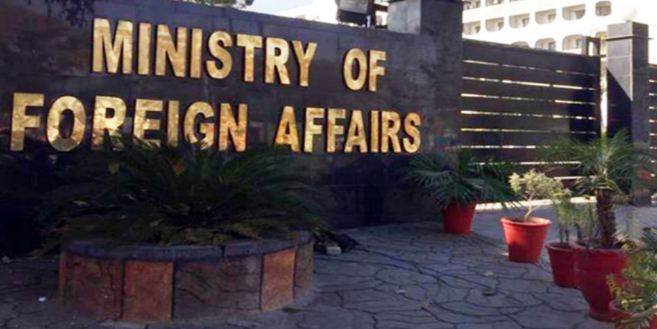
ISLAMABAD, JUN 21 /DNA/ – In response to media queries regarding claims in Indian media that the Deputy Prime Minister and Foreign Minister, Senator Ishaq Dar, said that Pakistan requested a ceasefire, the Foreign Ministry spokesperson issued the following statement:

“We categorically reject claims that Pakistan sought a ceasefire following the Indian aggression.

The Deputy Prime Minister/Foreign Minister, has in his media interviews and statements, explained that Pakistan responded decisively to Indian aggression in exercise of its right to self-defence.

Friendly states, including Saudi Arabia, and particularly the United States, played a crucial role in facilitating the ceasefire between Pakistan and India.

The sequence of events clearly demonstrates that Pakistan did not initiate or ask anyone for a ceasefire but agreed to it when around 0815 am on 10th May 2025, US Secretary of State Marco Rubio called the DPM/FM, Senator Mohammad Ishaq Dar, and informed that India is ready to ceasefire if Pakistan is willing.

The DPM/FM confirmed Pakistan’s acceptance and later around 9 am Saudi FM Prince Faisal also called DPM/FM and informed the same about India and sought same confirmation which Secretary of State Marco Rubio had sought earier.=DNA

Govt slashes tax rate to 1% for individuals earning up to Rs1.2m annually

Govt

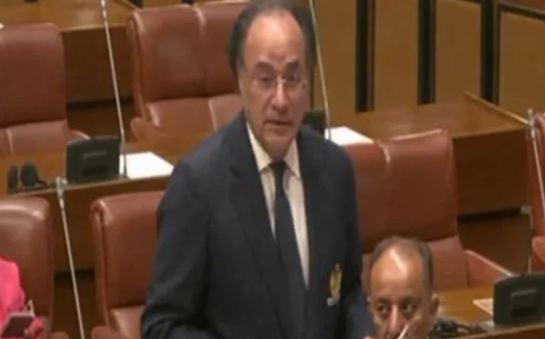
ISLAMABAD, JUN 21: Finance Minister Muhammad Aurangzeb on Saturday announced a positive development for the salaried class revealing that the tax rate for those individuals earning up to Rs1.2 million a year will drop from 5% to 1%.

“The salaried class bears the burden of inflation and also pays [due] taxes. The reduction in the income tax is already part of the proposed budget [for FY26]. On the directions of Prime Minister Shehbaz Sharif, the government has reduced tax on those earning from Rs600,000 to Rs1.2 million per year from [the proposed] 2.5% to a [mere] 1%,” Aurangzeb said while speaking during a Senate session on Saturday.

“We [the government] hope that this move will not only result in the increase of disposable income of the [salaried] class but also restore their trust in the taxation system,” the finance czar remarked.

The development comes after the government, in its Rs17.57 trillion budget for the FY26 has sought across-the-board cuts in income tax rates for the salaried class.

Initially, the tax rate for individuals making between Rs600,000 and Rs1.2 million a year was proposed to slash to 2.5% from existing 5% — which now as confirmed by Aurangzeb has further been cut to 1%. The move comes after PM Shehbaz, earlier this week, told the federal cabinet of 1% tax imposed on the people from the said salary bracket.

Meanwhile, the tax rate for those earning up to Rs2.2 million annually, has been reduced from 15% to 11% — a 4% fall in the budget FY26.

For those earning between Rs2.2 million and Rs3.2 million, the tax rate is expected to ease from 25% to 23%.

The budget also includes a move to slow down brain drain. A 1% reduction in surcharge has been proposed for those earning over Rs1 million, to retain highly skilled professionals who might otherwise consider leaving the country due to high taxes.

Speaking on the Senate floor today, the finance minister stressed that the government had taken steps for welfare in its proposed budget and highlighted that the federal expenditure had only been hiked by 1.9% which had soared up to 12% in the past.

He also confirmed that the initial 18% tax proposed on solar panels in order to promote the local industry has been reduced to 10% and warned those hoarding imported solar panels saying that action would be taken against individuals who had increased the price in advance.

It is pertinent to know that the government has set out the Federal Bureau of Revenue’s (FBR) tax collection target of Rs14,131 billion — reflecting an 18.7% increase compared to the previous fiscal year.

The part of provinces in the federal taxes would amount to Rs8,206 billion. With the non-tax revenue target set out at Rs5,147 billion, the federal government’s net income is expected to be Rs11,072 billion whereas the overall federal expenditures are estimated at Rs17,573 billion of which Rs8,207 billion will be allocated for the mark-up payment.

Pakistan, Russia strengthen energy ties

Pakistan

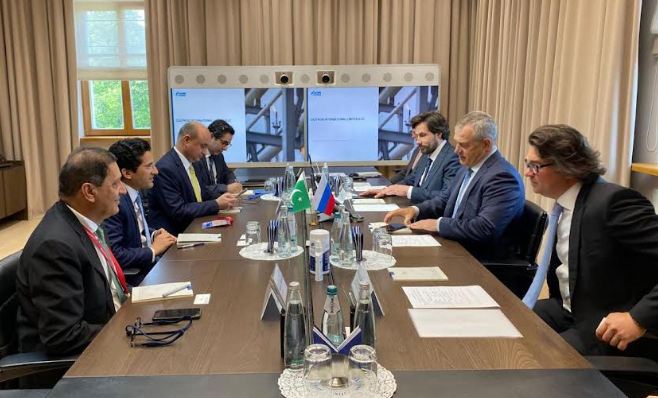
ISLAMABAD, JUN 21 /DNA/ – A high-level Pakistani delegation, led by Federal Minister for Petroleum Ali Pervaiz Malik, held a meeting with representatives of Gazprom, Russia’s leading oil and Gas Company, headed by Mr. Sergey Tumanov, General Director of Gazprom International. Mr. Ahmed Hayat Lak, MD/CEO Oil and Gas Development Company Limited (OGDCL) was also present in the meeting. The discussions focused on enhancing bilateral cooperation in the energy sector, with a particular emphasis on joint ventures and business development opportunities between OGDCL and Gazprom International.

During the meeting, both parties reaffirmed their commitment to strengthening energy collaboration, leveraging Pakistan’s growing energy demands and Gazprom’s extensive expertise in oil and gas exploration, production, and infrastructure development. The discussions highlighted potential areas of partnership.

It was agreed that OGDCL and Gazprom International would continue discussions to identify viable projects and partnerships, ensuring sustainable energy development and economic growth for both countries. 

The meeting marks a significant step forward in Pakistan-Russia energy relations, reinforcing the shared vision of energy collaboration and economic prosperity.

ICCI calls for Int’l standard vocational training to aid economy

ICCI

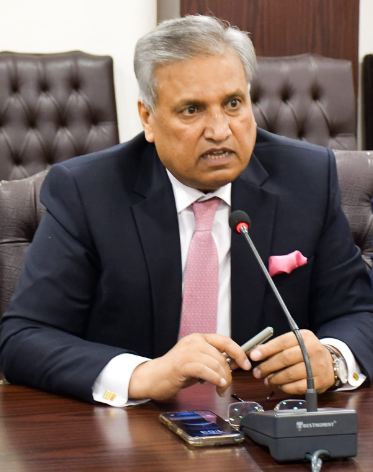
ISLAMABAD: /DNA/ – Nasir Mansoor Qureshi, President of the Islamabad Chamber of Commerce and Industry (ICCI), has emphasised the urgent need for globally accredited vocational and technical training programs to enhance Pakistan’s skilled workforce to increase its demand in international markets.

Talking to a delegation of visiting business leaders at the Chamber House on Saturday, Nasir Mansoor Qureshi underlined the importance of aligning all vocational and technical training initiatives across the country with international standards. He said this alignment is vital for enhancing the global employability of Pakistan’s youth and unlocking new avenues for foreign remittances.

He noted that by ensuring internationally recognized quality in training institutions, Pakistan can open up greater overseas opportunities for its young population, thereby contributing significantly to the national economy through an increase in foreign exchange inflows.

The ICCI President appreciated the efforts of the National Vocational and Technical Training Commission (NAVTTC) and the Prime Minister’s initiative to bring all public sector training programs under a unified regulatory framework. He welcomed the move to standardize curricula as a meaningful step toward producing a competitive and competent workforce.

Highlighting the importance of a skilled youth population for the country’s economic progress, Qureshi said, “A fully trained and internationally competitive workforce can not only uplift our economic indicators but also place Pakistan firmly on the road to sustainable development.”

He further stated that ICCI is fully committed to playing its part in this national goal. “We aim to promote entrepreneurship and support startups by strengthening collaboration with academic institutions, fostering innovation, and preparing youth to meet global market demands,” he added.

The ICCI President reiterated that empowering youth with internationally accepted skills is a critical investment for ensuring long-term economic resilience and prosperity for Pakistan.

Stay Connected

64FansLike
60FollowersFollow

Latest Reviews

Exchange Rates

USD - United States Dollar
EUR
1.17
GBP
1.34
AUD
0.67
CAD
0.73