Home Blog Page 304

Central Asia offers huge business potential: expert

Central Asia offers huge business potential: expert

Mahnoor Ansar

ISLAMABAD, JUN 29: /DNA/ – The Institute of Regional Studies (IRS), Islamabad, held a compelling lecture today under its Eminent Speaker Series, featuring renowned academic Dr. Ahmed Ijaz Malik, Associate Professor at the School of Politics and International Relations, Quaid-i-Azam University and PhD from the School of Oriental and African Studies (SOAS), University of London.

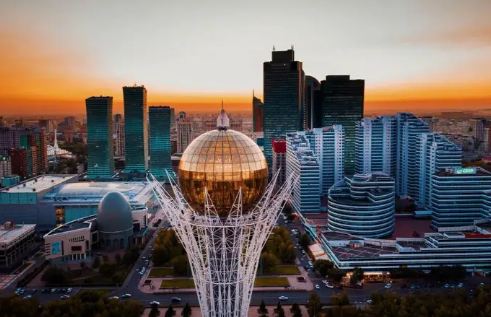
 The lecture, titled “Political Economies of Central Asia,” offered a comprehensive and analytical look at the dynamic socio-economic and strategic landscape of Central Asia, with a special focus on Kazakhstan, Kyrgyzstan, Tajikistan, Turkmenistan, and Uzbekistan.

In his opening remarks, President of IRS, Ambassador Jauhar Saleem, set the tone by framing Central Asia as a region of growing geopolitical significance. He highlighted the region’s geography, bridging Russia, China, and South Asia, positioning it as a vital transit hub for trade and energy across Eurasia. Reflecting on the region’s post-Soviet evolution, he noted the varied trajectories in governance and economic reform—from state-led models to market-oriented approaches. He also touched upon the region’s reliance on hydrocarbons and the resulting pressure to diversify, especially in the face of global energy shifts.

Dr. Malik’s address delved into the complex political and economic contours of the region, noting its landlocked geography but immense natural resource wealth. Kazakhstan, with its oil, gas, and uranium reserves, and Turkmenistan, rich in natural gas, stand out as energy giants. Uzbekistan, with substantial gold and cotton production, is moving towards economic liberalization. He lauded the 2025 Kyrgyz-Tajik border treaty as a promising sign of improving regional diplomacy. Dr. Malik stressed the pivotal role played by major global actors—China, the EU, Russia, and India—in shaping the region’s developmental trajectory. China’s enhanced role through the BRI, the Digital Silk Road, and strategic partnerships with Kazakhstan and Turkmenistan has reshaped infrastructure and digital connectivity. The European Union, meanwhile, is deepening its footprint via the €12 billion Gateway Initiative, a component of the broader Global Gateway strategy, aimed at mobilizing up to €300 billion globally across critical sectors including energy, transport, and technology.

Russia’s influence remains rooted in security frameworks and its North-South Corridor, though newer transport initiatives like the Trans-Caspian route and Middle Corridor. The EU’s first Central Asia Summit in April 2025 signaled a serious commitment to the region, identifying areas of cooperation such as counterterrorism, cybersecurity, border control, and safeguarding against hybrid threats, disinformation, and trafficking. Shared concerns around youth unemployment, labor migration, and environmental degradation—especially the Aral Sea crisis—were also underlined as ongoing regional challenges. Despite these, Dr. Malik pointed to significant opportunities in renewable energy, hydrogen development, rare-earth extraction, and digital innovation.

Regarding Pakistan’s engagement with Central Asia, Dr. Malik emphasized the importance of deeper economic and strategic partnerships. He highlighted Kazakhstan’s agricultural and petroleum sector reforms as a model Pakistan could adapt to revitalize its own economy. Kyrgyzstan offers scope for trade in consumables and tourism, while Uzbekistan’s shift toward IT and AI presents an opening for Pakistan’s skilled workforce. In Tajikistan, with remittances forming a key part of GDP and significant untapped mineral resources, there exists strong potential for bilateral cooperation. Dr. Malik also touched upon the underutilized potential of the TAPI pipeline, hampered by regional instability, and suggested that with a renewed focus and regional trust-building, such initiatives could still be realized.

Professor Malik also discussed emerging trilateral collaborations involving Pakistan, Azerbaijan, and Turkiye, citing recent agreements on trade, military cooperation, and sustainable development as steps toward a broader Eurasian strategic partnership. The lecture concluded with a call for Pakistan to build an economic transformation model grounded in reform of its agriculture, small and medium industries, and the creation of industrial and technological hubs. By initiating trade in key sectors, developing sovereign wealth funds and Sukuk bonds, and strengthening economic diplomacy, Pakistan could position itself as a more effective player in the evolving Central Asian matrix.

The event concluded with a lively Q&A session and was attended by academics, analysts, and students.

From Proxy to Open War How Israel-Iran’s shadow conflict ignited the region

From Proxy to Open War How Israel-Iran’s shadow conflict ignited the region

Analysis

Abdul Waheeh Khan

For years, Israel and Iran waged a hidden war—a conflict fought through cyberattacks, covert assassinations, and proxy militias across the Middle East. By 2025, that shadow war erupted into direct confrontation.

This was no sudden explosion, but the inevitable result of unchecked strategic ambition, critical miscalculations, and diplomatic failure. Both sides overestimated their deterrence capabilities, pushing boundaries until the line between proxy warfare and open conflict vanished entirely.

Israel, emboldened by unconditional Western support, escalated extraterritorial strikes—sabotaging nuclear sites, targeting Iranian personnel, and framing its actions as “defensive” while entrenching military dominance. Iran, meanwhile, expanded its proxy networks, leveraging them for influence while evading direct accountability. Its strategy blurred the line between self-defense and destabilization.

Gradually, aggression intensified. Israel expanded operations beyond its borders; Iran shifted from covert deterrence to overt retaliation, launching drone strikes and maritime attacks. With diplomacy absent, tit-for-tat reprisals spiraled into all-out war—likely beyond either side’s original intent.

Contrary to simplistic narratives, neither was purely reactive. Israel deliberately escalated, confident it could control the fallout—a fatal misjudgment. The region, already fragile from shifting U.S. priorities, Arab-Israeli normalization, and Iran’s expanding influence, was pushed to the brink.

When rockets struck Tel Aviv, Israel responded with overwhelming force—unleashing its full arsenal on Gaza, one of the world’s most densely populated and impoverished territories. Entire neighborhoods were erased. Infrastructure collapsed. Humanitarian corridors were blocked. Tens of thousands perished—mostly women and children—buried under rubble or killed in strikes on homes, shelters, and hospitals.

Beirut, too, faced Israeli airstrikes, but Gaza bore the weight of total war. The asymmetry was undeniable: Israel endured disruption; Gaza faced annihilation. Civilians—trapped, besieged, with nowhere to flee—became the primary casualties. The distinction between battlefield and home vanished.

As borders dissolved and proxy fronts collapsed, the region descended into chaos. Palestinians suffered most, but Lebanese, Syrians, and Israelis were also swept into the storm. What began as calculated proxy warfare had spiraled into a humanitarian catastrophe.

Ironically, Israel and Iran mirrored each other’s tactics. Israel’s security doctrine, once rooted in preemption, increasingly resembled the very strategies it condemned in Tehran: covert strikes, political interference, and the weaponization of deterrence. For both, deterrence became a language of escalation, not restraint.

At the core of this breakdown lay mutual miscalculation. Iran overestimated its asymmetric capabilities, underestimating Israel’s technological edge and willingness to strike. Israel exaggerated Iran’s threat, framing every maneuver as existential while dismissing Tehran’s ideological resilience. Each side interpreted the other’s moves as provocation, justifying its own aggression as defense—reinforcing a cycle of mistrust and violence.

Though a ceasefire now holds, the damage is irreversible. Israel, despite its military superiority, faces internal dissent, regional isolation, and a weakened deterrence posture. Iran, defiant but economically shattered, is diplomatically cornered—its proxy strategy exposed as a path to chaos.

The Arab world, once inching toward normalization with Israel, now recoils as public outrage surges against foreign aggression and domestic repression. The U.S., abandoning any pretense of mediation, shattered its neutrality by backing Israel’s devastation of Gaza and striking Iranian nuclear sites. Its role shifted from peacemaker to belligerent—its credibility in ruins.

Donald Trump’s ultimatums—demanding Iran’s surrender, Tehran’s evacuation, and regime change—proved mere political theater. They failed to topple Iran’s leadership but succeeded in exposing America’s declining strategic influence. Empty threats eroded Washington’s deterrence and handed Tehran a propaganda victory. Far from isolating Iran, the spectacle fractured global diplomacy, revealing a superpower that speaks loudly but stands alone.

In a grim irony, Pakistan’s nomination of Trump for the Nobel Peace Prize—a transparent bid for favor—rings hollow amid the rubble.

This war was not inevitable. It was the product of militarism, unaccountable leadership, and global apathy. Both Israel and Iran must confront an uncomfortable truth: security built on domination breeds endless war, not peace.

The path forward demands not louder threats or deadlier weapons, but mutual recognition, sovereignty, and the moral imperative to protect civilian lives. If these lessons go unheeded, the next war will be wider, bloodier, and beyond containment.

The views expressed in the article are writer’s own

The Rise of Daily Islamabad Post: A Beacon of Balanced Journalism in Pakistan

The Rise of Daily Islamabad Post: A Beacon of Balanced Journalism in Pakistan

In an era where media polarization and sensationalism often dominate headlines, Daily Islamabad Post has emerged as a trusted source of balanced and credible journalism in Pakistan. Launched in 2020, this English-language daily has quickly gained recognition for its fair reporting, insightful analysis, and wide coverage of national and international affairs. With its strong presence in both print and digital formats, the newspaper has carved a niche for itself among diplomats, policymakers, and the corporate community.

A Legacy of Credible Journalism

Daily Islamabad Post is part of a well-established media network that includes the Monthly Centreline—a publication known for its in-depth features on socio-political issues—and the Diplomatic News Agency, which specializes in foreign affairs and diplomatic reporting. Both sister publications were launched earlier, with Centreline debuting in 2010 and the Diplomatic News Agency in 2012. Under the leadership of Chief Editor Ansar Mahmood Bhatti, a seasoned journalist with years of experience, all three publications uphold high editorial standards, ensuring accuracy, objectivity, and professionalism.

Balanced Reporting in a Divided Media Landscape

One of the key reasons behind Daily Islamabad Post’s rapid rise is its commitment to balanced journalism. In a country where media outlets often align with political or ideological biases, the newspaper has maintained an independent stance, providing readers with well-researched and unbiased news. This approach has earned it membership in the All Pakistan Newspaper Society (APNS), a prestigious recognition that underscores its credibility and influence in Pakistan’s media industry.

The newspaper covers a wide range of topics, including politics, economy, international relations, business, and culture. Its editorial team consists of career journalists who bring years of expertise to their reporting, ensuring that readers receive not just news, but also meaningful context and analysis.

Popular Among Diplomats and Corporate Leaders

Given its affiliation with the Diplomatic News Agency, Daily Islamabad Post has developed a strong following within Pakistan’s diplomatic community. Foreign missions, international organizations, and local policymakers rely on the newspaper for accurate and timely updates on Pakistan’s political developments and foreign relations.

Similarly, the business and corporate sector values the newspaper’s comprehensive economic reporting. From stock market trends to government policies affecting industries, Daily Islamabad Post provides valuable insights that help professionals make informed decisions.

Embracing Digital Transformation

While the print edition of Daily Islamabad Post continues to thrive, the newspaper has also embraced digital transformation, ensuring that it reaches a global audience. Its online platform offers real-time updates, multimedia content, and interactive features, catering to the evolving preferences of modern readers. This dual presence in print and digital spaces has allowed the publication to expand its readership beyond Islamabad to other major cities like Karachi, Lahore, and Peshawar.

A Promising Future

Since its inception in 2020, Daily Islamabad Post has demonstrated remarkable growth and resilience. In just a few years, it has positioned itself as one of Pakistan’s leading English dailies, competing with long-established newspapers. Its success can be attributed to its unwavering commitment to journalistic integrity, diverse content, and adaptability in a rapidly changing media environment.

As Pakistan’s media landscape continues to evolve, Daily Islamabad Post stands out as a beacon of responsible journalism. With its strong editorial leadership, expanding reach, and reputation for fairness, the newspaper is well on its way to becoming an even more influential voice in the country’s press.

For readers seeking reliable news free from sensationalism, Daily Islamabad Post remains a top choice—a testament to the power of balanced and professional journalism in today’s world.

Why designations matter in every career path

Why designations matter in every career path

Ms. Sabahat Ali

In today’s evolving world of work, changing jobs is no longer viewed as a mark of inconsistency — it is increasingly acknowledged as a sign of professional maturity, self-awareness, and strategic career planning. The rigid linear career ladder has transformed into a flexible career lattice, accommodating cross-functional moves, lateral transitions, and cross-sector roles — all indicative of a dynamic and progressive career journey.

Beyond the Private Sector: Diverse Career Paths and Designations

While job mobility is commonly associated with the private sector, it is important to recognize that not all professions operate under the same framework. Many government, public service, civil, defense, and judiciary positions have fixed hierarchies and require service until retirement. Still, even within these structures, designation-based growth is a vital indicator of performance, leadership, and contribution.

Here is a broad classification of designations across sectors:

1. Corporate/Private Sector

Entry to Senior Roles

Intern → Associate → Executive → Senior Executive → Assistant Manager → Manager → Senior Manager → General Manager → Director → Vice President → CEO/MD

Specialized Tracks (e.g., IT, Finance, Marketing)

Developer → Team Lead → Tech Lead → Solutions Architect → CTO

Analyst → Senior Analyst → Finance Manager → Head of Finance → CFO

Marketing Assistant → Brand Manager → Marketing Director → CMO.

2. Government & Civil Service (Administrative)

Central/Provincial Bureaucracy (e.g., Pakistan Administrative Service, IAS, CSS Cadres)

Assistant Commissioner → Deputy Commissioner → Additional Secretary → Joint Secretary → Secretary → Federal Secretary

Other Civil Departments (e.g., Education, Health, Revenue)

Assistant Director → Deputy Director → Director → Director General.

3. Judiciary & Law

Judicial Cadre

Civil Judge → Senior Civil Judge → Additional District & Sessions Judge → District & Sessions Judge → High Court Judge → Supreme Court Judge

Legal Profession (Practice)

Junior Advocate → Advocate High Court → Advocate Supreme Court → Senior Counsel → Attorney General/Law Secretary

4. Armed Forces & Defense Services

Military Designations (e.g., Army, Navy, Air Force)

Second Lieutenant → Lieutenant → Captain → Major → Lieutenant Colonel → Colonel → Brigadier → Major General → Lieutenant General → General

(Note: Similar hierarchies apply in Navy and Air Force with different nomenclature.)

5. Education Sector

Teaching/Academic Line

School Teacher → Senior Teacher → Subject Specialist → Vice Principal → Principal → Director Education

Higher Education (University Faculty)

Lecturer → Assistant Professor → Associate Professor → Professor → Dean → Vice Chancellor

6. Judiciary-Linked Services (Magistracy, Prosecution, Investigation)

Public Prosecutor → Deputy Prosecutor → Additional Prosecutor General → Prosecutor General

Judicial Magistrate → Sessions Judge → Registrar High Court

7. Public Sector Enterprises/Autonomous Bodies

Government Corporations/Authorities

Junior Officer → Assistant Manager → Deputy Manager → Manager → General Manager → Executive Director → MD/Chairman

8. Healthcare Sector

Doctors/Nurses/Public Health

House Officer → Medical Officer → Senior Medical Officer → Consultant → Senior Consultant → Medical Superintendent

Staff Nurse → Head Nurse → Nursing Superintendent

Why Designation Matters

In both fluid and fixed-career structures, designations matter greatly. They indicate:

Growth in responsibility and leadership

Institutional trust and promotion

Recognition of skill and service

Authority and accountability

Even in roles where individuals are expected to serve until retirement — such as in civil service, judiciary, or defense — designation-based progression is a critical marker of achievement and standing.

Changing Jobs vs Growing Within a Structure

While job-hopping is common in the private and entrepreneurial sectors, many professionals in structured public careers — such as teachers, judges, military officers, or civil servants — serve long tenures in one institution but still progress through clearly defined designations.

The key is not whether a person changes jobs frequently or stays in one — it is whether they are growing in their role, enhancing their competence, and advancing in designation.

Recognizing Designation-Based Growth Across All Sectors

Professional growth is not always defined by changing employers. In careers with fixed service duration, designation progression plays an equally important role in reflecting development. Whether someone rises from Lecturer to Professor or from Captain to  General, the trajectory reflects commitment, performance, and leadership.

In all cases — whether through job transitions or internal promotions — the pursuit of excellence, continuous learning, and aligned purpose defines a successful career.

Let us reframe job mobility and title progression not as disjointed changes, but as steps in a purposeful and evolving professional journey.

PTV fee: Govt announces big relief in electricity bills

PTV fee: Govt announces big relief in electricity bills

ISLAMABAD, JUN 28: The federal government has decided to eliminate the Pakistan Television (PTV) license fee currently charged through electricity bills in a major relief move for electricity consumers across Pakistan, according to official sources.

An official announcement is expected soon, with Prime Minister Shehbaz Sharif set to make the final declaration.

At present, around 40 million electricity consumers in the country are required to pay a fixed PTV fee, contributing approximately Rs1.5 billion every month. This translates to nearly Rs16 billion annually collected from residential, commercial, and industrial users, regardless of whether they watch PTV or not.

Sources in the Ministry of Information and Broadcasting and the Power Division confirm that this decision is part of a broader government initiative aimed at reducing the burden of utility bills on the public amid rising inflation and electricity costs.

“The relief will apply to all categories of electricity consumers, including domestic, commercial, and industrial connections,” a senior official told reporters on condition of anonymity.

Heavy rain, flash floods feared in Punjab, Sindh, KP, Gilgit in 48hrs

Heavy rain

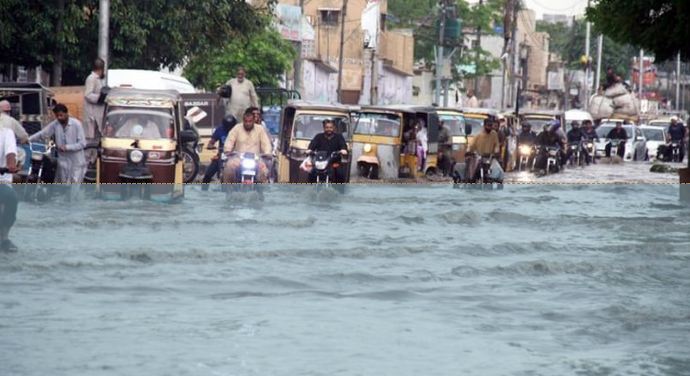
ISLAMABAD, JUN 28: The National Disaster Management Authority (NDMA) has issued a high alert for possible heavy rainfall and flooding across several regions of Pakistan over the next 24 to 48 hours, warning both the public and local administrations to take urgent precautionary measures.

According to an NDMA spokesperson, glacial melting combined with intense rainfall could trigger floods in Gilgit-Baltistan, Chitral, Upper Dir, Swat, and the Kumrat Valley. Specific high-risk areas in GB include Badswat, Hanarchi, Tarsat, Hundur, and Darkot, where a rapid rise in water levels is anticipated due to glacial outburst floods (GLOFs).

The authority has also forecast urban flooding in multiple cities of Azad Jammu and Kashmir, including Neelum Valley, Muzaffarabad, Rawalakot, Bagh, and Kotli, as well as in densely populated urban centres like Islamabad, Rawalpindi, Lahore, Gujranwala, Faisalabad, Sargodha, Kasur, and Mandi Bahauddin.

In Khyber Pakhtunkhwa, heavy rains accompanied by windstorms are expected in Peshawar, Mardan, Swat, Dir, Kohistan, Bannu, Karak, and Waziristan, while low-lying areas remain vulnerable to flash floods.

Also Read: Four kill as floods hit Zhob, Harnai and Swat

Southern Sindh, particularly Karachi, Hyderabad, Sukkur, Larkana, Mirpurkhas, Tharparkar, Badin, Umerkot and Jacobabad, has also been marked as highly susceptible to urban flooding. The National Emergency Operations Centre cautioned that electrical systems could be affected and plain areas of Sindh and Punjab may face waterlogging.

In Balochistan, heavy rains with dusty winds are expected in Quetta, Ziarat, Khuzdar, Zhob, Sibi, Dera Bugti and Loralai.

Additionally, thunderstorms in the mountainous regions of Gilgit-Baltistan and AJK may cause landslides, further complicating rescue and relief operations.

Public advisory and hotel warning
The NDMA has urged citizens to stay away from weak structures, mud walls, electricity poles, and billboards during rain and windstorms to avoid injury.

In light of the recent Swat tragedy, the Khyber Pakhtunkhwa Tourist Services Wing has separately issued a strict advisory to all hotels and restaurants in tourist destinations.

Also Read: Swat tourists, hotels ignored flood, glacier burst warnings: Report

“Hotels on riverbanks must immediately remove seating areas and avoid setting up any temporary barriers,” the advisory warned.

The wing emphasized that businesses near rivers should conduct safety inspections, adhere to official guidelines, and obtain NOCs for any new construction. Non-compliance will result in administrative and legal action, it added.

NDMA’s appeal
The NDMA has appealed to the public and relevant government bodies to stay alert, follow advisories, and report any emergency situations to the authorities. Local administrations have been asked to ensure emergency response teams are on standby, especially in high-risk zones.

MNA Isphanyar Bhandara welcomes approval of federal budget 2025–26

MNA Isphanyar Bhandara welcomes approval of federal budget 2025–26

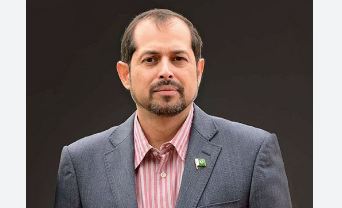
ISLAMABAD, JUN 28 /DNA/ – “I congratulate the Prime Minister and the government on the approval of a balanced and realistic federal budget for 2025–26. At a time of economic strain, maintaining targeted relief for the poor — through BISP, food security, and agricultural support — while scaling back blanket subsidies is a responsible move. The increase in government employees’ salaries is a welcome step for salaried households, and the enhanced defense allocation, in light of recent tensions with India, rightly reinforces our national security priorities. This budget reflects both empathy and resolve.”

Security Forces Foil Suicide Bomb, 13 Dead in North Waziristan

Pakistan Security Forces eliminate terrorists in Dera Ismail Khan: ISPR

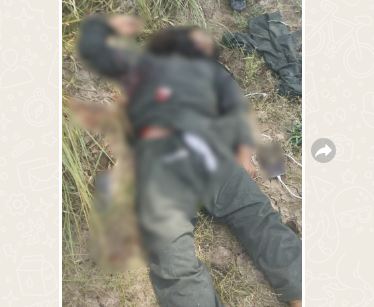
Rawalpindi, 28 JUN /DNA/ – In a cowardly attack, planned and orchestrated by the terrorist state of India, and executed by its proxy Fitna al Khwarij, a Security Forces convoy was targeted today in general area Mir Ali, North Waziristan District.

A vehicle borne suicide bomber attempted to explode himself on a security forces convoy, who was intercepted by the leading group, foiling his nefarious design. However, in their desperation, an explosive laden vehicle was rammed by the Indian sponsored Kharjis into one of the vehicles of the leading group.

Resultantly, thirteen brave sons of soil, embraced Shahadat. In this tragic and barbaric incident, three innocent civilians including two children and a woman also got severely injured.

Shuhada include Subedar Zahid Iqbal (age: 45 years, resident of District Karak), Havildar Sohrab Khan (age: 39 years, resident of District Naseerabad), Havildar Mian Yousaf (age: 41 years, resident of District Buner), Naik Khitab Shah (age: 34 years, resident of District Lower Dir), Lance Naik Ismail (age: 32 years, resident of District Naseerabad), Sepoy Rohail (age: 30 years, resident of District Mirpur Khas), Sepoy Muhammad Ramzan (age: 33 years, resident of Dera Ghazi Khan), Sepoy Nawab (age: 30 years, resident of District Quetta), Sepoy Zubair Ahmed (age: 24 years, resident of District Naseerabad), Sepoy Muhammad Sahki (age: 31 years, resident of District Dera Ghazi Khan), Sepoy Hashim Abbasi (age: 20 years, resident of District Abbotabad), Sepoy Muddasir Ejaz (age: 25 years, resident of District Layyah), Sepoy Manzar Ali (age: 23 years, resident of District Mardan).

In the ensuing sanitization operations, khwarij were pursued and after intense fire exchange, fourteen khwarij have been sent to hell by the security forces. The operations in the area would continue and perpetrators of this henious and cowardly act will be brought to justice.

The security forces of Pakistan in step with nation remain steadfast in their resolve to eradicate Indian sponsored terrorism from the country and such sacrifices of our brave soldiers and innocent civilians further reinforce our unwavering commitment of safeguarding our nation at all costs.

Imran Khan to devise plan for PTI’s protest: Barrister Gohar

Imran Khan

ISLAMABAD, JUN 28: Pakistan Tehreek-e-Insaf (PTI) Chairman Barrister Gohar Ali Khan said on Saturday that the party founder, Imran Khan, would devise a plan for staging the forthcoming protest.

Addressing a press conference, flanked by other PTI leaders, Barrister Gohar said: “It is just a misunderstanding to think that the PTI leaders have joined any other party. The PTI leaders had also declined the offer of billions of rupees in the past.”

“No conspiracy will be successful against Khyber Pakhtunkhwa government. The KP government is taking measure to combat terrorism,” he said.

Barrister Gohar had expressed grief over the Swat incident, saying, “The KP government is having merely one helicopter. The NDMA should give helicopter.”

Giving his take on the Supreme Court’s (SC) recent verdict on the reserved seats, Barrister Gohar said: “The PTI founder might already had know about the SC’s verdict.”

“I request the Chief Justice of Pakistan (CJP) to keep an eye on his courts. Despite not being the part of the constitutional bench, it is the responsibility of the CJP to monitor the constitutional bench,” Barrister Gohar said.

“We are quiet disappointed with the judiciary’s ruling,” said Barrister Gohar.

“Getting justice was not as difficult back in 1996 as compared to today. Don’t cross all the limits, while holding the grudge with the PTI,” he said.

Barrister Gohar made it clear that the PTI would continue its alliance with the Sunni Ittehad Council (SIC).

Barrister Gohar said, “Despite the SC’s ruling, the PTI leaders will remain part of the SIC. Following yesterday’s ruling delivered by the SC, the PTI members are not independent.”

“We would have no reservation if the full court heard the case in connection with the reserved seats. Eight SC judges had allocated our seats to us,” he said.

“We [PTI] had contested elections from 850 constituencies. After getting elected as independent candidates, we became part of the SIC,” said Barrister Gohar.

Meanwhile, Faraz said, “The constitution has been violated on many accounts. The constitution has been used selectively. The constitution has been violated by not conducting the elections on time.”

Speaking about the electoral watchdog, Faraz said: “The job of the Election Commission of Pakistan (ECP) is to hold the transparent elections.”

He lamented the situation in Khyber Pakhtunkhwa, adding that the loans were being taken to move forward the country’s matters.

“Majority of the people are living below the poverty line,” he said.

Talking about Finance Minister Muhammad Aurangzeb, Faraz said, “Our FinMin is a banker by profession and is taking the loans.”

“The foreign policy of the country cannot be independent; who is depending on the loans? This was the budget in line with the requirements of the International Monetary Fund (IMF),” Faraz maintained.

CDA seals illegal construction sites in Islamabad’s Zone-V

CDA seals illegal construction sites in Islamabad’s Zone-V

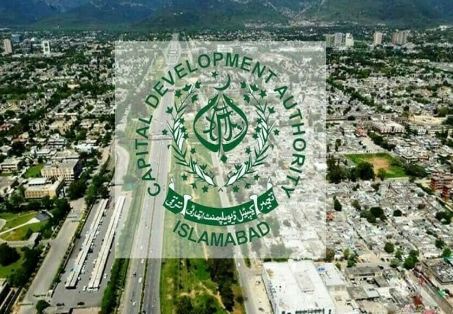
ISLAMABAD, JUN 28 /DNA/ – In pursuance of Islamabad Building Control Regulations-2020 (as amended 2023) and ongoing directives of the Federal Minister for Interior and Norcotics and Chairman, CDA,  to eliminate unauthorized construction activities across Islamabad, the Directorate General of Building & Housing Control (B&HC) Capital Development Authority (CDA) carried out a major sealing operation in Zone-V of the Islamabad Capital Territory (ICT) today.

The operation was conducted by B & HC in collaboration with Enforcement, ICT administration and Police.

As part of the operation:

                •             Wasna Palace Marquee, located in Zone-V, was sealed for illegal operation without approval of building plans and violation of building regulations.

                •             14 unapproved and illegal commercial structures under construction in Jinnah Gardens Society (FECHS), particularly in Touseef Commercial and Shaheen Commercial Blocks, were sealed.

                •             02 additional under-construction buildings along Japan Road in Mouza Gagri were also sealed for non-compliance with applicable bylaws.

                In addition, 03 Stop Work and Regularization Notices were served to violators in the same vicinity along Japan Road.

These structures were found to be in violation of regulations due to non-submission of building plans, unauthorized commercial activity, and absence of payment of mandatory fees as well as penalties.

The B&HC teams, under security cover from ICT Police and Magisterial cover from Magistrate ICT, ensured lawful enforcement, affixed official sealing and warning notices, and cordoned off active construction sites.

The Authority reiterates its zero-tolerance policy towards all forms of unauthorized construction. It also urges the general public, builders, and developers to refrain from initiating construction without obtaining requisite approvals.

All stakeholders are advised to verify the approval status of properties prior to making any purchase or investment decisions. CDA shall continue such enforcement actions across the ICT in the interest of planned development and legal compliance.=DNA

Stay Connected

64FansLike
60FollowersFollow

Latest Reviews

Exchange Rates

USD - United States Dollar
EUR
1.17
GBP
1.34
AUD
0.67
CAD
0.73