Home Blog Page 303

President of Uzbekistan to pay state visit to Azerbaijan

President of Uzbekistan to pay state visit to Azerbaijan

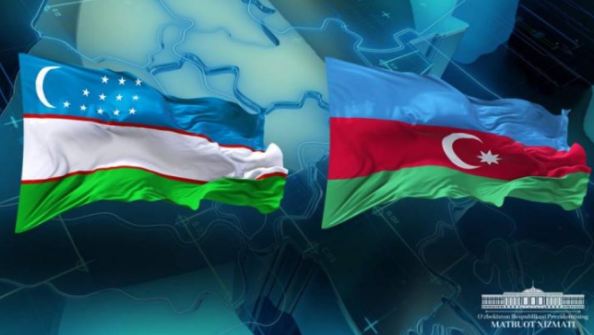
TASHKENT, JUL 2 (DNA): At the invitation of the President of the Republic of Azerbaijan Ilham Aliyev, the President of the Republic of Uzbekistan Shavkat Mirziyoyev will pay a state visit to Azerbaijan on July 2-4.

According to the visit program, the second meeting of the Supreme Interstate Council and other top-level events are scheduled to take place on July 2-3 in Baku.

The agenda includes discussions on further strengthening friendship, strategic partnership, and alliance between Uzbekistan and Azerbaijan, as well as expanding cooperation and exchanges in priority areas.

On July 4, in the city of Khankendi, the President of Uzbekistan will participate in the 17th Summit of the Economic Cooperation Organization and hold several bilateral meetings.

Pakistan indebted to Saudi support

Pakistan indebted to Saudi support

Saudi Ambassador Meets Prime Minister Shehbaz Sharif to Strengthen Bilateral Ties

Ansar M Bhatti / DNA

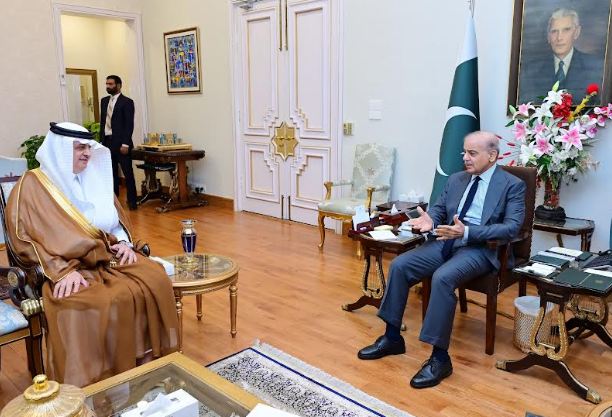
Islamabad, 2 Jul – The Ambassador of the Kingdom of Saudi Arabia to Pakistan, Nawaf bin Saeed Al-Malkiy, called on Prime Minister Muhammad Shehbaz Sharif today at the Prime Minister’s Office in Islamabad. The meeting underscored the deep-rooted fraternal relations between Pakistan and Saudi Arabia, with discussions focusing on enhancing bilateral cooperation in various fields, including trade, investment, and regional peace.

Prime Minister Shehbaz Sharif extended his heartfelt regards to the Custodian of the Two Holy Mosques, King Salman bin Abdulaziz Al Saud, and Crown Prince Mohammed bin Salman, reaffirming Pakistan’s strong bond with the Kingdom. The Prime Minister fondly recalled his recent telephone conversation with Crown Prince Mohammed bin Salman on 24 June, during which both leaders reiterated their commitment to further strengthening Pak-Saudi ties.

Ambassador Al-Malkiy conveyed greetings from the Saudi leadership and expressed the Kingdom’s desire to expand cooperation with Pakistan in multiple sectors, including energy, infrastructure, and human resource development. He emphasized Saudi Arabia’s continued support for Pakistan’s economic stability and progress.

The meeting highlighted the importance of accelerating ongoing projects under the Saudi-Pakistan Supreme Coordination Council (SPSCC), a high-level platform established to boost economic and strategic collaboration. Both sides reviewed progress on Saudi investments in Pakistan’s energy, mining, and agriculture sectors, with the Prime Minister assuring full facilitation for Saudi investors.

Prime Minister Shehbaz Sharif lauded Saudi Arabia’s role in promoting peace and stability in the region, particularly its efforts in mediating global conflicts. He reiterated Pakistan’s support for the Kingdom’s Vision 2030, a transformative economic and social reform blueprint aimed at reducing Saudi Arabia’s dependence on oil and diversifying its economy.

The two leaders also exchanged views on key regional and international developments, including the situation in the Middle East and South Asia. The Prime Minister appreciated Saudi Arabia’s steadfast support on the Kashmir issue and its consistent stance at multilateral forums, including the Organization of Islamic Cooperation (OIC).

Ambassador Al-Malkiy reaffirmed Saudi Arabia’s commitment to playing a constructive role in fostering dialogue and stability in the region. He praised Pakistan’s efforts in counterterrorism and its contributions to regional peace.

Recognizing the significant Pakistani diaspora in Saudi Arabia, the Prime Minister thanked the Kingdom for its hospitality towards Pakistani expatriates, who contribute substantially to both economies. Discussions also touched upon enhancing cultural exchanges, religious tourism, and educational collaborations between the two nations.

The meeting concluded with a mutual commitment to further elevate the historic Pakistan-Saudi relationship. Prime Minister Shehbaz Sharif expressed optimism about future collaborations, stating, “Pakistan and Saudi Arabia are bound by unbreakable ties of faith, brotherhood, and mutual trust. We are determined to take this partnership to new heights.”

Ambassador Al-Malkiy reiterated Saudi Arabia’s unwavering support for Pakistan’s prosperity and stability, assuring that the Kingdom would continue to stand by Pakistan in all circumstances.

The diplomatic engagement reflects the shared vision of both nations to deepen their strategic alliance and work together for regional peace and economic growth.

From Exclusion to Equity: WECON policy recommendations report proposes reforms to empower women entrepreneurs

WECON

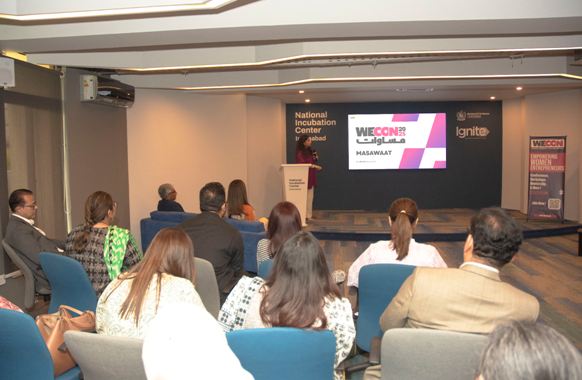
ISLAMABAD, JUL 2 /DNA/ – In a landmark move toward gender-inclusive economic transformation, changemakers from government, industry, and innovation spaces came together for the launch of WECON Policy Recommendations Report; a comprehensive analysis of the systemic barriers that continue to exclude women from entrepreneurship and a roadmap for structural change.

Developed through extensive consultations with women entrepreneurs, ecosystem builders, and financial experts, the WECON 2025 Policy Recommendations Report (2025) builds on alarming data that highlights the deep-rooted gender gaps in Pakistan’s entrepreneurial landscape: 91% of women have never applied for a business loan, and women-led enterprises received only 3.2% of total SME financing in 2022. Despite comprising nearly half of the population, women account for less than 1% of formally recognized entrepreneurs; a reflection not just of inequality, but of a system never built with women in mind.

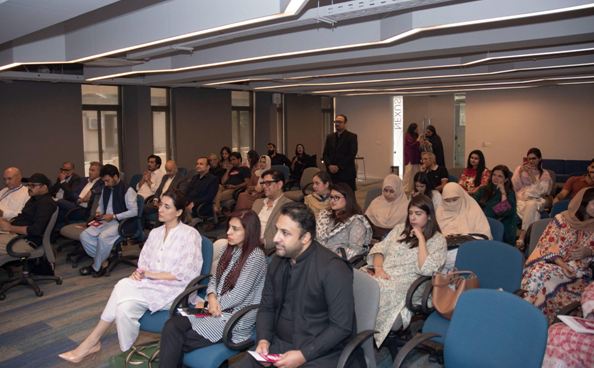
At the launch event, held on June 27th, 2025 at the National Incubation Center, Islamabad and attended by Senior representatives and experts from the public and private sector stakeholders including Ignite National Technology Fund,  NAVTTC, World Bank, P@sha, TDAP, SIFC, PSW, RCCi, IWCCI, GIZ Pakistan, Hashoo Foundation, British Council, Mobilink Microfinance bank, Dubai Islamic Bank,  VISA, NUST, Set Pakistan, Mashreq Bank, NUST, S&P global, Cybervision International; attendees reviewed findings and engaged in dialogue on actionable next steps. The discussion emphasized the urgency of moving from recognition to reform.

“It’s time for Pakistan to move beyond promises and start designing equitable policies that truly include women in the country’s economic future,” said Sayyed Ahmad Masud, Director, Change Mechanics Pvt. Ltd., the organization behind WECON.

The report outlines multiple key areas for reform including but not limited to: inclusive financial access through collateral-free loans; digital equity via subsidized internet, devices, and literacy programs; capacity-building tailored to women’s mobility and time; simplified & incentivized business registration in Urdu and mobile formats for women; Human (Women) Centered Design Approach for program development, and a centralized PORTAL to provide one-window access to funding, mentorship, legal aid, and learning.

Globally, women-founded startups receive less than 3% of total venture capital funding. In Pakistan, this gap is even wider due to limited networks, lack of visibility, and systemic underinvestment in women-led ventures. The report stresses that equity is not a side note it must be the foundation of all entrepreneurship policy going forward.


 “We cannot afford to leave half the population on the sidelines, not morally, not economically. When women thrive, communities thrive, and so does the economy,” added Sayyed Ahmad Masud while addressing the audience. ‘The WECON 2025 Policy Report contributes to a broader and ongoing national conversation on inclusive economic and institutional development. Rather than existing in isolation, the report draws from lived experiences of stakeholders working at grassroots level , up to decision making leaders and field data to inform structural reform. It is intended as a resource for policymakers, financial institutions, and ecosystem stakeholders working to address the persistent underrepresentation of women in entrepreneurship. By offering targeted, evidence-based recommendations, the report seeks to support existing policy frameworks and inspire new approaches that center equity as a foundational principle to increase the number of women entrepreneurs in the country.

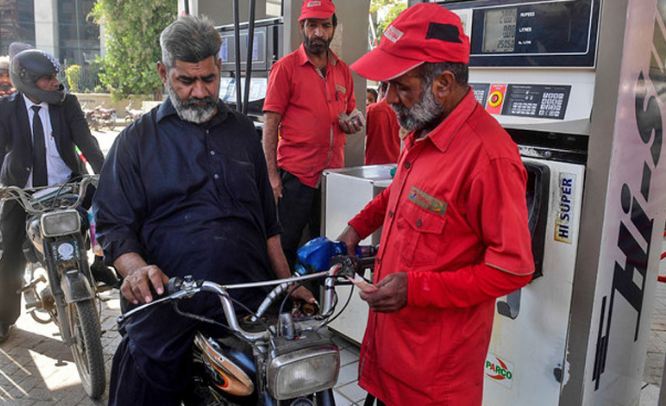
Anti-people petrol price hike: a vetrayal of public trust

Petrol price in Pakistan may see another big drop from May 16

In a shocking move, the government has once again increased petrol prices abnormally, further burdening the already struggling masses. This decision has sparked widespread anger and protests across the country, as citizens grapple with skyrocketing inflation, unemployment, and declining purchasing power. The recent petrol price hike is not just an economic blow but also a stark reminder of the government’s anti-people policies, where the rulers seem indifferent to the suffering of ordinary citizens.

The common man is already reeling under the worst inflation in decades. Prices of essential commodities—food, electricity, gas, and transportation—have surged beyond affordability. Wages remain stagnant, jobs are scarce, and businesses are struggling to survive. In such dire circumstances, increasing petrol prices is nothing short of economic cruelty. Petrol is a key commodity that affects the entire supply chain; its price hike leads to a domino effect, pushing up the cost of everything from vegetables to public transport.

One of the most glaring injustices is the government’s selective approach to global oil prices. When international crude oil prices drop, the benefit is never passed on to the people. Instead, oil companies and the government pocket the difference. However, even the slightest increase in global rates becomes an excuse to jack up domestic petrol prices abnormally. This double standard exposes the exploitative nature of the ruling elite, who prioritize profits over public welfare.

While the common man struggles to afford fuel, government officials, bureaucrats, and parliamentarians enjoy unlimited free petrol at taxpayers’ expense. Luxury vehicles, lavish fuel allowances, and VIP culture are rampant, with no accountability. Nowhere in the world do civil servants receive such extravagant perks, yet in this country, the ruling class treats public resources as their personal wealth.

Moreover, top bureaucrats are often allotted expensive plots and lands at throwaway prices, another privilege unheard of in most democracies. Meanwhile, parliamentarians have increased their own salaries manifold, while the poor face relentless taxation and inflation. This blatant inequality highlights the deep-rooted corruption and elitism in the system.

In a true democracy, the government is supposed to serve the people, not exploit them. However, the current system functions as a tool for the elite to enrich themselves while the masses suffer. The recent petrol price hike is yet another example of how policies are designed to benefit the powerful at the expense of the poor.

People feel isolated, unheard, and betrayed. Protests and public outcry are met with indifference, and corruption continues unchecked. The government’s refusal to reduce petrol prices when global rates fall, while swiftly increasing them at the slightest opportunity, proves that this is not just poor governance—it is a deliberate anti-masses strategy.

The people demand answers. Why are they forced to bear the brunt of every economic crisis while the ruling class enjoys unlimited privileges? Why is there no transparency in petrol pricing? Why are corrupt practices like free fuel for officials and illegal land allotments not investigated?

If this is democracy, then it is a democracy only for the powerful. The common citizen has been reduced to a mere spectator, struggling to survive while the elite loot the nation’s resources. The government must reverse this unjust petrol price hike, eliminate elite perks, and ensure that global oil price reductions are passed on to the public. Until then, the people’s anger will only grow, and their trust in the system will continue to erode.

The rulers must remember: a government that works against its people cannot survive forever. As reported by this newspaper, the Punjab government has decided to discontinue the health card in the government hospitals. However, the card can still be used in the private hospitals. This is ridiculous because there may be only 10 per cent private hospitals accepting health card. And those hospitals do not have required facilities.

The governments should ideally be siding with the people as they are the ones who brought these governments to power. Unfortunately, people remain relevant only till the time election drill is completed. As soon the so-called publish representatives reach the assemblies, they abandon their electorates.  This practice has to be discontinued for the greater sake of the country and populace.

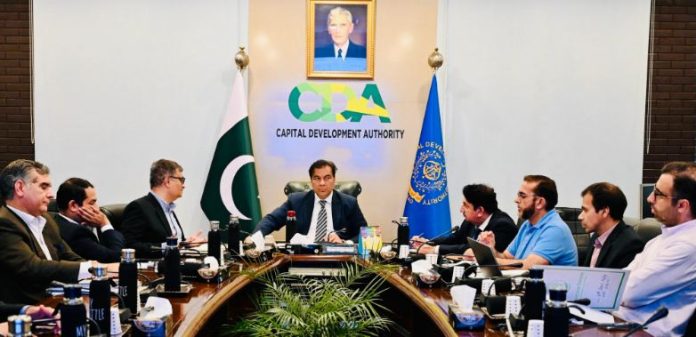
Islamabad property fees under review as CDA eyes reforms

Islamabad property fees under review as CDA eyes reforms

ISLAMABAD, JUL 1 /DNA/ – The 12th meeting of the Capital Development Authority (CDA) Board was held at CDA Headquarters, Islamabad, under the chairmanship of Chairman CDA, Chief Commissioner Islamabad and DG Civil Defense, Muhammad Ali Randhawa. The meeting was attended by CDA Board members, the Deputy Commissioner of Islamabad and other senior officers of CDA.

Several agenda items were discussed during the 12th CDA Board meeting, the details of which are as follows:

The Board reviewed the current transfer fees, registration fees and stamp duties on urban properties within CDA’s jurisdiction, rural properties in the Islamabad Capital Territory (ICT), housing societies and other real estate assets. It was decided that appropriate recommendations should be made after due diligence in accordance with law.

The Board decided to seek guidance from the Establishment Division and Cabinet Division regarding the adjustment of maintenance staff of PWD to CDA, so that future course of action regarding PWD maintenance staff will be considered as per law.

The Board approved a comprehensive feasibility plan to operationalize the Gandhara Heritage and Cultural Center in F-9 Park at the earliest.
Chairman CDA stated that the revenue generated from this project would be utilized for the welfare of Islamabad’s citizens, this providing them with better facilities as well as for the city’s development and beautification.

In order to implement the decision of the Honourable Islamabad High Court, the Board approved the issuance of an NOC for Plot No. 676D-12/2, as per Writ Petition No. 2214/2022 titled “Hussan Bano vs. FGEHA, etc.”

The Board also approved the request for return of the money deposited in lieu of plot allotted to Motamar Al-Alam Al-Islami some years ago.
It is worth mentioning that the amount to be refunded to Motamar Al-Alam Al-Islami is less than the current value of plot.

Additionally, the Board approved the allocation of an alternative plot in lieu of Plot No. 39, I-10/3, Islamabad, in compliance with the Islamabad High Court’s decision.

Chairman CDA Muhammad Ali Randhawa said that the top priority of CDA is development, prosperity and beautification of Islamabad in order to transform it into a model capital of the world. Therefore all resources are being utilised to meet the residential, transportation, and recreational needs of the public at their doorstep.

Aurangzeb calls for reforms

Muhammad Aurangzeb

DNA

MADRID, JUL 1: Aurangzeb Calls for Equitable Global Financial Reforms and Scaled-Up Development Support at FFD4 Conference in Spain

Federal Minister for Finance and Revenue, Senator Muhammad Aurangzeb, represented Pakistan at the plenary session of the Fourth International Conference on Financing for Development (FFD4) held in Sevilla, Spain.

The conference, convened to address the widening gap in financing for sustainable development, served as a global platform for countries to present national perspectives and outline their contributions and expectations regarding sustainable development financing. In his address to the conference, Senator Aurangzeb articulated Pakistan’s priorities, challenges, and reform efforts, while calling for urgent and coordinated global action to strengthen the international financial architecture in line with the principles of equity, solidarity, and inclusivity.

The Finance Minister acknowledged the scale of global challenges currently facing developing countries and pointed to a confluence of pressures—deepening debt vulnerabilities, accelerating climate impacts, and the reversal of hard-won development gains—that have further widened the global SDG financing gap.

JCP ‘approves’ new chief justices for high courts

JCP 'approves' new chief justices for high courts

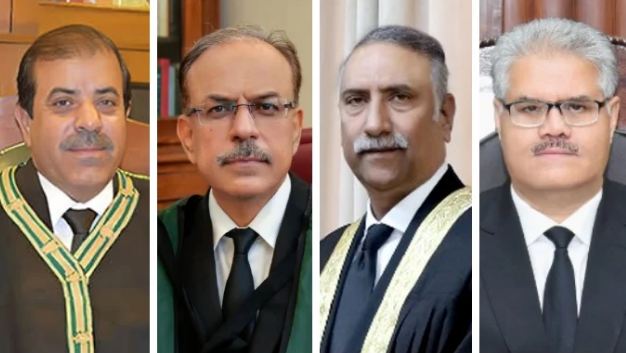
ISLAMABAD: The Judicial Commission of Pakistan (JCP) on Tuesday approved the appointments of permanent chief justices for four high courts, sources told Geo News on Tuesday.

The JCP meeting, headed by Chief Justice Yahya Afridi, convened to consider the nominations for high court appointments.

The top judicial body approved Justice Atiq Shah as the new chief justice of the Peshawar High Court (PHC), while Justice Rozi Khan has been endorsed for the top post at the Balochistan High Court (BHC).

Justice Junaid Ghaffar, the senior-most judge of the Sindh High Court (SHC), has been elevated as its new chief justice.

In addition, Justice Sarfraz Dogar has been approved as the permanent chief justice of the Islamabad High Court (IHC), sources said.

Justice Atiq Shah’s nomination was endorsed by 11 of the 16 members of the commission. He is currently the second most senior judge at the PHC.

However, Supreme Court judges Justice Mansoor Ali Shah and Justice Muneeb Akhtar opposed his nomination. Khyber Pakhtunkhwa’s law minister and two members affiliated with Pakistan Tehreek-e-Insaf (PTI) also expressed their dissent.

The JCP has formally notified the Prime Minister’s Office of its approval for the appointment of permanent chief justices for four high courts.

In February, five IHC judges had moved the apex court against the appointment of Justice Dogar as the acting chief justice of IHC, as well as the transfer of three high court judges to their court.

The plea was filed by Justice Mohsin Akhtar Kiyani, Justice Tariq Mehmood Jahangiri, Justice Babar Sattar, Justice Sardar Ejaz Ishaq Khan and Justice Saman Riffat Imtiaz.

However, the top court, on June 19, dismissed pleas filed against the transfer of judges and ruled that Justice Dogar could continue to work as IHC’s acting chief justice. Following this, the judges filed a review petition, which is pending.

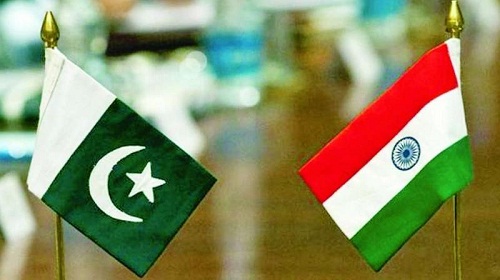
Experts warn of rising Pak-India tensions, urge diplomacy & economic security


ISLAMABAD, JUL 1 /DNA/ – “The 2025 crisis was a reminder that while full-scale war may be avoided due to nuclear deterrence, the threat of limited conflict persists under the stability-instability paradox,” Dr. Adil Sultan, an expert on nuclear studies, remarked. A high-level roundtable recently held at the Institute of Regional Studies featured prominent national security and strategic experts.

The experts discussed growing concerns over the recurring confrontational pattern between Pakistan and India. The dialogue emphasized the critical need for robust deterrence, regional diplomacy, and a calibrated response to emerging security threats.


Dr. Adil Sultan critically examined the notion of a ‘new normal’ in India-Pakistan conflict dynamics, arguing that acknowledging such a concept would only legitimize future unilateral actions by India. He credited Pakistan’s measured yet firm response in 2019 for preserving regional stability and reaffirmed that nuclear deterrence remains the cornerstone of peace.


Major General (Retd.) Samraiz Salik observed that confrontations between the two nuclear-armed neighbors tend to follow a pattern of recurrence every 5–10 years, fueled by India’s aggressive regional posture and ‘perceived’ strategic advantage. ‘Pakistan’s superior cyber capabilities and expanding diplomatic outreach have been a decisive factor in the recent Indo-Pakistan escalation’ noted Major General Samreez Salik. He warned that disruptions within Pakistan, particularly attempts to derail the China-Pakistan Economic Corridor (CPEC), often coincide with these escalations.


The President of IRS, Ambassador Jauhar Saleem noted that India’s adoption of a new offensive doctrine, combined with inspiration from US and Israeli pre-emptive strike models, signals a doctrinal shift. Ajit Doval’s “offensive capability” statements and India’s actions post-Pulwama indicate a deliberate effort to test thresholds and shape battlefield narratives.


Dr. Zia Ul Haque Shamsi highlighted the ideological transformation within India, characterizing the Modi administration’s policies as shifting the country from a secular republic to an extremist Hindu state. He cautioned that such transformations not only polarize India internally but also contribute to erratic and irresponsible behavior on the regional stage. “India’s belligerence, masked by its projected role as a counterweight to China, has gained it unchecked Western support—both diplomatically and militarily,” he stated.


Referring to past confrontations in 1999, 2005, 2008, 2016, and 2019, Dr. Shamsi pointed out that the current trajectory is dangerously similar, underlining that peace hinges on the success of either diplomacy or deterrence. When both fail, conflict becomes inevitable.


The roundtable concluded with a unanimous call for sustained bilateral dialogue between Pakistan and India. Drawing parallels with Cold War diplomacy, the participants stressed that continuous engagement is indispensable for de-escalation and long-term conflict resolution. However, experts highlighted pertinence of economic security for the country to counter any impending challenge.

Ethiopia, Pakistan agree to forge stronger cultural relations

Ethiopia

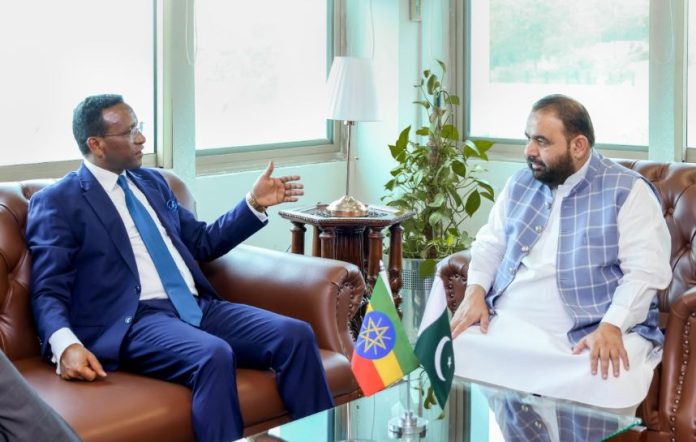
ISLAMABAD, JUL 1 /DNA/ – The Federal Democratic Republic of Ethiopia (FDRE) and the Islamic Republic of Pakistan on Tuesday agreed to further strengthen the bilateral relations by enhancing cultural ties of the two nations. 

To this end, H.E. Dr. Jemal Beker Abdula, Special Envoy and Ambassador Extraordinary of the FDR Ethiopia held a productive discussion with H.E. Mr. Muhammad Aurangzeb Khichi, Federal Minister for National Heritage and Culture.

H.E. Mr. Asad Rehman Gilani, Federal Secretary of Pakistan for the National Heritage and Culture Division, was also present on the occasion.

Ambassador Dr. Jemal emphasized the importance of fostering robust people-to-people connections through cultural exchange. He highlighted the recent launch of Ethiopian Airlines operations in Karachi, which now connects Pakistan to Africa and the broader global network.

During the discussion, the Ambassador briefed the Minister about “Medemer” philosophy of Prime Minister Dr. Abiy Ahmed, which is focused on nation-building through practical inter-generational connectivity, unity, and togetherness.

He said Prime Minister Dr. Abiy Ahmed is a prolific writer and wrote three books on “Medemer” philosophy.

The Ambassador presented Minister Khichi with a copy of “Generation Medemer” which was unveiled in Pakistan in 2023, and added to the collection of the National Library of Pakistan this year.

Minister Khichi expressed keen interest in the “Medemer Philosophy” and announced to translate “Generation Medemer” into Pakistan’s national language.

He affirmed Pakistan’s readiness to pursue all necessary formal processes to deepen cultural collaboration with Ethiopia, commending the Ambassador’s practical and valuable proposals for mutual engagement in heritage and culture.=DNA

Interior Minister praises FC, CTD for foiling terror attack in Mastung

Mohsin Naqvi

ISLAMABAD, JUL 1 /DNA/ – Federal Interior Minister Mohsin Naqvi has strongly condemned the attack by Fitna-e-Hindustan Terrorists on the Levies Line and government property in Mastung. He paid tribute to the brave personnel of FC, CTD, and Levies for thwarting the attack by the terrorists of Fitna-e-Hindustan.

Mohsin Naqvi lauded the professional capabilities of FC, CTD, and Levies for sending two terrorists of Fitna-e-Hindustan to hell. The Interior Minister emphasized that FC, CTD, and Levies effectively responded and foiled the terrorist attack through swift and decisive action.

He stated that the personnel of FC, CTD, and Levies fought the terrorists of Fitna-e-Hindustan with great courage, which is commendable. He expressed solidarity with the family of the young martyr who lost his life in the attack and prayed for the speedy recovery of the injured.

Stay Connected

64FansLike
60FollowersFollow

Latest Reviews

Exchange Rates

USD - United States Dollar
EUR
1.17
GBP
1.34
AUD
0.67
CAD
0.73