Home Blog Page 3011

Chinese envoy says CPEC highly valued in Pakistan

A.M.Bhatti

ISLAMABAD: Chinese ambassador to Pakistan Nong Rong has said that as an important pilot project of the Belt and Road Initiative (BRI) and a demonstration project of China-Pakistan Cooperation, the CPEC plays a significant role to promote the in-depth development of the all-weather strategic cooperative partnership and high-quality growth of the Belt and Road Initiative.

He expressed these views while speaking during a webinar organized by the CPEC Media Froum and Chinese embassy.

 The ambassador further said that high level and quality participation in the CPEC media forum was the testimony to the fact that CPEC has been highly valued in Pakistan.

Since its inception in 2015, CPEC Media Forum has brought together the governments, business communities, media, think tanks, and other sectors of China and Pakistan to focus on the construction of the CPEC.

While commenting on a recently held meeting of the Joint Working Group on international coordination on CPEC, he said that China would strengthen coordination with academia and think-tanks through CPEC.

Since its launch, Pakistan has achieved fruitful results of CPEC cooperation. After the successful completion of CPEC Phase 1, which focussed on energy and infrastructure, the second phase would focus on industrial cooperation, agriculture, science, technology, and improving the livelihoods of people. Moreover, he highlighted the prospects of CPFTA-II and said that it would solve the issue of the trade imbalance between Pakistan and China.

Chairman Senate Sadiq Sanjrani, Senator Mushahid Hussain Sayed and others also spoke on the occasion.

ICCI, RDA sign MoU for establishment of Industrial Estate

DNA

ISLAMABAD – The Islamabad Chamber of Commerce & Industry (ICCI) and the Rawalpindi Development Authority (RDA) have signed a Memorandum of Understanding (MoU) to establish a framework of cooperation between the two organizations to carry out joint efforts for the establishment of an industrial estate alongside the Rawalpindi Ring Road (R3) project on Public Private Partnership (PPP) model, to be known as the “ICCI Islamabad Industrial Estate”.

Sardar Yasir Ilyas Khan, President ICCI and Raja Tariq Mehmood, Chairman, RDA signed the MoU during a ceremony held at Chamber House. Fatma Azim Senior Vice President, Abdul Rehman Khan Vice President ICCI, Khalid Javed Convener ICCI Committee on New Islamabad Industrial Estate, Mian Akram Farid Chairman Founder Group, Muhammad Junaid Taj, Deputy Director RDA and others were present in the ceremony.

Speaking at the occasion, Sardar Yasir Ilyas Khan, President, Islamabad Chamber of Commerce & Industry said that Pakistan’s progress and prosperity was linked with industrialization and hoped that the signing of this MoU between ICCI and RDA would be instrumental in setting up a new industrial estate to boost investment and start a new era of rapid industrial growth in the region. He urged that the government should extend the construction package for another year to attract maximum investment. He further said that the government should also set up a real estate regulatory authority in order to regulate the activities in the construction and real estate sector and promote regulated businesses in this field.

Raja Tariq Mehmood, Chairman RDA said that his organization would make all possible efforts for the establishment of ICCI Industrial Estate as this project was in the best national interest and would be helpful in attracting local and foreign investment to the region. He said that the project would also create plenty of new jobs and contribute towards tax revenue of the country, therefore, its early materialization would support the efforts for stabilizing the economy.

By signing this MoU, ICCI shall arrange preparation of technical and financial feasibility for industrial estate project and submit them to RDA for evaluation and approval. ICCI shall also help in generating partial funding for acquisition of land for industrial estate while RDA shall acquire the required land from the land owners and commit industrial plots to the investors who will be providing funding for land acquisition. ICCI shall mobilize investors for investment in the industrial estate to set up small, medium and large-scale industries in order to produce manufactured and export-oriented products. ICCI shall also assist RDA towards formalization of the industrial estate by holding meetings with the relevant departments of the Punjab and Federal governments. Moreover, ICCI in consultation with RDA shall help finalize modalities and SOPs for the sale/purchase of plots in the industrial estate.

RDA shall acquire required land for the ICCI Industrial Estate and shall get notified of the acquired land from the Punjab Government. RDA shall earmark the land after approval of feasibility for ICCI Industrial Estate project and determine sizes and modalities for sale of industrial plots in consultation with ICCI. RDA will also negotiate with the Punjab Board of Investment to acquire approval for this industrial estate under SEZ model and will be responsible for developing its master plan in consultation with ICCI which will then be proposed to the potential investors for investment.

CPEC now a household word” says Sadiq Sanjrani

CPEC Media Forum to counter propaganda with facts, CPEC open to 3rd countries 

DNA/Staff Report

ISLAMABAD, Dec. 28 – The 6th China-Pakistan Economic Corridor (CPEC) Media Forum was held here in Islamabad. The forum was jointly organized by the Pakistan-China Institute (PCI) and China Economic Net (CEN) in cooperation with the Embassy of the People’s Republic of China in Pakistan. It is conducted as an annual event in Beijing and Islamabad in alternate years. Due to COVID-19, this year’s forum was held virtually and was themed “Post-epidemic China-Pakistan Media Cooperation”.

The Forum conducted in-depth exchanges and discussions on topics including the opportunities for digital media, media as an engine for the high-quality development of CPEC, and China-Pakistan media cooperation. It was moderated by Zoon Ahmed Khan, anchor of China Economic Net. Chairman Senate, Sadiq Sanjrani was the chief guest. The forum was addressed by Railways Minister, Deputy Chairman Planning Commission plus Ambassadors of both countries.

Zheng Qingdong, President and Editor-in-Chief of Economic Daily, and Mustafa Hyder Sayed, Executive Director, Pakistan-China Institute gave the welcome addresses. Zheng highlighted the importance of the CPEC media forum and said that since it’s launch, it has contributed a lot towards building a positive public opinion on CPEC. He said that in the face of the complex international environment, the media of China and Pakistan should take joint actions and form synergies in firmly opposing the negative propaganda against CPEC. Moreover, he said that the year 2021 will be the 70th anniversary of Pak-China diplomatic relations which will be celebrated with zeal and zest in both countries.

Mustafa Hyder Sayed said that Pakistan-China Institute in collaboration with China Economic Net launched the CPEC media forum as an online event and it is held in Beijing and Islamabad in alternate years. Last year, Pakistan-China Institute launched the Rapid Response Information Network (RRIN) which identifies fake news on CPEC and deconstructs them with Facts. Moreover, PCI has also launched a monograph titled “CPEC: Facts Vs Fiction”. Mustafa informed the audience that the Pakistan-China Institute will be publishing “The Governance of China”, Part 2 and Part 3 in Urdu, which are authored by President Xi Jinping.

Muhammad Sadiq Sanjrani, Chairman Senate of Pakistan, in his keynote speech said that China-Pakistan Economic Corridor (CPEC) has achieved significant milestones through joint efforts of the governments, enterprises, and peoples of both countries. The first phase of CPEC, which focused on energy and infrastructure projects met its successful completion and now, the second phase is set to boost Pak-China cooperation in agriculture and initiate an era of industrialization through the establishment of Special Economic Zones. He commended the role of the media and said that it has played a very important role in the dissemination of facts on CPEC which has resulted in CPEC becoming a household name in Pakistan. Through events like the CPEC media forum, both countries get an excellent opportunity to consolidate the existing all-weather friendship. He also highlighted Pakistan’s Medical and moral support to China during its fight against the pandemic. Moreover, he said that the Senate passed a resolution that acknowledged China’s robust measures to deal with coronavirus and commended their efforts to make Pakistani there, mainly students in Wuhan, feel at home during this critical time. It is evident from the documentary “CPEC Cooperation during COVID-19” made by PCI, that CPEC remained resilient even during a global pandemic and progressed ahead. As China-Pakistan cooperation proceeds to a greater depth, the Senate of Pakistan shall play a greater role in extending all possible cooperation to the media of both countries to develop greater understanding and cooperation on the issues of common interests. The 10th JCC on CPEC will be held soon, he announced.

Chinese ambassador to Pakistan Nong Rong said that as an important pilot project of the Belt and Road Initiative (BRI) and a demonstration project of China-Pakistan Cooperation, the CPEC plays a  significant role to promote the in-depth development of the all-weather strategic cooperative partnership and high-quality growth of the Belt and Road Initiative. He said that high level and quality participation in the CPEC media forum is the testimony to the fact that CPEC has been highly valued in Pakistan. Since its inception in 2015, CPEC Media Forum has brought together the governments, business communities, media, think tanks, and other sectors of China and Pakistan to focus on the construction of the CPEC. While commenting on a recently held meeting of the Joint Working Group on international coordination on CPEC, he said that China would strengthen coordination with academia and think-tanks through CPEC. Since its launch, Pakistan has achieved fruitful results of CPEC cooperation. After the successful completion of CPEC Phase 1, which focussed on energy and infrastructure, the second phase would focus on industrial cooperation, agriculture, science, technology, and improving the livelihoods of people. Moreover, he highlighted the prospects of CPFTA-II and said that it would solve the issue of the trade imbalance between Pakistan and China.

Pakistan’s ambassador to China, Moin ul Haq said that in this digital age, the media is playing a pivotal role in bolstering the friendship and solidarity between the peoples of Pakistan and China. He said that the media has rightly guided the public about the true significance of the CPEC project, which has resulted in creating a national consensus on CPEC. Moreover, he said that Pakistan is the biggest proponent of BRI and endorses President Xi’s philosophy of shared future and prosperity. He concluded by saying that Pakistan and China need to strengthen media cooperation by screening more films in China just like ‘Parwaaz hai Junoon”, which was the first Pakistani film screened in China in the last 45 years. He said that JWG on International Cooperation was held in Urumqi on December 26 which agreed to broaden CPEC by inviting third country participation.

Tian Yuhong, Executive Secretary of the All-China Journalists Association said that CPEC is a symbol of attachment between Pakistan and China and even a global pandemic like COVID-19 could not stop the progress of projects under its umbrella. He said that news exchange and cooperation is an important factor to promote the healthy development of bilateral relations and smooth implementation of CPEC projects. Under the BRI framework, All-China Journalists Association has established close cooperative relations with several journalist organizations, including the Pakistan Federal Union of Journalists, All Pakistan Journalists Association, and All Pakistan Newspapers Society. Moreover, he said that in the face of COVID-19, the common enemy of mankind, the media of China and Pakistan help each other with a common mission

Senator Mushahid Hussain Sayed, Chairman, Senate Foreign Affairs Committee and Pakistan China Institute commended the resilience of CPEC which progressed with full speed and vigor during COVID-19. He said that not a single Pakistani working on CPEC sites was laid off. While commenting on the recently held meeting on Joint Working Group on international coordination, he said that there will be an increased focus on media and think tank collaboration to take CPEC forward. The meeting also welcomed third party participation in CPEC. Moreover, he highlighted three objectives of conducting CPEC media forum. Firstly, it is aimed to promote and strengthen the all-weather strategic partnership between Pakistan and China. CPEC is part of BRI which is the biggest developmental and diplomatic initiative of the 21st Century. Secondly, it aims to counter the propaganda against CPEC with facts. This type of media cooperation will create synergies and energize both sides to come up with facts needed to shape positive public opinion on CPEC. Thirdly, it aims to highlight CPEC developments to the media and the general public. In this way, the forum is acting as a ‘Force Multiplier’ in taking this friendship forward.

. NI Siyi, Deputy Director, Office of Editor-in chief, Xinhua News Agency said that since the launch of CPEC, there has been close cooperation between the media houses of both countries, When Prime Minister Imran Khan visited China in October 2019, INP and Xinhua news signed an agreement to take this cooperation to next level. He called for airing more stories on CPEC which evoke people’s engagement. Moreover, he said that the media of both countries need to highlight the importance of the 70th anniversary of Pak-China diplomatic relations in 2021.

. Muhammad Jahanzeb Khan, Deputy Chairman Planning Commission gave a  very comprehensive presentation on CPEC Phase two. He said that CPEC is a multilayered project. In the first phase which ended in 2020, the focus was on improving infrastructure and solving the issue of energy. In the second phase which will end in 2025, processing and manufacturing industries will be developed and efforts will be made to ensure improvement in people’s livelihoods and balancing regional economic development. In the third phase (2025-2030) also called the period of maturity, the indigenous mechanism for sustainable economic growth will be in place and CPEC will be ready to play a leadership role in the region.

Ms. Zhao Qiao, Director, Department of Urdu, Asian & African Center, China Media Group said that the media of both countries fought misinformation regarding Pakistani students in Wuhan during COVID-19 by interviewing them and communicating the true perspective. She called for enhanced media ties between two brotherly countries and said that steps should be taken at the governmental level to increase people-to-people exchanges between Pakistan and China.

Senator Azam Khan Swati, Federal Minister for Railways highlighted the importance of the ML-1 project and said that it would transform the socioeconomic fate of Pakistan and the whole region by giving a boost to connectivity. This project, he said will create employment opportunities for the locals and improve the logistics infrastructure in the country. Moreover, he thanked China for standing with Pakistan through thick and thin and said that in the coming days, this cooperation would be diversified and made more comprehensive. He said ML-1 would cover 80% of Pakistani territory and 78% of the population of Pakistan

Mudassir Tipu Director-General (China), Ministry of Foreign Affairs Pakistan termed CPEC as a transformational and consensus-oriented project. He said that COVID-19 cooperation between Pakistan and China has been exemplary. He also appreciated the Chinese Communist Party for extending full support to Pakistan during the pandemic. Moreover, he also called for closer cooperation between the media of both countries.

Amir Ghauri, Editor of The News talked about the ways to respond to CPEC challenges and said that the coverage of this grand project has seen a significant increase since its launch. He briefed the participants about the importance of connectivity as a result of CPEC. Moreover, he called for upgrading media ties between the two nations.

After the speeches, an award ceremony was held in which seven journalists were conferred with “CPEC Communication Award”. Those seven journalists were; Muhammad Asghar, correspondent of Associated Press of Pakistan in Beijing; Naveed Hussain, Editor(Print & Digital) Express Tribune; Shafqat Ali, Special correspondent of The Nation; Liu Chang, Journalist of China Media Group Pakistan Bureau; Tariq Sumair, Editor of INP; Amir Ghauri, Editor of The News; Sultan Hali, Columnist, writer, and author of book on China.

At the end of the conference, there was a comprehensive question/answer session from the participants, which lasted for over 15 minutes. The CPEC Media Forum had huge online participation of over 300,000 persons in Pakistan and China, including students and scholars, journalists, and academics, policy-makers, think-tanks, and business and opinion leaders.

Kazakhstan elections important: envoy

According to the Kazakhstan constitution people aged 25 can be part of the Majlis. All the reforms made by the President are now being practically implemented 

A.M.Bhatti

ISLAMABAD:  Akan Rakhmetullin, Ambassador of the Republic of Kazakhstan to the Islamic Republic of Pakistan has discussed Kazakhstan’s Presidential Political reforms and its important development in the country.

While talking part in a seminar arranged by CGSS, the ambassador thanked all panelists for their in-depth analysis of Kazakhstan’s political system and parliamentary elections. Highlighting the importance of enhanced representation of women and youth he mentioned that according to the Kazakhstan constitution people aged 25 can be part of the Majlis. All the reforms made by the President are now being practically implemented.

The elections being held in 2021 will hold uniqueness in that they are held amidst the COVID-19 pandemic, and the safety of our citizens is the number one priority for the government. The entire process will be conducted keeping in view the international SOPs to ensure the safety of citizens especially the elderly population of Kazakhstan. Democracy cannot be constructed overnight. In Kazakhstan, we are very sensitive about developing our political system to be more open and transparent.

Criminals’ gang busted, motorbikes, weapons recovered

ISLAMABAD, DEC 28 (DNA) – Islamabad Ramana police team has arrested five members of a criminal gang involved in incidents of dacoity as well as street crime and recovered, motorbikes mobile phones and weapons from their possession, a police spokesman said.

According to details, Inspector General of Police (IGP) Islamabad Muhammad Aamir Zulfiqar Khan ordered crackdown against criminal elements. Following these orders, DIG (Operations) has directed all zonal officers to accelerate their efforts to curb the crime in the city.

SP (Saddar-zone) Muhammad Sarfraz Virk constituted police team under supervision of DSP Zulfiqar Ahmed to ensure arrest of criminals.  On a tip off, Police team including  SHO Ramana Police station Sub-Inspector Tarbul-Hassan, ASI Haider Shah along with others successfully arrested five  members of a criminal gang involved in snatching mobile phones and other valuables at gun point from the citizens.

The gangsters have been identified as Arslan, Iqbal, Imtaiz Alias Goga, Javed and Said while police recovered two motorbikes five mobile phone and weapons from their possession

During preliminary investigation, dacoit gang revealed that they have remained jail birds earlier for his involvement in several incidents of dacoity and snatching valuables at gunpoint from various areas Golra, Shalimar, and Karachi company. Cases have been registered against them and further investigation is underway from them.

DIG (Operations) has appreciated this overall performance and directed all police officials to ensure effective policing measures.

Gigi Hadid devoured Pakistani food during pregnancy? Her latest post drops a hint

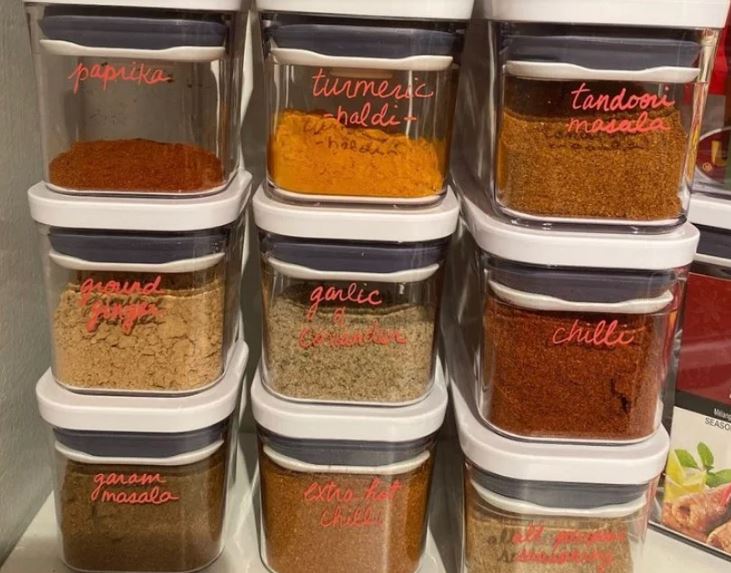
It looks like Gigi Hadid spent her pregnancy period reconnecting to her boyfriend Zayn Malik’s South Asian roots. In a photo posted on her Instagram, the supermodel, 25, revealed how she spent her pregnancy period consuming all kinds of desi spices.

Showing a picture of her pantry, Gigi revealed: “LOL I was a psycho pregnant.”

In the photo, the fashion icon’s desi fans and followers were able to spot quite a few familiar spices, including ‘garam masala’, ‘tandoori masala’, ‘haldi’, ‘jeera seeds’ and many others.

0000

It’s quite possible that the former One Direction member had the couple’s pantry stocked up with all Pakistani spices so the two can reconnect to the traditional Pakistani foods with authentic ingredients.

PDM summons meeting in Lahore on January 1

LAHORE, DEC 28 – The Pakistan Democratic Movement has summoned a meeting with all the opposition party heads in Lahore’s Raiwind on January 1.

It will be presided over by JUI-F chief Maulana Fazlur Rehman.

The meeting will discuss the anti-government rallies that were held across the country starting October this year, the plan for the upcoming year and the Senate elections.

The leadership of the movement is adamant on giving the PTI government a tough time with its resignations and a long march. PPP’s Asif Ali Zardari and PML-N’s Nawaz Sharif will give their opinions regarding resignations.

The PDM held a rally in Larkana on Sunday. PPP Chairperson Bilawal Bhutto Zardari, in his speech, said the opposition will march to Islamabad if Prime Minister Imran Khan doesn’t resign by January 31.

What is the Pakistan Democratic Movement?

The PDM, which comprises 11 opposition parties, has been staging anti-government rallies across Pakistan.

The first rally was held in Gujranwala on October 16, the second in Karachi on October 18, and the third in Quetta on October 25. The movement’s fifth rally was held in Peshawar on November 22 and its sixth in Multan on November 30.

The opposition members said there should be accountability for anyone accused of corruption, not just the opposition. At the rallies, the opposition leaders also challenged the country’s powerful establishment, accusing them of bringing the PTI government to power through systematic rigging.

Book launching ceremony held at PUCAR

RAWALPINDI, DEC 28 (DNA) – A launching ceremony of the book “Mehwar-e-Do Jahan” by senior poet Naseem-e-Sahar was held under auspices of Punjab Council of the Arts in collaboration with Halqa Ilam o Adab Pakistan.

The ceremony was presided over by Prof Dr Ehsan Akbar while Khawar Ijaz, Dr Farhat Abbas, Dr Arshad Mehmood Nashad was chief guests and Sharfudin Shafi was among the guest of honor of the evening. President  Halqa Ilam o Adab Arif  Farhad hosted the function.

Prof. Dr. Ehsan Akbar said that the Hamdo and Naat written by Naseem Sehar are full of devotion and are written on a strong level. Naseem Sehar has emerged as a strong poet of Hamdo Naat, he added.

On this occasion, Naseem Sehar also presented selected poems of his new composition to the audience and got much appreciation from the audience. Director Arts Council Waqar Ahmed said that intellectual thinking would help us to express ourselves.

The new book with Hamdo Naat is a gift for the new generation. In the book, Naseem Sahar has presented his love for Hazrat Muhammad “P.B.U.H” in a new way, which will be liked by the fans. Dozens of people from literary circles attended the book lunching ceremony.=DNA

================

AIOU commences admissions for spring 2021 semester from January 15, 2021

DNA

ISLAMABAD, DEC 28 – Allama Iqbal Open University (AIOU) commences admissions for the programs offered in the 1st phase of spring 2021 semester including matriculation, intermediate, ATC, BS (face to face) as well as MS/M Phil and PhD from January 15, 2021 across Pakistan, AJK and northern areas. According to the admission department, university has taken special measures to ensure availability of the admission prospectuses at the doorsteps of the students.

In this regard, prospectus sale points are being established at the union council level throughout the country. The information about the prospectus sale points would be uploaded on the university website soon. Prospectuses for all the programs will be available online on the university website (www.aiou.edu.pk).

The university has recently signed MoUs with the telecom operators of Pakistan to facilitate the students in fee depositing. In accordance with these agreements, students would be able to deposit admission fee through Jazz cash, Easypaisa, Upaisa mobile application *786# stickering, retailer agent, franchises and Mobilink, Telenor and U bank branches.

Admissions in the 2nd phase of spring 2021 semester will be commenced from March 1, 2021 and will continue till 15 April, 2021 for the programs including BA (Associate Degree), BS and B Ed. The Vice Chancellor, AIOU, Prof Dr Zia Ul-Qayyum, has instructed the relevant admission authorities to take special measures to provide admission facilities in the nearest and approachable vicinities of the students.

This objective would be achieved by providing admission facilities not only at the main campus of the university, but also at all regional offices. He, further, instructed the regional directors to establish ‘admission desk’ well equipped with computer system and internet services at the regional offices to facilitate the students in online admission process.

Intellectuals discuss upcoming Parliamentary elections in Kazakhstan

Experts were of the view that Kazakhstan is emerging as the most powerful country with a lot of opportunities in the future

DNA

ISLAMABAD:  Center for Global & Strategic Studies (CGSS), Islamabad organized an Online Conference on, “Kazakhstan’s Parliamentary Election 2021: A Way Forward for Further Strengthening Democracy & Political Setup”.

The conference aimed to understand the Kazakhstan government’s attempts to strengthen fair democratic and political values in the country to give a neutral and unbiased perspective on how such steps will be effective for free and fair parliamentary elections in the country on 10th January 2021.

The conference was commenced with the speech of Dr. Mahboob Hussain, Chairman, Department of History & Pakistan Studies, University of Punjab, Lahore. He discussed Kazakhstan Parliamentary Election 2021: A Giant Step Towards Liberal and Functional Democracy. He mentioned the historical and cultural importance of Central Asia dating back to ancient times. Hundreds of poets, writers, and Sufis migrated from central Asia to South Asia, thereby contributing significantly to the literature, history, science, and culture of South Asia.

Dr. Mahboob highlighted that the upcoming elections are an important step towards the political institutionalization setup in the country. Several reforms have been introduced for the upcoming elections in terms of representation and constitutional requirements. It is a very important step in terms of institution building, especially the political institutionalization building.  In the upcoming parliamentary elections, the determining factor will be the new paradigm of the relation between the state and the society. The presidential elections of June 2019, was the first sign that new political players and new political forces are getting their share in the political landscape of the country.

He further mentioned that it is the science of history that politically stable societies gain economic prosperity. Kazakhstan is one of the most economically and socially stable country of Central Asia as a result of the constitutional reforms, the election commission of Kazakhstan has implemented effective reforms including, voter registration reforms and securing representation of women and youth.  If we compare the upcoming elections with the previous elections, there are several key differences. There are new players in the political process, increased transparency, and the enhanced right to speak and participate during joint discussions, meetings of standees committees, etc.

Dr. Ghazi M. Abdullah, Assistant Professor, Department of History, University of the Punjab, Lahore discussed blessings of Political system in Kazakhstan. He highlighted that this topic is very important viz a viz the current political situation in Kazakhstan. It is a country that is economically, politically, historically, geographically and in the foreign policy paradigm is one of the most important countries in Central Asia. The upcoming elections will have a long-term impact on the regional politics and economies of neighboring countries and their relation with China and Russia as well.

Furthermore, historically its relation with Russia and the adjoining territories has always been important. It is witnessed that Kazakhstan is emerging as the most powerful country with a lot of opportunities in the future. In recent reforms, the trade relation of local traders and mercantile associations has enhanced resulting in economic development.

He also mentioned that the most important element in the Kazakhstan political system is the visionary leadership and role of Nursultan Nazarbayev in introducing productive reforms in Kazakhstan, despite all western propaganda and reservations. Keeping in view the present scenario, his role and contribution cannot be kept aside, as it has proven to be a guiding star for everyone and the most important pillar of Kazakhstan’s system.

Dr. Mehmood Ul Hassan Khan, Member Board of Experts, CGSS & Regional Geopolitical Analyst discussed Vital actors of preparedness of free and fair elections in Kazakhstan in 2021. He mentioned that all actors in Kazakhstan are fully prepared for upcoming parliamentary elections according to international standards and protocols. All preparations for free, fair, and impartial elections have been institutionalized in the country, including peoples friendly policies, equal participation, and structural reforms in all sectors.

He highlighted that there has been an upward trend in the political system of Kazakhstan, the percentage of youth and women has been further increased since the last elections.

Kazakhstan has ensured 30% participation of women and youth, this shows the education, high literacy rate, and the empowerment transition in the Republic of Kazakhstan. Women have been playing a vital role in the socio-economic development of Kazakhstan, it has been witnessed that important roles have been given to women. This is a practical manifestation of diversified political reforms in the country.

Dr. Mehmood highlighted that 5  political parties will be participating in the upcoming elections, all these parties are free to participate and nominate their representatives depending on their popularity, education, and experience of the candidates. Attractive promises have been made by the candidates including, zero corruption, accountability, formation of small and medium enterprises (SMEs), microfinancing, and agriculture.

His Excellency Akan Rakhmetullin, Ambassador of the Republic of Kazakhstan to the Islamic Republic of Pakistan discussed Kazakhstan’s Presidential Political reforms and its important development in the country. He thanked all panelists for their in-depth analysis of Kazakhstan’s political system and parliamentary elections. Highlighting the importance of enhanced representation of women and youth he mentioned that according to the Kazakhstan constitution people aged 25 can be part of the Majlis, but before these elections, it was not practically manifestoed. All the reforms made by the President are now being practically implemented.

The elections being held in 2021 will hold a uniqueness in that they are held amidst the COVID-19 pandemic, and the safety of our citizens is the number one priority for the government. The entire process will be conducted keeping in view the international SOPs to ensure the safety of citizens especially the elderly population of Kazakhstan. Democracy cannot be constructed overnight. In Kazakhstan, we are very sensitive about developing our political system to be more open and transparent. His Excellency Akan Rakhmetullin thanked CGSS for organizing this Conference and stated that we have to keep speeding our friendship and brotherhood.

The conference was moderated by Ms. Palwasha Nawaz, Project Executive, CGSS, and was attended by 50 participants including students and members of academia. It was also viewed by 100 people on social media networks.

Stay Connected

64FansLike
60FollowersFollow

Latest Reviews

Exchange Rates

USD - United States Dollar
EUR
1.17
GBP
1.35
AUD
0.72
CAD
0.73