Home Blog Page 2970

Conference explores economic cooperation between Pakistan, Xinjiang

DNA

BEIJING, JAN 23 – Speakers at the online conference for the Promotion of Economic and Trade Cooperation of Xinjiang, China — Pakistan Session underlined that Pakistan and Xinjiang have achieved fruitful cooperation results, and it is believed that it’s time for both sides to make joint efforts to further strengthen the depth of development in the fields of mechanized agriculture, food processing, agricultural tourism, textile technology transfer and skills upgrading.

The conference was held by the Commerce Department of Xinjiang Uygur Autonomous Region of China the other day, China Economic Net (CEN) reported.

Khashih ur Rehman, Additional Secretary/Executive Director, Board of Investment, Pakistan said on the occasion that textiles and agriculture are two high priority areas for the development of the China-Pakistan Economic Corridor (CPEC) in mutual cooperation.

“The Pakistani government has set up a separate joint working group under the framework of CPEC agreement to promote agricultural development, and cooperation among leading enterprises has made great progress. The textile and clothing industry is the largest manufacturing industry in Pakistan. Pakistan has a complete textile value chain in which Chinese enterprises are quite welcome to invest.”

Xie Guoxiang, Minister Counsellor of the Chinese Embassy in Pakistan underlined that Xinjiang Autonomous region is located at the forefront of China and Pakistan and has great geographical advantages in bilateral cooperation. He said that in recent years, Xinjiang has actively developed modern industrial systems such as deep processing of agricultural products, textile and clothing equipment manufacturing, energy and tourism, made significant progress in related industries, and created more cooperation opportunities with Pakistani partners. Because of Xinjiang’s special geographical location and diversified industrial layout, the prospect of cooperation between Xinjiang and Pakistan will be amazing and bright.

Badar uz Zaman, Commercial Counsellor of the Pakistani Embassy in China stated that urban development and cooperation is the fulcrum and support of the China-Pakistan Economic Corridor and the core project of connectivity.

Rising China and the burgeoning industrial cooperation

By Hassan Daud

China’s strength as the factory of the world and the key driver of global economic growth is visible as the world enters 2021 with new hope to combat the pandemic challenge through vaccine and bring growth and prosperity. In a country where per capita income has considerably increased and the New Year speech of President Xi echoed these sentiments when he said “In 2020, China made the historic achievement of establishing a moderately prosperous society in all respects and achieved decisive success in eradicating extreme poverty”.

In the post pandemic time, China has also taken the lead in achieving an economic regrowth with the World Bank and IMF forecasting GDP growth by 7.9 percent in 2021. According to the new 5 year plan starting in 2021,China will be able to eradicate extreme poverty, accelerate technology and high quality growth, invest sizable share of its GDP on culture and sports development and encourage Chinese companies to internationalize and pursue global expansion. Most interestingly, experts believe that by 2030 (the planned completion time of CPEC projects), China will have 6G around 1000 times the speed which is available today and with that level of connectivity and high speed transportation across all modes through which China will be able to replenish goods, works and services with far more sustainable speed and unprecedented scale. The main sectors and industries benefiting this economic transformation include high-speed railways, electric and hybrid cars, renewable energy generation, movie Production, online gaming, high-end Communication , quantum computing, 5G revolutions in agriculture, high-end logistics and transaction services, health care , traditional Chinese medicine, biomedical, telecommunications, energy, robotics, digitalization,  Renewable Electricity Producers and several more avenues.

According to World Bank’s report, China’s next transformation is well under way, and a “New Economy” is emerging, all set to make global impact through innovations and economic initiatives leveraging its demographic and economic diversity. China’s GDP is $14.3 trillion and these numbers in them self gives us a reason to promote trade and Industrial linkages with China through CPEC or any opportunity that exists outside the great initiative as the important phase leading to 2030 is likely to be transformational for the industrial Growth, development of Gwadar, regional trade, industrial and investment landscape in Pakistan. Through CPEC development, it is also expected that by 2025 processing and manufacturing industries will be developed including setting up of the priority SEZs and by 2030, ML-1 close to being fully operational and the endogenous mechanism for sustainable economic growth will be in place.

While there is a high level of misunderstanding and lack of knowledge of China in the West there is some dearth in our understanding of how China is growing and will shape up by 2030 and why we need to attract Chinese FDI fast and increase level of business to business interaction especially in the areas of e-commerce, technology, real estate, hospitality, health care, low-cost housing, media & entertainment and telecommunications.  For that to happen and for us to address the challenges and harnessing the opportunities and set the future directions to attract FDI, it requires a new industrial and investment development path that promotes complementarity, consistency and high level of coordination at all levels. This path is not going to be easy considering the hard work and dedication like China where the entire generation exhibited in their pursuit to prosperity. Therefore, we need to open our imagination and interact with Chinese business community, academia and Government officials and discuss possibilities for Pakistan’s industrial development in the Chinese growth.

The recovery of global FDI will probably start to happen by end of 2021 opening opportunities for investment and development and giving us time to prepare suitable investment promotion strategy charting a sustainable path to attract multinationals which may look to diversify and relocate to mitigate. We therefore need to address the challenges and harnessing the opportunities that are likely to arise from the future directions of global FDI through novelty in our investment strategy to attract Chinese and other investment.  As a stepping stone our standing of EODB has witnessed improvement and the Government including provincial governments is crafting policies favorable to market transactions, to attract foreign direct investment, protecting property rights to encourage entrepreneurship and promoting sustainable knowledge investment. Following the same, Government of Khyber Pakhtunkhwa has recently approved its “Industrial Policy 2020” and Trade & Commerce Strategy, which will pave the path for sustainable industrialization in Rashakai SEZ and other areas and will generate economic activity. These policies and strategies make an attempt to prioritize and incentivize trade and investment in industrial sectors and create a “Pull Factor” for investors to form joint ventures with local investors, invest in utilizing indigenous natural resources, bring new technology, invest export oriented industries, and add value to local products.

In order to accrue desired outcome fast,  the  Industrial cooperation under CPEC needs to remain consistent and in line with national agenda of economic growth, employment generation, regional connectivity and rapid industry and trade development leading to more sustainable investment in the green and blue economy. The Special Economic Zones (SEZs) and its development activity corridors are essential elements of the logistics system. Therefore, in these crucial times, we also need to expedite the push for improving business environment in an effort to spur economic development and for this, we need to target specific sectors with improving efficiencies, establish one window (at Federal and Provincial BoIs) and promote market competition by crafting attractive policies that are flexible for any novel business venture through a government-industry dialogue as complicated institutional arrangement is often interpreted as commercial risk. Secondly, accelerate country’s efforts to strengthen our human capital to prepare them for supporting the labour seeking investment by increasing annual per capita expenditure on education and vocational training to address the CPEC Project and its industrial cooperation. Empirical data shows that when China started its path to attract foreign direct investment under the leadership of visionary Deng Xiaoping the main factor was the low wage yet efficient labor.  Thirdly, bring an unambiguous regulatory framework through investment law. Fourthly, start a 5 year agricultural cooperation action plan with China involving provinces. Fifthly, conduct joint road shows in China and at trade capitals and lastly, accelerate an innovation and research drive by developing  China- Pak academia linkages and perhaps going the Deng’s way when he said in his speech, “Emancipate the mind, seek truth from fact, and unite as one to face the future.”

About the writer: Mr. Hassan Daud Butt is a Projects’ Management specialist and is a faculty member of Projects Management Dept. at various institutes/universities. He can be reached at [email protected]

Biden administration to review US-Taliban withdrawal deal

Washington, JAN 23 – The Biden administration said it will review a landmark US deal with the Taliban, focusing on whether the insurgent group has reduced attacks in Afghanistan, in keeping with its side of the agreement.

Washington struck a deal with the Taliban in Qatar last year, to begin withdrawing its troops in return for security guarantees from the militants and a commitment to kickstart peace talks with the Afghan government.

But violence across Afghanistan has surged despite the two sides engaging in those talks since September.

 President Joe Biden’s newly appointed national security advisor, Jake Sullivan, spoke with his Afghan counterpart Hamdullah Mohib and “made clear the United States’ intention to review” the deal, said National Security Council spokeswoman Emily Horne late Friday.

 Specifically, Washington wants to check that the Taliban is “living up to its commitments to cut ties with terrorist groups, to reduce violence in Afghanistan, and to engage in meaningful negotiations with the Afghan government and other stakeholders,” her statement continued.

 It added that Sullivan “underscored that the US will support the peace process with a robust and regional diplomatic effort, which will aim to help the two sides achieve a durable and just political settlement and permanent ceasefire.”

Sullivan also discussed the United States’ support for protecting recent progress made on women and minority groups’ rights as part of the peace process.

When contacted, the Taliban said they remained “committed to the agreement and honour our commitments”.

Washington’s move was met with a sigh of relief from officials in Kabul after months of speculation over how the new administration would potentially recalibrate the Afghan policy.

Mohib, the Afghan national security advisor, tweeted that during the call the two sides “agreed to work toward a permanent ceasefire and a just and durable peace” in the cou. 

Businessmen want competitive interest rate at neighbouring countries’ level

DNA

KARACHI – The Federation of Pakistan Chambers of Commerce and Industry’s ruling group has raised concern over keeping monetary policy rate unchanged at 7% for the third consecutive time, however, hailed the SB’s indication of maintaining its accommodative monetary stance in the near-term to support the rare recovery amid uncertain Covid-19 challenges.

The FPCCI’s ruling party, BMP, Chairman Mian Anjum Nisar said that in view of the policy rates in neighbouring countries Pakistan’s 7 percent interest is very high, and its reduction is essential to make Pakistani exporting sector as well as the local industry competitive. He said that after the Corona devastation, Pakistan should take advantage of those export orders canceled by the other regional countries. For this, the government will have to reduce production cost of the industries to avail this offer by the international buyers.

Mian Anjum Nisar said that future anticipated inflation would further decline due to low demand amidst the second wave of coronavirus. On the other hand, the external front is also presently sustainable due to foreign financial support and rescheduling of debt that has supported reduction in current account deficit, he added.

He termed the 7% key policy rate as insufficient, especially in the extraordinary prospects amidst fear of worldwide trade and industrial lockdowns.

Mian Anjum Nisar said that the State Bank’s keeping the discount rate unchanged at 7% is not understandable when it also expresses satisfaction over declining inflation and rising the growth, saying the risks to the outlook for both growth and inflation appeared balanced.

FPCCI former president, referring to the central bank reports, observed that most economic activity data and indicators of consumer and business sentiments have shown continued improvement.

On the inflation front, recent out-turns are also encouraging, suggesting a waning of supply-side price pressures from food. He said that inflation is expected to fall further within the previously announced range of 7-9% for FY21 and trend toward the 5-7% target range over the medium-term.

He said the trajectory of the Covid pandemic is difficult to predict, given still-elevated global cases, the emergence of new strains, and lingering uncertainties about the roll-out of vaccines worldwide.

“The trade and industry needs continued support from the government in the form of lower interest rate amidst such external shocks, he suggested.

He said that the Large-Scale Manufacturing grew by 7.4% year-on-year in Oct and 14.5% in Nov. The manufacturing recovery is also becoming more broad-based, with 12 out of 15 sub-sectors registering positive growth in November and employment beginning to recover. While discussing the external sector, he said the outlook for the external sector has improved further and the current account deficit for FY21 is now projected to remain below 1pc of GDP.

He said the current account remained in surplus during the first half of FY21, at $1.1bn compared to a deficit of over $2bn during the same period last year. This improvement has been mainly driven by workers’ remittances, which have remained above $2bn every month during the current fiscal year, he added.

Encouragingly, exports have also recovered to their pre-Covid monthly level of around $2 billion since Sept, with a broad-based recovery in export volumes recorded in almost all categories in Dec, he added.

Mian Anjum Nisar said that the reduction in electricity tariff for SMEs was the first step towards cut in production cost while the second and vital step toward this direction would be bringing discount rate to the regional level with a view to provide level-playing field especially to the export industry. “The decision would have the same importance for the domestic industry too, as it has also been facing tough competition of cheaper imported merchandize in the country following FTAs with several countries, including China,” he added.

He said: “Businessmen Panel appreciates the central bank to bring its policy rate to 7 percent from a high of 13.25 percent and several other measures of continuing fiscal, monetary and credit stimulus, but suggest the SBP committee more reduction of interest rate to cut it to at least 5 percent. While appreciating the central bank’s role in sustaining economic growth through supporting trade and industry, he said that reduction in interest rate would be vital relief to the business community.

He said SBP should take measures and develop a strategy to protect the pace of economic and trade progress of Pakistan otherwise the country might again face lower industrial growth and shifting of industrial units to the sick industry.

Mehidy spins Bangladesh to ODI series win over West Indies

Bangladesh registered a seven-wicket win over West Indies in the second ODI at Dhaka on Friday. Tamim Iqbal hit a half-century while spinner Mehidy Hasan claimed a career best 4-25 on Friday as Bangladesh sealed the three-match, one day series 2-0.

Tamim hit 50 off 76 balls to steer Bangladesh to 149-3 in 33.2 overs after West Indies, missing nearly all their top stars, were all out for 148 at the Sher-e-Bangla National Stadium in Dhaka.

Bangladesh won Wednesday’s opening match by six wickets and kept up the pressure after the West Indies stand-in captain Jason Mohammad won the toss and opted to bat.

Mehidy led the attack while spinner Shakib Al Hasan and pacer Mustafizur Rahman complemented with two wickets each.

Rovman Powell hit 41 off 66 balls while debutant opener Kjorn Ottley and Nkrumah Bonner made 24 and 20 respectively to boost the West Indies score.

West Indies spinner Akeal Hossain trapped Liton Das for 22 before skipper Mohammed grabbed the wicket of Najmul Hossain for 17 to give West Indies some hope.

Tamim, who hit three fours and a six, and the experienced Shakib then frustrated the visitors to make sure of victory. Shakib remained unbeaten on 43.

“It was nice to spend some time in the middle,” Tamim said.

“There is a lot of hunger in the dressing room, and there are people breaking the door down like Saif (Mohammad Saifuddiin) and Taskin (Ahmed),” he added.

West Indies skipper Mohammed was again disappointed with the performance of his side.

“We didn’t build partnerships and lost wickets in clusters, so that’s just not good enough. There’s some positives, but hopefully some other guys put their hands up as well,” he said.

Mustafizur claimed the first breakthrough for Bangladesh by removing Sunil Ambris for six hitting a catch to Mehidy.

West Indies’ wicket woes only increased when Bangladesh introduced their spinners.

Mehidy removed Ottley and Joshua Da Silva (5) in the same over while Shakib bowled Andre McCarthy for only three.

Kyle Mayers, the highest scorer in the previous match, was run out for zero before Shakib trapped skipper Mohammed leg-before for 11 to leave the West Indies floundering at 67-6.

Powell and Alzarri Joseph put on 32 for the ninth wicket to help West Indies past 100 runs.

Mustafizur, who gave away just two runs in his opening four overs, returned to remove Joseph for 17. Mehidy stumped Powell to wrap-up the innings in 43.4 overs. The final match is in Chittagong on Monday.

Pak Marching Towards Self Reliance in Edible Oil

Naveed Miraj

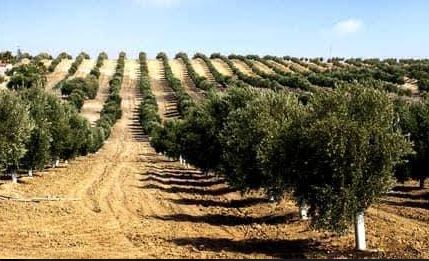
ISLAMABAD- Pakistan is passing through a silent revolution vis-à-vis olive oil production. The government’s enhanced focus on olive plantation is taking the country gradually towards self reliance which will greatly help it save $  3 to $ 4 billion currently being spent on the import  of edible oil.

In a major development, the officials told this correspondent that more than nine advanced oil extraction plants have been installed in the country to harness the increasing olive oil production on a commercial scale for farmers. The oil extraction units have been installed under the Public Sector Development Program (PSDP) to promote olive cultivation to cater to domestic requirements.

The officials said that three out of nine plants have a capacity of extracting 600 kg oil per hour while six have a capacity of extracting 100 kg per hour.

DNA 22-4

Olive trees have successfully been cultivated over 27,000 hectares of land across the country. The plantation extends through Punjab, Khyber Pakhtunkhwa, Balochistan, Islamabad and Azad Kashmir.

The officials said that Olive orchards in Punjab have reached the fruition stage especially the Potohar region has great prospects of becoming the highest olive seed producer. They said the olive saplings are provided free of cost to the  farmers of the region including Rawalpindi, Chakwal, Jhelum, Attock and Khushab districts in order to encourage them cultivate more olive trees.

The officials said that cultivation is to be expanded over 70,000 hectares to turn marginal lands into productive ones. “This will not only enhance the income of small scale growers but also give impetus to the economy. They said that massive plantation is in the pipeline.

The officials said the government also plans to issue certifications for the marketing and branding of olive oil for the private sector.

In addition, the officials said the present government is now giving special emphasis to the development of road infrastructure in order to facilitate the growers/farmers to take their produce direct to the market and get reasonable price for  their crops.  They said the Punjab government has recently started work on the 41 kilometer Gujranwala-Sheikhupura road to connect two major industrial cities of the province. The project will be completed under the public private partnership at a cost of Rs 5.7 billion rupees by mid of next year. They said that work on ten more such projects is also underway.

Amtibah, 78, still most popular Indian actor

NEW DELHI – 78-year-old Amitabh Bachchan is still the most popular male actor in India, an India Today survey has revealed. Bollywood’s Big B got 29% of total votes and emerged as the most popular Indian superstar, according to the Mood of the Nation survey,

Bollywood’s Khiladi Akshay Kumar ranked second on the list with 24% votes.

Deepika Padukone, who will be doing five films in 2021 including one with Shah Rukh Khan, emerged as the most popular Indian actress. She secured 17% of the total votes in the survey.

Priyanka Chopra trailed her with 16% votes. Kangana Ranaut followed with 15% while Katrina was on number four with 12% votes.

Chairman CDA reviews progress on anti-encroachment campaign

DNA

ISLAMABAD: Chairman Capital Development Authority (CDA) chaired a high level session to deal with the encroachments in the city on Friday. IG Islamabad, DIG, Deputy Commissioner, SSP, and CDA officials attended the session. Officials of revenue department were also present at the occasion. Important decisions were made during the high level session.

Decision to remove encroachments from Islamabad Highway, Margala hills, and green areas was taken during the session.  Besides this, a high level committee was also devised to resolve the pending cases regarding revenue. The committee will comprise of officers of police and revenue department. It is also decided during the session that strict action would be taken against the government officials who would be found involved in encroachments and illegal occupation. Special check points of police and CDA will be setup to protect the areas allocated for forests from encroachments.

Upon the special directions of Chairman CDA the administration of the authority took action against encroachments in zone three on Friday. CDA retrieved its land. Forest area on government’s land in Malpur retrieved. Three different illegal constructions at grabbed land were demolished at the occasion. CDA and police took part in the action against encroachments.

Speaking at the occasion, Chairman CDA said that the process of actions against the encroachments will be continued without any break. Strict action should be taken against those who have grabbed the government’s land and forest’s land, he added.

Prior to this CDA removed dozens of encroachments at park road. 03 buildings, 10 illegal boundary walls, 01 illegal building, 01 room, 03 road side set ups, and DPC of one building were demolished at Bari Imam during the operation against encroachments. Construction material was captured. Anti encroachment operation was also conducted in C-15 where a number of encroachments were removed.

Illegal constructions and encroachments at 06 different places of Bani Gala were also demolished. Polls were removed from a street in F-7/3. An iron pillar was removed from the street in G-8. One illegal security cabin was also demolished at the occasion. Illegal boundary wall was demolished at F-11. Encroachments were also removed from Khhana Pull and I-9.

German ambassador meets CM, discuss expansion of cooperation

LAHORE, JAN 22 (DNA) – Ambassador of Germany Bernhard Stephan Schlagheck called on Punjab Chief Minister Sardar Usman Buzdar at his office on Friday and discussed various matters including the expansion of bilateral cooperation.

Talking on the occasion, CM Usman Buzdar stated that solid steps will be taken to further promote relations as Germany was the best partner of Pakistan.

The government will take advantage of German expertise to develop the automobile industry, IT, health and social sector on modern lines, he said adding, Punjab will take a lead for promotion of cooperation in different sectors as different facilities were provided to the investors under one roof.

The CM asked the German investors to take benefit of tremendous investment opportunities as special incentives were being provided to foreign investment.All the necessary facilities were provided under one roof in special economic zones being established in different districts, he added.

He said the construction sector has a lot of potential and five cement factories were issued No Objection Certificates (NOCs), while 12 more NOCs will be issued soon.

The chief minister emphasized that development of less developed areas was focused and a special package was given for backward areas of south Punjab.

The establishment of the south Punjab secretariat was an important initiative as the development process was brought to the doorstep of the common man.

On the other side, the CM pointed out that the government was fully focused on the development of the agriculture sector and the latest technology will be utilized for enhancing cotton production. The government was working on developing new cotton seed and agricultural credit card scheme was in the offing for farmers. Every citizen will be given health coverage and this program will be completed in the current year, he added.

The PTI government was given priority to improving good governance, service delivery and development of backward areas and the development journey was continuous despite impediments, he added.

German Ambassador said he was happy to visit Punjab and appreciated the CM’s vision for the development of backward areas. German investment companies were interested to invest in different sectors in Punjab and cooperation will be further expanded, he added.=DNA

===========================

Stay Connected

64FansLike
60FollowersFollow

Latest Reviews

Exchange Rates

USD - United States Dollar
EUR
1.17
GBP
1.35
AUD
0.72
CAD
0.73