Home Blog Page 2963

COAS, ISI chief meet PM Imran Khan

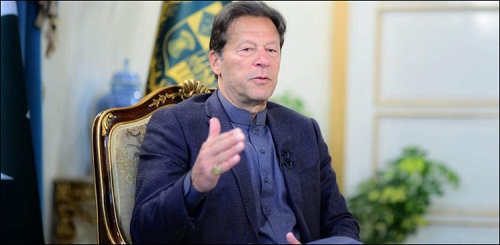
ISLAMABAD, FEB 1 (DNA) – Chief of Army Staff General Qamar Javed Bajwa called on Prime Minister Imran Khan in Islamabad.

Director General ISI Lt. Gen. Faiz Hamid was also present during the meeting.

Matters pertaining to internal and external security were discussed during the meeting.=DNA

=============

First COVID-19 vaccine tranche arrived from China

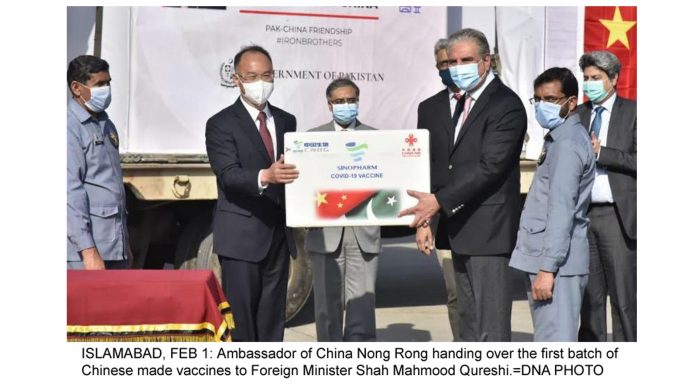
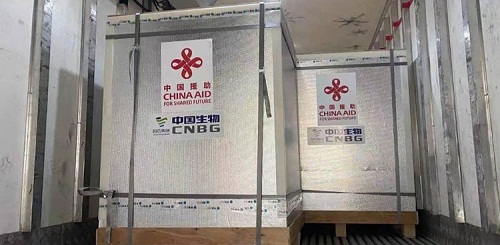
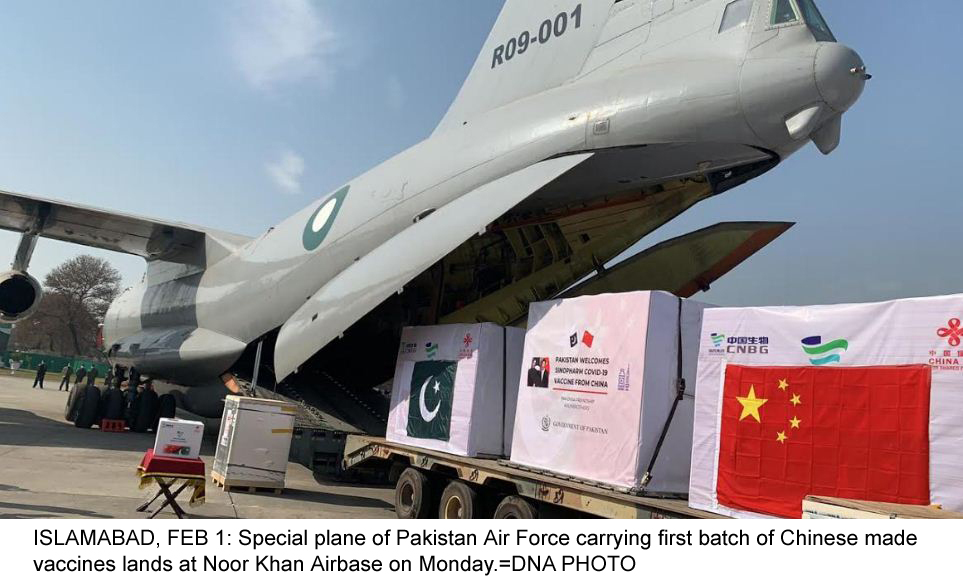
ISLAMABAD, FEB 1 (DNA): First Covid-19 tranche of the Sinopharm vaccine arrived here on Monday by Pakistan Air Force (PAF) special plane.

According to China Economic Net (CEN), Foreign Minister shah Mehmood Qureshi received the free of cost 500,000 doses of Covid-19 vaccine at the Noor Khan Airbase.

The Chinese ambassador to Pakistan Nong Rong, Special Assistant to Prime minister on health  Dr.Faisal Sultan were present on the occasion.

Addressing the ceremony Nong Rong announced that Pakistan is the first country in the world to receive the Chinese government donated vaccine.

“It is not only the vaccine to the people needed in Pakistan but more importantly a new manifestation to our iron brotherhood.

President Xi Jinping has repeatedly said that the Chinese COVID-19 vaccines once developed and put into use will be global public goods.”

He said “China has honored its commitment keeping the huge global need for vaccine in mind, China has lived to its best to offer assistance and support.

ISLAMABAD, FEB 1: Special plane of Pakistan Air Force carrying first batch of Chinese made vaccines lands at Noor Khan Airbase on Monday.=DNA PHOTO

Pakistan as our closest friend, is the priority of our cooperation. He appreciated the Pakistan government for its facilitation and cooperation in the approval of the emergency use authorization for Sinopharm’s vaccine and the phase III trial with the Casino company of China.

“We expect more cooperation to follow and more people can benefit from it, China is ready to contribute to Pakistan’s pandemic prevention drive, economic recovery and social development.

We are committed to the building of China- Pakistan community of shared future”, he added.

Talking to China Economic Net’s special correspondent the Chinese ambassador assured that the Sinopharm vaccine has proven effective and safe. Its license is issued not only to China and Pakistan but also to many other countries.

Foreign minister Shah Mehmood Qureshi in his speech on the occasion thanked the Chinese government on behalf of Prime Minister Imran Khan for the help and support they provided in the time of need and proved their distinct support and friendship with Pakistan.

He said “the plan is to first of all inoculate the frontline health care workers, they should be protected and then later to move to the rest of the sections of the society.

We will assess in the month of February, we will be requiring around 1.1 millions of more doses and we will be in touch with the Chinese government to send the next installment soon”.

It is to be noted that the first batch arrived in Pakistan is a “grant assistance” for which the country would not have to pay anything. This is a hand of goodwill and friendship that China has extended towards Pakistan.

According to the NCOC, all necessary measures have been put in place for vaccine storage at Islamabad and move of vaccine to various federating units particularly to Sindh and Baluchistan through air.

The NCOC has already released details of Pakistan’s vaccination plan for Covid-19.

Vaccine nerve center has been established at NCOC with provincial and district level vaccine administration/coordination centers/Adult Vaccination Centers.

The plan aims to vaccinate people under an integrated digital system following the best international practices, according to the NCOC. “Human involvement is limited to ensure transparency,” it added.

Pakistan has so far approved two vaccines for emergency use, the other being the Oxford-AstraZeneca jab.=DNA

====================

Central Europe as a community of shared aspirations

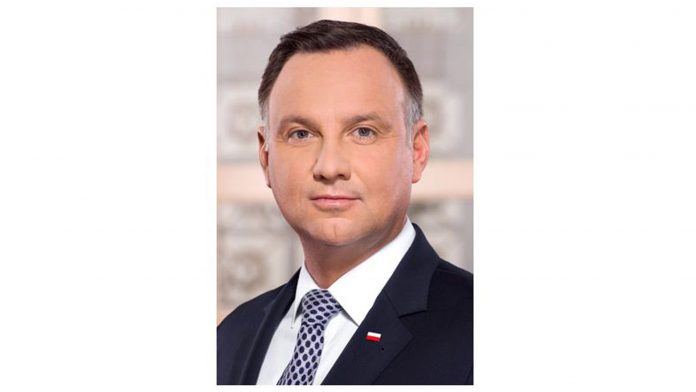
Andrzej Duda

A new decade of the 20th century has just opened. A decade of uncertainty brought forth by the global pandemic and its consequences, but also a decade of hope. A decade of opportunities for the civilization’s and economy’s recovery, a chance to create a world that is better, more just, more green, and one that respects the principles of sustained development. As we look towards the future, we are looking for areas which will be the centers of dynamic and positive changes. I am certain that Central Europe will be one of them on the European and global scale.

Central Europe or Central and Eastern Europe (the terms are used interchangeably) is a significant regional entity, a community of shared fate in terms of geography, politics, and economy as well as in terms of ideas and cultures. As for a location on a map, it is perceived as an area between the Baltic, Adriatic, and the Black seas or (even though it is oversimplification) between Germany and Russia. But above all, we constitute a circle of common memory. We have had our share of similar historical experiences, in the dramatic 20th century in particular. We have suffered from two totalitarianisms, the brown and red ones, that suppressed and oppressed us. But we also have great, glorious experiences from centuries ago. The 15th-17th centuries, the era called “the Europe of the Jagiellonian dynasty” to be later named the Polish-Lithuanian Commonwealth, saw a flourishing of a voluntary political union in a substantial part of the territory, a precursor to the European Union of today, which was a friendly home to many cultures and faiths and which respected the rule of law, parliamentarianism, and democracy. We are carrying lessons from those experiences – both good and bad – into the future as a universal warning as well as inspiration to work towards a common good, the prosperity of the region and all the integrated Europe.

A description of Central Europe in terms of values is important as well. Being part of Western civilization for more than a thousand years, we share its ideological foundations. Milan Kundera suggestively named Central Europe “a kidnapped West,” that is the part of Western civilization that found itself against its will under the Soviet domination – imperial, authoritarian, and unable to manage rationally. It must be emphasized, though, that our commitment to values that have built the European culture is not without reflection. We know perhaps better than others the high price one must pay for defending them. We are aware that one must cultivate and reconcile freedom and responsibility, rights and duties, individualism and solidarity, the attitude of criticism, innovation, and modernization with one that cherishes heritage and traditions that describe our identity.

On the threshold of the historic breakthrough of 1989, Timothy Garton Ash wrote that the concept of Central Europe has roused the Western world from thinking in Cold War terms, has challenged the common notions and priorities but also had something new to offer in return. This opinion seems to be valid today as well when the participation of Central European countries in the EU and NATO is a crucial and solidified part of the European and Atlantic order, and as our region with its solid economic growth has made a significant civilization leap. Also today, the concept of Central Europe contains dynamism and positive content. If I were to concisely present the modern face of Central Europe, including Poland as the biggest country in the region, I would say as follows: it is the community of shared success and the community of shared aspirations at the same time.

Central Europe constitutes a perfect example of how powerful and creative power freedom is. Freedom and its siblings – economic freedom, entrepreneurship, self-government, open up the space for fulfillment of bold ambitions and aspirations. Development accompanies the progress of freedom. The three decades that have passed since the fall of communism, the regional breakthrough initiated by the Polish “Solidarity” movement, are the story of the great economic success, of a social and civilization advancement that hardly ever happened over such a short time in the world history. Poland and the whole of Central Europe are a fascinating testimony to opportunities that come with freedom.

We can also serve as an inspiring example of how cooperation, joint initiatives and undertakings bring positive results. It was thanks to them that Central Europe ceased to be, as it was in adverse times, a peripheral area between the West and East, between imperial powers, and instead became a structure connected by multiple ties, one that is aware of its interests and has an influence on the course of European affairs. The emancipation of Central and Eastern Europe was a success, we are the crucial part of political and civilization processes.

Let me draw your attention to three important planes of Central European cooperation, which are not only of regional significance but are also crucial in the EU, Atlantic, and even global dimension. The first of them is the VisegradGroup, an entity of the longest existence which gathers Poland, the Czech Republic, Slovakia, and Hungary. Initiated in 1991 as a platform for political dialogue and coordination of efforts to gain membership in NATO and the EU, the Visegrad Group has also proven useful once it has achieved these strategic goals. Today it is one of the most important agents in activating regional cooperation in Central Europe and seeking understanding on European affairs.

The second of the planes is the Bucharest Nine, a structure that groups countries of NATO’s eastern flank: Poland, Romania, Lithuania, Latvia, Estonia, Hungary, Slovakia, Czech Republic, and Bulgaria. It was established in 2015 in Bucharest, where we signed a joint statement which said the Bucharest Nine countries join efforts to secure, where it is necessary, a “robust, credible and sustainable Allied military presence” in the region. To a large degree, the B9 is a response to Russia’s aggressive policy, to the violations of borders and territorial integrity of the neighboring Ukraine, which threaten a regional and Atlantic security. We are not going to watch it idly.

The third plane of cooperation is the Three Seas Initiative, which was initiated by the President of Croatia Kolinda Grabar-Kitarović and myself in 2015. The group comprises countries located between the Baltic, Adriatic, and Black seas: Austria, Croatia, Czech Republic, Estonia, Lithuania, Latvia, Poland, Romania, Slovakia, Slovenia, and Hungary. The goal is to make joint investments in infrastructure, transport, energy, and new technologies that will boost the development in our countries and contribute to the cohesion of the European Union. When we look at the map of economic connections within the EU, we will see a significant advantage of the horizontal flows along the West-East axis over vertical flows along the North-South axis. This includes the flows of people, goods, services, and capital, but also infrastructure networks: expressways, railroads, hubs, pipelines, power and IT lines. The Three Seas Initiative, a project aimed at boosting the structural transformation of this part of Europe, is to fill in the missing elements of the “scaffold” which will help strengthen the integration of our region and the entire EU as well. The fact that aside from the capital from within the EU, also investors from the United States, China, and other parts of the world are involved in the Three Seas Initiative ensures a sound diversification of benefits and mutual interdependence.

This is the picture of today and the vision of the future of Central Europe as the community of shared activities, success, and ambitious aspirations. We have traveled a long and successful road – from being a region almost non-existent in the minds of the main actors on the world stage for a long time (“in Poland, that is to say Nowhere,” as Alfred Jarry wrote in late 19th century) – to becoming a region which is one of the most dynamically developing parts of the globe and aspires to being listed in the category of centers of civilization. Central Europe – doesn’t the name say it all? Feel invited to take part in this fascinating adventure.

The writer is the President of the Republic of Poland.Text is published simultaneously in the Polish monthly magazine „Wszystko Co Najważniejsze” in partnership with the Warsaw Stock Exchange.

U.S. cattle shipments bolster productivity of Pakistan’s dairy sector

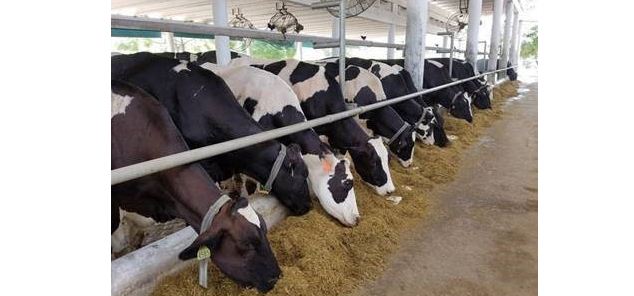
ISLAMABAD, FEB 1 (DNA) – A shipment of 2,078 U.S. cattle arrived at the port of Karachi on January 27, 2021.  As a result of the strong partnership between the U.S. Department of Agriculture and the Pakistan dairy sector, cattle shipments from the United States continue to supply Pakistan with high-quality bovine stock for its dairy and beef herds.

Roughly 95 percent of the cattle in this year’s first shipment are U.S. Holstein dairy cattle, which, thanks to U.S. livestock genetics, produce milk yields that are substantially higher than Holsteins imported from other countries.

The remaining animals are Jersey dairy cattle, noted for their high milk fat content, and Braham beef cattle, noted for their high-quality beef.  All breeds have the genetic potential to adapt to Pakistan’s climate.  At least two more shipments of U.S. cattle are expected to arrive before the end of March 2021, when the cattle shipping season closes.

Pakistan’s demand for milk is increasing, and the introduction of U.S. dairy cows is helping Pakistan reduce the gap between milk demand and supply, thereby contributing significantly to ensuring sustainable food security in the country.

Agriculture is Pakistan’s second-largest economic sector, accounting for nearly 20 percent of GDP in fiscal year 2019-2020.  It remains by far the largest employer, accounting for nearly 40 percent of Pakistan’s labor force.  For the nearly 63 percent of the Pakistani population living in rural areas, agriculture is a vital part of their daily life.  The U.S. government partners with Pakistani scientists and farmers to improve agricultural productivity.  The U.S. government has also supported the development of a model dairy farm at the University of Veterinary and Animal Sciences, Pattoki Campus, near Lahore, and to familiarize the Pakistani dairy sector about the unique characteristics of the U.S. cattle breeds that have been imported into Pakistan.=DNA

=======================

Once upon a time there was a PDM!!

Comment

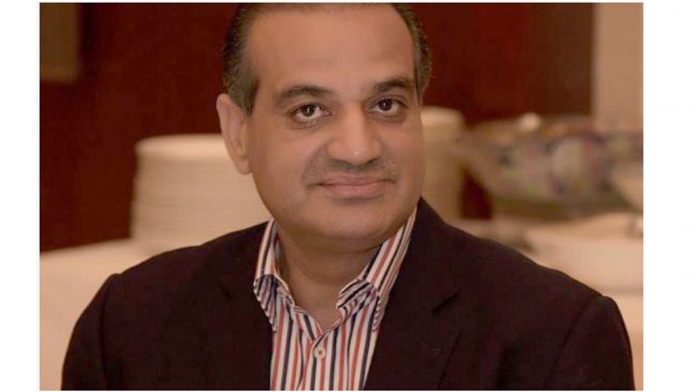
Ansar M Bhatti

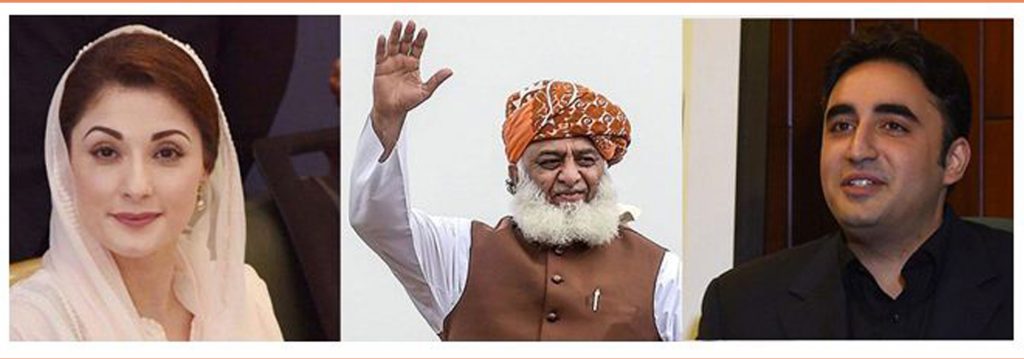
The Chief of Pakistan Democratic Movement (PDM) Maulana Fazalur Rehman on January 30, 2021 announced that their struggle was not against the establishment rather they wanted to make the men in khaki realize that their backing of the incumbent government had encouraged it to let the hell loose on the poor people of Pakistan.

According to him, it was because of this ‘backing’ that people were forced to lead a miserable life as prices of daily use items had sky rocketed and that too in a very short span of time. The otherwise composed and confidence maulana looked quite dejected and demoralized during the entire presser. His body language suggested as if all were not well within the ranks of the PDM and the maulana after sensing the gravity of the situation now wanted to mend fences with the forces he has been criticizing with full force.

I had mentioned in one of my earlier pieces that the Opposition neither wants to dislodge government nor launch a fully fledged anti-govt drive for the sake of its own ulterior political motives. And that is the point where its close ally Maulana Fazlur Rehman had serious problems. He wanted the Opposition parties to take a clear cut stand when it comes to giving tough time to the government.  But as things are unfolding gradually, it seems as if the maulana shall again be left in the lurch.

The problem of Pakistan People’s Party as mentioned before is that it cannot go beyond a certain point in its criticism of the government or when it comes to sending the federal govt packing. The reason is obvious that if it happens, PPP will surely lose its government in Sindh also. And losing the Sindh govt means losing Sindh in fact. It was the PPP who first decided to take part in the upcoming Senate elections for it is likely to get more seats as compared with its allied parties in the PDM. The PPP decision, though appears to be logical and a well-calculated political move, nevertheless it caused ripples among the alliance as nobody was expecting this move. Even at that time when PPP announced this decision, analysts had concluded that a major dent has been caused to the PDM. PPP, from the outset, has been playing its cards quite smartly. And it is likely to continue doing so till the time its political objectives are met.

PML-N, on the other hand, is still not ready to work with the establishment or vice versa. The Shahbaz Sharif group however is maintaining a mysterious silence thus triggering controversies within the party as to who actually is the man in charge. The PDM Lahore rally was indeed a poor show as majority of PMLN stalwarts mainly those aligned with the Shahbaz group stayed away. Making and breaking process within the PMLN continues unabated and it continues to deepen with the same speed, it is very much likely that one day Maryam Nawaz also had to announce that their struggle is not against the establishment!!

Edifice of PDM movement appears to have been erected on fragile structure. The major thrust of the Opposition turns out to be getting better deals for their leaders either in jails or abroad. Ordinary folks have been bearing the brunt of price hike, social injustices; nepotism; jobbery and corruption wanted the Opposition parties to become their voice and help them get rid of difficult times. The PDM was able to draw huge crowds in the beginning primarily because people thought the alliance had girded up loins for their sake but gradually they realized it was all a farce.

On the other hand, it is quite painful to see the opposition in disarray. To keep a watch on the government a strong and united opposition has to be there. It is because of the opposition fear that the government of the day delivers and makes all efforts to keep masses happy. But since the opposition is disjointed, fragmented and ill-focused, the govt continues to taking heavy toll on hapless masses.

As regards the long march, it is likely to take place however it may not be able to achieve the desired results – i.e to send the govt packing. The opposition leaders tend to cite long march against the Benazir Bhutto government back in 1989, which failed to dislodge the sitting government but the government was sent packing soon after the march. Similarly, while Benazir Bhutto’s first long march in November 1992 against Nawaz Sharif govt failed to achieve her desired purpose, her second attempt reaped rewards as both Nawaz Sharif and the then President Ghulam Ishaq Khan were shown the door by Army Chief General Waheed Kakar.

Today situation is absolutely different from that of 1989 and 1992. At that time the factors that are responsible for making and breaking of governments wanted the then governments to go while the same factors do not want so when it comes to dislodging the PTI government!!

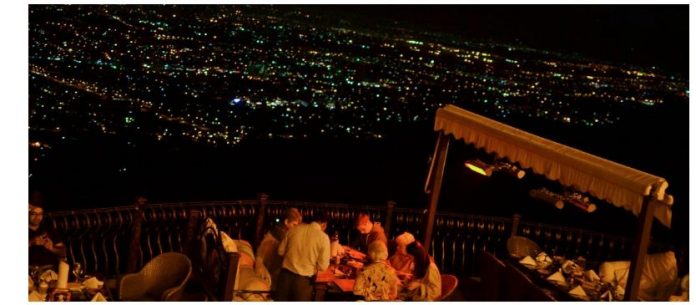
Punjab Govt Allows Dining At Eateries After 10pm

LAHORE – Following the decreasing trend of new Covid-19 cases in the province, the Punjab government has lifted the Covid-19 pandemic related 10:00 pm outdoor dining ban at food points and restaurants.

In this regard, Secretary Primary and Secondary Health Care Captain (Retd) Muhammad Usman has issued a notification

According to a notification, 50% of employees of all government and private institutions will work from home in Punjab.

All parks and recreational areas will be closed at 6 pm. Arrangements for weddings and other celebrations can also be made only in open spaces. Indoor eating has been banned at food points to prevent spread of coronavirus.

Any event can be arranged for up to 300 people in open spaces following SOPs, said notification.

The fresh order comes after the National Command and Operation Centre (NCOC) on Thursday lifted the time limit on outdoor dining in restaurants.

As per the notification issued by NCOC, all shopping malls, shops and marriage halls will shut by 10 pm. The NCOC has made it mandatory to wear face masks and ordered the provincial government for taking strict measures in view of the rising cases of coronavirus pandemic.

NAHE holds roundtable on developing linkages for faculty development

ISLAMABAD, FEB 1 (DNA) – The National Academy of Higher Education (NAHE) has organized the first of a series of workshops entitled, “Collaboration for Excellence – A Roundtable on Developing Linkages for Faculty Development in Higher Education”. The series of these workshops is one of multiple ongoing NAHE endeavours to facilitate capacity building of faculty in HEIs.

Representatives of 17 faculty development units and departments of higher education institutions from all provinces, ICT and Gilgit-Baltistan attended the workshop. In view of the necessary COVID-19 safety measures, some participants joined the workshop in person, while the majority joined it virtually.

During the event, participants were able to debate and discuss urgent faculty development needs in Pakistan, as well as avenues for collaboration and support with NAHE in the future.

Welcoming the participants, Rector NAHE, Dr. Shaheen Sardar Ali shed light on the importance of collaboration for excellence in teaching and learning in the higher education sector. She said that it was very important to seek the views of NAHE stakeholders, the academia overall, in order to make the Academy’s work more effective.

She asserted that NAHE would help provide a platform for faculty development units across the country in addition to working together with them to bridge gaps. “The pandemic has its costs but also provides an opportunity to improve and innovate.”

Vice Provost Aga Khan University Dr. Anjum Halai said that NAHE could provide support in three key areas, including individual-level capacity building, institution-level capacity enhancement and empowering higher education institutions to self-regulate and deliver quality learning for faculty.

Dean, Faculty of Social Sciences, Shaheed Benazir Bhutto University Dr. Tayyaba Zarif emphasised the need to contextualise trainings to ensure that they fulfilled the needs of universities to address their specific needs.

Vice Chancellor, Karakoram International University Dr. Attaullah Shah pointed out the urgent need for equipping faculty with technological and teaching skills in this new context of online learning including the need to train faculty on effectively conducting assessments beyond final and midterm exams.

Chief Executive, Advance HE in UK Alison Johns shared an international context of capacity building institutions which was debated by the participants.

NAHE is established as a stand-alone, autonomous institution operating under the auspices of HEC to improve the quality of teaching, research, and governance in Higher Education Institutions (HEIs) across Pakistan.=DNA

==================

Government outlines plan for Covid-19 vaccine distribution

ISLAMABAD : While a special aircraft of the Pakistan Air Force (PAF) carrying o.5 million doses of a Covid-19 vaccine landed at Nur Khan Airbase today, the government has outlined a vaccination distribution plan.

All measures for anti-Covid-19 vaccination drive have been finalised. The government has decided to swiftly distribute the China-gifted vaccine to the provinces to start the vaccination process, they added.They said the Covid-19 vaccine that arrived at Nur Khan Airbase this morning will be shifted to the Expanded Programme on Immunisation’s (EPI) storage in Islamabad from where it will be transported to the provinces.

The EPI will transport the vaccine in cold-chain containers, the sources said, adding the federal government will provide cold boxes, dry ice and syringes to the provinces.

The vaccine will be transported to Sindh and Balochistan by air while to Punjab and Khyber Pakhtunkhwa by road.

Officials of the EPI will accompany the vaccine containers to be transported amid tight security, the sources said, adding the federal government’s focal person for vaccination will hand over the vaccine to the provinces’ focal persons.

PM Khan to personally interact with general public on telephone today

ISLAMABAD : In an unprecedented move, Prime Minister (PM) Imran Khan will personally interact with the general public on the telephone to address their problems today (Monday).

The prime minister will take calls from the public at 4 pm today. He will personally respond to the queries of the general public. People can contact PM Imran by dialing 051-9210809.

Earlier, PM Imran Khan had said the incumbent government’s efforts to reduce inflation were showing results.

Taking to his official Twitter handle, he had said: “More good news on the economic front. Our efforts to reduce inflation are now showing results.

Consumer price index & core inflation are both now lower than when our government was formed.”

Zanzibar first vice-president contracts virus

Zanzibar’s First Vice-President, Seif Sharif Hamad, has tested positive for Covid-19 together with his wife.

Some of his aides have also contracted the virus, his party ACT Wazalendo said in a statement.

Mr Hamad was hospitalised and his condition has been said to be improving.

The opposition party urged Tanzanians to follow public health guidelines to prevent the spread of coronavirus.

The news comes days after Tanzania’s President John Magufuli warned health officials against acquiring Covid-19 vaccines, saying – without giving evidence – that they could harm the population.

The country stopped publishing official data about coronavirus in June last year and President Magufuli declared it coronavirus free.

Stay Connected

64FansLike
60FollowersFollow

Latest Reviews

Exchange Rates

USD - United States Dollar
EUR
1.17
GBP
1.35
AUD
0.72
CAD
0.73