Home Blog Page 2942

Ruthless Medvedev, Rublev fire Russia to maiden ATP Cup victory

Melbourne, Feb 7  : A relentless Russia crushed Italy 2-0 to win their maiden ATP Cup Sunday with Daniil Medvedev and Andrey Rublev in ruthless, red-hot form leading into the Australian Open.

Russia were the only nation in the 12-team event to boast two top 10 players and they had swept past Japan, Argentina and Germany en route to the decider.

Italy were flattened by the same Russian juggernaut on Rod Laver Arena, with Rublev destroying Fabio Fognini 6-1, 6-2 in just 61 minutes before Medvedev overpowered Matteo Berrettini 6-4, 6-2 in 79 minutes.

“It’s unbelievable,” said Russia captain Evgeny Donskoy.

“If the level is going to be the same, these guys are going to see each other in the (Australian Open) quarter-finals because I saw the draw.”

World number four Medvedev and eighth-ranked Rublev have been the two hottest players on tour since last year’s US Open.

They kick off their Australian Open campaigns on Tuesday and are scheduled to meet in the last eight.

Medvedev is now on a career-long win streak of 14 matches, including his third ATP Masters title in Paris and victory at the season-ending ATP Tour Finals, with 10 of those victories over top 10 opponents.

“It’s a really big achievement … it’s a big boost in confidence,” said Medvedev of his run of wins against top-ranked players.

“Even when you lose, you know that you’re capable of playing this level, and it helps you for the next time to stand up.”

Rublev has been equally impressive, winning five ATP titles in a breakthrough 2020, more than anyone else, as he raced up the rankings.

He ended his season by beating world number three Dominic Thiem at the ATP Finals and has started 2021 with four straight wins at the ATP Cup, dropping just one set, to make him a contender at the Australian Open.

His sizzling form extended to world number 17 Fognini, who went into the match with a 5-1 record against the Russian but was blown away.

– Machine-like Medvedev –

Rublev dominated with his forehand and lost just seven service points in the entire match.

“I was playing really well all week since the first match and I was just going on court thinking that I needed to fight for every ball,” said Rublev.

“I knew it didn’t matter the score, he always has a chance. He always knows how to come back, so I was trying to keep going no matter the score.”

Medvedev faced a tougher assignment against Berrettini, the world number 10 who has also been in prime early season form, winning all his matches before meeting the Russian, including against world number three Dominic Thiem.

The 24-year-olds had only met once before, in 2018, when Medvedev won, and he took an early break in the opening set to go 3-1 ahead, holding on to serve out the set.

It followed a similar pattern in the second set with the machine-like Medvedev raising his game to another level to grind down Berrett

“He’s playing really good. He’s confident, you can tell. He’s a really tough player to beat,” said Berrettini of Medvedev. “These days, you just have to say bravo to him and think about the next matches.”

Serbia beat Spain in the final of the inaugural and hugely popular tournament last year in Sydney — launched as a rival to the Davis Cup.

It has been slimmed down from 24 teams to 12 this year due to the coronavirus over five days at Melbourne Park with $7.5 million at stake, rather than the multi-city format employed in 2020.

Kashmir-The Pearl in Peril

Uffaq Khalid

Research Associate, Islamabad Institute of Conflict Resolution (IICR)

Kashmir is usually referred to as “earthly heaven” for its scenic beauty. The mountainous valley has been a center of conflict between the two nuclear giants of South-Asia since the 1947 unjust partition of British India. Both the countries have fought two wars over their rival claims.The volatile region has long endured instability and political strife.

Kashmir, the majestic area in the shadow of Himalayas long stuck between India and Pakistan, has sunk into the state of suspended animation. Curfews have been imposed, lifted and then reimposed. An uneasy stalemate has prevailed for decades, shattered by sporadic military intrusions, crackdowns by Indian police and terrorist attacks.

The year 2019 is known for one of the dramatic political eruptions in Kashmir. The year started with India’s staged Pulwama attack which led further escalation when India broke diplomatic norms by crossing international borderssince 1971 war. Territorial breach by Delhi was well responded by Pakistan. The air skirmishes led to the kneeling down of Indian pilots and being captured by Pakistan. However, Pakistan quickly returned the captured pilots as a “goodwill gesture”.

A climax of sorts came to the Kashmir dispute on August 5th, when the Modi’s government amended its legislation to annex the part of Kashmir that it controls, leaving the world in awe. Prime Minister Narendra Modi revoked the Article-370, a 70 year old provision that had granted limited autonomy to the states of Jammu and Kashmir. The states went under the direct control of central government through a bill introduced by BJP’s administration. Kashmiris opposed dissolving the region’s autonomous status and Pakistan condemned the India’s moves globally.

Kashmir has been subject to unprecedented lockdown even a year after India abrogated the special status of Jammu and Kashmir. People are still bound to live under lockdowns, curfews and communication restrictions. The lockdown has brought a toll on Kashmir’s economy, infrastructure and mental health of people. The educational institutions have been closed in Kashmir for a year and children are not able to go out freely.

The repression policy of India in Kashmir has resulted in grave human rights violations by the Indian security forces. The United Nations’ report,“Children and Armed Conflict” has verified the brutal killing of 15 children during joint operations of Indian Army and Central Reserve Police Force. According to the report, 68 children have been detained by Indian forces in this year on National-security related charges. According to a Kashmir-based human rights activist, “The lives of Kashmiris are shaped by a sense of injustice and the tendency to accept violence increases with time. All these things have a negative impact on their mental health.”

There is widespread panic in Kashmir. Life remains hard in Kashmir with hundreds of check-posts and cyber curfew still in place. The BBC report revealed the use of pellet guns, tear-gas and electric shocks by the occupation forces. The Indian forces arrested more than 500 people since August 5, the report said.

“Kashmir is under siege at the moment” but women are the biggest victims of this inhumane siege. The women of IIOJK continued to face unending trauma and terror of being abducted and molested at the hands of Indian forces in the name of ‘Search operations’.

Modi’s aggressive Hindutva policy has brought the India and Pakistan at daggers drawn. The anti-Islamic rhetoric of BJP and Modi fostering Hindu nationalism is a clear move to integrate Kashmir and change the Kashmir’s demographics. The renewed tensions between the bitter nuclear-rivals over Kashmir dispute have been raising the global anxiety and putting the world on high alert.

The year 2021 marks the 74 years of Indian invasion in Kashmir. For more than seventy years’ protracted efforts by the UN officials and UNCIP have failed to settle the dispute. The international community and human rights watch-dogs are not breaking the silence on the massive human rights violations in the valley.

In order to look into the future, there cannot be a military solution to the Kashmir conflict. Both nuclear-rival states need to realize the destructive consequences of military confrontation. Otherwise the conflict would continue to hang over the whole region like the Sword of Damocles.

The both sides must sincerely move forward without any preconditions and grudges for peace initiative. Let the people of Jammu and Kashmir enjoy the opportunity to determine their future in fair and democratic atmosphere. Let humanity live.

Former world heavyweight champion Leon Spinks dead at 67

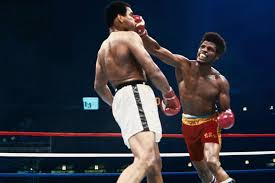
Los Angeles, Feb 7  : Former world heavyweight boxing champion Leon Spinks, who took the crown from Muhammad Ali in 1978 before losing a rematch, died on Friday, according to his publicists. He was 67.

Spinks had been hospitalized in December at Las Vegas before losing a five-year battle with cancer with his wife, Brenda Spinks, at his side, according to a statement from The Firm PR to Las Vegas television station KVVU.

“His final fight was fought with the same skill, grace and grit that had carried him through so many lifetime challenges,” the statement said.

“Leon fought his battle with numerous illnesses resiliently, never losing his trademark smile. Showing true Spinks determination, he never threw in the towel.”

Spinks finished his career 26-17 with three draws and 14 knockouts, but struggled to try and recapture the fame that came early in his career in one of the most shocking upsets in boxing history.

With a trademark gap-toothed grin, Spinks fought his way to Olympic gold in 1976 as a US light heavyweight in Montreal and turned professional six months later at age 23.

After only eight professional fights, seven wins and a draw, Spinks was sent into the ring against iconic Ali on February 15, 1978 at the Las Vegas Hilton.

Spinks captured a 15-round split decision over a 36-year-old Ali, who lost world crowns in the ring for the only time in his career, falling to 55-3 as Spinks claimed the heavyweight title in the shortest time of any fighter in history, only 13 months after his pro debut.

It would be the greatest moment of his career.

Seven months later, in a rematch before 70,000 at the Superdome in New Orleans, a fit and formidable Ali won a unanimous 15-round decision in what would be the final victory of his legendary career, making Ali the first three-time champion in heavyweight history.

Spinks had been stripped of the World Boxing Council crown for taking the rematch with Ali rather than face mandatory challenger Ken Norton, so the second fight was only for the World Boxing Association title.

Spinks lost his next fight as well but earned another shot at the crown in 1981 against Larry Holmes only to be stopped in the third round.

It took nearly five years for Spinks to gain another chance at a world crown but he fought for the WBC crusierweight title in 1986, stopped in the sixth round by Dwight Muhammad Qawi.

That began a run where he managed only one win and one draw in 10 fights. He lost five of his final eight fights before retiring in 1995.

Spinks’s son, Cory, was an undisputed welterweight champion from 2003-2005 and had brief junior middleweight reigns in 2007 and 2009.

Spinks’s younger brother Michael was a 1976 Olympic middleweight champion who was the undisputed light heavyweight champion from 1983-1985 and a heavyweight champion from 1985-1986.

IEP-IRC holds Professional development program on ‘Construction claims’

ISLAMABAD, February 7: Institution of Engineers, Pakistan (IEP) Rawalpindi-Islamabad Centre organized a technical lecture for graduate engineers on the topic of ‘Construction Claims’ to highlight the issues in Project Management.

It was aimed at apprising the young engineers about their  managerial responsibilities and legal obligations in settling different claims and disputes.

The event was arranged by the Center as a part of its continuing professional development program (CPD) for the young engineers.

A cerified Project Management Professional Engr. Haroon Rashid was the guest speaker who emphasized the importance of effective management of claims and disputes in the construction work.

Engr. Prof. Dr. Attaullah Shah, Vice Chancellor Karakorum International University, Gilgit-Baltistan in a detailed talk apprised on settling claims and ensuring transparency of contracts in executing  both civil and public sectors Projects.

Engr. Ahmed Shamim, convener of CPD conducted the session and present on the occasion were chairman IEP-RIC, Engr. Hafiz M. Ehsan ul Haq Qazi and Secretary IEP-RIC Gp. Capt. Engr. Najamuddin.

Engr. Haroon Rashid explained to the participants about the common claims that are faced by the project engineers in the construction process. These claims, he asserted are needed to be settled under FIDIC 87 that entails the international norms and practices for carrying out projects.

He also highlighted various kinds of cost claims and  explained the issues arising out of legal obligations and breach of the obligations  that could be amicably settled.

Dr. Attaullah Shah while giving examples from his rich Project Managent  experience was of the view that transparency of the contract is very important, for which the engineers need to maintain proper record and evidences. He emphasized that the engineers should fulfil their responsibilities, according to FIDIC-laid down provisions.

He said the young engineers has to focus on their capacity-building in project management and must strengthen  the monitoring system of a project .

Engr. Hafiz M. Ehsan ul Haq Qazi in his concluding remarks thanked  the Resource Person and Dr Ataullah for their Intriguing talk. He informed the participants that efforts are underway to start Certification courses and IEP RIC would continue to regularly hold capacity-building trainings for the young engineers.

Infrastructure construction under CPEC will transform model: CHINCA

BEIJING, Feb 7 : Infrastructure construction under CPEC will emerge as a model, according to China International Contractors Association (CHINCA).

Gwadar Pro reported on Sunday, that CHINCA summarized the development of Chinese international projects in BRI countries in 2020 last week.

Fang Qiuchen, the Chairman of CHINCA, remarked that infrastructure construction under BRI and CPEC will transform and upgrade their model in several respects.

The summary says in 1979, the annual value of China’s overseas contracts was only $34 million, and in 2020, the number exceeded $250 billion, an increase of nearly 8,000 times in the past 40 years.

Fang said, Asia, the largest benefited destination area of China’s infrastructure assistance, has accounted for more than 50% of the newly signed and completed contracts globally in 2020.

Among them, Pakistan, Bangladesh, and Saudi Arabia are key host countries.

In recent years, Chinese projects in Pakistan have focused on energy, housing and roads. From 2020, the construction of rail transit, such as high-speed rail and subway, will also rise under CPEC.

“China has built many large railway projects in BRI countries, which can be seen in CPEC.

Lahore Orange Line subway project, an exact example of BRI railway projects, was completed and started operation in 2020,” Fang said, “it’s the first respect of transformation.”

The second transformation is that in addition to building infrastructure directly, China will also share more Chinese solutions and wisdom with Pakistan so that the nation can develop its own abilities to construct infrastructure.

CPEC infrastructure projects emphasize localization, employing Pakistani workers and training local technicians.

China’s strengths lie in equipment manufacturing capabilities and practical, advanced technology.

Finally, CPEC will focus more on climate and environment. In 2020, CHINCA issued the Guidelines on Overseas Sustainable Infrastructure Projects of Chinese Enterprises, which set out the requirements for the green and sustainable development of BRI projects.

Not only energy projects, but all CPEC projects will comply with China’s green development requirements, which are higher than international standards.

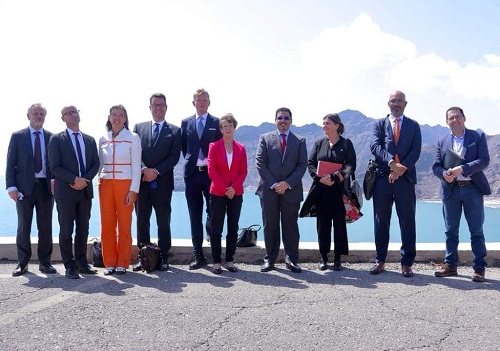
Minister of Foreign Affairs & Expatriates, H.E. Dr. Ahmed BinMubarak on Visit of European Ambassadors

Yemen, 7 February 2021 : We welcome the visit of the Head of the European Union delegation and the ambassadors of Germany, Belgium, France, the Netherlands, Ireland, Finland, Sweden, and the Deputy Ambassador of Norway accredited to Yemen. This visit sends an important political message that expresses the support of the European friends to the Yemeni government in its efforts to normalize public life and to realize peace and to restore security and stability. 


Today, we discussed a number of issues, and wherein we made clear that the cowardly terrorist bombing of the Houthi militia with ballistic missiles on Aden International Airport when the new government Cabinet had arrived at the airport was aimed at terminating the peace process and prolonging the war. However, the attack failed to achieve its goals, and it only increased the government’s cohesion and steadfastness to undertake its responsibility to end the militia’s tampering with the security and stability of Yemen; and to put an end to its criminal behavior and the never-ending violations on the rights of the Yemeni people. 


We illuminated how the Riyadh Agreement was a significant historical event for renewing hope for a better future and affirming that the approach of dialogue and reconciliation is the most effective way to resolve differences and to defuse the conflict, and that the constructive political atmosphere prevailing in the interim capital Aden, will positively reflect on the government’s performance and enable it to focus on improving public services as an urgent priority.  And we will continue to work with our brothers in the Kingdom of Saudi Arabia to complete the implementation of the Riyadh Agreement. 


We touched on the issue of the Safer oil tanker and explained that the Houthi militia continues to recant from its commitment to allow the international technical team to access the tanker so as to assess its condition, as they had agreed.  It is another indication to the international community of the importance of exerting maximum pressure on the Houthi militia in dealing with their methods of manipulation and deception used, which is also a reason for protracting the war and impeding in reaching a political settlement in Yemen, despite all the concessions made by the government in all rounds of negotiations undertaken with the Houthi militia. 


We affirmed that the government is moving towards a comprehensive national reconciliation and in a political partnership with the international community, to establish the necessary foundations to achieve a real, lasting and comprehensive peace in Yemen, stressing peace is the only way to solve the political crisis in Yemen and to address the catastrophic humanitarian repercussions. 


During this visit, the ambassadors met with the Their Excellencies the Prime Minister, the Minister of Planning and International Cooperation, the Minister of Legal Affairs and Human Rights, the Minister of Finance and the Deputy Governor of the Central Bank. 


The ambassadors were briefed on the government’s directions regarding its plans in the next six months to improve living conditions and the provision of basic services, as well as the most important features of the government’s general course of actions. Also discussed were issues related to humanitarian aid and the government’s efforts to facilitate humanitarian work in Yemen as well as the overall economic situation in Yemen. 

An agreement was also signed between the Republic of Yemen and the Republic of France to postpone the payment of debts in accordance with the joint agreement between the G20 and the Paris Club on April 15, 2020.

Govt intends to conduct Senate polls through open balloting to ensure transparency: Ali Muhammad

ISLAMABAD, Feb 7 (DNA) : Minister of State for Parliamentary Affairs Ali Muhammad Khan Sunday said the incumbent government intended to conduct the upcoming Senate elections through open voting to discourage the horse trading practice.

It was topmost priority of the Pakistan Tehreek-e-Insaf (PTI) government to carry out the Senate polls through open balloting to ensure more transparency in it, he said talking to a private news channel.

The minister said the open voting was so essential in public and national interest.

He said it was also mentioned in the Charter of Democracy (CoD), which was signed by former prime ministers Shaheed Mohtarma Benazir Bhutto and Nawaz Sharif, to conduct the Senate elections through open voting, but now their leaders were denying and doing politics on the issue.

Replying to a question, he said the government would not create hindrance in a way of the opposition’s long march.

He claimed the Pakistan Democratic Movement (PDM) leadership would fail to gather their workers and supporter for march as the people had already rejected them.

UK plans to tax firms that profited from pandemic

LONDON : Britain plans to tax retailers and tech companies whose profits have soared during the COVID-19 pandemic.

The government has summoned companies to discuss how an online sales tax would work, while plans are also being drawn up for a one-off “excessive profits tax”.Finance minister Rishi Sunak is unlikely to announce these taxes at the budget announcement scheduled for March 3, which will focus on an extension of the COVID-19 furlough programme and support for businesses.

They are instead likely to surface in the second half of the year.

Sunak faces pressure from some in his Conservative Party to show spending is under control when he presents a new budget, after what is on track to be the heaviest annual borrowing since World War Two.

He has promised to put public finances on a sustainable footing once the economy begins to recover. Data last month showed public borrowing since the start of the financial year in April reached a record 271 billion pounds ($370 billion).

K2 summit: Another search launched to locate missing climbers

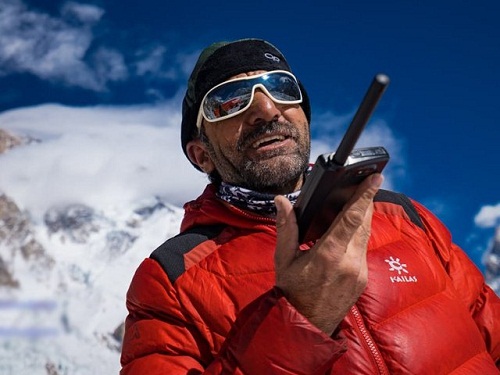
SKARDU : A land and air search was launched Sunday morning to locate Pakistan’s Muhammad Ali Sadpara and two foreign climbers who went missing while attempting to summit the world’s second-highest mountain, K2.

Two teams are taking part in the search operation, including one aboard a Pakistan Army helicopter while the other scouring the K2 trail to rescue the mountaineers.Local mountaineers and porters are part of the teams looking for the three missing climbers.

Sadpara, John Snorri from Iceland and Jaun Pablo Mohr from Chile were on the mission to scale K2 but lost contact after they started their push for the K2 summit from camp 3 at midnight between Thursday and Friday.

A search operation on Saturday failed to trace the whereabouts of the three. Earlier, a Bulgarian mountaineer was confirmed to have died on K2.

Thousands of police officers deployed in India to counter farmers’ protests

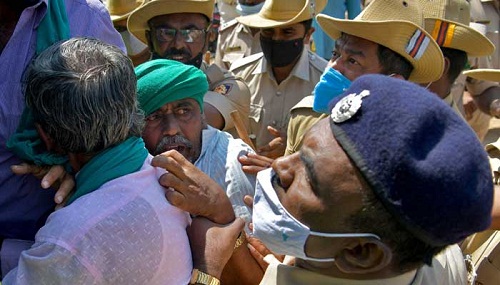
NEW DELHI: Tens of thousands of police were deployed across India on Saturday in a bid to smother new protests by farmers fighting government agriculture reforms.

Ten metro stations were closed in central New Delhi — where a tractor rally last month turned into a violent rampage — and thousands of police manned barricades and roadblocks at key intersections.

Farmers unions called for protest roadblocks across the country in the latest day of action.

They and their supporters occupied dozens of roads and toll booths for three hours in several states but no trouble was reported

A major police deployment was ordered in the key farm state of Uttar Pradesh, which is a traditional pro-government bastion. Farmers groups suspended their action in the state to avoid a confrontation.

Tens of thousands of farmers have been camping on the outskirts of Delhi since November calling for a repeal of the reforms that free up farm produce markets.

The farmers say the changes mean the crucial agriculture industry will be taken over by major conglomerates.

While the authorities have increased pressure on the Delhi protest camps — cutting internet and water supplies — the farmers have vowed to keep their campaign going for months more.

Rakesh Tikait, one of the senior farmers’ leaders, said Saturday that the protests would go on until the October 2 one-year anniversary of the launch of their campaign unless the government repealed the new laws.

He told the Indian Express newspaper that thousands more farmers wanted to come to Delhi to join the protests and would not be deterred by barbed wire fences put around the camps.

“They can put nails on the ground; we will put soil over it and grow flowers. We aren’t scared of the barricading or high security.

“We don’t think police will seal the area. If they do, there are protesters here who can break through all the barricades,” he said.

Stay Connected

64FansLike
60FollowersFollow

Latest Reviews

Exchange Rates

USD - United States Dollar
EUR
1.17
GBP
1.35
AUD
0.72
CAD
0.73