Home Blog Page 2902

Turkey summons Iran envoy over remarks on Iraq ops

Ankara expects Iran to support, not oppose, Turkey’s fight against terrorism, Turkish Foreign Ministry tells ambassador

ANKARA, FEB 28 – Turkey on Sunday summoned the Iranian ambassador in the country over remarks alleging it violated Iraq’s sovereignty, according to diplomatic sources.

Summoning Ambassador Mohammad Farazmand, the Turkish Foreign Ministry expressed the country’s rejection of the accusations leveled by Iran’s envoy in Baghdad, underlining that Ankara is fighting the PKK terrorist organization, which targets Iraq’s stability, security and sovereignty, said the sources.

They added that Ankara also told Farazmand that it expects Iran to support, not oppose, Turkey’s fight against terrorism.

PALSP appreciates customs authorities decision for linking prices of scrap with LMB

DNA

Islamabad: Pakistan Association of Large Steel Producers has expressed satisfaction and has appreciated the decision of Customs authorities on the valuation ruling issued by the Directorate General of Customs Valuation, Karachi, of linking the value of steel scrap with London Metal Bulletin.

PALSP that represents the large steel producers expressed optimism and expressed hope of more such initiatives from the Customs side of Federal Board of Revenue under the current member Customs Mr. Tariq Huda Shah as well Chief Exports & Valuation Dr. Faisal Bukhariare taking positive steps, and this will helpin improving the working of the Customs which is an important department of FBR. This decision has set a good example.

There are two systems of making valuation of imported goods under section 25 of Custom Act;One is ITP (Import Trade Price) in which a minimum price is fixed and goods are assessed on the basis of ITP or Declared Price in Invoice/ LC (letter of credit) whichever is higher; and Second is LMB which means value of items as per the London Metal Bulletin at the date of LC opening or value declared in LC whichever is higher. This change shall make the valuation system market based and transparentwhich will be good for both industry as well as the Federal Board of Revenue.

In this regard, a number of representations were received wherein, it was contended that the values fixed in valuation ruling was causing problems for industry at the clearance stage because the international market varies with demand and supply factor. Moreover, it was also informed that prices of scrap are also published in London Metal Bulletin (LMB) for Pakistan imports and thus, to ensure transparency, fairness as well as uniformity in assessment, the value should be linked with LMB prices and freight factor be added thereon, when published prices given as FOB.

The Association has made a recommendation to the DG Valuation for making one correction in the decision/ ruling as previously the price difference between Re-rollable and re-meltable scrap was of USD 100 PMT but in the current ruling the difference has been reduced to only USD 65 which is not justifiable to our industry. The industry requests to maintain of difference to the tune of USD 150 between the Re-rollable and re-meltable scrap.

CDA is committed to restarting the Ladies Club project at G-10

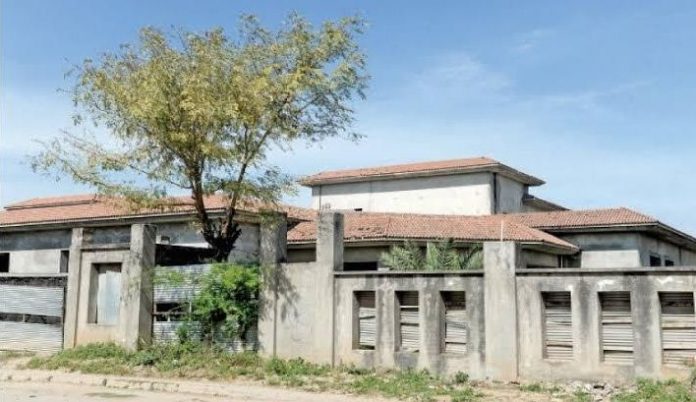
ISLAMABAD, FEB 28 (DNA) – Chairman Capital Development Authority (CDA) Amir Ali Ahmed should immediately issue instructions for resumption of work on the long-closed Ladies Club project at G-10 markaz, to provide effective health and club facilities to the citizens.

Instruct the engineering department to complete the project as soon as possible by removing the obstacles in the completion of the said project in the shortest possible time.

According to details, the Capital Development Authority (CDA) is committed to restarting the Ladies Club project at G-10.

The structure of the project is 100 percent complete, while the building is 97,000 square feet covered area.

Bakery facilities, Recreational facilities include movie, theater for 150 to 170 people, cinema, children’s play area, 2 banquet halls for banquet facilities, 2 rooms for bridle’s, swimming pool for swimming in health and sports facilities, gymnasium, aerobics, 2 squash courts.

Multi purpose sports hall, and 2 Lawn Tennis Courts will be available. Which need to be addressed before starting work.

However, now CDA Chairman Amir Ali Ahmed has directed the Engineering Wing to resolve all issues and obstacles and complete the remaining works in the shortest possible time.

So that the public money spent on this facility can be used properly and effective health and club facilities can be provided by the citizens.

UN rights chief concerned over Kashmir restrictions

Official says Indian government restrictions on right to information and debate impair people’s rights

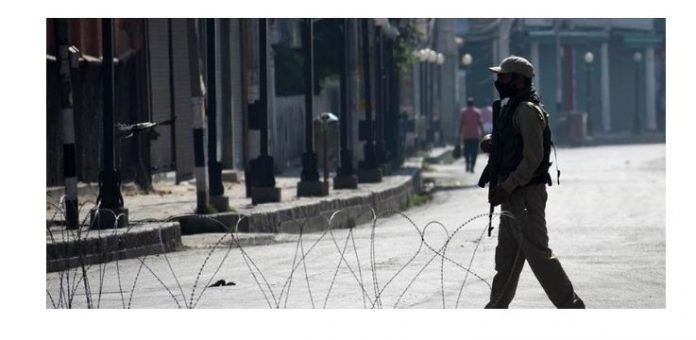
Raids on human rights defenders in Indian-administered Kashmir show continued restrictions on civil society, which impair the public’s rights to impart and receive information and debate the government policies affecting them, UN High Commissioner for Human Rights Michelle Bachelet said in a statement on Friday.

Bachelet said restrictions on communications and the clampdown on civil society activists in Kashmir “remain of concern.”

“Despite the recent restoration of 4G access to mobile phones, the communications blockade has seriously hampered civic participation, as well as business, livelihoods, education, and access to health-care and medical information,” the statement said.

High-speed internet was restored on Feb. 6 after a shutdown since Aug. 4, 2019, when India imposed a military and communications clampdown, besides arresting thousands of pro-freedom activists.

Last October, India’s National Investigation Agency (NIA) raided the offices of the Jammu and Kashmir Coalition of Civil Society and the home of Khurram Parvez, its coordinator.

The NIA also raided the office of the Association of the Parents of Disappeared Persons, which seeks the whereabouts of thousands of Kashmiris allegedly subjected to forced custodial disappearance by Indian forces.

Global human rights groups have expressed concern over these raids. In a statement last October, Amnesty International said these raids were “an alarming reminder that India’s government is determined to suppress all dissenting voices in Jammu and Kashmir.”

Last Thursday, seven UN rapporteurs said in a statement that India’s decision to strip Kashmir’s autonomous status in 2019 and the introduction of new residency laws “could curtail the previous level of political participation of Muslims and other minorities.”

On Friday, Shehryar Khan Afridi, the head of the Pakistani Parliament’s Committee on Kashmir, asked the UN secretary-general to act on a report of UN rapporteurs and “impose sanctions on India for its demographic terrorism” in Jammu and Kashmir.

Speaking at a seminar at Nishtar Medical University in Multan, Pakistan, Afridi said top rights groups have also asked India to “immediately halt its suppression of Kashmiri voices.”

Disputed region

Kashmir, a Muslim-majority Himalayan region, is held by India and Pakistan in parts and claimed by both in full. A small sliver of Kashmir is also held by China.

Since they were partitioned in 1947, the two countries have fought three wars-in 1948, 1965, and 1971-two of them over Kashmir.

Some Kashmiri groups in Jammu and Kashmir have been fighting against Indian rule for independence or unification with neighboring Pakistan.

According to several human rights groups, thousands of people have been killed in the conflict since 1989.

On Aug. 5, 2019, the Indian government revoked Article 370 and other related provisions from its Constitution, scrapping the country’s only Muslim-majority state with its autonomy. Jammu and Kashmir was also split into two federally administered territories.

Simultaneously, it locked the region down, detaining thousands of people, imposing movement restrictions, and enforcing a communications blackout.

10 dead as Myanmar junta intensifies crackdown on anti-coup protests

The junta is battling to contain a massive street movement demanding it yield power and release ousted civilian leader Aung San Suu Kyi, who was detained along with top political allies at the start of the month.

Police and soldiers had already fired rubber bullets, tear gas and water cannon on demonstrations in recent weeks in an effort to bring the civil disobedience campaign to heel, with live rounds used in some isolated cases.

Large numbers were again mobilised on Sunday morning to scatter crowds in several parts of the country, after online calls for protesters to once again flood the streets.

Three men were killed and at least 20 others injured when security forces moved on a rally in the southern coastal hub of Dawei, a volunteer medic and a media outlet based in the city said.

Rescue worker Pyae Zaw Hein said the trio were “shot dead with live rounds”, while the injured were hit by rubber bullets.

“More wounded people keep coming in,” he told.

Two teenagers were also gunned down in Bago, a two-hour drive north of commercial capital Yangon.

Ambulance driver Than Lwin Oo told he had sent the bodies of the 18-year-olds to the mortuary at Bago’s main hospital.

The deaths were confirmed by media based in the town.

Officers in Yangon began dispersing small crowds minutes before the slated beginning of the day’s protest, with one 23-year-old shot dead in the city’s east.

“His wife is heartbroken,” Win Ko, a social worker who visited the man’s widow, told. “She’s three months pregnant.”

Local lawmaker Nyi Nyi who was ousted from his parliamentary seat by the coup, confirmed the details of the death in a Facebook post.

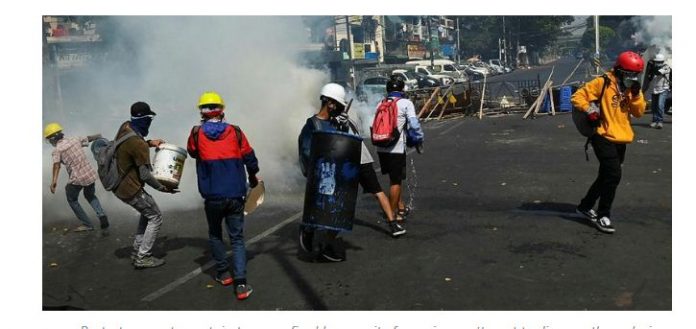
Elsewhere in the city, protesters took up positions behind barricades and wielded homemade shields to defend themselves against the onslaught, with police using tear gas to clear some rallies.

One man in Mandalay was taken to hospital in critical condition after a projectile pierced his helmet and lodged in his brain.

A doctor in the city, Myanmar’s second-largest, said it was not known whether the 41-year-old had been struck by a live round or a rubber bullet.

At least one journalist documenting Sunday’s assaults by security forces was beaten and detained further north in Myitkyina, a city at the headwaters of the Irrawaddy river, according to local outlet The 74 Media.

Another reporter was shot with rubber bullets while covering a protest in the central city of Pyay, their employer said.

Weeks of unrest

Since the February 1 military takeover, Myanmar has been roiled by giant demonstrations and a civil disobedience campaign encouraging civil servants to walk off the job.

Sunday’s crackdown followed a similar wave of violent action against angry but largely peaceful anti-coup rallies around the country a day earlier.

Several journalists documenting Saturday’s assaults by security forces were detained, including an Associated Press photographer in Yangon.

More than 850 people have been arrested, charged or sentenced since the coup, according to the Assistance Association for Political Prisoners monitoring group.

But the weekend crackdown was expected to raise that number dramatically, with state newspapers reporting 479 arrests on Saturday alone.

International condemnation of the coup has been fierce, with the United States, the European Union and other major powers denouncing violence against protesters.

‘Anything can happen’

Suu Kyi has not been seen in public since she was taken into custody during pre-dawn raids in the capital Naypyidaw as the coup was launched.

A court hearing will be held on Monday for the ousted leader, who faces obscure charges for possession of unregistered walkie-talkies and violating coronavirus restrictions on public gatherings.

But her lawyer Khin Maung Zaw told he had still been unable to meet with Suu Kyi ahead of the hearing.

“As a lawyer, I put my trust in the court,” he said. “But in this period of time anything can happen.”

State media announced Saturday that the junta had sacked the country’s United Nations envoy, who gave an impassioned plea for help on behalf of Myanmar’s ousted civilian government.

Before Sunday, at least five people had been killed since the army takeover — four from injuries sustained at anti-coup demonstrations.

One police officer also died while attempting to quell a protest, the military has said.

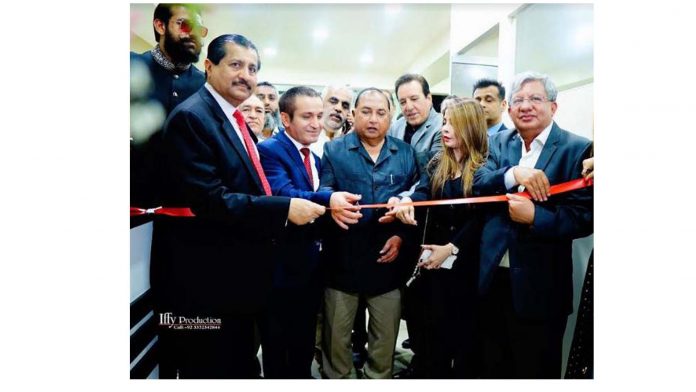
Pak-Turkish Mutual Real Estate Office “MUB Real State” inaugurated in Karachi

“There is no precedent for Pak-Turkish friendship, buying and selling property between the two countries will give citizens a chance to know each other’s way of life,” actor Javed Sheikh said.

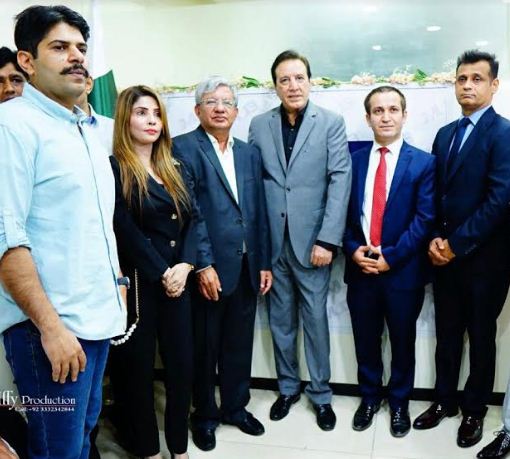
KARACHI, FEB 28 (DNA) – A joint venture office of Pakistan and Turkey MUB Real state was inaugurated in Karachi. The office was inaugurated by renowned actor Javed Sheikh, Business Tycoon SM Munir, Political Leader Mirza Ikhtiar Baig, Commercial Attachi of Turkish Consulate Eyup Yildirm, Country Manager Real Estate Azeem Waheed, Fashion Designers and Business Partner MUB Real State Tasneem Sadaf and Shakeel Dengra. Commercial Attachi of the Turkish Consulate Eyup Yildirm said that “Pakistanis are welcome to invest in Turkey”

 Leading actor Javaid Sheikh said that “there is no precedent for Pak-Turkish friendship”.

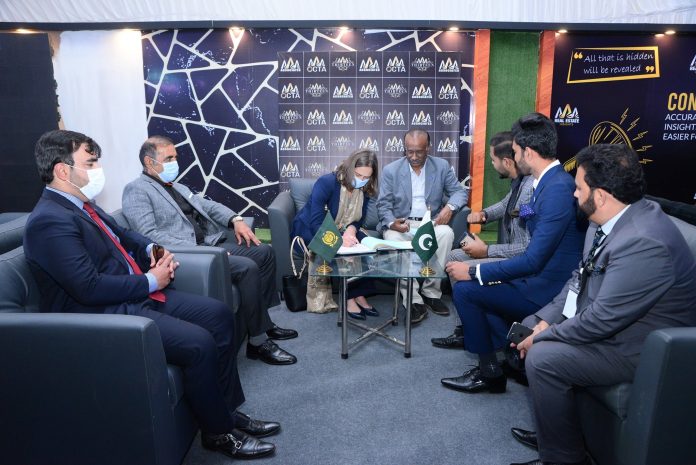
Denmark Ambassador Lis Rosenholm expressing her comments at visitors book at RCCI BUILD Expo 2021 Ayub Park

Business tycoon SM Munir welcomes the establishment of a real estate office in Karachi. Mirza Ikhtiar Baig said that “the establishment of such offices is very important for the strengthening of Pakistan-Turkey relations”

Azeem Waheed, Country Manager, MUB Real Estate, said that “the establishment of this office can be used by people who want to go to Turkey or buy property in Turkey. MUB Real Estate is here to guide such people”

The inaugural function was attended by a large number of showbiz stars including actress Sabahat, Nimrah Shahid, Anusha, Kanwal Nazar, Hina Ansari, actor Adnan Tipu, Faiq, and Shamail Riaz Malik. MUB Real Estate is an international investment partner, headquartered in Turkey with 6 global locations including two branches in Pakistan – the newest being in Karachi.

Envoys laud RCCI efforts for organizing Build 2021 Expo & Construction Trade Fair

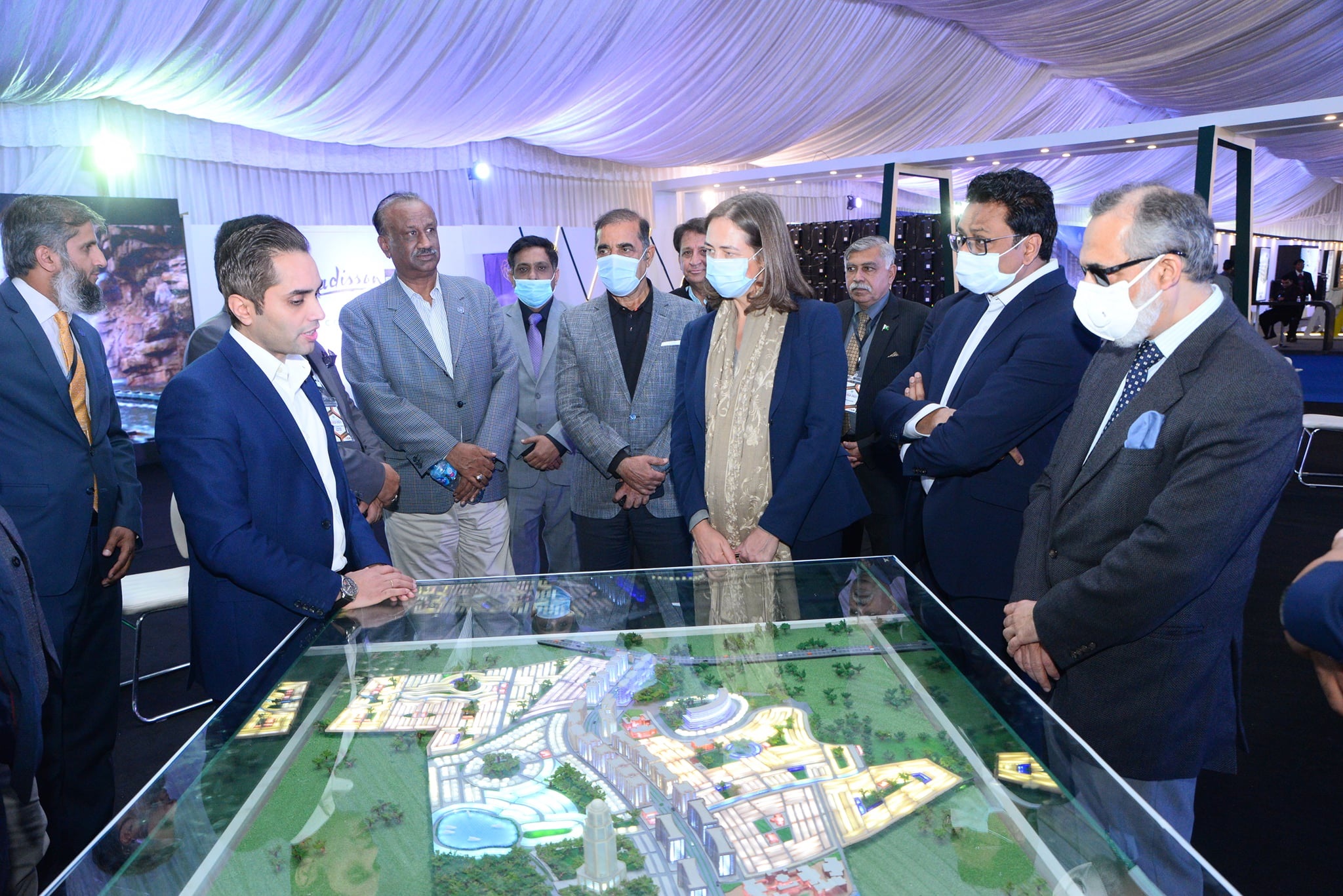
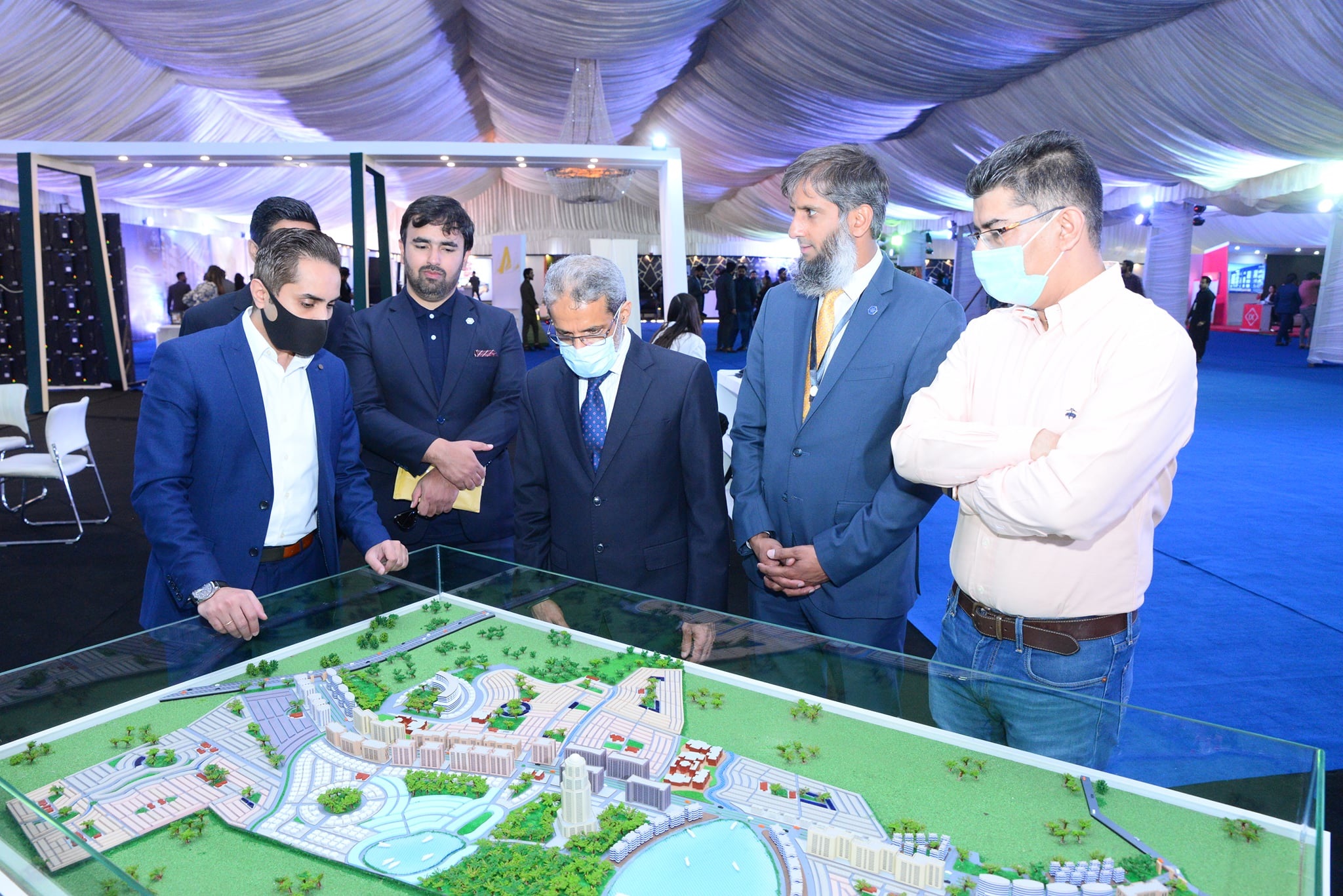
RAWALPINDI, FEB 28 (DNA) – A large number of ambassadors, High Commissioners, Commercial Counselors and diplomats visited the Build 2021 Expo and Construction Trade Fair organized by the Rawalpindi Chamber of Commerce and Industry (RCCI) at Topi Rakh Complex Ayub Park Rawalpindi.

Ambassador of Denmark in Pakistan, Lis Rosenholm in her tweet appreciated RCCI for its efforts for promoting trade activities and organizing exhibitions. She also discussed investment opportunities in liveable cities hand in hand with tackling climate changes and creating jobs. She said it was a great visit and I am happy to know that RCCI has become the first Green Chamber in Pakistan by installing a Solar system and rain water harvesting and recharge system in the building.

Denmanrk 2

Malaysian High Commissioner Ikram Bin Mohammad Ibrahim, Palestinian ambassador to Pakistan Ahmed Jawad Rabie, Yemeni Ambassador to Pakistan Mohammed Motahar Alashabi, Nepal Ambassador, and German Ambassador Bernhard Schlagheck visited different stalls at expo and appreciated the projects.

Yemen Ambassador
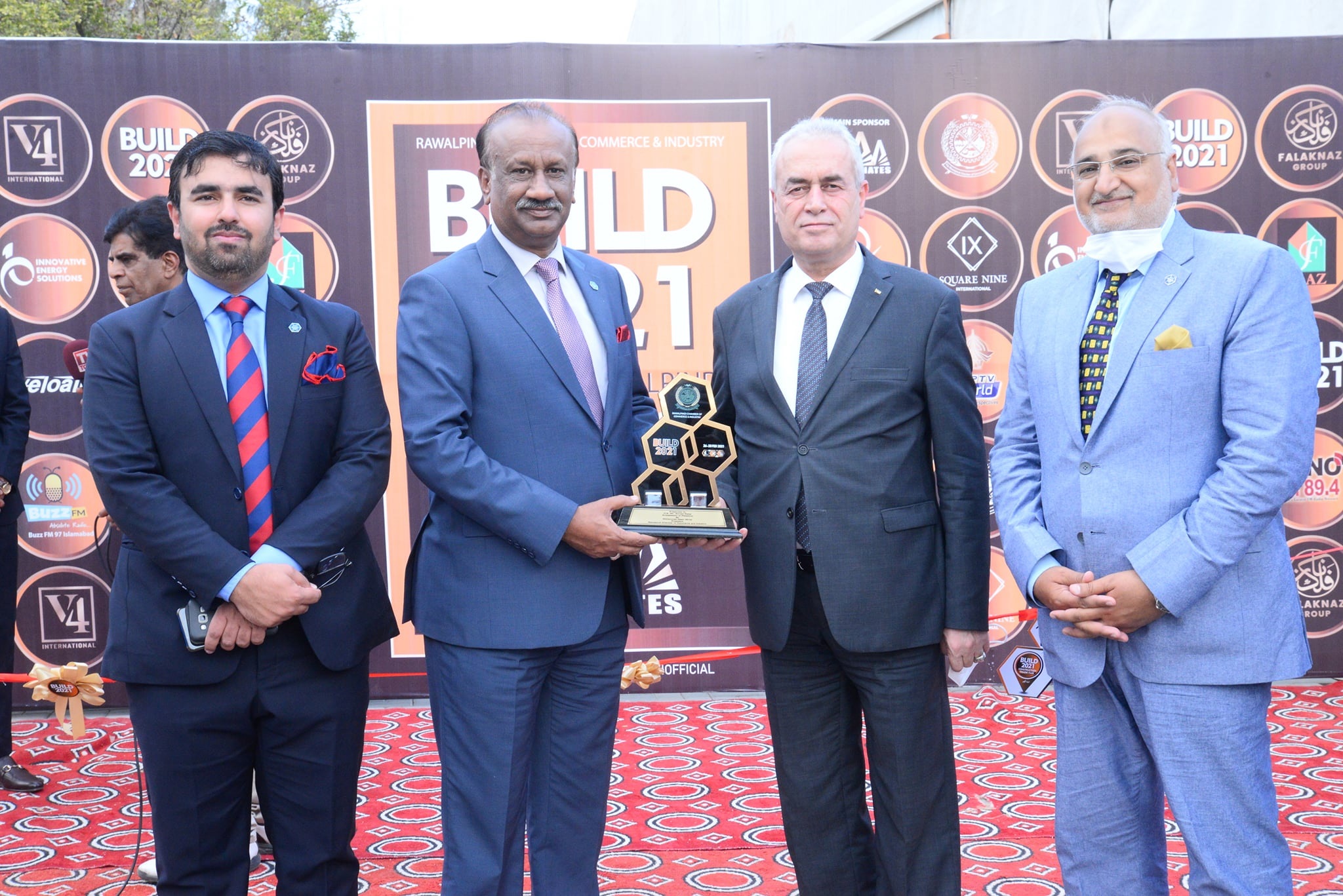
RCCI President Nasir Mirza Presenting memnto to Palestine Ambassador Ahmed Jawad Rabie at RCCI Build 2021 Expo Ayub Park

Chamber President Muhammad Nasir Mirza gave them a short briefing on RCCI current and ongoing projects and programs. He said that the purpose of the expo is to promote business activities. The expo will provide investors with a wealth of information on the housing and construction sectors, as well as information on various construction projects under one roof.=DNA

===================

FEBR demands growth-friendly policies as fiscal deficit going up

ISLAMABAD, FEB 28 (DNA) – Friends of Business and Economic Reforms on Sunday sought long-term measures amidst high cost of debt servicing due to heavy loans, as the fiscal deficit has jumped to around Rs1.5 trillion in first half of 2020-21.

FEBR President Kashif Anwar sought growth-friendly policies, upgraded tax and social spending and active industrial strategies in close consultation with real stakeholders to achieve sustainable development goals.

In terms of size of the economy, the budget deficit remained at last year’s level but in absolute terms the deficit went up, he said and added that the government had set the federal budget deficit target at 7.5% of GDP while it has obtained Rs1.2 trillion in loans to finance the deficit.

FEBR President observed that the fiscal deficit is going up despite the government claim of tight control over expenditures, while the only main head of expenditure that remains out of control is the debt servicing cost that jumped by 15 percent to nearly Rs1.5 trillion.

Kashif Anwar added that Pakistan’s fiscal policy continued to focus primarily on macroeconomic stabilization, in response to the financial crisis, instead of putting more emphasis on reforms to foster long-term growth through industrialization by adopting advanced technology.

In a written statement, he opposed the excessive borrowing policy of previous governments, as the present government has also added an additional Rs11.35 trillion in the total public debt during the first two years in power, which is more than the total debt the previous government has taken in its five-year term.

He observed that over 40 percent of the additional debt in the past two years is only because of debt servicing expenditures while about 30 percent due to rupee devaluation. He flayed the economic managers for keeping the interest rate artificially high at 13.25% in the past, besides devaluing the rupee more than the requirements, contributing most to lift the public debt.

Amidst consistently rising markup rate, Pakistan’s total debt and liabilities skyrocketed to around Rs36.3 trillion, which were rising at a high speed in the wake of a soaring budget deficit, he added.

The exponential growth in foreign debt levels underscores that the country has been unable to attract adequate non-debt-creating, long-term inflows like FDI or increase its exports, which remain stuck at $23billion a year, to meet its external account requirements. The extremely low level of formal domestic savings as reflected by banking deposits means that the government would have to depend on foreign savings to finance its budgetary operations as well as for balance-of-payments support. For example, the total loans taken during last two and a half years were meant for balance-of-payments or budgetary support. Similarly, the failure to reform the tax system and increase revenue collection is a major factor behind heavy domestic and foreign borrowings by the government.

He said that Pakistan foreign debt and liabilities have been increasing rapidly over the last several years. The government is forced to borrow heavily from external sources, including multilateral and bilateral creditors, and commercial lenders, in order to meet its foreign debt repayment obligations, as well as to finance its budget.=DNA

===========================

PRGMEA wants duty-free fabric import through easy procedure instead of DTRE

DNA

Lahore: Pakistan Readymade Garments Manufacturers & Exporters Association (PRGMEA) has appealed the government to allow duty-free import of fabric under a simple and easy procedure instead of ‘Procedure of Duty Tax Remission for Exports’ (DTRE), which is very complicated, as only two percent of the exporters can avail importing under the DTRE facility.

PRGMEA Vice Chairman and north zone head Adeeb Iqbal Shikeh stressing the need for duty-free fabric import to encourage value-addition, suggested the government to review its textile policy to remove hurdles hindering exports and to enable the textile sector to attain the exports targets.

“We urge the government to abolish all duties on the import of fabrics in line with the import relaxation provided on import of cotton yarn, as value-added garment sector is facing severe shortage of basic raw material of fabrics, which may lead to a drastic decline in value-added textile export. We also want duty-free import of fabric, as the cotton prices find no respite from an unabated spike with the industrial input trading at season’s highest rates because its muted local production continues to widen demand and supply gap,” he added.

He said that the whole process of import as well as audit under DTRE system takes at least 26 weeks in Pakistan while in Bangladesh the entire procedure is completed in just in two hours. As a result, Bangladesh textile exports have surged to $26 billion without producing a single bale of cotton while Pakistan has never crossed the figure of $16 billion despite producing its own raw material.

“Procedure of Duty Tax Remission for Exports (DTRE) scheme has been designed in such a manner that just few companies out of thousands of value-added textile sector units in Pakistan were benefiting from the scheme to increase the country’s export volumes.”

He also suggested the government to remove custom duty on yarn as well as fabric import, as its shortage has increased seriously despite removal of 5% regulatory duty on yarn. “We appeal the government to withdraw 5% Customs duty on yarn and fabric import following the abolishment of Regulatory duty on yarn in view of controlling shortage of apparel industry’s raw material.

PRGMEA also urged the government to impose a complete ban on export of fabric till the sufficient raw material is available to the industry. It will be positive for the apparel industry to convert it into value-added goods, exporting them in the international market instead of raw fabric, he added.

Stressing the need for consistency in export-related policies, he urged the government to simplify the complex nature of several segments of its policy, including DTRE and Sales Tax Refund system.=DNA

===================

From March 1, the procedure for collecting alimony is changing

TASHKENT, FEB 28 – President of the Republic of Uzbekistan “On measures to further improve the system of execution of court documents and documents of other bodies” to the command Mainly, from March 1, 2021, the execution of alimony obligations on enforcement documents will be carried out by the debtors through a single information system of enforcement and control of alimony obligations.

The single information system for the execution and control of alimony obligations is combined with a separate bank account for alimony obligations. In this case, the MIB opens a bank plastic card in the name of the claimant (alimony recipient) on the execution documents, as well as alimony money, including alimony withheld from the debtor’s work.

Farrukh Toshpulatov, head of the public relations and legal information department of the Interior Ministry, told Kun.uz that now the state executor will be able to monitor the implementation of alimony obligations via mobile phones.

As a result:

  • Execution of executive documents on alimony collection and control over alimony collection will be partially automated;
  • convenience for alimony payers and recipients;
  • alimony payers are remotely controlled;
  • the number of citizens’ appeals will decrease.

For information, more than 268 thousand (24.6%) of the current 1 million 90 thousand enforcement documents in the Enforcement Bureau are enforcement proceedings on alimony payments.

Stay Connected

64FansLike
60FollowersFollow

Latest Reviews

Exchange Rates

USD - United States Dollar
EUR
1.15
GBP
1.34
AUD
0.69
CAD
0.71