ISLAMABAD : The counsel of Pakistan People’s Party (PPP) leader Khursheed Shah has sought more time to complete preparations for responding queries of the Supreme Court (SC) in the bail petition.
Justice Mushir Alam heard the bail petition filed by PPP leader Khursheed Shah in the cases registered by the National Accountability Bureau (NAB).Justice Mushir Alam remarked that a larger bench of the Supreme Court (SC) made it clear about the principles for seeking bail in NAB cases. The chances for getting bail in the NAB cases are less, he added.
Khursheed Shah’s counsel, Raza Rabbani, said that he was unaware of the verdict given by the top court’s larger bench. To this, the judge remarked that it seems that the lawyer’s legal team has not assisted him well.
Justice Yahya Afridi said the counsel could continue its argument only if he can make a clarification regarding the assets of the petitioner, Khursheed Shah. The family of the petitioner accepted ownership of the said properties and arguments could only be heard if the assets values have matched with his income, said the judge besides questioning that source of Shah’s income when he had joined the politics.
Raza Rabbani replied that his client mentioned about all of his properties in the particulars.
Justice Afridi remarked that the matter is not about disclosing assets but to ascertain the sources of income. Raza Rabbani argued that Federal Board of Revenue (FBR) had not issued any notice to Shah, whereas, the anti-corruption watchdog had filed a case against him on the basis of the net worth of his assets.
“A probe had also been launched against Khursheed Shah in 2001, however, it was closed after seven years when the NAB found nothing wrong against him,” said Rabbani.
Justice Afridi said that financial records of the petitioner will uncover the facts about the variation of Shah’s sources of income.
Raza Rabbani then sought more time from the top court for completing his preparation in the case.
Later, the top court adjourned the hearing of the bail petition for an indefinite period.
Moreover, another bail plea was wrapped up by the top court over the request of Shah’s counsel Aitzaz Ahsan. He pleaded the apex court for withdrawing the second petition over being ineffective as it was filed before Shah’s indictment in the corruption reference.
ISLAMABAD : Pakistan has recorded 36 deaths and 2,362 new cases due to the COVID-19 in the last 24 hours.
In the past 24 hours, 36 more people succumbed to the disease, taking the death toll to 8,832. 1,719 patients have recovered from the virus during the last 24 hours and 2,456 patients are in critical condition, however, no patient has been declared critical today.The total count of active cases is 47,236.
According to the National Command and Operation Centre (NCOC), with fresh inclusion of the infections in the country the national tally of cases now currently stands at 440,787.
A total of 31,830 tests were conducted across the country during this period. Overall 384,719 people have recovered from the deadly disease so far while 6,064,220 samples have been tested thus far.
LAHORE, Dec 13 (DNA): Balochistan National Party chief Akhtar Mengal has demanded that all politicians including Musharraf should be held accountable for the supremacy of the constitution.
Addressing the PDM rally at Minar-e-Pakistan, he said that the government will not be allowed to tamper with the 18th amendment. In seventy years, the people of Balochistan have never seen a day in peace. Our villages were deserted and children were massacred in front of our mothers.
Akhtar Mengal said that the rulers call our rallies small gatherings, these are not rallies but funeral prayers of undemocratic forces.
He said that Gwadar was being divided like East Germany by erecting a fence. We do not want development that threatens our very existence.
He said island buyers in Australia and Dubai should also be held accountable. If the provinces were independent, Bangladesh would not have existed. If the constitution was superior, the constitution would not have been violated. If the rule of law had prevailed, the generals would not have ruled for 31 years.
LAHORE, DEC 13 – The sixth public meeting, which the Pakistan Democratic Movement (PDM) is calling a “historic and decisive” power show, is underway in Lahore’s Minar-i-Pakistan.
On their arrival at the venue, PDM leaders Maulana Fazlur Rehman, Maryam Nawaz, Bilawal Bhutto-Zardari along with others were greeted by enthusiastic supporters who had gathered at Minar-i-Pakistan during the day.
This is the first time in the recent history of the country that the PML-N is holding a public meeting at Minar-i-Pakistan, the first rally at this venue for PML-N Vice President Maryam.
Similarly, it is PPP Chairperson Bilawal’s first appearance at a political gathering at Minar-i-Pakistan. His late mother, former prime minister Benazir Bhutto, held a historic public meeting at Minar-i-Pakistan in 1986.
PML-N Vice President Maryam thanked Lahore’s residents for attending the public meeting in overwhelming numbers. Without naming the prime minister, Maryam said that someone had “challenged PDM in Pharoah’s tone” to gather enough people to fill up Minar-i-Pakistan’s grounds, adding that today, participants of the public meeting had filled up adjoining streets as well.
Referring to a gathering held by the PTI at Minar-i-Pakistan in 2011, Maryam alleged that the public meeting had been arranged by former ISI chief Shuja Pasha.
Maryam also spoke about the Panama Papers case and alleged that former chief justice Asif Saeed Khosa had told the incumbent prime minister to file an application “after which you (Imran) ousted Nawaz Sharif on the basis of an iqama through a fixed match”.
The PML-N vice president also questioned PM Imran’s offer for dialogue through the Parliament, asking who was behind the operations of the House. The incumbent premier will have to go, Maryam said, because he had ruined the country’s economy and had “lied to the people every day”.
She said Lahore welcomed Sindh, Khyber Pakhtunkhwa and Balochistan as a “real brother”.
“No one is big or small, we are all equal,” Maryam declared.
She said that for the past three years, the prime minister — whom she referred to as ‘Tabedar (obedient) Khan’ — had been saying that he will not grant an NRO. Maryam insisted that today, the prime minister was seeking an NRO from Nawaz Sharif and the people.
She urged the people to wear masks because “I value and care for your life” but said that it was important to attend public meetings because Covid-18 was “more lethal than Covid-19”. The former prime minister’s daughter expressed grief that seven patients in Peshawar’s Khyber Teaching Hospital had died due to shortage in oxygen supply and question the PTI government’s performance in the health sector.
PPP chief Bilawal, in his address, recalled that his grandfather Zulfiqar Ali Bhutto had founded the party in Punjab. PPP workers in Lahore, Bilawal said, went through torture but continued to support democracy.
He said that the country was suffering because of the “fake, incompetent and illegitimate government”.
“Punjab’s pag (turban) is on the head of the puppet of a puppet. Is this acceptable to Punjab?” he asked, adding that he neither accepted the prime minister nor his chief minister. He insisted that the PDM’s “war is not for power but for the rights” of the people.
The PPP chief said that non-democratic forces termed as the establishment, which he refers to as the selectors, “have been conspiring against you (public) and have been forming governments of their choice”. He said that the incumbent government was brought to power “through the umpire’s signal”.
“Selectors, listen, you will have to listen to the public’s voice, you will have to accept their decision […] the time for dialogue is gone, now there will be a long march,” said a charged Bilawal.
“Stop making phone calls, stop trying to establish contacts. No differences can be created between us, we will reach Islamabad and chase your puppet out. Once he is gone, then there can be dialogue,” said Bilawal.
PML-N supremo Nawaz Sharif also addressed the crowd via video link and asked who was answerable for the government’s failings.
“He says I won’t give an NRO. Who is asking you for an NRO? You and Aleema Khan got an NRO from Saqib Nisar yourself,” said Nawaz.
“They say, don’t take names? Tell me, what should we do? Is Imran Khan alone responsible for the predicament the country is in?”
Nawaz said that his “crime is that I speak the truth” and added that he was fighting for the people. He said that his “narrative” was the same as Quaid-i-Azam’s.
“Stop political engineering factories in agencies,” said the former prime minister.
JUI-F chief also addressed the crowd and said: “The wounds inflicted by the rigging done by the establishment for this illegal government, the dirty role they played [to sieze] this illegal power are getting deeper.”
Rehman further said that he wanted to “alert and caution the defence forces and their leadership […] to move out of the people’s way and let them reach Islamabad”.
“In the coming days, I see anarchy in the country. We should handle matters before heading towards anarchy,” he said.
‘Who is responsible?’
Jamiat Ulema-i-Pakistan’s (JUP) Awais Noorani, who was the first to address the crowd, told Prime Minister Imran Khan to submit his resignation and called upon PTI supporters to “rebel” against the ruling party.
Awami National Party Ameer Haider Khan Hoti also condemned the ruling PTI and said that about 80 years ago, Bacha Khan had started a non-violent struggle for his nation’s rights but he was termed as a traitor.
Hoti declared that terrorism was “imposed upon the Pakhtun people” saying, “Pakhtun people were the ones who were killed and were defamed as well”. He added that there were “conspiracies” to lead Afghan peace talks towards failure and efforts to “create misunderstandings between Afghanistan and Pakistan”.
“I want to say that this is not our fight alone, this is of all of Pakistan’s,” he said. Hoti urged PDM leaders to stand by the Pakhtun people and vowed that he would continue to stand by the alliance for the “supremacy of the Parliament and Constitution and the respect for vote”.
Balochistan National Party-Mengal’s Sardar Akhtar Mengal started off his address by saying that the PDM public meetings were “funeral prayers of the dictators and the powers who, for 70 years, have treated the country’s Constitution as their slave”.
“I will only present a few drops of the blood flowing from our bodies and then you can decide if we are responsible for the distrubance in Balochistan today,” he said. Mengal said that his party had been struggling against the khalayi makhlooq, against whom the people have gathered today.
“Who is responsible [for the cruelty and injustice over the past 70 years]? It is not them, but the politicians and [people of the] big province who have gathered in this venue today,” Mengal said. “Had you controlled this dragon from day one, it would not have become this uncontrollable monster. This genie that is out of the bottle, it is your responsibility to control it.”
Mengal said that 10,000 Baloch people were still missing, adding that all the people of Balochistan want was to be treated and respected as humans. He also spoke about provincial autonomy, saying that if “provinces were autonomous [in Pakistan] Bangladesh would not have been created”. He said that in Gwadar people were being “divided like East Germany and West Germany” in the name of development.
Pakhtunkhwa Milli Awami Party chairman Mehmood Khan Achakzai called for a “Turkey-like revolution” in Pakistan and urged Maryam, Bilawal and Rehman to spearhead the movement. He said that he was striving for a Pakistan where no ethnicity would be superior to the other.
Jamiat-i-Ahle Hadees chief emir Professor Sajid Mir also spoke at the gathering and said he wanted to “commend the participants for holding a grand and memorable public meeting in the shadow of Minar-i-Pakistan despite the difficulties” created by the government.
He said that the “new Pakistan’s government was in quarantine” and added that PDM shared the same narrative. Mir said that the “right to self govern should be returned to the public”.
Islamabad:-Critically acclaimed and one of Pakistan’s most celebrated actors, Bilal Abbas Khan has been named on the first of its kind Top 50 Asian Celebrities In The World list as the highest placed male actor from Pakistan.
Published by the UK based paper Eastern Eye, Bilal Abbas Khan has been ranked at 28 on the list, ahead of not only many global artists but also fellow senior actors and artists from Pakistan. The Cheekh famed actor who debuted back in 2016 has solidified his place in the industry by showing his tremendous range as a performer. Bilal Abbas Khan managed the top spot in male actors after the fame he achieved through his 2020 hit drama PyarKeSadqay and his first international web series EkJhooti Love Story.
Eastern Eye entertainment editor AsjadNazir, who put the list together said: “Fast rising acting star Bilal Abbas Khan is the future of Pakistani film and television. He had another great year with projects including EkJhooti Love Story, which was boundary breaking in its reach and continued being a powerful role model for a new generation.”
Upon receiving this recognition, Bilal Abbas Khan was elated and talked about his desire to keep on taking unconventional roles, “I think every character that I play has a story to tell – and so far I have been conscientious what stories I want to tell the audiences. This is the kind of praise that I didn’t expect to receive, but I am grateful and proud of the choices I have made because of all the love the audience continues to show me. I hope to continue to inspire, surprise, and make people think with every role I play. Thank you.”
The artists on the list were ranked based on their media exposure, performances, broadcasting activities, and professionalism. Bilal Abbas Khan’s year in showbiz has been nothing short of extraordinary, with news of two new projects also unveiling in the first half of the new year, a web series titled ‘AbdullahpurKaDevdas’ and the murder-mystery drama ‘Dunk.’
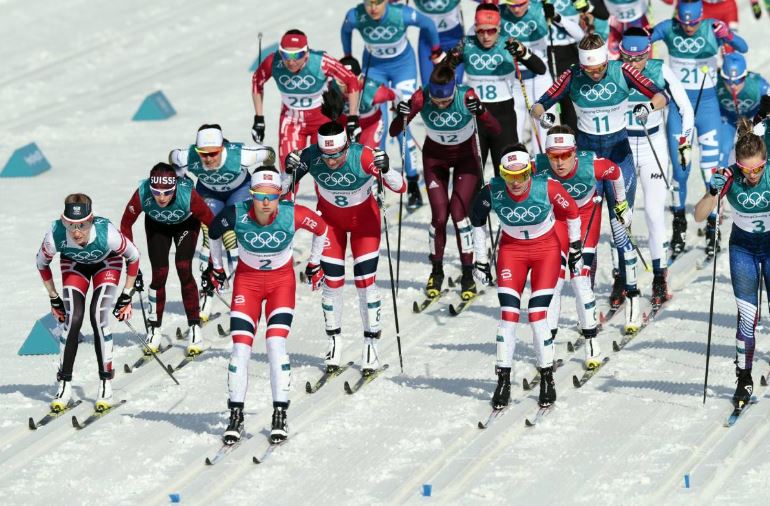
OSLO – If you’ve heard the saying that Norwegians were born with skis on their feet, it may not come as a surprise that the country is a nation of skiers.
From the de facto national sport, cross country skiing, to alpine (downhill), to ski-jumping, and beyond, Norway seems to have championed them all!
But how did such a small nation get so good at this sport, and why are they so obsessed with it?
The answer lies in the climate, their ancestors, and their connection to nature.
While the origins of skiing can be traced to China, the earliest evidence of skiing in Norway is a rock carving estimated to be around 6000 years old.
Discovered in 2001 and known as the Bøla Man, the carving shows a human on skis with one pole in his hand.
The single pole is thought to have been used as a paddle, demonstrating that skiing was already prevalent at this time.
A second carving known as the Rødøy Man was discovered in 1933 and is dated to 2000 BC. The carving depicts a figure on skis.
It became the inspiration for a worldwide sporting event, as we will see later.
793 – 1066: The Vikings and Old Norse
Did you know that the term “ski” comes from the Old Norse word, “skíð,” meaning cleft wood?
Outside of pillaging, the Vikings found some time to worship the many Norse Gods and Goddesses.
Among them were Ullr and the giantess Skadi, both of whom are documented in Norse folklore for their skiing ability.
In reality, heavy snowfall meant that skiing was a necessary means of transport during the Viking Age.
A good area for hunting was high up in the mountains, but there was only one way down, which required skilled navigation.
The Vikings combined elements of alpine and jumping to ensure a safe descent from their hunts.
1204: The Prince and the Birch Legs
Fast-forward 138 years, and a civil war is now raging between two groups, the Baglers and the Birkebeins.
The name Birkebeins, meaning “birch legs,” was intended to be negative – referring to their use of birch bark as proper footwear, indicating their low status.
They supported the ruling King Haakon Sverressons and appointed him the leader of their group.
When he died, the king’s new-born son and heir to the Norwegian throne, Håkon Håkonsson, became a target for the Baglers.
Worried about the infant in danger, a group of Birkebeiners planned to carry young Håkon to safety on skis, but only the two best skiers could go due to bad weather.
Together, they completed a treacherous 54km journey and secured Håkon’s ascent to the throne.
This piece of history is commemorated by the annual skiing event, Birkebeinerrennet.
All participants carry a backpack weighing 3.5 kg, symbolizing the weight of the infant.
In 2015, the event came full circle when Norway’s Crown Prince Haakon became the first member of the royal family to participate in the race.
You can find out how he got on here!
The 1800s: Norway gets modern
Although records exist from the Danish-Norwegian army of military ski exercises, it was not until the 1800s that civilians took up skiing for leisure.
The oldest officially recognized ski race for civilians is considered «Veddeløb paa Ski» (Betting Run on Skis), which took place in Tromsø in 1843.
From this date onwards, its popularity exploded across Norway, and the first ski club was founded shortly after.
Around the same time, a new type of skiing emerged from the county Telemark.
This modern technique is attributed to Sondre Norheim, dubbed the Father of Skiing for his pioneering skills and technical innovations that would later propel Norway onto the world stage of skiing.
1905: New rulers
Following independence from Sweden in 1905, the Norwegian government identified suitable candidates for the Norwegian Crown.
It had been over 500 years since Norway had had its own king.
After some discussions, the Danish Prince Haakon VII and his English wife, Princess Maud, emerged as the new King and Queen of Norway.
Aware of the need to adapt to a new country and much to the delight of Norwegians, they quickly found a cross-country skiing instructor as well as a friend in the explorer, Fridtjof Nansen.
The Royal couple instilled their love for the sport in their son, Crown Prince Olav.
He is fondly remembered as Norway’s Ski King and, on two occasions, he even took part in the Holmenkollen ski jump competition!
1924 and 1994: Winter Olympics
Winning a total of four gold medals in skiing, Norway proved victorious in the first Winter Olympics hosted by France.
Since then, the country has gone on to win the Games an additional eight times, more than any other country in the world.
A total of 70 years after the first competition, it was Norway’s turn to host. Remember the rock carving of the Rødøy Man? That was the inspiration for the pictograms for each sport, designed to highlight their proud heritage.
1943: The heroes of Telemark
In April 1940, the Nazis invaded neutral Norway and, a month later, seized Vemork hydroelectric power plant in Telemark.
The facility became the basis for initial research into atomic bomb production, which caused growing concern among allied forces.
Britain formed the Linge Company, a group of talented Norwegians, to undertake raids against the Nazis.
One such raid would be the plant.
A failed mission by Britain to detonate the facility had already resulted in 41 deaths.
Determined, they called on the Linge Company for help, and Operation Swallow/Gunnerside was born.
Both operations succeeded, but with 2,800 Nazis in pursuit, the groups had to escape quickly.
By sunrise, the saboteurs were well clear, five of whom skied cross-country for 14 days, covering 280 miles before reaching neutral Sweden.
Conclusion
With such a long history, skiing is entrenched in the Norwegian way of life.
Although the participation for leisure purposes is less, Norwegians remain proud of their heritage, and Norway’s athletes remain at the top of their game.
ISLAMABAD, DEC 13 (DNA) – Muhammad Saleem, High Commissioner for the Islamic Republic of Pakistan to the United Republic of Tanzania, called on Palamagamba John Aidan Mwaluko Kabudi. Minister of Foreign Affairs and East African Cooperation of the United Republic of Tanzania in Dar es Salaam .
As a major leap-forward in bilateral ties, following two MoUs were signed during the meeting:
Memorandum of Understanding between the Ministry of Foreign Affairs and East African Cooperation of the Government of the United Republic of Tanzania and the Ministry of Foreign Affairs of the Government of the Islamic Republic of Pakistan on Bilateral Political Consultations.
Memorandum of Understanding for the Establishment of a Joint Commission on Economic Cooperation between the Government of the United Republic of Tanzania and the Government of the Islamic Republic of Pakistan.
The MoUs provide the institutional framework for structured dialogue between the two friendly countries in political and economic fields to elevate the relations to higher levels. Both sides are also working on various other initiatives including exchange of high keel visits, trade delegations and people-to-people contacts to further strengthen the existing cordial ties.
The bilateral trade between Pakistan and Tanzania during financial year 2019-20 soloed US$ 154 million. Pakistani business community has invested amend USS490 million in the Tanzanian economy prodding employment for 5,400 Tanzanian nationals. Both countries are working on realizing the existing trade and investment potential following a Tanzanian trade delegation’s recent visit to Pakistan from November 25 – December or, 2020.=DNA
ISLAMABAD: British High Commissioner to Pakistan Christian Turner has Congratulated Pakistan for its global leadership on Climate Action under Prime Minister Imran Khan’s leadership.
In a series of tweets on Sunday, he said, Pakistan is leading the way on Climate Action by announcing no new coal power projects and with – 1 percent of global emissions but 5th most affected country. He said we are working together to tackle the threats of Climate Change.
ISLAMABAD, Dec 13 (DNA): The Italian Ambassador to Pakistan, Andreas Ferrarese said here on Sunday that he perceived more trade potential between Pakistan and Italy in different sectors of the economy that would help evolve trade equilibrium between both the sides.
“Both the sides want equilibrium and to achieve trade balance as currently, Pakistan had a trade surplus in bilateral trade with Italy as was observed in FY 2019-20,” the ambassador said.
Replying to a question he said Pakistan exports to Italy were US $ 731million during 2019-20 while Pakistan’s major exports to Italy included textile, leather, rice, ethanol, including textiles articles, sets, worn clothing, Cotton ,apparel, crocheted, Cereals, raw hides and skins, leather, beverages, spirits and vinegar, Plastics, footwear and gaiters.
The ambassador said in FY 2019-20, Pakistan’s imports from Italy stood at US $ 521 million and included ships, boats, and other floating structures, machinery, pharmaceutical product, aircraft, spacecraft, electrical, electronic equipment, Organic chemicals, iron and steel, miscellaneous chemical products, optical, photo, technical and medical apparatus. He said currently, Italy was providing technical assistance in textiles, leather and marble sectors.
The Ambassador, Andreas Ferrarese said his government prioritized to enhance bilateral trade between Pakistan and Italy to its full potential of US $ five billion annually in the next three years from current US $ 1.7 billion. He said dairy and livestock, olives and olive products, plastics, processed food and construction sector were the areas where Italy could extend its cooperation with Pakistan. The Pak-Italy Joint Economic Commission was the forum for bilateral economic engagement and was expected to meet in Rome in the last quarter of this year.
While replaying about the expectation of Preferential Trade Agreement (PTA) between Pakistan and Italy, he said Italy was in European Union (EU) countries adding, “We are fully supporting Pakistan in Generalized Scheme of Preferences (GSP+) status in every review.” He informed that Pakistan has a share of 10 percent of trade with Italy in the whole contribution with EU countries and in future both sides would extend more cooperation in trade and economy.
The ambassador informed that Italy has become the largest contributor from the EU in home remittances to Pakistan. He said in FY 2019-20, it registered 29 percent growth which was far higher than our national growth in remittances. He said Pakistani workers contributed US $ 142.9 million in home remittances in FY 2019-20, and US $ 111 million in 2018-19. He said Italy was the eigth largest economy of the world with US $ two trillion Gross Domestic Product (GDP).
Italy has the third largest economy in the European Union (EU) after Germany and France and Pakistan`s 9th top export destination, he added. He said Italy has the largest Pakistani diaspora in the EU. Ambassador Ferrarese said the construction for the new embassy was underway and his priority task was to supervise the new under-construction Italian embassy in the diplomatic area and speed up the process.
He said a new economic mission would also be established in Pakistan to enhance trade and economic connectivity with Pakistan. The ambassador said, “I want to open up a cultural centre, maybe in one part of the new embassy, and promote Italian cuisine, art, paintings, music so that the Pakistanis can know more about Italy.” He said that he was appointed about nine months ago when coronavirus was at its peak. Replying to a question, he said his predecessor, Stefano Pontecorvo, was a seasoned economist and he tried his best to enhance the overall volume of bilateral trade.
He set a good example and standards for boosting the economic and trade relation between both of the countries. He said COVID-19 wasted our efforts and then he had to start afresh to give a quantum jump to the bilateral trade between Pakistan and Italy. Ambassador Ferrarese has many out of the box ideas in-store to promote bilateral, trade and cultural relations between Pakistan and Italy. He also stressed the need for the importance of cultural connectivity to promote trade and said that he would encourage exchange of students to further strengthen bilateral relations.
Replying to a question about his family, he said that his father and mother were educationists; his father was a professor of history and his mother a professor of financial economy. He started that his foreign services career was started at the age of 26 from the department of Economic Affairs, Italy looking after the Asia region. DNA