Home Blog Page 2704

FPCCI ORGANIZES WEBINAR SESSION ON PSW IN COLLABORATION WITH FBR

DNA

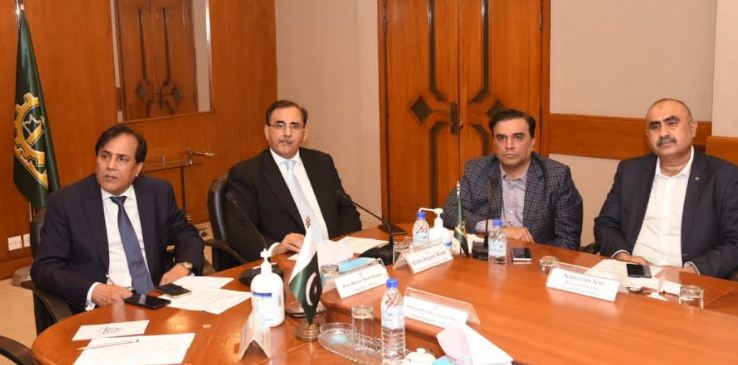
ISLAMABAD, JUN 2 – The Federation of Pakistan Chambers of Commerce & Industry (FPCCI), in collaboration with the Federal Board of Revenue (FBR) organized a webinar on Pakistan Single Window (PSW) program at their countrywide offices on June 1, 2021.

The PSW program is a major reform initiative led by Pakistan Customs that aims to transform the management of imports, exports, transit trade and related logistics. The program includes re-engineering of processes and automation of dozens of regulatory agencies to reduce regulatory compliance costs and complications.

The webinar was part of the PSW’s outreach plan to create awareness among stakeholders before launch of its first module – related to subscription in June 2021. Under this module traders and users will be able to avail electronic subscription and registration facility without needing to visit any government department. This will be followed by other 6 major releases by PSW in the current year to facilitate cross border trade and enhance government controls while integrating other government agencies. It is pertinent to mention that the government has promulgated the Pakistan Single Window Act, 2021 to ensure smooth operations of PSW.

 The PSW implementation team attended the webinar and explained salient features of the new system to familiarise the participants with this system. The president of FPCCI Mian Nasir Magoon and other participants appreciated efforts of Pakistan Customs to facilitate trade.

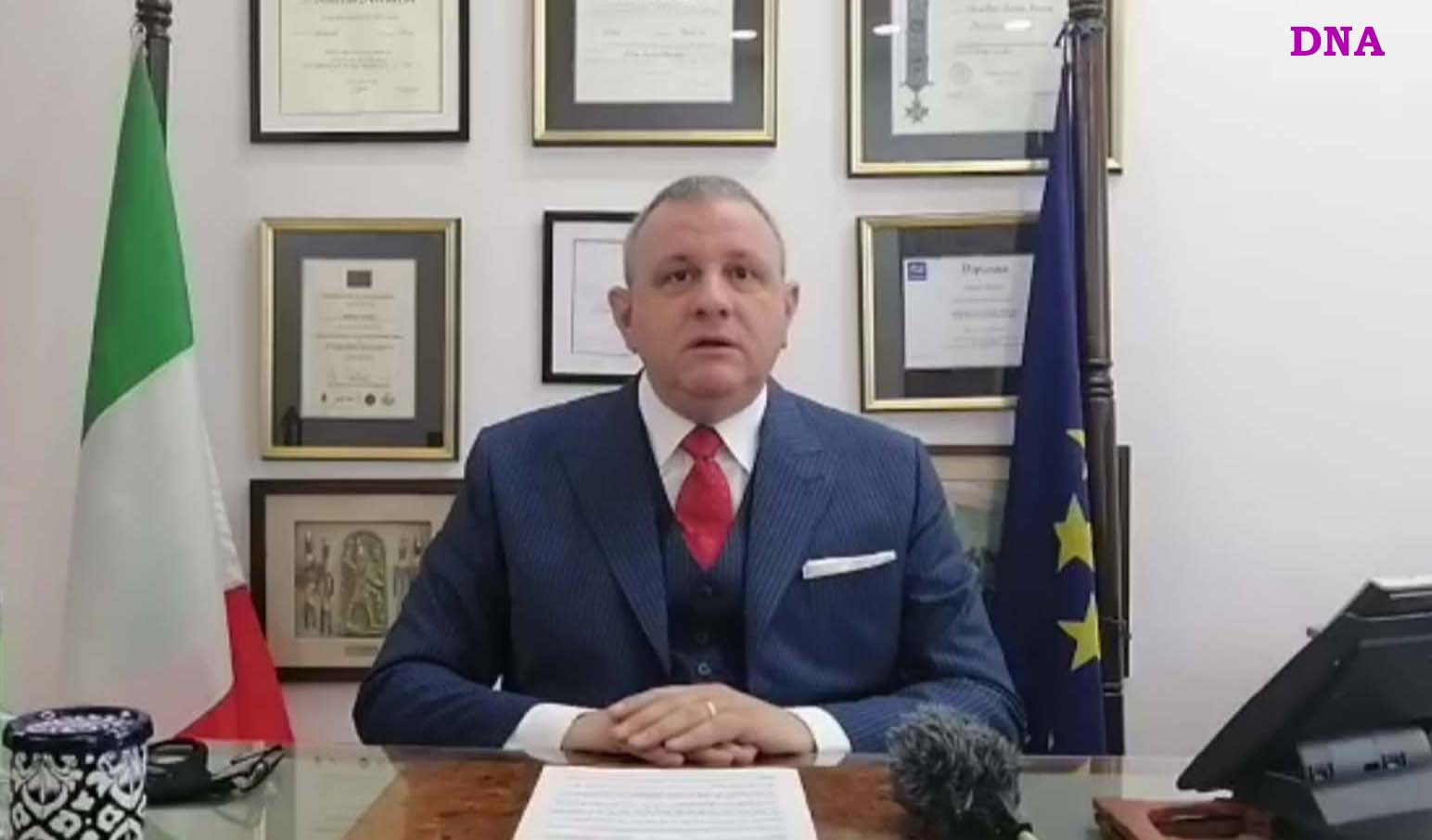
Italian envoy thanks Pakistan for support

Delivers message on Italian National Day; says on this day back in 1946, referendum was held in Italy where people were asked to choose between monarchy or republic for their state, 54.3 of voters opted for their republic

Zubair Ahmad

ISLAMABAD: Ambassador of Italy to Pakistan Andreas Ferrarese has shared the message with the people of Pakistan on National Day of Italy. He said today was the 2nd of June and the Italian all over the world are celebrating republic day.

On this day back in 1946, referendum was held in Italy where people were asked to choose between monarchy or republic for their state, 54.3% of voters opted for their republic, and thus Italy became republic on the 2nd of June 1946, he added.

Moreover, he said, every year Italy celebrates this day as the republic day or National day, following the covid-19 SoPs, we are not able to celebrate National day this year with our friends, but we are looking forward to celebrating after vaccination completes.

Furthermore, I would like to thank our Pakistani friends who sent messages of warmth and solidarity on our national day.

Pakistani stood by Italy since the very beginning of the pandemic. People in the government of Italy sincerely appreciate all the support and sympathy offered by the Govt and the people of Pakistan, says the ambassador.

He added, Let us play our role to curb the contagion and celebrate all our festivities responsibly. From everyone at Italian embassy, I wish you all a Bona-fiesta. Pakistan-Italy Dosti Zindabad.

CGSS, HSF ORGANIZE ONLINE DISCUSSION ON “CLIMATE CHANGE AS NON-TRADITIONAL SECURITY CHALLENGE: RELEVANCE FOR PAKISTAN”

DNA

ISLAMABAD, JUN 2 – Online Roundtable Discussion on “Climate Change as Non-Traditional Security Challenge: Relevance for Pakistan” was held. It was jointly organized by Center for Global and Strategic Studies (CGSS), Islamabad and Hanns Seidel Foundation (HSF) Pakistan.

Mr. ShakeelRamay Advisor, Asian Institute of Eco-civilization Research and Development, Consultant SDPI & Member board of Advisors, CGSS,commenced the session with opening remarks.

Dr. Steffen Kudella, Resident Representative, Hanns Seidel Foundation, Pakistan gave the welcome remarks.He welcomed all the participants and distinguished panelists. Dr.Kudella highlighted that on 5th June 2021, Pakistan is hosting the international Environment Day.

Last year this day was hosted by Germany and Colombia.Dr. Kudella said that it is important for Pakistan to raise awareness on climate change and mitigate its negative impacts. He stated that climate change is both, the rise of the average temperature of the Earth’s climate systemand also large-scale weather shifts. It is one of the most threating situations for Pakistan. 

These non-traditional security challenges are non-militaryin nature, but risks to the survival and well-being of people. Dr. Kudella stated that the rising temperaturesare leading to the melting of glaciers in Pakistan. Moreover, they lead to a degradation of ecosystems, impact biodiversity, and cause desertification and flooding, which in turn can cause serious problems such as mass migration, starvation or poverty. He emphasized on the importance of holding these roundtables to address critical issues.

Ms. RominaKhurshidAlam, Member of the National Assembly of Pakistan and Former Secretary of Climate Change Ministrystated that climate change is a subject on which we all need to work cohesively. She said that pollution has also increased in this pandemic and explained that Pakistan has the Climate Committee and is working to mitigate the negative impacts of climate change. She suggested thatin this regard think tanks can play an important role in policy orientation process and Government should implement the devised policies.

Dr. Rashid Aftab, Director of Riphah Institute of Public Policy, Riphah International Universitystated that the outcomes of climate change are devastating as Pakistan is among the top ten most effected countries.This has led to water insecurity. Dr. Rashid explained that climate change can lead to a number of challenges. One is the scarcity of water. Second, water availability will become erratic and put strains on population.Third,this situation will result in higher evaporation rate and raise demand of water.Dr. Rashid said that if these factors are likely to continue, it willincrease frequency of droughts. While concluding, Dr. Rashid suggested that the government should devise policies which can be practically implemented.

Dr. Yusuf Zaraf, TI, Former Chairman, Pakistan Agricultural Research Council (PARC)explained the relevance of climate change with agriculture sector. He statedthat Pakistan energy consumption is low and it is not contributing much to GHG. He said that there are so many plans like agriculture emergency plans. He suggested that if we want our national food security, we should properly opt practicalsolutions. Dr. Yusuf discussed that Pakistan isfacing certain issues related to food security this year which is alarming as our productivity is low. He suggested that isolated actions should not be beneficial, therefore the government should revisit the plan under climate changescenarioand incorporatetechnological advancement in agriculture sector to enhance productivity.

Prof. Dr. Muhammad Irfan Khan,Dean, Faculty of Basic and Applied Sciences, International Islamic University Islamabad (IIUI)shared his views on environment security and human security. He stated that environment security in terms of water, food and energy is considered an important aspect of national security. Therefore, the nexus builds important links between environment and national security. Dr. Khan stated that the link is reshaping the contemporary political discourse as it has been impacting the national security. Dr. Irfan said that this changing discourse is to translate contemporary security concerns and broaden the national security agenda that should include climate security. Mr. Tariq stated that now, environment security concerns have been incorporated into the foreign policy agenda. While concluding, Dr. Irfan suggested that there is need of environment policies among the provinces and also SARRC countries to develop environment security and peace which are imperative to achieve sustainable development.

Prof. Dr. Muhammad Khan, Member Board of Experts, CGSSdiscussed that the NTSchallenges transcend the nationalboundaries as they are transnationalin character. They have sudden unexpected appearances. Dr.Irfan said that human security isendangered inSouth Asiabecause of regional sensitivity to climate change. Prof. Irfan stated that as far as climate change is concerned, it has been impacting the humanity. Every country has a strategic linkage and effective policy making to mitigatenegativeimpacts of climate change that need to be explored. Climate change has adverse effect.Therefore, mitigation could not be successful until or unless there is cooperationamong all sectors. Dr. Irfan statedthat water security, agriculture and availability of clean drinking water are the key concerning areas.While concluding his speech, Dr. Irfan suggested that we have to preserve water resourcesand not disturb the natural cycles. He stated that the sooner we realizepreserving water sources, it would be significant for Pakistan and the next generation.

Dr. Shaheen Akhtar, Professor at the Department of International Relations, National Defense University, Islamabadstated that we need to looked between environment change and national security. She stated that climate change is an emerging threat to national security. Dr. Shaheen explained the link ofthese two concepts while highlighting the proponents (international scholars) such as BarryBuzan and Robert Kalpan, who introduced the two conceptasinterlinked. She highlighted that the rising temperature will increase irregular rainfall patterns and precipitation level. She discussed that this situation will lead towards food and water insecurity as they are interlinked. While conducing her discussion, Ms. Akhtar suggested that there has to be sectoral approaches. If there is no preparedness to mitigate these challenges, there would be huge repercussions. She stated that disaster-risk reduction plan and preparedness is important with the involvement of all stakeholders to mitigate the repercussion imposed by climate change.

Dr. Kanwar Muhammad Javed Iqbal, Lead Researcher of the National Institute of Maritime Affairs (NIMA)elaborated that the global community has consensus that climate change has emerged as the issue of national security and human security.  Dr. Kanwar statedthat ocean base economy ismore vulnerable to climate change as sea level is rising.  He also raised points on Pakistan’s drought situation that the Sindh province is highly affected by the droughts, increasing vulnerability to its huge population. He stated that the drought condition has impacted the Melon crops. While concluding, Dr. Kanwar suggested that there is a need to have a national policy on environment plan. He also suggested active engagement and safe participation between multiple think tanks  and relevant stakeholders.

Dr. Sarah Amir, Department of Environmental Sciences, International Islamic Universitystated that the climate change and its impacts is the pressing issue. She discussed that a lot of jargons have been introduced in the last decade like climate smart agricultureor non-traditional security threats and that climate change is not a myth but reality. She suggested that we cannot delay implementing climate change related policies.

Mr. Munir Ahmed, Executive Director of DEVCOM, Pakistanstated that we need to have specific researches. There has been no significant agenda of the working climate committees.  Climate change is the biggest threat. It affects everyone. Therefore, non-traditional security threats should not be handled by traditional method. Mr. Munir stated that there is a need to educate people in each constituency.  He also suggested that the funds that are being given by certain organization and NGOs and how,in this regard, the role of civil society is significant.

Mr. Ali TauqeerSheikh, founding CEO & National Program Director of LEAD Pakistan, and CDKN’s Regional Director for Asiaraised certain significant aspects. He stated that theresponse to non-traditional security threats should be non-traditional in nature. NTS need not be totally domestic or interstates as they are over lapped. Mr. Ali stated that many issuesthat are domestic also becomeregional or international. He gave examples ofclimate-relatedtransboundaryissues i.e.,cyclones and tsunamis, air pollution, smog, migration and refuges, pandemic and epidemics. While suggesting, Mr. Ali stated that NTS need not be a zero-sum game. By adopting effective policies, it can be a win-win situation if common grounds are crafted to work together. Mr. Ali discussed that NTS can be process oriented. Therefore, NTS need intelligence with engagement of knowledge economy.

Brig Muhammad Aslam Khan (Retd), Chairman Gomal Daman Area Water Partnership Pakistanstated that we need effective strategies to beat climate change. Therefore, Pakistan should undertake reforms plans like the KP government.  Dr. Aslam also suggested that there should be effective water management program along with protection and restoration of ecosystem. Dr. Aslam highlighted the role of youth in buildingawareness. While concluding, he stated that government alone cannot do anything on its own and that community efforts are required.

Dr. Hassan Abbas, Chairman Forte, Integrated Water Resources Management stated that we should not forget that a lot of products which we are using are importedmaterials. Therefore, we have to do careful consideration to our consumption related to industrial GHG emissions. He emphasized that water is the most impacted element by the climate change. He explained that we have developed infrastructure to modify our natural flow regime. Dr. Hassan recommended that before focusing on one type of solution like the old-mind set of diverting rivers, weshould move toward alternatives to manage water. Therefore, climate change should be discussedwidely in parallel to invest in same amount of investment in developing the alternatives.

Mr. Faizanul Hassan, Director, Pakistan Council of Research in Water Resources (PCRWR)discussed that the challenges are due to climate change. In this regard, there are some questions we need to answer related to climate change its vulnerability and mitigation. Mr.Faizan statedthat theGermanwatchGlobal Climate Risk Index 2021has placed Pakistan among top 20most vulnerable countries. He explained that climate vulnerability has been ignored. Therefore, there is a need to generate awareness among people regarding the issue of climate change.

Dr. Steffen Kudella, Resident Representative, Hanns Seidel Foundation Pakistanpresented concluding remarks. He stated that Pakistan is vulnerable to climate change and suggested torespond to theseeffects is a responsible manner, collectively.

The Online Roundtable was moderated by Mr. ShakeelRamay, Advisor, Asian Institute of Eco-civilization Research and Development, Consultant SDPI & Member Board of Advisors, CGSS.A total number of 80 participants from all across Pakistan attended the online roundtable discussionand was also viewed live on various social media platforms.

Chairman of Pakistan-Qatar Takaful Insurance Company meets COAS Gen. Bajwa

DNA

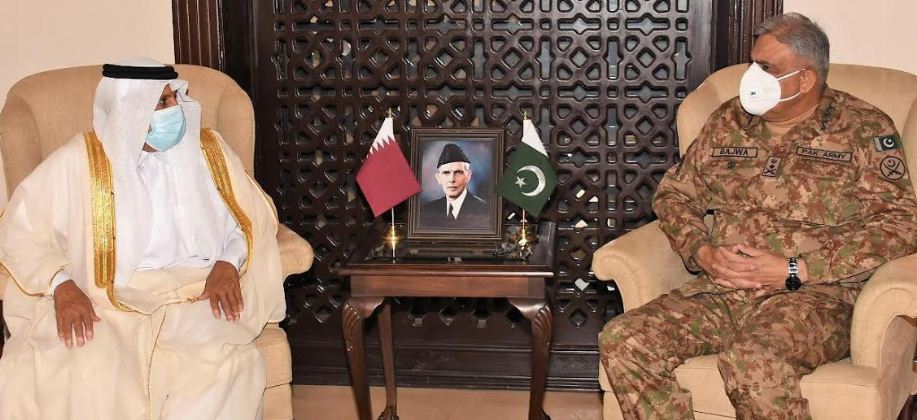
RAWALPINDI, JUN 2 – Sheikh Ali Bin Abdullah Thani J. Al Thani, Chairman of Pakistan-Qatar Takaful Insurance Company & Member of the Ruling Family of State of Qatar called on General Qamar Javed Bajwa, Chief of Army Staff (COAS), today.

During the meeting matters of mutual interest, regional security situation including recent developments in Afghan Peace Process and bilateral cooperation in various fields were discussed. Acknowledging positive trajectory of Pakistan – Qatar relationship, COAS appreciated Qatar’s support to Pakistan in various domains.

The visiting dignitary appreciated Pakistan’s contributions for conflict prevention in the region & expressed desire for enhanced Pakistan-Qatar bilateral collaboration.

PAKISTAN DESIRES TO PROMOTE MULTIFACETED COOPERATION WITH TAJIKISTAN

DNA

ISLAMABAD, JUN 2: Foreign Minister Shah Qureshi called on the President of Tajikistan Emomali Rahmon, after his arrival in Islamabad, today. The Foreign Minister welcomed him on a two-day visit to Pakistan and discussed issues of bilateral interest.

Building on historic and cultural commonalities between the two countries, he hoped for positive and fruitful outcomes from the current visit.

Foreign Minister Qureshi expressed satisfaction on the upward trajectory of bilateral ties and shared that Pakistan desires to promote multifaceted cooperation with Tajikistan in all spheres, including political, trade and economic, defence and security, education and cultural contacts.

The Foreign Minister elaborated Pakistan’s efforts for enhanced engagement with Central Asian countries to build a result-oriented, sustainable and long-term partnership through its “Vision Central Asia” policy. He also highlighted the aspect of regional connectivity and integration as its important components and underlined shortest access to the sea for Central Asian states through our ports.

The Foreign Minister also underlined the importance of peace and stability in Afghanistan in the advancement of regional connectivity.

President Rahmon later had tête-à-tête with Prime Minister Imran Khan, followed by delegation-level talks. The two sides also signed a number of agreements and MoUs for deepening bilateral cooperation in diverse fields.

———————————–

KOREAN ENVOY CALLS ON ZOBAIDA JALAL

Staff Report

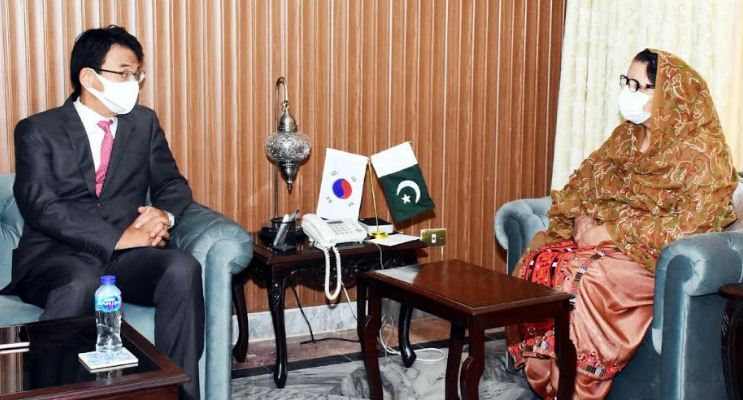
ISLAMABAD: The Ambassador of the Republic of Korea Suh Sangpyo called on Federal Minister for Defence Production, Ms. Zobaida Jalal at her office in Islamabad on 01st June 2021.

 During the meeting, matters of mutual interest, enhanced bilateral & defence cooperation were discussed.

Suh Sangpyo expressed Korea’s keen desire to explore new avenues in the mutual relationship with Pakistan in all sectors, particularly in defence, economy and education sectors. Both reiterated the commitment to enhance Pak-Korea bilateral relationship.

MUSHAHID ELECTED CHAIRMAN SENATE DEFENCE COMMITTEE

Says his Committee will act ‘above party lines in national interest to promote Khaki-Mufti harmony’

 Staff Report

ISLAMABAD: The newly constituted Senate Defence Committee in its first meeting held this morning in the Parliament, unanimously elected Senator Mushahid Hussain Sayed as Chairman of the Committee.  Five political parties participated in the electoral process including the Leader of the House, Senator Dr. Shahzad Wasim and Leader of the Opposition, Senator Yousaf Raza Gilani. 

Senator Hidayatullah proposed the name of Senator Mushahid Hussain for Chairman which was seconded by Senator Mushahid Ahmad.  After his unanimous election, Senator Mushahid Hussain thanked the Chairman Senate, Parliamentary Leader of PML-N, Senator Azam Tarar, the Leader of the House and the Leader of the Opposition for reposing confidence in him and he also thanked all the members present for their support.

He said that the spirit of consensus which was witnessed in the unanimous election today, would be maintained and the Senate Committee on Defence and National Security, which would function above party lines, as the issues of defence and national security should have a national bi-partisan support.

Senator Mushahid Hussain also pledged to promote Khaki-Mufti harmony issue, with the Senate Committee on Defence and National Security would play the role of a bridge between parliament and armed forces.  He the role of the Defence Committee is not only to preserve, promote and protect the interests of Pakistan, but he also underlined the Defence Committee’s role to defend the inalienable rights of the oppressed people of occupied Kashmir, occupied Palestine and the Rohingya.

In his address to the Defence Committee, Senator Mushahid Hussain also said that the national security would be redefined to include

human security with a particular focus on new non-traditional challenges and threats to national security such as pandemics, climate change, health, population planning, education, food security and water scarcity so that socio-economic development and human security can underpin Pakistan’s national security and defence in a strong and robust manner.

He also appreciated the role of the Senate Secretariat particularly the Secretary Senate, Mr. Qasim Samad Khan for the smooth conduct of the election.  Members present during the meeting included Senators Talha Mahmood, Engr. Rukhsana Zuberi, Mushtaq Ahmad and Hidayatullah, as well as both the Leader of the House Senator Dr Shehzad Waseem and Leader of the Opposition Senator Yousaf Raza Gilani.

STATE-OF-THE-ART TECHNOLOGY PARK IN ISLAMABAD TO GENERATE 5000 JOBS IN NEXT FIVE YEARS

DNA

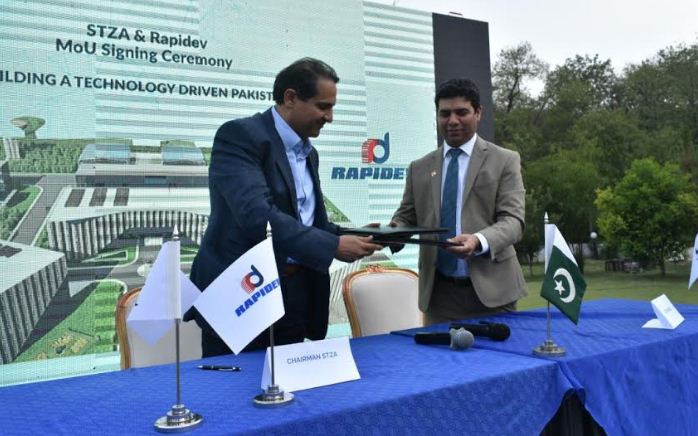
ISLAMABAD, JUN 2 – The Special Technology Zones Authority (STZA) and Rapidev DMCC signed a Memorandum of Understanding (MoU) to establish a Technology Park in Pakistan’s first Special Technology Zone (STZ) in Islamabad, a state-of-the-art development that will facilitate a high-tech business environment. The signing ceremony was held in Islamabad and attended by members of both the organizations, technology sector professionals, and government officials.

According to the MoU, both the organizations will work together to achieve high-tech industrial growth, create job opportunities, upskill the youth, and attract Foreign Direct Investments (FDI) through development of a knowledge ecosystem driven by research, innovation and collaboration.

Mr. Amer Hashmi, Chairman STZA, stated that the Technology Park in the Islamabad STZ will encourage innovative solutions and provide futuristic entrepreneurship opportunities for the youth of Pakistan. The STZA team also addressed how the Special Technology Zones (STZs) have the potential to change the economic outlook of Pakistan by enhancing IT exports and encouraging technology and knowledge transfer from global technology hubs. The signing of the MoU between the organisations means that the groundwork is in place for STZA’s flagship project, the Islamabad STZ, to break ground soon.

 The 3 Pol (People, Purpose, Passion) Technology Park by Rapidev, will spread over an area of 650,000 sq. ft. which will offer a complete ecosystem including all the necessary facilities to foster innovation. The facilities offered to resident companies will include technology towers, cutting edge R&D labs, production and manufacturing plants, certified testing centers, wellness facilities and a Center of Excellence. . With an investment US$ 100 million, the project is expected to create more than 5000 highly skilled jobs and generate over US$ 200 million of revenue in the coming few years. By the addition of a Research and Training academy at the Park, Mr. Wajid Gulistan, Chief Executive Officer of Rapidev, also envisions to equip the youth of Pakistan with high-tech knowledge and skills.

 While addressing the gathering, Mr. Gulistan stated that the Park will be a one-of-its-kind in Pakistan – a hub of research, innovation, and technology. He mentioned that the aim will be to provide all resident companies, including startups, SMES and multi-nationals with access to all available facilities. He concluded by stating that “Our mission is to make Pakistan the fastest growing exporting country in the world and make ‘Made in Pakistan’ a symbol of quality”.

The MoU with Rapidev DMCC on 3 Pol Technology Park is STZA’s second recent one after the former MoU was signed with iEngineering Corporation. It is envisioned that a cluster of Technology Parks will form within the Islamabad STZ as the Zone materializes over the years.

IRON BROTHERS OR BATIE, SPECIAL, UNIQUE TERMINOLOGY FOR PAKISTAN: AWAN

ISLAMABAD, June 2 (DNA): “Now we are the third generation in this chain of (Pak-China) friendship. I want to promote and carry on the same spirit to our next generation,” said Zamir Ahmed Awan, a Sinologist and former diplomat of Pakistan.

Awan shared his family’s special bond with China in an interview with China Economic Net (CEN) before the 70th anniversary of the establishment of China-Pakistan diplomatic ties.

“My father had lived in China before 1949. I studied and worked in China for many years. My children also once studied in China. We have a very strong family bond. I inherited the friendship from my parents and then transferred it to my children,” Awan said.

There is an Islamic teaching: you have to seek knowledge, even you have to travel to China. “I fulfilled this saying. I’m very lucky that I have an opportunity to study in China,” said Awan.

He added, “I came to study in Shanghai China when I was 18 years old. I had spent six and a half years here finishing my higher education with my Chinese friends.”

For Awan’s family, Shanghai is a special place. “My father, my son and I all stayed in Shanghai,” Awan told CEN. He even can speak some phrases in Shanghai dialect.
Awan recalled that when he came to Shanghai in the 1980s, China was just at the initial stage of the reform and opening-up policy.

China was quite poor and backward. There was shortage of food, consumer products and infrastructure. “But China built up rapidly. 

We can see a visible change in the Chinese society. Today, China is one of the most modern, developed and prosperous nation and the purchasing power of the Chinese people is much higher than any other country,” said Awan.

He added that “Today, China has emerged a geopolitical power, which is due to the hard work and struggle of the Communist Party of China (CPC).”

Awan thinks that CPC is one of the oldest political parties and he largest political party in the world. The history of the CPC is full of achievements through the hard work. 

They achieved many milestones and the success story of CPC is full of many, many mega events. Awan once wrote in an article that, China’s lifting of almost 850 million people out of poverty is a miracle.

No other country in the world has had such a marvelous achievement in recent history. Credit goes to the Chinese leadership, good governance and the hard work of the people. The rest of the world should congratulate China and learn from the Chinese experience.

“We congratulate CPC on its 100th founding anniversary and wish them all the good luck and more success in the future,” said Awan.

For Awan, working for China-Pakistan amity and making friends with Chinese are his greatest happiness.

Awan was appointed as the science counselor in the Embassy of Pakistan, Beijing in 2010. He said, “Promotion of cooperation between two countries in the field of science and technology, and higher education was my job. I did it very well. 

The number of Pakistani students studying in China had increased many folds. I have created almost 200 PhD scholarships for higher education for Pakistanis.”

Awan thinks that China is becoming the most favorable destination for the international students. Education is the most important to strengthen the relationship between Pakistan and China, exchange of students and youth is the most vital things to promote the understanding between two nations. 

Based on the understanding, the relation will be more robust, stable, and fruitful.

Awan said that China has become a major contributor to the workforce produce for Pakistan in science and technology and higher education. 

He added “I believe more and more students should go to China for higher education. I also want to encourage Chinese students to come to study in the Pakistani universities. It will promote the people to people contact and understanding.”

Awan believed that if the youth of the two countries understand each other and deepen their friendship, the two countries’ relationship will embrace a brighter future.

“During the period as science counselor, I had got 17 protocols of science and technology signed and assisted signing around 200 MOUs between Pakistani science and technology institutions, research organizations with the Chinese counterparts. 

I have facilitated a number of visits of exchange programs between the two science communities of the two countries. One of my focus was on the transfer of technology, seeking high tech and new technologies,” Awan told CEN.

He added “In addition to that, I was promoting the public diplomacy, people to people contact because I know the Chinese language and Chinese culture.”

Awan points out that “I believe the elder people of both countries have to work hard to pass on the friendship to the younger generation so that we keep the same momentum of friendship.”

“I think China is the only country that maintains true friendship with Pakistan. We used to have very close relations with America and other western countries, but that was some kind of transactional relationships,” Awan said.

“With China, our friendship is pure. We are both eastern countries and we value the friendship in its true spirit. Materials are not important things to us. 

China values Pakistan and Pakistan also values the friendship with China. We are friends forever, eternal friendship as the leadership of two countries say that our relations are higher than mountains, deeper than oceans, sweeter than honey, stronger than steel, we are real iron brothers,” he said.

Awan said that Chinese uses the terminology for friendly countries, such as good countries, and strategic partners. But for Pakistan, the Chinese people use a unique terminology that was never used and won’t be used for any other country, iron brothers. 

“Tiegemen or batie, these are the special and unique terminology for Pakistan. No other country, no other nation, can be replaced with that one,” Anwan said.

In Awan’s opinion, China and Pakistan are much more than the neighborly, friendly and brotherly countries. “We are two nations with a shared destiny, as Chinese President Xi Jinping has emphasized. 

We share our destiny, which means that we will support each other at all difficult moments. And it was witnessed in the history whenever Pakistan was in trouble, China was the only country who stood fast with Pakistan, either in the earthquake in 2005, the flood in 2010 or the COVID-19 pandemic in 2020.

At any difficult moment, China was always helping Pakistan and rescuing Pakistan. In addition to these, in the diplomatic and political matters, China also helped Pakistan,” said Awan.

BA EXAMINATIONS STARTS FROM JUNE 5

DNA

ISLAMABAD, JUN 2 – Allama Iqbal Open University has decided to conduct semester terminal examinations for BA (Associate Degree) programs in the fall semester 2020 postponed previously due to Covid19. The examinations will start from June 5. The question papers of all the course codes (examination papers) of the students will be uploaded in the roll number slip section of AIOU website. Students will send hand written answer scripts to the mentioned tutor in time.

Information of concerned tutors will be given on roll number slips. Students will have to take an affidavit with each course paper that we have solved this paper ourselves and did mot use any unfair means. This affidavit will also be available with the roll number slip. Irrelevant, stolen, copied material from a book or other media will be considered rejected and a legal action will be taken.  Each paper will consist of a total of 3 questions and all of them must be answered. 

The word limit for the answer is 600 to 800 words, in case of more than 800 words there will be a negative marking of that question. Students are instructed to post their answer scripts to tutor through any registered courier service and keep receipts.  Students are also instructed to write answers in their own handwriting and must write their name and roll number with signature on each solved page. Students must use a separate envelope to send answer book of each course code.

It is pertinent to mention here that only handwritten answers will be accepted for BA program.  Typed answer copies will be rejected. Exam of course code 473, 456, 451, 411, 405, 402 have already been conducted, semester terminal examination of these courses will not be held.

Stay Connected

64FansLike
60FollowersFollow

Latest Reviews

Exchange Rates

USD - United States Dollar
EUR
1.14
GBP
1.34
AUD
0.70
CAD
0.71