Home Blog Page 2695

Sanjrani for enhanced Pak-Azerbaijan ties

Azerbaijan attaches immense importance to its relationship with Pakistan: Sahiba Gafarova

Mahnoor Ansar

ISLAMABAD: Chairman Senate Muhammad Sadiq Sanjrani has called for closer Pakistan-Azerbaijan cooperation for the development of political and economic relations between the two countries. Exchanges of a high-level delegation, trade ties, and people-to-people contact will bring the two fraternal countries more closer, he stated while talking to the Speaker of Milli Majlis of the Republic of Azerbaijan, Sahiba Gafarova, who called on him here at Parliament House. 

During the meeting, matters of mutual interest, regional security situation, and bilateral relations were discussed in detail. 

Pakistan-Azerbaijan relations are based on mutual trust, confidence, common historical, cultural, and religious similarities, said Sadiq Sanjrani. “Pakistan cherishes its cordial relation with Azerbaijan. There is a dire need to further enhance parliamentary and institutional cooperation”, he added. 

The Chairman Senate thanked the visiting delegation for participating in the 2nd General Conference of the Parliamentary Assembly of the Economic cooperation organization (PAECO). High-level parliamentary contacts and exchange of delegations should continue, he stressed. 

Talking to the visiting dignitary, the Chairman underscored that the Pakistan-Azerbaijan Parliamentary Friendship Group can be a forum to further cement bilateral ties. “There is an urgent need to make the Parliamentary Friendship Group more active and viable forum”, he said. He also stressed the need to reinvigorate the Parliamentary Union of ECO member states. 

“Pakistan is committed to promoting cooperation in various fields, inter alia, including trade, energy, and other areas of common interest. Both countries have always supported each other’s posture on global issues of common interest”, he observed. 

Touching upon the issue of the Nagorno Karabagh conflict, the Chairman underlined that Pakistan has always supported Azerbaijan’s territorial integrity under the UN resolution. Pakistan fully supports Azerbaijan’s position on the Nagorno-Karabakh issue, he maintained. 

While exchanging views on the COVID-19 Pandemic, Sanjrani pointed out that the whole world is currently facing the Corona epidemic and routine life has been immensely disturbed. Only through joint strategy and efforts, we can be able to contain the epidemic, he said.

The Chairman also briefed the visiting dignitary about the role and procedure of business of the Upper House in the Parliament. 

Sanjrani thanked Azerbaijan for its extended cooperation and support on various issues and stated that the exemplary cooperation will continue in the future as well. 

The Speaker of the Milli Majlis of the Republic of Azerbaijan said his country also attaches immense importance to its relationship with Pakistan. Sahiba Gafarova also expressed gratitude to the Government of Pakistan for extending diplomatic support on Nagorno Karabakh. The Speaker of Milli Majlis Sahiba Gafarova later on recorded his remarks in the “Visitor’s Book”. 

Leader of the House, Senator Dr. Shehzad Waseem, Chief Whip of PTI in the Senate, Senator Fida Mohammad, Senator Dilawar Khan, Senator  Nuzhat Sadiq, Senator  Rukhsana Zubair, member National Assembly  Shandana Gulzar Khan, and Secretary Senate Mohammad Qasim Samad Khan were also present during the meeting.

Eleven killed as roadside bomb hits Afghan bus

No group has claimed responsibility for the blast but Badghis governor Hessamuddin Shams accused the Taliban of planting the bomb

AGENCIES

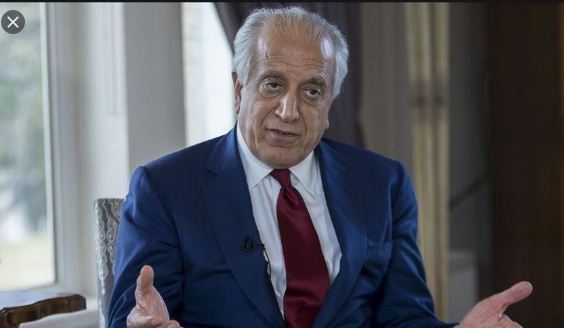
HERAT: At least 11 civilians including four women and three children were killed when a roadside bomb struck a bus in Afghanistan, officials said Sunday, as top US negotiator Zalmay Khalilzad visited Kabul.

The latest attack targeting passenger vehicles occurred on Saturday evening in the western province of Badghis, raising fears of fresh violence in the months ahead as the US military continues to pull out its last remaining troops from the country. No group has claimed responsibility for the blast but Badghis governor Hessamuddin Shams accused the Taliban of planting the bomb.

Another official from the province, Khodadad Tayeb, confirmed the toll and said that the bus fell into a valley after it was hit by the bomb.

Taliban capture 4 more districts

News Desk

KABUL: Afghan Taliban fighters have captured four more districts from government forces in the past 24 hours amid an escalation in fighting across the country.

It comes after the US began withdrawing its remaining troops from the war-torn state more than a month ago, officials. The Do Aab district in eastern Nuristan, one of the 34 provinces of Afghanistan, was seized by the Taliban overnight, while Shinkai in southern Zabul, Deh Yak in adjacent Ghazni and Gizab in neighboring Daikundi province were overtaken on Friday.

“The security forces were under Taliban siege for a month in Do Aab. There were more than 300 of them who handed over their weapons to the Taliban and withdrew from their areas as part of a deal,” Ismail Aikan, a lawmaker from Nuristan province, told Arab News.

He added that the Taliban were “now advancing” toward the Noragam region and Do Aab, a strategic district linking Nuristan with the Panjshir province — long seen as an invincible and rugged region that troops belonging to the former Soviet Union and Taliban previously failed to capture.

A lawmaker from Zabul province in southern Afghanistan lamented the loss of the area to the Taliban, who “captured it without any resistance” after overrunning a key army base in Shahjoy, another district of Zabul.

“The troops abandoned their region. The Taliban have stepped up pressure on the government,” Hamidullah Tokhi told Arab News.

“There have been complaints about shortage of troops, lack of equipment and frustration among forces who are forced to leave the areas and just rescue their lives,” he added. However, the government said that forces had “made a tactical retreat from Do Aab district.”

Mutations of virus leading to delay in Hajj announcement; Majid Al-Qasabi

RIYADH — Minister of Commerce Majid Al-Qasabi, who is also the acting minister of media, said that the coronavirus vaccine is not mandatory in Saudi Arabia, while indicating that mutations of the virus and uncertainty surrounding the vaccines have led to the delay in the announcing the details of this year’s Hajj.

Al-Qasabi announced in a press conference on Sunday that 40% of the Kingdom’s population has been vaccinated so far.

“If we want to coexist, go to markets and return to schools and work, we should take the vaccine,” the minister said with around 15 million doses administered so far.

The minister announced that the continuous mutation of the virus and the delay of vaccines supply in many countries were factors that led to the delay in announcing how the Hajj season will be.

Al-Qasabi revealed that the Ministers of Health and Hajj would announce details about this year Hajj season soon.

US envoy Khalilzad departs for travel to Kabul, Doha, region to boost Peace Process

KABUL, June 06 (DNA): A U.S delegation led by Zalmay Khalilzad, special envoy for the Afghanistan peace process have departed to travel to Kabul, Doha and the regional countries for boosting the peace process which have been rocket for several last months.

The delegation led by Khalilzad includes U.S National Security Council, US Department of Defense and USAID, said the media note of the Department of State.

The delegation will meet the Afghan government leaders, politicians, and civil society groups to hear their opinions about the peace process.

This comes as the Afghanistan Peace Process was paused for the last couple of weeks with no progress, however violence and war have dramatically increased throughout Afghanistan, in many cases, several districts fell in the hands of the Taliban and some military groups surrendered to the Taliban.

This comes as that Pakistan, a prominent neighbor to Afghanistan which apparently has a critical role in the Afghanistan peace process, has recently warned of possibilities of a chaos and civil war post U.S forces withdrawal, the Afghan local media reported Sunday. NNI

Balance in consumption, production vital for ecosystem restoration: experts

ISLAMABAD, JUN 6 (DNA) – Behavioral change is key to strike balance between the consumption and production patterns to ensure sustainability of the resources and the ecosystem restoration. The environmental experts said this while sharing their views with the participants of the webinar ‘Ecosystem restoration through sustainable consumption and production,’ organized by sustainable Development Policy Institute (SDPI), in connection with the World Environment Day.

Ms Romina Khurshid Alam, Member National Assembly, emphasized that South Asian countries need to work together to find solutions of the issues resulted by climate change as they are bearing most of the brunt of these impacts.

She added further that responsible consumption is important for the ecosystem restoration. However, behavioral change has a key role to play here and to achieve this objective, policy makers, academia and media need to work together and awareness should be imparted at school level.

Dr Mushtaq Ahmed Memon, from United Nations Environment Programme (UNEP), with the help of his presentation, highlighted that imparting awareness to people on the consumption patterns is important and this awareness must include the information on daily used items and how they could be recycled and used multiple time. He added further that the hygiene concerns of the consumers also need to be addressed while discouraging single time used items.

Dr Abid Qaiyum Suleri, Executive Director, SDPI, highlighted that the sustainable consumption and production is directly linked with ecosystem restoration. He said that some recent research studies indicate that we are consuming even more oxygen at present globally than the ability of the nature to replenish it.

“Changing the consumption and production patterns needs a collective resolve as no single government could do it alone,” Dr Suleri said and added further that we all have to play our respective roles for the ecosystem restoration.

Ms Bharati Chattarjee, the environmental expert based in Canada, was of view that creating equality in consumption and sharing what is beyond the need with less resourceful is the most important part of the sustainable consumption and production behavior that needs to be adopted. She said that climate change and its impacts are pushing people back to poverty and local plans are required to respond to this situation.

Environmental expert, Ms Afia Salam, opined that we need to focus on the green processes of the production by ensuring that compliance to all environmental standards has been made. She said that the consumptions patterns must be aligned with our resources and efforts to bring behavioral change about the responsible consumptions is the need of the hour.

Ms Archana Datta, from UNEP, highlighted that the world has enough to cater the needs of every individual if we follow the responsible consumption pattern. She said that every individual needs to play a role to ensure such patterns. However, youth should be involved in such campaigns  as catalysts of change. Mr Darmesh Shah, environmental expert and Ms Mariyam Shabbir from SDPI, also shared their views on the various aspects of the topic.=DNA

=============  

Pakistan to play role in combating climate crisis: FO

ISLAMABAD, June 06 (DNA): Pakistan has reaffirmed on Sunday its commitment to play its due role in combating climate crisis, protecting biological diversity and restoring ecosystem.

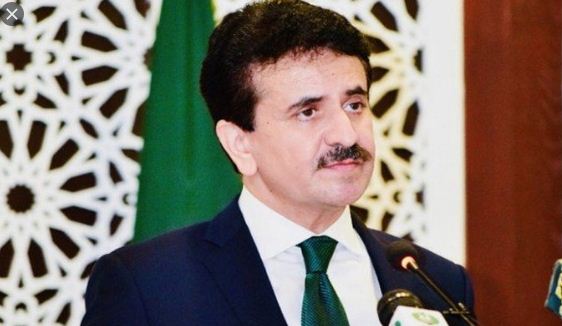
In a statement today, Foreign Office Spokesperson Zahid Hafeez Chaudhari said hosting of World Environment Day 2021 in Islamabad is an acknowledgment of Pakistan’s swift transition towards a “clean and green” Pakistan.

He said Pakistan is already in the midst of one of the world’s most ambitious efforts to expand and restore its forests, having already planted a billion trees as part of its 10 Billion Tree Tsunami Project.

The Foreign Office Spokesperson said that the observance of World Environment Day 2021 on the theme of “ecosystem restoration” is fully aligned with Prime Minister Imran Khan’s Green Vision, as manifested in Pakistan’s flagship “ecosystem restoration Initiative.” This year’s World Environment Day carried special significance because it also witnessed the formal launch of “United Nations Decade on Ecosystem Restoration 2021-2030”.

He said the hosting of World Environment Day 2021 in Pakistan is an acknowledgment of our country’s swift transition towards a “clean and green” Pakistan through a well-articulated climate change and environmental agenda consisting of a number of flagship green initiatives on the ground.

Pakistan, he said, is already in the midst of one of the world’s most ambitious efforts to expand and restore its forests, having already planted a billion trees as part of its 10 Billion Tree Tsunami Project. In its quest for a Green Future, Pakistan has already set policies in motion to make by 2030 60% of our energy mix, clean and green and shift 30% of road transport to electric vehicles.

The Spokesperson said it is high time for the international community to raise ambition and translate political commitments on combating climate change and environmental degradation into tangible actions on ground. However, for developing countries like Pakistan, this would not be possible without provision of sufficient support by developed country partners in the form of means of implementation: green finance, technology transfer, and capacity building.

“Going forward, we reaffirm our commitment to playing our due role in combating climate crisis, protecting biological diversity, and ecosystem restoration,” the Spokesperson said. DNA

KNOWLEDGE-BASED PROACTIVE GOVERNANCE URGED FOR ECOSYSTEMS RESTORATION

ISLAMABAD, JUN 6 (DNA) – Speaking at a regional webinar on Sunday, the experts urged for governance reforms and integrated regional approaches towards identifying the challenges and threats confronting the ecosystems of the region from mountains to the coastal areas and deserts.

They said the governments have to increase public funding into the ecosystems conservation and repair of the degradation done. We need to tag a price to the ecosystem services so that the people who are the actual beneficiaries should know how valuable the ecosystems are for human life on earth.

They urged the citizens to change their lifestyle and reduce consumption of everything in their use as the production of every product cost a lot of natural resources. Population control is the other element that has to be controlled with immediate effect. Carbon emissions are the third factor contributing to the degradation of the environmental resources.

With changes to everyday lifestyle, we can help protect the planet and its ecosystems. Reduce or eliminate the use of household chemicals and pesticides that can hurt the environment. Harsh chemicals in typical store bought cleaners can get into the water supply and leak into ecosystems when disposed of. 

The Development Communications Network (Devcom-Pakistan) and DTN organized the regional webinar on the subject “Ecosystem Restoration – learning from the case studies” on Sunday. The panel of experts included Senior Scientific Advisor EVK2CNR Ashiq Ahmad Khan, ICIMOD (Nepal) Regional Programme Manager Dr. Ghulam Rasul, World Resources Institute (India) Chief Economist Dr. Madhu Verma, biodiversity expert from Maldives Selvam Rabindranath, Devcom-Pakistan Executive Director Munir Ahmed, and Research Fellow Desert Resource Centre (India) Tatsama Motilal.

Devcom-Pakistan Executive Director Munir Ahmed while introducing the subject said: Environmental degradation is going on unchecked in Pakistan that has turned to be a graveyard of policies sans implementation.

It is indeed a great movement that Pakistan hosted the international event of the World Environment Day while climate impact is rising and environmental degradation. Deforestation, change of land-use and implementation of policies and governance reforms. Countries need to look into the causes and community-based governance models for ecosystems. 

Dr. Ghulam Rasul said the climate change is fast impacting the mountain resources and habitats. Communities in mountain regions face unique challenges, including a fragile ecology, natural disasters, and long distances to markets, educational facilities, and healthcare as well as high unemployment. Tourism brings benefits and potentially novel risks. Many communities have aging populations with out-migration of youth. Communities adapt to these challenges with diverse strategies, including engagement with traditional ecological knowledge, history, and narratives valuing landscape and social relationships.

Ashiq Ahmad Khan said the main issue is governance. We need dedicated professionals and bureaucrats to work on it. We need to enhance understanding of mountain ecosystems and the conservation of its biological and cultural diversity, and sustainable development.

Ensure that mountain ecosystems are understood in relation to the communities who rely on them. For the ecosystems’ restoration, we need to generate knowledge and guidance that is respectful of existing traditional ecological knowledge systems and which emphasizes the centrality of local communities to successful ecosystem management. 

Dr. Madhu Verma, Chief Economist at the World Resources Institute, said India, who is basically an Ecological Economist, shared her experiences of working  on forest conservation in India in Uttarakhand Forest, Sixteen Tiger Reserves and 13th, 14th and 15th Finance Commissions of India. Through her estimates of forest resources valuation and incorporation of various indicators of High Conservation Value Forests (HCVF) both for degradation and conservation, she was able to inculcate this knowledge across the entire set of stakeholders, specially the policy makers.

 This led to the creation of economic instruments in India like estimates of Net Present Value (NPV) of forest diversion and appreciation of value of forest land as well. Further her work for various last three Finance Commissions of India, led to provisioning of incentives for forest conservation through grant initially and now allocation of 7.5 percent to 10 percent of total divisible pool of taxes to forestry sector of India to compensate for fiscal disabilities created for not diverting forest and for the provisioning of varied ecosystem services to the nation.

Selvam Ravindranath mentioned that Maldives enjoys one of the richest marine diversity anywhere in the world. The coral reefs of Maldives are the seventh largest in the world, representing about 5 percent of the global reef area. The Maldives 21.000 square kilometers of reefs are home to 250 species of coral, which team with more than 1.000 species of fishes.

This unique environment holds the economy of the nation, Fisheries and Tourism. The two largest industries mainly depended on the healthy and diverse marine ecosystem. The country was practiced with the traditional ecological conservation principles based on livelihood production. Over the course of time, it has neglected the natural environment, by placing long-term economic and environmental health in jeopardy. Biodiversity has often been taken for granted and environmental damages dismissed as a price worth paying for short-term profits.

Hence it is observed that protection of Maldives’ biodiversity is not only important for the country’s environmental health, it is also an economic and developmental imperative.

Tatsama Motilal said Deserts are, by far, amongst the most intriguing ecosystems. Often misunderstood and tagged as wastelands, deserts all over the world have long been misused for developmental functions not aligned with historic desert dynamics. Through highlighting the unique land, life and living of deserts, Desert Resource Centre is working towards restoring the niche ecological and traditional economic functions of these ecosystems.

We envision creating a global alliance that specifically caters to desert-centric issues. A Global Desert Partnership is being proposed on the launch of the UN Decade on Ecosystem Restoration to increase recognition and priorities formation of customized action goals and parameters for hot and cold deserts of the world. In India, development of a Desert Restoration/Management Authority is needed to revive traditional crafts, agri-dairy value chains and pastoralism in the Thar Desert.=DNA

=============

CHINESE TRYING TO SELL ‘OBSOLETE’ DVB TECH TO PAKISTAN

According to the studies on the DVB-T, India, Afghanistan, And Indian Occupied Kashmir all are on DVB-T technology and if PTV adopts DTMB technology then Pakistan will be limiting it’s terrestrial beam to within the confines of Pakistani territory and will not be viewed outside Pakistan

Special Report

ISLAMABAD: The Chinese are trying to sell to Pakistan Digital Terrestrial Multimedia Broadcast (DTMB) technology, which is almost ‘obsolete’ and will not benefit Pakistani official TV channel PTV, in any case.

Government has some big plans for the digitalization of national broadcaster PTV for which plans are afoot, sources confided to this scribe.

However, what is depressing is that Digital Terrestrial Multimedia Broadcast (DTMB) being adopted by the PTV has no popular acceptance worldwide and is less compatible when compared with the very vogue Digital Video Broadcasting Terrestrial (DVB-T).

According to the studies on the DVB-T, India, Afghanistan, And Indian Occupied Kashmir all are on DVB-T technology and if PTV adopts DTMB technology then Pakistan will be limiting it’s terrestrial beam to within the confines of Pakistani territory and will not be viewed outside Pakistan.

According to tech experts, the DTMB is still under testing phase and apart from China other countries did not adopt it, yet, as most of the research work is still going on this technology. China itself is in the process of improving this technology.

Technical experts believe that a lot of factors need to be considered before adopting the DTMB in Pakistan. Firstly, a digital antenna and receiver will be required to receive the DTMB and the cost per household to receive the transmission will not be less than Rs 6000. Then a very less number of Digital Smart TVs are in use due to the high price. If the DTMB will broadcast HD channels, the user should have equipment to receive the digital HD channels.  Thus this is not cost effective option as long as our people are concerned.

The tech experts also raised the question whether the spectrum required to broadcast is available or it has already been allocated and auctioned by Pakistan Telecommunication Authority (PTA), and that what will be the roll of PEMRA and the PTA to regulate the DTMB.

The tech experts threw their weight behind the DVBT technology saying it is the most widely used digital television standard in use around the globe for terrestrial television transmissions.

It provides many facilities and enables a far more efficient use of the available radio frequency spectrum than the previous analogue transmissions. The DVB-T makes use of many modern technologies to enable it to deliver high quality video in a broadcast environment. It is capable of carrying a very significant level of data. Normally several television broadcasts may be carried on a single transmission and in addition to this several radio channels may be carried as well. As a result, each transmission is called a multiplex. With this technology one can get up to seventy free-to-air standard channels, 15 HD channels and around thirty radio services.

PN SHIP SAIF VISITS PORT DJIBOUTI

ISLAMABAD, JUN 6 (DNA) – Pakistan Navy Ship SAIF visited port Djibouti during deployment on Regional Maritime Security Patrol. Upon arrival, at port of Djibouti, PN Ship was extended warm welcome and was received by officials from Djibouti Navy and Honorary Consul of Pakistan at Djibouti Mr Imran Muhammad Ilyas.

PNS SAIF is presently on deployment at North Arabian Sea & Gulf of Aden and is contributing towards international efforts to ensure maritime security in the region.

During the port stay, Commanding Officer of PNS SAIF called on President of Djibouti Parliament Mr Mohamed Ali Houmed, Commander Djibouti Navy Captain Ahmed Daher Djama, Commander Djibouti Coast Guard Colonel Wais o Bogoreh and Harbour Master Djibouti Port Mr Turkei.

During the interactions, matters of mutual interest were discussed and further enhancement of bilateral ties in all spheres was re-affirmed. Harbour exercises were also arranged for Djibouti Coast Guard personnel to demonstrate PN capabilities to conduct Maritime Security Operations.

President of Djibouti Parliament along with ministers and parliamentarians also returned Call and visited PNS SAIF.

Pakistan Navy believes in promoting stability in the region and has remained committed to maritime security and order at sea. The visit of PNS SAIF is aimed to further strengthen bilateral ties and enhance interoperability among both navies.=DNA

===========

Stay Connected

64FansLike
60FollowersFollow

Latest Reviews

Exchange Rates

USD - United States Dollar
EUR
1.14
GBP
1.34
AUD
0.70
CAD
0.71