Home Blog Page 2674

WELL-EARNED TRUST

By VLADIMIR NOROV 

China’s economic success is the result of the CPC’s competent leadership and carefully thought-out development model

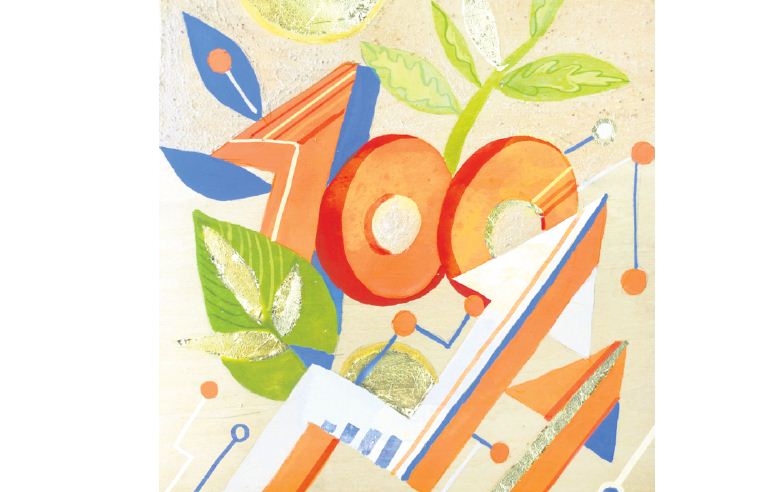
The Communist Party of China is celebrating its 100th anniversary this year. The CPC has come a long way to establish itself as a leading force promoting the cause of national revival.

In 1949, when the People’s Republic of China was founded, it was a less developed country with hundreds of millions of people living in poverty and illiteracy.

After passing through a series of critical tests and crises, the CPC has become even stronger and more confident in leading the Chinese people on the path to the country’s great rejuvenation.

In 1978, the Party led and supported the discussion that “practice is the only test of truth”, which has been of great importance in lifting the country out of chaos and turning the country into the world’s second-largest economy.

Especially since the CPC initiated the policy of reform and opening-up in 1978, which enabled China to lift more than 800 million people out of abject poverty, according to the World Bank’s international poverty standard. United Nations Secretary-General Antonio Guterres praised this feat, saying: “China is the country that has made the greatest contribution to reducing poverty in the world”, as it accounted for more than 70 percent of the global population lifted out of poverty over the same time period.

While previously most people in China did not have access to health insurance, today more than 96 percent of the population is covered by it. As the world’s largest developing country, China’s successful experience in poverty eradication and providing health insurance coverage has attracted worldwide attention.

Achieving the goals and objectives in the state-building of any country is impossible without a solid economic foundation. From 1952 to 2019, the volume of Chinese industrial production increased almost 1,000 times with an average annual growth rate of 11 percent. Per capita income has increased 70 times. In addition, in 1978 China’s exports amounted to $10 billion, which is less than 1 percent of world trade, by the end of 2020 exports had increased to a record $2.49 trillion, which made China the world’s largest country trading in goods. No other country in the world has ever experienced such dynamic development. As a result of the ongoing reforms, China’s GDP per capita has grown from less than $200 four decades ago to more than $11,000 today.

Over the past decades, China’s achievements have been notable, not only because of their scale, but also because of the global economic shocks that have recurred during this period. The Chinese leadership has coped with these very successfully, and after each crisis, the economy has become stronger and narrowed the gap with the biggest economy in the world, the United States.

The 1997-98 Asian crisis, an event that set back a number of other Asian economies for many years; the bursting of the dot-com bubble in financial markets in 2001; the devastating financial crisis of 2007-08, from which many economies and their societies may not have really recovered; and, of course, the current COVID-19 pandemic, which has led to the largest economic downturn worldwide since the 1930s.

During the pandemic, against the backdrop of a sharp decline in global transnational direct investment, foreign direct investment in China in 2020 increased by 6.2 percent and reached about 1 trillion yuan ($144.38 billion). At the end of 2020, analysts at the British Center for Economic and Business Research said in a report that China’s economy will become the largest economy in the world in 2028, five years earlier than previously predicted.

It must be recognized that China’s outstanding economic success is the result of the CPC’s competent leadership and a carefully thought-out development model implemented through “trial and error”.China’s leaders are well-educated and capable civil servants, many of whom have postgraduate degrees from leading universities at home and abroad.

The Chinese way of careful planning and review of the results of each five-year plan is a good example of how to achieve high global development results in all areas of the country’s socioeconomic life. The competence of China’s leaders is evidenced by their approach to economic development: a pragmatic, experimental, gradual and strong leadership style.

The CPC has achieved overwhelming domestic recognition and approval. Polls from the Harvard Kennedy School show that more than 90 percent of Chinese people trust the CPC-led government. A recent study published by York University in Canada in May 2021 shows that the new coronavirus outbreak has further increased Chinese citizens’ confidence in their governments: 93 percent at the county level, 94 percent at the city level, and 95 percent at the provincial level.

In November last year, President Xi Jinping said that by 2035, the size of the national economy and GDP per capita will double, and the 14th Five-Year Plan (2021-25) will lead China toward becoming a high-income country.

By the end of the 14th Five-Year Plan, China aims to be one of the most innovative countries in the world, and its longer-term goal is to make significant breakthroughs in innovation by 2035. As part of the dual-circulation development paradigm, technological innovation will boost China’s manufacturing industry and propel it up the global value chain, while ensuring strategic supply in the domestic market.
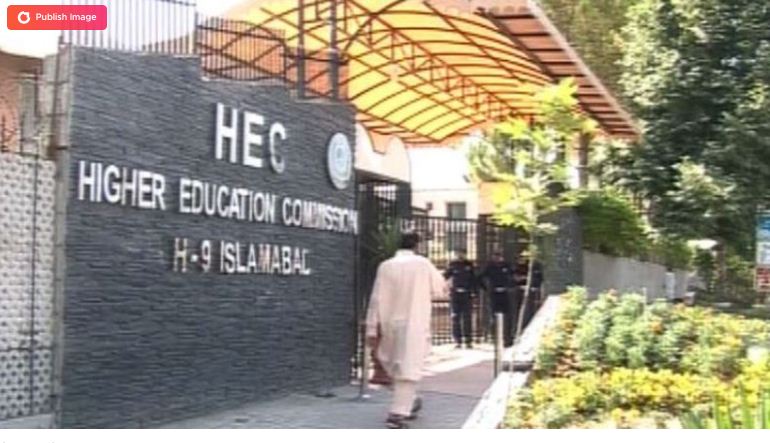
HEC warns students of fake attestation, degrees

ISLAMABAD – The HEC wants students to be careful about “individuals posing to be attestation agents”. There are some people who pretend to be agents and offer help to applicants in getting their documents and degrees attested, the Higher Education Commission said in a notice shared on Twitter Friday.

“In some cases, these individuals cheat applicants by pasting fake HEC stamps/tickets on original degrees and transcripts,” it read.

Degrees with fake stamps will be confiscated by the HEC, the notice warned. Applicants have been advised to follow the prescribed procedure for attestation, instead of indulging in fraudulent practices.

How can you get your degree/documents attested from HEC

>Go to the HEC website and create a user account
>Submit an online application for degree attestation
>You will receive a confirmation e-mail or SMS
>Once you receive the message, you can either go to the office, schedule an appointment or send documents through courier
>The HEC will send you a message or email once the attestation is complete

The commission charges an attestation fee of Rs1,000. Applicants must submit all the required original documents along with a set of photocopies.

In case of queries, you can visit this website or call 111-119-432.

BRITISH COUNCIL RECOGNISES ACADEMIC CREDIBILITY OF AIOU

ISLAMABAD, JUN 18 (DNA) – International Collaboration and Exchange Office, AIOU organised an award ceremony for the scholarship recipients under the Scotland Pakistan Scholarship for Young Women and Girls’ at the main campus of the university yesterday.

The ceremony was presided over by Prof Dr Zia -Ul Qayyum, VC, AIOU while Amir Ramzan, Country Director Pakistan, British Council was invited as the chief guest. Deans, Director Regional Services, AIOU Inam Ullah Sheikh, Registrar, Bibi Yasmin, Director Collaboration and Exchange Office, Dr. Zahid Majeed, Sarah Parvez and Zoha Fatima from British Council, Islamabad also attended the ceremony.

During the ceremony, the British Council awarded scholarship to 19 young women studying in AIOU who are pursuing their education at M Phil level.

The scholarships were awarded on merit basis to the most deserving students from the underdeveloped areas of Pakistan. Scholarship certificates and fee cheques were presented by Prof Dr Zia Ul- Qayyum and Amir Ramzan.

The British Council in partnership with the Government of Scotland initiated Scotland Pakistan Scholarship Scheme to promote education for women in Pakistan. Many AIOU students applied for this scheme which will cover educational expenses of selected students for two years. However, 37 female students were shortlisted and 19 were awarded scholarships in this ceremony.

 While addressing the ceremony, Prof Dr Zia Ul-Qayyum congratulated scholarship awardees and said that awarding scholarships to our students reflects British Council’s confidence in academic credibility of the university. He further suggested that the British Council may award scholarships to additional AIOU students which was generously approved by Amir Ramzan.

 The Country Director of British Council in Pakistan went on to announce the awarding of laptops to selected AIOU scholarship recipients to facilitate access to their work during the pandemic.

Prof Dr Zia Ul -Qayyum thanked him and said that AIOU has reserved considerable amount of funds to provide educational facilities to the underprivileged and marginalised segments of the society.=DNA

==============

INDONESIAN ENVOY VISITS RCCI, URGES FOR STRENGTHENING TRADE TIES

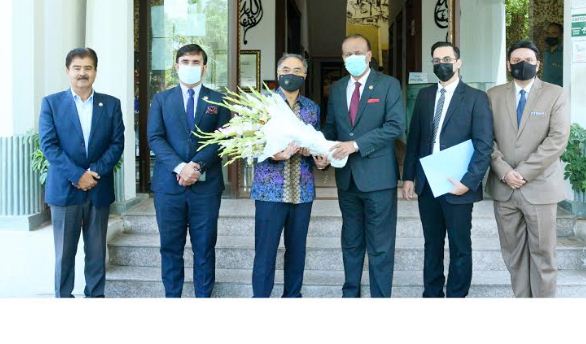
RAWALPINDI, JUN 18 (DNA) – Indonesian Ambassador to Pakistan Adam Tugio during his visit to the Rawalpindi Chamber of Commerce and Industry (RCCI) has said Indonesia along with ASEAN countries are huge markets with great potential for Pakistani products and businessmen should focus on these countries to promote trade and exports. The ambassador said that Pakistani businessmen should take advantage of Indonesia’s emerging market.

RCCI president Mohammad Nasir Mirza, group leader Sohail Altaf, former president Raja Amer Iqbal, senior vice president Osman Ashraf, Vice President Shahraiz A Malik, members of the executive committee and members were also present on the occasion.

Adam Tugio said that Indonesia seeks to increase bilateral trade with Pakistan and strengthen trade and business relations. Pakistan and Indonesia share many cultural values. There are similarities in many types of food and drink. Programs will be arranged in collaboration with the Rawalpindi Chamber to promote Batik art.

Pakistan and Indonesia have historical ties based on mutual respect and friendship, he added. Indonesia attaches great importance to Pakistan in the list of ASEAN countries. The Ambassador said that the Embassy would participate in the Food Festival and Exhibition organized by the Chamber.

On the occasion, RCCI President Nasir Mirza, briefed the Ambassador about the ongoing activities of the Rawalpindi Chamber. He said that there was a need to enhance links between the two countries at the chamber level and between the private sector to increase the trade volume. We can work together on promoting religious tourism as Pakistan has rich cultural heritage.

Group leader Sohail Altaf said networking and information exchange needed to be enhanced. A joint exhibition can also be held in Pakistan, he added. Later in the end,  a commemorative shield was presented to the Ambassador.=DNA

===============

ICCI CALLS FOR WITHDRAWAL OF SEC-203(A) TO SAVE TAXPAYERS FROM TROUBLES

ISLAMABAD, JUN 18 (DNA) – The Islamabad Chamber of Commerce & Industry (ICCI) has expressed strong concerns over the introduction of Sec-203(A) in the Federal Budget 2021-22, which has given powers to FBR Officers to arrest a taxpayer on pretext of concealment of income and called upon the government to immediately withdraw it in order to save the taxpayers from unnecessary troubles.

The Sec-203 (A) grants the power to an officer of Inland Revenue, not below the rank of an Assistant Commissioner of Inland Revenue or any other officer of equal rank authorized by the Board, who on the basis of material evidence has reason to believe that any person has committed the offense of concealment of income or any offense warranting prosecution under this Ordinance, may cause the arrest of such person.

Sardar Yasir Ilyas Khan, President, Islamabad Chamber of Commerce & Industry said that there was no need to introduce provisions like Sec-203(A) as it already exists in tax laws and bringing in such new provisions would create new problems and difficulties for the taxpayers instead of improving the tax revenue of the country.

He said that this provision would not serve the interest of the country, rather it would shatter the confidence of taxpayers and discourage potential investors from investing in Pakistan.

Sardar Yasir Ilyas Khan said that at the one hand, the Prime Minister was giving assurances to the business community that his government would minimize the direct interaction between the tax machinery and the taxpayers through automation, but on the other hand, new provisions were being introduced in tax laws to give more discretionary powers to tax officials that would create more harassment in the business circles.

He said that the business community was the major contributor to the tax revenue of the country and the government should introduce new provisions in tax laws to give taxpayers more respect and honor instead of taking measures that would make the lives of taxpayers more difficult and create hindrances in promotion of business and investment activities in the country.

Therefore, he urged that the government should withdraw Sec-203(A) introduced by the new Federal Budget in the larger national interest of the country.

Fatma Azim Senior Vice President and Abdul Rehman Khan Vice President ICCI said that the prevailing tax system of Pakistan was very cumbersome and complicated due to which it was a major hurdle in promoting tax culture.

They emphasized that instead of resorting to coercive tactics, the government in consultation with stakeholders should focus on simplifying the tax system and introduce new provisions in tax laws that should help in boosting the confidence of taxpayers and support the growth of business and investment activities in the country.=DNA

===============

BLEND OF TURKIC, ARABIC, INDIAN CULTURE, HYDERABAD OFFERS UNIQUE DISH

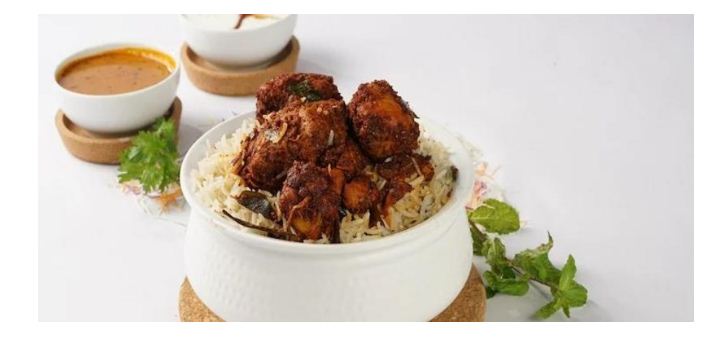
Haleem, a popular meat and wheat dish originally prepared in the city of Hyderabad, the capital of southern India’s Telangana state, is the first cooked product having received Geographical Indication (GI) status in the country.

A melting pot of Turkic, Arabic and local Indian traditions, Hyderabad’s unique dish now regarded as an international delicacy and prepared by skilled chefs at a low temperature close to 12 hours is a perfect recipe to recall the Sustainable Gastronomy Day, which is being observed on Friday.

Comprising a mix of pounded multigrain, lentils, goat or chicken meat, clarified butter, dried fruit, and saffron, the dish was accorded the GI certification in 2010 by the Indian GI Registry, meaning that it cannot be sold in parts of the world using the Hyderabad tag unless it meets criteria.

Originally an Arabic dish, introduced to Hyderabad by the Arab diaspora during the reign of Mahbub Ali Khan, who ruled the region from 1869-1911, it soon became part of traditional cuisine.

Khan known as Nizam of Hyderabad was a descendent of a Turkic family from Samarkand city of Central Asia, who migrated to India during the Mughal period in 1650.

Over recently it owes popularity to Mohammad Abdul Majeed, president of Hyderabad Haleem Makers Association and owner of Pista House Hotel.

Speaking to Anadolu Agency, Majeed said while the dish existed in the region earlier as well, they have changed its recipe to make it tastier.

“Slowly, it evolved into a taste of Hyderabad, distinct from the Arabian recipe, and became a great hit with the foodies of the city,” he said.

Although cooked especially during the Muslim holy month of Ramadan at a mass scale, it is now available at selected joints in the city throughout the year.

“The month of Ramadan is all about purifying your soul through fasting and Haleem gives the nourishment to the body during fasts as it is a high-calorie dish that gives instant energy, is rich in protein, and easy to digest, besides being appetizing and full of flavor,” said Majeed.

TURKIC-ARABIC BACKGROUND

Because of the Turkic-Arabic background blended with local Indian culture, the city of Hyderabad serves many mouthwatering dishes, out of which Hyderabadi Haleem draws admirers from far-off countries.

The mouthwatering dish also plays a crucial role in the city’s economy.

According to Majeed, there are 6,000 Haleem makers in the city and they, directly and indirectly, employ thousands more. The dish also sustains the national economy as the spices, lentils and some other ingredients are procured from various parts of India. He said while the wheat is procured from the northern state of Punjab, the sheep and goats come from nearby districts.

He said due to COVID-19 related restrictions the business was severely affected the last two years. During this year’s Ramadan, the business picked up to 25%.

Former director of National Research Center on Meat, Hyderabad, V.V. Kulkarni said his institution has worked to increase the shelf life of the dish.

“We have conducted a study and completed a project so that it can be kept for three months,” he said.

According to the city’s residents, Hyderabad’s Haleem has unique qualities and the cooks here have achieved expertise and perfection over some time.

“The Hyderabadi Haleem is different from other places. It is unique. Hyderabad’s Ramadan is incomplete without Haleem,” said Javed Alam, a resident of Hyderabad.

The delicacy is also exported from India to countries like the US, Europe, and West Asia. The taste, aroma, and feel of the dish are matchless and gives the city of Hyderabad a separate identity across the world.

SWEDISH TECH COMPANIES TO INVEST IN PAKISTAN

By Muhammad Omar Iftikhar

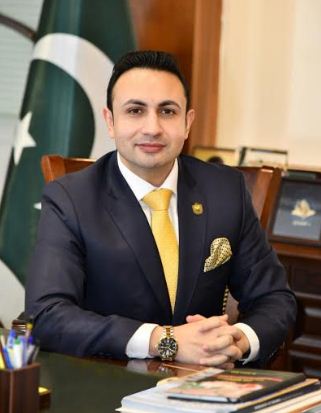
Federal Minister for IT and Telecommunication Amin Ul Haque has invited Swedish tech companies to invest in Pakistan. It has been observed that the environment for investment in the country is favorable. Mr. Haque extended his invitation during a meeting with the Swedish delegation led by Ambassador of Sweden in Pakistan Henrik Persson. During the meeting, matters of mutual interests and related to IT and telecommunication, connectivity, and digitalization were discussed.

Federal Secretary Ministry of IT & Telecom Dr. Sohail Rajput, Chairman PTA Maj Gen (r) Amir Azeem Bajwa, Executive Director Frequency Allocation Board (FAB) Brig (r) Muhammad Tahir Ahmed Khan, and senior officers of the Ministry of IT were also present during this meeting.

It is indeed a positive step for Pakistan to consider collaborating with Swedish IT companies. They will bring an enriched experience and expertise in the technology and technical domains. Pakistan-Sweden can work together to enhance IT and telecommunications – fields that are significant for all nations. Pakistan must augment global connectivity and enhance national sectors of IT and telecommunication. Pakistan also has to end the digital divide and secure a leading position in IT, digital media, and telecommunications as far as South Asia is concerned. Any future agreement signed between a Swedish tech company will also add value to Pakistan’s freelancing sector and the IT industry as a whole.

The concerned authorities in Pakistan must also consider collaborating with tech industries and corporations from the US, Europe, Canada, Middle East, Far East, China, Australia, and New Zealand. In today’s age of communication, we are only a click away from each other. Pakistan must ensure its presence in the field of tech and IT so that it not only remains relevant but grows with every passing year. This will increase our footprint on the global tech fabric, allow freelancers to broaden their business, and equip IT companies in Pakistan to increase their clientele and deliver services effectively and efficiently. This will add more to the revenue stream from this sector.  

EU IS A VALUED PARTNER OF PAKISTAN

Joint Commission discussed the socio-economic impact of the COVID-19 pandemic. The humanitarian assistance provided by the European Union was highly appreciated

IP Report

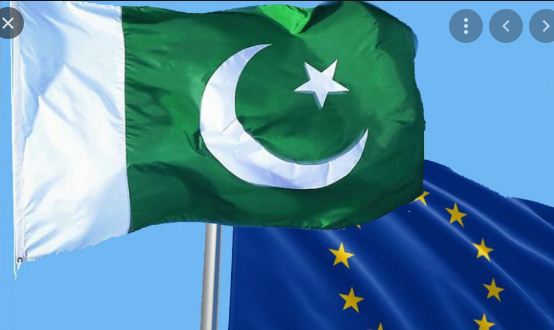
BRUSSELS: The European Union (EU) – Pakistan Joint Commission was held by video conference. The plenary of the Joint Commission was preceded by sub-group meetings on Development Cooperation (25 February 2021); Trade (2 March 2021); and Democracy, Governance, Rule of Law and Human Rights (1 June 2021).

The Joint Commission discussed the socio-economic impact of the COVID-19 pandemic. The humanitarian assistance provided by the European Union was highly appreciated. The ongoing vaccination programmes and future cooperation in vaccines were also discussed. Pakistan’s efforts for sustainable economic recovery were also highlighted.

They also exchanged views on climate change, where the EU informed Pakistan about the European Green Deal, connectivity and digitalisation, and Pakistan briefed about various climate projects, including eco-system restoration, green stimulus and national electric vehicle policy. They also discussed cooperation in the fields of education, culture, science and technology. The Joint Commission also provided an opportunity to discuss migration and mobility and to follow up on the discussions of the EU-Pakistan Joint Readmission Committee, which was held on 24 February 2021.

The EU and Pakistan agreed to enhance bilateral trade, including by addressing issues that are hampering trade and investment, improving the business climate, and Pakistan’s efforts towards full implementation of the 27 international conventions stipulated under the EU’s unilateral trade preferences scheme, the Generalised Scheme of Preferences Plus (GSP+). Pakistan acknowledged the extension of its GSP+ status as a mutually rewarding step and affirmed its full commitment to fulfil its obligations under the GSP+. Pakistan underlined the relevant measures and actions taken since September last year.

Joint efforts in the fields of democracy, governance, rule of law and human rights, cooperation on human rights issues at international fora, and the promotion and protection of all fundamental freedoms were discussed. Both the EU and Pakistan reaffirmed their commitment to the promotion and protection of all human rights and fundamental freedoms, including freedom of religion and belief (including concerns about anti-Muslim hatred), the rights of persons belonging to minorities, freedom of expression, women’s rights and children’s rights. Pakistan informed about developments concerning the Journalist Protection Bill, the Forced, Involuntary Disappearance Bill and the Anti-Torture Law.

The EU raised concerns regarding death penalty and the abuse of blasphemy laws.

The EU welcomed the progress made by Pakistan in the implementation of the Financial Action Task Force (FATF) Action Plan and Pakistan’s commitment to continue the engagement with the FATF to address all the remaining issues.

The EU appreciated Pakistan’s hosting of millions of Afghan refugees for past two decades. The EU assured Pakistan of its cooperation and ongoing work towards a durable solution, including through assisting and promoting the safe and dignified return of Afghan refugees to their homeland. In this regard, the EU and Pakistan emphasised the need for a well-resourced and time-bound roadmap.

Pakistan briefed the EU on the recent developments in the region and reiterated its concerns regarding the human rights and humanitarian situation in Indian controlled part of Jammu and Kashmir. The EU welcomed the recent reiteration by Pakistan and India to fully implement the 2003 Ceasefire Understanding along the Line of Control and encouraged more confidence-building measures between Pakistan and India.

The EU expressed its readiness to support regional integration and sustainable connectivity in the South Asia region.

The Joint Commission was co-chaired by Mr Gunnar Wiegand, Managing Director for Asia and the Pacific in the European External Action Service, and Mr Noor Ahmed, Secretary of Economic Affairs Division. Representatives of relevant Ministries of the Government of Pakistan as well as of the European Commission, the Ambassador of the EU to Pakistan, Pakistan’s Ambassador to the EU and observers from EU Member States also participated in the meeting.

It was agreed to hold the next session of the Joint Commission in Islamabad in 2022.

GOLF COOPERATION BETWEEN PAKISTAN AND BELARUS DISCUSSED

DNA

MINSK: Ambassador Sajjad Haider Khan received Director Commercial of GolfMinsk Mr. Vladimir Savenko and Deputy Director Ms Lidiya Kotkina and discussed cooperation in Golf.

Briefing on the rich expertise of Pakistan in this field, the Ambassador offered to arrange a weeklong complimentary coaching session by renowned Pakistani Golf Coach Khalid Mehmood during July 2021. The two sides also discussed long term cooperation between the two countries.

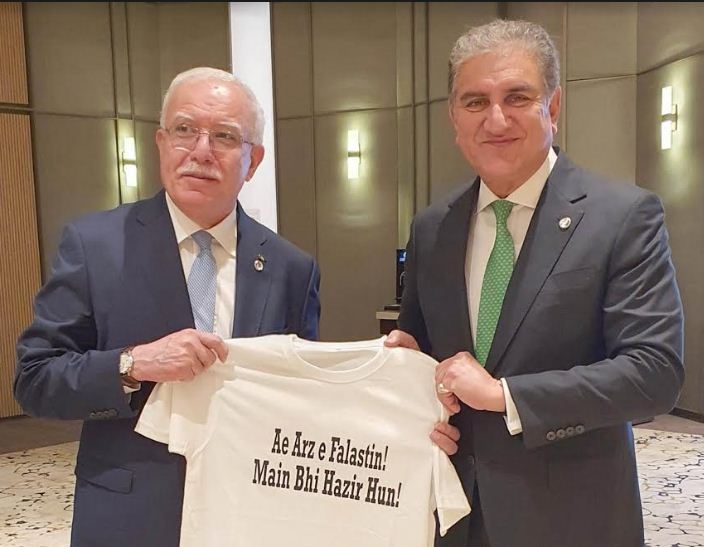
FM QURESHI REITERATES PAK SUPPORT FOR PALESTINE

Meets Palestinian Foreign Minister Dr. Riyad Al Maliki; also expresses strong concerns on the latest Israeli strikes

Staff Report

ISLAMABAD: Foreign Minister Makhdoom Shah Mahmood Qureshi met with Palestinian Foreign Minister Dr. Riyad Al Maliki on the sidelines of the Antalya Diplomacy Forum.

During the meeting, Foreign Minister Qureshi reiterated Pakistan’s unwavering support for the Palestinian cause and underscored the importance of two-State solution based on pre-1967 borders under the relevant UNSC resolutions for sustainable peace in the region. He also expressed strong concerns on the latest Israeli strikes against Gaza after the recent ceasefire.

Foreign Minister Maliki briefed Foreign Minister Qureshi on the latest situation in Palestinian Occupied Territories. He also conveyed deep appreciation on behalf of the Palestinian President and people of Palestine to the Foreign Minister for proactively taking up the case of Palestine at the UN General Assembly during the recent Israeli aggression against Gaza.

Both Foreign Ministers exchanged views on rising Islamophobia and agreed on the need for evolving a joint strategy to counter discrimination against all religious faiths, particularly against Muslims.

Foreign Minister Qureshi also extended an invitation to Foreign Minister Maliki to visit Pakistan. Foreign Minister Maliki accepted the invitation and responded that he looked forward to visiting Pakistan in the near future.

Stay Connected

64FansLike
60FollowersFollow

Latest Reviews

Exchange Rates

USD - United States Dollar
EUR
1.14
GBP
1.34
AUD
0.70
CAD
0.71