Home Blog Page 2670

CDA/DEVELOPMENT WORKING PARTY MEETING ON JUN 29

DNA

ISLAMABAD, JUN 20: The 52nd CDA/ Development Working Party meeting will be held on June 29 at the CDA Headquarters. In which many big projects worth billions of rupees in the history of Islamabad will be reviewed.

These include a 100-bed facility at CDA Hospital having cost of Rs. 186 million, a two-year plan of Rs. 57 million for rainwater harvesting,  two year plan of Rs. 4 billion for construction of parking areas in various urban commercial areas of Islamabad to alleviate the problem of parking, one year plan of Rs. 185 million for construction of bridge on Kayani Road to restore traffic flow in Bhara Kahu, one and half year plan of Rs. 1168 million for development of Sector D12, Rs.1705 million costing one and half year plan to make Nineth Avenue Shaheen Chowk signal free, one and half year plan of Rs. 1472 million to make E-11 Chowk signal free, one and half year plan of Rs.1422 for establishment of provincial courts, a two-year plan of Rs 1,800 million for the Litigants Facilitation Center for Litigants and Lawyers, a three-year plan of Rs 3,500 million to maintain and enhance the natural beauty and greenery in Margalla Hills National Park will be considered.

The CDA Development Working Party meeting will review all the projects mentioned in PC-1 and give final approval to them.

PAK INVESTORS TO GET OPPORTUNITIES IN NIGER FOR CONNECTING WITH AFRICAN ECONOMIES: FPCCI

ISLAMABAD, JUN 20 (DNA) – Chairman FPCCI, Capital Office Islamabad on Sunday hoped that Pakistani investors and exporters would acquire huge opportunities for economic activity in Niger and also connect to all African regional economies.

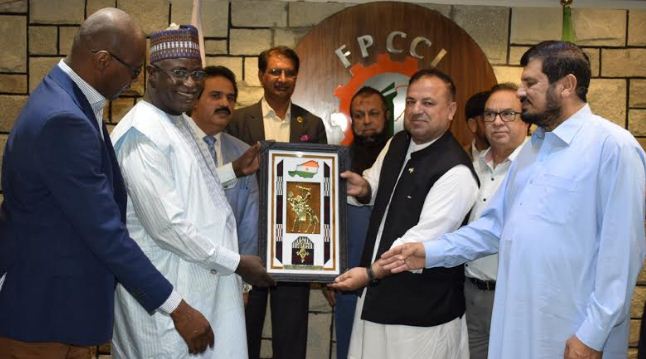
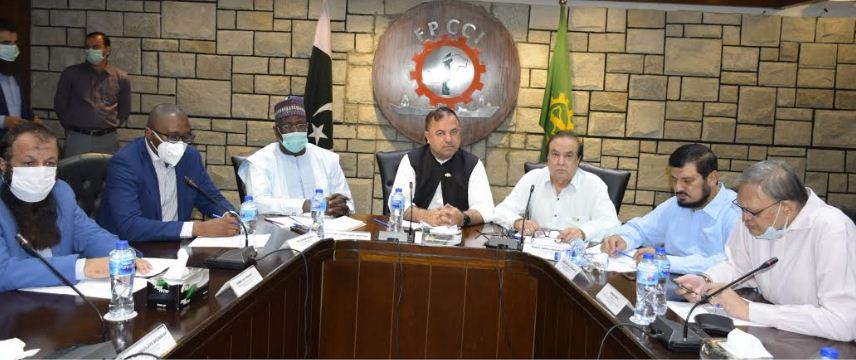
“Pakistani investors can work in infrastructure, agriculture, including textiles, pharmaceuticals, medical devices and other industries” Chairman Federation Pakistan Chamber of Commerce and industry Qurban Ali said this while business delegation of Republic of Niger, led by Minister for Commerce and Industry Gabo Sabo Moctar, visited the capital office of the Federation of Pakistan Chambers of Commerce and Industry (FPCCI).

While Ex. President FPCCI Senator Haji Ghulam Ali and Coordinator FPCCI Capital office, Mirza Abdur Rehman along with senior business leadership participated in the negotiation.

 The other members of Niger delegation included Minister for Investment Zakaria Wergo, Secretary Industry Abdoulaye Boubacar, prominent businessman Saleem Gado Sabo and Pakistan’s ambassador to Niger Ahmed Ali Sirohey also participated in Business to Business negotiation. Visiting delegations signed agreements with Pakistani companies to promote bilateral trade, and business-to-business meetings were also held.

While Chairman FPCCI Capital Office, Qurban Ali that exploration of new markets and regional trade integration are the key elements for economic and trade expansion to materialize the industrial policy. Whereas exploration of the untapped markets likes Africa region and additional potential market of European Union (EU), North American

countries besides Association of Southeast Asian Nations (ASEAN) are the major potential for increasing the connectivity and trade integration with regional and world economy, he said. The senior business said that Pakistan and Niger have huge economic and trade relations and in future there is need to explore more areas to increase the trade volume between both sides. He said that current trade volume between both of the countries is not according to potential, which needs to be increased in future by searching new trade avenues.

Qurban Ali said that Pakistan and African countries are initiating the new beginning through the “Look Africa Campaign”, despite the Covid-19 pandemic, Pakistan with African Countries increased by seven percent in 2019-20.

He said exports to Niger will increase to US$ 48.045 million in 2019-20 and Kenya will increase from US $ 265.1 million in 2018-19 to US $ 289.3 million in 2019-20, recording an increase of nine percent.  He said a few months ago in November 2020 , a four-member business delegation from Tanzania visited FPCCI during their visit to Pakistan.

While in negotiation, Minister for Commerce and trade of Niger, Gabo Sabo Moctar said there was scope of increasing bilateral trade. “Pakistan’s basmati rice is excellent. Niger has a new market for Pakistani exporters. Trade with Pakistan is our priority in pharmaceuticals,  agriculture inputs and other sectors”, he said. He said that there was scope for increasing bilateral trade in various sectors.  He said the Niger government is planning to establish a Special Economic Zones (SEZ) for Pakistan as it looks to attract investment and the infrastructural sector in Africa.

Muctar said the prime focus is to set up a joint working group for exchange of experience at both policy and operational levels for setting up SEZs, so that both countries could establish long-term trade relations.

While in his remarks Coordinator FPCCI Capital office, Mirza Abdur Rehman said the current Pakistani had launched the ‘Look Africa Initiative’ which envisaged various measures to enhance trade with Africa and increase outreach to major African economies.

“We will tap the huge potential of Niger’s market through bilateral trade cooperation in fields of textile, auto industry, mining, and agriculture” he said. He underlined the importance of enhancing economic outreach through a formal structure accompanied by regular high-level contacts, government-to-government, and business-to-business interactions.

While veteran business leader and Ex President FPCCI, Haji Ghulam Ali highlighted the different aspects to relations with African countries and said that African is a potential region for future trade. He said that local businessmen and trade are willing to search the new markets for trade and investment.=DNA

==========

Speakers urge for mass vaccination drive

ISLAMABAD, JUN 20 (DNA) – COVID-19 has triggered a global crisis in addition to an enormous human toll, is leading to the deepest global recession. Its spread has left national economies and businesses counting the costs, as governments struggled with lockdown measures to tackle the spread of the virus.

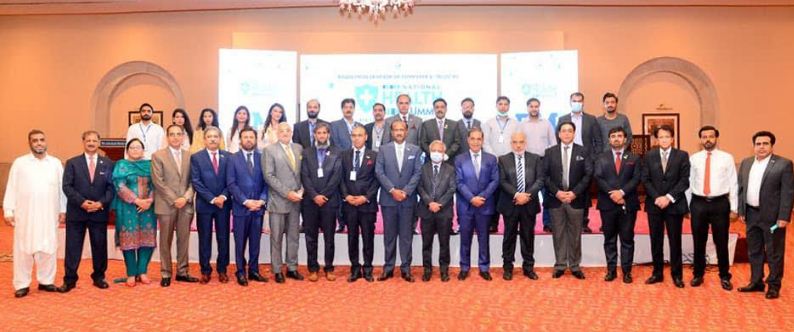
These remarks were passed by President Rawalpindi Chamber of Commerce and Industry (RCCI) Nasir Mirza at the National Health Summit  (Battel Against COVID-19) at a local hotel in Islamabad. The summit was organized by RCCI aimed to provide a platform to address challenges faced by developing countries like Pakistan for mass vaccination and bringing back trade and economic activities.

Pakistan has also started vaccination drive for all its citizens however a number of confusions have hazed minds of people regarding prevention and treatment of the Covid-19, he said.

New virus mutations and various types of vaccines along with myths surrounding the pandemic have also given rise to an infodemic, he further added.

Aamir Ashraf Khawaja – Secretary Health Ministry of National Health in his remarks highlighted the government initiatives on vaccination and curbing the spread of COVID-19. He lauded RCCI for organizing the summit and assured full support from the ministry for the mass vaccination drive.

Executive Director NIH Aamir Ikram gave his valuable remarks on advancement of vaccination across the country NIH role in conducting research and local manufacturing of vaccines in the country. CEO Drap Dr. Asim Rauf also addressed the session and highlighted the challenges faced during procurement of medicines, equipment, NOC for imports of medicines and vaccines etc.

Chairman of the Summit, Usman Shaukat briefed the audience about role of pharma, vaccine manufacturing in Pakistan, its prospects and efficiency. He also highlighted the challenges faced by pharmaceuticals specially maintaining supply chain due to lock-down and pricing issues due to high demands. Speakers of leading diagnostic labs, and hospitals also gave presentations to the audience.=DNA

================

Morgah village searched during operation

RAWALPINDI, Jun 20:Police conducted a search operation in morgah village and its adjoin areas here on Sunday, informed police spokesman.

The operation was led by SP Potohar while Elite force, Ladies Police and other law enforcement agencies participated.

During the search operation, 148 houses were searched, 22 tenants interrogated and 295 suspects were questioned.

SP Potohar said that the purpose of the search operation was to root out criminals who had taken temporary residence in the area.

The search operations would continue aiming to provide sense of protection to the people, he added.

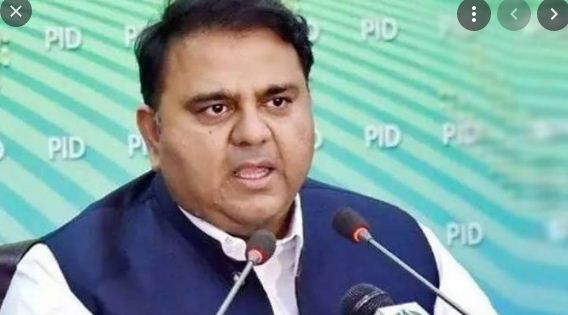
Fawad says there is dictatorship in Sindh


KARACHI, June 20 (DNA): Federal Minister for Information and
Broadcasting Fawad Chaudhry has lashed out at Sindh government saying
there is in fact no democratic government in Sindh, it’s just a dictatorship over there.

The federal minister was talking to media outside Karachi Press Club on
Sunday.

Fawad Chaudhry lamented that there was no democratic government in
Sindh, ‘there is the only dictatorship in Sindh,’ he added. He
reiterated his plea to the Supreme Court to implement Article 140A of
the Constitution in the province.

He stated that it was being said that the PTI won in Karachi ‘but they
don’t consider the fact that under the 18th Amendment, funds are being
provided to the whole province.’

He said categorically that the PTI government would invite a third party
to monitor the funds being spent in Sindh. He said a malicious campaign
was being carried out against Supreme Court Chief Justice Gulzar Ahmad.

He regretted that PPP used to be a national party. ‘Today PPP Chairman
Bilawal Bhutto Zardari raises his voice against Punjab accusing it of
stealing water.’ He said when the federal government demanded the data
of inflow and outflow of water then they ran away.

He said PPP itself stole water and diminished party position from a
national party into a provincial party. He said PPP days were numbered.
He was hopeful that PTI would form next government in Sindh. He said
Prime Minister Imran Khan would start his next election campaign in
Sindh.

He lamented the PPP had been ruling Sindh for more than a decade. ‘But
look at the state of Sindh. What has become of it,’ he added.

He was of the view that maligning PM Imran was no agenda. He said Maryam
Nawaz and Bilawal did not have any agenda. He said they were the scions
of royalty and they did not have the political acumen.

He said Imran Khan was a true leader. His policy was very clear whether
it was Afghanistan or Muslim Ummah.

He boasted on the PTI government’s performance saying the economy was
showing signs of improvement. He said that PTI would form the government
in Sindh next time.

Mr Chaudhry said that opposition did not have a democratic thinking
saying that PML-N President and Opposition leader in National assembly
Shehbaz Sharif was looking for some shoulder.

He said that Shehbaz had no control over his party. He was of the view
that PML-N was being controlled by its vice president Maryam Nawaz and
PML-N supremo Nawaz Sharif. He said that opposition was just a
hotchpotch of Nawaz Sharif, Maulana Fazlur Rehman and Bilawal Bhutto
Zardari. DNA

====

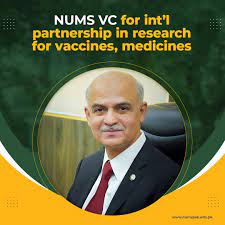
NUMS, Pharmaceutical Company, DOU to forge cooperation in healthcare research,development

RAWALPINDI, Jun 20:National University of Medical Sciences (NUMS) and a leading multi-national regional pharmaceutical company signed a 5-year Document of Understanding (DOU)  to enhance cooperation in the field of research and development pertaining to healthcare.

The DOU was inked  by NUMS Vice Chancellor Lt Gen Syed Muhammad Imran Majeed (Retd) and  Managing Director and Chief Executive Officer CCL Pharmaceuticals  Pvt. Ltd  Lahore Dr Shahzad Khan at a simple ceremony.

It was attended among others, by the Pro Vice Chancellor Academics Maj Gen Saleem Ahmad Khan(Retd), Pro Vice Chancellor Administration Maj Gen Syed Ammar Reza Hamdani (Retd), and Director NUMS Office of Research, Innovation and Commercialization(ORIC) Awais e Siraj and head of Medical Affairs  CCL Beena Ali.

Under the DOU pharmaceutical company has expressed its willingness in “capacity building and training with special emphasis on pharmaceutical testing including bioequivalence studies, clinical trials and healthcare products development,” which will help bolster NUMS endeavor to improve quality of life of the people.

“CCL actively seeks opportunities to contribute to clinical research, product, and capacity development of key stakeholders,” it added.

In his brief remarks on the occasion the Vice Chancellor of NUMS said, “ We and you are in the business of dispensing healthcare to the patients. We fully support you as our success will be gauged by your success.”

The pharmaceutical company, with an annual turnover of  Rs 8 billion, is currently has its operations in South Asia, South East Asia, Central Asia, Middle East, and Africa and is producing  a vast range of over 200 products in major therapeutic categories.

Managing Director of the second biggest pharmaceutical exporters in the country Dr. Shahzad after the ceremony said, “ As an organization we strongly believe that NUMS is a kind of organization which has the greatest impact in overall  healthcare system of the country. It has the credibility and a voice which is heard. We can give back to the society much more from a bigger platform which NUMS has provided.”   

“CCL Pharmaceuticals is actively engaged in the development, manufacturing, and marketing of generic pharmaceutical products with strategic industry partnerships that meet evolving needs of healthcare professionals, patients, and caregivers,” said the DOU.

NAB CONTINUES TO GIVE HIGH PRIORITY TO FIGHT AGAINST CORRUPTION: CHAIRMAN

ISLAMABAD, JUN 20 (DNA) – Chairman of National Accountability Bureau (NAB) Honorable Justice Javed Iqbal has said that corruption is estimated to cost the world at least $2.6 trillion annually, approximately 5 percent of the global GDP.

It is estimated that $1.26 trillion are lost by the developing countries to corruption etc each year. He said that NAB continues to give high priority to the fight against corruption. We believe that corruption should be prevented in all its forms and manifestations. 

He said NAB’s commitment to eradicate corruption from the country is across the board as per law.  He said that NAB would not spare those as per law who have after devouring billions of rupees of innocent Pakistanis.

NAB considered the case not the face behind it and whoever will commit corruption will be brought to justice as per law. “The NAB has no affiliation with any individual, party or organization but with the country and is performing its duties.

He said that NAB is pursuing a policy of accountability for all. He said that eradication of corruption has become the voice of the whole nation as it not only halts the progress of the country but also usurps the rights of the deserving people. Pakistan is facing the challenge of corruption which is the root cause of all problems being endured by the country.

 He said that NAB has chalked out a comprehensive Anti corruption strategy comprising awareness, prevention and enforcement under “Accountability for All” policy. Besides overhauling and perfecting working procedures in order to make NAB a more credible and reputed organization to eradicate corruption in all its forms and manifestations. The Chairman NAB said that NAB has rejuvenated by implementing his Accountability for All Policy across the board under the slogan of “NAB’s Faith-Corruption free Pakistan.”

The results have yielded excellent dividends. Well Reputed national and International Organizations like Transparency International Pakistan, World Economic Forum, PILDAT, Mishal Pakistan have not only lauded NAB’s efforts for eradication of corruption but in the Gillani and Gallup Survey about 59 percent people have shown their confidence upon NAB. NAB under the dynamic leadership of Mr. Justice Javed Iqbal, has recovered a staggering sum of Rs. 533 billion from corrupt elements directly and indirectly from 2018 to 2020 that no one previously had ever been able to accomplish since the establishment of the anti-corruption watchdog in 1999, besides overall recovery of Rs. 814 bullion, NAB has filed 1273 corruption references in the various learned Accountability Courts which are under adjudication and their approximately worth is 950 billion.

He said that not just in Pakistan alone, NAB has now emerged as a role model for countries under South Asian Association of Regional Cooperation (SAARC) which includes India, Sri Lanka, Bangladesh, Nepal and Bhutan. NAB heads the SAARC anti-corruption forum.

It is a focal organization for Pakistan under the United Convention against Corruption (UNCAC). NAB has also signed a unique Memorandum of Understanding (MOU) with China to extend cooperation in tackling corruption and to oversee CEPC projects being under process in Pakistan. Among other achievements of NAB, it has established a state of the Art Forensic Science Laboratory in NAB Rawalpindi besides establishing its own Pakistan Anti-Corruption Training Academy at NAB headquarters.

The academy is meant to train and equip its investigation officers with modern techniques to investigate white collar crimes on the basis of lessons learnt in order to eradicate corruption. NAB has also signed a Memorandum of understanding (MOU) with Higher Education Commission to spread awareness among students at Universities/Colleges level as part of Chairman’s vision to make our future leadership aware of the effects of corruption.

It is a remarkable effort. In this regard, over 50 thousand Character Building Societies (CBS) have been established in Universities/Colleges throughout the country. In order to streamline the working of NAB, NAB has also ensured that a highest degree of transparency and merit is maintained at all levels of enforcement.

From complaint verification to the final stage of filing a reference full level of transparency is maintained, guided, supervised and closely watched and an innovative concept of combined investigation team has been introduced in order to benefit from collective wisdom and to improve the quality of investigation on the basis of solid evidence as per law.

The Honorable Mr. Justice Javed Iqbal, Chairman NAB said that NAB strongly believes in self accountability besides accountability of others. He said that NAB is committed for logical conclusion of the cases of fake and illegal housing societies for depriving the poor investors from their hard earned money.

He said the housing societies neither handed them over plots nor had returned their hard earned money. “The poor investors are running from pillar to post to get their money back.  NAB has great regard for the business community which is playing an important role in the country’s progress.

He said that NAB has referred the cases of Income Tax, Sales Tax and Under Invoicing to FBR. NAB has established a special desk under the supervision of the Director at NAB headquarters Islamabad to address the complaints of the business community.

The business community leaders of FPCCI, ICCI and Lahore lauded the efforts of Chairman NAB for taking personal interest in addressing their problems timely.=DNA

==============

RUSSIA’S GLOBAL OUTREACH AND AGENDA 2030

Khalid Taimur Akram

Russia is among one of the fastest-growing economies in the world. Progressive and sustainable in its development goals, the country has been constructively working to bring nations together via an enhanced regional integration.

In contemporary times, Russia’s global outreach amid 2030 targets has been efficaciously adding for its socio-economic and political development. Russian foreign policy has been strengthening up to its present expansive phase. Moreover, its ambitions reflect through its foreign or regional policies, objectives and targets.

It relies on more advance and transforming goals. Since the adoption of 2030 goals, Russia has reaffirmed its commitment to fulfilling the targets and advanced its civil society through progressive measures. Russian President, His Excellency, Vladimir Putin has been stressing to actively work on the 2030 goals, cooperating with regional countries, and implementing joint progressive projects to ensure sustainable growth,foster economic integration, and upgraded industrial & transport infrastructure.

Moreover,Russia has been actively expanding its capacities through foreign assistance and facilitation to developing countries. Broader assistance is also one of the essential parts of the 2030 Agenda.Therefore, the studyessentially highlightsRussia’s startling policy framework for sustainable growth.The article also discusses the development strategies of Russia and its constructive input in sustainable development goals (SDGs).

The 2020 Strategy and May Decrees:

Russia has adopted a well-structured and cohesive policy framework. It can be envisagedthat the country under its visionary leadership will continue to pursue efficacious strategies for industrial development, environmental sustainability, technological transformation and other priorities over the decade. While discussing Russia’s beneficial adapted strategies, it is significant to highlight theMay Decrees.  

In 2018, Russian President, His Excellency, Vladimir Putin signed a decree setting the national development targets to 2024. The documents set certain significant goals to be adopted for the socio-economic well-being of the state.  The Decrees’ goals reflect some of the Sustainable Development Goals (SDG) as well.

The ambition is amid achieving broader goals, i.e., to ensure economic growth rates above the world’s level while keeping macroeconomic stability. The 2024 goals also include stabilizing and securing Information and Communications Technology (ICT) infrastructure for high-speed transmission, processing and storage of data bank easily accessible to all organizations and households.

In this aspect, the government is highly ambitious to establish and strengthen the digital economy’s legal regulation system, relying on a feasible approach in each domain.The 2017 program of ‘’Digital Economy of the Russian Federation” was designed for 2024. It is based on five aspects, i.e., normative regulation, robust education program, cybersecurity, establishing research competencies and Information Technology (IT) infrastructure. Most of these initiatives and broader targets have been already implemented to empower Russian progressive civil society. Russia’s National Project is an exceptional roadmap of state-driven investment across 12 major areas. The outlined five development goals are as follows:

  • Maintaining the population (health and well-being)
  • Providing a safe living environment
  • Facilitating effective workforce
  • Ensuring feasible business climate and enhancing entrepreneurship 
  • Technological transformation

Integration of Trilateral Dimensions of Sustainable Development and Policy Coherence:

A well-functioning, modern infrastructure is a central requirement for inclusive economic development and sustainable growth.  The three dimensions, i.e., social, environmental and economic,have been reflected by a profound analysis of the May Decree. In this regard, Russian federal ministries and agencies are well coordinated with one another and with regional authorities to execute the adopted programs. Russia is a social state and always endorsed and encouraged Human and civil rights and freedoms. Since 2012, many trends have been advanced in Russia for sustainable development. The country has been working hard to achieve the Global SDGs by 2030. Therefore, the structural reforms have given new impetus to many sectors, especially the agriculture sector, to sustain food security. Therefore, as the world’s leading strategic hub and growing economy, Hunger is not an issue for Russia.According to the estimation of 2014 onwards, domestic agriculture capacity and production has been growing. Therefore, the country ensures not only its food security but also provide other countries with massive assistance. According to the Federal Customs Service of Russia (FCS), in 2018-2019, vegetable products’ exports were approximately$14.5 billion, weighing more than 69 million ton. This ratio indicates that the export in this sector would be further increased in the near future.

One of the Sustainable development targets is to maintain plant genetic resources for food and agriculture. In this aspect, Russia has strong expertise. The genetic diversity of seeds is preserved due to the Vavilov seed bank and Kuban genetic bank of seeds. Russia has the world collection of plant genetic resources, including 400 thousand samples. Therefore, theresearch institute, Vavilov Institute of Plant Industry (VIR) facilitates the production of hundreds of new species and hybrids annually. Moreover, Russia has been assisting other countries with shared knowledge through its huge expertise in the research and development (R&D) sector. Certain accomplishmentsby the Russian federation are pertinent to highlight in this area:

  • Under the prudent and dynamic leadership of President Vladimir Putin, the federation has adopted robust legislative amendments ensuring societal well-being.
  • Allocating special grants for the industrial composting of food waste.
  • Providing pervasive assistance to farmers and rural communities and advancing the agriculture sector.
  • Establishing warehouse logistics and the industrial processing of agricultural commodities, construction of storage networks.
  • Mobilizing efforts to mitigate adverse impacts of climate change on socio, political and economic fabrics of society.
  • Ensuring implementation of SDGs and maintaining low carbon footprints.
  • Supporting funds that assist vulnerable social groups.
  • Facilitating working group and leading commissions
  • Monitoring the provision of societal well-being.

n Russia, one of the leading ideas of state policy is the modernization of education. Education provides easy access to education and improves its quality and efficiency. Furthermore, society’s demeanor to the future changes iscooperative and optimistic.Thereby, the society has welcomedtoextend the sphere of the educational system, focusing on the best foreign practices whileadhering to sustainable development goal four ‘quality education’.

Russia and Pakistan Broader Cooperation: Prospects for Achieving Sustainable Development Goals (SDGs):

Since the start of the new millennium, the strategic graph of Russia-Pakistan bilateral relations has followed an upwards trajectory. Russia’s outlook towards South Asia has dramatically evolved in the past decade. Moscow has highlighted its “Pivot to Asia” strategy as a central part of its Foreign Policy objectives.

These objectives aim at diversifying diplomatic and economic relations with the Asian states. In the contemporary era, the global pendulum of the economy has shifted its course towards the Asian region.The contemporary geopolitical setting appears to be immensely encouraging in terms of the Russia-Pakistan relationship.

There are multiple sectors such as geo-economics, defense, information technology, counter-terrorism in which both countries can extend their cooperation and extract maximum benefits out of the alliance. Russia and Pakistan recognize each other’s geopolitical significance, especially regarding the Afghanistan conflict’s durable solution. Moreover, the China-Pakistan Economic Corridor (CPEC) provides yet another opportunity to strengthen Pak-Russia relations. Russia has announced its full support for the CPEC program.

By theabovementioned profound analysis of Russian global outreach and agenda 2030, it has been clear that the country can pave the way to attain common goals together and assist Pakistan in this regard. Therefore, Pakistan can extend its partnership with Russia to achieve global SDGs and add constructively into global alignments and cooperation. Collaboration to achieve the sustainable development goals would provide a new impetus for Pakistan and Russia to enhance their bilateral ties and foster people-to-people connectivity. The result-orientated policies by the visionary Russian leadershiphave ultimately proved to be a driving force for the amicable resolution of common global challenges and move towards regional cooperation.

The writer is the Executive Director, Center for Global & Strategic Studies (CGSS), Islamabad

PAKISTAN HC IN BANGLADESH INTERACTS WITH BUSINESSMEN

DNA

High Commissioner Imran Ahmed Siddiqui briefed DCCI about Pakistan’s huge export potential in high quality goods and services and underlined the need for leveraging this potential

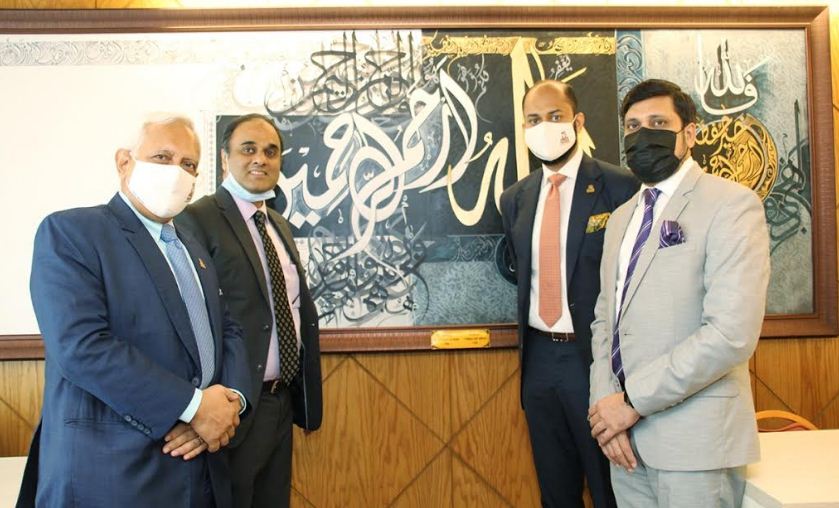
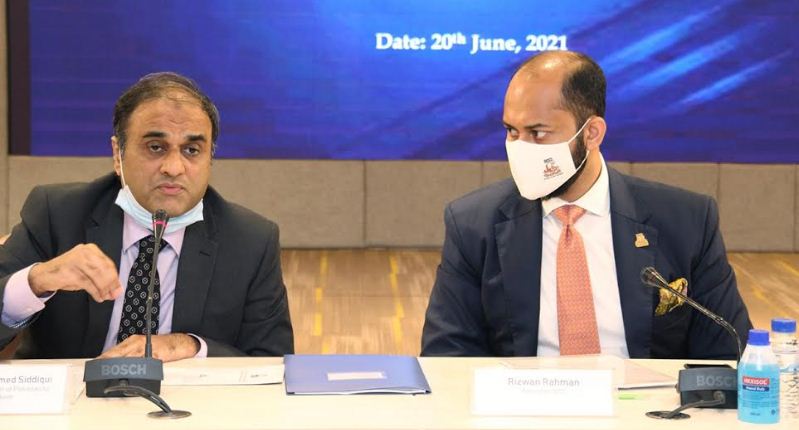
DHAKA: High Commissioner Imran Ahmed Siddiqui visited Dhaka Chamber of Commerce and Industry (DCCI). He was accompanied by relevant officials of the High Commission for Pakistan, Dhaka.

During the formal meeting, the two sides agreed that there was a vast potential to further strengthen trade, business and investment cooperation between the two fraternal countries.

 High Commissioner Imran Ahmed Siddiqui briefed DCCI about Pakistan’s huge export potential in high quality goods and services and underlined the need for leveraging this potential.

The High Commissioner and President (DCCI) jointly inaugurated a 10×4 ft calligraph-art presented by the High Commission to DCCI. The art piece has been painted by Mr. Asghar Ali, Naqqash Masjid-un-Nabvi Ashareef, Madina Munawwarah. 

It may be recalled over 55 Pakistani companies had attended the DCCI Business Conclave in January this year. Later, President Rizwan Rehman had spoken at Pakistan International Chambers Convention.

Established in 1958, DCCI is the largest Chamber of Bangladesh and has an experience of over four decades of rendering useful services for the development of business and industry in the country.

WORLD BANK APPROVES $442M LOAN TO PAKISTAN

Omar Iftikhar

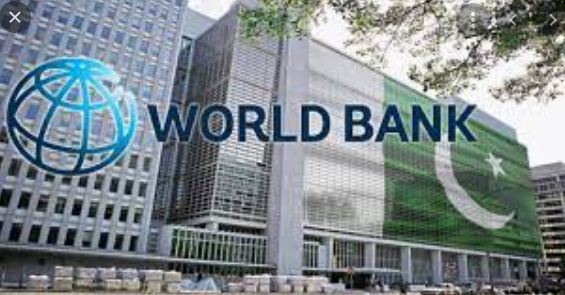
The World Bank (WB) recently approved a $442 million loan to Pakistan for improving access to water and sanitation services for the most vulnerable rural communities in Punjab, as the lender predicts “sizable increase” in poverty across the country. According to an official statement from the World Bank, the WB board of directors approved the Punjab Rural Sustainable Water Supply and Sanitation Project (PRSWSSP) to upgrade water supply and sanitation infrastructure and services for sustainable access to drinking water and safe wastewater management.

The report claims that the project will pursue activities related to rural settlements, where water contamination and poor hygiene are more dominant. They cause illness and child stunting. Interestingly, the World Bank approved the project the day the government decided to reverse its decision of increasing tax incidence on dairy products, which would have reduced their consumption.

 In the recently passed budget, the government has proposed to increase the sales tax rate on dairy products from 10% to 17%. While the approval of the WB loan can be seen as a positive step that will bring growth to the country, some steps need to be pursued in this regard. The government must create a committee to oversee how and where the loan money is being spent or invested.

 There must be complete transparency as far as financial matters are concerned. The government, while using its vision and experience, must comprehend the consequences of the loan granted. Once the WB approves a loan certain specific stipulations become a mandatory part to be completed by the government that acquires the loan.

 The Pakistani government must know these stipulations and what actions it would need to complete to complement WB’s decision to grant a loan in the first place. According to a news report, the World Bank project documents underlined that the Covid-19 pandemic crisis is expected to lead to a sizable increase in poverty, reversing the sustained reduction observed over the past 20 years.

Stay Connected

64FansLike
60FollowersFollow

Latest Reviews

Exchange Rates

USD - United States Dollar
EUR
1.14
GBP
1.34
AUD
0.70
CAD
0.71