Home Blog Page 2656

Fawad condemns terrorist attack

Saifullah

ISLAMABAD, JUN 25 (DNA) – Minister for Information and Broadcasting Chaudhry Fawad Hussain on Friday vehemently condemned terrorists’ attack on FC patrolling team in Sibi, Balochistan.

In a condolence message, he said those who sacrificed their lives for the sake of country were the real heroes of the nation. However, the anti-state elements would not succeed in their nefarious designs.

Acknowledging the services security forces for offering great sacrifices in restoring law and order in the country, he said, the entire nation stands with the security forces in the war against terrorism and such cowardly acts cannot sabotage the government’s efforts to maintain law and order in the country. The minister prayed the Almighty Allah to grant martyrs a high place in Jannah and grant patience to the bereaved families of the martryrs to bear the irreparable loss with patience and equanimity. 

Bangladesh may accept Pakistan’s Covid aid

HC Imran Siddique meets BD FM; conveys Pakistan’s desire to extend aid under SAARC emergency fund; Indian, Pakistani envoys arrive at the Ministry at the same time

DNA

DHAKA: In Dhaka, Indian High Commissioner Vikram Doraiswamy and Pakistani High Commissioner Imran Ahmed Siddiqui visited the Foreign Ministry. It is rare incident for top diplomats from two hostile South Asian countries to visit the foreign ministry on the same day. On the one hand, Indian High Commissioner paid a courtesy call on State Minister for foreign Affairs, Shahriar Alam. On the other hand, the High Commissioner of Pakistan paid a courtesy call on Foreign Secretary Masood bin Momen.

Two courtesy meetings were held at around noon. Pakistan’s High Commissioner to Dhaka Imran Ahmed Siddiqui came first to meet Foreign Secretary Masood bin Momen. After 15 minutes, Indian High Commissioner Vikram Doraiswamy came to meet State Minister for Foreign Affairs Shahriar Alam. However, Vikram Doraiswamy left the Foreign Ministry before the end of the Pakistani High Commissioner’s talks with the Foreign Secretary.

Foreign Ministry officials told this correspondent in the afternoon that Indian High Commissioner Vikram Doraiswamy was scheduled to pay a courtesy call. The discussion could not take place for miss matched of the schedule for several days. The ‘informal’ meeting took place today at noon. However, no one wanted to talk about what the top Indian diplomat had discussed with the Bangladesh foreign minister in Dhaka.

Talking to senior officials of the Ministry of Foreign Affairs, it was learned that Imran Siddiqui discussed with the Foreign Secretary the issue of Pakistan’s desire to assist a private aid agency of Bangladesh to curb Corona under the SAARC Emergency Fund. Last December, the Pakistan High Commission in Dhaka sent a letter to the Ministry of Foreign Affairs expressing its interest in providing various items including medical equipment to the Bangladesh-based organization from SAARC’s Covid-19 Emergency Fund. The Pakistani High Commissioner requested the Foreign Secretary to address the issue as it had been pending for six months. Bangladesh has replied positively to cognize the issue. SAARC’s Covid-19 Emergency Assistance Fund has been set up in 2020 at the initiative of Indian Prime Minister Narendra Modi. India has allocated 10 million for the fund. Pakistan has allocated 3 million and Bangladesh 1.5 million. The SAARC member countries have kept the special fund for Covid to themselves. The countries of South Asia are providing assistance to other countries from that fund as per own liking.

Pak desires ‘civilized’ ties with US: PM

There was this mistrust between the two countries and people in Pakistan felt they paid a heavy price for this relationship

Special Correspondent

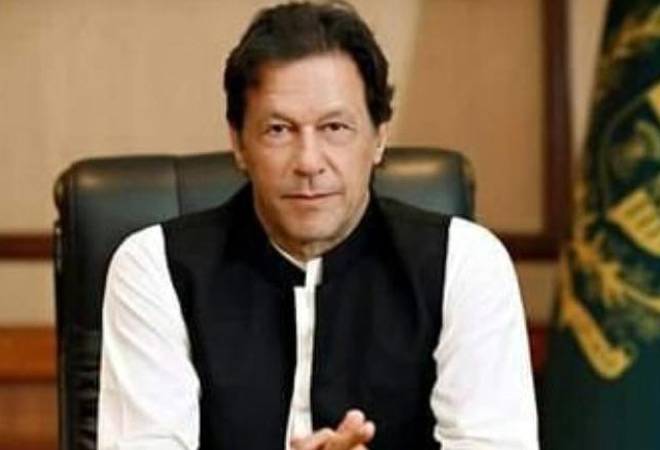
ISLAMABAD, JUN 25 (DNA) – Prime Minister Imran Khan has said Pakistan would want a civilized relationship with the US, which you have between nations, and would like to improve the trading relationship with the U.S.

In an interview with the New York Times, the prime minister further elaborated that he wanted the relationships between Pakistan and the United States in line with the relations between the U.S. and Britain, or actually between U.S. and India right now.

He said it was a lopsided relationship between Pakistan and the U.S. as the latter felt that they were giving aid to Pakistan, they felt that Pakistan then had to do U.S.’s bidding.

“And what Pakistan did in terms of trying to do the U.S. bidding actually cost Pakistan a lot in human lives. Seventy thousand Pakistanis died, and over $150 billion were lost to the economy because there were suicide bombings and bombs going on all over the country. That’s where the problem began. The U.S. kept expecting more from Pakistan. And unfortunately, Pakistani governments tried to deliver what they were not capable of.”

He said there was this mistrust between the two countries and people in Pakistan felt they paid a heavy, heavy price for this relationship and the U.S. thought Pakistan had not done enough.

“So in that sense, it was a lopsided relationship. What we want in the future is a relationship based on trust and common objectives. That’s actually what we have right now with the U.S. — I mean, our objectives in Afghanistan are exactly the same today.”

About Pakistan’s strategic relevance for the US after the Afghanistan exit, PM Khan said the states really have relationships based on common interests and Pakistan is a country of 220 million people, a young population, in a sense strategically placed for the future if our relationship with India improves at some point.

“So we have one of the biggest markets on one side of Pakistan, and then China on another side. So two of the biggest world markets. And then the energy corridor, Central Asia, Iran, if that relationship improves between the U.S. So Pakistan, in that sense, is strategically placed for the future in terms of economics.”

About the military and security relationship going forward between the US and Pakistan said he was not clear that post the U.S. withdrawal, what sort of military relationship it will be.

“But right now, the relationship should be based on this common objective that there is a political solution in Afghanistan before the United States leaves because Pakistan doesn’t want a civil war, a bloody civil war in Afghanistan. And I’m sure neither does the U.S. after it leaves, it wants the country going up in flames after spending, God knows, $1 or $2 trillion. So that’s a common objective.”

He said Pakistan has used the maximum leverage it could on the Taliban to avoid a civil war in Afghanistan. “Basically, Pakistan was the country that had recognized Taliban, one of three countries after 1996.  Given that the United States gave a date of withdrawal, from then onward, our leverage diminished on the Taliban. And the reason is that the moment the United States gave a date of exit, the Taliban basically claimed victory.

They’re thinking that they won the war. And so therefore, our ability to influence them diminishes the stronger they feel. So the leverage we used was to bring them on — they were refusing to have talks, so it was Pakistan who got them to talk to the United States. And secondly, it was us pressurizing them, and really, it was [us] very toughly pushing them, pressurizing them to talk to the Afghan government. So that’s how far Pakistan has got.”

He said Pakistan has been emphasizing to the Taliban that they should not go for a military victory because it’s not going to happen, because if they go for an all-out military victory, it would mean a protracted civil war. And the country that would be affected by a civil war, after Afghanistan, would be Pakistan and we would be affected because there are more Pashtuns in Pakistan than in Afghanistan, he added.

“And since the Taliban is primarily a Pashtun movement, this will have two effects. One, we are scared that this will be another influx of refugees into Pakistan. Already, the country has found it very difficult to cope with three million Afghan refugees. And so there will be another influx into Pakistan. Secondly, our vision for the future is lifting our economy and trading through Afghanistan into Central Asia. We have signed very good trade deals with the Central Asian republics, but we can only go there through Afghanistan. If there is a civil war, all that goes down the drain.”

He said during his visit to Afghanistan earlier this year, Pakistan gave our full support to the Afghan government, telling them it will do everything for this peace settlement.

“There’s frequent exchanges between our intelligence agencies and the Afghan intelligence agencies, and between our army chief and the Afghan president and their army chief. So there has been constant communication between us. Unfortunately, there is still a feeling in the Afghan government that Pakistan could do more, which I have to say is very disappointing to us when they blame us for being unable to, after so many years, to come to some sort of a settlement.

“Let me assure you, we will do everything except use military action against the Taliban. I mean, we will do everything up to that. All sections of our society have decided that Pakistan will take no military action. We unfortunately — and I have to say, I opposed this military action — the United States pressured Pakistan to send its troops into the tribal areas, to flush out maybe a few hundred Al Qaeda [militants] who had come into Pakistan from Afghanistan after [the Battle of] Tora Bora.

 Remember, the whole border [was] completely open. There was never any border between Afghanistan and Pakistan, which is called the Durand Line. Now, we are fencing it, and almost 90 percent of the border, we’ve fenced now. What if [the] Taliban try to take over Afghanistan through [the] military? Then we will seal the border, because now we can, because we have fenced our border, which was previously [open], because Pakistan does not want to get into, number one, conflict. Secondly, we do not want another influx of refugees.”

World considers Pakistan as part of the solution

Ansar M Bhatti

ISLAMABAD:  Foreign Minister Shah Mahmood Qureshi has said the world considers Pakistan as part of the solution and not part of the problem when it comes to a peaceful and negotiated solution of the long-standing Afghanistan imbroglio.

The foreign minister said this while addressing a press conference on Friday.

He further said, Pakistan would always want a peaceful Afghanistan and therefore be part all efforts meant towards this goal. He added, Pakistan is all agog to work with the stakeholders in order to achieve early and lasting peace in Afghanistan.

To a question about Turkish role in Afghanistan, the foreign minister said, Turkey as coalition partner wants to retain its role in the Kabul airport management. Things are at early stage now and we are waiting for the Turkish authorities to come up with plans in this regard. He made it clear Taliban they have to see the reaction of Taliban as well regarding Turkish plans of having control of the Kabul Airport.

FM Qureshi added, he was not privy to any development regarding deployment of peace keeping troops in the region.

Qureshi emphasized that the Afghans, including the government and Taliban, needed to sit together. “Whatever the outcome evolves out of their negotiations, Pakistan would respect that,” he added, saying that “We will remain the partners of peace and not conflict”.

Asked about the blame-game against Pakistan ahead of the meeting between U.S. president Joe Biden and Afghan president Ashraf Ghani, he said, “They [Afghan government representatives] can say whatever they want, but the U.S. knows Pakistan’s role very well and the world is oblivious to our role”. Foreign Minister said as Kashmiris wanted a full-fledged restoration of statehood of Jammu and Kashmir, the claim of Indian prime minister Narendra Modi to fulfill such demand “at some opportune time” was entirely “vague and against the interest of Kashmiris”.

He termed the meeting between Indian prime minister Narendra Modi with Kashmiri leader minus the All Parties Hurriyat Conference a “staged drama and a public relation exercise” to cover the illegal acts of August 5.

“This was a failed attempt on part of the Indian prime minister to mend the tarnished image of his government following the illegal acts of revocation of special status of Jammu and Kashmir,” the foreign minister said here at a press conference.

The foreign minister was referring to Thursday’s meeting where Narendra Modi met political figures from Occupied Jammu and Kashmir – the first high-level engagement since August 2019 when India revoked the region’s autonomy by scrapping Article 370 of its constitution and ended the special status of J&K.

He said the all-parties conference called by the Indian prime minister exposed the tall claims about normalcy of the situation in Jammu and Kashmir ended up in failure.

He said there existed a wide gulf between the aspirations of Bhartiya Janta Party government and the true representative of Kashmiris who remained “in search of their identity and the basic right of self-determination.

Rashid Skakir appointed PM’s PRO

Staff Report

ISLAMABAD: Abdul Rashid Shakir, a BS-18 officer of the Information Group has been assigned his duties in Prime Minister’s Office on deputation basis for a period of three years, replacing Faisal Ilyas, who has been posted as the Press Attaché in Cairo, Egypt.

According to a notification issued by the Prime Minister’s office, a fresh panel of suitable officers has also been sought for post of Public Relations Officer (PRO) of the Prime Minister, replacing Irfan Ashraf Qazi.

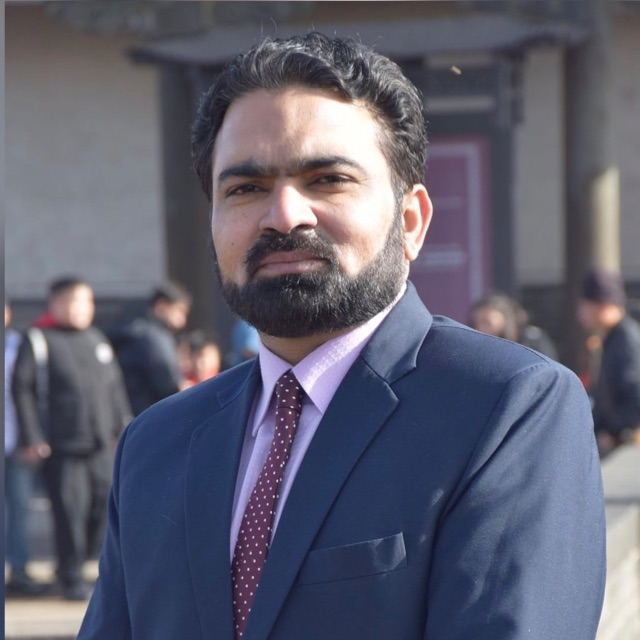
Abdul Rashid Shakir has previously worked in the prime minister office. He is considered a competent officer of the Ministry with excellent communication skills. He is an elaborated writer as well and has contributed scores of articles to various reputed newspapers and journals.

JAVED IQBAL REJUVENATED NAB THROUGH EXCELLENT PERFORMANCE

DNA

Islamabad, June 25, 2021: It is an honour for Pakistan that one of its institutions is not only a focal institution under United Nations convention against Corruption but also a role model for SAARC countries due to its effective and visible performance through three pronged anti corruption strategy comprising Awareness, Prevention and Enforcement.  The National Accountability Bureau (NAB) was established in 1999 to eradicate corruption and recover looted money from corrupt elements.

Justice Javed Iqbal, after assuming the responsibilities of Chairman NAB, formulated an effective National Anti-Corruption Strategy, which has been recognized as the most effective strategy against corruption. 

The NAB Chairman introduced a number of new reforms in the institution. NAB Chairman stated that eradicating corruption was his top priority and he not only adopted zero tolerance policy but also endured any pressure, some Rs 533 billion had been recovered directly or indirectly from the corrupt element from October 2017 till date and deposited the record recovered amount in the national exchequer.

  Justice Javed Iqbal while assuming the charge of chairman not only fulfilled his responsibilities as a challenge and firmly believed that the institutions are made up of individuals and if individuals perform their duties diligently, honestly and with dedication that enhances the prestige of the institution.

This also enhanced the respect and credibility of these institutions. People from all sections of the society express confidence in this institution and the people attached to the institution look at the officers and officials with respect and dignity.

The NAB chairman had also performed his duties as the Acting Chief Justice of the Hon’ble Supreme Court of Pakistan, then his motto was “Justice for All” and today when he is discharging his responsibilities as NAB Chairman, his policy is  ” accountability for all”. Elimination of corruption from the country is NAB’s first priority besides adhering to zero tolerance and self-accountability.

 NAB officers do not belong to any political party, they are employees of the state and are doing their job according to the law without any discrimination.  All NAB inquiries are being conducted within the ambit of the law. The anti-corruption strategy formulated by Justice Javed Iqbal, has been recognized as the most effective anti-corruption strategy.

  After the efforts and hard work of Justice Javed Iqbal, National Accountability Bureau, NAB has emerged as an excellent anti-bribery body with training and working environment for the development of its existing workforce.  With the recruitment of new investigative officers, it has become a model institution.  The new investigation officers will be trained at the Police Training College, Sihala.

  After the completion of their training, the investigation and research work has been further intensified. The hard work of the NAB officers has helped in enhancing transparency, achievement of objectives and professionalism.  Justice Javed Iqbal said that due to his experience, the National Accountability Bureau (NAB) has formulated the best strategy to eradicate corruption in the country. He also paid special attention to the training of officers.  The National Accountability Bureau, under the direction of the Chairman, has launched a comprehensive standard grading system to review and further improve the annual performance of NAB officers.  Under this grading system, the performance of all NAB regional beavers is being reviewed annually.  They are not only made aware of their strengths and weaknesses but are also instructed to rectify them. 

The NAB has developed an effective monitoring and elevation system to improve the infrastructure and working procedures for expeditious disposal of all grievances.  The main objective of citizen friendly NAB is not only to inform the complainant about the progress of his complaint in an efficient manner but also to ensure transparency and accountability in the context of liaison with the complainant in NAB.  Which has increased confidence in the NAB and helped promote transparency and merit in the NAB.  Where the NAB has improved the infrastructure and working procedures for expeditious handling of grievances, there has been an increase in the number of complaints from inquiries and inquiries to investigations and accountability. 

The National Accountability Bureau (NAB) has appointed new law officers in the Prosecution Division keeping in view the modern requirements of the NAB.  With the deployment of new investigating officers in the Operations Division and new law officers in the Prosecution Division, both the divisions have become more active.  The National Accountability Bureau has also set up training programs to enhance the capacity of its investigative officers and new law officers on modern lines, where they will be trained by national and international experts to investigate corruption and white-collar crimes using state-of-the-art technology. 

The National Accountability Bureau has filed 1,273 references of corruption in the esteemed accountability courts which are pending with a total value of about Rs. 1300 billion. NAB has set up a forensic science laboratory in Islamabad in which digital  Advanced forensic, document and fingerprint analysis facilities are available.  While the purpose of setting up the Forensic Science Laboratory was to equip the NAB with modern equipment, it also aims to improve the quality of NAB’s inquiry and investigation, as well as to save time.

  NAB is not only an institution that works in accordance with the law to eradicate corruption in the country, but also respects the self-esteem of every person in accordance with the law and firmly believes in resolving their legitimate concerns in accordance with the law and the constitution.  Bureau Chairman Justice Javed Iqbal said that the role of the business community is very important in the development of the country.

 The business community is playing an important role in economic development. If the business community is prosperous then the country will be prosperous.  To deal with the grievances of the business community promptly, a special desk has been set up at the NAB headquarters where a director level officer is present. In addition, the Chairman NAB has directed the NAB not to take up sales tax and income tax matters. 

The investigation is referred to the FBR. The bureaucracy is the backbone of any country as it plays a key role not only in the development and prosperity of the country but also in running the system of government.  Chairman NAB has performed important responsibilities in various institutions of the country.  NAB is a role model for SAARC countries. Pakistan is the first chairman of the SAARC Anti-Corruption Forum. NAB has signed a memorandum of understanding with China to end corruption. NAB chairman Justice Javed Iqbal  The commitment of “accountability for all” to eradicate corruption from the country after taking office is not only being strictly followed through a policy of zero tolerance and self-accountability.

 The significant achievements of NAB in the last 3 years under the dynamic leadership of  Mr. Justice Javed Iqbal Chairman NAB are the result of the tireless work and teamwork of all ranks of NAB officers. The Chairman  NAB also believes in teamwork. He always performs his duties with merit and honesty and he teaches this lesson to all his officers and staff.  He said that eradication of corruption was the national duty of NAB officers. Under the able leadership of National Accountability Bureau (NAB), Chairman -NAB under its successful anti-corruption strategy was committed to eradicate corruption from Pakistan in an organized and coordinated manner.

 It is hoped that NAB will continue its indiscriminate operations against corrupt elements in accordance with the law which will not only help in making Pakistan corruption free but will also put Pakistan on the path of development and prosperity.

Germany praises Pakistan’s role in Afghan Peace Process

DNA

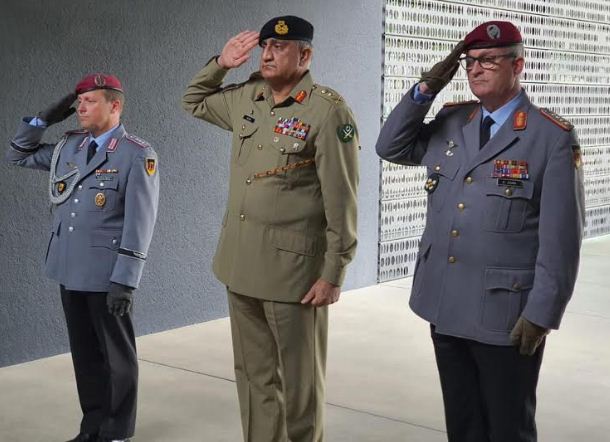
BERLIN, JUN 25 – General Qamar Javed Bajwa, Chief of Army Staff (COAS), during an official visit to Germany, called on General Eberhard Zorn, Chief of Defence German Army, today.

Dr. Detlef Waechter, Director General for Security and Defence Policy at German Ministry of Defence was also present on the occasion.

During the meeting, matters of mutual interest, regional security situation, mutual cooperation in defence & security domain and bilateral cooperation in various fields were discussed. COAS said that Pakistan Army would like to expand bilateral defence cooperation to benefit from German expertise in training and technological advancements. It will have positive impact both on bilateral relationship b/w to countries as well as on regional security.

The German dignitary also commended the role of Pakistan for regional peace and security, the efforts of Pakistan Army in battling the scourge of terrorism and bringing peace and stability in the region, especially Pakistan’s role in the Afghan Peace Process. Both sides pledged to further expand defence and security cooperation at all levels.

Earlier on arrival at Ministry of Defence, COAS also laid floral wreath on the monument and was presented a Guard of Honour by a smartly turned out military contingent.

PM Khan to visit Uzbekistan on July 13: Uzbek envoy

Zafar Bakhtawari said on the occasion that the dream of the Pakistani people is to reach Tashkent in four hours by train from Islamabad

ISLAMABAD: The extension of ML-1 rail project between Uzbekistan and Pakistan will be a breakthrough for centuries. Zafar Bakhtawari

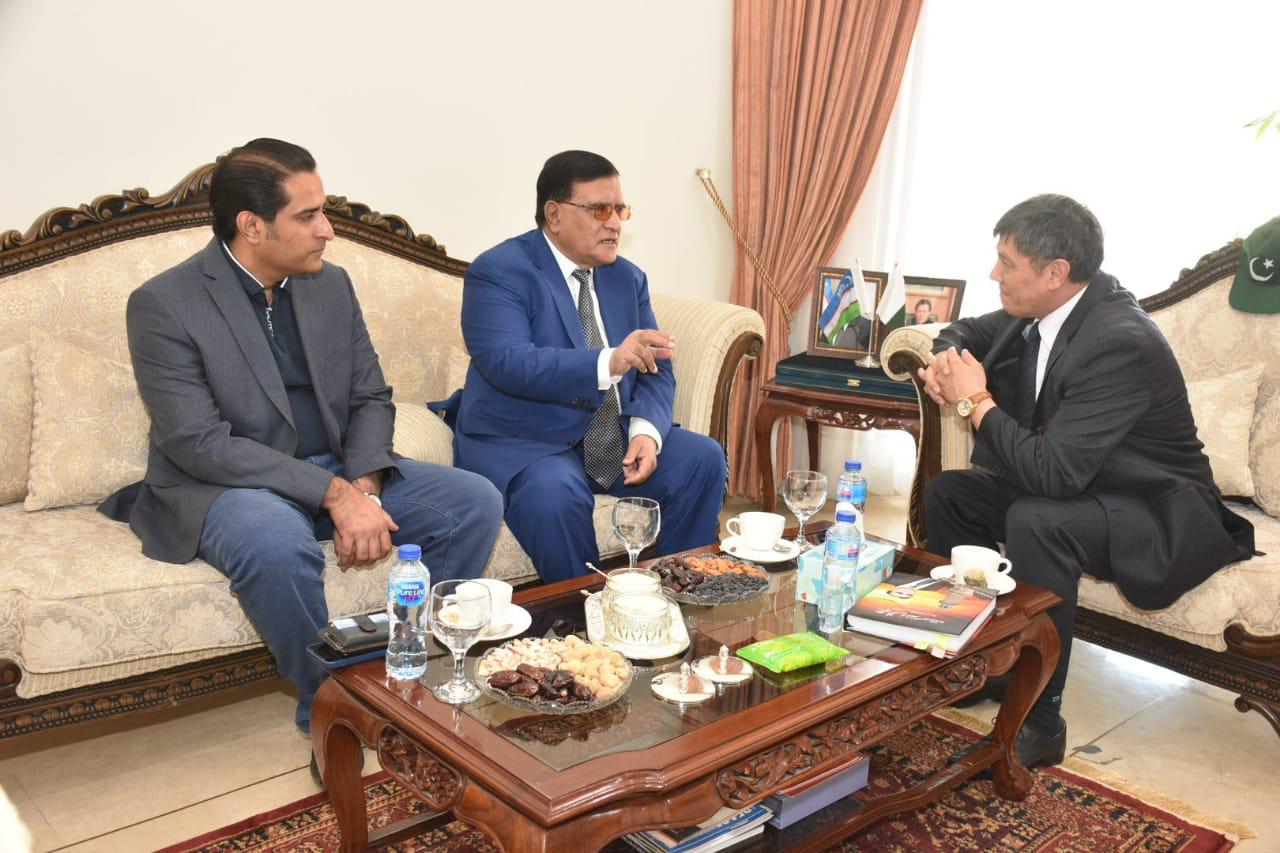
The Ambassador of Uzbekistan, Mr. Aybek Arif Usmanov, has said that the road and rail link from Karachi and Gwadar to Uzbekistan via Peshawar will be an important milestone in regional cooperation. And it is not appropriate to wait for peace in Afghanistan. The prime Minister of Pakistan Imran Khan will be attending the conference of the countries of South Asian and Central Asia   in Tashkent on July 13 as a special guest and it will in a mile stone  in regional co-operation. He expressed these views at his Embassy here on Friday while talking to Zafar Bakhtawari, Chairman, Pakistan Central Asia Friendship Association. He said that the people of Uzbekistan are eagerly awaiting the visit of Imran Khan and Minister of Commerce Abdul Razzaq Daud will attend the Uzbek-Pakistan Business Forum on July 12. He said that airline service between Pakistan and Uzbekistan would be resumed from July.

Zafar Bakhtawari said on the occasion that the dream of the Pakistani people is to reach Tashkent in four hours by train from Islamabad. And the ML-1 project will be an important step in fulfilling that dream. We have wasted thirty years in realizing this dream and now our future generations will not forgive us for further delay in it. He added that peace in Afghanistan is important not only for Pakistan and Uzbekistan but also for Afghanistan and its neighboring countries. Waqar Bakhtawari emphasized on trade and economic ties between Pakistan and Uzbekistan and the importance of direct air link between Pakistan and Uzbekistan. Zafar Bakhtawari presented his newly published book Jahan Dost to the ambassador of Uzbekistan. 

Zafar Bakhtawari said on the occasion that the dream of the Pakistani people is to reach Tashkent in four hours by train from Islamabad. And the ML-1 project will be an important step in fulfilling that dream. We have wasted thirty years in realizing this dream and now our future generations will not forgive us for further delay in it. He added that peace in Afghanistan is important   besides Pakistan and Uzbekistan as well as for Afghanistan and its neighboring countries. Waqar Bakhtawari emphasized on trade and economic ties between Pakistan and Uzbekistan and new direct flights between Pakistan and Uzbekistan. 

Zafar Bakhtawari presented his newly published book Jahan Dost to the ambassador of Uzbekistan. Waqar Bakhtawari was also present on the occasion.

PAKISTAN, BELARUS EXCHANGE VIEWS ON FURTHER PROMOTING BILATERAL RELATIONS

DNA

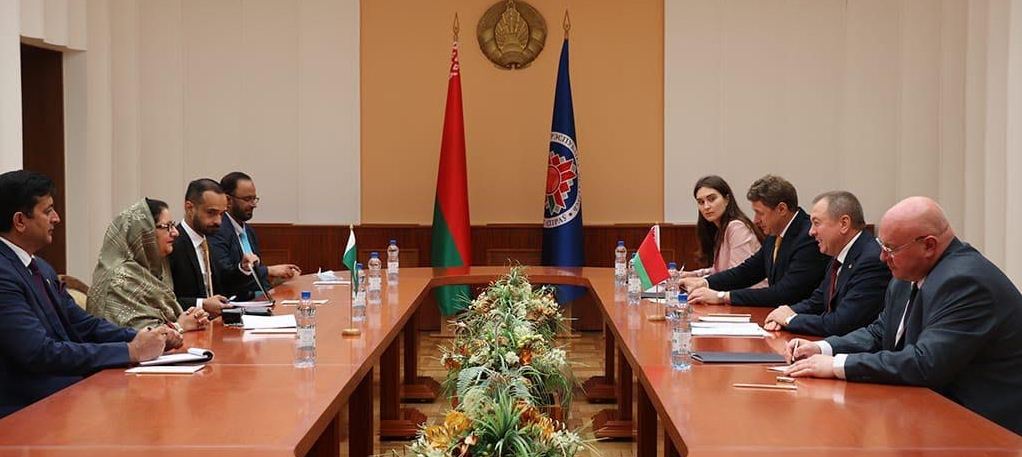
MINSK, JUN 25: Federal Minister for Defence Production of Pakistan, Zobaida Jalal held a meeting with the Minister of Foreign Affairs of the Republic of Belarus, Vladimir Makei. The meeting was also attended by the Deputy Foreign Minister Mikalai Baresevich and Ambassador of Pakistan to Belarus Sajjad Haider Khan.

During the meeting, the two sides discussed existing state of bilateral relationship and prospects for future development of the Pak-Belarus cooperation in different spheres including political, economic, defence, education and culture.

Expressing her complete satisfaction over the proceedings of her visit to Minsk in connection with MILEX exhibition, she expressed her hope that the visit will further provide fresh impetus to strengthening cooperation between the two countries and will lead to concrete results in the future.

Khwaja Fareed UEIT, University of Tasmania, Australia sign MoU

DNA

ISLAMABAD, JUN 25 – The Vice Chancellor Khwaja Fareed Univerity of Engineering and Information Technology Prof. Dr. Muhammad Suleman Tahir inked a Memorandum of Understanding (MoU) with the University of Tasmania, Australia in order to develop and enhance academic and research collaboration.

According to an MoU, both universities shall take joint education, cultural, research activities; exchange of faculty members for research, lectures, discussions; exchange of advanced graduate and professional students for collaborative or independent research; joint PhD Supervision Program, Jointly Awarded PhD Program, Dual PhD and Dual Master of Science Program; Participation in seminars and academic meetings; exchange of academic materials, publications, and other information; special short-term academic programs, and honorary appointments of key personnel involved in joint research programs and any other areas of cooperation to be mutually agreed upon by the parties.

The Vice Chancellor said that the students and faculty exchange program as discussed in this MoU would bring fruitful outcomes by developing international linkage between Khwaja Fareed University and Tasmania University. He further said the KFUEIT would be flourishing an atmosphere of conducting joint cultural and research activities.

Stay Connected

64FansLike
60FollowersFollow

Latest Reviews

Exchange Rates

USD - United States Dollar
EUR
1.14
GBP
1.34
AUD
0.70
CAD
0.71