Home Blog Page 2649

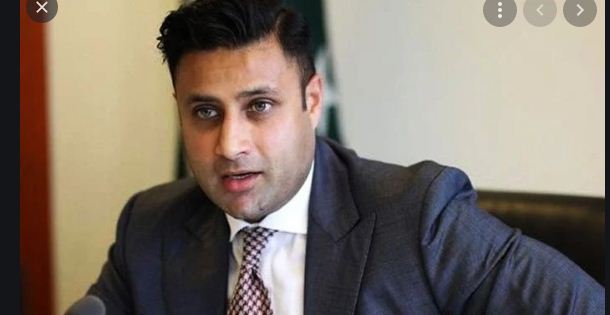
ZULFI BUKHARI DENIES ALLEGATIONS OF ISRAEL VISIT

DNA

ISLAMABAD, JUN 28 – Responding to queries regarding the media reports alleging a visit to Israel by former Special Assistant to the Prime Minister (SAPM) on Overseas Pakistanis Zulfiqar Bukhari, the Spokesperson stated:

These reports are baseless and misleading. No such visit to Israel has been undertaken.

In this regard, categorical rejection was also issued today by the former SAPM himself.

It may be recalled that this Ministry had rebutted similar false reports earlier on 18 December 2020.

As reiterated earlier, there is no change in Pakistan’s principled position. Pakistan has consistently called for a two-state solution, with pre-1967 borders and Al-Quds Sharif as the capital of Palestinian State.

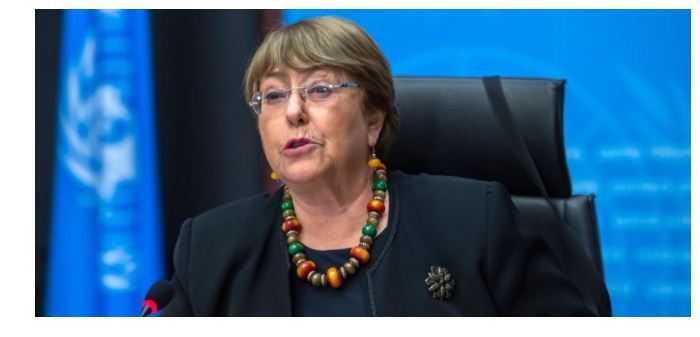
Citing racism, UN rights chief Michelle Bachelet seeks reparations for Blacks

The UN human rights chief, in a landmark report launched after the killing of George Floyd in the United States, is urging countries worldwide to do more to help end discrimination, violence and systemic racism against people of African descent and “make amends” to them — including through reparations.

The report from Michelle Bachelet, the U.N. High Commissioner for Human Rights, offers a sweeping look at the roots of centuries of mistreatment faced by Africans and people of African descent, notably from the transatlantic slave trade. It seeks a “transformative” approach to address its continued impact today.

The report, a year in the making, hopes to build on momentum around the recent, intensified scrutiny worldwide about the blight of racism and its impact on people of African descent as epitomized by the high-profile killings of unarmed Black people in the United States and elsewhere.

“There is today a momentous opportunity to achieve a turning point for racial equality and justice,” the report said.

The report aims to speed up action by countries to end racial injustice; end impunity for rights violations by police; ensure that people of African descent and those who speak out against racism are heard; and face up to past wrongs through accountability and redress.

“I am calling on all states to stop denying — and start dismantling — racism; to end impunity and build trust; to listen to the voices of people of African descent; and to confront past legacies and deliver redress,” Bachelet said in a video statement.

While broaching the issue of reparation in her most explicit way yet, Bachelet suggested monetary compensation alone is not enough and would be part of an array of measures to help rectify or make up for the injustices.

Reparations should not only be equated with financial compensation,” she wrote, adding that it should include restitution, rehabilitation, acknowledgement of injustices, apologies, memorialization, educational reforms and “guarantees” that such injustices won’t happen again.

The U.N.-backed Human Rights Council commissioned the report during a special session last year following the murder of Floyd, an African-American who was killed by a white police officer in Minneapolis, Minnesota in May 2020. The officer, Derek Chauvin, was sentenced to 22-1/2 years in prison last week.

ICCI starts 2nd phase of vaccination drive for business community

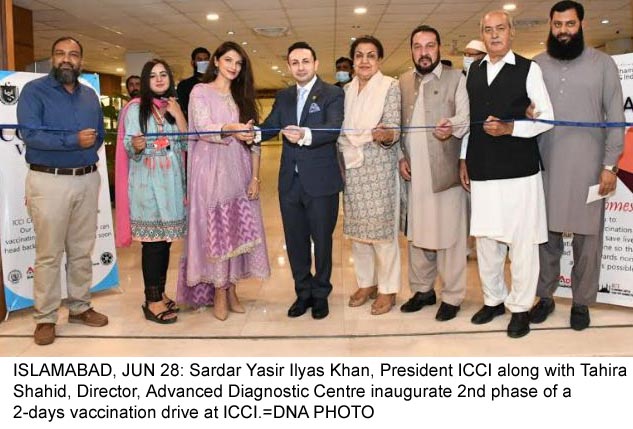
ISLAMABAD, JUN 28: Sardar Yasir Ilyas Khan, President ICCI along with Tahira Shahid, Director, Advanced Diagnostic Centre cutting ribbon to open 2nd phase of a 2-days vaccination drive at ICCI.=DNA PHOTO

ISLAMABAD, JUN 28 (DNA) – The Islamabad Chamber of Commerce & Industry (ICCI) has started the 2nd phase of a 2-days vaccination drive by setting up another vaccination centre in its premises on Monday in collaboration with Advanced Diagnostic Centre for the vaccination of the business community, their families and employees.

Sardar Yasir Ilyas Khan, President, Islamabad Chamber of Commerce & Industry along with Dr. Tahira Shahid, Director, Advanced Diagnostic Centre inaugurated the vaccination centre. Fatma Azim Senior Vice President, Abdul Rehman Khan Vice President ICCI, Abdul Rehman Siddiqui Convener ICCI Healthcare Committee, Khalid Chaudhry, Ch. Zahid Rafique and others were present at the occasion. 

The visitors were administered Cansino-single shot, Sinovac 1st dose and Sinoharm 2nd dose during the vaccination drive. ICCI was the first chamber of the country that had set up a vaccination centre in its premises during the first phase for the vaccination of the business community. 

Speaking at the occasion, Sardar Yasir Ilyas Khan, President, Islamabad Chamber of Commerce & Industry said that ICCI was actively engaged in vaccination drive by opening vaccination centres in industrial areas and markets and the main purpose of this campaign was to support the mass vaccination drive of the government to make the federal capital a coronavirus free city of the country.

He said that the only way for Pakistan to come out of the coronavirus and normalize business activities was the vaccination of maximum people. He stressed that more and more members of the business community, their families and employees should avail this facility for their vaccination. He also appealed to the citizens of Islamabad to get themselves vaccinated for normalization of life and restoration of business activities to normal routine.

Sardar Yasir Ilyas Khan further said that the positivity rate of coronavirus has come down significantly as Pakistan has reported less than 1000 Covid cases for the third consecutive day, therefore, he emphasized that the government should lift all restrictions on businesses to restore them to normal timings. = DNA

=======================

THE NEW SETTLERS: ISRAEL-PALESTINE CONFLICT

Jamal Akbar

Prime Minister Netanyahu has served Israel for long 12 years, the longest ever tenure. While it comes to an end on Sunday, by a thin margin of 60-59 vote of confidence, Naftali Bennett, a high-tech millionaire took the claim.

Only with the desire to focus on domestic issues, Bennett belongs to a right-wing nationalist party known as Yamina which makes it quite a mandate to follow in his coming tenure. This puts a question to the issue of Palestine which has been ongoing in the war zone forthe past few weeks. The new administration has remained to avoid the sweeping moves on the reports, but the conditions of Palestine say otherwise.

The Palestinian issue has been long since 1948 despite the changes of governments and administrations, it has always remained a top-notch priority for Israel. This is why the dependence on the change of government of Israel is not to be assured of making any change in the war zone, but it might keep on going just as before. As Bennett remarks on the issuing state that the creation of Palestine would be death to Israel brings an image of the same policies as Israel has been implementing.

Bennett is a strong supporter of Jewish settlements with the annexation of most of West bank, it would not opt to clear the differences than what ‘Bibi’ did. As he remained Netanyahu’s chief of staff but becomes a hardcore rival afterward, there are no such policies of leading peace towards Palestine. This sentiment has opposed the ‘two-state agenda which was remarked by Naftali Bennett, “We will not allow the Israeli government to recognize a Palestinian state under no circumstances.”

Whilst there is no peace for the Palestinians, no hopes lieon this ground as well. The Bennett administration is set to be fiercer than the previous government because of its history. In 2014 Bennett openly expressed that “I have killed Arabs and there’s no problem with that.” Depicting the agenda of PM Bennett, there is no change in the uprising illegal interventions in Palestine. Although, the Palestinians have assured of no hope but meeting the tensions with more violence than that of Netanyahu. Hence, the problem remains a high priority for both countries whether there is a change in government or not.

A recent month for Palestine has remained under the shed of terrified bombings by the Israeli forces. The 11-day on-slaughter brought devastating effects on the locals, killing more than 250 people including many children as well. These attacks imprint a huge mark on the Palestinian as they suffer more day by day, nonetheless the changes in the government as the only the face differs. Although the ceasefire was made but as soon as Bennett took the office, two days after the bombing begins again.

There are no chances for the Palestinian to reach on negotiations in the new regime. PM Bennett has remained more aggressive on the grounds than Netanyahu which makes the Palestinians hopeless. The demonstrative show by the new Israeli government has made a clear point which was seen in the address of PM Bennett and his vast past experiences. Thus, to say that the change of government will bring any change in the Israel’s apprach would turn out to be more violent and extreme than that of previous faces of government.

The US-Israeli-led coalition through the lens of Bennett is seen with the Biden administration. For now, he is focused on intact the relation and gains the previous hand back of democratic coalition which according to him was lost in Netanyahu’s time. In the wake of US-Israel relations, Palestine has drawn the attention of the international community which is to be dealt with strong control and attention for the bipartisan system. This does not mean to let go of the human rights violation but to make the international community confident of the actions happening in Palestine. As the court orders still in process for the reconstruction of Gaza and potential evictions of families of Palestinian, the engagement of the US in Israel’s arena has not reached any decision yet.

The Palestinian issue to be solved on some levels is a great opportunity for the “New Normalizers”. UAE, Bahrain, Sudan, and Morocco have a great opportunity in this high tense environment to play a proactive role for the region. It would be a success for the regional stakeholders to bring peace for the Palestinians,

The change of faces on the chairs of government cannot change the fate of Palestine until met the standards of the international community with a strong narrative. The ongoing war between the Hamas group and Israeli forces is the most brutal due to heavy bombings. The new government seems more desperate to be violent as the bombings have begun already in Gaza. The time has now emerged to look up to the international community to follow the trends for regional and global peace.

COMSTECH AND NTD NETWORK COLLABORATE TO BUILD CAPACITY AGAINST LEISHMANIASIS

DNA

ISLAMABAD, June 28: Neglected Tropical Diseases (NTDs) are a major health and economic burden on member states of Organisation of Islamic Cooperation (OIC). The control and elimination of NTDs require a scaled-up integration of global mass treatment programmes, along with new tools and technologies to tackle these diseases. COMSTECH, in collaboration with A Global Network for Neglected Tropical Diseases known as the NTD Network, has launched a virtual lecture series for researchers across the Muslim world and beyond.

The NTD Network, funded by Global Challenges Research Fund (GCRF) of UK Research and Innovation (UKRI), is a consortium of academic researchers from South America, Asia, and the UK, seeking new therapeutic solutions to Leishmaniasis and Chagas disease.

Both COMSTECH and the NTD Network aim to promote global scientific cooperation and build research capacity to find new and better therapeutic solutions for NTDs.

The first lecture of this series was delivered by Professor Jeremy Mottram, the NTD Network institutional lead for York University. He is a Professor of Pathogen Biology, York Biomedical Research Institute, University of York, United Kingdom.

Dr. Mottram said that, I am pleased to have this opportunity to share the work we are doing within our NTD network – a global network for neglected tropical diseases, and to have this opportunity to tell some of the COMSTECH members about the work that we do and hopefully to promote further interactions in future.

He said NTD Network is based in university of Durham, UK, and links researchers interested in neglected tropical diseases with four hubs one in the UK, Pakistan, India and a hub in South America. These four regional hubs allow a number of research institutes and research groups to come together to address some of the fundamental questions around early phase drug discovery. He said that we have a mixture of parasitologists, chemical biologists, structural biologists and some immunologists that are taking an interdisciplinary and a collaborative approach to seek new solutions.

Dr. Mottram informed that in the first phase of this project we are trying to identify molecular targets within the parasite that can be used in identifying new chemical entities that can be first phase of a drug discovery programme.

He mentioned that this disease identified in 1903, and no new registered drugs developed in last 20 years and the impact of discovery science is limited, however the prospects are promising. He informed that Leishmaniasis drugs is an issue, and there is a need for the development of new drugs.

He informed that one of the major ways in which understanding of parasite and its interaction with the hosts is going to change through the ability of CRISPR to edit genomes of the parasites. Either for example to understand the basic biology or to make attenuated live vaccines and conduct those types of experiments.

Prof. Dr. M. Iqbal Choudhary, Coordinator General COMSTECH welcomed the speaker and introduced him to the participants. More than 200 participants from OIC member states attended this lecture online. DNA

PILOT PHASE OF FOREIGN MINISTER’S PORTAL (FMP) LAUNCHED

DNA

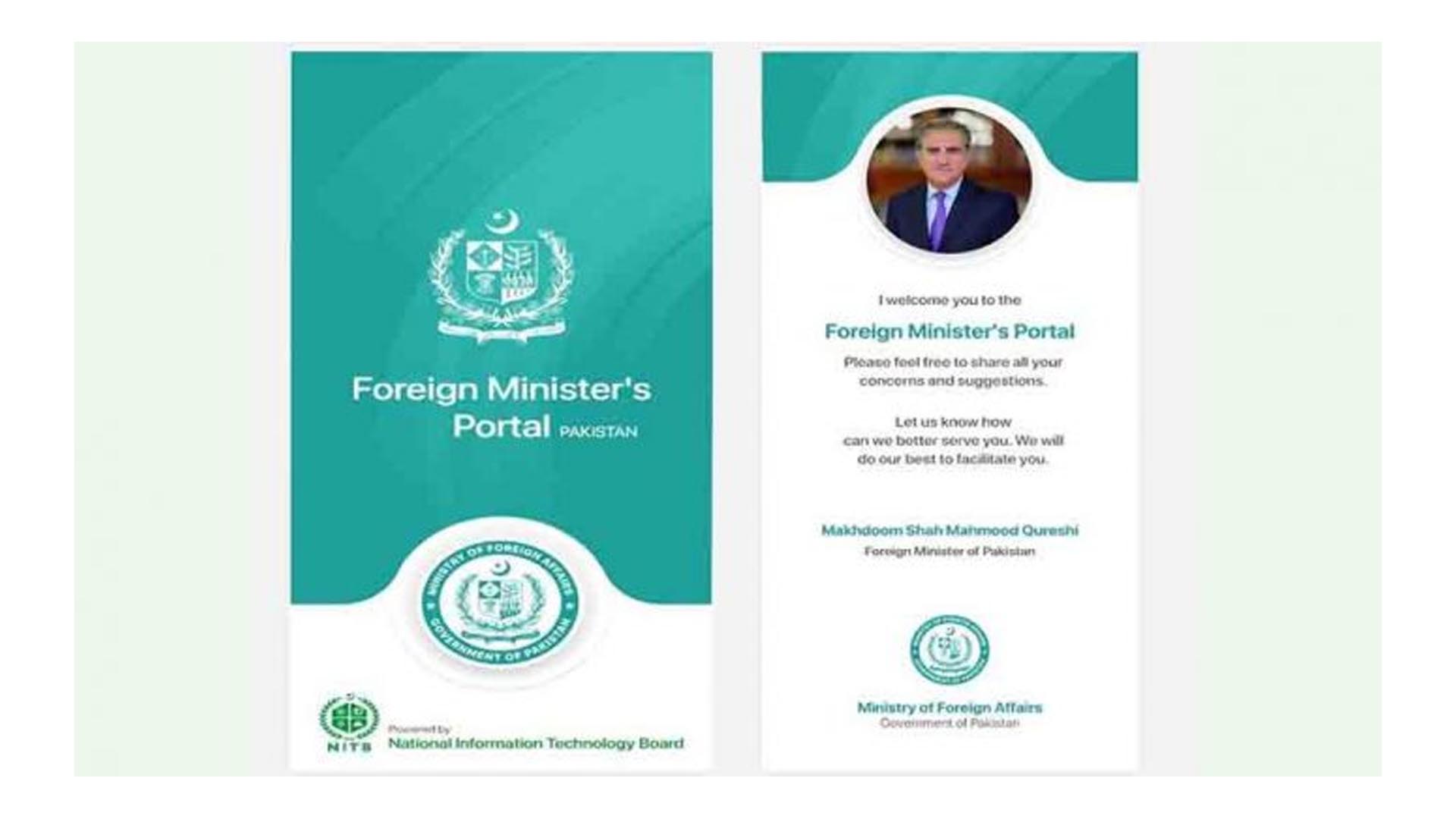
ISLAMABAD, JUN 28 – As announced by Foreign Minister Makhdoom Shah Mahmood Qureshi on 16 June 2021, under the Vision FO Thought Leadership Platform, the pilot phase of the Foreign Minister’s Portal (FMP) has been launched today.

In its pilot phase, the FMP is available online for overseas Pakistanis and foreign nationals residing in the jurisdiction of five Pakistan Missions abroad, namely, Barcelona, Dubai, Jeddah, London and New York. The Pakistani community and foreigners can download the App (Foreign Minister’s Portal) from Android store from today, & later on from iOS store also, to register their problems, suggestions and feedback.

Launched under the supervision of the Foreign Minister, the cardinal objective of the Portal is to directly engage with our Diaspora by providing them remote access to the Missions through modern means of communication. This will also help to assess the nature of the issues being faced by overseas Pakistanis leading towards their better resolution.

Gradually, the scale of the Portal will be widened to all Pakistan Missions aboard.=DNA

==============

Pak ambassador designate to Netherland visits RCCI

RAWALPINDI, JUN 28 /DNA/ – Pakistani Ambassador-designate to the Netherlands Suljuk Mustansir Tarar visited the Rawalpindi Chamber of Commerce and Industry (RCCI) here on Monday and called on President of the Chamber Mohammad Nasir Mirza.

Senior Vice President Osman Ashraf, Vice President Shahraiz A Malik and Chamber members were also present on the occasion.

President Rawalpindi Chamber Nasir Mirza briefed the Ambassador-designate in detail on the ongoing activities of the Chamber and future programs.

He also briefed the Ambassador about the key events organized by RCCI including Gwadar Business Conference, International Chambers Summit (ICS), Business Africa Forum, Building and Construction Expo, and upcoming ICEE and Gems and Jewelery Expo.

Ambassador Suljuk said that the efforts of Rawalpindi Chamber of Commerce in promoting trade and business activities are commendable.

He said that the purpose of his visit to the Chamber was to enhance contacts and exchange information for the promotion of trade between Pakistan and the Netherlands.

The envoy vowed to encourage Dutch investors to explore Pakistan for possible joint ventures and investment in conventional and non-conventional sectors.

He said that the balance of trade between the two countries is in favor of Pakistan. The bilateral trade between Pakistan and Netherland is 1.522 Billion US$ during FY 2021 (11 months- July to May). Pakistan  exports to Netherlands  are US$ 1.113 Billion whereas Pakistan imports from Netherland stands at 409 Million US$.

Despite the COVID-19 epidemic, Pakistan’s economy is now growing rapidly. New sectors and areas will have to be explored in trade and export.

Textiles, rice are important imports of Netherlands from Pakistan and added that more areas need to be explored.

He said that the Trade and Commercial Consulers would strengthen the liaison with the Chambers.

He appreciated the suggestion of the President Rawalpindi Chamber that diplomatic missions abroad should hold virtual meetings with the Chambers of Commerce and share information regarding trade opportunities in their respective countries.=DNA

===========

SWEDISH PM LOFVEN RESIGNS IN WAKE OF NO-CONFIDENCE VOTE

Stockholm, JUN 28 – Swedish Prime Minister Stefan Lofven said on Monday he had handed in his notice of resignation, giving parliament’s speaker the job of finding a new premier after the Social Democrat leader lost a vote of no-confidence last week.

Lofven lost the confidence vote in parliament on June 21 after the Left Party withdrew its support, triggering frenzied talks as both the centre-left and centre-right tried to line up enough support to form a government.

He had until midnight tonight to find fresh backing in parliament, enabling him hand over the job of finding a new government to the speaker with the expectation of being reappointed, or to call a snap election.

Lofven, a former union boss and welder, has headed a fragile minority coalition with the Greens since 2018, relying on support from two small centre-right parties and the Left Party to remain in power.

The centre-left and centre-right blocs are now evenly balanced in parliament and opinion polls show a general election might not change the picture.

It took Lofven four months to form a government after 2018’s inconclusive election.

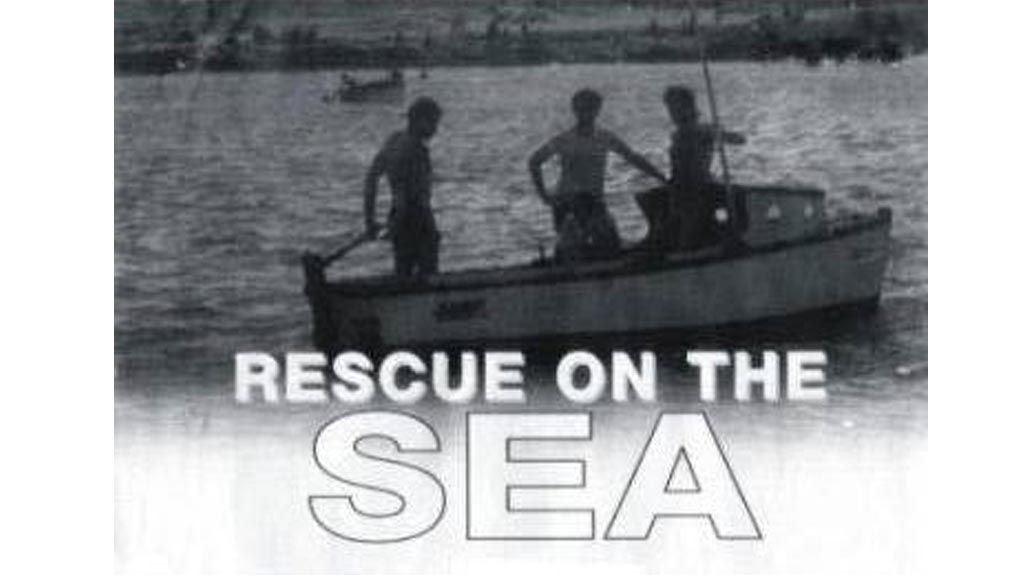
SHORT STORY: RESCUE ON THE SEA

Zeenat Iqbal Hakimjee

Very little has been written about the ancient coastal people of Lyari – the irrepressible Makranis – who take their name from the Makran coast of Sindh and, Balochistan, which also indicates a common history of the two provinces; the Makran coast constitutes the South-East of Iran and the South-West of Pakistan; a 1,000 km stretch along the Gulf of Oman from RA’s (cape) Al-Kuh, Iran (West of Jask), to the Lasbela District of Pakistan (near Karachi). The Makran coast is on the Arabian Sea, to the North-West of Quetta in Balochistan. 

The following is a story of one such coastal village:

Children on   bare – back camels, watch   the   sea, its   vastness spanning even beyond the grasp of their eyes. Fishermen on the beach watch the sky, like the city dwellers read their newspapers first thing in the morning. Through the knots of their nets hanging on the line, they seem to predict the weather. This exercise determines whether they should take a boat out or not on the deep sea, for their daily expedition to catch fish. The air is filled with the smell of rancid water that is due to the deposits of oil, resulting in decayed and dead sea-life. Music, which is a part of their lives, plays in the background. The sounds are a fusion of musical cultures from the Middle East, Indo-Pakistan and Africa. 

The shells on the beach look like the abandoned toenails of the old fishermen, and they are more beautiful there, than on the foot. The broken wings, the sand-logged crabs, a woman’s lonely shoe, a rusty toy damaged beyond recognition, the plank or sail from a doomed boat, all lay sprawled on the beach, each with a story behind it, cleansed and sterilized by the salt and iodine in the great hospital of the sea. In the night, the light from the tower was but a spot against the background of the sky and spectacular cliffs. 

The weather beaten villager’s munched dates from the interior while watching holidaymakers trying to teach their children to swim, like fish to water, amidst the shouts and screams of the children who are already submerged in the waters. The steps of the ladies faltered as they approached the sea, clad in shalwar kameezes filled with the wind, the Shalwar Kameez itself a deterrent for swimming. 

The story told here is that of a villager who because of his sharp sense of hearing helped in the rescue of a drowning man. The villager was alone and as he had no family to fend for, hence he had no responsibilities to drain his energy. Somehow he had also preserved his youth, which he owed to mother nature. Religion that usually comes into the house with the presence of a woman was lacking in his and he was quite oblivious of it. 

One evening when it was well after ten and the moon was full with black clouds scudding in ordered masses across the sky, he was still sitting on his wall, all alone. A cool wind suddenly sighed from an unexpected quarter and in its wake was a noise like that from a distant cavalry charge. His razor sharp ears picked up the sound. His brow creased up as his eyes searched the distance. He hobbled to his neighbours house and banged on the door of his traditional mud-hut – the two men, though natural life-guards, knew thoroughly all that was written in the books about rescue on the seas. The coastal blacks were descendants of imported slaves – the fishermen being known as the Meds and the seamen as the Koras – when there was no response; he banged on the door again. A groggy fellow soon appeared. He pointed towards the horizon and mumbled something in the Makranic dialect. The man’s eyes tried to see beyond the direction of the location being pointed at. A boat in trouble, he thought aloud. Without wasting any time they woke the other men. 

A rule of the sea states, that half the purchase price of the vessel of the sea is given to the rescue party. This prize money was quite a temptation, but since it was always dangerous the case required to be argued, all hands knew that the proposed journey was perilous. 

The village women all having gathered on the beach, saw their men disappear, reappear, disappear, reappear and finally disappear into the darkness. They were now a tiny speck in the vast vista of the sea – the ocean that is open to all and merciful to none, that which threatens even when it seems to yield, pitiless always to weakness. 

Many of the Makrani women now worked as domestic servants in Karachi; they were also experts in the art of massaging any mother and child    after    birth.   Their   traditional   long   dresses with   hand-woven 

Embroidery gave them a distinct ‘folk’ touch, separating them from the typical Karachiites. The skirt-like look, with its wide circumference, and the loose shalwar could be compared to the costumes of the pathan and Kabuli women.

The men in the rescue boat changed sides, so as not to tip the balance of the boat as the surf sprayed them from head to toe. The taste of salt lingered in their mouths during the voyage. They were not bothered by their appearance. On the contrary, they felt no different from when they started out dry.  

Suddenly, a dark object was thrown at them on the crest of a wave. It was a man. They held on to the poor fellow and eventually succeeded in dragging him aboard. Nobody felt sorry that this time, there was no prize. They rowed back to their village. 

Couples fought with each other to offer hospitality to this half dead man; and they almost came to blows in their struggle for this visa to heaven. 

They fetched a doctor from a nearby village, while the women sat all around him wearing their beads. The doctor was a Karachiite who had been sent to the village to serve them. The doctor prompted the man to speak. The man said, “Mahganj” very faintly. Repeated attempts, received the same response. The diagnosis stated that he was a victim of a traumatic shock and was suffering from amnesia, which meant a loss of memory, if only temporarily.     

The Priest, who was also a member of the village council, was also summoned, as was the case in other similar incidents. “What’s going on here?” he asked one of the ladies. “A miracle” said all the ladies together. The Makrani women are predominantly Muslim. 

The Priest was briefed about the rescue and what followed. Being

an elderly fellow, he recalled that a girl by the name of ‘Mahganj’ had been registered in the mosque some eighteen years ago. 

Now, it was easy to put two and two together. The man they found was associated with Mahganj and was discovered as belonging to the same village as her’s.  He was also supposed to marry her. 

Mahganj was the granddaughter of the village tailor. Thus it was decided that the man be taken back to the same village that he originated from. Similar surroundings would help to revive his memory, it was hoped. 

A therapist was hired from the city and surely, slowly though, his memory came back in bits and pieces. Mahganj’s presence always evoked a response in the man, so strong was the bond of love. His memory did eventually return, which in turn led to their marriage. They led a happy married life. 

ROMANIAN FOREIGN MINISTER BOGDAN AURESCU VISITS AZERBAIJAN, ARMENIA, GEORGIA

This was the first joint visit to the Eastern Neighbourhood by a group of European Foreign Ministers, coordinated with and mandated by the High Representative, Josep Borrell

News Desk

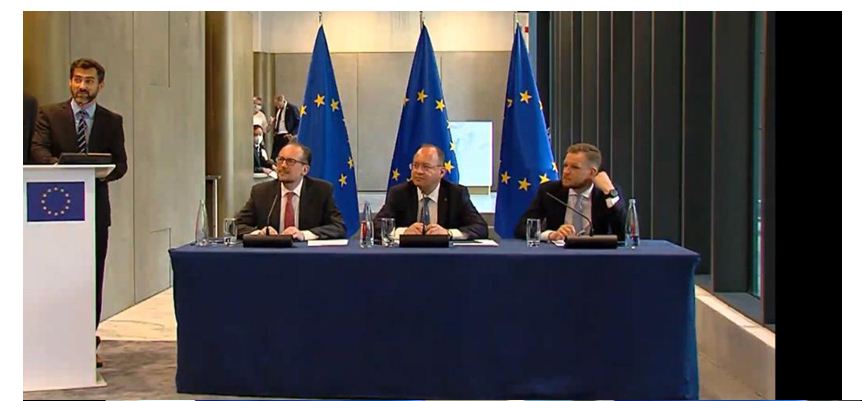
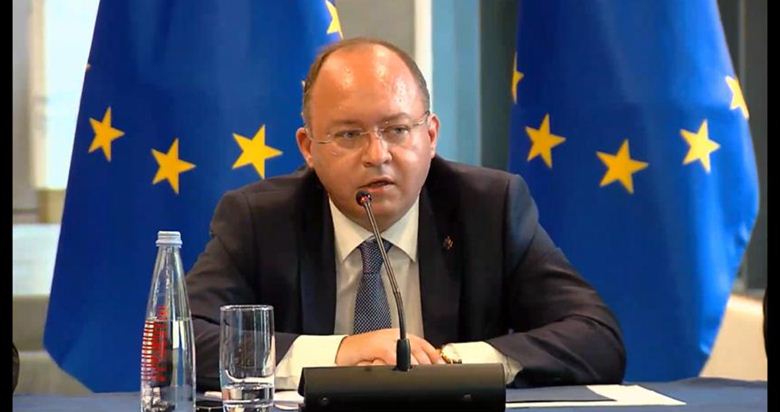
BUCHAREST: Romanian Foreign Minister Bogdan Aurescu issued a statement after his visit to Armenia , Azerbaijan and Georgia along with his counterparts from Austria and Lithuania. Here is the text of his statement, ‘From the outset, I would like to express a well-deserved word of appreciation for our partners from Georgia, Azerbaijan and Armenia, for their warm hospitality and the excellent organization of this tour through the South Caucasus, a region having strategic importance for the European Union. 

Also, I would like to add our gratitude to the EU Delegations in Baku, Yerevan and Tbilisi, together with our national diplomatic missions on the ground, for putting together, in a very short time, a very dense, consistent schedule and for making the necessary arrangements for our tour.

This is the first joint visit to the Eastern Neighbourhood by a group of European Foreign Ministers, coordinated with and mandated by the High Representative, Josep Borrell. 

I believe it was a very successful endeavour, especially as the challenges faced by our Eastern Partners are high on the EU agenda.  This tour allowed us to pass a message of European solidarity and engagement, on behalf of the EU and the Member States. At the same time, we conveyed a message of the EU commitment to prioritize the security, stability and prosperity of all three Southern Caucasus countries we visited. And the determination for the European Union to be more and more actively involved in the process of settling the protracted conflicts in this region, which has a geostrategic importance for the EU as a whole. 

Now a few words on the regional challenges. 

I recall that, on behalf of Romania, already last year, in October, I promoted the idea, which was supported by ten other EU Ministers of Foreign Affairs, of having an in-depth discussion at EU level on protracted conflicts, which affect many of the countries in the Eastern Neighborhood and have been hindering these countries’ development perspectives for decades. 

As everyone can see, these conflicts have an extremely negative impact on the regional security and stability. They hamper the socio-economic progress and generate difficulties for the people living in the affected areas.  In this context, it is particularly important to mobilize the EU’s attention on these issues, to identify the best ways of using EU instruments and cooperation formats to support the affected countries.

We had insightful discussions last month, at the Gymnich meeting in Lisbon, when we have decided to strengthen our political support to the Eastern Partners. And this tour is, in fact, the first concrete follow-up to the discussion we had in Lisbon.

We encouraged our partners in the South Caucasus countries to make best use of the instruments provided by the Eastern Partnership framework, in order to strengthen regional cooperation, to the benefit of peace and prosperity and, also, ultimately, to the benefit of the people. So in all three countries, we have expressed support for the possible creation of a regional format, including all three of them, with EU facilitation and support. 

In the timely discussions with our interlocutors in all three capitals, I have reaffirmed the view on the importance of their active involvement in the perspectives of the upcoming Eastern Partnership Summit. In view of this Summit, it is essential to endorse a common, ambitious vision on the Eastern Partnership, for the coming years. 

While maintaining the inclusiveness of the Partnership, we should be ready to reward the efforts of our most ambitious and committed Partners, such as Georgia, but also Ukraine and Republic of Moldova. This is why we advocate for a flexible Eastern Partnership, with a fine balance between inclusivity and differentiation.

From Romania’s perspective, as I proposed at European level, I will promote the need to develop a security dimension within the Eastern Partnership.

We had, in all three capitals, substantial and very productive talks with our high-level interlocutors. In Azerbaijan, we met the President and the Foreign Minister. In Armenia – the Acting Prime Minister and the President and here, in Tbilisi – the Prime Minister and our colleague, the Foreign Minister, David Zalkaliani. 

We have also paid a visit to the Administrative Boundary Line, where we were briefed by the EUMM staff on the situation on the ground. 

And, in this context, I would like to reiterate our strong support for the territorial integrity and sovereignty of Georgia and to reassure that Romania will continue to contribute with personnel to the EU Monitoring Mission. We already have 23 monitors on the ground. 

In Azerbaijan, we have expressed the fact that we consider that this country has a key role in the stability and prosperity of the South Caucasus and expressed the hope that the new EU-Azerbaijan Agreement, currently under negotiation, would be concluded swiftly, and thus providing an updated, modern framework to further guide our cooperation. And we have agreed, with President Aliyev, to resume, swiftly, the negotiation process. We hope that this agreement will be concluded by the end of this year. 

In Armenia, I have congratulated Prime Minister Pashinyan for his party’s victory in last Sunday’s parliamentary elections and commended the good organization and the democratic character of the elections, as highlighted by OSCE/ODIHR and other international observation missions. I highlighted my belief that further modernization and democratization of the country, through a continuation of the reform process already initiated by the previous Government, should become the new strategic objective for Armenia, capable of uniting the efforts of all political forces, to the benefit of the Armenian people. 

In both countries, Azerbaijan and Armenia, we had in-depth talks on the current situation and on the perspectives of moving forward, following the last year’s military confrontation. We called for a constructive spirit and for rebuilding trust, because confidence-building measures, such as those related to the release of all detainees and the handing over of all maps of mined areas, remain a priority. EU is ready to continue to help and support such evolutions. So, we underlined the EU’s readiness to provide support, upon request, on all matters that might lead to a negotiated, sustainable and lasting settlement of all pending issues. I have underlined the need for reconciliation between the two societies, which is a process which will take probably some time and a lot of efforts, but there is no other option. We have also discussed about many other important components of the settlement. I will not go now into details about them.

Now, some words about our activity here in Tbilisi.

I have congratulated Georgia on the progress in the implementation of the Association Agreement. We stand ready to further support the political association and economic integration of Georgia with the European Union. 

And I have also underlined that an inclusive political environment and further modernization and democratization are important for Georgia’s European agenda. On this note, I welcomed the decision of the opposition forces to accept their mandates in the new Parliament, as a first step towards normalization of the internal situation. At the same time, we consider that all political forces need to sign the April political agreement.

And I also welcomed Georgia’s approach towards peacefully engaging the population in the two Georgian regions affected by the protracted conflicts.  

Last but not least, I would like to reiterate Romania’s strong support for the European and Euro-Atlantic aspirations of Georgia.

To conclude, I would like to state again that this was a very successful diplomatic tour in the South Caucasus and we will inform our EU colleagues and the High Representative, Josep Borrell about the results during the next Foreign Affairs Council meeting on the 12th of July.

As you know, our joint delegation left together from Bucharest and we are now returning together to the capital of Romania. This has shown that Romania is pro-actively engaged in the region and that we have a well-acknowledged contribution at the European level regarding our Eastern Neighbourhood and our partners. And I am glad that, in this way, we can come with a solid contribution to the realization of European foreign policy. 

I am concluding by saying that, for Romania, the fact that we managed to introduce this topic high on the agenda, the topic of protracted conflicts in our Eastern Neighbourhood, represents a true diplomatic success, because our country supports the stability and security of the states in the Eastern Partnership and, at the same time, because the settlement of these conflicts represents, for us, a strategic priority objective.

We will continue to advocate for closer ties with the EU and for more EU involvement in the region, to the benefit of the future perspectives of all three countries and especially to the benefit the citizens, who, I hope, were reassured these days about the EU’s support’. 

Stay Connected

64FansLike
60FollowersFollow

Latest Reviews

Exchange Rates

USD - United States Dollar
EUR
1.14
GBP
1.34
AUD
0.70
CAD
0.71