Home Blog Page 2647

SENATE DEFENCE COMMITTEE ADOPTS WORK PLAN 2021, REAFFIRMS TERMS OF ENGAGEMENTS OF APRIL 12

DNA

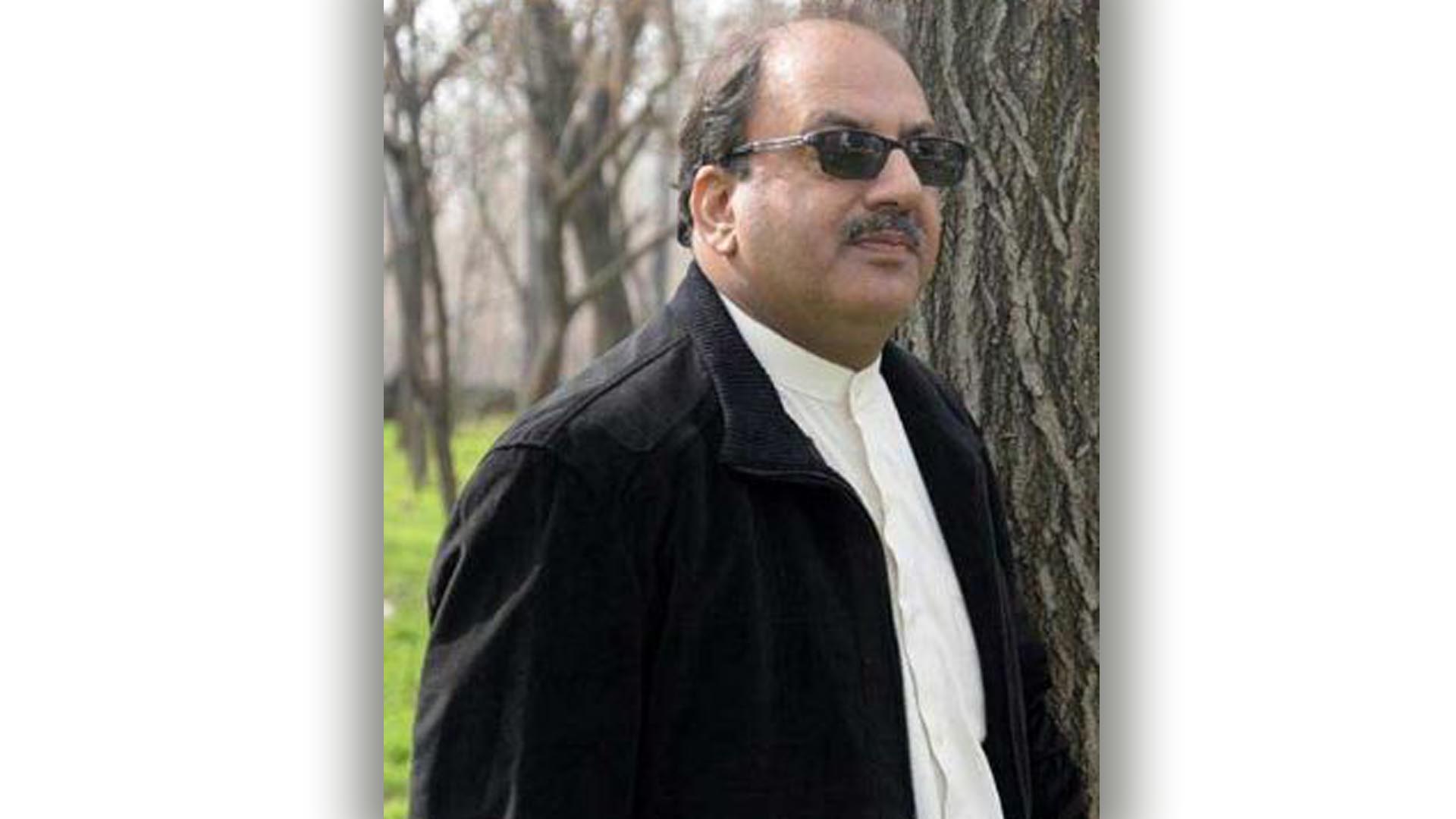
Islamabad, June 29:  The Senate Committee on Defence and National Security met today at the Parliament House under the chairmanship of Senator Mushahid Hussain and received a comprehensive briefing from the Ministry of Defence, which lasted for almost 3 hours.

At the outset of the meeting, in his opening remarks, Senator Mushahid Husssain Sayed and other members of the committee offered Fateha for the soldiers, civilians and officers, who have laid down their lives in defence of the motherland.  He also paid tributes to his predecessor, Senator Walid Iqbal, for his positive role.

Senator Mushahid Hussain Sayed said that the Committee on Defence and National Security would function above party lines with a national perspective that seeks to preserve, protect and promote Pakistan’s defence and national security, while also acting as a bridge between khaki and mufti in promoting intra-institutional harmony.  He underlined that in this challenging times, issues on defence and national security require a “whole of nation” approach since the role of the armed forces, the government, parliament, people, media and political parties is inextricably intertwined to achieve common national goals on defence and national security.

Senator Mushahid Hussain Sayed also underlined that in Pakistan’s transition from geo-politics to geo-economics, the notion of national security can no longer be confined to military components alone like tanks, planes or military equipment, but it has to be based on the notion of Human security that make people as the pivot of defence and national security incorporating such areas as economy, health, population planning, climate change, food and water scarcity.

On related issues, the committee also underlined the need that the 2% disability quota be fully implemented in the Ministry of Defence in letter and spirit, with the Secretary Defence committing to comply with this direction. Senator Mushahid Hussain conveyed the sense of the committee to the Ministry of Defence that in future, the Minister of Defence should also be present during meetings of the committee.

The meeting received a detailed briefing on the working of the 3 services and the functions of the Ministry of Defence and in this regard, the members of the committee had a proactive participation in the hour long question & answer session.  Unanimously adopting the Work Plan for 2021, the committee underlined that it will work closely with the Ministry of Defence to ensure the implementation of the 14-point work plan which include detailed briefings on the 3 services as well as briefing on intelligence and the Joint Chiefs of Staff Committee, visits to Siachen, Waziristan and the LOC for solidarity with our soldiers, briefing on CPEC security, visits to CMH and other military hospitals to express sympathy with those wounded during counter-terror operations as well as a special visit to the graves of Nishan-e-Haider martyrs on September 6, the Defence of Pakistan day.

Senator Mushahid Hussain Sayed presented a copy of the terms of engagements which the parliament of Pakistan had unanimously approved on April 12, 2012 pursuant to the report of the Parliamentary Committee on National Security which was then headed by Senator Raza Rabbani and of which Senator Mushahid Hussain was also a member and they both helped in drafting those recommendations which were later unanimously adopted by parliament. After adopting it, the Senate Defence Committee  referred it to the Ministry of Defence with the direction that on the issue of bases, foreign ‘boots on the ground’, foreign intelligence operations on Pakistani territory, that all of these are forbidden under the parliament’s directive and this document is to be considered as Pakistan’s state policy guidelines  for the future on such issues.

The meeting was attended by Senators Faisal Javed. Mushtaq Ahmad, Hidayatullah, Walid Iqbal, Engineer Rukhsana Zuberi, Dr. Zarqa Suharwardi Taimur and Palwasha Khan and Secretary of the Committee, Maj. ® Husnain Haider.  The Ministry of Defence was represented by Secretary Defence Lt. Gen. ® Mian Hilal Hussain, Additional Secretary Maj. Gen. Khurram Nawaz Khan and Additional Secretary AVM Kazim Hammad.

POLITICAL PARTIES UNITE TO CONGRATULATE COMMUNIST PARTY OF CHINA ON ITS CENTENARY

DNA

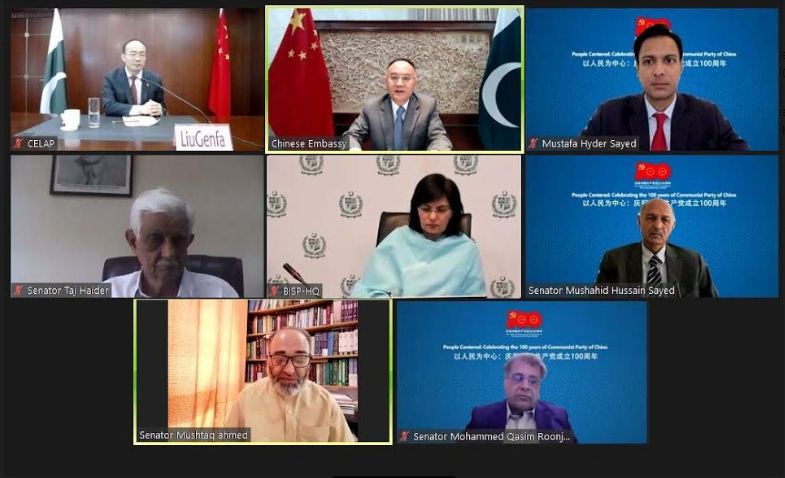
Islamabad, June 17, 2021:  In commemoration of 100 years of Communist Party of China (CPC), Pakistan China Institute organized a webinar titled “People Centered: Celebrating 100 Years of CPC”.

This virtual conference aimed at learning from the Chinese experience under the CPC leadership and highlighted new dimensions to further strengthen the bilateral relationship. The strategy of CPC in addressing and alleviating poverty from the country, 10 years ahead of United Nation’s target was discussed in detail and appreciated. A dedicated panel of nine speakers consisting of  parliamentarians and Ambassador of China spoke on the 100 years of CPC.

The webinar was moderated by Executive Director of Pakistan China Institute, Mustafa Hyder Sayed. In his opening remarks, Mustafa Sayed highlighted the contributions of the CPC for the people of China and how the leadership has carried the same spirit of ‘serving the people’ till today. He also quoted President Xi Jinping who at the onset of Covid-19 pandemic said that China will fight the pandemic as this is a people’s battle, and once the vaccine is developed, China would distribute it for ‘greater public good’. Senator Mushahid Hussain, Chairman Senate Defence Committee, who also heads Chairman Pakistan China Institute (PCI) read out a congratulatory letter signed by representatives of 9 major Pakistani political parties to President Xi Jinping, who is also General Secretary of CPC, on the eve of CPC’s centenary.

He said on China, there is complete unanimity of opinion in Pakistan. Senator Mushahid Hussain highlighted the contribution of CPC Chairman Mao Zedong for the Chinese people, especially women as he liberated them from feudal bondage and gave them equality of opportunity as he famously said ‘women hold high the sky’. Moreover, he highlighted the role of CPC during the last 40 years for bringing 800 million people out of poverty, and contributing to peaceful rise of China.In her keynote speech, Senator Sania Nishtar, Minister for Poverty Alleviation, highlighted the remarkable success of CPC in eradicating absolute poverty in the country.

China has also supported Pakistan in the fight against the covid-19 pandemic and will continue to do so. Moreover, he said that Pakistan and China have always supported each other’s core interests. Senator Taj Haider highlighted the sacrifices and contributions of the CPC in bringing a revolutionary change in China. He said that CPC’s 100 years enshrine contributions for the people; as it promised better future, alleviated poverty, ended slavery, and modernized the country. Moreover, he said that Prime Minister Zulfiqar Ali Bhutto played a pivotal role in building and promoting Pakistan-China relations.Senator Anwarul Haq Kakar, Parliamentary Leader, Balochistan Awami Party (BAP) thanked China for its continued support to Pakistan during the Covid-19 pandemic. He said that the year 2021 marks 70 years of Pakistan-China bilateral relations and 100 years for CPC.

He also defined new pathways for strengthening exchanges between CPC and Pakistan’s political parties.Senator Mushtaq Ahmed, Parliamentary Leader of Jamat-e-Islami said that the work on Western Route of CPEC is in full swing and is expected to be completed by November this year. He said this will bring ample opportunities for people of KPK. He also added that the strategic location of Khyber Pakhtunkhwa province gives the CPEC’s Rashakai Special Economic Zone great potential for developing export-oriented industries targeting Central Asia and for the industries to meet the domestic market demand as well.  Senator Mohammed Qasim Roonjho, Parliamentary Leader, Balochistan National Party-Mengal congratulated Chinese President Xi Jinping for eradicating poverty.

 In his concluding remarks, Mustafa Hyder said that CPC’s legitimacy lies in its unprecedented economic growth and people-centric policies, and highlighted the concerted efforts spanning over 40 years to alleviate absolute poverty from the country. He said public opinion polls show a 90% high level of satisfaction of the Chinese people with CPC performance and ability to deliver for issues that matter to them. 
The webinar lasted for two hours and hosted over 50 participants who gained a lot of knowledge from the insightful conversations revolving around Pakistan-China relationship.

DIGITIZING MSMES FOR A DIGITAL PAKISTAN – WEBINAR HELD TO MARK INTERNATIONAL MSME DAY

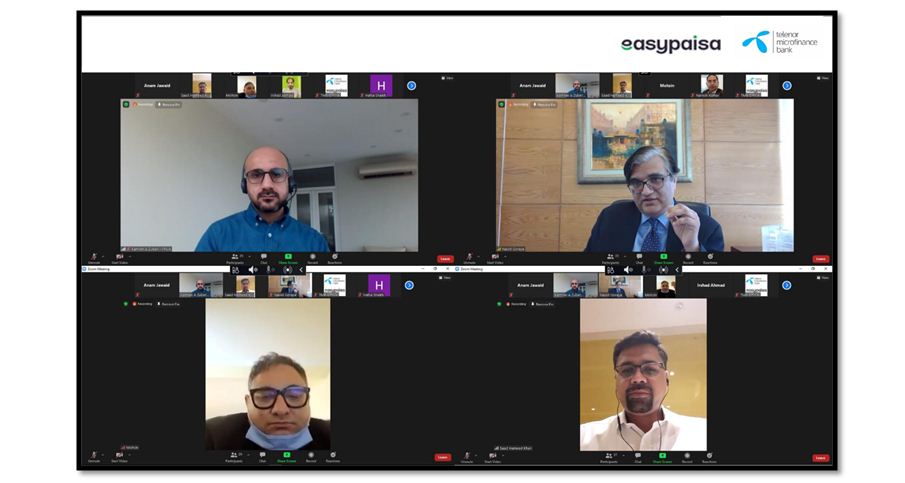
In light of the International Day of Micro Small and Medium Enterprises (MSMEs), celebrated around the world on June 27th every year,a Digital Dialogue was organised on ‘Digitizing MSMEs for a Digital Pakistan’. Thesession shed light on how digitization can work towards transforming the current financial ecosystem for micro and small enterprises across Pakistan.

The session was hosted by Saad Hameed Khan, Head of Lending Transformation & Digitization – Easypaisa / Telenor Microfinance Bank, and the panelcomprised renowned industry leaders, including Syed Mohsin Ahmed, Chief Executive Officer – Pakistan Microfinance Network, NavidGoraya, Chief Investment Officer – Karandaaz Pakistan and Kamran A. Zuberi, Chief Executive Officer – Finja Lending Services Ltd.

MSMEs form the backbone of Pakistan’s economic infrastructure contributing 40% to the country’s exports and an equal amount to the overall GDP. However, the sector is facing various challenges today, the most prominent one being lack of access to financial services and resultantly, limited access to formal credit. This challenge can be addressed by digitizing MSMEs and bringing them into the fold of financial services through digital payments and lending services.

During the session, panelists discussed that the only credit available to SMEs is 7% of the total private lending whereas in other regional markets it is as high as 30% or more. Similarly, just 1% of the country’s GDP is given to SMEs as credit. In other South Asian countries, this percentage ranges all the way up to about 9% to 10%. Naturally, given the constraints that are being put from the supply side on to the SME sector, there is less incentive for them to organize themselves and borrow or digitize.

Participants alsohighlighted that the behavioral change inMSMEs will only be possible when there is no friction,which comes in the form of pricing. In order to go cashless, the costs associated with digital payments need to be incentivized as it is extremely sensitive to customers across the board.

It was also notedthat the way to tackle the challenges faced by the MSME sector is by not perceiving digitization as just a tool for documenting the economy. That can be the by-product of a financially inclusive society but not its holistic objective. This approach will alter the way policies/frameworks are developedand allow enhancement of inclusive finance through digitization.

Pakistan’s microfinance institutions have made substantial strides over the years in developing relevant digital infrastructures for not just individual customers but MSMEs as well. By minimizing the need for complex documentation and digitizing transactions, the country’s most prudent business sector can work wonders for itself and for the overall economy as well.

The webinar can be viewed online through this link: https://youtu.be/7TpAQr9keco

CPC: AN INSTRUMENT OF ECONOMIC MIRACULOUS TRANSFORMATION

Dr. Mehmood Ul Hassn Khan

China will celebrate the 100th anniversary of the founding of the Communist Party of China (CPC) on July 1. It has been great journey from poverty to prosperity, degradation to development, slums to shining China, disunity to unity, political instability to immense stability and last but not least, foreign possession to complete  independence.

It has been an economic miracle which actually changed the lives of millions of people. It has been inspirational global story of the century and event of the world.

Since its beginning, the CPC has been facing numerous difficulties but utmost die hard spirits of its workers, supports and sympathizers acted as agent of real change due to which Chinese agrarian economy has now been turned into technological powerhouse. 

The five-year planning has been the major driving policy/factor of the CPC that boosted the Chinese economy to the No. 2 in the world. It has been following a holistic, macroscopic, forward looking, anticipatory and binding approach to achieve the desired goals of socio-economic prosperity.

There have been 14 five-year plans (FYP) which institutionalized structural reforms in economic and social spheres. It envisioned labour incentivized mechanism, economic stabilization, industrialization, digitalization, innovations, de-carbonization and last but not least, artificial intelligence doctrines in China which has now revolutionized its macro-economy, civility, and governance. 

China has its own unique model of economic development which is totally different from the West’s laissez-faire capitalism or its so-called marketization. China maintains more compelling institutional prowess than the West which has comparative advantage in terms of implementation, utility and allocations. Economic development has been revolving around the CPC central people & business friendly policies which integrate short-term plans into medium and long-term ones.

Initially China tried to replicate the Soviet Union’s five-year planning system but soon CPC realized the limitations of the Soviet model and then decided to independently follow a socialist road map suited to China’s national conditions, which, enforced with laser focus and effective execution, led to one milestone after another during the last one century.

The 13th CPC National Congress of 1987 institutionalized a three step development strategy that envisaged doubling the gross national product (GNP) between 1981 and 1990, doubling its GNP again by the end of the 20th century and per capita GNP reaching moderately developed country levels by the middle of this century.

The Third Plenary Session of the 14th CPC Central Committee established a socialist market economic system. With the guidance of the Ninth FYP (1996-2000), China started the transition from a planned economy to a socialist market economy in 2000, a prelude to its accession to the WTO in December 2001.

Today, China’s FYPs have become a global document which provides firsthand information about China’s economic policies and development goals. 

Year 2021 its global attention is set to pave the way for the second centenary goal to be attained building a modern socialist power by 2049 when the PRC turns 100.

Immaculate Conception of the CPC, China’s economy has been steady, stable and sustainable. Its macro-economy outperformed all the regional as well as international economies even in the decade of the catastrophe and successfully pursued extensive and high-speed growth over a certain period of time.

Right from the beginning the CPC has been showing strategic flexibility and timely maneuverability to seek truth from facts a phrase that epitomizes its overall functionality. The CPC Central Committee urged maximum efforts to correct all deviations during 1960-61 decided on the implementation of an economic adjustment. It successfully achieved all its targets at the end of 1965 and started its third FYP the Cultural Revolution began, putting China in “10 years of catastrophe” until 1976.

Interestingly, the CPC has a strong mechanism of self-correction and accountability which developed within the democratic system of the party. It further enhanced its national economy’s resilience that has mitigated  various challenges and crises, such as the 1997-98 Asian financial crisis, the 2008 global financial crisis and the COVID-19 pandemic, into hiccups which only result in increased economic modernization.

During all these years the CPC was able to seek truth from facts and be flexible, as well as to be free from prejudice and ideological bias, encouraging local exploration and innovation. Eventually, it rationalized strategic equation between high GDP and the environment and economic imbalance. Afterwards most of the counties cancelled the GDP assessment and implemented the evaluation method of giving priority to agriculture and ecological protection.

The milestone Third Plenum of the 11th CPC Central Committee in December 1978 has been widely known as a starting point for the economy’s 40 years of reform and opening-up, ushering in a transition from a class struggle-themed party platform to a focus on economic building.

One of the most valuable contributions of the CPC is to change state policy towards the state-owned enterprises (SOE) which finally introduced series of liberalization policies which ultimately boosted its macro-economy. Critical analysis of the statistical data reveals that by 1987, 80 percent of the country’s state-owned enterprises (SOEs) adopted various forms of the contracted managerial responsibility system. Some enterprises even began to undertake shareholding system reforms.

Despite tremendous success over the past several decades, difficulties and hurdles never ceased to test China’s commitment to the reform and opening-up policies today.

From 1989 to 2001, though the number of SOEs dropped to 46,800 from 102,300, their total industrial added value increased to 1.47 trillion yuan from 389.5 billion yuan, surging 11.67 percent annually.

Moreover, by 1964, the self-sufficiency rate of China’s main machinery and equipment had reached over 90 percent. With construction of the Daqing oilfield completed and Shengli and Dagang oilfields under development, China achieved total self-sufficiency in oil by 1965 in which holistic policies of the CPC played a deceive role.

Since then, self-sufficiency has been replicated in many areas, including technological innovation, has never stopped and has helped lift China to a world-leading global technological power in many areas from 5G to high speed rails, from new-energy vehicles to space exploration technologies and from outer space to Mars mission.

The CPC’s focus on self-sufficiency and innovation-driven strategy was particularly notable in the country’s efforts to mitigate an increasingly hostile external environment marked by a relentless attempt by the US to contain China’s rise.

Even before the US’ crackdown campaign, the focus on self-dependence and technological innovation was highlighted as the CPC convened its 19th National Congress in October 2017, where a new era of China’s socialism was declared. The Party’s 18th National Congress also introduced an innovation-driven development strategy.

Afterwards, in a series of meetings and top policy documents, the CPC has constantly stepped up efforts to pursue efficiency in a wide range of areas, from semiconductors to crop seeds. 

It hopes that with the CPC’s firm leader-ship and its proven successful economic policymaking, China is better positioned than ever to reach its bold development goal of becoming a modern socialist power in the coming decades, analysts said. 

On political fronts, the CPC has maintained regular contacts with more than 560 political parties and political organizations from over 160 countries and regions around the world. Moreover, it has very trustworthy relations with all the political parties of Pakistan too.

It developed from an organization of just over 50 members to the world’s biggest political party with more than 91 million members during the past 100 years.

CPC economic reforms have led China to experience the biggest and longest-run economic boom in human history. In 1980, China’s annual GDP stood at a mere $191bn, or $195 per capita, making it one of the poorest countries in the world. Nearly 40 years later, its GDP has increased 75 times to $14.3tn, or $10,261 per capita, in 2019.

CPC economic dominance has been driving force for the Chinese people due to which it surpassed the German economy in 2005 and then surpassed the Japanese economy in 2010. It is predicted the Chinese economy is set to surpass the American economy in 2025. China has emerged as the second-largest economy in the world.

In this context, only six years, from 1978-1984, agriculture reforms have up-lifted around 500 million people from poverty. A country hard hit with food shortages became almost self-sufficient and even started to export some of its agriculture produce. It was a mega achievement of CPC.

CPC leadership introduced reforms in other sectors gradually like industry, trade, business, education and social sector. CPC kept on learning new skills and ideologies to suit the emerging trends throughout the100 years.

Being prominent regional expert of China, BRI and CPEC I estimate that if economic trends continue an expanding high-tech military, including the world’s largest navy; sophisticated modern cities with a vast, entrepreneurial middle class; and modern universities and genuine research centers transforming for leadership in the key technologies of the century ahead which has consolidated China’s future in the next century.

Its ongoing global vaccine diplomacy and launching of projects of the century One Belt One Road Initiative (BRI), flagship China Pakistan Economic Corridor (CPEC) and last but not least, extended BRI Health Partnership would further consolidate China’s regional as well as global economic dominance in the days to come.

To conclude, CPC stands for China’s collective wisdom, input of visionary leadership, honesty of policy makers, people’s pure inspirations, dreams and aims to live a qualitative live in the future. 

8th Japan-Pakistan Politico-Military Dialogue held virtually in Tokyo and Islamabad

DNA

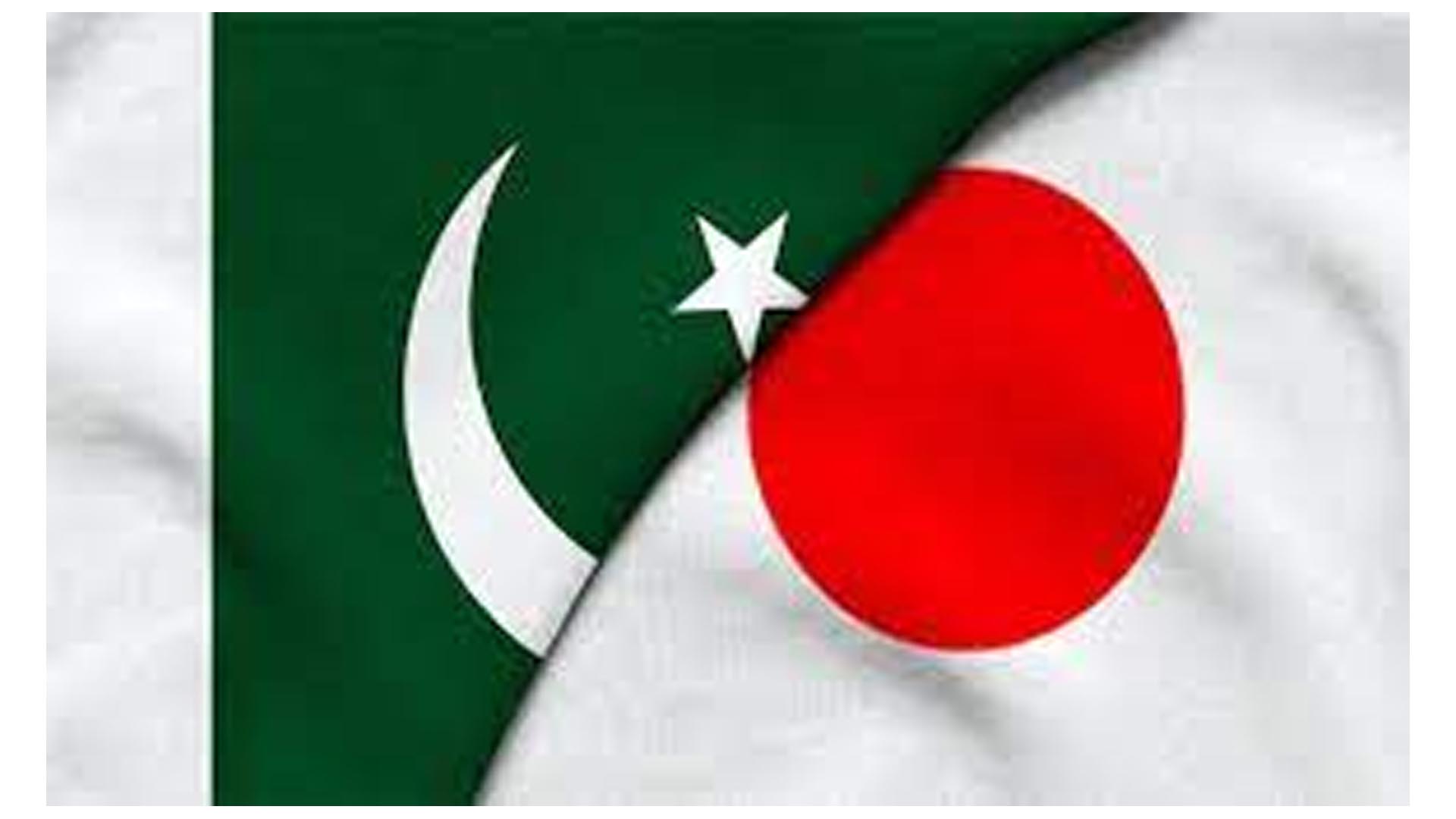
ISLAMABAD, JUN 29: The 8th Japan-Pakistan Politico-Military Dialogue was held virtually in Tokyo and Islamabad on June 29, 2021. Mr. KOBAYASHI Kenichi, Director-General, Southeast and Southwest Asian Affairs Department, Ministry of Foreign Affairs of Japan, and Mr. Zahid Hafeez Chaudhri, Additional Secretary (Asia Pacific) who also serves as the Spokesperson of the Ministry of Foreign Affairs of Pakistan represented respective sides. Officials of the two countries from related Ministries and agencies also attended the dialogue.

H.E. MATSUDA Kuninori, Ambassador of Japan to Pakistan, recognizes Pakistan as an important country for the peace and stability in this region, therefore he highly values security dialogues between Japan and Pakistan. He also emphasized that Japan and Pakistan would continue to work together for strengthening cordial relationship between the two countries, through bilateral dialogues at various levels.

CPC AT 100 EYING ON TOMORROW WITH CONFIDENCE

By Syed Ali Nawaz Gilani

TODAY July Ist 2021, The Communist Party of China (CPC) is celebrating its 100th birthday. CPC rightly called itself “great, glorious and correct” and will start its second century, no doubt CPC has good cause to be proud of. As not only has it survived far quite longer than its many critics predicted; it also appears to be on the up.

After the USSR imploded in 1991, many pundits thought that China being a great communist power would be the next. But, we see how wrong they were, as US President Joe Biden, felt the need to declare not only that America was at odds with China, but also that much of the world doubted “whether or not democracies can compete”.

This  shows the strength of CPC at its 100th Anniversary of it founding. And, it is a great appreciation and compliment by the US and  G-7. CPC as one party has ruled China for more than sevendecads with success success bearing criticism from from the West since long. China was under Mao Zedong, the world’s second-largest economy, whose cutting-edge technology and infrastructure has sent a signal to the world’s biggest economies like US. This is fact that CPC is the world’s most successful authoritarian government.

The Communist Party of China’s media dealing and handling across the globe has recently come under fire, as it happens always. Western media and US politicians, especially since COVID-19, did not hesitate to criticize China on different grounds including socio-economic and political factorsTruth is that the CPC is the driving force behind  China’s socio-economic miracles and political advancement. . Needless to say that the consistently rising progress and growth of China is taken as a threat by the world’s biggest economies who have been carrying this mantle for decades.

Undoubtedly, the CPC has proven to be unique and distinguished since its inception as of July 192 when it combined Marxist-Leninist principles blending those with Chinese characteristics, thus creating a new model suiting its country, people and environment.

Its eventual victory over the Kuomintang party led to the founding of the People’s Republic of China in 1949. Despite market reforms introduced in the late 1970s, modern Chinese state remains a basically socialist system maintained by the CPC’s functioning, leading role and unflinching strength.

As the Party prepares for the 100th anniversary, it has brought about China’s rapid economic growth and rise as a global power, despite facing many formidable challenges at home and abroad.It was the strong will of the CPC and Chinese people that led to its victory in the War to resist US Aggression and Aid Korea (1950-53).

The CPC applied  its collective wisdom to launch the five-year plan system in 1953. Next year will mark the 14th five-year period in this progressive series of growth and development.Each of the past 13 plans has projected the nation’s social, economic and political goals according to its actual situations and needs.

The CPC’s decision-making is based on democratic centralism. It has succeeded in caring for  1.4 billion Chinese people and considerably improving their living standards. The 18th CPC National Congress in 2012 marked the peaceful transition from Hu Jintao to Xi Jinping as General Secretary of the CPC Central Committee. Xi is also President of the country and the Head of its military.

Under Xi’s leadership, the CPC has revamped its anti-corruption supervision, tapped domestic vitality and pushed through ambitious plans, including the Belt and Road Initiative, to expand trade by building ports, railways and other connecting infrastructure.

The BRI principles of consultation and cooperation for shared benefits, and its aim for open, green and clean cooperation and development, showcase the CPC’s vision for better lives for all of the world’s people.

Today, the CPC’s people-centered policy is a guide to the world’s largest poverty-relief campaign. China  this year is making a great stride in its final battles to eliminate extreme poverty. The country’s success in containing COVID-19 in a comparatively short period has again proved that it puts people’s life and interests first.

The present escalating row between US and  China over blame for the coronavirus pandemic is fast becoming a battle over the CPC’s legitimacy, raising the stakes in an already fraught relationship. In castigating China for its failure to contain the outbreak, senior US officials have gone out of their way to portray the crisis as a deadly threat posing to the entire world.

President Xi Jinping, who is the supreme leader of the CPC has acquired power in 2012, has accrued more political power than any Chinese leader since Chairman Mao Zedong.Xi has amassed vast authority after being named party general secretary in 2012, effectively becoming leader for life. He took over as leader of the military to head party bodies that oversee economic reform and other important issues.It was a break away with two previous generations of leadership, which were based on consensus among members of the ruling party’s inner circle of power, the Standing Committee.It  has allowed Xi to push through ambitious plans, including the multi-billion-dollar Belt and Road Initiative, to expand trade by building ports, railways and other trade-related infrastructure across Asia, Africa and the Middle East.

Since 2012 President Xi Jinping came to power, he has consolidated his control over the party, with many experts calling him the most influential Chinese leader since Mao Zedong. In 2017, the CPC reaffirmed President Xi Jinping’s dominance and elevated new officials to support him in setting the agenda for l one of the largest world economies.

The CPC relies on three pillars: control of personnel, propaganda, and the People’s Liberation Army. Around 70 percent of its nearly ninety million members are men; farmers, herdsmen, and fishermen make up roughly 30 percent of its membership.

The CPC convenes its National Party Congress (NPC) every five years to set major policies and choose the Central Committee, which comprises around 370 members and alternates including ministers, senior regulatory officials, provincial leaders, and military officers. The Central Committee acts as a sort of oard of Directors for the CPC, and its mandate is to select the Politburo, which has twenty-five members.

No doubt that CPC is in firm control of the People’s Republic of China and transformed China from less developed country to one of the most technologically  advanced country of the world. The CPC role is vital to ensure continuity of the ongoing progress and growth of  China. The decision making is based on democratic Centralism that has taken care of more than one billion Chinese people in terms of socio-economic development and its trickle down effect to the people at grassroots level of the society. We can rightly mention CPC as a centrifugal force behind China’s Social, economic and political power. (The writer is Secretary-General Pakistan-China Friendship Association Khyber Chapter & President Radio China Listener’s Club his email syeed,[email protected])

Govt gives independence to institutions: Punjab CM

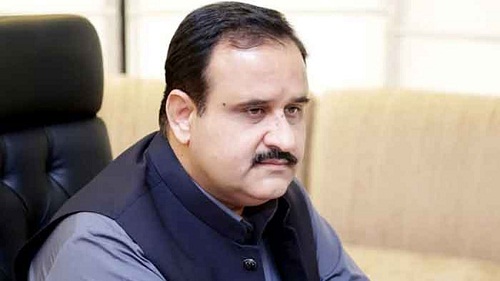
Lahore : Punjab Chief Minister Sardar Usman Buzdar says the government has given total independence to institutions and made appointments on merit.

He was talking to former Sindh Chief Minister Arbab Ghulam Rahim, who called on him in Lahore on Tuesday.

Usman Buzdar said Punjab government will take other provinces along in the journey of development.

Arbab Ghulam Rahim lauded Chief Minister Usman Buzdar’s vision for presenting Punjab’s people-friendly annual budget for 2021-22.

Pakistan welcomes statement of UN Chief seeking effective global role against Islamophobia

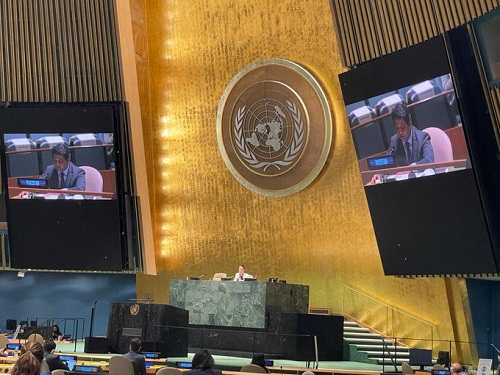
Acting Permanent Representative of Pakistan Mission at the United Nations, Ambassador Aamir Khan welcomed the recent statement of UN Secretary General in which he sought an effective global role against Islamophobia.

He said this during the 2nd high-level conference of heads of counter-terrorism agencies of Member States in New York.

He said the most common trend in global terrorism is terrorist attacks based on racism, intolerance, Islamophobia or other forms of intolerance.

He called the recent Islamophobia terrorist attacks across the world are yet another wake-up call for the international community.

Cas Calls On Senior Military Leadership Of Turkey

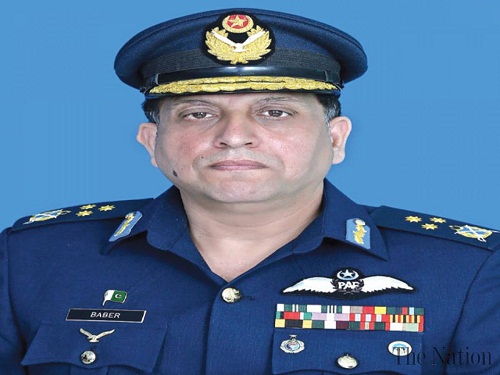
29 June 2021 :    Air Chief Marshal Zaheer Ahmed Baber Sidhu, Chief of the Air Staff, Pakistan Air Force, who is on a 04-day official visit to Turkey, met with the senior Military leadership of Turkey, today.

The Air Chief separately called on Minister for National Defence of Turkey Mr. Hulusi AKAR and Chief of the Turkish General Staff General Yaşar GÜLER. During the meetings, he discussed ways to further promote Pakistan-Turkey defence ties, particularly between the two air forces through mutual experience sharing as well as relying on the respective strengths of each side.

Air Chief Marshal Zaheer Ahmed Baber Sidhu, also called on Commander Turkish Air Force, General Hasan KÜÇÜKAKYÜZ. Both the commanders held detailed discussion on enhancing collaboration and exchanging expertise between the air forces of the two countries to meet the challenges of the contemporary world. The discussion also included exchange & training of pilots between PAF and TurAF.

Air Chief Marshal Zaheer Ahmed Babar Sidhu, Chief of the Air Staff, Pakistan Air Force, was also awarded Legion of Merit of Turkish Armed Forces in recognition of his outstanding services for promotion of collaboration and ties between the two air forces. General Hasan KÜÇÜKAKYÜZ, Commander Turkish Air Force, presented the medal.

Minorities to be taught their own religious curriculum: Shafqat

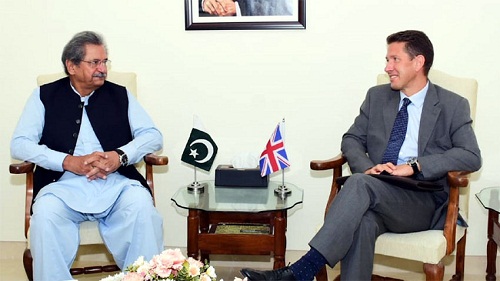
Islamabad : Minister for Federal Education Shafqat Mahmood says minorities like Hindus, Sikhs, Christians, Kalash and Bihai will be taught their own religious curriculum and values in educational institutions.

He was talking to British High Commissioner, Christian Turner in Islamabad.

The two sides reaffirmed their firm resolve to further fortify their cooperation in the field of education.

Admiring Pakistan’s response to COVID-19 pandemic, British High Commissioner said the government has done well so far to curtail the spread of virus.

Stay Connected

64FansLike
60FollowersFollow

Latest Reviews

Exchange Rates

USD - United States Dollar
EUR
1.14
GBP
1.34
AUD
0.70
CAD
0.71