Home Blog Page 26

Marri criticizes KP government’s rain preparedness

Marri criticizes KP government’s rain preparedness

ISLAMABAD, Jul 22: Pakistan Peoples Party Parliamentarians (PPPP) Central Spokesperson Shazia Marri on Wednesday criticised the Khyber Pakhtunkhwa government over its handling of the aftermath of recent heavy rains, calling for immediate relief and compensation for affected families.

In a statement, Marri said the recent rainfall had exposed shortcomings in the province’s infrastructure, including roads, drainage systems and other civic facilities, causing hardship for residents.

She said despite being in power for an extended period, the provincial government had failed to improve basic public infrastructure and services, blaming the Pakistan Tehreek-i-Insaf (PTI) government of prioritising political rhetoric over public welfare.

The PPPP spokesperson also criticised the PTI’s performance on governance and institutional matters, stating the party had failed to meet public expectations and had focused on political confrontation instead of addressing citizens’ concerns.

Expressing grief over the loss of lives in Peshawar and other parts of Khyber Pakhtunkhwa due to the recent rains, Marri extended condolences to the bereaved families and prayed for the recovery of those injured.

She also expressed sympathy with families that suffered financial losses, saying the PPP stood with those affected during the difficult period.

While acknowledging that natural disasters could not be prevented, Marri said their impact could be minimised through effective planning and timely response.

She termed the provincial government’s emergency preparedness “disappointing” and said providing prompt relief to affected citizens was the responsibility of every government.

She called for immediate rescue and relief operations, a transparent assessment of damages and adequate compensation for victims.

She also urged the provincial government to strengthen its emergency response system and prioritise the protection of lives and property.

Pakistan, Iran agree to expand rail connectivity, trade cooperation

Pakistan, Iran agree to expand rail connectivity, trade cooperation

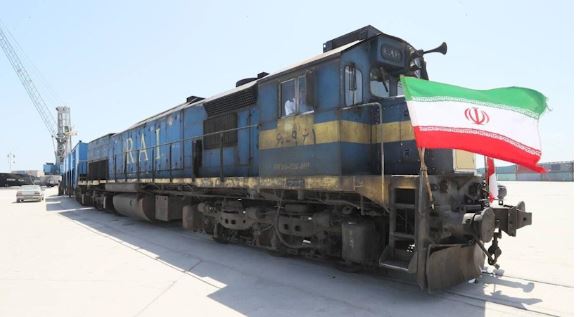
ISLAMABAD, Jul 22: Federal Minister for Railways Muhammad Hanif Abbasi said on Wednesday that Pakistan and Iran have reaffirmed their commitment to strengthening bilateral relations, expanding railway cooperation and enhancing regional connectivity.

During a meeting with Iranian Interior Minister Eskandar Momeni, Hanif Abbasi welcomed him to Pakistan and said the visit was an important step towards further deepening the longstanding brotherly ties between the two neighbouring countries.

Iran’s Ambassador to Pakistan, Dr. Reza Amiri Moghadam, also attended the meeting, said a news release.

The minister paid tribute to the resilience, determination and steadfastness demonstrated by the Iranian nation, government and leadership during the recent crisis.

Hanif Abbasi also expressed respect for Iran’s Supreme Leader and paid homage to the innocent civilians who lost their lives during the crisis.

The two leaders reaffirmed their resolve to further strengthen the religious, historical and cultural bonds between Pakistan and Iran and stressed the importance of promoting peace, stability, diplomatic engagement and mutual cooperation across the region.

The meeting focused on expanding railway cooperation, improving cross-border connectivity and facilitating bilateral trade through enhanced rail links.

Hanif Abbasi informed the delegation that work on the upgradation of Main Line-3 (ML-3) is expected to commence during the current fiscal year, with completion anticipated by December 2029.

He said ML-3 would serve as the principal railway corridor linking Pakistan and Iran and would significantly boost bilateral trade and regional connectivity upon completion.

The minister also appreciated the cooperation extended by the Iranian government and Iranian Railways in the restoration of the Zahedan-Taftan railway section.

He said Taftan Railway Station had been designated as a customs clearance station at the request of Iranian Railways, a move that would facilitate cross-border freight movement and shunting operations.

The two sides also discussed the revival of the Islamabad-Tehran-Istanbul (ITI) freight train service to promote regional trade and connectivity.

Both countries agreed to further expand railway collaboration under the 1959 bilateral railway agreement and the 2025 Framework of Cooperation.

They reaffirmed their commitment to strengthening railway links, cross-border trade, economic cooperation and regional connectivity for the mutual benefit of Pakistan, Iran and the wider region.

On the occasion, Eskandar Momeni expressed gratitude to Federal Minister for the warm hospitality extended to him during his visit to Pakistan and reaffirmed Iran’s commitment to further strengthening bilateral cooperation with Pakistan.

During the meeting, Momeni said Pakistan and Iran enjoy deep-rooted, historic and brotherly relations that continue to grow stronger with the passage of time.

He said that bilateral ties between the two neighbouring countries had reached an exemplary level over the past two years, reflecting the shared commitment of both governments to enhancing cooperation in various sectors.

The Iranian minister also appreciated the support and cooperation extended by the Government of Pakistan and thanked the country’s leadership for its constructive role in promoting bilateral relations.

Referring to the recent regional tensions, Momeni commended Prime Minister Muhammad Shehbaz Sharif and Field Marshal Syed Asim Munir for their diplomatic efforts and support, describing their role as commendable.

He said the Iranian nation would always remember Pakistan’s sincere efforts and support during a difficult period, adding that Pakistan had demonstrated the true spirit of brotherhood when Iran needed it most.

Reaffirming Iran’s desire to further deepen engagement with Pakistan, Momeni expressed confidence that the two countries would continue expanding cooperation in areas of mutual interest, further strengthening their longstanding partnership and regional collaboration.

Islamabad, Dhaka welcome direct flights

Islamabad, Dhaka welcome direct flights

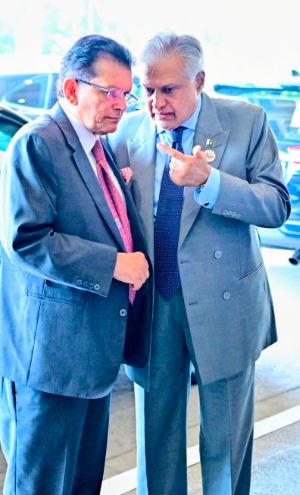
ISLAMABAD, JUL 22: Deputy Prime Minister and Foreign Minister Senator Ishaq Dar on Wednesday met Foreign Minister of Bangladesh and President-elect of the 81st Session of the United Nations General Assembly Khalilur Rehman, on the sidelines of the 33rd ASEAN Regional Forum (ARF) Ministerial Meeting in Manila.

During the meeting, they reviewed the positive trajectory of Pakistan–Bangladesh relations and the renewed impetus provided by the Deputy Prime Minister’s visit to Bangladesh last year. They also reaffirmed their shared commitment to further strengthening bilateral ties.

The two sides welcomed growing engagement between the two countries, including enhanced people-to-people contacts and improved connectivity following the commencement of direct flights this year, and agreed to sustain this positive trajectory.

They also exchanged views on regional and international issues of mutual interest.

Petrol pumps to shut nationwide for 24 hours as dealers strike over daily pricing

Petrol pumps to shut nationwide for 24 hours as dealers strike over daily pricing

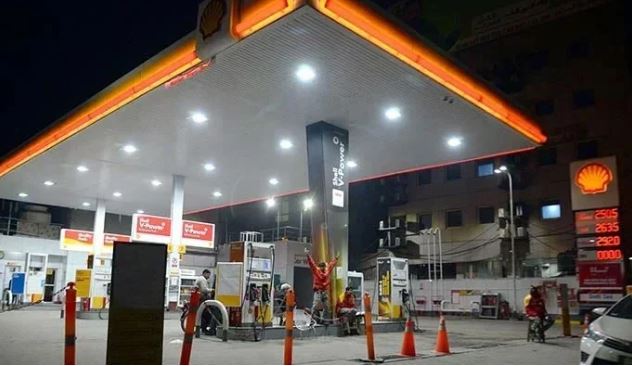
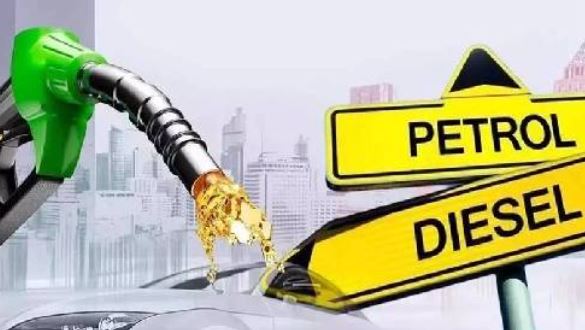
KARACHI: The Petroleum Dealers Association announced on Wednesday that petrol pumps across the country would remain closed for 24 hours starting Thursday morning at 6am until Friday 6am, in protest against the government’s policy of revising petroleum product prices on a daily basis.

Addressing a press conference, association representative Malik Khuda Bakhsh said the daily price fluctuation mechanism was unacceptable and that consultations had been held with a committee following an OGRA meeting earlier in the day.

“We are going on strike tomorrow for 24 hours,” he said.

The Oil and Gas Regulatory Authority (Ogra) updates petroleum products prices on a daily basis on its website to ensure transparency and allow the immediate impact of international price fluctuations to be passed on to consumers.

The daily pricing is based on a seven-day weekly average of international market prices to align with international standards, according to Petroleum Minister Ali Pervaiz Malik.

A day earlier, All Pakistan Petrol Pumps Owners Association (APPPOA) announced a nationwide shutdown of petrol pumps after negotiations with the government ended without a breakthrough.

“We cannot accept daily changes in petroleum product prices under any circumstances,” Butt said.

Speaking to Geo News today, APPPOA announced its support for the dealers’ strike, with president Nadeem Hussain saying that public transport would also shut down alongside petrol pumps from tonight.

He demanded the government withdraw its daily petroleum pricing policy.

The President of the Pakistan Mini Mazda Goods Transport Association, Haji Sher Ali Chaudhry, also announced full support for the strike, saying Mazda vehicles would stop operating from midnight tonight.

“We reject the decision to increase petroleum product prices on a daily basis — it is causing immense losses to transporters,” he said, urging the government to reverse its decision.

The Pakistan Business Forum, however, called on the Petroleum Dealers Association to reconsider its strike decision, saying the action was against the interests of the public and the economy, particularly in extraordinary circumstances.

Chief Organiser Ahmad Jawad said the demand for increased dealer margins was not appropriate at this time, noting that dealers were already receiving approximately Rs8 per litre in margin, which he described as sufficient.

Jawad said the government should withdraw the daily pricing policy, questioning how businesses and the economy could function under a system of daily price revisions.

He also called on the government to defer the petroleum levy for one month to provide relief to the public, adding that placing all burdens on the public was not appropriate. He said the dealers association could not take unilateral decisions in such circumstances.

Decision challenged
Separately, the daily petroleum pricing policy has been challenged in the Lahore High Court.

A private organisation, in its petition, argued that daily price increases were causing continuous inflation and that the public was not benefiting when international petroleum prices fell.

The petition contended that arbitrary determination of petroleum prices was contrary to the Constitution and law, and requested the court to declare the daily pricing mechanism illegal.

Daily fuel pricing framework
An official document seen by Geo News has revealed key details of the federal cabinet-approved petroleum pricing mechanism, under which the Ogra will issue ex-depot prices of petrol and high-speed diesel on a daily basis.

Under the new framework, fuel prices will be determined using the average international market prices recorded over the previous seven days.

The regulator will be authorised to announce daily prices without requiring prior approval from the prime minister or the federal government, while prices notified on Fridays will remain unchanged on Saturdays and Sundays.

The document stated that Ogra will publish daily Platts reference prices from July 1, 2026.

It also stipulated that the petroleum levy cannot exceed the limit approved by the federal cabinet, while any change in the levy rate will require approval from the Finance Division.

ISSI-PAIDAR celebrating Egypt’s Revolution Day

ISSI-PAIDAR celebrating Egypt's Revolution Day

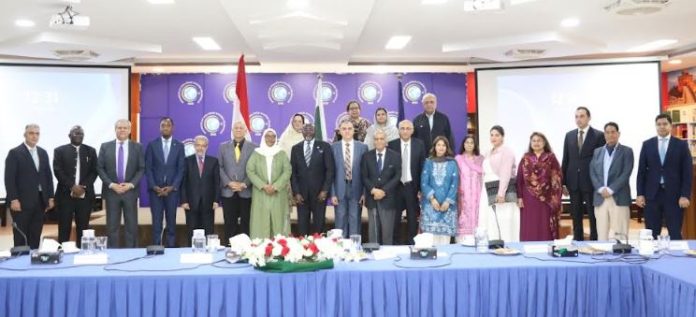
ISLAMABAD, JUL 22 /DNA/ – The Centre for Afghanistan, Middle East & Africa (CAMEA) at the Institute of Strategic Studies Islamabad (ISSI), in collaboration with Pakistan Africa Institute for Development and Research (PAIDAR), organized an event to commemorate Egypt’s Revolution Day.

Ambassador Moin ul Haque, highlighted Egypt’s rich civilizational heritage and its pivotal role in the Arab, African, and Islamic worlds. He underscored the longstanding Pakistan–Egypt friendship, founded on shared history, mutual respect, and close cooperation, while emphasizing Egypt’s importance in Pakistan’s ‘Engage Africa’ policy..

Dr. Ihab Abdelhamid Hassan described the 23 July 1952 Revolution as a defining milestone in Egypt’s modern history that embodied the principles of national independence, sovereignty, and social justice. He noted that the Revolution also inspired liberation movements across the Arab world, Africa, and the Global South. Highlighting the longstanding and multifaceted Pakistan–Egypt partnership, he noted the growing momentum in bilateral relations through high-level exchanges and the successful 10th round of bilateral political consultations.

Dr. Amina Khan in her remarks highlighted the significance of the 23 July 1952 Revolution as a defining milestone in Egypt’s history. She underscored the longstanding Pakistan-Egypt friendship and their shared perspectives on regional issues. She also reaffirmed CAMEA’s commitment to strengthening Pakistan’s engagement with Africa through research and dialogue.

Senator Mushahid Hussain Sayed highlighted Egypt’s central role in the Arab world and described it as the region’s centre of gravity. He noted that Egypt was among the few countries visited by Quaid-e-Azam Muhammad Ali Jinnah. He said the 1952 Egyptian Revolution was a turning point that inspired nationalist movements across the Arab world and reaffirmed the strategic importance of Pakistan–Egypt relations.

Ambassador Aamir Shoukat highlighted the enduring and multifaceted Pakistan–Egypt relationship, underlining the close political dialogue between the two countries and the recent revival of bilateral consultations. He praised Egypt’s remarkable development and emphasized the importance of expanding cooperation in trade, investment, academic exchanges, and think tank collaboration.

Ambassador Hamid Asghar Khan highlighted Egypt’s unparalleled civilizational, cultural, and intellectual heritage, describing Cairo as a centre of history, learning, and religious diversity.

In his concluding remarks, Ambassador Khalid Mahmood, highlighted the significance of Egypt’s Revolution Day and emphasized Egypt’s important role as an influential partner in promoting peace, security, and development.=DNA

Lavrov, FM Dar review bilateral ties at ASEAN Summit

Lavrov, FM Dar review bilateral ties at ASEAN Summit

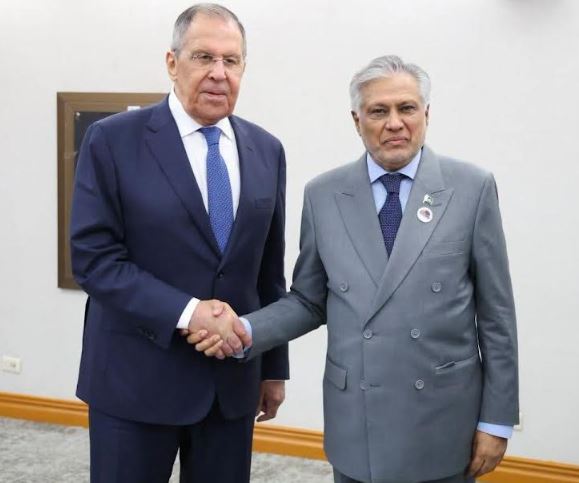
MANILA, JUL 22 /DNA/ – On the sidelines of the ongoing ASEAN ministerial meetings in the Philippine capital, Russian Foreign Minister Sergey Lavrov held a working meeting with Pakistan’s Deputy Prime Minister and Foreign Minister, Mohammad Ishaq Dar.

The bilateral encounter, which took place amid a busy schedule of regional dialogues, provided the two senior officials with an opportunity to review the current state of Russia-Pakistan relations. According to a readout from the Russian delegation, the ministers discussed a range of topical bilateral issues, with an emphasis on strengthening political dialogue and expanding mutual cooperation.

In addition to bilateral affairs, Lavrov and Dar engaged in a comprehensive exchange of views on key regional and international developments. The discussion touched upon shared priorities and challenges, with a particular focus on collaboration within the Shanghai Cooperation Organisation (SCO). Both sides also addressed avenues for closer coordination within other international organizations, underscoring their commitment to multilateral efforts in promoting stability and security in Eurasia and beyond.

The meeting underscores the continued engagement between Moscow and Islamabad as both nations navigate a complex geopolitical landscape in South and Central Asia. No specific announcements regarding new agreements or joint initiatives were made following the talks.

The ASEAN ministerial meetings and related summits are taking place in Manila through the week, drawing foreign ministers from across the Asia-Pacific region and key dialogue partners.

Government’s daily petrol price adjustment sparks nationwide criticism

Government’s daily petrol price adjustment sparks nationwide criticism

The government’s recent decision to revise petrol prices daily has ignited a storm of criticism across Pakistan. Instead of stabilizing the economy or ensuring transparency, this policy has placed an unbearable burden on ordinary citizens, transporters, and businesses. The move is widely seen as impractical, unfair,

Under the new mechanism, petroleum prices are adjusted every 24 hours. This means that consumers wake up each day uncertain about how much they will pay at the pump. For families already battling inflation, this unpredictability makes budgeting nearly impossible. Transporters, delivery services, and small businesses are particularly vulnerable, as fuel costs directly affect their daily operations.

Ordinary people feel that austerity measures are imposed only on them, while ministers, bureaucrats, and government officials continue to enjoy fuel quotas and perks without restrictions. If the government insists on daily adjustments for the public, critics argue that the same principle should apply to officials’ fuel allowances. Why should the common man suffer daily fluctuations while the ruling elite remains insulated?

Pakistan presents a unique paradox: a nation run on IMF loans and foreign grants, yet its ruling elite lives in luxury. Politicians’ lavish lifestyles convoys of expensive cars, extravagant residences, and unchecked privileges—paint a picture far removed from the hardships faced by the average citizen.

This glaring gap between the haves and have-nots underscores the deep-rooted inequality. While the majority struggles to afford basic necessities, corruption continues to thrive across institutions. Not a single department is free from allegations of misuse of funds or abuse of power. The perception is clear: austerity is for the poor, while luxury remains the privilege of the powerful.

The policy has also provoked strong reactions from stakeholders. Petrol pump owners have threatened a nationwide strike, arguing that daily adjustments create logistical chaos and erode consumer trust. Transporters are preparing similar protests, warning that rising fuel costs will force them to increase fares, further burdening commuters.

In a country with a fragile economy, strikes of this scale could paralyze daily life. Supply chains, public transport, and essential services would all be disrupted. Pakistan simply cannot afford such instability at a time when its economy is already under severe strain.

Experts and citizens alike are urging the government to reconsider this policy. A more practical approach would be to revise fuel prices on a weekly or fortnightly basis. This would provide some predictability for households and businesses, while still allowing the government to respond to fluctuations in international oil markets.

Daily adjustments, on the other hand, only amplify uncertainty and frustration. They risk alienating the public further and could ignite widespread unrest.

At its core, this controversy highlights Pakistan’s chronic governance issues. Policies are often designed without considering their impact on ordinary citizens. Meanwhile, the ruling elite remains shielded from the consequences of their decisions.

The government must recognize that economic reforms cannot succeed if they disproportionately target the poor while sparing the privileged. Transparency, accountability, and fairness are essential if Pakistan is to move beyond its cycle of debt, corruption, and inequality.

Citizens across the country have expressed anger and despair. For daily wage earners, even a small increase in petrol prices translates into higher transport costs, reduced income, and greater hardship. Students commuting to universities, workers traveling to factories, and families relying on public transport all feel the pinch.

The frustration is compounded by the perception that government officials remain untouched by these hardships. Their fuel quotas, luxury vehicles, and taxpayer-funded perks stand in stark contrast to the struggles of ordinary people.

The looming strikes by petrol pump owners and transporters could push the country into chaos. If fuel supplies are disrupted, the ripple effects will be felt across every sector—from agriculture to industry, from education to healthcare. A weak and struggling economy cannot withstand such shocks.

The government must act swiftly to prevent this crisis from escalating. Dialogue with stakeholders, revision of the pricing mechanism, and a fairer distribution of austerity measures are essential steps.

The daily petrol price adjustment policy has become a symbol of misplaced priorities. Instead of easing the burden on citizens, it has deepened their struggles. With strikes looming and public anger mounting, the government must act swiftly to revise this mechanism before the situation spirals out of control.

Chairman stresses computing education key for Pak’s digital future

Chairman stresses computing education key for Pak's digital future

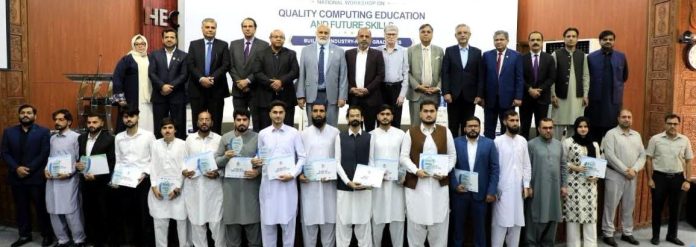
ISLAMABAD, JUL 22 /DNA/ – The Higher Education Commission (HEC), Pakistan, organized the National Workshop on Quality Computing Education and Future Skills at HEC Secretariat, Islamabad.

The workshop brought together distinguished policymakers, vice chancellors, academics, industry leaders, representatives of accreditation bodies, technology experts, and students to deliberate on enhancing the quality of computing education and equipping graduates with future-ready competencies aligned with national development priorities and the evolving demands of the global digital economy.

Addressing the participants, Dr. Niaz Ahmad Akhtar, Chairman, HEC, underscored that the future of Pakistan’s digital economy depends on the provision of quality computing education.

Referring to the Prime Minister’s vision for digital transformation, he highlighted HEC’s key initiatives aimed at strengthening computing education, including the implementation of the Computing Curriculum 2025, integration of Artificial Intelligence (AI) into academic programmes, promotion of Outcome-Based Education (OBE), and implementation of the National Skills Competency Test (NSCT) to enhance graduates’ competencies, industry readiness, and employability.

Delivering the welcome remarks, Prof. Dr. Habib Bokhari, Member (Research, Development & Innovation), HEC, stated that the workshop was organized to raise awareness among students, parents, academia, and industry about the importance of quality computing education, emerging technologies, future-ready skills, and evolving career opportunities.

He reaffirmed HEC’s steadfast commitment to modernizing computing curricula, strengthening academia-industry collaboration, enhancing quality assurance mechanisms, and equipping graduates with the knowledge and competencies required to meet the demands of a rapidly evolving digital economy.

The event was graced by Mr. Hassan Saqlain, Additional Secretary, Ministry of Federal Education and Professional Training, as the Chief Guest. Senior officials from the Ministry of Information Technology & Telecommunication (MoITT), Pakistan Software Export Board (PSEB), Pakistan Software Houses Association (P@SHA), National Computing Education Accreditation Council (NCEAC), Virtual University of Pakistan, vice chancellors from universities, IT students from various higher education institutions, and representatives of HEC participated in the workshop.

The workshop featured an interactive panel discussion moderated by Mr. Hidayatullah Kasi, Deputy Director (Curriculum), HEC.

The panel comprised representatives from PSEB, P@SHA, NCEAC, members of the National Curriculum Review Committee (NCRC) for Computing, and HEC.

The discussion focused on the skills demanded by the IT industry and the future workforce, aligning computing curricula with emerging technologies and evolving market needs, strengthening accreditation systems and quality assurance mechanisms, promoting faculty development, industry immersion, and collaborative research, and expanding industry-led internships, capstone projects, professional certifications, and other initiatives to enhance graduate employability.

Representatives from academia and industry also shared valuable insights on bridging the gap between higher education and market requirements, particularly in the fields of artificial intelligence, cybersecurity, cloud computing, software engineering, data science, and digital innovation.

They highlighted the need for continuous curriculum review, faculty capacity building, experiential learning, and stronger collaboration with the technology industry.

At the conclusion of the event, shields of appreciation were presented to the Chief Guest, moderator, panelists, and other distinguished contributors in recognition of their valuable support and contributions to the success of the workshop.

In addition, the top 17 achievers of the National Skills Competency Test (NSCT) 2026 were honored with shields and certificates of appreciation in recognition of their outstanding performance.

The awards acknowledged their academic excellence and encouraged merit, innovation, and excellence in computing education.=DNA

How a 64-team World Cup could transform soccer’s economics

How a 64-team World Cup could transform soccer’s economics

But the financial implications could prove even more significant. By making qualification easier for many of the game’s biggest nations, a 64-team tournament could reduce the commercial value of qualifying competitions while increasing the importance of FIFA’s own flagship event.

DALLAS: The first 48-team World Cup has barely finished, but Gianni Infantino has already acknowledged the possibility that soccer’s biggest tournament could one day grow larger still, a move that could fundamentally alter the economics of the sport.

Speaking to Swiss television during the tournament, the FIFA president said a 64-team World Cup was among the ideas that could be examined once the finals were over, reopening debate over how large the game’s showpiece event can realistically become.

The logistical implications of another expansion are obvious. A bigger tournament would require more stadiums, more hotels, more transport and, most likely, more time.

But the financial implications could prove even more significant. By making qualification easier for many of the game’s biggest nations, a 64-team tournament could reduce the commercial value of qualifying competitions while increasing the importance of FIFA’s own flagship event.

If broadcasters place less value on qualifying campaigns, soccer’s six regional confederations could become increasingly dependent on FIFA’s own distributions, potentially shifting more financial influence — and power — toward the global governing body.

“I don’t think ‌it’s a good idea ‌for the World Cup itself, and it’s not a good idea for our qualifiers either. So I’m ‌not supporting ⁠that idea,” UEFA ⁠President Aleksander Ceferin said last year. The European governing body’s position has not changed since then.

Asian Football Confederation President Sheikh Salman bin Ibrahim Al Khalifa has also voiced opposition, questioning last year where further expansion might end.

FIFA did not reply to requests for comment.

“I think it is important that when you want to organize a World Cup, you do it for the whole world — not just Europe and South America,” Infantino said when discussing the idea of an expanded tournament. “If you don’t give smaller countries a chance to participate in the World Cup, they’ll lack the incentive to keep improving.”

CHALLENGES ON AN ENTIRELY DIFFERENT SCALE

The 2026 tournament in Canada, Mexico and the United States was the first since 1998 to move away from the 32-team format, expanding to 48 nations and 104 matches over more than ⁠five weeks.

If the competition retained the same basic structure, with four-team groups followed by a 32-team knockout stage, ‌a 64-team World Cup would comprise 128 matches — 24 more than in 2026 and double the total ‌staged under the old 32-team format.

Unless FIFA compressed the schedule or staged more games simultaneously, that could add roughly another week to a tournament already lasting more ‌than five weeks.

Plans are in place for Spain, Portugal and Morocco to stage most of the 2030 finals, with Uruguay, Argentina and Paraguay each ‌hosting a single opening-round match to mark the tournament’s centenary. Accommodating 64 teams across six host nations presents a formidable organizational challenge. Doing so in a single country could prove even more demanding.

Saudi Arabia, due to host the tournament alone in 2034, already faces significant scheduling questions. Ramadan is expected to begin in mid-November that year, making the November-December window used for the 2022 World Cup in neighboring Qatar difficult to replicate and potentially forcing another unprecedented reshaping of the global football calendar.

A 64-team tournament would ‌magnify those challenges, requiring more stadiums, training facilities, hotels, transport capacity and volunteers while placing additional pressure on infrastructure in a country still developing its tourism industry.

The Saudis have proposed 15 venues for the existing ⁠48-team format, with eight stadiums in Riyadh, ⁠four in Jeddah and others in Khobar, Neom, and Abha. Construction and renovation work is already under way ahead of the 2027 Asian Cup.

DOMESTIC PRESSURE

An expanded World Cup would also place greater strain on an already congested international calendar and increase pressure on domestic leagues, many of which have aligned themselves with Europe’s traditional August-to-May season. Japan’s J-League is about to begin its first August-to-May campaign, while US Major League Soccer plans a similar switch from next year.

Any future winter World Cup would therefore disrupt an ever-growing number of competitions rather than primarily Europe’s major leagues, as was the case in 2022.

World Cups can be costly for national federations, even rich ones like France. The French Football Federation had been expecting to spend 24.5 million euros ($28 million) at this year’s World Cup, with federation president Philippe Diallo saying Les Bleus would probably need to at least reach the semifinals not to lose money.

At the April FIFA Congress in Vancouver, Diallo said FIFA needed to provide greater financial support to participating nations.

If a 48-team tournament is already stretching the finances of participating federations, a longer 64-team event could increase those costs further.

Player welfare concerns would also intensify, with more matches adding to the workload of elite players. A 64-team tournament would give more nations access to football’s biggest stage but could also reignite debate over competitive balance, tournament length, fan costs and whether the World Cup risks losing some of the exclusivity that has long underpinned its appeal.

Whether the idea progresses beyond discussion may depend in part on how the first 48-team World Cup is ultimately judged.


US plans to announce nuclear agreement with Saudi Arabia

US plans to announce nuclear agreement with Saudi Arabia

Trump administration to submit agreement to Congress but approval not needed for deal

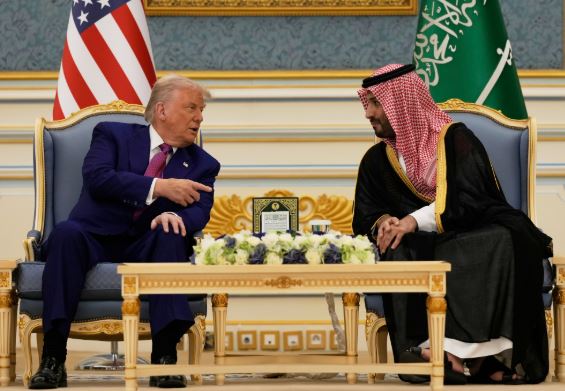
WASHINGTON: The United States plans to announce an agreement with Saudi Arabia on Wednesday that would give Riyadh a civilian nuclear programme, according to media reports, amid renewed fighting between the Gulf oil giant and Houthis in Yemen.

Citing two unnamed US officials, the New York Times reported Tuesday the Trump administration plans to formally sign and announce the deal with the Saudis on Wednesday.

President Donald Trump’s administration said the deal will provide billions of dollars for the US nuclear industry.

The Trump administration plans to submit to Congress in the coming days the pact with Saudi Arabia that does not include safeguards the US has said would stop materials being used in nuclear weapons programmes, two sources told Reuters.

The sources said the administration will submit to Congress a document known as a 123 Agreement signed by US Energy Secretary Chris Wright and the Saudi Minister of Energy Abdulaziz bin Salman.

The two signed a preliminary agreement in Riyadh last year.

A provision in the deal, which would last 30 years, would have American companies build a uranium enrichment facility in Saudi Arabia if a joint study determined it warranted, the Wall Street Journal reported.

But some US lawmakers from both parties and Israeli officials have voiced opposition to a civilian nuclear project for Saudi Arabia, over fears it could be converted to eventually develop nuclear weapons.

With renewed fighting between the United States and Iran, Houthis threatened to expand the war this week, announcing they would blockade Saudi ports.

Saudi Arabia and the Houthis traded fire last week for the first time in years, threatening a 2022 truce, but the rebels have largely remained on the sidelines since Israel and the United States attacked Iran in late February.

Stay Connected

64FansLike
60FollowersFollow

Latest Reviews

Exchange Rates

USD - United States Dollar
EUR
1.15
GBP
1.35
AUD
0.70
CAD
0.71