Home Blog Page 2588

PAKISTANI CULTURE TOUR EXHIBITION INAUGURATED IN SCODA QINGDAO

ISLAMABAD Aug. 2 (DNA): Pakistani Culture Tour Exhibition Gandhara’s Smile was inaugurated in Shanghai Cooperation Organization Demonstration Area (SCODA) Qingdao.

According to a report published by China Economy Net on Monday, ancient Gandhara civilization has left indelible footprints in the realm of arts, architecture, cultures and spiritually.

The most enduring feature of Gandhara is its art which mesmerizes the world with its artist brilliance, innovation and intense devotion. It is learned that the central figure of Gandhara is Lord Buddha, which has also been exhibited at the center display of the hall.

Chairing the session, Wang Zihai, Executive Director of Pakistan China Center (PCC), highlighted that under the framework of China-Pakistan Economic Corridor (CPEC), a great deal of projects that benefit people’s livelihood, including energy, roads, ports, economic parks, agriculture, science and technology, and education, are taking root and bearing fruit in Pakistan.

“Belt and Road Initiative’s promotion of the Silk Road spirit of peace and cooperation, openness and inclusiveness, mutual learning and mutual benefit, and the promotion of people’s livelihood are very consistent with Gandhara’s broad-mindedness in embracing the achievements of different civilizations.”

Ms. Syeda Saira Raza, official of Pakistani Embassy in China, stated at the occasion that while celebrating the 70th anniversary of the establishment of diplomatic ties between China and Pakistan, it is also an opportune moment to celebrate the achievement of ancient Gandhara civilization on the common heritage of the two countries.

“As the Gandhara civilization has early linkages between two countries, it is pertinent to mention that many Chinese marks including Fa Xian and Xuan Zang braved the hand journeys to arrive at the famous Buddhist seminaries in Pakistan.

They carried back with them not only the light of wisdom and spiritually but also the warm sentiments of brotherly love and respect which underlines our present fraternal ties,” Ms. Syeda further explained.

According to Hao Guoxin, member of the Party Working Committee and Deputy Director of the Management Committee of SCODA, the Pakistani Culture Tour Exhibition will open a window for citizens to understand Pakistani culture to further enrich the Pakistani elements of SCODA, and become an important microcosm of the cultural dialogue between China and Pakistan.

“We have also interspersed the major events since the establishment of the diplomatic relations between China and Pakistan in the exhibition to further promote and highlight the long-lasting friendship between China and Pakistan, which is deeper than sea.”

It is learned that Gandhara’s Smile is the virgin exhibition of the ‘Walking into Pakistan’ series, more wonderful civilizations will be on display.
RESURGENCE OR RECOGNITION OF RELIGION IN POLITICS?

Islamabad: /DNA/ – ‘Whether it was a resurgence or a recognition of religion in international politics of South Asia, the politicization of religion per se was an existential threat to pluralist thoughts in society, say panelists at a webinar organized by the Institute of Regional Studies. On a prescriptive note, scholars from Germany, Australia, the US, and Pakistan called for a greater understanding of ‘others’ to seed religious tolerance in the region.

Speaking on the occasion, Dr. Christian Wagner, Senior Fellow at German Institute for International and Security Affairs, said that religion as a concept was inherently ambivalent, adding that, in South Asia particularly the nation-building processes more often have been oscillating between ethnicity and religion. Quoting Bangladesh’s example, Dr. Wagner argued that religion couldn’t bridge ethnic and linguistic differences between east and west, even though it was the founding pillar of Pakistan. Also argued that most of the wars in South Asia were mainly fought on territorial claims, adding that even in dispute settlements neither at national nor at the international level, religion was a negotiation leverage. Rulers, whether democratic or authoritarian, however, tended to instrumentalize religion to legitimatize their authority, he said adding that the outcome was disastrous as sometimes it backfired. The killings of Indra Gandhi and PM Bandra of Sri Lanka were the glaring examples, said Dr. Wagner. On religious political parties, he stated that despite large gatherings they could not get public support in terms of higher voter turnout, added that people generally tend to vote for non-religious parties especially in Pakistan. 

In line with Wagner’s thesis, Senator (r) Javed Jabbar argued that in Pakistan ‘neither any religious group had ever direct political power nor was there any prospect’. ‘The history of Pakistan was being portrayed in a distorted way’, he lamented. To argue, he apprised the audience about Jinnah’s unhappiness with Gandhi for bringing religion into politics. Further argued that international relations of Pakistan were conducted on fine lines of the international political system, for example, ‘our recognition of China, a communist state, our strategic relationship with the US and even with India until 5th of August, was based on realpolitik. On the issue of Islamophobia, he said that ‘it was rooted in ignorance about Islam’. He regretted that ‘even highly educated advanced countries, have not been able to understand other religions with the respect they deserve’. He urged ‘for a far more intensive and sustained campaign by states and civil societies to alter how people perceive the role of religion’.

In contrast to Dr. Wagner and Senator (r) Jabbar, Professor Samina Yasmeen of the University of Western Australia, Perth presented an entirely different view. Her thesis was based on the assertion that there was an increasing acknowledgment of religion at the world level. Since religion was the very basis of the partition of the subcontinent, Pakistan was largely seen from this religious identity in regional and global politics’ she said. Further continued saying that particularly after the 1980s, ‘the government consciously used religion to mobilize country’s Islamic identity that resulted in the creation of ‘restricted narratives’. In the case of India, the process began in the 1990s wherein Hindutva, the Hindu identity started dominating thinking and practices that resulted in the creation of the notion of ‘others’, mostly the Muslims, at a higher level than Pakistan in which mob killing was seemed to be a new normal, where any change of religious identity was treated as ‘Love Jihad’, she added. On a prescriptive note, Prof. Yasmeen called for greater understandings of Islam and the way Muslims regard their beloved Prophet (PBUH). Muslims, on their part, also respect other religious communities, she emphasized.

Speaking on the subject, Michael Kugelman, Senior Associate for South Asia at the Woodrow Wilson Center, said that religion particularly in India under the current BJP government has turned out ‘far more muscular’ than previous BJP terms. In Nepal, ‘Some opposition voices in Nepal were calling for the restoration of Nepal’s Hindu status, he said, adding that in Sri Lanka, several policies of the government in recent months appeared to be somewhat communal such as shutting down religious schools and banning Burqa (veils). In Bangladesh, he said that Ashadul Islam’s party has become increasingly vocal and active. Similarly, in Pakistan, religious parties were making inroads into politics, he added. These all together resulted in the sharp rise of regional communal tensions in South Asia. In the end, Mr. Kugelman stressed the need to promote religious tolerance in the region, which he thought, ‘was also one of the great global problems of our times and it could play out everywhere including in the US’.

Pakistan hopes India will act fairly as UNSC president

ISLAMABAD: The Foreign Office on Saturday expressed the hope that India would act fairly during its month-long tenure as the president of the United Nations Security Council (UNSC).

FO spokesman Zahid Hafeez Chaudhri, while responding to a query from Dawn, said Pakistan hopes that “India will abide by the relevant rules and norms governing the conduct of the Security Council Presidency”.

India, which is currently a non-permanent member of UNSC for a two-year term, would be holding the presidency of the powerful 15-nation body for the month of August beginning Sunday.

The presidency of UNSC rotates on a monthly basis following the English alphabetical order of the names of the member states. India, which entered UNSC on Jan 1, 2021, will twice get the presidency during its term ending on Dec 31, 2022.

CALLS FOR ABIDING BY RULES AND NORMS GOVERNING CONDUCT OF SECURITY COUNCIL

“As India assumes this role, we would also like to once again remind it of its legal obligation to implement the UN Security Council resolutions on Jammu and Kashmir,” the spokesman further said.

The timing of India’s presidency is important — although it is a mere coincidence that it has coincided with the second anniversary of annexation of Occupied Kashmir by India; and completion of withdrawal of foreign forces from Afghanistan.

Indian presidency means that Pakistan would not be able to seek any discussion on the situation in Occupied Kashmir in the Security Council on this occasion.

Spokesman Chaudhri had earlier at the weekly media briefing said: “5th August, 2021 would mark the completion of an unprecedented 24-month-long military siege and draconian curbs on the fundamental rights and freedoms of Kashmiri people in the aftermath of India’s illegal and unilateral actions.”

The Security Council has thrice discussed the issue of Jammu and Kashmir during the past two years.

Secondly, withdrawal of foreign forces from Afghanistan is likely to be completed by the end of August. Indian presidency could become important in case of some major development related to Afghanistan.

Pakistan has always seen India as a spoiler for the efforts for peace and reconciliation in Afghanistan.

However, the most important element of any country’s presidency is its ‘programme of work’ that lists its priorities during the one-month tenure.

India’s ‘programme of work’ shows that it will use its tenure to ‘needle’ regional rivals Pakistan and China.

The two flagship events planned by India are a briefing on counter-terrorism, and a debate on maritime security.

India’s Permanent Representative to the UN Ambassador T.S. Tirumurti, in an Op-Ed for Times of India, has written that India has been “a bulwark against any attempt to dilute the fight against terrorism and has helped in exposing those who aid, support and finance terrorists. Terrorism in our neighbourhood and beyond is of particular concern given the increasing use of AI, drones, blockchain technology, and online financing by terrorists”.

Given India’s proclivity to malign Pakistan at such forums, it is almost certain that it would use the counter-terrorism briefing for accusing its neighbour.

Similarly, the maritime security debate is expected to be used to criticise China’s role in South China Sea.

On maritime security, Tirumurti contends that “a comprehensive approach to maritime security is indispensable to safeguarding common prosperity as it protects legitimate activities and counters threats of current and emerging hostile, illegal or dangerous acts within the maritime domain. This encapsulates the PM’s vision of SAGAR — Security and Growth for All in the Region.”

APP adds: Meanwhile, Pakistan welcomed the letter by members of the European Parliament addressed to the president and vice president of the European Commission where they expressed concern over the human rights violations in India-held Kashmir.

FO Spokesperson Chaudhri in response to media queries said the letter was “another demonstration of the continuing global censure of the ongoing human rights violations and humanitarian crisis in Indian Illegally Occupied Jammu and Kashmir”.

He said although India continuously peddled false propaganda in futile attempts to push the sham narrative of so-called normalcy in occupied Kashmir, the global censure and condemnation of the Indian atrocities in the valley continued.

He said India must realise that it cannot ignore the international community’s continuing calls to end its grave and systematic human rights violations in Occupied Kashmir.

Tokyo Olympics: Max Whitlock defends Olympic pommel horse title

Great Britain’s Max Whitlock retained his Olympic title with a sublime performance in Tokyo to win gold in the men’s pommel horse.

The 28-year-old was first up in the event and immediately put the pressure on his rivals with a near-perfect routine that earned him a score of 15.583.

Three-time world champion Whitlock then watched on as the remaining seven gymnasts were unable to beat his score before his third career Olympic gold – and Britain’s 10th of the Games – was confirmed.

Lee Chih-kai of Chinese Taipei was the only competitor to give Whitlock an anxious moment but his score of 15.400 was only good enough for silver. Japan’s Kazuma Kaya took the bronze medal.

Ireland’s Rhys McClenaghan had finished joint top of the qualifying standings but came off the apparatus early in his routine and finished seventh.

Whitlock trained in an empty gym back home to try to recreate the sense of competing at an Olympics without any spectators.

He was not at his best during qualifying, admitting afterwards that nerves played a part, but he put it all together when it counted to win his sixth Olympic medal at his third Games.

“I feel lost for words,” Whitlock told BBC Sport. “I am completely overwhelmed and it feels kind of surreal. I had seen the other sports, gold medals flowing in and I wanted to do the same here. Incredible journey.”

Whitlock admitted the pressure of being the defending champion weighed heavily in the build-up to the Olympics.

“It is a million times harder,” he added. “The pressure was there and I could feel it. Experience pays a lot in situations like this.

“Being first up meant I had to go all out. I couldn’t watch the scores. I had to go all out. That was the biggest routine I had been training for. I couldn’t have done any more.”

Qureshi says India biggest hurdle in regional peace

DNA

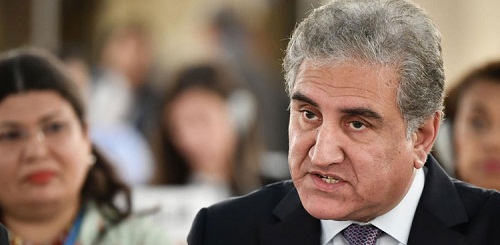
MULTAN: Foreign Minister Shah Mahmood Hussain Qureshi Sunday said India wanted to sabotage peace in the region and was creating obstacles in this regard.

Qureshi expressed these remarks during his address in a ceremony, organized in honour of workers of Multan Waste Management Company, by PTI local leader Shiekh Wajid, here. Qureshi maintained that promotion of peace in the region was top priority of Pakistan. However, India is big hurdle in way of peace in the region. Solution of Kashmir and Palestine issues was inevitable to promote peace across the globe, stated Foreign Minister Qureshi.

Qureshi stated that Prime Minister Imran Khan was highlighting Kashmir, Palestine and other issues of Muslim Ummah at all international forums.

Pakistan will mark August-5 in amicable way as Prime Minister Imran Khan will visit Azad Kashmir and express solidarity with innocent people of Indian Illegally Occupied Jammu and Kashmir (IIOJK). The citizens in IIOJK have been deprived of basic rights, said Qureshi.

Following efforts from PM Imran Khan, the Kashmir issue was discussed after 63 years in United Nations, said FM Qureshi. Now, the international community is raising voices in support of innocent Kashmiris, who are facing brutalities by occupied forces.

The Kashmir issue has become a globally recognized issue following efforts of incumbent government of PTI, remarked Shah Mahmood Qureshi.

Shah Mahmood Qureshi observed that Pakistan Tehreek Insaf had become the most popular political party in the country. Similarly, he said, the country is heading towards matchless progress under the vibrant leadership of Prime Minister Imran Khan.

Qureshi hinted that the government was striving hard to overcome inflation. He hoped that country would witness more positive economic changes very soon.

The fourth wave of pandemic coronavirus is a big challenge for the government. He however urged people to follow precautions in this regard. 

He suggested Sindh government to make strategy after complete consultation with National Command and Operation Centre (NCOC) in order to combat the pandemic effectively. 

Qureshi also lauded performance of Multan Waste Management Company especially on occasion of Eid ul Azha. On this occasion, Special Assistant to CM Punjab, MPA Javed Akhtar Ansari, and many other local PTI workers were also present.

Asad urges masses to follow SOPs

Warns that the Indian variant spreads very fast

Zubair Ahmad

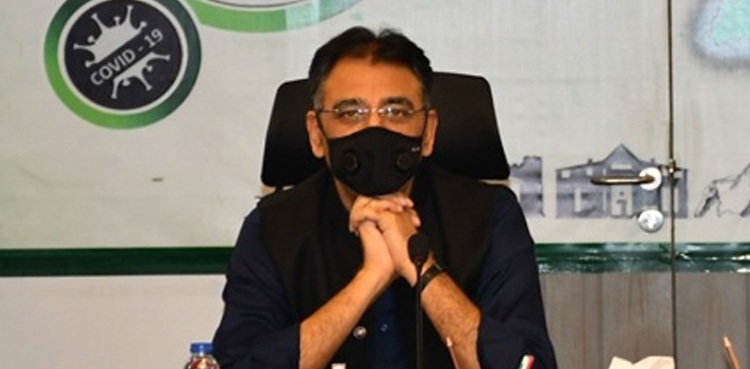
ISLAMABAD: Planning Minister Asad Umar has urged people to strictly follow Standard Operating Procedures (SOPs) and get vaccinated at the earliest to contain spread of the Indian variant of COVID-19.

Addressing a news conference along with Special Assistant on National Health Services, Regulations and Coordination Dr. Faisal Sultan in Islamabad on Sunday, he said the Indian variant spreads very fast. He said the government is arranging vaccines to protect the people from the coronavirus.

Asad Umar said the government has been successful to combat the previous waves of coronavirus and now we will be able to protect our people from the current wave and without affecting their employment.

Speaking on the occasion, Special Assistant to Prime Minister on National Health Services, Regulations, and Coordination Dr. Faisal Sultan asked the citizens to strictly follow COVID-19 Standard Operating Procedures (SOPs) to prevent the disease in the wake of sudden increase in the number of infections in the country.

Dr. Faisal said that that this disease expansion had caused a burden on the country’s health system as Covid cases were jumping up for the past few weeks.

He said that the number of confirmed Corona cases was increasing while the rising trend was also observed in a number of critical patients admitted in hospitals across the country. He added daily reported cases figure was also high in Karachi.

He said that keeping in view the disease risk the government will take effective steps to protect its citizens. He said that this time is not of any complacency rather strict compliance of SOPs.

Afghan forces battle to thwart Taliban assaults

Both the Taliban and government forces exaggerate their claims of casualties

News Desk

Kandahar: Afghan government forces struggled against Taliban assaults on several major cities Sunday as the insurgents stepped up a nationwide offensive that saw a key airport in the south come under rocket fire overnight.

After seizing large tracts of rural territory and capturing key border crossings, the Taliban has now started to besiege provincial capitals.

“Fighting is going on inside the city and we have asked for Special Forces to be deployed in the city,” Ataullah Afghan, head of Helmand provincial council, told agencies.

Afghan security forces have increasingly relied on air strikes to push the militants back from cities even as they run the risk of hitting civilians in heavily populated areas.

“The city is in the worst condition. I do not know what will happen,” said Halim Karimi, a resident of Lashkar Gah.

“Neither the Taliban will have mercy on us, nor will the government will stop bombing.”

Further west in the city of Herat, fighting continued on the city’s outskirts overnight with air strikes on Taliban positions.

Herat provincial governor’s spokesman Jailani Farhad said that around 100 Taliban fighters had been killed in the attacks.

Both the Taliban and government forces exaggerate their claims of casualties inflicted on each other’s forces and true counts are difficult to independently verify.

SADAF KANWAL’S ‘PROBLEMATIC’ FEMINISM STATEMENT ENRAGES TWITTER

Sadaf Kanwal, model and wife of actor Shahroz Sabzwari, has enraged a number of people for reducing feminism to household chores and taking care of the husbands.

A clip from an interview featuring Sadaf and Shahroz has topped Twitter trends. When asked about how she interprets feminism, Sadaf says, “Aurat is not bechari at all. A woman is very strong. I feel very strong and surely you [the host] must be strong as well.” 

She believes that the Aurat March is an entirely different debate.

“In our society, our culture is our husband,” Sadaf said. “I have to pick up his shoes, iron his clothes (which I seldom do, but I know where they are kept). I should know where Sherry’s [Shehroz] stuff is and what and when he has to eat.”

For Sadaf, feminism is taking care of her husband and giving him respect as this is what she has seen and been taught growing up. She ascribed feminism to increasing “liberals” in society and said that because she is a woman, she should know more about her husband than he does. Sadaf’s remarks have prompted a strong backlash from many people who argued that women like herself don’t represent those who are oppressed and subjected to violence. They are upset because they think Sadaf’s interpretation of feminism is “myopic and patriarchal”. Some people have defended the model too, saying that she only put forth her views when asked about them and that everyone has the right to express themselves.Sadaf and Shahroz tied the knot in a simple ceremony in May 2020. Shahroz was married to actor Syra Yousuf for seven years and they have a daughter named Nooreh Shahroz. 

Rockets hit Kandahar airport

Agencies

Kandahar: At least three rockets struck Kandahar airport in southern Afghanistan overnight, an official told AFP on Sunday, as the Taliban pressed on with their sweeping offensive across the country.

“Last night three rockets were fired at the airport and two of them hit the runway… Due to this all flights from the airport have been cancelled,” airport chief Massoud Pashtun told AFP.

Pashtun said work to repair the runway was underway and expected the airport to be operational later on Sunday.

An official at the civil aviation authority in Kabul confirmed the rocket attack.

The Taliban have for weeks launched withering assaults on the outskirts of Kandahar, stirring fears that the insurgents were on the verge of capturing the provincial capital.

Kandahar’s air base is vital to providing the logistics and air support needed to keep the militants from overrunning Afghanistan’s second-biggest city.

The attack on the airport came as the Taliban inched closer to overrunning two other provincial capitals — Herat in the west and Lashkar Gah in the south.

The Taliban’s significant territorial gains during the final stages of the US military withdrawal have largely been in sparsely populated rural areas.

But in recent weeks they have brought increasing pressure on several provincial capitals and seized key border crossings.

The capture of any major urban centre would take their current offensive to another level and fuel concerns that the army is incapable of resisting the Taliban’s battlefield gains.

Stay Connected

64FansLike
60FollowersFollow

Latest Reviews

Exchange Rates

USD - United States Dollar
EUR
1.14
GBP
1.34
AUD
0.70
CAD
0.71