Home Blog Page 2560

Erdoğan, Putin describe Akkuyu nuclear power plant as ‘symbol of friendship’

ANKARA, MAR 10 – A Russian-built nuclear power plant in Turkey, set to come into operation in 2023, represents close cooperation between the two countries, the two country’s presidents said on Wednesday.

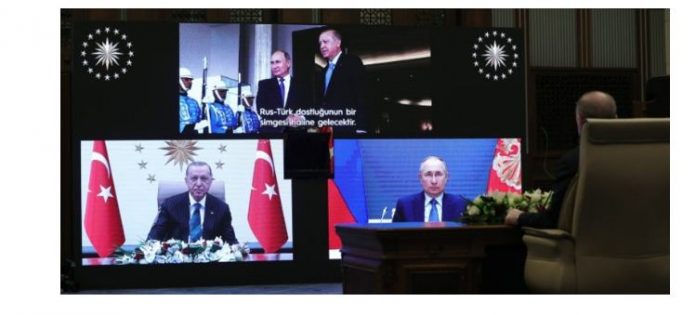
“We see this giant project as one of the symbols of Turkish-Russian cooperation,” Turkish President Recep Tayyip Erdoğan told a videoconference with Russian counterpart Vladimir Putin.

Erdoğan and Putin watched the laying of concrete at the third unit of the 20-billion-dollar Akkuyu nuclear power plant in southern Turkey via video link.

The construction of the plant, Turkey’s first ever, started in 2018.

Putin praised the project as a “symbol of friendship” and said it will “contribute to Turkey’s energy security.”

The plant’s first unit, out of a total of four, is scheduled to be operational in 2023, the centennial of the republic’s foundation, Erdoğan said.

The “strategic” project will eventually provide 10 percent of Turkey’s electricity requirment, Erdoğan added.

Russia’s Rosatom has a 99.2-per-cent stake in Akkuyu. Turkish engineers are receiving training in Russia to operate the plant in the future.

Erdoğan said construction of the fourth unit will start in 2021.

Ankara is determined to deepen ties with Moscow in other fields, including in security cooperation in the wider region, Erdoğan added.

Pak, Bahrain discuss issues of mutual interest

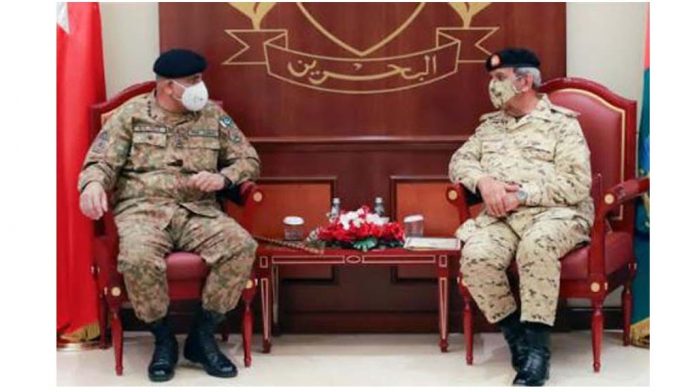
MANAMA, MAR 10: General Qamar Javed Bajwa, Chief of Army Staff (COAS) held one-on-one meetings with Field Marshal Mohammed Bin Isa Al Khalifa, Commander Bahrain Nation Guard and Major General Shaikh Nasser bin Hamad Al Khalifa, Bahrain National Security Advisor during his visit to Bahrain on Tuesday 09 March 2021.

During the meetings, issues of mutual interest and regional security situation came under discussion. COAS offered Pakistan’s complete support in achieving shared interests in bilateral security cooperation including training and capacity building.

Later, delegation level talks were also held, where current developments in Afghan Peace Process, Border Security and necessary steps to be undertaken to facilitate an Afghan-led and Afghan owned peace process were discussed. General Sir Nicholas Patrick Carter – Chief of Defence Staff UK Army, Dr Chrisitian Turner – British High Commissioner to Pakistan, Dr Hamdullah Mohib -National Security Advisor Afghanistan, General Mohammed Yasin Zia – Chief of Afghan National Army (ANA), Mr Ahmad Zia Saraj – Director National Directorate of Security (NDS) Afghanistan and Lieutenant General Faiz Hamid – Director General Inter Services Intelligence were present during the meeting.

Ways to enhance economic cooperation between Pak, Uzbek discussed

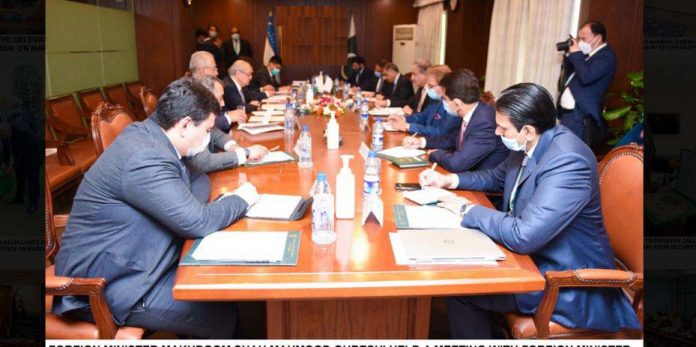
SLAMABAD, MAR 10 (DNA) – Foreign Minister Shah Mahmood Qureshi held delegation-level talks with the Foreign Minister of Uzbekistan, Abdulaziz Kamilov. Views were exchanged on enhancement of economic cooperation, mutual support in international fora, regional connectivity and tourism promotion.

Outlining the vision of “Naya Pakistan” centered around economic security, the Foreign Minister underlined the importance of shifting focus from geo-politics to geo-economics, to advance the goals of national economic development.

Both sides expressed their firm resolve to boost high-level interactions to give impetus to the existing positive momentum in bilateral relations. It was agreed to maximally utilize the existing institutional mechanisms by regularly convening sessions of Bilateral Political Consultations and Joint Ministerial Commission.

The two Foreign Ministers expressed satisfaction at the progress achieved in advancing rail connectivity between the two countries and agreed on early completion of Trans-Afghan railway project. Foreign Minister Qureshi emphasized the importance of direct air connectivity to further trade and tourism. He also stressed facilitation of visas for businessmen and tourists.

Foreign Minister Qureshi underlined the need to further strengthen the existing parliamentary cooperation between the two countries through exchange of visits. He welcomed the proposed “Re-connect Silk Route Conference” scheduled for July 2021. The event would help showcase Pakistani exports and products in Central Asia. He also underscored the importance of closer agricultural cooperation between the two countries particularly in cotton seed sector.

Foreign Minister Qureshi expressed satisfaction at the level of cooperation between the two countries in the multilateral organizations such as the UN, OIC, ECO and SCO.

The Foreign Minister highlighted Pakistan’s positive role for the facilitation of Intra-Afghan Negotiations.

The Foreign Minister reiterated Pakistan’s support to Afghan-owned and Afghan-led peace and reconciliation process culminating in an inclusive and broad-based political solution. Establishment of lasting peace and stability in Afghanistan would contribute to progress on various connectivity initiatives leading to regional prosperity.

He also underlined the grave and systemic human rights violations in IIOJK by Indian security forces.

Foreign Minister Kamilov extended an invitation to Foreign Minister Qureshi to participate in the Central Asia- South Asia Connectivity Conference to be held in Tashkent in July 2021.=DNA

=======================

RCCI organizes digital transformation conference vision 2025

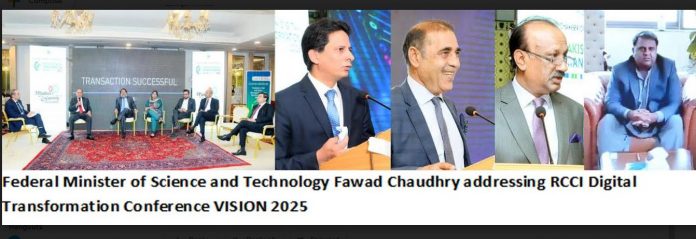
RAWALPINDI, MAR 10 (DNA) – The Rawalpindi Chamber of Commerce and Industry (RCCI) organized Digital Transformation Conference vision 2025 aimed to highlight the key challenges faced by the industry to transform traditional solutions to digital platforms. The conference also provided an opportunity to discuss industrial automation trends worldwide, automation requirements for existing industry, Digitalization and export competitiveness and digitalization requirements for small and cottage industry of the country and impact on employment opportunities.

President RCCI Nasir Mirza, Group Leader Sohail Altaf, Former Presidents, Senior Vice President Osman Ashraf, Vice President Shahraiz A Malik, executive committee members and a large number of members attended the conference.

Federal Minister of Science and Technology Fawad Chaudhry who joined the conference via video link, said that the Government is working on a comprehensive policy to address two major challenges to bring digitization or digital revolution in the country. The IT ministry has been given strong direction to bring stable Internet connection and spread the internet across the country. 5G technology will bring a revolution and several sectors including the medical sector. The second challenge is payment gateways where our IT exports are facing a big challenge to grow as we have been placed on FATF grey list.

The minister appreciated RCCI for organizing the conference and assured full support and assistance in this regard. He suggested RCCI to close collaboration with universities as strong industry academia linkages can improve the national economy as we saw many examples around the world.

The minister highlighted Governments recent initiatives for digital transformation and added that now stents, ventilators are being produced in the country. The Government has introduced the most lucrative electric vehicles auto policy.

Member IT Junaid imam highlighted ministry key steps towards knowledge economy. Through the universal support fund more than 20 billion rupee has been spent to spread broadband penetration and Internet outreach across Pakistan. Later speakers at panel discussion highlighted the core issues faced by the industry towards digital transformation mainly, skill workers, information, data analysis and Government support.

President RCCI Nasir Mirza in his welcome address said that with the use of digitization and automation, companies will be able to deliver their orders on time and at the same time be able to maintain quantity and quality standards with compliance with international standards. Further help to increase exports of the country and reduce dependence on the import of goods and services. Digital technologies are a vital tool for social development and economic magnification and growth to compete the world.

Group leader Sohail Altaf in his address said that there is a need to fill the communication gap between the ministry and the business community.

Chairman Conference, Abdul Basit Malik in his address said that the major aim of this conference was to discuss issues of the business community with relevant ministers and government authorities.

The panelists includes, Usman Shaukat (CEO Bio Labs) as moderator, Abdullah Khan DAO Proptech, Zarar Hasham Khan, Chief Business Services Officer PTCL, Dr. Rizwan Uppal CEO IDC, Muqeem ul Islam Director General NAVTTC, Ms Sadia Masood, Director Technology TUSDEC, Engr. Zaheer Shah MD HMC Taxila.=DNA

================

Pakistan, Belarus joint investment opportunities discussed

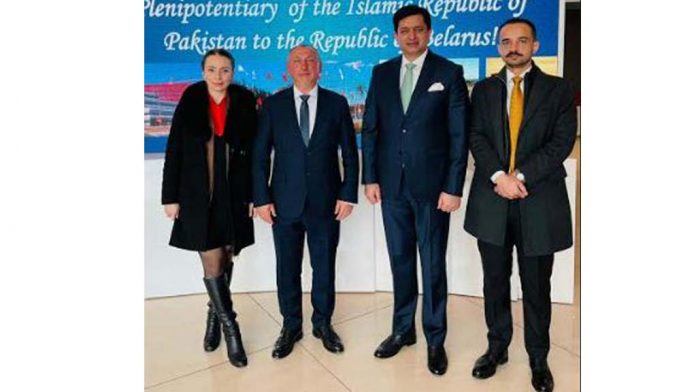
MINSK, MAR 10 (DNA) – Ambassador of Pakistan to Belarus Sajjad Haider Khan accompanied by the Deputy Head of Mission Abdullah Amin visited “Great Stone” Industrial Park in Minsk.

Head of Administration of the Industrial Park Aliaksandr Yarashenka received the Ambassador and provided a compressive tour of the facility and briefed the delegation on the origin, scope, ongoing projects and future prospects of the project. The project is part of China’s Belt and Road Initiative. Mr. Yarashenka was the former Belarusian Deputy Minister of Economy.

The park offers all the benefits of a free economic zone coupled with unique tax and legislative advantages. Great Stone’s convenient location, simplified business processes and advanced, ready to use infrastructure has attracted around 70 investors from 14 countries since its establishment, five years ago.

Mr. Yarashenka also welcomed the potential Pakistani investors to benefit from the ideal investment opportunities.

Appreciating the progress made in the industrial park, the Ambassador briefed the management on China Pakistan Economic Corridor where 9 SEZs are planned with four of them at advanced stages of development. The two sides agreed to remain in touch and work closer for mutual benefit of the two countries.=DNA

============

Cooperation between Engineering universities of Pak, Azerbaijan discussed

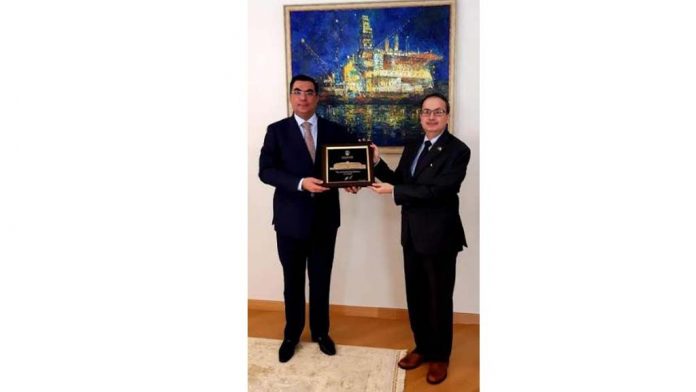
BAKU, MAR 10 (DNA) – Ambassador Bilal Hayee visited the campus of the prestigious Baku Higher Oil School (BHOS) and met with the Rector Elmar Gasimov, on Wednesday.

The two sides exchanged views to enhance cooperation between the Engineering universities of Pakistan and Azerbaijan including exchange of students, researchers, and sharing of technical expertise.

During the tour of the Campus, Ambassador was briefed on the working of different laboratories and training facilities available to the students at the state of art BHOS.=DNA

============

Biden’s Prospective Afghan Policy: Scenarios and Options for Pakistan

By Prof Dr. Shabir Ahmad Khan

America’s Afghan policy is closely related to its policy for Asia. The cornerstone of the USA’s Asia policy is to counter China’s rise that the USA perceives as a major threat to its global hegemony in addition to strengthening strategic cooperation with India, to check and eliminate Russia’s influence in Central Asia,and dealing with Tehran’s nuclear issue. According to one source, relations with China, Russia and Iran are important and central to the USA’s new administration.

The USA always keep eye on Pakistan’s nuclear assets. Joe Biden’s Pakistan policy will be framed by its relations with China, India, and Afghanistan. In this context, USA’s Afghan policy seems directly connected to its overall policy goals for Asia in the short, mid and long-term. To achieve these goals, objectives will be revised, re-framed, and adjusted accordingly by the USA.

The Complexities

Joe Biden has yet to come out with a comprehensive future policy regarding Afghanistan i.e. how to handle the post-deal situation. Based on Biden’s past speeches and approach towards Afghanistan, one can say that under his leadership, the US is not going to abandon Afghanistan all out.According to AFP (Agency from Presse), Joe Biden’s administration will review the US–Taliban withdrawal deal and seems not to withdraw troops by May 1st, 2021 though also stating to end the so-called forever war.NATO in its meeting on Afghanistan has also postponed the decision on withdrawal. It is hard to predict a government’s policy and strategy,however, it can be deducted from various readings that the Biden administration may support the Doha peace deal but will postpone the troops’ withdrawal if the parties do not reach to an agreement in the negotiations. Review of the deal/withdrawal will include consultations with European Union and NATO allies.This  will have repercussions to be seen if other party i.e. Taliban are not taken on board.

Biden desires to ensure the safe and secure exit of the US and to ensure a resolution of the Afghan imbroglio through a negotiated settlement including all parties. Therefore it seems unlikely that the Biden administration will entirely reverse the commitment to the withdrawal of US forces unilaterally. It is also a fact that in the post-pandemic period the USA may not be able to provide critical financial support due to other funding priorities. However, The U.S making efforts to foreclose the Taliban military victory or to prevent such an image.It has been suggested by some U.S analysts that America and its allies must also pressurize the incumbent Kabul regime to seriously negotiate and reach a compromised settlement. So both sides will and must face some pressure to make compromises.

The Trumpadministration though created conditions for peace by signing the deal, it has been criticized because the deal’s unilateral concessions to the Taliban and Trump’s tweets of troops’withdrawal by the end of 2020, weakened Afghanistan’s government position while emboldened Taliban. This also undermined peace talks however it seems that both the parties Afghan government and Taliban in reality are inconclusive on a future political setup/roadmap.The difficulty with the US-Afghan government stance is the demand for reduction in violence/war from Taliban, removing sanctions from Taliban – to remove the names of Taliban leaders from the United Nations Security Council (UNSC) blacklist – and release remaining Taliban prisoners linked with the start of intra-Afghan negotiations as per the deal. They intend to win a war on the table which they have lost on the ground.

The Americans also realize that Taliban have been joined by 5000 released prisoners and the emboldened Taliban may topple down the Afghan government which has been propped up by the US plus NATO at a huge cost, blood, and treasure. Reconciling Afghan factions is not so simple further complicated by lack of consensus at regional and global levels.The external dynamics of Afghanistan vis-à-vis the USA are the clash of interests between the USA and regional powers. Divided and ineffective Kabul regime, ethnic fault lines andtreacherous nature of insurgency are the internal dynamics.

Any unilateral decision regardingthe agreement without the consent of Taliban may further weaken the U.S/NATO already weakened position in Afghanistan. The complexity of the matter is that if troops withdraw without reaching any consensus on a political settlement, Afghanistan will move towards a civil war-like situation. This ultimately takes a shape of either war between Pashtun and non-Pashtuns. Main concern for U.S is Al-Qaida and IS in Afghanistan. The Afghanistan Study Group has also painted a bleak picture of Afghanistan if the US remaining troops withdraw without a negotiated political settlement. The group has concluded that Afghanistan may become a breeding ground of extremists threatening American security.

The Congressional mandate Afghan Study Group proposed all possible support to the Afghan government but also pointed out that U.S forces can’t be held hostage to the in-effective, corrupt and divided Afghan government. There will be pressure on the Afghan government to make compromises to reach a consensus with the Taliban. There will at the same time pressure on the Taliban to make compromises. Divisions in the Afghan government may intensify as many opposition leaders are not averse to interim setup.

Jake Sullivan, U.S national security advisor has hinted at regional diplomatic effort to enable the two parties Kabul regime and Taliban to reach political settlement and ceasefire. The three regional powers are currently playing a game of wait and see. Russia, Iran, and Central Asian Republics are tacitly extending support to the Taliban and not against the Taliban as previously were. It will be highly difficult for the USA to persuade Iran, Russia and China to play active roles in this American-led process in a way that America heralds a victorious withdrawal.

Probable Scenarios and Options for Pakistan

  1. It seems that USA has limited options or alternatives other than working on and keeping alive the current peace process to culminate in a logical conclusion. It is most probable that USA’s new administration talks to the Taliban, reviewing the deal particularly withdrawal, seek 6 months extension for sorting out political roadmap/interim setup including the Taliban representatives and negotiating other modalities. If such negotiations on extended withdrawal succeed, all the parties including USA, Taliban, and the Afghan government will have more time to conclude the peace process. It may lead to an inclusive broad-based government of all ethnic/political groups.In this case,the pressure will be mounted on the two parties Afghan government and Taliban for making compromises provided thatall other peace processes such as the Moscow Format and Quad remain supportive of the current peace process and USA withdraws within re-negotiated timeline.Pakistan will have to play a constructive role in this regard for having sustainable peace. The neighbors of Afghanistan will still need to be on board. It will elevate Pakistan’s stature regionally and globally. It will also pave way for Pakistan’s integration with Central Asia and enhanced regional connectivity. The international donors will also have to support Afghanistan financially for many years to come.
  2. An ideal scenario is still possible that both the parties Afghan government and Taliban are pressurized to make compromises, the negotiations accelerate with all the partiesthe USA, Afghan government and Taliban fulfilling their obligations according to the deal signed. The Afghan government agrees to a new political roadmap/setup, releases Taliban prisoners while Taliban agree to reduction/end of violence and become part of the new setup. In this case USA will have to withdraw by May 2021 according to the deal. The immediate neighbors of Afghanistan will have to support the new setup with increased interaction and financial, trade facilitation as per their capacities. It will lead to a win-win situation for all the regional states including Pakistan.
  • If the negotiations breakdown the following scenarios may emerge. First,USA withdraws unilaterally and Afghanistan sinks into chaos and instability because the Taliban alone cannot control the whole of Afghanistan. Different regional states will support different groups based on ethnicity or political interests. Pakistan will face refugees’ influx and stalled regional connectivity. The instability will have cross-border negative consequences for Pakistan. Pakistan can do little in this caseas huge financial resources will be required to sustain any support for any political group in Afghanistan. This may lead to a lack of confidence and suspicions among neighbors of Afghanistan also which will be detrimental for national and regional inclusive growth.

The second scenario in case of negotiations breakdown can be that USA stays militarily with renewed Taliban opposition and the status quo remains for an un-seeable future.In either case, instability will prevail having dire consequences for Pakistan and the region at large.So the Afghan endgame will be protracted however the peace process must be alive because the only way forward for sustainable peace in Afghanistan is through a negotiated political settlement and no military solution.Pakistan has been playing a constructive role however it must be realized that Pakistan has also limitations that must be clarified to USA and other regional and non-regional states. It will help remove doubts, if any, regarding Pakistan and its role during this particular time. For instance Pakistan’s support for inclusive political setup and it is up to the Afghans to decide the kind of future political setup and Pakistan cannot take any position on this.

27 reports of Standing Committees presented in upper House

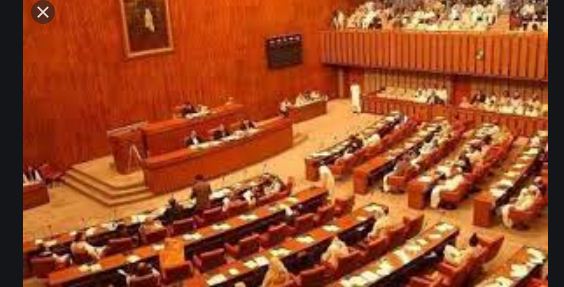
ISLAMABAD, MAR 10 (DNA) – Around 27 reports of the Senate Standing Committees were presented in the Upper House of the Parliament on Wednesday.

Senator Faisal Javed, Chairman Senate Standing Committee on Information and Broadcasting presented report of the committee on the subject matter of starred question asked by Senator Bahramand Khan Tangi regarding names, designations, grades, educational qualification and places of domicile of persons appointed in PTVC during last one year including their salaries, allowances and other fringe benefits.

He also presented report of the committee on a point of public importance raised by Senator Mushahid Hussain Sayed regarding airing of Indian sports channels in Pakistan despite complete ban by Pakistan Electronic Media Regulatory Authority (PEMRA) on production and broadcasting of Indian contents.

Senator Lt General (Retired) Abdul Qayyum, Chairman Senate Standing Committee on Defence Production presented special report of the committee regarding development of a mechanism to make Defence Production units financially self-sustaining.

Senator Taj Muhammad Afridi, Chairman Senate Standing Committee on States and Frontier Regions presented report of the committee on a point of public importance raised by Senator Muhammad Usman Khan Kakar on February 4, 2020, regarding payment of compensation to the IDPs of South Waziristan.

Senator Mirza Muhammad Afridi, Chairman Senate Standing Committee on Commerce presented report of the Committee on the subject matter starred question No. 13, asked by Senator Muhammad Usman Khan Kakar on 22th January, 2021, regarding details of coal imported annually during the last ten years indicating names of countries, annual volume of quantity of coal and amount incurred thereon.

Senator Ayesha Raza Farooq on behalf of Senator Farooq H Naek, chairman Senate Standing Committee on Commerce presented report of the committee on the completion of its tenure (2018-2021).

She also presented report of the Committee on the Subject matter of starred question No.139 asked by Senator Mir Kabaeer Ahmed Muhammad Shahi regarding the number of persons presently working in the ministry of Finance, Revenue and Economic Affairs and its attached departments.

Senator Ayesha Raza Farooq on behalf of Chairman Senate Standing Committee on Finance, Revenue and Economic Affairs also presented report of the committee on the subject matter of starred question asked by Senator Talha Mahmood. She also presented a report on a motion under Rule 218, moved by Senator Sirajul Haq.

Senator Muhammad Usman Khan Kakar on behalf of Chairman Standing Committee on Water Resources Senator Shamim Afridi presented three reports of the committee in the House.

Senator Khushbakht Shujat, Chairperson Standing Committee on National Health Services, Regulations and Coordination presented report of the committee on the subject matter regarding the details of vacant posts of Medical and Para Medical staff in the government hospitals in Islamabad with hospital wise break up and the steps being taken by the government to fill the same.

Senator Seemi Ezdi presented two reports on behalf of the Chairman Senate Standing Committee on Cabinet Secretariat Senator Muhammad Talha Mehmood regarding the number of operational mobile phone towers on National Highway Leading to Southern Districts of Khyber Pakhtunkhwa and decision of the government to abolish the posts lying vacant.

Senator Rukhsana Zubairi on behalf of the Chairman Senate Standing Committee on Federal Education, Professional Training, National History and Literary Heritage presented four reports of the committee. Senate Implementation Committee report was also presented in the House regarding original idea, purpose and implementation status of Aghaz-e-Haqooq-e-Balochistan package.

Senator Kesho Bhai on behalf of the Chairman Senate Standing Committee on Religious Affairs and Interfaith Harmony presented report of the committee on point of public importance. Senator Sussui Palijo on behalf of the Chairman Senate Standing Committee on Overseas Pakistanis and Human Development Senator Hilal Ur Rehman presented report of the committee on the completion of its tenure (2018-2021).

Senator Fida Muhammad Chairman Senate Standing Committee on Power presented report of the committee on a point of public importance regarding provision of electricity to Makran Division through establishment of power projects in the area. He also presented two other reports of the committee regarding number of electricity meters installed by PESCO and non-installation of electricity meters, promotion of kunda culture and wrong billing. = DNA

====================

Timely diagnosis of chronic kidney diseases can save lives: experts

ISLAMABAD, MAR 10 (DNA) – Each year World Kidney Day is aimed to raise awareness of the importance of our kidneys to our overall health and to reduce the frequency and impact of kidney disease and its associated health problems worldwide.

The World Kidney Day theme of this year is “Living Well with Kidney Disease”. This has been done to both increase education and awareness about effective symptom management and patient empowerment, with the ultimate goal of encouraging life participation.

According to experts, Pakistan ranks eighth in the list of countries with a high rate of kidney diseases, with 17 million people suffering from such diseases. According to them, Chronic Kidney Disease (CKD) is rapidly growing in Pakistan due to late diagnosis, kidney stone disease, and an increasing number of patients suffering from diabetes and high blood pressure.

Dr. Syed Farhat Abbas, Consultant Nephrologist at Shifa International Hospital (SIH) said that kidney patients should keep their blood pressure on the lower side, and manage blood sugar levels, also they should reduce salt intake, and moderate protein consumption. A person at high risk for kidney disease should consult his health care provider to protect kidney health.

Dr. Syed Nayer Mahmud, Consultant Nephrologist at SIH said that to protect kidney health, people should know their risks. If one has diabetes or high blood pressure, or a family history of kidney failure, they are at higher risk of kidney problems. Also getting tested can help timely diagnosis because people with early-stage kidney disease usually have no symptoms.

Dr. Danyal Hassan, Consultant Nephrologist at SIH said that kidneys serve a vital role by filtering waste and excess fluid from the blood and maintaining a healthy balance of water, salts, and minerals. Stone disease is a common cause of chronic kidney disease and drinking 2-3 liters of boiled or filtered water is the key to prevent stone formation.

Dr. KiranKhurshid& Dr. MomenaManzoor, Consultant Nephrologists at SIH also highlighted that those who are suffering from end-stage kidney disease, please be careful about the risk of acquiring hepatitis and other blood-borne infections from dialysis machines; choose dialysis unit where proper sanitization is done.

Dr. Fareeha Khalil, Associate Consultant Nephrologist at SIH also advised that normal people should take care of their kidneys by exercising, weight control and balanced diet, stay hydrated, cholesterol levels maintenance, avoid painkillers, get annual physical checkups, and know their family medical history.=DNA

=====================

Air chief meets CJCSC Gen. Nadeem Raza

DNA

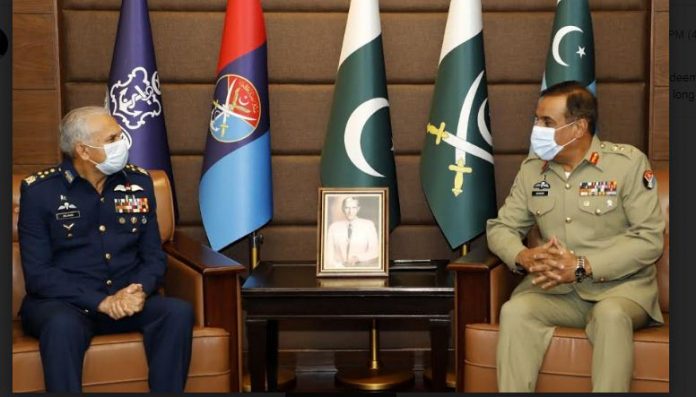
Rawalpindi, MAR 10 – Air Chief Marshal Mujahid Anwar Khan, Chief of Air Staff (CAS), paid farewell call on General Nadeem Raza, Chairman Joint Chiefs of Staff Committee at Joint Staff Headquarters, Rawalpindi.

Chairman JCSC thanked CAS for his services to the Nation during a long and illustrious career.

Stay Connected

64FansLike
60FollowersFollow

Latest Reviews

Exchange Rates

USD - United States Dollar
EUR
1.17
GBP
1.34
AUD
0.67
CAD
0.73