Home Blog Page 217

Dar, Wang Yi discuss regional tensions via phone

Dar, Wang Yi discuss regional tensions via phone

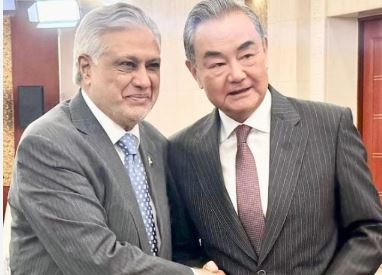
ISLAMABAD, MAR 10 /DNA/ – Deputy Prime Minister and Foreign Minister Senator Mohammad Ishaq Dar @MIshaqDar50 held a telephonic conversation today with the Foreign Minister of China, H.E. Wang Yi.

They exchanged views on the evolving regional situation and broader global developments. DPM/FM shared Pakistan’s perspective and underscored the urgent need to ease tensions in the Middle East and the wider region.

Foreign Minister Wang Yi appreciated Pakistan’s constructive efforts aimed at promoting de-escalation and stability in the region.

The two leaders stressed the importance of de-escalation and emphasized the need to pursue dialogue and diplomacy in accordance with the principles of the United Nations Charter.

Both sides also reaffirmed the enduring strength of the Pakistan-China All-Weather Strategic Cooperative Partnership, reiterated their shared commitment to further deepening bilateral cooperation, and agreed to remain in close contact.

PHMA opposes 0.9% infrastructure Cess in Punjab

PHMA opposes 0.9% infrastructure Cess in Punjab

FAISALABAD, MAR 10 /DNA/ – Ahmad Afzal Awan, Senior Vice Chairman ofvPakistan Hosiery Manufacturers and Exporters Association (PHMA) North Zone has strongly opposed the imposition of a 0.9 percent Infrastructure Development Cess in Punjab, stating that such levies would further increase the cost of doing business and adversely affect the competitiveness of Pakistan’s export-oriented textile sector.

In a statement issued here on Tuesday, Mr.Ahmad  said that the value-added textile sector, particularly hosiery and knitwear exporters based in Faisalabad and other industrial hubs of Punjab is already facing immense challenges due to high energy tariffs, rising raw material costs, and increased taxation. The imposition of an additional infrastructure cess will place an unnecessary financial burden on exporters who are striving to sustain their presence in highly competitive international markets.

He emphasized that exporters are contributing significantly to the national economy by earning valuable foreign exchange and providing large-scale employment. Instead of introducing new levies, the government should focus on facilitating exporters and reducing the cost of production to enhance Pakistan’s export potential.

He further noted that such provincial levies create distortions in the supply chain and discourage industrial growth. He urged the Punjab government to reconsider and withdraw the proposed infrastructure cess, as it would ultimately harm export growth and slow down economic activity in the province.

The PHMA North Zone leadership called upon the federal and provincial authorities to consult with industry stakeholders before introducing any additional taxes or charges that may negatively impact the export sector.

He reiterated that the government must adopt policies that promote industrial expansion, boost exports, and ensure the long-term sustainability of Pakistan’s textile industry.

In view of these concerns he requested the Punjab Govt to immediately withdraw this proposed infrastructure cess in Punjab .

Pakistan-Afghanistan tensions seen boosting Taliban supreme leader’s position

Pakistan-Afghanistan tensions seen boosting Taliban supreme leader’s position

Shamim Shahid

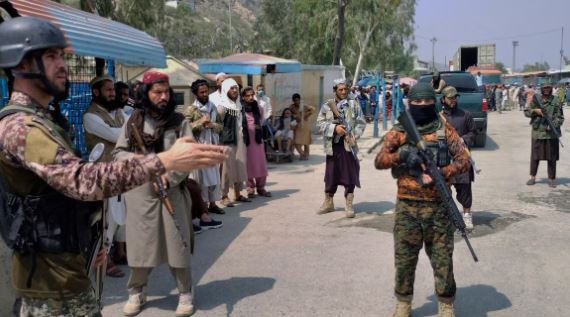
ISLAMABAD, MAR 10 /DNA/ – Recent cross-border clashes and diplomatic tensions between Pakistan and Afghanistan are being viewed by analysts as inadvertently strengthening the authority of the Taliban’s supreme leader, Hibatullah Akhundzada, within the Islamic Emirate of Afghanistan.

Sources familiar with the developments said the escalation comes at a time when several senior Taliban officials were reportedly preparing to raise concerns about the administration’s strict policies and growing international isolation.

 Diplomatic observers suggest that ministers and deputy ministers had planned to submit a message urging policy reforms to address the public’s discontent.

“The internal discussion was aimed at aligning leadership decisions with the realities on the ground,” said an official associated with international monitoring organisations, including the United Nations. “Some leaders intended to inform the supreme leader that certain decrees and policies were causing frustration among Afghan citizens and widening the gap between the government and the people.”

Analysts note that Pakistan’s military operations, which began in October 2025 and resumed after a brief ceasefire in February 2026, have shifted focus away from these internal debates. “External conflict often sidelines dissenting voices,” said a regional analyst. “In this case, the escalation may have consolidated the supreme leader’s authority while stalling reform efforts within the Taliban administration.”

Since the Taliban takeover of Kabul in August 2021, the government has faced widespread criticism over human rights violations, restrictions on women’s education and employment, and political repression. Ahead of International Women’s Day, former US envoy to Afghanistan Zalmay Khalilzad called on the Taliban to allow Afghan girls and women to attend schools and universities, highlighting ongoing international concern.

Public opinion analysts in Afghanistan and abroad say the recent escalation may have strengthened hardline positions within the Taliban, reducing momentum for internal reform and silencing voices calling for changes in strict policies. However, experts caution that the full impact of external pressures on Taliban decision-making remains uncertain.

This development raises questions about whether the clashes represent ordinary military action or a calculated move to reinforce existing leadership structures amid Afghanistan’s ongoing political and humanitarian crisis.

Pak-Turkey discuss regional security and cooperation

Pak-Turkey discuss regional security and cooperation

ISLAMABAD, MAR 10 /DNA/ – The Turkish Ambassador to Pakistan, Mr. Irfan Neziroglu, met with the Prime Minister’s Adviser on Inter-Provincial Coordination and Public Affairs, Rana Sanaullah, in Islamabad today. Federal Secretary for Inter-Provincial Coordination, Mohiuddin Ahmed Wani, was also present during the meeting.

During the meeting, both leaders discussed matters of mutual interest and the changing political and security situation in the region.

Rana Sanaullah and the Turkish Ambassador expressed deep concern over the rising tensions and the threat of war involving the United States, Israel, and Iran. Both sides agreed that war is not a solution to any problem. They noted that conflict not only leads to the loss of human lives but also poses serious risks to the global economy and energy supplies. Both leaders stressed the need for establishing peace in the region and finding diplomatic solutions to conflicts.

The Prime Minister’s Adviser also briefed the Turkish Ambassador on Pakistan’s perspective regarding the situation along the Pakistan-Afghanistan border and its relations with Afghanistan.

The Turkish Ambassador informed Rana Sanaullah that Turkey’s Minister of Sports will visit Pakistan in May. The purpose of the visit is to promote sports cooperation and provide joint platforms for the youth of both countries.

Federal Secretary Mohiuddin Wani reaffirmed Pakistan’s commitment to enhancing cooperation with Turkey in various sectors at the inter-provincial level.

Rana Sanaullah praised the long-standing brotherly relations between Pakistan and Turkey. He stated that Pakistan highly values its relationship with Turkey, and both nations have always stood by each other in times of need.

HEC hosts reception for scholarship awardees from Bangladesh, Sri Lanka

HEC

ISLAMABAD, MAR 10 /DNA/ – The Higher Education Commission (HEC) hosted a reception at its Secretariat in Islamabad for students from Bangladesh and Sri Lanka who are currently pursuing their studies in Pakistan under the prestigious Allama Iqbal Scholarship Programme.

The event brought together students from these countries studying at various leading universities in and around the capital. Chairman HEC Dr. Niaz Ahmad Akhtar graced the occasion as the chief guest. The ceremony was attended by the High Commissioner of Sri Lanka to Pakistan, Rear Admiral Fred Senavirathne (Rtd), High Commissioner of Bangladesh to Pakistan, Md. Iqbal Hussain Khan, senior officials from Ministry of Foreign Affairs Pakistan, Vice Chancellors and Rectors from various host institutions.

In his keynote address, Dr. Niaz Ahmad Akhtar extended a warm welcome to the students and the diplomats. He expressed his profound gratitude to the management of Pakistani universities for their dedicated support in hosting and mentoring these students. He highlighted that Pakistan is home to world-class institutions such as FAST, COMSATS, Pak-Austria Fachhochschule, NUML, Quaid-I-Azam University, NUTECH, UET and NUST, which provide a competitive and nurturing environment for global talent.

The Chairman emphasized that such educational initiatives are vital for cementing the bilateral bonds. He noted that Pakistan and Sri Lanka have a long history of standing by each other in times of need, and similarly, the relationship with Bangladesh is being continuously strengthened through multiple avenues, with education serving as a primary bridge for future collaboration.

The High Commissioner of Sri Lanka spoke highly of the longstanding and robust friendship between the two nations, noting that collaboration spans critical sectors including commerce, sports, defense, and education. He reiterated that Sri Lanka prioritizes the education of its citizens and views this scholarship program as a resounding success that significantly strengthens people-to-people relations. While thanking the Government of Pakistan and the HEC, he encouraged the students to make the most of this unique opportunity to gain knowledge and build lasting professional networks.

Echoing these sentiments, the High Commissioner of Bangladesh remarked on the shared cultural and academic values that unite the two countries. He stated that the presence of Bangladeshi students in Pakistani universities is an indicator of the deepening educational ties and mutual trust between the two countries. He praised the Allama Iqbal Scholarship Programme for providing a platform where young minds can exchange ideas and contribute to the socio-economic development of the entire region.

Earlier, Director General (HRD) HEC Mrs. Aayesha Ikram delivered the welcome remarks. She provided a brief overview of the program’s progress and reaffirmed that HEC will facilitate the students’ journey throughout their stay to ensure a seamless academic experience. She said that these students will serve as ambassadors of goodwill between their respective countries and Pakistan.

OGRA denies social media claims of fuel price hike

OGRA denies social media claims of fuel price hike

ISLAMABAD, Mar 10: The Oil and Gas Regulatory Authority (OGRA) on Tuesday rejected reports circulating on social media about a rise in petrol and diesel prices.

OGRA’s spokesperson clarified that no summary recommending a petrol increase of Rs 73.40 or a diesel hike of Rs 84.95 had been sent to the Prime Minister.

The spokesperson called the claims “completely baseless” and urged the public not to trust unverified information online.

B-52s arrive at UK air base amid conflict with Iran

B-52s arrive at UK air base amid conflict with Iran

DNA

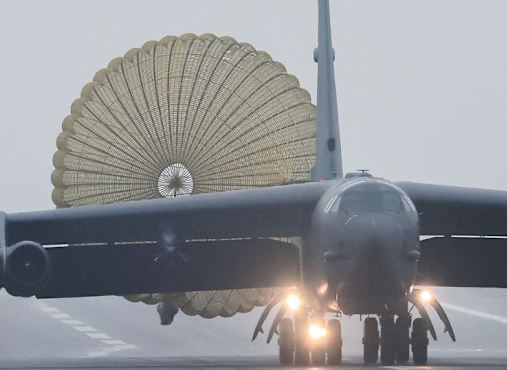
LONDON: Three more US bombers have landed in the UK after Prime Minister Sir Keir Starmer approved “defensive” US action against Iranian missile sites from UK bases.

The B-52 bombers that arrived at RAF Fairford in Gloucestershire earlier measure 160ft (49m) and are capable of launching missiles more than 1,500 miles (2414km).

They join a fleet of US military planes now stationed at the base after a B-1 Lancer bomber arrived on Friday evening, followed by two more on Saturday.

After granting the US permission to use RAF Fairford in Gloucestershire and Diego Garcia in the Indian Ocean, the prime minister told MPs the government “does not believe in regime change from the skies”.

A large black B52 military bomber, a long sleek black plane, coming down the runway at Fairford air base. It is a misty day and there is barbed wire in the foreground.

The B-52 bombers were pictured arriving at RAF Fairford in Gloucestershire earlier

Air activity has increased significantly at RAF Fairford in the last 72 hours, with the United States putting in some of its heavy-duty bomber forces.

This is the first time B-52s have been seen in the UK during this current conflict.

The B‑52, piloted by a crew of five, is one of the US Air Force’s longest‑serving and most versatile heavy bombers and can carry up to 70,000 pounds (31,751kg) of mixed weapons.

It first flew in 1952, yet remains a core part of the United States’ strategic power today due to its capacity, long range, and flexibility.

IBCC, PHF discuss roadmap to promote hockey at grassroots level

IBCC, PHF discuss roadmap to promote hockey at grassroots level

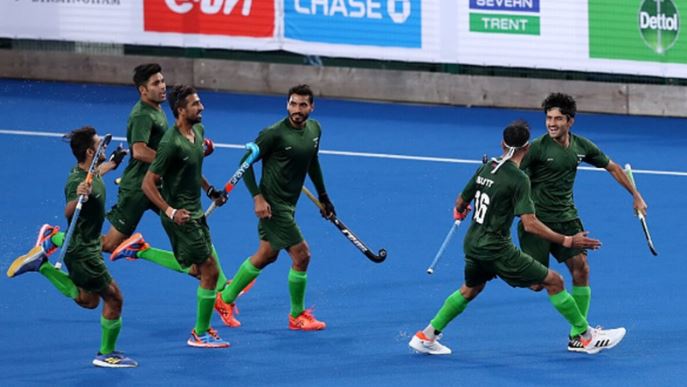
ISLAMABAD, Mar 10 /DNA/ : The Inter Boards Coordination Commission (IBCC) on Tuesday hosted a meeting of the National Education–Hockey Coordination Committee at its Secretariat in Islamabad to discuss a comprehensive national strategy aimed at reviving hockey through Pakistan’s education system.

The meeting was co-chaired by IBCC Executive Director Dr. Ghulam Ali Mallah and Secretary Inter-Provincial Coordination (IPC) and President of the Pakistan Hockey Federation (PHF) Mohyuddin Ahmed Wani.

Directors of Physical Education from various educational boards, representatives of the PHF and former Olympians including Hassan Sardar, Islahuddin and Khawaja Junaid attended the session.

During the meeting, the Federal Secretary IPC presented the IBCC–PHF School and Inter-Board Hockey Revival Program (2026–2029), a strategic roadmap designed to rebuild Pakistan’s hockey talent pipeline through schools and educational boards.

The initiative aims to promote hockey at the grassroots level by expanding school-based competitions, organizing inter-board tournaments and establishing a structured pathway for young players to progress towards national representation.

Participants welcomed the initiative and expressed their commitment to work collectively for the revival of Pakistan’s national sport through the education sector.

It was also decided that a joint Steering Committee, comprising representatives of IBCC, PHF and former Olympians, would oversee the implementation of the roadmap and ensure effective coordination among educational boards across the country.

Trump Buries the United Nations

Qamar Bashir

Qamar Bashir

In the ashes of the Second World War, humanity stood at the edge of civilizational collapse. Two catastrophic wars had devastated continents, killed more than 70 million people, and shattered the illusion that unrestrained nationalism and military power could coexist with global stability. Out of this devastation emerged one of the most ambitious political projects in human history: the creation of the United Nations in 1945. Designed largely under the leadership of the United States and its wartime allies, the institution was meant to prevent future wars, eliminate poverty, encourage diplomacy, and build a world governed by rules rather than brute force.

For nearly eight decades, the United Nations and its related institutions helped construct what came to be known as the “rules-based international order.” Agencies such as the World Health Organization, World Food Programme, International Monetary Fund, and World Bank worked to alleviate poverty, distribute health services, stabilize economies, and assist countries emerging from conflict. The United Nations oversaw peacekeeping missions in dozens of conflict zones, helped eradicate diseases like smallpox, and coordinated humanitarian aid to millions facing famine or displacement. The rule-based trading and financial architecture that followed—embodied in institutions like the World Trade Organization—enabled unprecedented economic growth across the globe.

Yet today, the institution that once symbolized humanity’s collective commitment to peace stands increasingly weakened. The very country that was instrumental in creating and enforcing this system appears to be drifting away from it. Since the return of Trump to the presidency, his rhetoric and actions have undermined the legitimacy of international law and institutions that once amplified American power. Trump has repeatedly emphasized that the United States possesses the most powerful military on Earth, the largest economy, and unmatched technological capability. While these facts are widely acknowledged—U.S. defense spending alone exceeds $850 billion annually, greater than the next ten countries combined—the repeated emphasis on raw power signals something deeper: a belief that international rules constrain American freedom of action.

For decades, the United States championed a system where even small nations possessed legal standing and diplomatic voice within the United Nations. The foundational principle was simple but revolutionary: sovereign equality. In theory, the smallest island nation had the same vote in the General Assembly as the largest superpower. This principle helped legitimize the system and ensured that disputes would be resolved through negotiation, consultation, and diplomacy rather than war.

However, the resurgence of “might-makes-right” thinking threatens to unravel that consensus. Increasingly, global politics appears to be drifting away from diplomacy toward unilateral action backed by military superiority. The use of strategic bombers such as the B-52 Stratofortress and stealth platforms like the B-2 Spirit symbolizes this shift. Rather than relying on multilateral consensus or international arbitration, military power is again being invoked as the ultimate arbiter of global disputes.

Nowhere is this erosion of international authority more visible than in the Middle East. Israel’s military operations across Gaza, Lebanon, Syria, and Iran have frequently proceeded despite criticism from international bodies and resolutions calling for restraint. Investigations and appeals from the International Court of Justice and multiple UN resolutions have had little practical effect on events on the ground. The devastating war in Gaza, which according to humanitarian agencies has resulted in tens of thousands of civilian casualties and widespread destruction of infrastructure, illustrates the limits of global institutions when powerful states choose to ignore them.

The inability of the United Nations to enforce its resolutions has led many analysts to question whether the organization still possesses meaningful authority. Critics increasingly describe it as toothless—a forum for speeches rather than an institution capable of imposing consequences on those who violate international law. In earlier decades, the credibility of the United Nations rested largely on the willingness of major powers, particularly the United States, to enforce its principles. When Washington itself begins to bypass those principles, the entire structure weakens.

Recent geopolitical events reinforce this perception. The United States has seized foreign oil shipments, imposed sweeping sanctions on adversaries, and conducted military strikes in multiple regions without clear UN authorization. Washington has also openly discussed strategic control over resources in regions such as Greenland and emphasized pre-emptive military action as a legitimate doctrine. These developments signal a shift away from the cooperative frameworks that once defined post-war international politics.

The consequences of this shift extend far beyond the Middle East. If international rules are no longer respected by their principal architect, other countries may follow the same path. Already, conflicts such as the war between Armenia and Azerbaijan, border tensions across Asia, and unilateral military actions by various regional powers reflect a growing willingness to bypass diplomacy in favor of force.

This erosion of legal norms creates a dangerous precedent. If powerful states feel free to violate borders, eliminate political leaders, or destroy infrastructure without accountability, smaller nations will face increasing insecurity. The collapse of trust in international law could also disrupt global commerce, maritime navigation, and air travel agreements that depend on mutual respect for established rules.

Ironically, this transformation could ultimately weaken the very country that once championed the rules-based order. The international system created after World War II magnified American influence by aligning global institutions with its values and interests. By abandoning those frameworks, Washington risks encouraging a fragmented world where competing blocs pursue power without restraint.

The war in Gaza illustrates another paradox. Despite overwhelming military superiority and the deployment of some of the world’s most advanced weapons systems, Israel and its allies have struggled to achieve decisive strategic outcomes against irregular forces. The persistence of groups such as Hamas and Hezbollah demonstrates that military might alone cannot resolve deeply rooted political conflicts. Even after years of bombardment and tens of thousands of casualties, the underlying grievances and power dynamics remain unresolved.

These realities raise a fundamental question: if overwhelming military force cannot eliminate small insurgent groups, what would be the consequences of applying the same strategy against a large and heavily armed nation like Iran? Iran has a population exceeding 90 million and a vast geographical landscape stretching across mountainous terrain. Any prolonged conflict would carry immense regional and global repercussions.

The deeper lesson may be that sustainable peace cannot be achieved through force alone. Lasting solutions require dialogue, diplomacy, and recognition of mutual sovereignty. The original vision behind the United Nations was precisely this: a system where disputes would be resolved through negotiation rather than war.

Today that vision appears battered, perhaps even buried. Yet history suggests that institutions often evolve through crisis. The devastation of two world wars gave birth to the United Nations. The present erosion of international law may eventually compel global leaders to reform and strengthen the very institutions that now appear weakened.

Humanity possesses one enduring advantage over the forces of chaos: the capacity for reflection and hope. If the United States and other major powers rediscover the value of the rules-based system they once built, the United Nations could yet regain its relevance. The alternative—a world governed solely by power and intimidation—would not merely undermine international stability. It would return civilization to the very conditions the United Nations was created to prevent.

In that sense, the future of the global order may depend not on military strength, but on whether humanity chooses once again to believe that law must stand above power.

Qamar Bashir

Press Secretary to the President (Rtd)

Former Press Minister, Embassy of Pakistan to France

Former Press Attaché to Malaysia

Former MD, SRBC | Macomb, Michigan

Gulf on the Verge of Catastrophe

Gulf on the Verge of Catastrophe

by Muhammad Mohsin Iqbal

The present confrontation in the Middle East has brought the international system to one of its most delicate moments since the end of the Cold War. The joint military campaign launched by the United States and Israel against Iran in late February 2026 has rapidly expanded into a wider regional crisis, drawing in multiple actors and raising fears of an uncontrollable escalation. Independent analysts describe the conflict as the opening phase of what some commentators already call a “third Gulf war,” whose consequences may extend far beyond the immediate battlefield.

The campaign began with coordinated air and missile strikes by Israel and the United States against Iranian military installations and infrastructure. The stated objective was to weaken Iran’s missile capabilities and strategic facilities that Washington and Tel Aviv believe threaten regional security. Yet the war has not unfolded according to simple expectations. Iran has responded with missile and drone attacks against Israeli targets and military facilities in several Gulf countries, while tensions around the Strait of Hormuz have disrupted global shipping and energy supplies.

The resilience of Iran’s retaliatory capability has surprised many observers. Missile strikes and asymmetric responses have demonstrated that even under intense pressure Iran retains the ability to inflict strategic costs. At the same time, Israel’s celebrated multilayered defence system has faced severe strain as repeated waves of missiles and drones test the limits of interception technologies. The war has therefore turned into a contest of endurance rather than a swift demonstration of military superiority.

The economic consequences of the conflict are already visible. Oil prices have surged rapidly, shaking global financial markets and raising fears of recession in several economies. The United States, already confronting inflationary pressures and fiscal burdens from earlier conflicts, may find the continuation of a prolonged war economically difficult. Wars fought far from home often impose invisible costs that gradually accumulate in national budgets and public opinion.

The Gulf countries, despite their close security ties with Washington, are deeply worried about the consequences of the conflict. Iranian retaliatory attacks have already reached several states of the region, and analysts warn that vital infrastructure—including desalination plants and energy facilities—could become targets if hostilities intensify. For countries whose survival depends on imported technology and fragile water infrastructure, the specter of a wider war is profoundly alarming.

Beyond the immediate region, the positions of major global powers further complicate the situation. China and Russia have voiced strong diplomatic criticism of the military strikes and warned that the conflict could destabilize the international system. Beijing in particular appears to be pursuing a cautious long-term strategy, balancing its economic ties with Iran and its global diplomatic interests while urging de-escalation. Moscow, for its part, sees the crisis through the prism of great-power competition with the West and fears that a prolonged war could reshape strategic alignments in Eurasia.

These reactions highlight a deeper transformation in world politics. The Middle East is no longer merely a regional theatre; it has become an arena in which the strategic interests of major powers intersect. Energy routes, technological supply chains, and geopolitical influence are all at stake. Consequently, even a localized war has the potential to produce global consequences.

One of the most troubling questions raised by the present conflict concerns the possibility of nuclear escalation. While neither the United States nor Israel has publicly suggested the use of nuclear weapons, analysts acknowledge that the longer the war continues without decisive results, the greater the temptation for extreme measures may become. History offers a sobering precedent. During the final phase of the Second World War, the United States resorted to atomic bombs against Hiroshima and Nagasaki in order to force Japan’s surrender. That decision ended the war but introduced a terrifying new era in human history.

The comparison is not exact, yet the psychological logic of war often follows similar patterns. When conventional military campaigns fail to achieve rapid victory, decision-makers may consider extraordinary options. However, the geopolitical environment today is fundamentally different from that of 1945. The existence of multiple nuclear powers, combined with complex alliances and global media scrutiny, creates powerful deterrents against such a catastrophic step. Any nuclear attack on Iran would almost certainly provoke unpredictable reactions across the world, potentially drawing other nuclear states into the crisis.

For countries such as Pakistan, the implications of such an escalation would be profound. Pakistan lies at the crossroads of South Asia, the Middle East, and Central Asia. Instability in the Persian Gulf would affect its energy security, economic stability, and regional diplomacy. Moreover, Pakistan’s strategic partnership with China and its historical ties with Muslim countries of the region would place it in a highly sensitive diplomatic position.

The most realistic future scenario may therefore involve neither total victory nor immediate peace, but a prolonged confrontation punctuated by periods of negotiation. Wars in the modern era often evolve into complex stalemates in which military operations coexist with diplomatic maneuvering. International pressure—from Europe, China, Russia, and regional actors—may gradually push the warring parties toward a ceasefire or negotiated arrangement.

Yet the broader lesson of the current crisis is unmistakable. Military power alone cannot resolve deeply rooted geopolitical rivalries. Every missile launched and every city bombed deepens mistrust and multiplies the risks of miscalculation. The Middle East, already burdened by decades of conflict, can ill afford another generation of instability.

The present war has therefore become more than a regional struggle. It is a test of whether the international community has learned the lessons of history or remains condemned to repeat them. The shadow of Hiroshima still hangs over humanity. The responsibility of avoiding another such catastrophe rests not only on the nations directly involved but on the collective wisdom of the entire world.

Stay Connected

64FansLike
60FollowersFollow

Latest Reviews

Exchange Rates

USD - United States Dollar
EUR
1.14
GBP
1.34
AUD
0.70
CAD
0.71