Home Blog Page 2166

DG FIA Sanaullah Abbasi visits venue of recruitment process of physical/endurance test at Sukkur Centre

KARACHI.  Director General/FIA Sanaullah Abbasi visited at the venue of recruitment process of physical/endurance test at Sukkur Centre. The DG/FIA was briefed by Mr. Muhammad Younis Chandio, Director, FIA Sindh Zone-II regarding whole process of recruitment. The real time feeding of data and result which was also personally reviewed by DG/FIA.  The DG/ FIA Mr. Abbasi also chaired crime meeting with FIA Officers of Sindh Zone-II.

The meeting was attended by Mr Muhammad Younis Chandio Dir c or FIA Sindh Zone-II, Mr. Ghulam Sarwar Warraich Deputy Director FIA Crime Ci cle Sukkur and Mr. Abdul Rau Chaudhry Deputy FIA Cyber Crime, Muhammad Ayaz Deput Director FIA Shaheed Benazirabad (SBA) and concerned officers.  DG/FIA directed the circle Heads and concerned officers  to reduce the old pendency at the earliest as well as stressed speedy disposal Hawala/ Hundi and illegal foreign money exchange related investigations and efforts be ma e to ensure the maximum transparency in handl enquiries nd investigations.  During the Visit of Sukkur, th DG/FIA offer Fatiha at grave of Nissar Siddiqi , former IBA Sukkur VC.

EU-Pakistan business forum on Sept 8: envoy

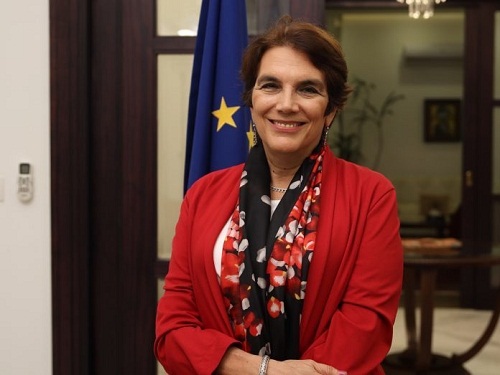
EU Delegation would launch Business Forum to facilitate Pakistani SMEs, Promote trade with EU , EU Ambassador in Pakistan Androulla Kaminara said

ISLAMABAD: Preparations have been completed for EU Pakistan Business Forum – with Abdul Razzaq Dawood, Assistant to the Prime Minister of Pakistan as Special Guest. The EU Pakistan delegation is all set to launch the first EU-Pakistan Business Forum in Islamabad on September 8, 2021.

 EU Delegation would launch a Business Forum to facilitate Pakistani SMEs, Promote trade with the EU , EU Ambassador in Pakistan Androulla Kaminara said.   She said opportunities would be provided to the European Union and Pakistani businesses to increase bilateral trade.

 The opening ceremony of the EU-Pakistan Business Forum for Small and Medium Enterprises (SME) is expected to be attended by representatives of local SMEs covering four key sectors:, jewelry and mining, information technology, handicrafts and  during the first session in Islamabad, along with fashion travel and tourism, participants will be briefed on the EU’s GSP + scheme and how to benefit from the scheme.

GSP + provides duty-free access to two-thirds of the tariff lines in the EU market, with the rest on preferential duties.  The subsequent meetings of the EU-Pakistan Business Forum later this year will cover more sectors, including agriculture and auto parts manufacturers.

She said the EU will take full advantage of the Pakistan Business Forum and establish the right links to expand its trade. The EU market while the EU has given GSP + concessions. Later this year there will be meetings in Lahore and Karachi as well.

Indian, Pakistani veterans see slim chance of full-scale war

Military veterans from India and Pakistan foresee a slim chance of a full-fledged war between the two nuclear neighbors, dubbing it an “inconceivable” idea on the 56th anniversary of the 1965 war.

They also called for “political engagement” to resolve long-pending disputes, including the Kashmir issue.

Retired Lieut. Gen. HS Panag, an Indian war veteran, who participated in the 1971 war as a young captain against Pakistan, observed that the “nuclear factor” massively diminished the chances of a full-scale war.

“In 1998, both countries became nuclear powers. Now nuclear nations don’t fight a full-scale war, because nuclear capabilities come into play at some point in time and Pakistan has been practicing nuclear brinkmanship to its advantage,” Panag told Anadolu Agency while accusing Islamabad of waging a “proxy war” in the disputed Jammu and Kashmir region.

“Wars and conflicts continue between nations and they never end … but in the modern era with nuclear weapons, the concept of an all-out war is over. It no longer can take place,” he said. “What can happen is, below the threshold of war and there are also limits to that.”

Stating that India has also refrained from attacking Pakistan because of the same reason, he said Pakistan “cannot be decisively defeated by India.”

Echoing Panag’s views, retired Lieut. Gen. Talat Masood, who participated in two wars against India, in 1965 and 1971, also rejected the possibility of a full-fledged war even if the nuclear factor is kept aside.

“Yes, nuclear capability is a factor but if even they are not nuclear, it would make no sense to go into full-fledged war in this era,” Masood, who served in an armored division that took part in a fierce tank battle on the eastern borders in the 1965 war, told Anadolu Agency.

The battle, involving hundreds of tanks from both sides, took place at Chawinda village that sits on the Pakistan-India border near northeastern Sialkot district, is considered the second greatest tank battle after World War II.

“(In case of an all-out war) You will push your country back 15 – 20 years, apart from alienating yourself from the international community. Things will get harder for your people, the economy will be shattered and matters will be complicated further,” he said.

It is not a “sensible” and “conceivable” idea that the two countries will make a “blunder” to go into a war, he added.

Retired Major Ikram Sehgal, who was an aviation pilot in post-1965 war skirmishes along the border between then East Pakistan, now Bangladesh, and India and six years later in the 1971 war, also ruled out the chances of an all-out war.

“An all-out war means, it may turn into a nuclear conflict. And in that case, the winner and the loser will stand nowhere,” Sehgal said to Anadolu Agency.

Brig. M. P. S. Bajwa, an army veteran who commanded an Indian brigade during the 1999 Kargil skirmish against Pakistan, said, “It is very unlikely because both countries are nuclear-armed and they apparently have realized it is not an option.”

Pakistan and India are among a few select countries with nuclear arsenals. India joined the nuclear club long before Pakistan, in 1974, prompting Islamabad to follow suit. Pakistan silently developed its nuclear capabilities in the 1980s, when it was an ally of the US in the first Afghan war against the crumbling Soviet Union.

According to the Stockholm International Peace Research Institute, India currently possesses between 80 and 100 nuclear warheads, while Pakistan holds 90 to 110.

POLITICAL ENGAGEMENT

The 17-day war that began Sept. 6, 1965, was an escalation of irregular fighting that started regarding Kashmir, a sore point between the two countries ever since partition in 1947.

The war eventually ended with a draw, following a peace agreement, brokered by the then-prime minister of the now-defunct Soviet Union in Tashkent, the capital of Uzbekistan.

Nonetheless, both countries declared victory.

Pakistan, since then, has been celebrating Sept. 6 as Defense Day.

Insisting that another war will further complicate matters, Masood sees a “political engagement” as the only option to resolve long-smoldering disputes between the two nuclear-armed neighbors.

“The only answer lies in (a) political solution. The two sides have to engage politically. There is no other way,” he said.

The political engagement, he thought, will eventually facilitate cultural and economic engagements.

Supporting Masood’s view, Bajwa said Islamabad and New Delhi should “sit and talk” to resolve their pending issues.

Sehgal, who authored the bestseller, Escape from Oblivion — his autobiography as a prisoner of war — nonetheless reckoned that India would never hold any meaningful talks on Kashmir as “giving up Kashmir means giving up several other states,” a reference to several northeastern Indian states hit by separatist movements.

Panag opined that India and Pakistan are engaged in a “primordial struggle” starting from the partition of India, making an all-out war between the nuclear-armed countries “unlikely.”

Kashmir is held by India and Pakistan in parts and claimed both in full. A small sliver of Kashmir is also held by China.

Since they were partitioned in 1947, the two countries have fought three wars — in 1948, 1965 and 1971 — two of them over Kashmir.

Some Kashmiri groups in Jammu and Kashmir have been fighting against Indian rule for independence, or unification with neighboring Pakistan.

According to several human rights organizations, thousands have reportedly been killed in the conflict in the region since 1989.

Relations between India and Pakistan plummeted to a new low after August 2019, when India scrapped the longstanding special status of the disputed Jammu and Kashmir region.

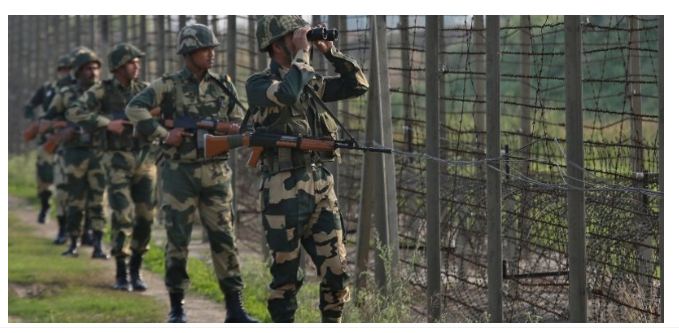
Since then, the two border forces have been engaged in almost daily clashes at the Line of Control (LoC), a de facto border that splits the scenic Kashmir valley between the two rivals until the two sides agreed to honor a 2003 cease-fire agreement in February.

Apart from Kashmir, the two countries have been locked in a string of sea-and-land disputes, amid several “successful” missile tests.

WAR GAVE NEW POLITICAL DYNASTIES TO INDIA, PAKISTAN

Hours after signing the peace agreement in 1966, Indian Prime Minister Lal Bahadur Shastri mysteriously died in Tashkent, leading to persistent conspiracy theories. The city hosts his bust and a road named after Shastri.

The difference also arose between Pakistan President Ayub Khan and his Foreign Minister Zulfikar Ali Bhutto in Tashkent, soon after signing the agreement. Bhutto parted ways and launched his own party — the Pakistan People’s Party and rose to become prime minister.

In India, Shastri’s death paved the way for 48-year old Indira Gandhi to become the first female prime minister in India. With a brief interlude of two years, she ruled the country until October 1984 when she was assassinated by her bodyguards.

Tashkent, not only gave South Asia the Mughal dynasty but two political families — Gandhi and Bhutto.

Afghan civil war ‘likely’: top US general

WASHINGTON, SEPT 5 – Afghanistan will “likely” erupt in civil war, the top US general told US media Saturday, warning that those conditions could see a resurgence of terrorist groups in the country.

As American forces began their withdrawal, the Taliban took over Afghanistan in a lightning campaign, with only the northern province Panjshir holding out against the hardline group.

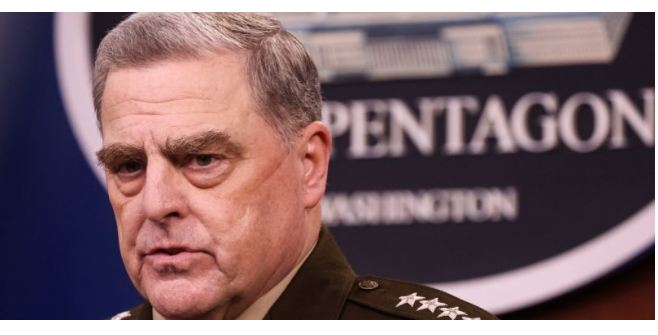
“My military estimate… is that the conditions are likely to develop of a civil war,” General Mark Milley, chairman of the Joint Chiefs of Staff, told Fox News.

He questioned whether the Taliban — who are yet to declare a government — would be able to consolidate power and establish effective governance.

“I think there’s at least a very good probability of a broader civil war and that will then in turn lead to conditions that could, in fact, lead to a reconstitution of Al-Qaeda or a growth of Daesh or other… terrorist groups,” Milley said.

Emphasizing that he could not predict what would happen next in Afghanistan, he nonetheless gave a bleak assessment.

“The conditions are very likely,” Milley told Fox News, “that you could see a resurgence of terrorism coming out of that general region within 12, 24, 36 months.”

The United States invaded Afghanistan and toppled the first Taliban regime in 2001 in the wake of the 9/11 attacks by Al-Qaeda, which had sanctuary in the country.

Western governments fear Afghanistan could again become a haven for extremists bent on attacking them.

The United States has said it will maintain an “over-the-horizon” capability to strike against any threats to its security in Afghanistan.

AT LEAST 3 MARTYRED, 20 INJURED IN SUICIDE ATTACK TARGETING FC CHECKPOST ON QUETTA’S MASTUNG ROAD

QUETTA, SEPT 5 – At least three people were martyred and 20 injured on Sunday in a suicide attack near a Frontier Corps (FC) checkpost on Mastung Road in Quetta, Deputy Inspector General of Quetta police Azhar Akram confirmed.

He said that 18 of the injured were security officials while two were bystanders, adding that the number of casualties could rise.

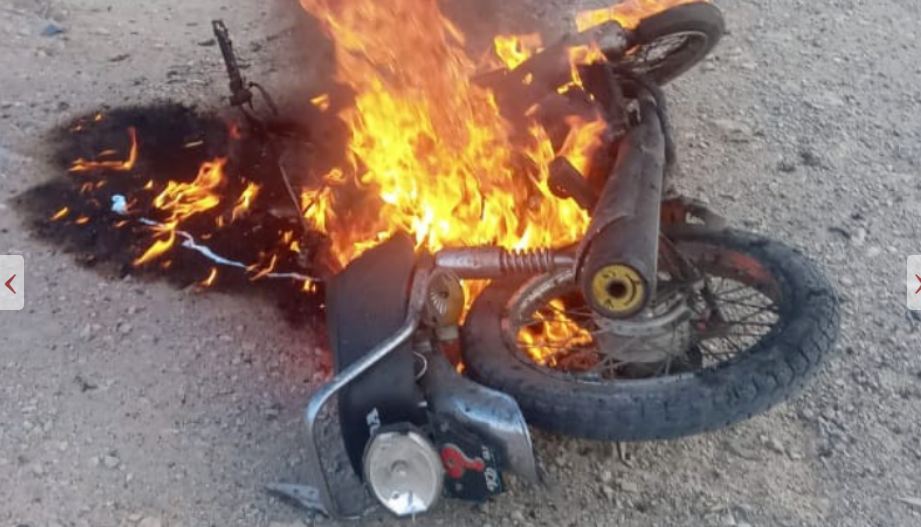
A suicide bomber on a motorcycle packed with six kilogrammes of explosives rammed one of the vehicles in an FC convoy, Akram was quoted as saying by Reuters.

The banned Tehreek-i-Taliban Pakistan (TTP) claimed responsibility for the attack. Prime Minister Imran Khan condemned the attack, saying in a tweet: “My condolences go to the families of the martyrs & prayers for the recovery of the injured. Salute our security forces & their sacrifices to keep us safe by thwarting foreign-backed terrorists’ designs.”Condemning the attack and offering condolences to the families of those martyred, Minister for Human Rights Shireen Mazari said the “brave security forces continue to thwart the designs of terrorists [especially] the RAW- (Indian intelligence agency) funded TTP.”

Balochistan Home Minister Mir Ziaullah Langove too strongly condemned the attack and asked authorities to submit a report in this regard.

“Security forces have given countless sacrifices in the war against terrorism,” he said, adding that the war would continue until total peace was achieved.

“The whole nation is indebted to the martyrs. We are fighting the terrorists with our full strength and will continue to do so. These violent attacks will not lower the morale of the forces,” he stressed.

The attack comes less than two weeks after three Levies personnel were martyred and as many injured when their vehicle hit a landmine in the province’s Ziarat district.

Earlier that week, a Pakistan Army captain was martyred and two soldiers injured when their vehicle hit an improvised explosive device (IED) planted by terrorists in the Gichik area.

There has been an uptick in violence in the province, with several incidents of terrorism reported this year, targeting both civilians as well as security forces.

The Silk Cushion Inn

Global Misperceptions

By : Zeenat Iqbal Hussain

In heaven, on a cloud, was the Silk Cushion Inn. So beautiful was it that no words were sufficient to describe’ it. The Silk Cushion Inn had “the. softest,, most .tender, structure ever seen, Everything-looked like it was j made up of fluffy cotton balls! or some candy floss. There was no sound of pitter-patter, on the floors for the legs were sunk in the clouds. The walls were so soft that reclining hard against them would mean sinking in. Sleeping here mean that you slept on till you were woken up. There was a special alarm system that woke youup. It rang like a bird song.

It was known, about the Silk Cushion Inn that if anyone sick slept there he woke up all right. Such were the comforts that there was always electricity and water available in abundance, collected from lightening and the rain. Different machines operated on electricity. There were robots to listen to your every command. The waterfalls and the ponds they fell into had all sorts of beautiful fish swimming in it. The stars glowing in the sky just like lamps provided the direction. There were shops, which gave out free chocolate and sweets.

Pieces of moon would fall out and become expensive gems and harps would play soothing tones. Fountains of syrup flowed. Anybody who did good deeds in a day would be put up at the Silk Cushion Inn.

Around this inn there would always be a lot of hustle and bustle. Angels fluttered their wings. Then there were all those close to God, His deputies, and all good men. They were those who had not been sent down to Earth because they were needed in the skies to look after, the .work there. Otherwise who would maintain God’s offices? There was a system there, just like on Earth, where there were differently trained people to cater to the specific departments. Up above electricity came from lightning. Water was’ obtained from rain, People would gather in Sky Square whenever it poured

“Great its going to be bath day today. We’re going to wash our clothes With .the lightning there, work could be attempted at night too,.”I have so much work left over from morning. I think I will complete it in the night,” Someone would say. Meanwhile the angle would be out and about for the benefit of the sinners on Earth / Cleaning them, washing away their sins.

​“That mortal on the East Side has committed a sin. We’ll have to cleanse it away. Is a typical line that .one may hear from the angels. On their winged; motorbikes they would reach the place, purify the soul of the evildoer and make him learn from his mistakes. “Do notrepeat what you have done again,” they’d leave telling him.

The scene in skies would have God’s people in big, pure white robes strolling from here and there in pursuit of their daily chores, monitoring the weaknesses of human beings and rectifying them. There has been a fight in the corner house on Morris Street.

We’ll have to get there to sort things out. With this and a straight drop from an invisible ladder they’d descend on the house. Spraying an essence of peace they restore things to normal.

The grading system even persists here. Those close to God are given the most important jobs. The best were made to ward off the worst degree of evil. In the capable hands of these angels, all problems would be solved just like that. Some had spacecraft to escort them to Earth. God gave these crafts to die most deserving.

“I earned mine at the annual good deeds contest.” One of the owners informed. Amongst prizes given by God was also a chance to see Mars. Said one angel to another at one such contest, “I have been trying for two years but hope to succeed this year.” The faces of those heavenly folks are so beautiful that they would put the-moon to shame;

Sometimes the moon would cover itself when it saw them. “I feel shadowed by their beauty.” It would say quite awkwardly. But now my day in this heaven is reaching an end. No bother, 1 will continue with my good deeds to be put up in the Silk Cushion Inn once again.

Challenges and Defense of Pakistan

Global Misperceptions

By Zamir Awan

Pakistan is the only Muslim country with nuclear power in the whole world. With a population of 220 million, stands for the second largest Muslim country just after Indonesia. Its geostrategic location makes it a pivotal state. It connects Asia, Africa, Europe, Middle-East, and Eurasia. Pakistan has been playing a crucial role in geopolitics in the past and always played decisive roles.

Having said all above, it is to bring to your kind attention that Pakistan is not digested by some of the adversaries and they are planning to harm Pakistan. In 1999, Western powers planned to washout Pakistan from the World Map and declared that there will be no more Pakistan by 2015. They already initiated measures to harm Pakistan and fulfill their dream. But, Pakistan was created with the name of Allah and Allah has been kind to protect Pakistan.

However, defense is not only to protect a country from enemy forces in case of war. Today the war is in various shapes and phenomenons. Hybrid war, Cyberwar, Media war, narrative war, economic war, cultural war, etc, and so on.

The armed forces of Pakistan are always ready to face any challenge from the enemy and have demonstrated their capabilities recently. The incident of the Balakot attack by India in 2019, was an exemplary surprise to our enemy, and the Armed forces of Pakistan performed outstandingly. Response to the Slala incident in 2011, was also a memorable event. The armed forces of Pakistan are capable and will not embarrass the nation at any critical moment.

However, a comprehensive defense requires the whole nation to act collectively. It is the responsibility of each individual to contribute toward national defense in a capacity where he or she can. Irrespective of one’s profession, job, capabilities, or capacities, he or she can share part of his/her duty toward national defense. As a teacher, we may positively educate our young generation to make them a true Muslim and good Pakistani. As an economist, one can contribute to uplift the national economy and make Pakistan a self-sustainable country, without depending on any other country or institution to survive. We must get rid of IMF, World Mang, or any other International Financial Institutions (IFIs). We must get rid of our foreign debt. As an Industrialist, one, must contribute toward rapid industrialization and creating more jobs, as well as reduce imports relieving the pressure of our foreign exchange reserves, Similarly, enhancing Industrial output, we may export excessive production to the international market after meeting the domestic consumption and generating much needed foreign exchange for our country. As an agriculturist, we must work hard to ensure food security in the nation. We must feed our nation well and have sufficient calories and nutrition. The excessive Agri-produce can be exported to earn much desired and needed foreign exchange. As an engineer, we have the responsibility to revolutionize the count and positively contribute toward the socio-economic welfare of the country. As a doctor, we may contribute to ensuring good health and longevity for the nation. Irrespective of one.s job or profession, we may contribute directly or indirectly toward the national defense.

As media is the most modern tool of national defense, our media houses and personnel may feel a much higher responsibility to build Pakistan’s national narrative, and counter any attack from our adversaries. We should not spread fake news, or fabricated stories, or distorted narratives. We must counter them and promote our national narrative. Leaving behind all our differences and diversities, collectively we promote unity, and harmony among all segments of the society, irrespective of our ethnicity, religious factions, or regional groupings, etc.

The youth are our assets, our future and the country consists of approximately 70% population as youth under the age of 40. We must involve our youth in national policies and decision-making processes. We must train our youth to take responsibility and face the challenges of the coming days.

There is a dire need to introduce comprehensive reforms in our educational system, to produce true Muslims and good Pakistanis. Although reforms are required in all sectors the most effective one should be prioritized in the educational sector first.

The recent example of the Afghan debacle, were bare-footed, empty-stomach, and poorly equipped Taliban,  forced 57 countries (US, NATO, 46-Allies and 11-supporting countries, which includes Israel and India too). The Heavily equipped Afghan National Army (ANA), American-Trained, equipped with most modern weapons, latest technologies, and military gadgets, yet have to surrender because there was no public support. It is a lesson for us, that as long as, Armed forces and civilians are on the same page, supporting each other, and integrated with one vision and one mission, that is defense of Pakistan, no power in the world can defeat Pakistan or harm Pakistan.

In the last four decades, by evil designs, Pakistan was radicalized, intolerance, extremism, and terrorism were promoted. Foreign intelligence agencies established bases in Pakistan and divided the nation. They picked the disgruntled, and destitute Pakistanis, trained them, equipped them, flooded them with dollars, and used them against Pakistan. They aimed to explode Pakistan internally. We must awaken, and should not be exploited by our enemies. Open eyes, be vigilant, and fight against all evils. Allah will be with you.

Efforts were made by our adversaries to coerce Pakistan with military power but failed, they tried to coerce Pakistan economically, but we sustained, they imposed hybrid war on us, but we resisted and countered. They are trying to malign our Armed forces and creating a gap between civilian and military, Trust, they will never succeed.

Despite our ethnic, regional, religious diversity, we are united against all enemies, either internal or external, to defend our beloved country, Pakistan.  Unitedly and collectively, we ensure the defense of Pakistan is unchallengeable. Pakistan Zindabad.

Author:  Prof. Engr. Zamir Ahmed Awan, Sinologist (ex-Diplomat), Editor, Analyst, Non-Resident Fellow of CCG (Center for China and Globalization), National University of Sciences and Technology (NUST), Islamabad, Pakistan. (E-mail: [email protected]).

PM Calls For Int’l Community’s Enhanced Engagement With Afghanistan

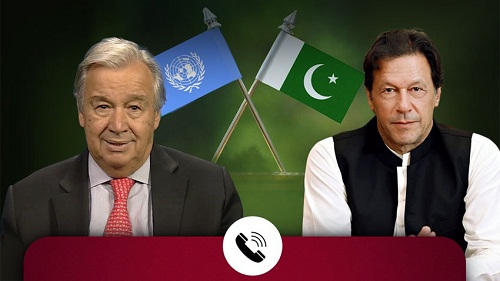
Islamabad : Prime Minister Imran Khan has called for international community’s enhanced engagement with Afghanistan to address humanitarian needs and ensure economic stability.

In his telephonic conversation with United Nations Secretary General Antonio Guterres, he said such steps would not only reinforce security, but also preclude any mass exodus of Afghans from their country and prevent refugee crisis in Afghanistan.

The two leaders discussed the developments in Afghanistan, with a particular focus on the humanitarian situation.

The Prime Minister highlighted the importance of peace, stability and an inclusive political settlement in Afghanistan.

He stressed that the opportunity to finally put an end to 40 years of conflict in Afghanistan must be seized by enabling the Afghans to achieve lasting peace, security and prosperity.

Imran Khan appreciated the vital role of the United Nations in delivering much needed humanitarian assistance to the Afghan people.

He reaffirmed Pakistan’s full support to smooth operation of the United Nations’ humanitarian mission for Afghanistan.

The Prime Minister also assured Pakistan’s continued cooperation with the United Nations in the fulfillment of its mandate.

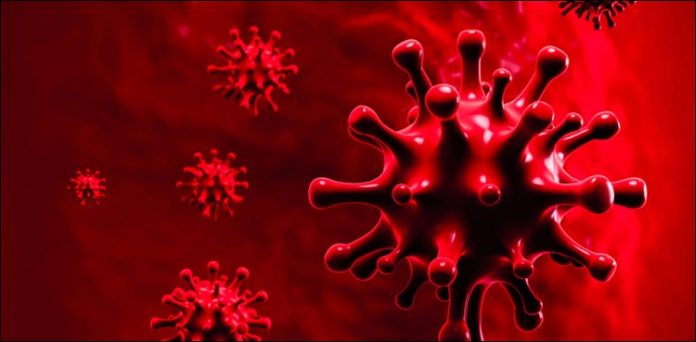
Covid Daily: 61 New Lives Lost While Infection Rate Stands At 6.47

ISLAMABAD: In the daily statistics shared by the Command and Operation Center (NCOC), COVID-19 has claimed Sunday 61 new lives and the rate of new infections stood at 6.47 per cent.

In its tweet from the official Twitter handle, NCOC said of the past 24-hour period that 57,908 Covid tests were conducted in the period out of which 3,747 emerged as COVID-19 infected.

The new positive cases today take the positivity of the past 24-hour period to 6.47, NCOC said.

Moreoever, the NCOC record confirmed that with new deaths reported today due to COVID-19 take the overall death toll to 26,175.

Separately, in a newly conducted research study for COVID-19 infected patients, many people who lose their sense of smell due to COVID-19 eventually regain it, but some survivors later report smell distortions and unexplained smells.

Researchers analyzed survey responses from 1,468 individuals who had been diagnosed with COVID-19 between April and September 2020 and had suffered loss of smell and taste at the start of their illness. Early on, about 10% also reported smell distortions, or parosmia, and unexplained smells, known as phantosmia.

At an average of six to seven months after becoming ill and first reporting loss of smell, roughly 60% of women and 48% of men had regained less than 80% of their pre-illness smell ability, and rates of smell distortions and imaginary smells had increased, the researchers reported on Tuesday on medRxiv ahead of peer review.

PAKISTAN EMBASSY IN VIENNA HOLDS EVENT TO HIGHLIGHT RECENT DEVELOPMENTS IN AFGHANISTAN

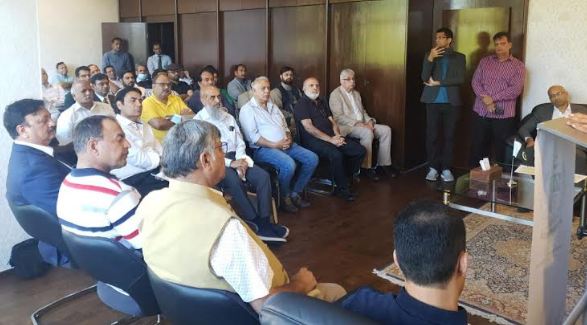
Vienna, Sept 4 /DNA/ – At an event held at the Pakistan Embassy in Vienna, today, Ambassador Aftab Ahmad Khokher briefed the Pakistani and Kashmir community in Austria about the recent developments in Afghanistan. He said that a peaceful and stable Afghanistan was of paramount importance for Pakistan as well as the wider region. Pakistan had always persistently called for an inclusive and broad based political solution to the conflict in Afghanistan through an Afghan-led and Afghan owned process. 

Ambassador Khokher highlighted that Pakistan was facilitating the evacuation of the personnel of diplomatic missions, INGOs, international organizations and other foreigners from Afghanistan, which had been highly appreciated by the international community, including the Austrian government. The Foreign Minister and the Secretary General of the Ministry of European and International Affairs of Austria have called their counterparts in Pakistan recently, to thank Pakistan for facilitating the evacuation of Austrian nationals from Afghanistan. Ambassador Khokher also used the occasion to pay tribute to the struggle of Syed Ali Geelani for the Kashmir people’s right to self-determination. The funeral prayers of the veteran Kashmiri Hurriyat leader were also offered, in absentia.

Stay Connected

64FansLike
60FollowersFollow

Latest Reviews

Exchange Rates

USD - United States Dollar
EUR
1.17
GBP
1.35
AUD
0.67
CAD
0.72