Home Blog Page 187

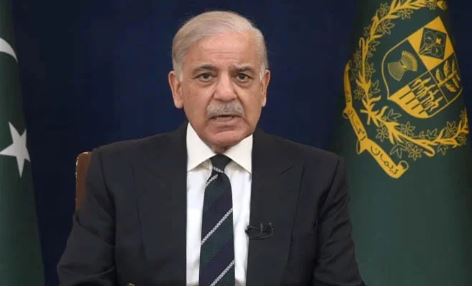
PM Shehbaz cuts petrol price by Rs12, diesel by Rs135 per litre

PM Shehbaz welcomes US-Iran ceasefire, hails regional stability

ISLAMABAD, APR 10 /DNA/ – Prime Minister Shehbaz Sharif addressed the nation on Friday, welcoming the immediate ceasefire between the United States, Iran, and their allies.

He expressed deep gratitude to both Washington and Tehran for agreeing to halt hostilities, describing the development as a significant step towards regional stability.

“Peace is in everybody’s interest,” the Prime Minister declared. He stressed that a permanent ceasefire could only be achieved through sustained dialogue, calling the upcoming talks a “make or break” moment for peace in the region.

Delegations from the US and Iran are expected in Islamabad for further negotiations.PM Shehbaz warmly praised Field Marshal Asim Munir for his pivotal role in making the ceasefire possible. He highlighted the Army Chief’s diplomatic and strategic contributions that helped de-escalate tensions amid the recent Middle East conflict.

The Prime Minister also announced immediate relief measures for the masses amid easing global oil prices. Following a slight reduction in international crude rates, the government decided to pass on the benefit to Pakistani consumers.New fuel prices effective immediately:High-Speed Diesel price has been cut by Rs135 per liter. The new price is now Rs385 per liter (down from the recent high of over Rs520).

Petrol price has been reduced by Rs12 per liter. The new price stands at Rs366 per liter.

These cuts aim to ease the burden on transporters, farmers, and ordinary citizens who have faced record-high fuel costs in recent weeks due to global disruptions.PM Shehbaz said the relief package reflects the government’s commitment to supporting the people during challenging times.

He urged all political and regional stakeholders to support the peace process and focus on economic recovery.The address was widely welcomed, with political analysts noting Pakistan’s active diplomatic role in the US-Iran de-escalation.

Markets are expected to react positively to the fuel price reduction in the coming days.The Prime Minister concluded by appealing for national unity, saying collective efforts in diplomacy and economic management would help Pakistan emerge stronger.
UK PM lauds Pakistan’s role in US-Iran ceasefire

UK PM lauds Pakistan’s role in US-Iran ceasefire

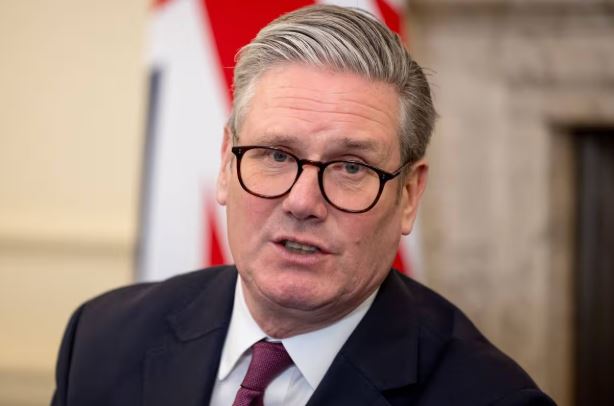
ISLAMABAD, APR 10: Prime Minister Muhammad Shehbaz Sharif received a telephone call from Prime Minister of the United Kingdom, Keir Starmer, this evening.

Prime Minister Starmer deeply appreciated Pakistan’s effective diplomatic efforts in facilitating the U.S.-Iran ceasefire, and the resumption of dialogue. He felicitated Prime Minister Muhammad Shehbaz Sharif on hosting the peace negotiations in Islamabad and offered his best wishes for the success of this endeavor.

Reaffirming Pakistan’s sincere commitment to regional peace and stability, Prime Minister Muhammad Shehbaz Sharif welcomed the joint statement issued by key European and international leaders, including Prime Minister Starmer, endorsing Pakistan’s peace initiatives.

Both leaders emphasized the importance of ensuring that the ceasefire remains in place and creates the necessary conditions for lasting peace and stability in the region.

The two leaders agreed to work together to lend fresh impetus to the longstanding friendly ties between Pakistan and the United Kingdom, across all spheres of mutual interest.

The Prime Minister reiterated his cordial invitation to Prime Minister Starmer to undertake an official visit to Pakistan.

Ambassador Khalil Hashmi visits Anhui Province in China

Ambassador Khalil Hashmi visits Anhui Province in China

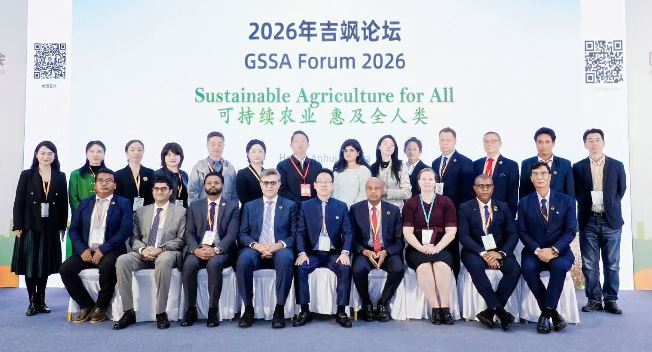
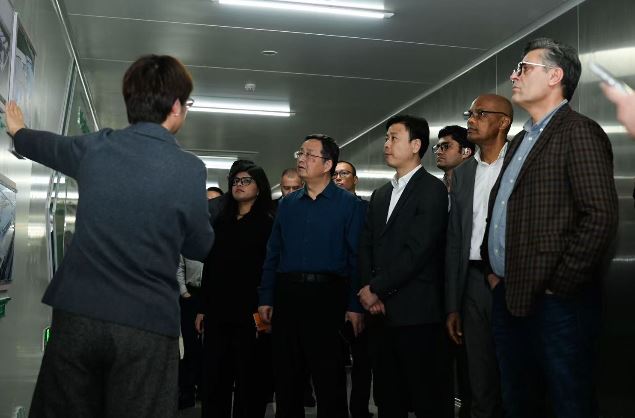
BEIJING, APR 10 /DNA/ – Ambassador Khalil Hashmi paid a visit to the Anhui Province of China from 9-10 April 2026. In the capital city of Hefei, he delivered remarks at the opening ceremony of the International Rural Innovation and Development (IRID) Expo-2026, China’s first international expo focused on the entire industrial chain of rural development.

The Ambassador underscored that rural development was not merely a policy choice but a foundation of national prosperity, food security, and social stability. He also emphasized the importance of empowering rural women and youth through digital inclusion and agri-tech skills to foster inclusive development.

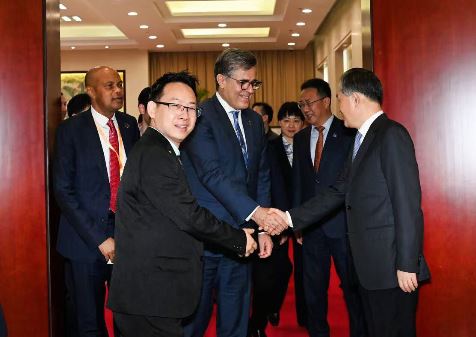
Ambassador Hashmi represented fellow ambassadors and diplomatic envoys in a meeting with Vice Governor of Anhui Province, Mr. Zhang Shuguang. The Ambassador conveyed deep appreciation of the participants over the impressive economic, social and technological gains achieved as well as progress made in the agriculture sector mechanization, enhanced productivity and high-quality production. Ambassador Hashmi also presented new agriculture cooperation proposals in academia, research & business with the Anhui province, including a Pakistan-focused sub-forum on agriculture next year on the sidelines of IRID Expo in Hefei.

The Ambassador also delivered remarks at the Global Summit on Sustainable Agriculture (GSSA)Forum, highlighting Pakistan’s priorities for revitalizing its agriculture sector. He invited GSSA and its Secretary General GSSA Sun Xi to organize the next edition of the Forum in Pakistan. He also encouraged Chinese investors to visit Pakistan to leverage mutually beneficial opportunities in digital agriculture, climate-resilient farming, hybrid seed development, cotton innovation, wheat molecular biology, and buffalo genetics.

In another dynamic city of the province, Bengbu, the Ambassador visited the uniquely combined high technology, the pilot free trade & comprehensive bonded zone, all in one location, signifying China’s scale, efficiency & importance attached to ease of doing business. Ambassador Hashmi also visited the Anhui BBCA Bio-Chemical Complex, the largest polylactic acid (PLA) plant in China, with over 40K tones production annually. PLA is a biodegrade-able thermoplastic derived from corn, starch or sugarcane and is used for food packaging, 3D printing filament & medical devices. The Ambassador also paid a visit to Dachan Group a key producer of animal feed and processed chicken products since 2005. Its Guzhen County facility is a major hub specializing in intelligent manufacturing, poultry breeding, and food processing. Beijing – 10 April , 2026

Mali ends SADR recognition, supports Moroccan sovereignty solution

Mali ends SADR recognition, supports Moroccan sovereignty solution

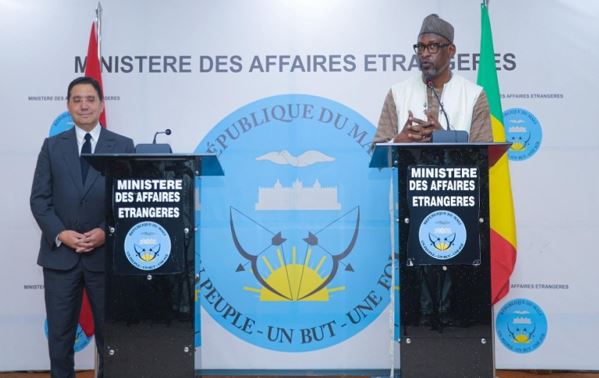
BAMAKO, APR 10 /DNA/ – The Republic of Mali announced today that “after an in-depth analysis of this important issue (of the Sahara) which has an impact on subregional peace and security, the Republic of Mali has decided today to withdraw its recognition of the “Sahrawi Arab Democratic Republic (RASD)”.

This position was expressed in a Statement by the Government of Mali, delivered by Mr. Abdoulaye DIOP, Minister of Foreign Affairs and International Cooperation of the Republic of Mali, at the end of his meeting with his Moroccan counterpart. M. Nasser Bourita, Minister of Foreign Affairs, African Cooperation and Moroccans living abroad, is visiting Bamako on His Majesty King Mohammed VI.

In the same Declaration, Mali “supports the autonomy plan proposed by Morocco as the only serious and credible basis for the resolution of this dispute and considers that true autonomy under Moroccan sovereignty is the most realistic solution”.

Mali further expresses “support for the efforts of the United Nations and the Personal Envoy of the Secretary-General, as well as Security Council resolutions, including Resolution 2797 (2025), adopted on 31 October 2025,” the document continues.

The Malian minister also said that this decision will be shared with regional and international organizations of which Mali is a member, as well as with the Diplomatic Corps accredited in Bamako.

PSL 11: RawalPindiz win toss, elect to bowl first against Quetta Gladiators

PSL 11: RawalPindiz win toss, elect to bowl first against Quetta Gladiators

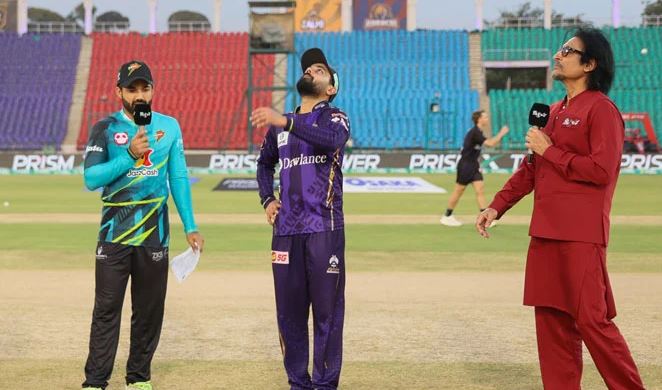
KARACHI: RawalPindiz have won the toss and opted to field first against Quetta Gladiators in the 18th match of the Pakistan Super League (PSL) 11 here at the National Bank Stadium on Friday.

Playing XIs

Quetta Gladiators: Saud Shakeel (c), Sam Harper, Hasan Nawaz, Khawaja Nafay, Bevon Jacobs, Rilee Rossouw, Jahandad Khan, Kashif Bhatti, Khalil Ahmed, Abrar Ahmed and Usman Tariq.

RawalPindiz: Mohammad Rizwan (c), Usman Khawaja, Yasir Khan, Abdullah Fazal, Mubasir Khan, Sam Billings, Daryl Mitchell, Saad Masood, Asif Afridi, Mohammad Amir and Ben Sears.

Head-to-head

The upcoming fixture will be the first-ever meeting between the Gladiators and the Pindiz, as the latter are making their maiden appearance in the PSL.

Form Guide

Gladiators and Pindiz enter the fixture with not all, but similar momentum as the former champions have just one victory in their four matches, while the tournament debutants are yet to taste a triumph in the PSL 11.

The 2019 champions kicked off their campaign with a narrow 14-run defeat at the hands of Karachi Kings before humbling another debutants Hyderabad Kingsmen, by 40 runs.

They, however, failed to continue the winning run and suffered back-to-back losses against holders Lahore Qalandars and three-time champions Islamabad United, respectively.

Pindiz, on the other hand, were beaten by Peshawar Zalmi, Kings, United and leaders Multan Sultans in their first four matches and thus sit at the bottom of the PSL 11 standings.

Quetta Gladiators: L, L, W, L, L (most recent first)
RawalPindiz: L, L, L, L

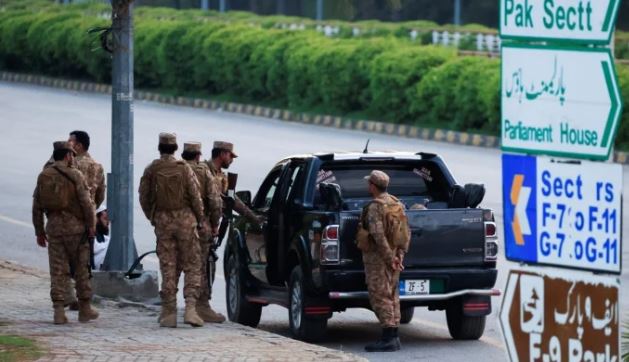
Pakistan ramps up security as Islamabad braces for high-stakes US-Iran talks

Pakistan ramps up security as Islamabad braces for high-stakes US-Iran talks

ISLAMABAD, APR 10: Pakistan is pressing ahead with its preparations for high-stakes talks between the United States and Iran in Islamabad, expected to focus on extending the fragile two-week ceasefire into a lasting peace.

Chairing a meeting to review security and administrative preparations for the talks in the federal capital, Interior Minister Mohsin Naqvi directed authorities to ensure foolproof security and exceptional hospitality for all visiting foreign guests.


The high-level meeting decided that the Red Zone will be completely sealed during the talks, with entry restricted only to authorised individuals.

A dedicated control room has already been established at the interior ministry to monitor and manage all arrangements.

Islamabad is set to host crucial talks between the United States and Iran on Saturday, following Prime Minister Shehbaz Sharif’s invitation to both sides to the negotiating table after facilitating the ceasefire.

The war in the Middle East began on February 28 when the US and Israel launched coordinated strikes that assassinated Supreme Leader Ali Khamenei and struck Iran’s military and nuclear infrastructure, killing more than 2,000 people in five weeks.

In its response, Tehran effectively blocked the Strait of Hormuz, a key shipping route, along with strikes against Israel and US bases across the Gulf region.

The hostilities between the US and Iran ended on April 8 when Prime Minister Shehbaz Sharif announced the two-week ceasefire.

Washington’s reported 15-point proposal for the peace talks centres on Iran’s enriched uranium, ballistic missiles, sanctions relief and the reopening of the Strait of Hormuz.

Tehran has countered with a 10-point plan demanding control over the strait, a toll for vessels crossing the strait, an end to all regional military operations and the lifting of all sanctions.

The global community hailed Pakistan for its essential role in stopping hostilities and offered their support to Islamabad in its peace efforts.

Delegations from the two sides are now set to hold talks in Islamabad on Saturday, with US Vice President JD Vance due to lead the US delegation, joined by special envoy Steve Witkoff and Trump’s son-in-law Jared Kushner.

Iran’s parliament speaker Mohammad Bagher Ghalibaf and Foreign Ministe Abbas Araghchi are expected to lead the Iranian delegation.

Ghalibaf is a former IRGC commander, and it remains unclear whether any active IRGC representative will attend.

Ahead of the talks — dubbed the “Islamabad talks” — authorities announced a local holiday in Rawalpindi and Islamabad on April 9 and 10.

According to the district administration, all educational institutions and government and private offices in the twin cities will remain closed on Thursday and Friday.

Lebanon issue
The two-week truce between the US and Iran was agreed to allow negotiations aimed at ending a conflict that has already killed thousands and plunged the global economy into turmoil.

US President Donald Trump has voiced displeasure at Iran´s handling of the Strait of Hormuz, which was meant to be reopened under the deal, while Tehran has reacted angrily to Israeli attacks in Lebanon, insisting that it too falls under the agreement — something Washington disputes.

Lebanon is also a major sticking point. Israel continued its strikes in the country, targeting Hezbollah — after the ceasefire came into force — with Israeli Prime Minister Benjamin Netanyahu rejecting the assertion that the truce included Lebanon.

On April 8, less than 48 hours after the ceasefire came into force, Israel carried out its heaviest strikes on Lebanon since Hezbollah entered the Middle East war, killing more than 300 people.

There was, however, ongoing “pressure from European states, Gulf states and Egypt on Israel to prevent renewed Israeli airstrikes on Beirut after ‘Black Wednesday'”, AFP cited a Western diplomat as saying.

As of Friday morning, the Israeli army had not acted on warnings the day before that it would strike wide areas in the capital´s south.

Washington has said the Lebanese front of the war will be dealt with under separate talks.

“We can confirm that the Department will host a meeting next week to discuss ongoing ceasefire negotiations with Israel and Lebanon,” a US State Department official said.

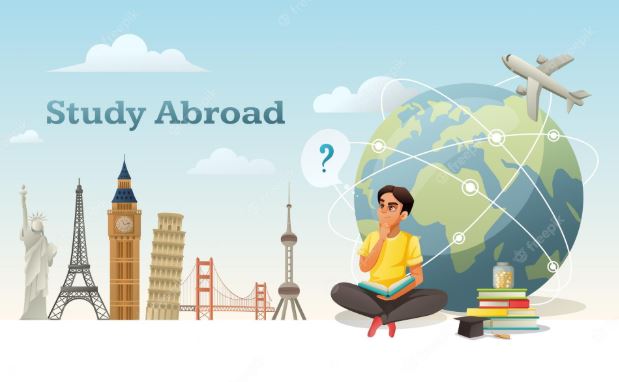
Superior consulting hosts 65th immigration seminar in Islamabad

Superior consulting hosts 65th immigration seminar in Islamabad

ISLAMABAD, Apr 10: Superior Consulting is set to hold its 65th One-to-One Immigration and Study Abroad Seminar here on April 18 focusing on immigration and study abroad opportunities and guiding aspirants for abroad study.

Seminar will be held at a local hotel and feature pre-arranged, one-to-one consultation sessions for professionals, students, and families seeking information on overseas pathways.

The sessions are expected to cover areas including immigration planning, study options, visit visas, and general settlement-related matters in countries such as the United States, United Kingdom, Australia, and Canada.

Talking to APP, Immigration Expert Adil Ismail said, “Immigration today is not about trends or assumptions, it is about understanding each individual’s profile and aligning it with the right pathway. Through our one-to-one model, we ensure that every applicant receives honest, structured, and practical guidance based on real possibilities.”

Director Operation, Superior Consulting Abu Bakar Adil while talking added, “We are seeing a clear shift, people are now more informed, more serious, and more focused on long-term outcomes. This seminar is designed for those individuals who want clarity and a well-defined strategy, rather than guesswork or generic advice.”

The sessions would follow a structured format, allowing participants to discuss their individual profiles and explore available options in detail. They added that participation in the seminar would be based on prior arrangements.

The development comes at a time when many individuals are exploring international education and migration opportunities, reflecting a broader trend of seeking career and settlement options abroad.

Based on past experience, Superior Consulting seminars generate strong interest from applicants seeking serious and structured guidance. This is not a walk-in event; meetings are arranged through prior booking, and suitable candidates are given confirmed slots after initial assessment. Individuals with strong profiles are encouraged to get in touch early so their seats may be reserved in time.

In addition to consultations, the company also supports suitable clients in related requirements such as media coverage, profile building, research-backed direction, and other supporting areas that strengthen serious immigration planning.

JD Vance hopes Islamabad talks will be fruitful

JD Vance hopes Islamabad talks will be fruitful

Vance indicated that President Donald Trump had provided him with “some pretty clear guidelines” for the discussions. The vice president is heading a high-level U.S. delegation that includes special envoy Steve Witkoff and Jared Kushner. The talks, mediated in Pakistan, are scheduled to begin this weekend and represent the most significant direct U.S.-Iran engagement in years

News Desk/DNA

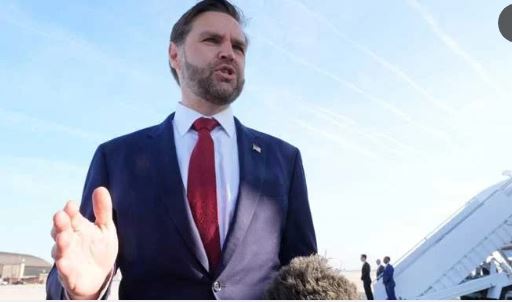
WASHINGTON — Vice President JD Vance left Washington on Friday for Islamabad, Pakistan, where he will lead U.S. negotiations with Iran aimed at solidifying a fragile ceasefire and potentially ending the recent conflict involving the U.S., Israel, and Iran.

Speaking to reporters before boarding Air Force Two, Vance expressed optimism about the upcoming talks while delivering a firm warning to Tehran.”We’re looking forward to the negotiation. I think it’s going to be positive,” Vance said. “As the president of the United States said, if the Iranians are willing to negotiate in good faith, we’re certainly willing to extend the open hand. If they’re going to try to play us, then they’re going to find the negotiating team is not that receptive.”

Vance indicated that President Donald Trump had provided him with “some pretty clear guidelines” for the discussions. The vice president is heading a high-level U.S. delegation that includes special envoy Steve Witkoff and Jared Kushner. The talks, mediated in Pakistan, are scheduled to begin this weekend and represent the most significant direct U.S.-Iran engagement in years.

The mission comes amid efforts to build on a recent ceasefire. Vance, long known as a skeptic of prolonged U.S. military engagements abroad, is stepping into a key diplomatic role at Trump’s request.

Pakistan is hosting the negotiations, positioning itself as a mediator in the sensitive talks.Vance’s departure marks his highest-profile international assignment to date as vice president. Outcomes from the Islamabad meetings could shape the trajectory of U.S. policy in the Middle East for the remainder of the Trump administration.

Netanyahu signals war with Iran ‘unfinished’ business, despite Pak-mediated ceasefire backed by US

Netanyahu signals war with Iran 'unfinished' business, despite Pak-mediated ceasefire backed by US

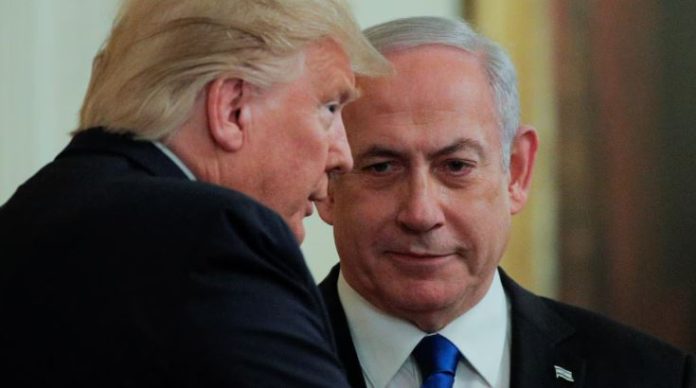
NEW YORK, Apr 10: Israeli Prime Minister Benjamin Netanyahu has said that the war with Iran is not over and remains “unfinished business” as many of Israel’s objectives have not been achieved, according to a report in The New York Times.

Following a Pakistan-brokered ceasefire that went into effect around April 7–8, 2026, he said in a televised address to Israeli public, that the “double existential threat” of Iran’s ballistic missiles and its nuclear programme has been “distanced,” he said, but not eliminated.

The Times pointed out that his address was less about victory than unfinished business.

“We still have goals to complete,” Netanyahu said, “and we will achieve them either by agreement or by the resumption of fighting.”

He was speaking at the end of the deadliest day in Lebanon since the resumption of hostilities last month between Israel and Hezbollah fighters across Israel’s northern border.

On Thursday, under international pressure to dial down the violence, Netanyahu said he had instructed his government to open talks with Lebanon “as soon as possible.”

The negotiations would focus, he said, on establishing peaceful relations between Israel and Lebanon, and the disarmament of Hezbollah, which is also a significant political force in the country.

Forty days after Israel and the United States launched their military offensive against Iran, life in Israel was getting back to normal, the Times said.

“While Netanyahu and many other Israelis have praised the military’s accomplishments in downgrading their enemies’ capabilities, so far there have been no total victories or lasting diplomatic resolutions,” the Times commented.

At the same time, it said, Netanyahu’s domestic political timetable is pressing, with elections due before the end of October.

“914 days of war, over 2000 killed, tens of thousands wounded, 4 open fronts and — 0 decisive wins!” Avigdor Liberman, the leader of a right-wing Israeli opposition party, sniped on social media, tallying up the account on Israel’s side.

The United States is now shifting its attention from the battlefield to negotiations with Iran. Israeli officials will not be in the room, adding to the sense of unease among the Israeli public. Israel and Pakistan, the mediating country that is hosting the talks, have no formal diplomatic relations.

In the hours after President Trump announced the temporary cease-fire, the Israeli military bombarded Beirut and other areas and said it struck more than 100 Hezbollah targets within 10 minutes. More than 200 people were killed and more than 1,000 others were wounded in the strikes, according to the Lebanese authorities.

“The timing may have been intended to demonstrate that Israel did not count Lebanon as part of the cease-fire understanding, or to get in a final salvo while it was still possible,” according to the Times.

When War Theories Go Viral

When War Theories Go Viral

Zaryab Zaib

A short video, reportedly circulating on Chinese social media, has stirred a familiar mix of fascination and scepticism in strategic circles. In it, a Chinese individual appears to explain how Iran could use mobile infrared-based defence systems to detect and potentially target advanced stealth aircraft such as the F-35 Lightning II. The narration is technical, confident, and presented as if offering a tactical workaround to one of modern warfare’s most prized capabilities: stealth. At first glance, such content seems to signal an unusual phenomenon private citizens sharing sensitive military ideas across borders in real time. More intriguingly, it is being framed in some quarters as a form of informal, decentralised support for Iran in its long-standing confrontation with the United States and its regional allies. Yet, beneath the surface, the episode raises deeper questions about the nature of information warfare, the limits of open-source military knowledge, and the evolving role of digital platforms in shaping strategic narratives.

The claim itself warrants careful scrutiny. The F-35, developed by Lockheed Martin, is widely regarded as one of the most advanced multirole combat aircraft in operation today. Its stealth design is optimised primarily to evade radar detection, reducing its visibility to conventional air defence systems. However, stealth does not render an aircraft invisible across all spectrums. Infrared search and track (IRST) systems, which detect heat signatures rather than radar reflections, have long been discussed as a potential countermeasure to stealth technology. In theory, mobile infrared systems could detect the heat emitted by an aircraft’s engines or airframe, particularly under certain atmospheric conditions. Countries such as Russia and China have invested in such technologies, integrating them into both airborne and ground-based platforms. Iran, too, has claimed progress in indigenous air defence capabilities, often showcasing domestically developed systems in military parades and official statements.

But translating theory into operational success is another matter entirely. Detecting a stealth aircraft using infrared sensors is only the first step in a complex chain that includes tracking, targeting, and engaging a highly manoeuvrable and electronically sophisticated platform. The F-35 is equipped with advanced countermeasures, sensor fusion, and situational awareness tools designed precisely to neutralise such threats. Moreover, modern air combat rarely unfolds in isolation; it is embedded within a broader ecosystem of electronic warfare, satellite surveillance, and networked command structures. This is where the viral video’s narrative begins to blur the line between technical possibility and practical feasibility. Open-source discussions of military technology are not new. Defence analysts, hobbyists, and former personnel routinely publish detailed breakdowns of weapons systems, often drawing on publicly available data. What is different today is the speed, scale, and reach of such content, amplified by algorithms that reward engagement over accuracy.

The suggestion that Chinese citizens are deliberately sharing sensitive insights to assist Iran introduces another layer of complexity. It would be simplistic to interpret such actions as coordinated state policy. The Chinese state maintains tight control over information flows, particularly in areas related to national security. While online discourse in China can be vibrant, it is also closely monitored, and content that touches on military matters is unlikely to remain entirely outside official oversight. At the same time, the digital age has blurred the boundaries between state and non-state actors. Individuals with technical training—engineers, students, or enthusiasts can access a vast repository of information and share their interpretations with global audiences. Whether motivated by ideology, curiosity, or a desire for online visibility, their contributions can shape perceptions even if they do not alter realities on the battlefield.

For Iran, the circulation of such material may carry symbolic value. The country has long faced sanctions and restrictions that limit its access to advanced military hardware. In response, it has emphasised self-reliance and asymmetric strategies, investing in missiles, drones, and layered air defence systems. Narratives that suggest vulnerabilities in Western technology can bolster domestic confidence and project an image of resilience. However, there is a risk in overestimating the practical impact of online technical advice. Military effectiveness depends not only on hardware but also on training, integration, and operational doctrine. A fragmented set of ideas—however sophisticated—cannot بسهولة translate into a cohesive defence strategy without the institutional framework to support it.

For the United States and its allies, such developments are unlikely to trigger immediate concern at the operational level. The performance of platforms like the F-35 is continuously tested and refined against a range of simulated and real-world threats. Nevertheless, the proliferation of quasi-technical narratives online does contribute to a broader information environment in which perceptions can be as influential as capabilities. This is particularly relevant in regions already marked by tension. The strategic rivalry involving Iran, the United States, and other regional actors is not confined to physical domains. It extends into cyberspace, media, and public discourse, where narratives compete for legitimacy and influence. In this context, even a short video can become part of a larger contest over credibility and psychological advantage.

It is also worth noting that misinformation and disinformation can travel in both directions. Not all viral content is accurate, and some may be deliberately misleading. Technical jargon, when presented convincingly, can create an illusion of expertise that is difficult for non-specialists to evaluate. This underscores the importance of critical engagement with such material, particularly when it touches on complex subjects like advanced military technology. Ultimately, the episode serves as a reminder of how warfare and its representations are evolving. The battlefield is no longer confined to land, sea, air, and space; it now includes the digital realm, where ideas, claims, and counterclaims circulate with unprecedented. In this environment, the distinction between knowledge and speculation becomes increasingly difficult to maintain. The viral Chinese video may fade from attention as quickly as it emerged. Yet, the questions it raises about the diffusion of technical knowledge, the role of individuals in geopolitical contests, and the power of digital narratives are likely to persist. For policymakers and observers alike, the challenge lies not only in assessing the credibility of such claims but also in understanding the broader dynamics they reflect.

Zaryab Zaib

M.Phil Scholar University of Okara

Stay Connected

64FansLike
60FollowersFollow

Latest Reviews

Exchange Rates

USD - United States Dollar
EUR
1.14
GBP
1.34
AUD
0.70
CAD
0.71