Home Blog Page 185

Finance Minister meets World Bank’s Anna Bjerde in DC

Finance Minister meets World Bank’s Anna Bjerde in DC

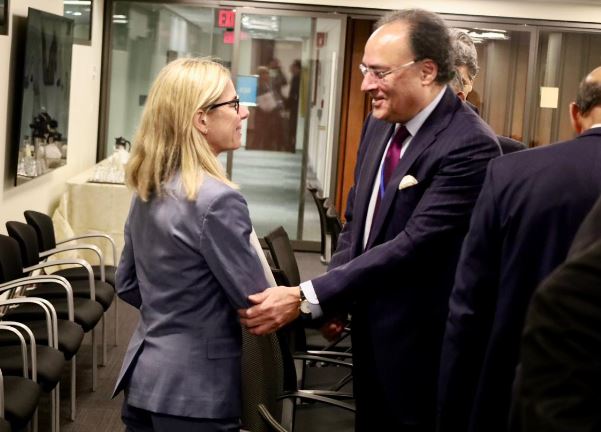
ISLAMABAD, APR 13: /DNA/ – Federal Minister for Finance and Revenue, Senator Muhammad Aurangzeb, commenced his engagements at the World Bank-IMF Spring Meetings 2026 today with a productive meeting with Ms. Anna Bjerde, Managing Director (Operations), World Bank Group.

The Finance Minister appreciated the World Bank Group’s longstanding support to Pakistan’s reform and development agenda. The two sides discussed Pakistan’s economic outlook, including the management of first and second-order effects arising from the ongoing conflict in the Middle East.

Both sides agreed on the importance of strengthening social protection measures to cushion the impact of external shocks on vulnerable segments of the population.

The meeting also reviewed progress under the Country Partnership Framework (CPF). While acknowledging meaningful progress in several priority areas, both sides emphasized the need for sustained efforts to fully achieve the framework’s objectives.

The Finance Minister highlighted the importance of adopting a coordinated federal and provincial approach to effectively address Pakistan’s demographic challenges. In this context, he requested the World Bank Group to support the development of a comprehensive Master Plan.

US-Iran ceasefire still holding, efforts underway to resolve disputed issues: PM

US-Iran ceasefire still holding, efforts underway to resolve disputed issues: PM

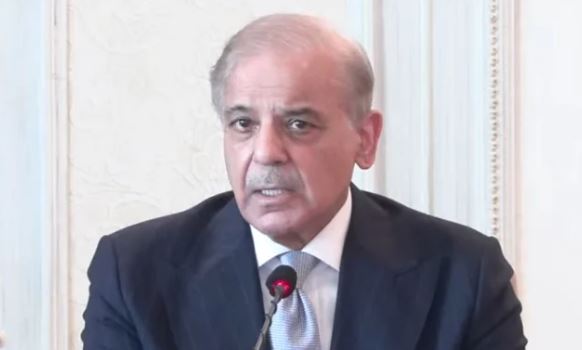
ISLAMABAD, APR 13: Prime Minister Shehbaz Sharif on Monday said that Pakistan remains fully engaged in efforts to resolve pending issues between the United States and Iran, commending the political and military leadership for their role in hosting the historic talks in Islamabad.

Islamabad emerged as key mediator in the US-Iran war after PM Shehbaz mediated a two-week ceasefire between the two side on April 8. Delegations from Washington and Tehran then arrived in Islamabad and held negotiations for over 20 hours at his invitation over the last weekend. However, the negotiations could not result in an agreement.


Addressing the federal cabinet, the prime minister said that Pakistan played an important role in bringing the United States and Iran to the table after around 47 years, noting that both delegations visited Pakistan at Islamabad’s request.

He said the talks marked the first time the two sides had engaged in direct, face-to-face dialogue at such a level, with discussions continuing for 21 hours.

PM Shehbaz added that Pakistan’s leadership worked tirelessly to make the negotiations possible.

The prime minister also expressed gratitude to the US and Iran for accepting Pakistan’s invitation, saying both delegations appreciated the country’s hospitality and acknowledged its constructive role.

He maintained that Pakistan’s efforts had helped sustain the two-week ceasefire, while attempts were ongoing to resolve outstanding issues.

He said that Pakistan was able to step in as a mediator and contribute positively to regional stability at a time when the global economy was reeling from the conflict.

The Islamabad talks lasted around 21 hours and marked the first direct US-Iran meeting in over a decade, as well as the highest-level discussions since Iran’s 1979 Islamic Revolution.

The US delegation, led by Vice President JD Vance, included President Donald Trump’s special envoy, Steve Witkoff, and his son-in-law Jared Kushner.

The Iranian delegation was led by Parliament Speaker Mohammad Bagher Ghalibaf, included Foreign Minister Abbas Araghchi.

The negotiations aimed at ending six weeks of fighting that has killed thousands of people across the Gulf and throttled vital supplies of energy and sparked fears of a wider regional conflict.

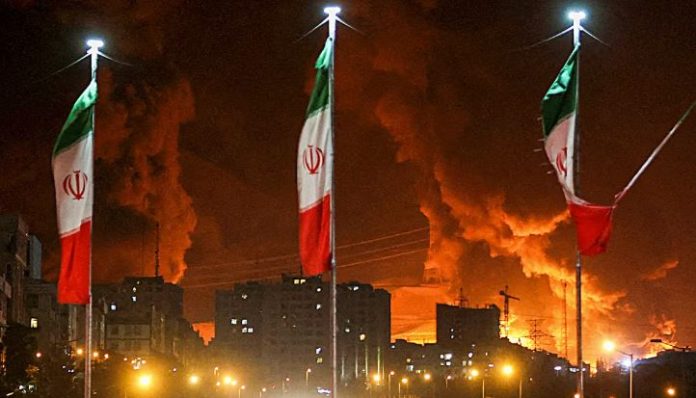
The conflict in the Middle East began on February 28, when the US and Israel launched a joint bombing campaign against Iran.

The scope quickly expanded as Iran effectively blocked the Strait of Hormuz and launched attacks against Israel and US bases in the Middle East.

The war has buffeted global financial markets and caused thousands of civilian deaths, mostly in Iran and Lebanon.

Bilawal urges public support

Chairman Bilawal strongly condemns terror attack in Khuzdar, Balochistan

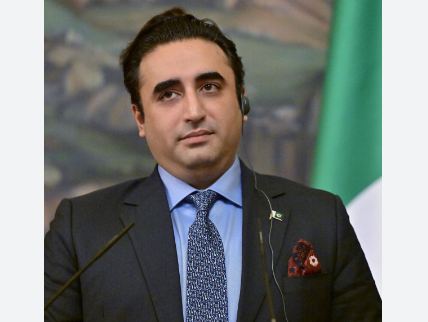
ISLAMABAD, 13 APR (DNA) —  Chairman of Pakistan Peoples Party (PPP) Bilawal Bhutto Zardari has termed the launch of the anti-polio campaign in Pakistan a significant step towards ensuring a healthier future for the nation.

In his statement issued by the party secretariat, Bilawal Bhutto said that the ongoing anti-polio drive represents a collective fight against a serious threat to the country’s future.  He emphasized that polio, often spread due to negligence, can only be eradicated through increased public awareness and responsibility.

Bilawal Bhutto paid tribute to frontline workers participating in the campaign, calling them “national heroes” who continue to perform their duties despite extreme heat and security challenges. He also urged parents to play their vital role in the campaign by taking personal responsibility and ensuring that their children receive polio vaccination drops.— DNA

Iran war’s global energy crisis sharpens China’s advantage in clean tech

Iran war's global energy crisis sharpens China’s advantage in clean tech

HONG KONG, APR 13: China is poised to benefit from the Iran war as global energy disruptions accelerate a shift away from fossil fuels and toward clean technologies and renewable power, industries that China dominates.

Most of the oil and gas from the now mostly shut Strait of Hormuz was Asia-bound. Asian nations are scrambling to conserve energy and bolster dwindling reserves. As a temporary ceasefire teeters, gasoline prices in the U.S. and Europe are spiking.

While most of Asia is hit hard, China will likely benefit from the fossil fuel disruptions despite being the biggest purchaser of Iranian oil. China leads the world in battery, solar and electric vehicle exports, and its industries are forecast to face a rise in demand for renewable products.

Before the start of the Iran war in late February, China’s lead in clean technologies was lengthening. The U.S. under President Donald Trump scaled back on renewable energy and leaned on its vast oil and gas resources, promoting energy exports to achieve what Trump described as “energy dominance.”

Now Chinese industry giants like vehicle-maker BYD and battery-producer CATL are well-positioned to capitalize on growing interest in low-emissions energy products as the world confronts the fragility of fossil fuels.

“China’s approach to energy sector development and geopolitics has been completely validated by the Iran conflict,” said Sam Reynolds with the U.S.-based Institute for Energy Economics and Financial Analysis.

Over a decade ago, Chinese President Xi Jinping merged energy security with national security. China has since stepped up its focus on renewable energy, even though fossil fuels still dominate its domestic energy mix.

China makes up over 70% of EV manufacturing and about 85% of battery cell production globally, according to the International Energy Agency. Its current five-year plan until 2030 continues to prioritize these industries.

“They are at the very forefront of this, more so than any other countries in the world, certainly more so than the United States,” said Li Shuo, director of the Asia Society Policy Institute’s China Climate Hub.

The U.S. is the world’s top oil producer and has pushed liquefied natural gas. The American approach — summed up by Trump as “ drill, baby, drill ” — favors fossil fuels over renewables.

Markets were witnessing a “bifurcation” before the war, Reynolds said, with the superpowers pushing very different energy futures, leaving other countries with complex choices on which approach to back.

The Iran war is driving demand for Chinese technology, whose exports of items such as solar panels, batteries and electric cars hit a record of almost $22.3 billion in December. That was up about 47% from the year before, with much going to Southeast Asia and Europe, according to the think tank Ember.

Investment in renewable power and battery storage — designed to save energy when the sun isn’t shining or the wind isn’t blowing — is expected to increase in nations heavily dependent on energy imports, including European countries, according to the credit rating firm Fitch Ratings.

Investors are betting the war will boost demand for renewables. In March, CATL and BYD’s Hong Kong traded shares rose roughly 24% and 11%, respectively.

Over the past few years, Chinese automakers were already expanding EV development and production while growing exports faster than American or European rivals, offering cheaper models and gaining ground in regions like Southeast Asia.

These trends are expected to accelerate.

The energy shock is “going to help the Chinese industry globally and hurt the American car industry globally,” said Amy Myers Jaffe of New York University’s Center for Global Affairs.

Meanwhile, high U.S. tariffs have largely shut Chinese EVs out of the American market.

Rising fuel prices also may boost BYD growth in China, said Chris Liu with the research and advisory firm Omdia.

Households facing higher energy costs are likely to move to clean power, said James Bowen of the Australia-based consultancy ReMap Research.

Pakistan offers an early example. Its renewable rollout in 2017 led to more than 50 gigawatts of Chinese solar panels imported by December 2025.

Pakistan still imports a third of its energy. About 80% of its oil flowed through the Strait of Hormuz, and Qatar had been supplying a quarter of its LNG. But “the shock isn’t as big as it would have been without solar,” said Nabiya Imran of Renewables First.

If prices remain high, solar could save Pakistan $6.3 billion in fossil fuel imports over the next year, according to think tanks Renewables First and the Centre for Research on Energy and Clean Air.

In the United Kingdom, EV leasing demand jumped by more than a third in the first three weeks of March compared to a similar period in February before the war, according to Octopus Energy, a renewable group. Octopus also reported increases in rooftop solar sales and solar-related inquiries.

In Southeast Asia, Vietnamese EV maker VinFast is offering discounts to offset fuel price shocks.

Prolonged fuel spikes may act as a future catalyst for EVs, but it will take time to see the trend reflected in purchases, partly because customers are likely waiting to see how the conflict plays out, said Patrick Tan, with the energy consultancy Aurora Research.

Even Indonesia, the world’s largest coal exporter, is recalibrating in ways that could make it a bigger customer for China’s clean energy technology.

In March, Indonesian President Prabowo Subianto announced a push into EVs, including plans to produce electric cars and expand charging infrastructure.

The dream of electrified transportation is gaining renewed attention, said Putra Adhiguna of the Jakarta-based think tank Energy Shift Institute.

Chinese firms play a major role in Indonesia’s clean energy supply chain. They signed more than $54 billion dollars’ worth of deals with the state utility in 2023 and added a $10 billion pledge during Prabowo’s visit to Beijing in 2024.

“There will be direct financial benefits to Chinese companies,” said Reynolds of IEEFA.

Russian FM to pay official visit of China from April 14 to 15

Russian FM to pay official visit of China from April 14 to 15

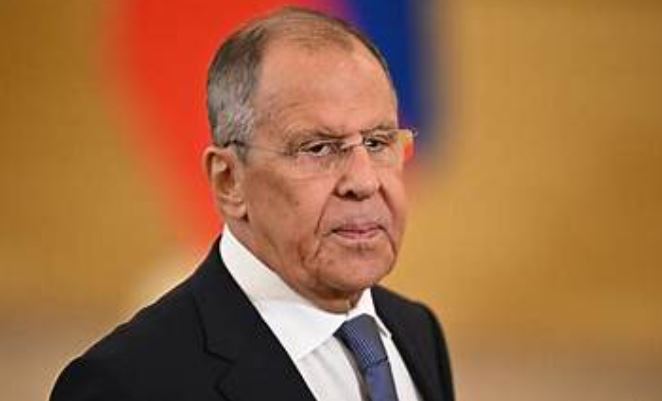
BEIJING, Apr 13: Russian Foreign Minister Sergei Lovrov will arrive in China on Tuesday for a two-day official visit, a Chinese Foreign Ministry Spokesperson announced on Monday.

At the invitation of Member of the Political Bureau of the CPC Central Committee and Foreign Minister Wang Yi, the Russian Foreign Minister will pay an official visit to China from April 14 to 15.

Fitch affirms Pakistan’s rating at ‘B-‘ with ‘stable outlook’

Fitch affirms Pakistan's rating at 'B-' with 'stable outlook'

ISLAMABAD, APR 13: Fitch Ratings on Monday affirmed Pakistan’s long-term foreign currency issuer default rating at ‘B-’ with a “stable outlook”.

“Pakistan’s rating affirmation reflects progress on fiscal consolidation and macro stability measures, broadly in line with its International Monetary Fund (IMF) programme and supporting its funding capacity. Foreign exchange buffers rebuilt over the past year provide a cushion against the economic impact of the war in the Middle East, while Pakistan’s role as a ceasefire broker may provide tangible benefits and partly offset external pressures,” the agency said in a statement.

The US-based agency highlighted that the country’s high exposure to the global energy price shock remained a key risk, particularly if it led to a sharp drop in foreign exchange reserves.

Highlighting key rating drivers, Fitch said the authorities reached a staff-level agreement with the IMF on its loan programmes in March, unlocking a combined $1.2 billion.

The programme will continue to provide a key policy anchor, particularly for the fiscal framework, and will help mobilise additional multilateral and bilateral support, it added.

“Pakistan sources up to 90% of oil from the Gulf and has limited storage capacity, creating high exposure to the Middle East conflict and constricted energy supply via the Strait of Hormuz,” it said, adding the fuel subsidies since early March had been funded by reallocating expenditure from other areas of the budget, while costs had been reduced by large pump-price hikes and the switch to a more targeted support scheme from April.

“We expect the overall impact on the fiscal deficit to be contained, as the government is likely to cut other spending,” the rating agency added.

On inflation, the rating agency said that higher world energy prices will raise inflation in the coming months, especially with the switch to more targeted subsidy support and base effects.

“We expect inflation to average 7.9% in FY26 (ending 30 June 2026), above the FY25 level but well below the 23.4% in FY24,” it added.

The State Bank of Pakistan (SBP) cut the policy rate to 10.5% by the end of 2025, from 22.0% at the end of May 2024, and market interest rates fell in tandem. However, the term interbank rate had risen to about 100bp above the policy rate by early April, on inflation concerns tied to the tight energy supply.

“The shock will detract from GDP growth, but we still expect growth of 3.1% in FY26, up slightly from 3.0% in FY25, due to improved confidence from lower borrowing costs,” the agency said.

The rating agency anticipated external debt amortisations to rise to $12.8bn (2.9pc of GDP) in FY26, from almost $8bn in FY25.

It anticipated external debt amortisations to rise to $12.8bn (2.9pc of GDP) in FY26, from almost $8bn in FY25. A $3.5 billion deposit was repaid to the United Arab Emirates (UAE) in April, the agency said. It said the amortisation projections exclude another $9.2bn in bilateral deposits and loans expected to be rolled over.

“We expect debt to be financed mainly by IMF and other multilateral and bilateral inflows, followed by commercial financing. Pakistan plans to issue a panda bond this fiscal year,” it added.

Daily Islamabad POST becomes a popular newspaper of Pakistan

Daily Islamabad POST becomes a popular newspaper of Pakistan

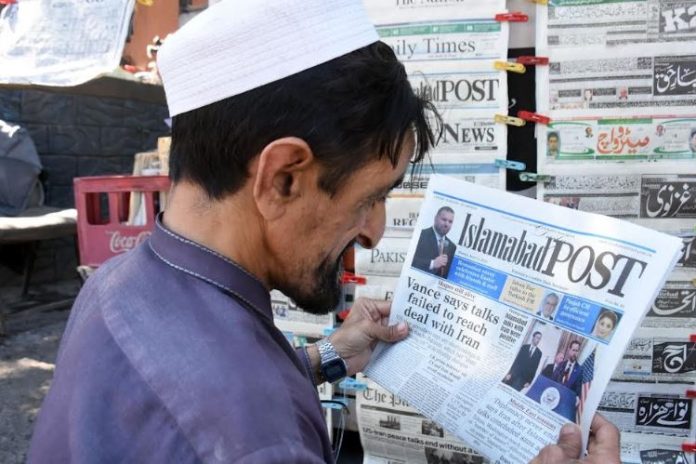
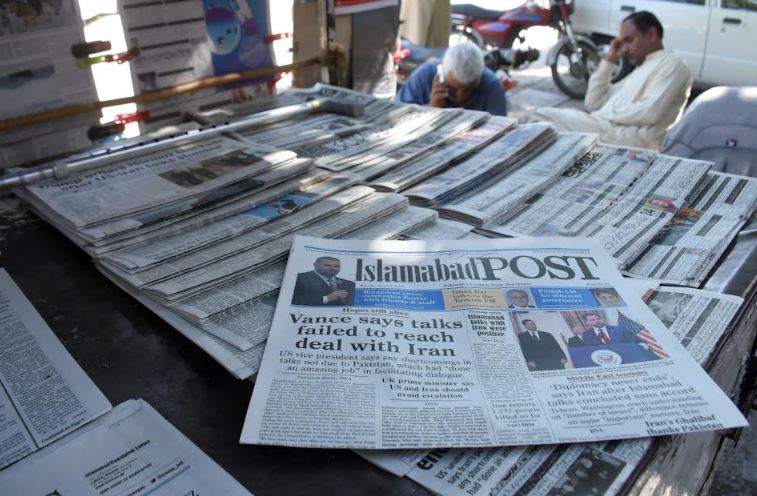
ISLAMABAD, APR 13: /DNA/ – In a remarkably short span of time, Daily Islamabad Post has emerged as one of the most popular and credible newspapers in the country. Under the leadership of seasoned journalist Ansar Mahmood Bhatti, the publication has carved a distinct identity based on professionalism, integrity, and journalistic excellence.

What sets Daily Islamabad Post apart is its commitment to independent analysis and unbiased reporting. At a time when media credibility is often questioned, the newspaper has remained steadfast in presenting facts without distortion, offering readers a balanced perspective on national and international affairs. Its in-depth coverage of diplomatic developments, in particular, has earned it recognition among policymakers, diplomats, and the informed public.

The newspaper’s growing influence is reflected in its wide circulation across leading hotels and major airlines, where it serves as a trusted source of information for travelers and professionals alike. This expanding readership base underscores its relevance and appeal among diverse audiences.

Furthermore, Daily Islamabad Post is a proud member of the All Pakistan Newspapers Society (APNS), a testament to its standing within the country’s media landscape. With its unwavering focus on quality journalism, the newspaper continues to strengthen its position as a reliable voice in Pakistan’s evolving media environment.

Hungarians look to changed future after pro-EU Magyar’s election landslide

Hungarians look to changed future after pro-EU Magyar's election landslide

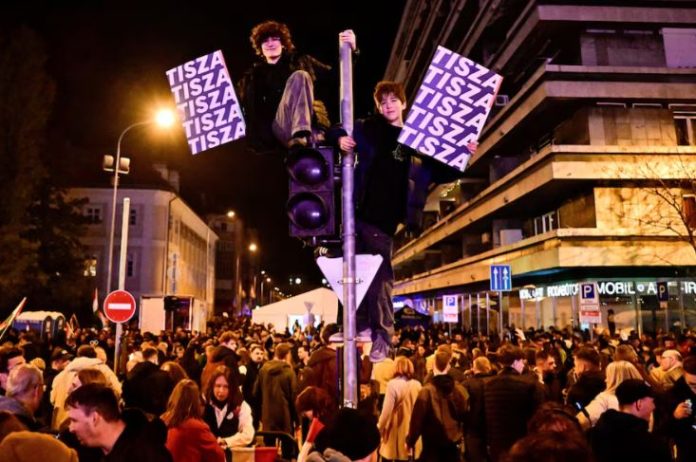
BUDAPEST, April 13 – Hungarians were waking up to a political earthquake on Monday, after a landslide victory for the centre-right ​opposition reverberated everywhere from Washington to Kyiv, sending local markets surging and turning Budapest into a party zone.


The ballot’s implications stretched ‌far beyond the borders of the landlocked country of under 10 million people, as outgoing nationalist Prime Minister Viktor Orban was a key ally of both U.S. President Donald Trump and Russia’s Vladimir Putin, and had frustrated European efforts to aid war-torn Ukraine.

Supporters of election winner Peter Magyar’s Tisza party hope he can unblock billions in European Union ​funds frozen over concerns about democratic standards, bolster the rule of law and hold those they accuse of wrongdoing under the ​previous government to account thanks to his two-thirds supermajority.


“It is an immense honour that you have empowered us ⁠to form a government with the most votes ever received, and to work for the next four years for a free, European, functioning, and ​humane Hungary,” Magyar posted on X on Monday.


The Hungarian forint surged 2.5% to a more than four-year high against the euro on Monday, while ​the Budapest stock exchange gained almost 3% in anticipation of the EU funds starting to flow.

EU leaders, Ukraine’s President Volodymyr Zelenskiy and Trump’s Democrat opponents in the United States have all warmly welcomed Magyar’s victory. Orban has blocked a 90-billion-euro ($105 billion) loan to war-battered Ukraine.


German Chancellor Friedrich Merz said on Monday that decision-making in the EU, ​including with regard to Russia, would become easier after Magyar’s win.


The Kremlin said on Monday Russia respected the choice of Hungarian voters and would continue ​what it called “pragmatic ties” with the new government in Budapest.


‘WE WANT TO STAY WITHIN THE EUROPEAN UNION’
In Budapest many residents were recovering from wild celebrations that saw ‌the streets ⁠of the capital thronged with revellers well into the early hours.


Among those letting themselves go was Zsolt Hegedus, a leading candidate for health minister, whose dance moves on stage following Magyar’s speech went viral online.

Tisza supporters spoke on Monday morning of their optimism about the end of Orban’s adversarial relations with Brussels.


“We are part of the European Union and we want to stay within the European Union,” said network engineer Gyula Ferenc Teleki.


Magyar ​has pledged a sweeping anti-corruption drive, ​including stronger judicial independence and ⁠tougher public procurement rules to help secure the release of the EU funds.


On Sunday, Magyar called on Hungary’s chief prosecutor, the heads of the top court and the media authority, and other officials to resign, saying ​the country’s public institutions had been captured by Orban loyalists over the past 16 years.


“I cannot believe…,” said ​Peter, who declined ⁠to give his surname, his voice cracking with emotion as he spoke about the election result.

“We have so many problems because the Hungarian state is not in good condition, but I think we have many funds from the EU, they will be coming, and maybe the new government has a better ⁠way to ​rule this country.”


Some conservatives, including a former Polish minister granted asylum in Hungary by Orban, ​lamented the election result.


“Conservative Poland and Europe have lost a very important bastion,” said Marcin Romanowski, who served in Poland’s previous nationalist Law and Justice government. He is wanted by ​Polish prosecutors on charges of abuse of power.


Reporting by Anita Komuves, Kristina Than, Anna Lubowicka, Marco Trujillo, Writing by Alan Charlish, Editing by Gareth Jones

PHF bars nine overage players from U-18 Games

Pakistan Hockey Federation still in a shambles

ISLAMABAD, APR 13 (DNA): Pakistan Hockey Federation (PHF) has barred nine players from participating in the National Under-18 Youth Hockey Games after they were found overage during a stringent scrutiny process.

According to a PHF press release issued here on Monday, the federation’s scrutiny committee disqualified the players on grounds of age misrepresentation and exceeding the prescribed age limit for the tournament.

The verification process, carried out with the assistance of the National Database and Registration Authority (NADRA), involved careful examination of Family Registration Certificates (FRCs), which confirmed that the players were not eligible to compete in the U-18 category.

The PHF reiterated its commitment to uphold transparency and merit, emphasizing that equal and fair competition is essential to protect the rights of genuine young athletes.

The federation further stated that such measures are necessary to ensure integrity in age-group competitions and to promote a level playing field for all participants.

The Youth Under-18 National Hockey Championship 2026, running from April 9 to 19, features 16 teams from across the country competing fiercely for the national title. The tournament serves as a key platform for identifying and nurturing the next generation of Pakistani hockey talent.

Pakistan-China Reaffirm Strong Partnership Amid Regional Tensions

Pakistan-China Reaffirm Strong Partnership Amid Regional Tensions

Saifullah Ansar

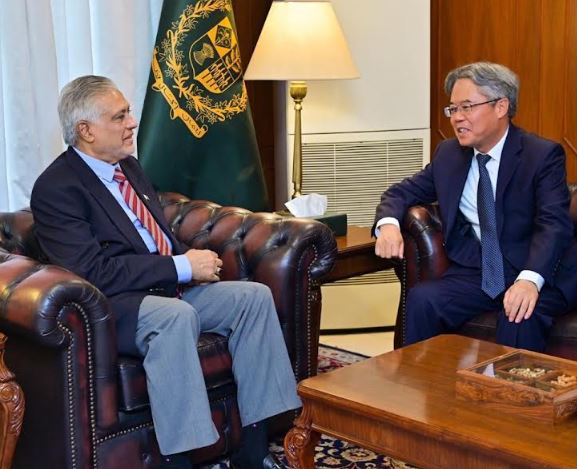
ISLAMABAD, APR 13: Deputy Prime Minister and Foreign Minister Senator Mohammad Ishaq Dar held a significant meeting today with Chinese Ambassador to Pakistan Jiang Zaidong at the Foreign Ministry. The discussions primarily focused on the recent developments following the collapse of US-Iran peace talks hosted in Islamabad. Senator Dar reaffirmed Pakistan’s firm commitment to supporting dialogue and diplomacy as the way forward to ease escalating tensions in the region.

Ambassador Jiang Zaidong praised Pakistan’s constructive role in facilitating the direct talks between the United States and Iran, describing Islamabad’s efforts as “important and timely.

”Both sides expressed full satisfaction with the deep-rooted Pakistan–China All-Weather Strategic Cooperative Partnership and agreed to continue close coordination on regional issues, particularly the volatile situation involving the Strait of Hormuz.

Senator Dar emphasized that Pakistan will remain actively engaged with all stakeholders to promote de-escalation and peace. The Chinese Ambassador reiterated Beijing’s support for Pakistan’s diplomatic initiatives during this critical period. The meeting underscores the enduring strategic alliance between the two countries at a time when the Middle East faces heightened risks of conflict.

Stay Connected

64FansLike
60FollowersFollow

Latest Reviews

Exchange Rates

USD - United States Dollar
EUR
1.14
GBP
1.34
AUD
0.70
CAD
0.71