Home Blog Page 177

The Victory of a Civilization

The Victory of a Civilization

Sadaf Noreen Awan

The Clash of Ages: Ancient Heritage vs. Modern Arrogance

When viewed through the lens of history, Iran stands as the custodian of an ancient and magnificent civilization with roots stretching back thousands of years. From the administrative genius of the Achaemenids to the poetic depths of the Safavids, the Iranian nation is defined by its history, knowledge, humility, and civilizational dignity. In stark contrast, the United States of America is a discovery of a mere few hundred years a nation built on expansionism that lacks the deep, spiritual anchors of an ancient society.

In the current geopolitical context, Iran’s struggle is not merely over a piece of land or a nuclear program; it is a battle for the survival of the Islamic identity, for the oppressed people of Gaza, for the dignity of the entire Muslim Ummah, and for the sanctity of the Masjid al-Aqsa. This was truly a conflict between the “Soldiers of Rahmān (the Merciful)” and the “Agents of Satan.” On one side stood those who place their absolute trust in the Divine, and on the other were the arrogant powers intoxicated by material strength, sophisticated weaponry, and a desire to trample upon human rights. Iran has proven to the world that when knowledge and humility are fortified by unwavering faith, they can force the world’s greatest material powers to bite the dust.

The Barbarism of the Oppressor and the Legacy of Minab

The beginning of this war was marked by a savagery that made the very soul of humanity tremble, echoing the darkest chapters of history. The Zionist aggressors and their American patrons targeted innocent children and defenceless civilians with unmatched brutality, reminiscent of the historical tragedies where the innocent were forced into ultimate sacrifices. We remember the 170 schoolgirls of Minab, whose legacy of choosing a dignified death over the dishonour of foreign capture remains a testament to the Iranian spirit. Today, the bombs falling on hospitals, schools, and refugee camps are, in reality, a bloody ritual, a gift offered to the modern altars of “Baal” by the “Sons of Satan,” Benjamin Netanyahu and Donald Trump.

They believed that by spilling the blood of infants, they could dampen the spirits of the resistance and break the will of a nation. However, their cold-blooded logic failed to account for a people who breathe the air of Karbala. They forgot that this is a nation following in the footsteps of Ali Asghar (as), where even the youngest is a soldier of truth. While the martyrdom of these innocents failed to stir the rusted conscience of the Western world, it provoked a wrath from the heavens, paving the way for the enemy’s ultimate strategic destruction.

The Miracle of Martyrdom and the Unity of a Nation

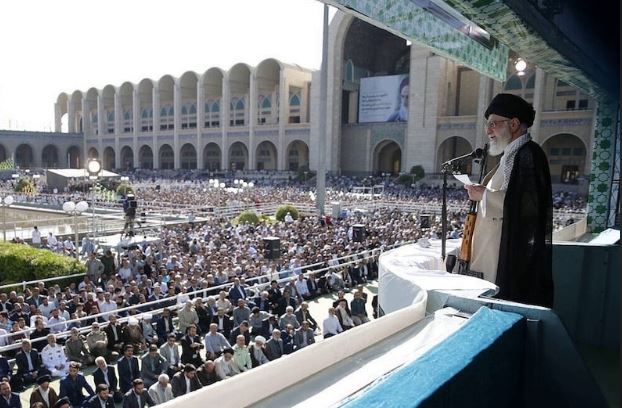
The enemy made a fatal strategic error by martyring the Leader. Their intelligence hubs predicted that a “regime change” would follow naturally, that the Iranian nation would crumble into chaos without its central pillar. Instead, the blood of the Martyr-Leader Syed Ali Khamanei acted as a catalyst for an unprecedented national awakening. Millions poured into the streets, not just in mourning, but in a display of fierce resolve that signalled the absolute end of foreign interference.

The martyrdom itself was shrouded in divine signs. In the ruins of the room where a massive concrete block had fallen, the body of the Rahbar (Leader) was found appearing as if he were sleeping in total tranquillity. That heavy stone did not crush him, it became a pillow of peace. This was a physical manifestation of his pure life and the acceptance of his sacrifice by the Creator, Allah the Almighty. It brought to mind the miracle years prior, when Allah saved him from a bomb hidden in a tape recorder. He was preserved then for a grand purpose, and he was taken now in a prestigious manner that ignited the hearts of an entire generation. A new, young leadership has emerged from this fire, carrying the same spirit of defiance, ensuring that the ambitions of the West remain buried under the rubble of their failed policies.

The Shattering of the Superpower Myth

At the completion of the 40th day of this war, the United States and Israel faced a crushing defeat that defied all their technological and military projections. Their elite think tanks, trillion-dollar research hubs, and high-tech idols were shattered before the “power of faith” (Emaan) and the ironclad nationalism of the Iranian people. The goals of the invaders were left unfulfilled, they failed to secure Iran’s uranium, they failed to achieve regime change, and they failed to break the will of the people.

Instead, Iran displayed a courage that shocked the world’s military establishment. The so-called “Iron Dome,” once marketed as an invincible shield, was proven to be little more than a toy against the precision of Iranian resistance. The counter-attacks shook the Zionist entity to its core. The world witnessed the reality that America is no longer the “superpower” it claimed to be, the air has been let out of its balloon, and its credibility has vanished. The United States was exposed as a treacherous actor, launching cowardly strikes even while negotiations were purportedly underway. This breach of trust has broken the world’s confidence in American diplomacy forever.

The Fall of Proxy Credibility and the Gulf Crisis

This war has also acted as a mirror for the Gulf states and Saudi Arabia. For decades, they relied on American protection, spending trillions of dollars and providing airbases to the U.S. military. Yet, when the moment of truth arrived, Iran’s strikes proved that the American military is a paper tiger, incapable of protecting its own assets, let alone its allies. Dubai and Abu Dhabi, once marketed as the safest hubs in the world, began to empty as international billionaires realized that the American security umbrella was full of holes. The Gulf states realized that their investment in American friendship brought them nothing but humiliation and financial ruin. Here, the Hadith of the Holy Prophet (pbuh) resonates with profound clarity, Do not provide your homes to your enemies to kill fellow Muslims. Now, a tide of public opinion has turned. From Qatar to the streets of Amman, a campaign is rising to free the land from American bases.

Control of the Strait: The Jugular Vein of the West

By asserting total control over the Strait of Hormuz, Iran placed its hand on the jugular vein of the global economy. Iran sent a clear message, Do not take us for granted like Venezuela. While Donald Trump issued daily threats via social media like a “teenage bully,” claiming he would force the Strait open, Iran maintained a dignified, calm replies.

As the crisis peaked, Pakistan stepped in, played a pivotal role in high-key diplomacy. Following consultations in Islamabad with leaders from Turkey, Egypt, and Saudi Arabia, a unified front began to emerge. Under this pressure and facing the reality of an empty American treasury and a defeated military, Trump was forced to consider Iran’s 10-point agenda. On the 40th day, Iran celebrated its victory, a victory reminiscent of the day Ali ibn Abi Talib (as) conquered the fort of Khayber.

The Political Death of the Aggressors

Today, it is a manifest reality that this is a magnificent victory for Iran. The myth of American global hegemony has been buried. The fact that the U.S. is now begging for the opening of the Strait of Hormuz is a testament to the shift in the global balance of power. Trump and Netanyahu have failed in every target they set before the war.

In America, Trump faced the wrath of 8 million of his own citizens on the streets, protesting against a war they knew was fought for his own personal face-saving. His attempt to hide his involvement in the “Epstein Files” through a foreign distraction failed miserably. He has not only lost the war abroad but has faced political death at home. The American earner is left with nothing but humiliation and a crippled economy. Meanwhile, the world now recognizes Netanyahu as the “cancer of humanity.”

 A Moral Victory: Civilization vs. Chaos

In a desperate attempt to break the spirit of the nation, the American military targeted the very foundation of Iran’s future its intellectual and technological heart. They launched a cowardly attack on the Sharif University of Technology (the MIT of Iran), wishing to destroy the education, technology, and innovation of a rising power. Their missiles destroyed vital bridges, schools, and hospitals, and in their blind rage, they killed 2,300 people, the vast majority of whom were innocent civilians.

This display of raw, unguided violence was intended to spread terror, but it only highlighted the moral bankruptcy of the invaders. In stark contrast, Iran demonstrated the character of a true Islamic civilization; despite having the capability, Iran did not target civilians. Iran directed its strength against military installations, proving that it fights with a code of honor. This distinction has earned Iran a profound moral victory on the world stage. It showed that while the U.S. seeks to destroy education and infrastructure, Iran seeks to protect humanity.

Conclusion: The Diplomacy of Peace and the Triumph of Reason

Ultimately, this conflict has reaffirmed a fundamental truth often forgotten by the architects of war, even the most intense battles must eventually find their resolution at the negotiation table. As a nation built on the foundations of Islamic principles, Pakistan stepped forward to fulfil its sacred duty as a peacemaker, prioritizing the preservation of human life over the fires of destruction. By hosting these pivotal talks in Islamabad, Pakistan emerged as the diplomatic bridge between worlds, proving that the spirit of Islam always favours the path of peace and reconciliation.

Iran enters these negotiations not out of weakness, but from a position of unprecedented strength and moral high ground. It sits at the table with the quiet confidence of a nation that has already won the war on the battlefield and earned a civilizational victory in the hearts of the global populace. Donald Trump’s ambition was to erase the Iranian civilization from the map of history, yet his arrogance was met with an unbreakable wall of resilience. This dialogue in Islamabad is not just a diplomatic meeting; it is a formal recognition that the Iranian civilization which Trump sought to end has not only survived but has emerged as the defining architect of a new, multipolar world order. The victory belongs to those who stood firm, proving that while empires may rise and fall on the strength of their weapons, civilizations endure through the power of their convictions.

Reflecting on this invincible dignity, the great Persian poet Ferdowsi writes in the Shahnameh:

«ایران تنها نام یک سرزمین نیست، بلکه یک باور و وقار است که حفاظت از آن وظیفه هر نسل است.»

(Iran is not just the name of a land; it is a belief and a dignity that every generation is duty-bound to protect.)
US-Iran Talks end in fiasco

Azerbaijan: a global model of religious tolerance

Ansar Mahmood Bhatti

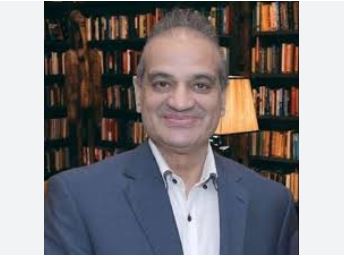
The much-anticipated talks between the United States and Iran, recently held in Islamabad, have ended in what can only be described as a diplomatic fiasco. While both sides attempted to project a sense of guarded optimism before the negotiations, the outcome has laid bare the deep-rooted mistrust and rigid positions that continue to define relations between Washington and Tehran.

Iranian officials were quick to point out that expecting a breakthrough in a single sitting was unrealistic, while American representatives maintained that the onus for progress lay with Iran. In reality, however, both sides emerged from the talks claiming that the ball was in the other’s court a familiar refrain that underscores the persistent deadlock.

At the heart of the failure lies the core issue that has long plagued US-Iran relations: Iran’s nuclear program. The United States reiterated its long-standing demand that Iran hand over its enriched uranium and abandon its nuclear ambitions altogether. For Washington, this remains a non-negotiable requirement, framed as essential for regional and global security. Iran, on the other hand, categorically rejected this demand, viewing it as an infringement on its sovereignty and its right to pursue peaceful nuclear technology. This fundamental disagreement proved insurmountable, rendering discussions on other matters largely inconsequential.

Indeed, while topics such as the Strait of Hormuz, the situation in Lebanon, and Iran’s ties with groups like Hamas were reportedly discussed, these issues were peripheral compared to the central dispute over the nuclear program. Without movement on the core issue, progress on these secondary matters was always unlikely, the US Vice President also mentioned in his media talk. The talks, therefore, became an exercise in reiterating established positions rather than exploring new avenues for compromise.

One of the most critical factors contributing to the failure of the Islamabad talks was the absence of a credible and influential mediator. Pakistan deserves recognition for hosting the talks and providing a neutral venue, reflecting its genuine desire to promote peace and stability in the region. However, Islamabad’s role was largely limited to that of a facilitator. It did not possess the leverage necessary to influence either side in a meaningful way or to push them towards compromise.

Effective mediation in high-stakes international disputes requires not only neutrality but also significant political, economic, and strategic clout. In this context, countries such as China and Russia or even a collective entity like the European Union are better positioned to play the role of mediator. While reports suggest that representatives from China and Russia were present during the Islamabad talks, their participation was limited to that of observers. They did not actively engage in the negotiations or attempt to bridge the gap between the two sides.

This lack of active mediation proved to be a crucial shortcoming. Mediation is not a passive exercise; it requires sustained engagement, creative diplomacy, and the ability to apply pressure or offer incentives where necessary. Without such intervention, the talks were bound to flounder, as both the United States and Iran remained firmly entrenched in their traditional positions.

Despite the failure of the talks, it would be unfair to dismiss Pakistan’s role as insignificant. On the contrary, Islamabad’s initiative has positioned it as a country willing to contribute constructively to global peace efforts. At a time when tensions in the Middle East continue to pose a threat to international stability, Pakistan’s willingness to host such high-level negotiations sends a positive signal to the global community. It demonstrates a commitment to dialogue and diplomacy, even in the face of daunting challenges.

The Islamabad talks, though unsuccessful, have also created a framework that can potentially be built upon in the future. Diplomatic processes are rarely linear, and setbacks are often an inherent part of negotiations of this magnitude. What is important is that the channels of communication remain open and that efforts to resolve the conflict continue.

Looking ahead, the way forward requires a more structured and inclusive approach. Major global powers, particularly China, Russia, and the European Union, must take a more active role in facilitating dialogue between the United States and Iran. These actors possess the economic influence and political leverage necessary to bring both sides to the negotiating table and to encourage them to adopt more flexible positions.

China, with its growing global influence and strong economic ties with both Iran and the broader Middle East, is uniquely positioned to act as a mediator. Similarly, Russia’s strategic relationships and experience in regional diplomacy make it a key player in any potential resolution. The European Union, which has historically played a role in nuclear negotiations with Iran, can also contribute by providing a multilateral framework that lends legitimacy and balance to the process.

However, the involvement of these powers alone will not guarantee success. Ultimately, the responsibility for reaching an agreement lies with the United States and Iran themselves. Both sides must recognize that their current approach—marked by rigidity and an unwillingness to compromise—is unsustainable. Continued adherence to maximalist positions will only prolong the conflict and exacerbate tensions, with potentially serious consequences for regional and global security.

For the United States, this may require a reassessment of its demands regarding Iran’s nuclear program. While concerns about proliferation are valid, insisting on complete abandonment may not be a realistic objective. A more pragmatic approach, focusing on limitations, transparency, and robust verification mechanisms, could provide a viable path forward.

For Iran, greater flexibility is equally essential. While safeguarding national sovereignty is important, engaging constructively with the international community and addressing concerns about its nuclear activities could help build trust and pave the way for sanctions relief and economic stability. Iran must weigh the long-term benefits of compromise against the costs of continued isolation.

The stakes are too high for both sides to remain locked in a cycle of confrontation. The potential consequences of failure extend far beyond bilateral relations, affecting the stability of the entire Middle East and the global economy. The Strait of Hormuz, a critical artery for global energy supplies, remains a flashpoint that could have far-reaching implications in the event of escalation. Similarly, ongoing conflicts and proxy dynamics in the region add further complexity to an already volatile situation.

In this context, the international community has a vested interest in ensuring that the diplomatic process does not collapse. The Islamabad talks, despite their shortcomings, represent an important step in keeping dialogue alive. They have demonstrated that both sides are at least willing to engage, even if meaningful progress remains elusive.

The challenge now is to build on this foundation and to inject new momentum into the process. This will require not only the involvement of major powers but also a willingness on the part of the United States and Iran to move beyond entrenched positions. Confidence-building measures, incremental agreements, and a focus on common ground could help create the conditions necessary for a broader settlement.

It is also important to recognize that diplomacy is a gradual process. Breakthroughs are often preceded by multiple rounds of negotiations, each contributing in small ways to the eventual outcome. The failure of one round of talks should not be seen as the end of the road but rather as an opportunity to reassess strategies and to approach the problem with renewed determination.

The Islamabad talks between the United States and Iran may have ended in failure, but they have also highlighted the path forward. The absence of a strong mediator, the persistence of rigid positions, and the focus on non-negotiable demands were key factors that led to the breakdown. Addressing these issues will be essential for any future success.

Pakistan’s role as a facilitator, while limited, deserves acknowledgment and appreciation. More importantly, the international community must now step up to ensure that the process initiated in Islamabad does not derail. With the active involvement of major powers and a genuine commitment to compromise from both sides, there remains a real possibility of bringing the talks back on track. The alternative continued deadlock and escalating tensions is a scenario that neither the region nor the world can afford. The prevailing situation therefore demands a pragmatic diplomacy and shared responsibility.

The article originally published in CENTRELINE journal in its April 2026 issue. The article is reproduced here for readers’ interest.

2026: Azerbaijan’s year of urban planning – A Model for the future

2026: Azerbaijan’s year of urban planning – A Model for the future

By Ansar Mahmood Bhatti

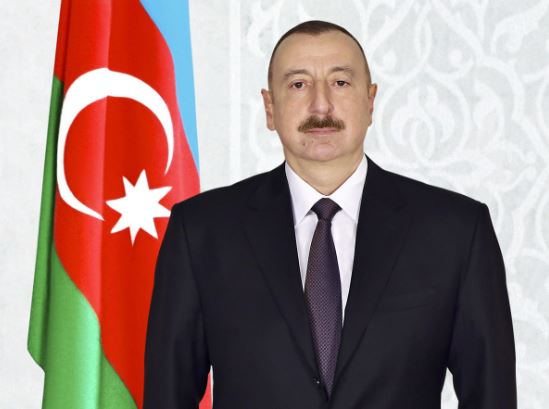
President of Azerbaijan Ilham Aliyev has signed an order declaring 2026 as the “Year of Urban Planning and Architecture” in Azerbaijan. The initiative is aimed at safeguarding the country’s centuries-old traditions of urban planning and architectural heritage, while simultaneously encouraging the development and wider application of modern, innovative approaches in the sector. The decision reflects Azerbaijan’s commitment to addressing contemporary urban challenges, ensuring sustainable development, and harmonizing historical legacy with forward-looking architectural and planning practices.

Azerbaijan’s urbanisation journey is not only reshaping its own cities but also extending its influence abroad, reflecting the country’s growing role as a partner in sustainable development. Since independence in 1991, Azerbaijan has transformed from a largely rural society into a majority urban one, with the urban population rising from 45 percent in 1993 to nearly 58 percent in 2025. This transformation has been guided by a deliberate strategy that integrates smart city technologies, sustainable planning, and inclusive governance.

The domestic model is anchored in resilience and digital connectivity. Azerbaijan inherited a Soviet legacy of industrial hubs and large housing blocks, but in the three decades since independence, it has crafted policies that emphasize sustainability, inclusivity, and modern infrastructure.

The Karabakh region, devastated by conflict, has become the flagship of this transformation. Aghali, rebuilt as the country’s first smart village, now boasts renewable energy grids, digital governance platforms, and eco-friendly agriculture. Shusha, the cultural capital, is being redeveloped as a “15-minute city” with electric public transport, underground waste collection, and heritage-led planning. These projects demonstrate how Azerbaijan is embedding sustainability into reconstruction, turning post-conflict recovery into an opportunity for innovation.

Yet Azerbaijan’s urbanisation vision does not stop at its borders. The country has begun to share its expertise and financial support with other nations, including Pakistan. In Islamabad, Azerbaijan has contributed to upgrading and beautifying key areas, particularly those frequented by tourists.

This cooperation has enhanced the capital’s aesthetic appeal and infrastructure, strengthening its position as a modern, welcoming city. The initiative underscores the close ties between Pakistan and Azerbaijan, reflecting not only diplomatic goodwill but also a shared belief in the transformative power of urbanisation. By investing in Islamabad’s uplift, Azerbaijan demonstrates that its urbanisation strategy is not merely a domestic priority but a cornerstone of its international outreach.

This collaboration highlights two important dimensions of Azerbaijan’s approach. First, it shows that urbanisation is central to its national identity and foreign policy. For Azerbaijan, building modern, sustainable cities is not just about domestic development but about projecting soft power and fostering partnerships. Second, it illustrates how urbanisation can serve as a bridge between nations.

 By supporting Islamabad’s beautification, Azerbaijan strengthens cultural and economic ties with Pakistan, creating a model of cooperation that blends urban development with diplomacy.

At home, Azerbaijan continues to host the National Urban Forum (NUFA), most recently NUFA3 in 2025, where experts discussed energy-efficient cities, green planning, and digital municipal management.

These forums highlight the country’s commitment to tackling challenges such as traffic congestion, ecological sustainability, and housing shortages. Abroad, its support for Islamabad shows that Azerbaijan is willing to export its urbanisation expertise, helping partner nations modernize their cities while reinforcing bilateral relations.

Comparisons with regional neighbors further underscore Azerbaijan’s uniqueness. While Turkey and Iran grapple with the complexities of mature, overcrowded urban systems, Azerbaijan is building modern cities almost from scratch, embedding sustainability and smart technologies from the outset. Its shorter independent history explains the modest urbanisation figures, but also provides the opportunity to leapfrog older models. By extending this vision to Pakistan, Azerbaijan demonstrates that its urbanisation model is not only nationally transformative but also internationally relevant.

Azerbaijan’s urbanisation strategy is about more than expanding cities. It is about creating resilient, green, and digitally connected urban spaces that serve as engines of national development and symbols of post-conflict recovery.

The Karabakh reconstruction stands as a flagship example, while Islamabad’s beautification reflects the country’s growing role as a partner in global urban uplift. Together, these efforts show that for Azerbaijan, urbanisation is both a domestic imperative and a diplomatic instrument, shaping cities at home and abroad while strengthening bonds with allies like Pakistan.

Lahore Qalandars knock Rawalpindiz out of PSL 11 with dominant win

Lahore Qalandars knock Rawalpindiz out of PSL 11 with dominant win

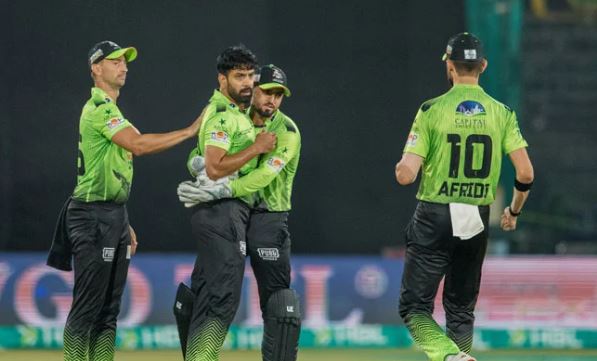
KARACHI, APR 18: Defending champions Lahore Qalandars secured their third victory of Pakistan Super League (PSL) 11 on Saturday, defeating Rawalpindi by 32 runs at the National Bank Stadium Karachi to eliminate them from the tournament.

Chasing 211, Rawalpindiz were restricted to 178-9 in their 20 overs, courtesy of an excellent bowling performance by the Qalandars’ attack.


Pindiz made a poor start as opener Shahzaib Khan became the first batter dismissed in the third over, falling to skipper Shaheen Afridi.

Afridi struck again in the same over, removing captain Mohammad Rizwan for a run-a-ball nine, which included two boundaries, leaving the side struggling at 17-2 in 2.3 overs.

Daryl Mitchell and Yasir Khan then steadied the innings with a crucial partnership, taking the score past the 50-run mark. The duo added a 50-run stand as Yasir played positively, bringing up his fourth PSL half-century.

However, their 71-run partnership was broken when Haris Rauf dismissed Mitchell for 11 off 15 balls, including one four, leaving Pindiz at 88-3 in 9.2 overs.

Rauf struck again in the same over, removing Yasir after a brilliant 58 off 29 deliveries, which included six fours and three sixes.

Sam Billings and Dian Forrester attempted to rebuild the innings and took the score past 100. However, Sikandar Raza broke the stand by dismissing Billings via stumping for just seven runs.

RawalPindiz continued to lose wickets as Usama Mir joined the attack, removing Dian Forrester for eight off 10 balls, leaving the side at 110-6 in 12.5 overs.

Usama struck again, dismissing Colin McConchie for three off five deliveries. Daniel Sams then removed Razaullah cheaply for five off 10 balls, adding further pressure on the batting side.

Saad Masood fought hard with a spirited knock, pushing the total past 150 and bringing up his maiden PSL half-century.

In the final over, Haris Rauf picked up his third wicket by ending Saad’s impressive innings of 54 off 26 balls, which included nine fours and one six, while Asif Afridi hit a four off the last delivery.

Batting first, Lahore Qalandars finished their innings at 210-4 in their allotted 20 overs, courtesy of outstanding performances by their opening batters Mohammad Farooq and Fakhar Zaman.

The pair began scoring at regular intervals, with Farooq leading from the front as runs flowed quickly through boundaries, putting early pressure on the Pindiz bowling attack as the score crossed the 50-run mark inside the powerplay.

Farooq was in top-notch form with the bat, while Fakhar contributed steadily from the other end, which also helped the young batter raise his bat for his maiden PSL fifty.

The duo troubled the opposition and showed no signs of slowing down as they brought up their 100-run stand, showcasing their brilliance while aiming to post a mammoth total to defend.

However, the 121-run partnership was broken when Mohammad Amir struck on the fifth delivery of the 11th over, dismissing the prized wicket of Farooq, who played an exceptional knock of 63 off 41 deliveries, including five fours and the same number of sixes.

Fakhar remained composed at the crease and kept the scoreboard moving for his side, which not only helped the team’s total surge past the 150-run mark but also saw the left-handed batter raise his bat for his 25th PSL half-century.

Abdullah Shafique came to the crease and started piling on runs, notching up a 50-run stand alongside Fakhar as the duo remained dominant with their batting approach.

However, Razaullah struck to break the 70-run partnership, dismissing Abdullah Shafique, who played a vital knock of 26 off 18 deliveries, including one four and two sixes.

Raza then dealt RawalPindiz another blow as he picked up his second wicket of the match, removing Sikandar Raza for a first-ball duck, leaving the team at 191-3 after 18 overs.

Qalandars lost their fourth wicket in the 19th over as Mohammad Amir struck to end Fakhar Zaman’s brilliant innings. He played an exceptional knock of 84 off 54 deliveries, featuring 11 fours and one six.

Charith Asalanka and Asif Ali came to the crease in the final over to finish the Qalandars’ innings.

Asif struck back-to-back sixes to push the team’s total past the 200-run mark and remained unbeaten on 14 off six deliveries, while Asalanka added one run.

Razaullah and Mohammad Amir led the bowling attack, picking up two wickets each during their spells.

Twelve Nations condemn Israel’s Somaliland diplomatic appointment move

Twelve Nations condemn Israel's Somaliland diplomatic appointment move

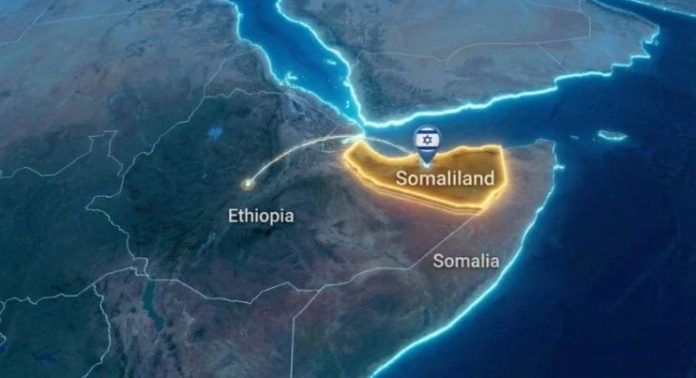
ISLAMABAD, APR 18 /DNA/ – The Ministers of Foreign Affairs of the Islamic Republic of Pakistan, the Arab Republic of Egypt, the Federal Republic of Somalia, the Republic of the Sudan, the State of Libya, the People’s Republic of Bangladesh, the People’s the Democratic Republic of Algeria, the Kingdom of Saudi Arabia, the State of Palestine, the Republic of Türkiye, the Republic of Indonesia and the State of Kuwait express their strongest condemnation of Israel’s announcement of the appointment of a diplomatic representative to the so-called “Somaliland”, which is considered a flagrant violation of the sovereignty, unity, and territorial integrity of the Federal Republic of Somalia.

The Ministers reaffirm their unequivocal rejection of all unilateral measures that undermine the unity of states or infringe upon their sovereignty. They further underscore their firm and unwavering support for the unity, sovereignty, and territorial integrity of Somalia, as well as for its legitimate state institutions, being the sole representative of the will of the Somali people.

The Ministers further emphasise that such actions constitute a blatant violation of the principles of international law, the United Nation’s Charter, and the Constitutive Act of the African Union, and sets a dangerous precedent that risks undermining stability in the Horn of Africa, which reflects negatively on regional peace and security as a whole.

Progress on agriculture projects reviewed

Progress on agriculture projects reviewed

BAHAWALPUR, Apr 18: Director General Agriculture (Extension) Punjab, Chaudhry Abdul Hameed, visited Bahawalpur and conducted a detailed review of various ongoing development projects and activities under the Agriculture Department.

On this occasion, progress on cotton cultivation, the Cotton Valley Project, Kisan Card recovery, the Green Tractor Program, and other government initiatives was reviewed.
The Director General Agriculture (Extension) directed that awareness campaigns for the promotion of cotton cultivation should be made more effective. He stated that this year, a target has been set to cultivate cotton on approximately 3.2 million acres across Punjab, while about 1.7 million acres will be brought under cultivation in Bahawalpur Division.
He further stated that the Cotton Valley Project is being implemented at a cost of approximately 1.75 billion rupees, under which subsidies are being provided to farmers on modern agricultural machinery. He advised farmers to submit their applications as soon as possible through the Agriculture Department’s portal to benefit from this facility.
The Director General also directed that the recovery process related to the Kisan Card should be accelerated. He said that the recovered amount would be transferred back into farmers’ accounts within 24 hours so that they can continue to benefit from the interest-free loan scheme.
He added that farmers who repay the Kisan Card amount on time will be eligible for prize draws offering rewards worth hundreds of thousands of rupees.
Director Agriculture (Extension) Bahawalpur Division, Muhammad Jameel Ghori, briefed the Director General, stating that awareness is being provided to farmers under the Cotton Valley Project and that the process of receiving applications through the portal is ongoing.

‘Shadows of Belonging’ exhibit marks Pakistan-China 75th anniversary ties

'Shadows of Belonging' exhibit marks Pakistan-China 75th anniversary ties

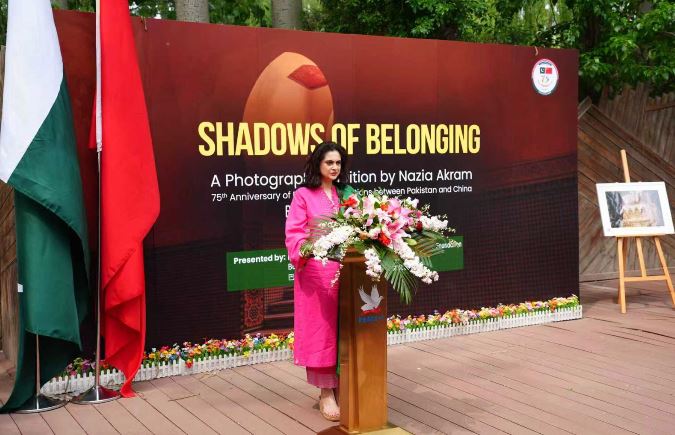
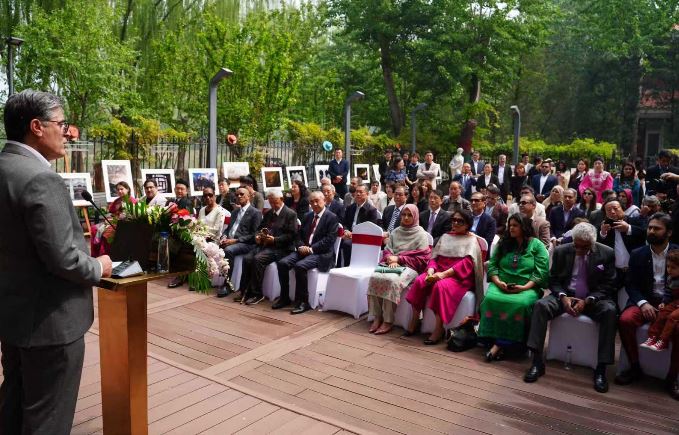
BEIJING, APR 18 /DNA/ – Embassy of Pakistan in Beijing co-hosted “Shadows of Belonging” Photo Exhibition to celebrate 75 Years of Pakistan-China Diplomatic Relations to commemorate the 75th anniversary of diplomatic relations between Pakistan and China, the Embassy of Pakistan in Beijing, in collaboration with the Beijing Peace Garden Museum and IBI Goulian Goufan, co-hosted a groundbreaking photo exhibition titled “Shadows of Belonging” by Pakistani artist, Ms. Nazia Akram, held at Beijing Peace Garden Museum,  today. The even was attended by dignitaries, art lovers, media, and cultural enthusiasts, celebrating not only the artistic spirit of Pakistan but also the enduring cultural ties between the two nations.

In his remarks, Ambassador of Pakistan to China, H.E. Khalil Hashmi, welcomed the distinguished guests to the exhibition. He highlighted that the exhibition marks an important milestone—the 75th anniversary of diplomatic relations between Pakistan and China. He noted that over the past seven and a half decades, the two countries have developed a unique model of inter-state relations, based on mutual trust, respect, and support. Ambassador Hashmi emphasized that the friendship between Pakistan and China has withstood the test of time, continuously growing stronger.

The Ambassador expressed his gratitude to the Beijing Peace Garden Museum and Mr. Li Ruohong for graciously providing the venue for this exhibition. He also thanked IBI Goulian Goufan and Beijing Long Muse Culture Media Company as well as Ms. Liu Zhai for her partnership in bringing this event to life.

Ambassador Hashmi further acknowledged Ms. Nazia Akram, an accomplished Pakistani visual artist, for her collaboration with the Embassy in showcasing her artwork. The Ambassador also recognised Mr. Wang Long, whose musical performance added a deeply emotional layer to the exhibition. Inspired by classical Chinese poetry, his compositions formed a poetic dialogue with Ms. Akram’s images, bridging cultures through sound and emotion.

The Ambassador underscored that the artistic contributions from both Pakistan and China serve as a powerful reminder that, despite our distinct histories and traditions, the language of art speaks to a universal connection shared by all.

In her opening speech, Ms. Nazia Akram shared that Shadows of Belonging is an exploration of Pakistan’s cultural essence, captured through the lens of everyday life, light, shadow, and architecture. She said that photography for her was a way of thinking through seeing. She underscored that the exhibition was not just a visual experience but a cultural dialogue that speaks to the shared commitment of mutual understanding and artistic exchange between Pakistan and China.

Ms. Akram extended heartfelt gratitude to the Embassy of Pakistan and encouragement in fostering cultural exchange.

A large number of attendees visited and appreciated the photo exhibition and enjoyed music.

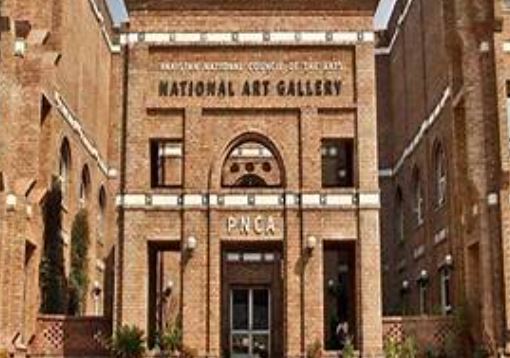
PNCA reaffirms commitment to cultural preservation on World Heritage Day

PNCA reaffirms commitment to cultural preservation on World Heritage Day

ISLAMABAD, Apr 18: Marking World Heritage Day, the Pakistan National Council of the Arts (PNCA) Friday reiterated its firm commitment to preserving, promoting, and performing the country’s rich cultural heritage.

Describing heritage as a vital element of national identity, the council emphasized that it serves as a living legacy connecting people to their roots while shaping the nation’s collective character.


The PNCA noted that this legacy is being actively safeguarded through its various departments, particularly the Heritage Division, where sustained efforts are underway to protect traditional arts, customs, and cultural expressions.


In a message, Director General PNCA, Muhammad Ayoub Jamali, said that safeguarding heritage was not only an institutional responsibility but also a collective duty.


He stressed the importance of engaging communities especially the youth to ensure that cultural values remain vibrant and are passed on to future generations.


Reaffirming its vision, the PNCA pledged to continue providing meaningful platforms that showcase the diversity and strength of Pakistan’s cultural landscape, urging citizens to take pride in their heritage and contribute to its preservation.

Iran says no date set for next round of negotiations with US

Iran says no date set for next round of negotiations with US

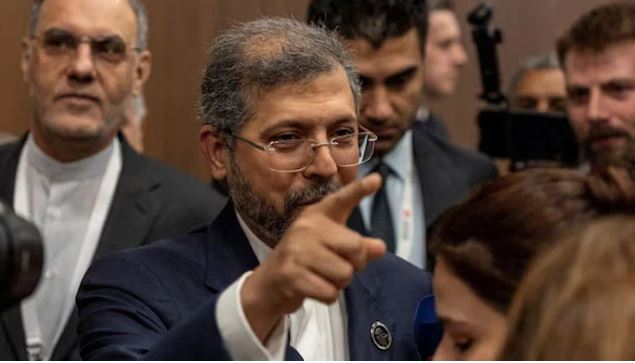
TEHRAN, APR 18: No date has been set for the next round of negotiations between Iran and the United States, Iran’s deputy foreign minister said on Saturday, adding that a framework of understanding must be agreed first.

The highest-level US-Iran talks since the 1979 Islamic Revolution ended in Islamabad without agreement last weekend.


US President Donald Trump has told Reuters there would probably be more direct talks this weekend, though some diplomats said that was unlikely given the logistics of convening in Islamabad, where the talks are expected to take place.

“We are now focusing on finalising the framework of understanding between the two sides. We don’t want to enter into any negotiation or meeting which is doomed to fail and which can be a pretext for another round of escalation,” Saeed Khatibzadeh told reporters on the sidelines of a diplomacy forum in the southern Turkish province of Antalya.

“Until we agree the framework, we cannot set the date… There was significant progress made, actually. But then the maximalist approach by the other side, trying to make Iran an exception from international law prevented us from reaching an agreement,” he said, referring to US demands over Iran’s nuclear programme.

“I have to be very crystal clear that Iran would not accept being an exception from international law. Anything that we are going to be committed to will be within the international regulations and international law.”

Asked about reports that Iran again closed the Strait of Hormuz on Saturday after its temporary reopening following a separate US-brokered 10-day ceasefire between Israel and Lebanon on Thursday, Khatibzadeh said Iran had announced it would allow the safe passage of commercial vessels in line with the terms of the truce.

“The other side, the American side, tried to sabotage that by saying that it is open except for Iranians. So that was the reason we said that ‘if you are going to violate the ceasefire terms and conditions, if Americans are not going to honour their words, there will be repercussions for them’,” he said.

Hajj flights begin as first batch of pilgrims departs Karachi

Hajj flights begin as first batch of pilgrims departs Karachi

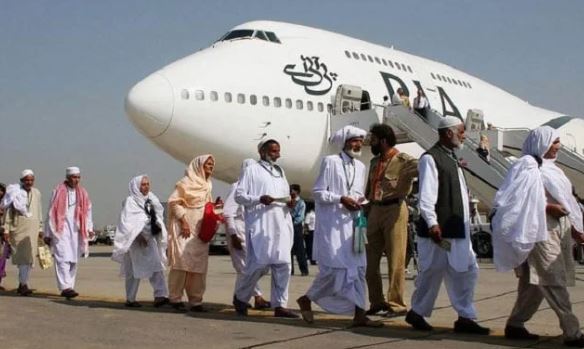
KARACHI, APR 18: Hajj flight operations from Pakistan began early Saturday, with the first batch of pilgrims departing from Karachi at 3am via a private airline, authorities at Jinnah International Airport said.

A total of 160 pilgrims left on the inaugural flight, officials said, adding that under the Road to Makkah Project, one-time immigration for pilgrims was completed at Karachi airport before departure.

The first flight from Pakistan arrived in Madinah, where airport authorities and Hajj service providers received the pilgrims. A second Hajj flight is also expected to arrive in Madinah from Turkiye.

Separately, Pakistan International Airlines (PIA) will commence its Hajj operations from April 19, its spokesperson told Geo News. The airline plans to transport more than 55,000 pilgrims through 191 flights to Saudi Arabia.

Of these, around 49,000 pilgrims will travel under the government scheme, while approximately 6,000 will perform Hajj through private groups.

PIA’s Hajj flights will operate from Islamabad, Karachi, Lahore, Multan, Faisalabad, Sialkot and Quetta.

The airline’s first Hajj flight, PK-747, will depart from Sialkot to Madinah on April 19. From Faisalabad, flight PK-4003 will also leave on April 19 carrying more than 150 pilgrims.

Multan’s first Hajj flight is scheduled for April 20 with 391 pilgrims on board. Islamabad’s first flight, PK-713, will depart for Madinah on April 21.

From Quetta, the first Hajj flight will leave on April 21 carrying more than 300 pilgrims, while Karachi’s flight PK-743 will transport 391 pilgrims.

Lahore’s first Hajj flight is scheduled to depart on April 24 with over 300 pilgrims.

Federal Minister for Religious Affairs Sardar Muhammad Yousuf announced earlier this month that Hajj 2026 arrangements are fully prepared, with no extra cost for 180,000 pilgrims, including 120,000 under the government scheme and 60,000 private pilgrims.

Highlighting improvements for this year, he revealed a new Lahore-to-Saudi Arabia route to facilitate easier travel, while flights from other cities will continue as scheduled.

The minister emphasised that all operations — including flights, accommodation and transport — will be organised smoothly and efficiently to ensure the comfort and safety of pilgrims.

He further stated that the Ministry of Religious Affairs will closely coordinate with private companies to regulate Umrah services, accommodation, catering and transport.

“Every effort is being made to provide pilgrims with high-quality arrangements, and the ministry aims to make this year’s Hajj an exemplary experience in terms of management and facilities,” he said.

The minister also reaffirmed the strong relationship between Pakistan and Saudi Arabia, appreciating the host country’s arrangements and support for Pakistani pilgrims.

He added that Pakistan would fully utilise its Hajj quota while maintaining high standards, reflecting the commitment of both governments to facilitating a safe and smooth pilgrimage experience.

Responding to a query, he said that previously the Hajj route primarily operated from Karachi and Islamabad, and now a new Lahore-to-Saudi Arabia route has been added to facilitate easier travel, while flights from other cities will continue as scheduled.

Stay Connected

64FansLike
60FollowersFollow

Latest Reviews

Exchange Rates

USD - United States Dollar
EUR
1.14
GBP
1.34
AUD
0.70
CAD
0.71