Home Blog Page 173

SAARC chief urges turning South Asia’s challenges into opportunities

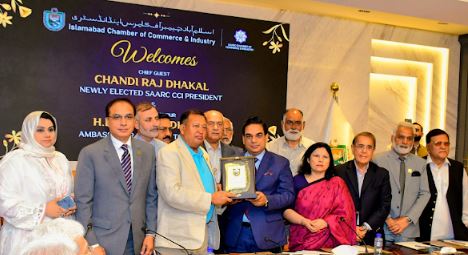
ISLAMABAD, APR 21 /DNA/ – President of the SAARC Chamber of Commerce and Industry, Chandi Raj Dhakal, has emphasized that South Asia’s economic and geopolitical challenges must be transformed into opportunities through collective action and stronger regional cooperation.

Speaking during his visit to the Islamabad Chamber of Commerce and Industry (ICCI), he underscored that unity among member states—beyond political differences—is essential for achieving sustainable growth and shared prosperity. He noted that despite a population of nearly 1.94 billion, intra-regional trade remains below 6 percent, calling for enhanced connectivity, stronger political will, and a business-friendly environment to unlock the region’s vast economic potential.

Highlighting broader regional dynamics, Mr. Dhakal appreciated Pakistan’s constructive role in promoting dialogue and easing tensions in the evolving situation between the United States and Iran. He expressed hope that the fruits of such mediation would lead to lasting peace, reduced regional uncertainty, stabilization of energy markets, and relief from inflationary pressures affecting economies across South Asia and beyond. He further stressed the importance of empowering youth and women, strengthening SMEs, and promoting borderless trade while unlocking key sectors such as tourism, hydropower, agriculture, and services. He reiterated his vision to transform SAARC CCI into an action-oriented institution focused on delivering tangible economic outcomes, while ensuring that regional economic cooperation continues irrespective of political challenges.

The Ambassador of Nepal to Pakistan,  Ms. Rita Dhital, urged deeper trade and investment cooperation, noting that existing commercial ties remain underdeveloped compared to strong diplomatic relations. She emphasized that the resumption of direct flights between Nepal and major Pakistani cities such as Islamabad and Karachi would significantly enhance bilateral trade, tourism, and people-to-people linkages. She reaffirmed that the Embassy remains fully committed to facilitating stronger business and investment cooperation between the two countries.

President ICCI, Sardar Tahir Mehmood, in his remarks, warmly welcomed the SAARC CCI President and reaffirmed ICCI’s commitment to strengthening regional collaboration. He emphasized the need to boost intra-regional trade and connectivity, and appreciated Mr. Dhakal’s forward-looking leadership. Highlighting Pakistan’s strategic location and market potential, he stressed the importance of expanding trade ties with Nepal and other SAARC countries in sectors including tourism, hydropower, agriculture, pharmaceuticals, and information technology, expressing optimism for a more integrated, competitive, and prosperous South Asia.

Chairman ICCI Founder Group Tariq Sadiq called for overcoming regional differences and making a new beginning for economic collaboration. Former President ICCI Zubair Ahmed Malik stressed the need for broader cooperation to address poverty challenges in the region, while former President ICCI Zafar Bakhtawari expressed confidence that under the leadership of Chandi Raj Dhakal, SAARC CCI will make meaningful progress and assured full support of the business community.

Senior Vice President ICCI Tahir Ayub, who conducted the proceedings, highlighted the significance of Pakistan-Nepal relations and the role of SAARC CCI in promoting regional economic prosperity. Among the prominent attendees were Vice President Irfan Chaudhry, former Presidents Khalid Javed, Mohammad Ejaz Abbasi, Mian Shaukat Masood, Khalid Iqbal Malik, Executive Members Raja Naveed Satti, Zulqurnain Abbasi, Ishaq Sial, Wseem Chaudhry, Sanaullah Khan, Abdul Rehman Siddiqui, Malik Mohsin Khalid, Mirza Mohammad Ali, Umair Aziz Malik, Ms. Fatima Azim, Ms. Shumaila Siddiqui, and Hina Zulfiqar of RWCCI, along with a large number of business leaders and women entrepreneurs.
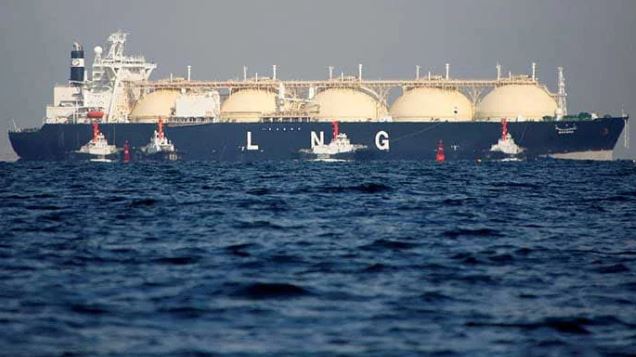
Azerbaijan says ready to supply LNG as Pakistan faces shortages amid Mideast conflict

Azerbaijan says ready to supply LNG as Pakistan faces shortages amid Mideast conflict

ISLAMABAD/BAKU: Azerbaijan’s state energy company Socar is ready to supply liquefied natural gas (LNG) to Pakistan as soon as it receives a request from Islamabad, the company told Reuters on Tuesday, as Islamabad seeks spot cargoes to ease a growing energy shortfall.

Socar said a ⁠framework agreement signed in 2025 between Socar Trading and Pakistan LNG Limited (PLL) allows the Pakistani buyer to purchase LNG cargoes directly under an accelerated procedure.


“Socar is ready to provide LNG to Pakistan as soon as PLL submits a corresponding request,” the company ⁠said in response to Reuters questions.

SOCAR did not say whether such a request had already been made, when a first delivery could ⁠take place, or whose LNG would be supplied under the agreement.

Pakistan, which relies heavily on gas ⁠for its energy needs, remains vulnerable to declining domestic production and swings ⁠in global LNG prices amid the supply disruptions related to the US-Israeli war on Iran.

A day earlier, authorities in the Petroleum Division had informed that the import of four LNG cargoes from Qatar had been halted due to Iran’s renewed closure of the Strait of Hormuz, The News reported.

A logo of Azerbaijans state oil company SOCAR on a building in Geneva, Switzerland, March 18, 2026. — Reuters
A logo of Azerbaijan’s state oil company SOCAR on a building in Geneva, Switzerland, March 18, 2026. — Reuters
Pakistan State Oil (PSO), which was arranging the import of four LNG cargoes stranded in the strait under two agreements with QatarEnergy, has communicated via email to the Petroleum Division that the imports have been suspended until the situation caused by the closure of Strait of Hormuz stabilises.

Earlier, Pakistan had requested Qatar to provide four cargoes out of the 8-10 that were loaded and stranded due to the ongoing conflict, to be delivered once Iran reopened the Strait of Hormuz.

However, Tehran closed the strait again after determining that the US naval blockade had not ended and was instead continuing what it described as acts of piracy.

Federal Minister Ali Pervaiz Malik, speaking to The News two days ago, stated that QatarEnergy currently has 8-10 loaded LNG vessels available and Pakistan is seeking to secure as much volume as possible from these cargoes in the short term.

He added that once QatarEnergy lifts its force majeure conditions, Pakistan is expected to resume a more regular schedule of LNG imports.

Following an attack on a Qatar LNG facility, QatarEnergy declared force majeure on March 4. Since then, Pakistan has been deprived of imported gas supplies. The Power Division currently requires 400mmcfd (million cubic feet per day) of gas for electricity generation to bridge the gap and eliminate loadshedding.

Dar, US chargée discuss engagement between America and Iran

Dar, US chargée discuss engagement between America and Iran

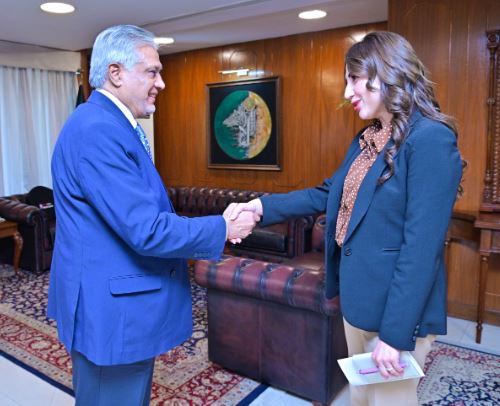
ISLAMABAD, APR 21 /DNA/ – U.S. Chargé d’Affaires Natalie A. Baker called on Deputy Prime Minister/Foreign Minister Senator Mohammad Ishaq Dar @MIshaqDar50 today. Discussions covered recent regional developments.

DPM/FM underscored Pakistan’s consistent emphasis on dialogue and diplomacy as the only viable means to address challenges and achieve lasting regional peace and stability.

He stressed the need for engagement between the United States and Iran, urged both sides to consider extending the ceasefire, and to give dialogue and diplomacy a chance.

Cd’A Baker conveyed U.S. appreciation for Pakistan’s constructive and positive role in promoting regional peace and facilitating dialogue.

Pakistan’s Peace Role Termed ‘Historic’ Amid Ceasefire Efforts

Pakistan’s Peace Role Termed ‘Historic’ Amid Ceasefire Efforts

By Nazir Siyal / DNA

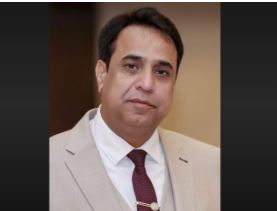
KARACHI: Dr Hamid Khan Al-Mashriqi, an International Strategic Affairs expert and analyst has categorically said that the Pakistan’s role in maintaining regional and global peace has been described as significant and potentially “historic,” particularly in the context of ongoing ceasefire efforts and diplomatic engagement.

Analysts noted that sustaining the current two-week ceasefire could be a major success, he said with the possibility of its extension to a longer duration as negotiations continue he added.

Dr. Hamid Al Mashriqi emphasized that such talks are unlikely to conclude quickly, but continuity of dialogue remains essential for lasting peace.

Dr Al-Mashriqi highlighted that Pakistan is playing a constructive role in ensuring the continuity of peace in the region and beyond. Dr Hamid stressed that international stakeholders should support these efforts rather than engage in negative narratives or rivalries.

Commenting on leadership dynamics in South Asia,  Al-Mashriqi argued that regional stability should take precedence over individual ambitions, with Pakistan’s leadership under Shehbaz Sharif being positioned as a proponent of peace and cooperation.

He said the role of Asim Munir was also termed “historic,” with analysts stating that his strategic engagement has contributed to stabilizing tensions and encouraging diplomatic pathways, including influencing regional actors toward restraint.

Sindh Governor, Iranian CG discuss bilateral ties

Sindh Governor, Iranian CG discuss bilateral ties

By Nazir Siyal / DNA


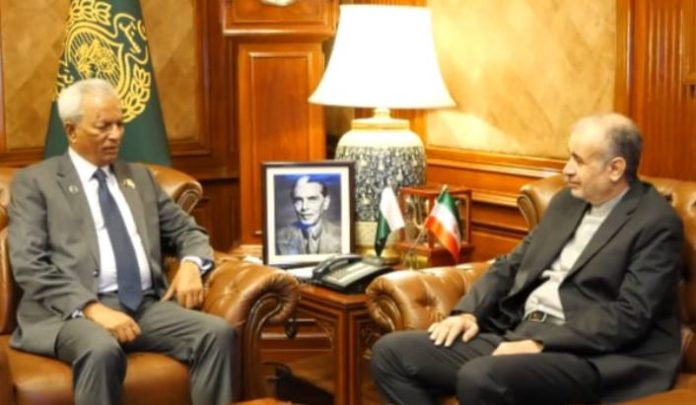
KARACHI: Governor Sindh Syed Muhammad Nihal Hashmi held a meeting with Iranian Consul General Akbar Isa Zadeh at Governor House, where discussions were held on bilateral relations, the ongoing regional situation and other matters of mutual importance.

The Iranian Consul General congratulated the Governor on assuming office and expressed his best wishes.

Speaking on the occasion, Governor Sindh stated that Pakistan-Iran bilateral relations are based on cultural, social, historical and religious foundations. He said that the Muslim Ummah, particularly the people of Pakistan, stand with their Iranian brothers. He expressed willingness to enhance trade and attract Iranian investment, adding that the completion of the Pakistan-Iran gas pipeline project is a critical need of the time. He also noted that the Prime Minister and Field Marshal are playing a full role day and night for peace in the region.

The Iranian Consul General paid tribute to the Prime Minister and Field Marshal for their peace efforts. He expressed desire to complete the Pakistan-Iran gas pipeline project as soon as possible. The meeting underscored the commitment of both sides to strengthen bilateral ties and promote regional stability.

US, Iran blame game puts talks in jeopardy

US, Iran blame game puts talks in jeopardy

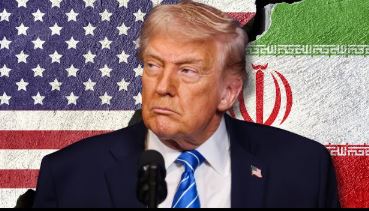
US President Donald Trump has accused Iran of committing numerous violations of the fragile ceasefire in the Strait of Hormuz, citing gunfire directed at foreign vessels

News Desk/DNA

WASHINGTON: US President Donald Trump has accused Iran of committing numerous violations of the fragile ceasefire in the Strait of Hormuz, citing gunfire directed at foreign vessels, including those linked to France and the UK, over the weekend.

Trump warned of severe consequences if talks fail, stating the US could target Iranian power plants and bridges, while noting that American envoys are heading to Pakistan for fresh peace negotiations as the current truce nears expiration.

In a related development, US forces boarded a sanctioned oil tanker in the Indo-Pacific region without incident, part of ongoing efforts to enforce sanctions on vessels involved in illicit shipments, with the Pentagon confirming the operation on a ship tracked from the Caribbean.

Qatar has emphasized that resolving the Strait of Hormuz crisis is a collective regional responsibility, involving coastal states and major users of the waterway. Officials stressed that the strait’s security must not be threatened by any party and that there should be no preconditions for reopening it.

Meanwhile, Iran’s Navy commander met with Foreign Minister Abbas Araghchi to discuss diplomatic efforts aimed at repatriating the bodies of sailors killed during recent naval incidents, including those from the frigate IRIS Dena sunk earlier in the conflict.

The head of the UN’s International Maritime Organization (IMO), Arsenio Dominguez, has appealed for urgent help for thousands of seafarers stranded in the Strait of Hormuz amid the ongoing Middle East conflict. Since US-Israeli strikes on Iran began on February 28, around 20,000 seafarers and roughly 2,000 ships have been trapped in the vital waterway, leading to severe stress, fatigue, and isolation. Speaking at a maritime conference in Singapore, Dominguez urged shipping companies to provide remote mental health support, while praising countries that have set up helplines and delivered food aid. He called for more personal outreach to help sailors feel less isolated as the IMO works on safe evacuation plans once security conditions allow.

The situation remains highly fluid, with diplomacy continuing alongside military and humanitarian pressures in one of the world’s most critical energy chokepoints.

BISP Chairperson pays tribute to Allama Muhammad Iqbal on death anniversary

BISP Chairperson pays tribute to Allama Muhammad Iqbal on death anniversary

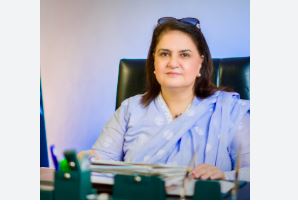
ISLAMABAD, Apr 21: Chairperson Benazir Income Support Programme (BISP), Senator Rubina Khalid Tuesday paid tribute to Allama Muhammad Iqbal on his death anniversary, saying his vision continues to guide the nation’s collective struggle and direction.

In her message, she said that the great thinker of Islam, Allama Muhammad Iqbal had envisioned a dignified and sovereign Pakistan.
She noted that Iqbal’s concept of Pakistan reflects a welfare state based on justice and equality.
Senator Khalid said that the philosophy of the Poet of the East still determines the course of national efforts, adding that Iqbal awakened the Muslims of the subcontinent to the idea of a separate homeland.
She further highlighted that Iqbal’s message revolves around selfhood (khudi), action, and unity, which remain essential for building a strong, prosperous, and self-reliant Pakistan.
Emphasizing the relevance of Iqbal’s teachings, she said the country must strive to transform into a true welfare state in light of his ideas.
She added that Iqbal guided the Muslim Ummah towards awareness and self-reliance, while his philosophy continues to inspire hope and courage among the youth.

PIDE warns temporary window not structural transformation yet

PIDE warns temporary window not structural transformation yet

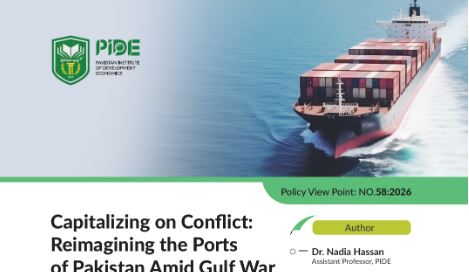
ISLAMABAD, APR 21 /DNA/ – The Pakistan Institute of Development Economics (PIDE) has released a new policy brief highlighting a rare and time-sensitive opportunity for Pakistan to reposition its ports as competitive regional and global trade hubs amid ongoing disruptions in Gulf shipping routes. Authored by Dr. Nadia Hassan, Assistant Professor at PIDE, the brief titled Capitalizing on Conflict: Reimagining the Ports of Pakistan Amid Gulf War argues that while Pakistan is already benefiting from diverted cargo flows, the real challenge lies in converting these temporary gains into sustained economic advantage through urgent and coordinated reforms.

With nearly one-fifth of global trade passing through the Strait of Hormuz, recent tensions and its closure in March 2026 triggered a major rerouting of international shipping away from traditional hubs such as Dubai’s Jebel Ali and Oman’s Salalah. Pakistan’s ports—Karachi Port, Port Qasim, and Gwadar—located outside the direct conflict zone yet in close proximity to key shipping lanes, have emerged as viable alternatives, placing the country at the center of a rapidly shifting maritime landscape.

The scale of this shift has been significant. Karachi Port alone handled approximately 11,000 transshipment containers and recorded 133 vessel calls in March, surpassing its total transshipment activity for the previous year. Port Qasim absorbed nearly 25 percent of redirected cargo and processed over 4,000 TEUs in a single day, registering an extraordinary 2,302 percent increase in transshipment activity. Gwadar Port, though still developing, marked its entry into the regional transshipment network by berthing its first vessel, signaling strong long-term potential as a deep-sea hub at the mouth of the Persian Gulf.

Despite these encouraging trends, PIDE cautions that the current gains reflect a temporary window rather than a structural transformation. Karachi’s urban congestion and limited expansion capacity, Port Qasim’s upstream constraints, and Gwadar’s underdeveloped ecosystem all pose serious challenges to sustaining this momentum. Without timely policy action, Pakistan risks losing this opportunity as quickly as it emerged.

A comparative analysis with leading regional ports underscores the gap. Jebel Ali handles approximately 15.5 million TEUs annually compared to Karachi’s 2.65 million, while its Port Liner Shipping Connectivity Index stands at 775 against Karachi’s 310 and Port Qasim’s 131. Vessel turnaround times at Salalah range between 10 to 20 hours, whereas Pakistan’s ports report inconsistent performance. Similarly, Pakistan’s ports operate with only 5 to 6 ship-to-shore cranes compared to 27 to 29 in leading hubs, and berth occupancy ratios remain below the global optimal range of 50 to 70 percent.

The brief emphasizes that these shortcomings are not merely infrastructural but also institutional and operational. Successful ports like Jebel Ali integrate logistics, industrial zones, and free trade ecosystems to enhance efficiency and reduce costs, while Pakistan’s ports function largely as isolated nodes with weak hinterland connectivity and limited digitalization. Although Pakistan enjoys a cost advantage in labor, this is offset by high port charges, procedural delays, and a semi-skilled workforce.

To address these challenges, PIDE proposes a focused reform agenda including infrastructure modernization, operational automation, expansion of container handling capacity, and integration of ports with export processing and logistics zones. The brief also calls for strategic partnerships with global shipping lines, rationalization of procedural costs, and investment in workforce development to meet modern maritime standards. These measures are essential to transform conflict-driven cargo diversion into sustained trade growth and long-term economic resilience.

PIDE concludes that Pakistan’s geographic advantage alone is insufficient to secure a lasting position in global trade. The current geopolitical disruption presents a defining test of policy readiness and institutional capacity. With decisive action, Pakistan can transform its ports from underutilized assets into dynamic engines of commerce and connectivity. Without it, a historic opportunity may be lost.

Belarus, Uzbekistan preparing cooperation roadmap through 2030

Belarus, Uzbekistan preparing cooperation roadmap through 2030

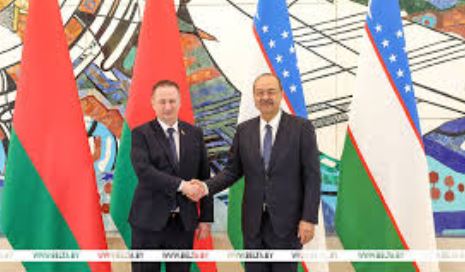
MINSK, Apr 21: Belarus and Uzbekistan are preparing a cooperation roadmap through 2030, Belarus’ Deputy Prime Minister Viktor Karankevich said during the main plenary session of the international industrial exhibition INNOPROM. Central Asia in Tashkent, Uzbekistan, the government’s press service told BelTA.

“It is important to note that the Belarus-Uzbekistan trade and economic cooperation is gaining momentum. Our mutual trade consistently rises every year. This growth is based on the agreements reached at the level of the heads of state during the official visit of the Belarusian president to Uzbekistan in February 2024, as well as on the effective implementation of the 2024-2025 roadmap. Assembly of BELARUS tractors with phased localization has been organized, along with the production of mounted and trailed agricultural equipment adapted to the region’s climate.

In the light industry, a joint footwear enterprise is operating successfully, and cooperative clothing production has been established, combining Belarusian design solutions with Uzbekistan’s raw-material base,” the deputy prime minister said. “A special place is occupied by the creation of a joint venture for the production of cable and wiring products in the Eltech Industrial technopark.”

Following the visit of the Belarusian prime minister to Uzbekistan, preparations are being finalized for a five-year cooperation roadmap for 2026-2030. The implementation of this document will aim to double the current indicators of foreign trade cooperation by 2030. Promising areas include combining competencies in the production of electrical engineering products and medical goods, deepening cooperation in the light industry, and introducing joint IT solutions, including the digitalization of production and technological processes and big-data management.

“Belarus reaffirms its readiness to continue strengthening trade and economic cooperation, expanding industrial cooperation, and implementing new joint projects within the Union State, the EAEU and the CIS,” Viktor Karankevich emphasized.

71.6% growth: Zhambyl region becomes Kazakhstan’s top investment destination

71.6% growth: Zhambyl region becomes Kazakhstan's top investment destination

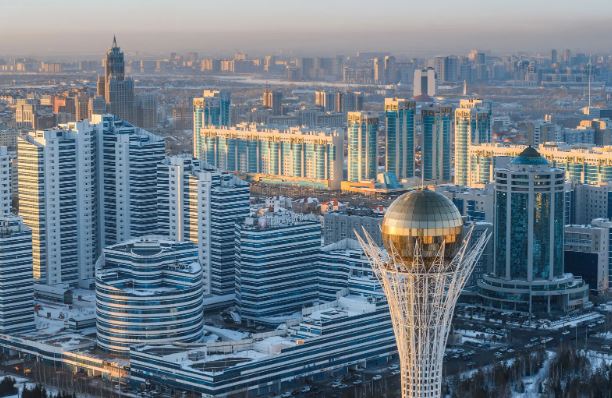
ASTANA, Apr 21: The Head of State’s instructions on attracting investment, developing advanced processing, and expanding manufacturing are being put into practice in the Zhambyl region through specific projects and consistent work, Qazinform News Agency, citing the Regional Akimat.

In January–March 2026, the Zhambyl region continues to show positive investment activity. Fixed capital investment reached 218.1 billion tenge, an increase of 71.6% year-on-year. In terms of growth rate, the region ranked first in the country, confirming the stability of economic development.
Private investment is particularly noteworthy. It reached 214.3 billion tenge, a 205.5% year-on-year surge. On this indicator, the region ranked second in the country. Significant growth was also recorded in the manufacturing industry. Investment in this sector attained 140.7 billion tenge, rising 2.7 times. As a result, the Zhambyl region ranked first in the country, accounting for 28% of total investment in the sector nationwide.
These results continue a positive trend established in 2025. By the end of 2025, the Zhambyl region attracted $289.7 million in foreign direct investment, 8.5 times higher than the previous year.
Furthermore, the planned target ($86 million) was exceeded by 3.3 times, indicating the region’s strong appeal to international investors. It is noted that the sustained positive momentum in investment indicators resulted from a consistent implementation of effective economic policy in the region. The Zhambyl region is strengthening its position as one of the country’s leading investment hubs, paving the way for continued industrial growth. Earlier, Qazinform reported that Kazakhstan’s investment totaled over 3tn tenge in Q1 2026.

Stay Connected

64FansLike
60FollowersFollow

Latest Reviews

Exchange Rates

USD - United States Dollar
EUR
1.14
GBP
1.34
AUD
0.70
CAD
0.71