Home Blog Page 172

PM announces electric bikes for govt employees on easy instalments

PM announces electric bikes for govt employees on easy instalments
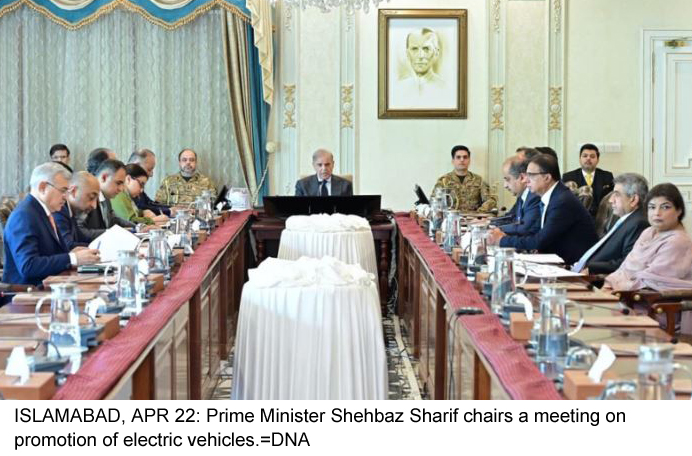
ISLAMABAD, APR 22: Prime Minister Shehbaz Sharif chairs a meeting on promotion of electric vehicles.=DNA

ISLAMABAD, APR 22: Prime Minister Shehbaz Sharif on Wednesday announced that the government employees up to BPS-16 would be provided electric bikes on easy installments.

The premier made the announcement while chairing a high-level meeting on the promotion of electric vehicles (EVs) in the country.


The meeting was informed that the government aimed to shift 30% of vehicles to electric power within the next five years, a move expected to save approximately $4.5 billion in fuel imports.

The prime minister directed relevant authorities to accelerate ongoing initiatives aimed at promoting EV adoption across the country.

He emphasised that, given the evolving regional situation and future energy demands, the transition to electric vehicles would not only reduce the import bill but also contribute significantly to environmental protection and energy security.

The prime minister also stressed the need for transparency in the provision of subsidies for electric motorbikes under the National EV Policy.

He instructed officials to further expedite the implementation of the scheme.

During the briefing, officials informed the prime minister that 72 manufacturing certificates have so far been issued for electric motorcycles and rickshaws, along with four certificates for electric cars.

Additionally, 123 applications have been received for the installation of EV charging stations nationwide.

The Challenge before Rana Sikandar Hayat

The Challenge before Rana Sikandar Hayat

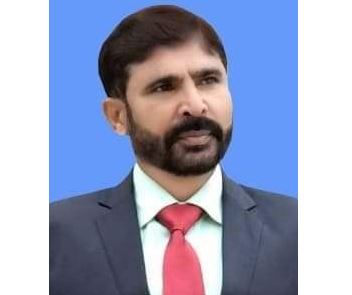
Dr. Muhammad Akram Zaheer

In the evolving landscape of Punjab’s governance, the role of the education minister carries both symbolic and practical weight. It is a portfolio that not only shapes policy but also influences the intellectual future of millions. In this context, Rana Sikandar Hayat stands out as a prominent political figure, particularly rooted in the constituency of Pattoki, whose rise reflects a blend of local political grounding and provincial ambition.

Rana Sikandar Hayat’s political identity is closely tied to Pattoki, a region often described as politically vibrant yet developmentally uneven. His emergence from this locality is not merely incidental; rather, it reflects the enduring importance of constituency politics in Punjab. Leaders who maintain a strong connection with their electorate often carry that sensibility into provincial governance. In Hayat’s case, his familiarity with grassroots issues—ranging from school infrastructure deficits to teacher shortages has shaped his public narrative as a minister who understands the system from the bottom up. The education sector in Punjab has historically been both a success story and a persistent challenge. While previous administrations have introduced reforms in enrollment, digitisation, and monitoring, systemic issues continue to linger. It is within this complex terrain that Rana Sikandar Hayat has assumed office. His tenure, therefore, is being closely watched not just for policy innovation but for continuity and consolidation of earlier gains.

One of the defining features of Hayat’s political persona is his emphasis on administrative efficiency. Observers note that his approach tends to favour measurable outcomes—attendance rates, examination performance, and school functionality—over rhetorical commitments. This aligns with a broader trend in Punjab’s governance model, where data-driven oversight has increasingly replaced traditional bureaucratic inertia. However, the challenge lies in ensuring that such metrics translate into meaningful learning outcomes rather than merely statistical improvements. Critics, however, argue that the education ministry requires more than managerial competence. It demands a vision that addresses deeper structural inequalities—urban-rural divides, gender disparities, and the persistent gap between public and private schooling systems. In this regard, the expectations from Rana Sikandar Hayat remain high. His ability to move beyond administrative reforms and articulate a long-term educational philosophy will likely define his legacy.

Another dimension of his role is political balancing. As a well-known figure in Pattoki, Hayat carries the weight of local expectations alongside provincial responsibilities. Constituents often expect tangible development new schools, upgraded facilities, and employment opportunities. Balancing these demands with broader policy priorities is a delicate task, one that tests the political acumen of any minister. In Punjab’s highly competitive political environment, maintaining this equilibrium is crucial for both governance and electoral viability. Furthermore, the education sector in Pakistan is increasingly influenced by global trends. From digital learning platforms to curriculum reforms aligned with international standards, the pressure to modernise is constant. Rana Sikandar Hayat’s ministry must navigate these demands while remaining sensitive to local contexts. The introduction of technology in classrooms, for instance, cannot succeed without addressing basic infrastructural gaps such as electricity and internet access in rural areas.

There is also the question of curriculum and ideological orientation. Education in Pakistan has long been a site of contestation, reflecting broader societal debates about identity, history, and modernity. Any attempt at reform inevitably invites scrutiny from various quarters—political, religious, and civil society. How Rana Sikandar Hayat approaches this sensitive domain will be indicative of his political skill and policy clarity. Supporters of the minister point to his accessibility and engagement with stakeholders as a positive sign. Teachers, administrators, and local representatives often emphasise the importance of a responsive leadership style in addressing day-to-day challenges. If sustained, this approach could help bridge the gap between policy formulation and implementation, a persistent weakness in the education sector.

Yet, the scale of the challenge cannot be overstated. Punjab’s education system serves millions of students across diverse socio-economic backgrounds. Issues such as dropout rates, quality of instruction, and resource allocation require sustained attention and innovative solutions. Short-term interventions, while necessary, are insufficient without a coherent long-term strategy. In assessing Rana Sikandar Hayat’s performance, it is important to recognise the broader institutional constraints within which he operates. The education ministry does not function in isolation; it is part of a larger governance ecosystem that includes finance, planning, and local government departments. Effective coordination among these entities is essential for meaningful reform. The minister’s ability to navigate this پیچیدہ administrative landscape will significantly influence outcomes.

Ultimately, the significance of Rana Sikandar Hayat’s role extends beyond his individual political trajectory. As Punjab’s education minister, he occupies a position that directly impacts the province’s human capital development. Education, after all, is not merely a sectoral concern; it is the foundation upon which economic growth, social cohesion, and democratic stability are built. For Pattoki, his leadership represents a source of local pride and political visibility. For Punjab, it is an opportunity to advance educational reform at a critical juncture. Whether this opportunity is fully realised will depend on a combination of vision, execution, and political will.

 Rana Sikandar Hayat’s tenure offers a telling case study of contemporary governance in Punjab where local roots intersect with provincial responsibilities, and where the promise of reform must contend with the realities of implementation. The coming years will reveal whether his stewardship of the education ministry can translate ambition into lasting impact.

HEC awards 1,427 scholarships under Stipendium Hungaricum Programme since 2016

HEC

ISLAMABAD, APR 22 /DNA/ – The Higher Education Commission (HEC) Pakistan has awarded as many as 1,427 scholarships under the Stipendium Hungaricum Programme since 2016. The students have availed themselves of the opportunity in various disciplines at the Bachelor’s, Master’s and PhD levels.

It is pertinent to mention here that the process for award of scholarships for the academic year 2026 is underway and is expected to complete by June 2026, as HEC has received 26,000 applications against its latest call.

The Stipendium Hungaricum Scholarship Programme is a fully-funded initiative for Bachelor’s, Master’s, One-Tier Master’s and PhD studies across wide range of disciplines, including engineering, IT, agriculture, medicine, business and social sciences.  

The programme aims to strengthen academic and research cooperation between Pakistan and Hungary by offering opportunities that deepen institutional and educational collaboration. It provides fully funded access to high‑quality European education, including tuition-free studies, monthly stipend, accommodation support, and medical insurance. It promotes cultural exchange and global exposure, enabling Pakistani students to interact in a diverse, multicultural academic environment.

The Stipendium Hungaricum Scholarship Programme was started with an initial Memorandum of Understanding (MoU) signed in December 2015, which facilitated 80 annual scholarships over three years. The first batch of 64 students embarked on their academic journey to Hungary in September 2016, marking a successful start. A revised MoU in 2017 elevated the annual scholarship count to 200, followed by a renewal in 2020, extending the partnership until December 2022. Subsequently, a revised agreement underscored a substantial expansion, offering up to 400 scholarships annually across diverse educational levels for another three years, from 2023 to 2025. Most recently, the agreement has been further renewed, continuing the provision of up to 400 scholarships annually for the period 2026 to 2028 and ensuring sustained opportunities for higher education in Hungary.

Grand Mosque course launched to deepen pilgrims’ understanding of Hajj Rituals

Makkah, Apr 22: President of Religious Affairs at the Grand Mosque and the Prophet’s Mosque Sheikh Dr. Abdulrahman Al-Sudais inaugurated a scientific course at the Grand Mosque as part of the presidency’s programs in preparation for the 1447 AH Hajj season.

He stated that the course seeks to enhance pilgrims’ religious awareness and enable them to perform their rituals with understanding based on Islamic legal evidence and jurisprudential principles, enriching their spiritual and intellectual experience.


The lessons are broadcast through digital platforms, translated into several languages, and made accessible via QR codes, thereby enhancing their benefit for pilgrims and visitors.

Made-in-Pakistan products featured at Food & Hospitality Asia

Made-in-Pakistan products featured at Food & Hospitality Asia

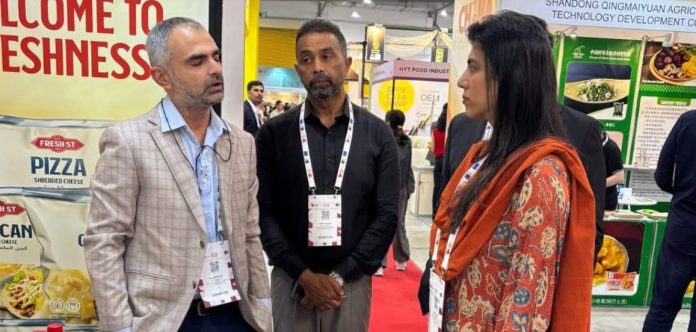
SINGAPORE, Apr 22: High Commissioner of Pakistan to Singapore Rabia Shafiq on Wednesday visited the Food & Hospitality Asia (FHA) 2026 event at Singapore Expo and toured the Pakistani stall, showcasing Made-in-Pakistan products.

Pakistan is participating through its UAE-based partner, M/s AAYZ Trading F.Z.E., presenting a diverse range of products, including frozen food items, and Himalayan salt, especially infused salts.

The initiative aims to introduce authentic Pakistani food products to Singapore’s dynamic and multicultural market and explore new trade opportunities.

Being held from April 21-24, the FHA 2026 is Asia’s leading food and hospitality trade event, bringing together over 80,000 attendees and 2,750+ exhibitors from more than 115 countries at Singapore Expo.

PM Shehbaz, Iranian envoy discuss peace efforts

PM Shehbaz, Iranian envoy discuss peace efforts

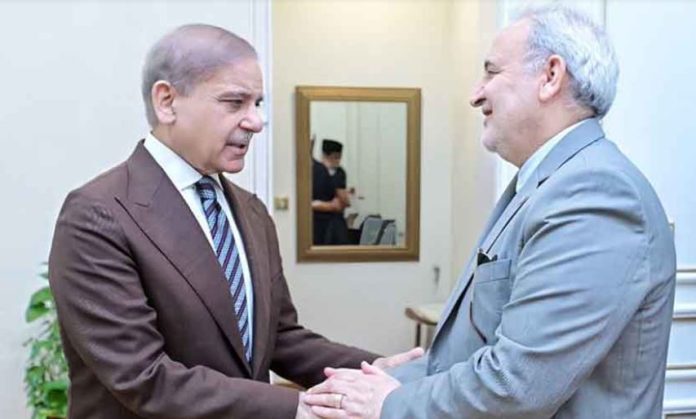
ISLAMABAD, APR 22: Prime Minister Shehbaz Sharif and Iran’s Ambassador to Pakistan, Reza Amiri Moghadam, discussed the prevailing regional situation and efforts towards peace.

According to details on Wednesday, the Iranian envoy called on the prime minister. The meeting reviewed recent developments in the region and ongoing diplomatic efforts for stability.

Deputy Prime Minister and Foreign Minister Ishaq Dar attended the meeting. Tariq Fatemi and the foreign secretary were also present.

Earlier, following an announcement by United States President Donald Trump regarding the extension of a ceasefire with Iran, the prime minister expressed hope that a comprehensive peace agreement could be finalised in Islamabad.

The prime minister conveyed his personal thanks, as well as those of Field Marshal Syed Asim Munir, to President Trump for accepting the request for an extension to the ceasefire. He said the continuation of the ceasefire would assist diplomatic efforts.

He added that Pakistan would fulfil the trust placed in it and continue sincere efforts for a peaceful resolution of the conflict. The prime minister expressed hope that both sides would uphold the ceasefire.

On Pahalgam attack anniversary, Pakistan slams India for ‘failing’ to share evidence

On Pahalgam attack anniversary, Pakistan slams India for ‘failing' to share evidence

ISLAMABAD, APR 22: On the first anniversary of the Pahalgam attack, Islamabad on Wednesday criticised New Delhi for failing to provide “credible evidence” for its allegations against Pakistan.

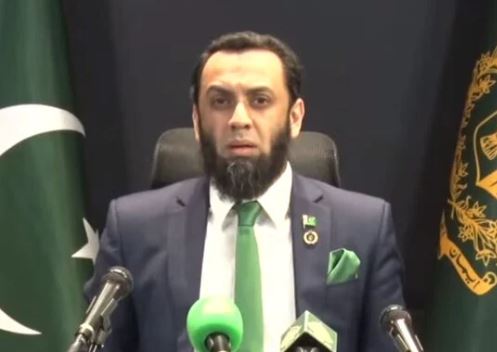
In a special televised statement, Federal Minister for Information Attaullah Tarar said India had also sidestepped calls for an independent investigation into a “false flag operation”.

The longtime neighbouring adversaries went to war in May last year after India launched an unprovoked attack on Pakistan following the attack on tourists in Pahalgam, Indian Illegally Occupied Jammu and Kashmir (IIOJK), which claimed the lives of 26 people.

Without offering any evidence, New Delhi had accused Islamabad of orchestrating the deadly attack in Pahalgam — a charge that Islamabad denied and also asked it to hold neutral investigation.

India followed the baseless accusations with unlawful missile strikes inside Pakistan, which resulted in the martyrdom of several civilians and security personnel.

Pakistan responded by downing seven Indian fighter jets, including three Rafale, dozens of drones, and destroying an S-400 defence system.

The war between the two nuclear-armed nations ended on May 10 with a ceasefire agreement brokered by the United States.

In his statement today, Tarar said the Pahalgam incident reflects a mindset driven by “hollowness, illogical thinking, false pride, arrogance, and greed”, adding that India has consistently been unable to address concerns raised over the episode and is yet to provide satisfactory answers despite the passage of a year.

He said India continues to present its internal issues as external matters, while treating internationally recognised disputes as domestic affairs.

He noted that terrorism is an internal issue for India, which it projects outwardly, whereas the IIOJK dispute is a recognised international issue that India seeks to portray as internal.

The minister went on to say that India’s approach has been fully exposed, describing its handling of the Pahalgam incident as consistent with historically known patterns of false flag operations. He said India resorted to crude methods in dealing with the incident.

He further said that when Prime Minister Shehbaz Sharif proposed an independent and impartial investigation into the Pahalgam incident, India avoided the offer and did not respond in a meaningful manner. He said Pakistan’s position was clear, while India’s refusal to accept an inquiry reflects avoidance, strengthening concerns over the nature of the incident.

The minister pointed out that an FIR was registered within ten minutes of the incident, describing it as highly unusual given the distance between the site and the police station, and suggesting it indicates prior preparation.

He added that international media, Indian civil society, politicians and think tanks have also raised serious questions over the incident.

He said narratives built around false flag operations are difficult to sustain globally, adding that India has not been able to present a convincing case or any credible evidence in support of its claims.

Tarar also criticised the Indian media for creating a war-like atmosphere and spreading fabricated and baseless reports, saying its credibility has been exposed internationally.

Referring to wider issues, he said minorities in India are being deprived of rights under the Hindutva ideology, while Muslims face violence. He added that India uses terrorism as a state policy and has been involved in such activities globally.

He referred to incidents involving Sikh leaders abroad and the arrest of Kulbhushan Jadhav as examples pointing towards India’s involvement in such activities.

The minister said Pakistan has concrete evidence of India’s involvement in terrorist activities inside the country, adding that elements such as the BLA and TTP are being used to destabilise Pakistan. He said this evidence has been shared with the international community and global media at various points.

He also referred to incidents of terrorism in Pakistan, including the Jaffar Express attack and the Khuzdar incident, saying they demonstrate India’s involvement in destabilising activities in the country.

Tarar said Pakistan remains fully committed to eliminating terrorism and that the entire nation stands united in this resolve. He said Pakistan will not compromise on its sovereignty, dignity and security, and will continue to take all necessary steps to counter terrorism.

He said recent statements by Indian military leadership regarding a new operation reflect failure and defeat, adding that any misadventure would be met with an immediate and decisive response.

Referring to Pakistan’s military campaign”Marka-e-Haq”, Tarar said Pakistan achieved a decisive victory over India and continues to be recognised globally for its success, while India faces increasing isolation.

He added that under the leadership of PM Shehbaz and Chief of Defence Forces (CDF) and Chief of Army Staff (COAS) Field Marshal Asim Munir, Pakistan continues its efforts for peace, with civil and military leadership fully aligned for national defence.

Tarar said Pakistan has emerged as a strong, united nation and prayed for continued peace, stability and prosperity.

Pakistan condemns violation of Al-Aqsa Mosque Compound

Pakistan condemns violation of Al-Aqsa Mosque Compound

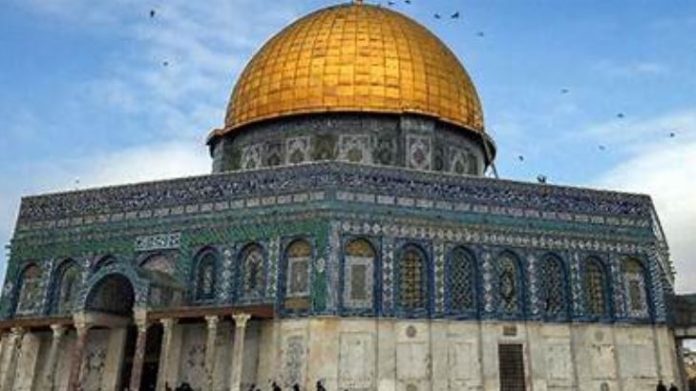
ISLAMABAD, APR 21 /DNA/ – Pakistan condemns in the strongest terms the storming of the Al-Aqsa Mosque compound and the raising of the occupying power’s flag within its courtyard by illegal Israeli settlers.

These reprehensible acts constitute a blatant violation of international law, as well as of the sanctity and inviolability of the holy site. Such provocative steps also risk further escalating tensions in the region.

Pakistan calls for all possible measures to protect holy sites under Israeli occupation and to end the impunity of illegal settlers operating under its patronage.

Pakistan continues to stand in solidarity with the Palestinian people, reaffirms its unwavering support for their right to worship, and reiterates its support for the establishment of an independent, viable, and contiguous State of Palestine based on the pre-1967 borders, with Al-Quds Al-Sharif as its capital.

Azerbaijan says ready to supply LNG as Pakistan faces shortages amid Mideast conflict

Azerbaijan says ready to supply LNG as Pakistan faces shortages amid Mideast conflict

State energy company Socar says ready to provide LNG to Pakistan as soon as PLL submits request

DNA

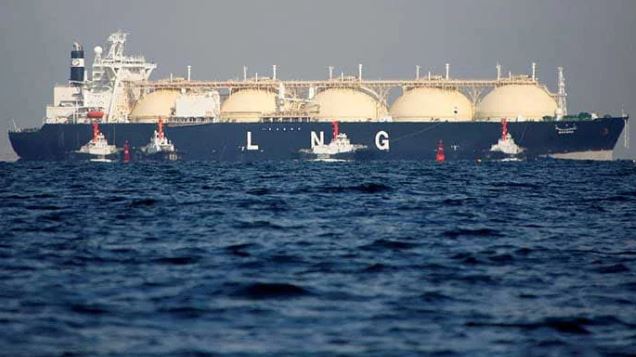
BAKU: Azerbaijan’s state energy company Socar is ready to supply liquefied natural gas (LNG) to Pakistan as soon as it receives a request from Islamabad, the company told media on Tuesday, as Islamabad seeks spot cargoes to ease a growing energy shortfall.

Socar said a ⁠framework agreement signed in 2025 between Socar Trading and Pakistan LNG Limited (PLL) allows the Pakistani buyer to purchase LNG cargoes directly under an accelerated procedure.

“Socar is ready to provide LNG to Pakistan as soon as PLL submits a corresponding request,” the company ⁠said in response to Reuters questions.

SOCAR did not say whether such a request had already been made, when a first delivery could ⁠take place, or whose LNG would be supplied under the agreement.

Pakistan, which relies heavily on gas ⁠for its energy needs, remains vulnerable to declining domestic production and swings ⁠in global LNG prices amid the supply disruptions related to the US-Israeli war on Iran.

Pakistan State Oil (PSO), which was arranging the import of four LNG cargoes stranded in the strait under two agreements with QatarEnergy, has communicated via email to the Petroleum Division that the imports have been suspended until the situation caused by the closure of Strait of Hormuz stabilises.

Earlier, Pakistan had requested Qatar to provide four cargoes out of the 8-10 that were loaded and stranded due to the ongoing conflict, to be delivered once Iran reopened the Strait of Hormuz. 

However, Tehran closed the strait again after determining that the US naval blockade had not ended and was instead continuing what it described as acts of piracy.

Federal Minister Ali Pervaiz Malik, speaking to The News two days ago, stated that QatarEnergy currently has 8-10 loaded LNG vessels available and Pakistan is seeking to secure as much volume as possible from these cargoes in the short term. 

He added that once QatarEnergy lifts its force majeure conditions, Pakistan is expected to resume a more regular schedule of LNG imports.

Following an attack on a Qatar LNG facility, QatarEnergy declared force majeure on March 4. Since then, Pakistan has been deprived of imported gas supplies. The Power Division currently requires 400mmcfd (million cubic feet per day) of gas for electricity generation to bridge the gap and eliminate loadshedding.

Pakistan says formal response from Iran ‘still awaited’

Pakistan says formal response from Iran ‘still awaited’

Fiaz Chaudhry / DNA

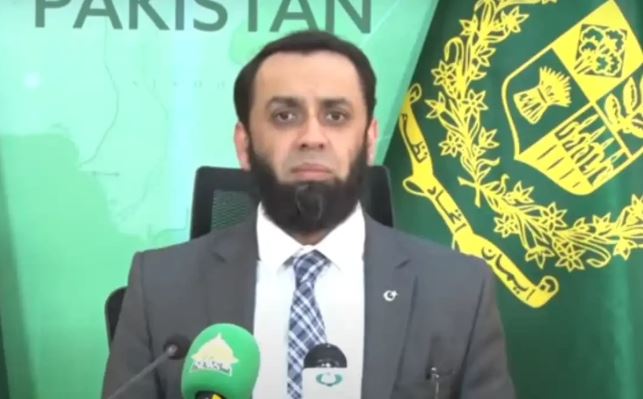
ISLAMABAD: Information Minister Attaullah Tarar said on Tuesday that a formal response from the Iranian side regarding its participation in the second round of peace talks with the United States was “still awaited”.

Pakistan remains in constant touch with the Iranian side, but a formal response from Tehran regarding participation in the Islamabad Peace Talks had not been received as of 7.30pm PST, the minister said on the social media platform X.

“The ceasefire ends at 4:50am PST, April 22. A decision from Iran to attend the talks before the end of the two-week ceasefire is critical,” he said.

“Pakistan has made sincere efforts to convince the Iranian leadership to participate in the second round of talks, and these efforts continue,” the information minister said.

Hours earlier, Deputy Prime Minister and Foreign Minister Ishaq Dar had urged the US and Iran to “consider extending the ceasefire and give dialogue and diplomacy a chance”, according to the Foreign Office (FO). He expressed these views in a meeting with US Chargé d’Affaires Natalie Baker, where the two discussed recent regional developments.

“DPM/FM underscored Pakistan’s consistent emphasis on dialogue and diplomacy as the only viable means to address challenges and achieve lasting regional peace and stability,” the FO said.

“He stressed the need for engagement between the United States and Iran, urged both sides to consider extending the ceasefire, and to give dialogue and diplomacy a chance,” it said.

Meanwhile, Baker conveyed the US’s appreciation for Pakistan’s constructive and positive role in promoting regional peace and facilitating dialogue, it added.

Stay Connected

64FansLike
60FollowersFollow

Latest Reviews

Exchange Rates

USD - United States Dollar
EUR
1.14
GBP
1.34
AUD
0.70
CAD
0.71