Home Blog Page 162

Ankara backs Islamabad’s Middle East peace mediation efforts

Ankara backs Islamabad's Middle East peace mediation efforts

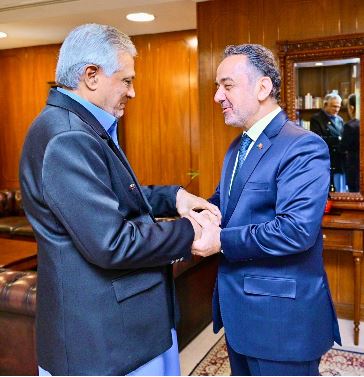
ISLAMABAD, MAY 1 /DNA/ – Turkish Ambassador to Pakistan, Irfan Neziroğlu, called on Deputy Prime Minister/ Foreign Minister Senator Mohammad Ishaq Dar @MIshaqDar50 at the Ministry of Foreign Affairs today.

The Ambassador conveyed President Recep Tayyip Erdogan’s appreciation and support for Pakistan’s ongoing efforts to promote peace and stability in the Middle East region.

DPM/FM reaffirmed Pakistan’s continued commitment to advancing lasting peace in the region.

Appreciating the close coordination and regular high-level exchanges, DPM/FM reaffirmed Pakistan’s resolve to further deepen Pakistan-Turkiye strategic partnership.

Maryam Nawaz and the Burden of Reform

Maryam Nawaz and the Burden of Reform

Dr. Muhammad Akram Zaheer

The English philosopher Jeremy Bentham argued that governments should be judged not by slogans or ceremony, but by the extent to which they promote “the greatest happiness of the greatest number.” His famous hedonic calculus was an attempt to measure pleasure and pain through factors such as intensity, duration, certainty, nearness, extent and consequences. Though conceived in the 18th century, the idea still offers a useful lens through which modern governance can be examined. In Punjab today, where Chief Minister Maryam Nawaz Sharif has launched a range of reforms, Bentham’s framework invites a timely question: do these policies increase public welfare while preserving liberty and rights?

Punjab, Pakistan’s most populous province, has long suffered from bureaucratic inertia, weak service delivery and growing public frustration. Successive administrations promised change, yet governance often remained hostage to red tape. Since taking office in 2024, Maryam Nawaz Sharif has sought to project a more interventionist and welfare-oriented model. Her government has introduced housing programmes, youth schemes, transport expansion, digitalisation drives and regulatory authorities. Whether one supports or opposes the politics behind them, these measures deserve assessment on outcomes rather than rhetoric.  From a Benthamite perspective, social welfare schemes carry obvious utility. Programmes such as Apni Chhat Apna Ghar aim to expand affordable housing, while scholarships, laptops and youth internships seek to widen opportunity. If a poor household gains shelter, a student gains access to digital tools, or an unemployed graduate secures training, the pleasure generated is not merely private it radiates into families and communities. Bentham would likely classify such measures as high in intensity, duration and extent, because benefits can be both immediate and long-lasting. Similarly, the province’s investment in transport and citizen facilitation may be read through utilitarian logic. New buses, road rehabilitation, mobile health clinics and digital service centres can reduce everyday suffering: fewer delays, easier mobility, quicker access to healthcare, and less humiliation in dealing with officialdom. Governance often fails not in grand theory but in ordinary inconvenience. Bentham understood this well. Removing avoidable pain from daily life is itself a moral gain.

Yet Bentham’s calculus also asks governments to weigh costs. Every policy has side effects. A subsidy poorly targeted may waste public money. A welfare scheme designed for headlines rather than institutional sustainability may create temporary satisfaction but long-term fiscal strain. Punjab’s ambitious spending priorities have drawn attention because development allocations and sectoral budgets have risen sharply. If such spending builds durable capacity, the utility case is strong. If it expands debt or weakens finances, the pleasure may be short-lived.  The sharper test lies in legal and institutional reform. Maryam Nawaz’s administration has promoted the Punjab Enforcement and Regulatory Authority (PERA), aimed at tackling hoarding, profiteering and encroachments. On paper, this appears Benthamite: inflation and market disorder impose pain on millions, so stronger enforcement may benefit the wider public. But utilitarianism is not a blank cheque for state power. Bentham supported codified law and administrative efficiency, yet arbitrary authority can itself become a source of suffering. If enforcement agencies act transparently, proportionately and under judicial oversight, utility rises. If powers are abused, fear replaces trust.

The same dilemma appears in policing reforms. Public demand for safer streets is genuine, and crime control yields collective benefit. But liberty cannot be collateral damage. Reports surrounding tougher policing structures, including the Crime Control Department, have raised concerns among rights advocates. Here Bentham meets modern constitutionalism: security matters, but unchecked coercion can inflict pain more severe than the disorder it claims to cure. Effective governance must protect citizens from both criminals and excessive state force. This brings us to individual rights. Bentham famously criticised the abstract language of “natural rights,” yet contemporary democracies have refined the debate. Rights today are practical guarantees against arbitrary detention, censorship, discrimination and abuse. In a province as politically vibrant as Punjab, liberty means the citizen’s ability to criticise power, seek justice and live without official intimidation. No utilitarian success in roads or subsidies can fully compensate for the erosion of these freedoms. Happiness without dignity is an incomplete metric.

To Maryam Nawaz’s credit, her administration has also highlighted inclusion from minority welfare initiatives to disability support and women-focused programmes. Such measures align with a more modern utilitarianism that counts the welfare of marginalised citizens equally, not merely the majority. If sustained fairly and free from patronage, these can strengthen social cohesion and widen the moral reach of the state.  Punjab’s real challenge, however, is institutionalisation. Pakistan’s politics too often personalises governance. Schemes are tied to personalities, not systems; announcements outpace execution; reforms depend on one office rather than stable rules. Bentham would have warned against this. Good government is not episodic generosity but predictable administration under law. The public gains most when institutions outlast leaders. In the end, the verdict on Punjab under Maryam Nawaz Sharif cannot rest on partisan enthusiasm or reflexive criticism. Bentham’s hedonic calculus asks harder questions: Are citizens safer? Are services easier to access? Are opportunities wider? Are rights secure? Is pain reduced for the many without injustice to the few?

If the answer increasingly becomes yes, then Punjab may indeed be moving toward the greatest happiness principle. But if efficiency comes at the cost of liberty, or welfare at the expense of accountability, then the calculus turns against power itself. Governance, like philosophy, is judged not by promises but by consequences.

Eroding compliance with international humanitarian law calls for greater role of religious communities: IPS-ICRC conference

Eroding compliance with international humanitarian law calls for greater role of religious communities: IPS-ICRC conference

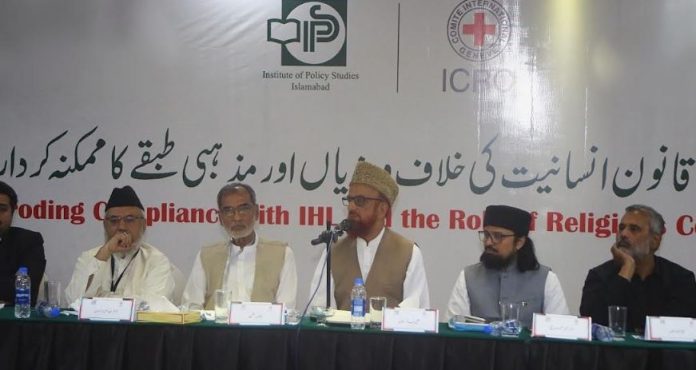
Karachi, May 1: /DNA/ – The growing erosion in compliance with international humanitarian law (IHL) in contemporary conflict settings underscores the need to revisit ethical frameworks and enhance the role of religious communities in promoting humanitarian norms, protecting human dignity, and fostering accountability. Experts emphasized that Islamic traditions offer significant guidance for regulating conduct during armed conflict and safeguarding non-combatants.

These views were expressed at a conference titled “Eroding Compliance of IHL and Role of Religious Communities,” organized by the Institute of Policy Studies (IPS) in collaboration with the International Committee of the Red Cross (ICRC) in Karachi. The event brought together scholars, religious leaders, practitioners, and civil society representatives to examine the challenges facing IHL implementation and explore the constructive role religious actors can play in reinforcing humanitarian principles.

The speakers included prominent religious scholars, academics, humanitarian workers, lawyers, and media practitioners. Prominent among those who spoke at the conference included Mufti Munib ur Rahman, Mufti Abdur Rahim, Prof. Dr. Anis Ahmad, Dr. Mohsin Naqvi, Dr. Nigar Sajjad Zaheer, Dr. Umair Mahmood Siddiqui, Dr. Hafiz Muhammad Sani, IPS Chairman Khalid Rahman, and Regional Advisor ICRC Dr Ziaullah Rahmani.

The first session highlighted the increasing disregard for established norms governing armed conflict, noting that violations of IHL have become more visible in recent global crises. Speakers underscored the importance of bridging legal frameworks with moral and religious values to strengthen compliance.

The keynote address by Dr. Anis Ahmad reflected on the causes and manifestations of declining adherence to humanitarian principles and called for greater engagement by Muslim societies in upholding ethical conduct in times of conflict.

The conference explored the foundations of IHL and Islam in humanitarian approaches to identify the relationship between IHL and Islamic teachings. The speakers particularly drew on the tradition of Siyar, i.e., Islamic international law. They examined the principles governing conduct in war, including the protection of civilians, religious personnel, symbols, and places of worship, as well as the ethical treatment of prisoners and non-combatants. The discussion also highlighted the role of religious scholarship and education in promoting awareness of humanitarian norms and fostering inter-communal harmony.

In the second session, panelists deliberated on the practical dimensions of the role of Muslim communities in promoting compliance with IHL in contemporary contexts. They emphasized the critical role of religious leaders and faith-based organizations in advocating humanitarian values, especially during crises. The contributions of welfare organizations in conflict situations, challenges faced by media in reporting armed conflicts, and the protection of medical personnel and infrastructure were also discussed. Speakers noted that strengthening institutional cooperation and public awareness remains essential for improving adherence to humanitarian standards.

In the concluding session, speakers emphasized the need for sustained intellectual and policy engagement to address the declining respect for IHL. They highlighted the importance of integrating ethical, legal, and religious perspectives to develop more effective responses to humanitarian challenges. The conference concluded with a call for continued collaboration between academic institutions, humanitarian organizations, and religious communities to promote a more humane and principled approach to conflict.

IPS Chairman Khalid Rahman said the conference formed part of IPS’s ongoing efforts to facilitate dialogue on critical global issues, bridging classical ethical traditions with contemporary policy frameworks and contributing to a more informed and responsible discourse on humanitarian law and practice.

Maryam Nawaz and the Burden of Reform

Maryam Nawaz and the Burden of Reform

Dr. Muhammad Akram Zaheer

The English philosopher Jeremy Bentham argued that governments should be judged not by slogans or ceremony, but by the extent to which they promote “the greatest happiness of the greatest number.” His famous hedonic calculus was an attempt to measure pleasure and pain through factors such as intensity, duration, certainty, nearness, extent and consequences. Though conceived in the 18th century, the idea still offers a useful lens through which modern governance can be examined. In Punjab today, where Chief Minister Maryam Nawaz Sharif has launched a range of reforms, Bentham’s framework invites a timely question: do these policies increase public welfare while preserving liberty and rights?

Punjab, Pakistan’s most populous province, has long suffered from bureaucratic inertia, weak service delivery and growing public frustration. Successive administrations promised change, yet governance often remained hostage to red tape. Since taking office in 2024, Maryam Nawaz Sharif has sought to project a more interventionist and welfare-oriented model. Her government has introduced housing programmes, youth schemes, transport expansion, digitalisation drives and regulatory authorities. Whether one supports or opposes the politics behind them, these measures deserve assessment on outcomes rather than rhetoric.  From a Benthamite perspective, social welfare schemes carry obvious utility. Programmes such as Apni Chhat Apna Ghar aim to expand affordable housing, while scholarships, laptops and youth internships seek to widen opportunity. If a poor household gains shelter, a student gains access to digital tools, or an unemployed graduate secures training, the pleasure generated is not merely private it radiates into families and communities. Bentham would likely classify such measures as high in intensity, duration and extent, because benefits can be both immediate and long-lasting. Similarly, the province’s investment in transport and citizen facilitation may be read through utilitarian logic. New buses, road rehabilitation, mobile health clinics and digital service centres can reduce everyday suffering: fewer delays, easier mobility, quicker access to healthcare, and less humiliation in dealing with officialdom. Governance often fails not in grand theory but in ordinary inconvenience. Bentham understood this well. Removing avoidable pain from daily life is itself a moral gain.

Yet Bentham’s calculus also asks governments to weigh costs. Every policy has side effects. A subsidy poorly targeted may waste public money. A welfare scheme designed for headlines rather than institutional sustainability may create temporary satisfaction but long-term fiscal strain. Punjab’s ambitious spending priorities have drawn attention because development allocations and sectoral budgets have risen sharply. If such spending builds durable capacity, the utility case is strong. If it expands debt or weakens finances, the pleasure may be short-lived.  The sharper test lies in legal and institutional reform. Maryam Nawaz’s administration has promoted the Punjab Enforcement and Regulatory Authority (PERA), aimed at tackling hoarding, profiteering and encroachments. On paper, this appears Benthamite: inflation and market disorder impose pain on millions, so stronger enforcement may benefit the wider public. But utilitarianism is not a blank cheque for state power. Bentham supported codified law and administrative efficiency, yet arbitrary authority can itself become a source of suffering. If enforcement agencies act transparently, proportionately and under judicial oversight, utility rises. If powers are abused, fear replaces trust.

The same dilemma appears in policing reforms. Public demand for safer streets is genuine, and crime control yields collective benefit. But liberty cannot be collateral damage. Reports surrounding tougher policing structures, including the Crime Control Department, have raised concerns among rights advocates. Here Bentham meets modern constitutionalism: security matters, but unchecked coercion can inflict pain more severe than the disorder it claims to cure. Effective governance must protect citizens from both criminals and excessive state force. This brings us to individual rights. Bentham famously criticised the abstract language of “natural rights,” yet contemporary democracies have refined the debate. Rights today are practical guarantees against arbitrary detention, censorship, discrimination and abuse. In a province as politically vibrant as Punjab, liberty means the citizen’s ability to criticise power, seek justice and live without official intimidation. No utilitarian success in roads or subsidies can fully compensate for the erosion of these freedoms. Happiness without dignity is an incomplete metric.

To Maryam Nawaz’s credit, her administration has also highlighted inclusion from minority welfare initiatives to disability support and women-focused programmes. Such measures align with a more modern utilitarianism that counts the welfare of marginalised citizens equally, not merely the majority. If sustained fairly and free from patronage, these can strengthen social cohesion and widen the moral reach of the state.  Punjab’s real challenge, however, is institutionalisation. Pakistan’s politics too often personalises governance. Schemes are tied to personalities, not systems; announcements outpace execution; reforms depend on one office rather than stable rules. Bentham would have warned against this. Good government is not episodic generosity but predictable administration under law. The public gains most when institutions outlast leaders. In the end, the verdict on Punjab under Maryam Nawaz Sharif cannot rest on partisan enthusiasm or reflexive criticism. Bentham’s hedonic calculus asks harder questions: Are citizens safer? Are services easier to access? Are opportunities wider? Are rights secure? Is pain reduced for the many without injustice to the few?

If the answer increasingly becomes yes, then Punjab may indeed be moving toward the greatest happiness principle. But if efficiency comes at the cost of liberty, or welfare at the expense of accountability, then the calculus turns against power itself. Governance, like philosophy, is judged not by promises but by consequences.

Practical steps under way to uplift labour class , Minister

Practical steps under way to uplift labour class , Minister

SARGODHA, May 1: Provincial minister for Ushaar & zakaat Punjab, Rana Munawar Ghous khan , during his excutive interview with Associated press of Pakistan on the occasion of International Labour Day, has said that May 1 is not merely a day on the Calendar, but a powerful symbol of hard work, struggle, human dignity, and the collective commitment to social justice.

The day is observed worldwide as an expression of solidarity with workers and serves as a reminder of the great sacrifices made by labourers in their struggle for fundamental rights.


He noted that the historical significance of May 1 is linked to the Haymarket incident in Chicago, United States, where workers staged a peaceful protest demanding an eight-hour workday.
The unfortunate events that unfolded during this movement gave a new direction to labour rights struggles across the world, and in remembrance of those sacrifices, May 1 came to be observed as International Labour Day.


Rana Munawar Ghous khan emphasized that national development, economic stability, and sustainable prosperity are deeply tied to the tireless efforts and dedication of the working class. He described workers as the backbone of any economy, stressing that no vision of progress can be realized without ensuring their welfare and well-being.
He further highlighted that both the teachings of islam and the Constitution of Pakistan place great emphasis on respecting workers, protecting their rights, and ensuring social justice.


He underlined that it is the fundamental responsibility of the state to provide workers with dignified employment, fair wages, social protection, and a safe working environment so that they may lead honorable lives.
He also underscored that Provincial Assemblies as well as Parliament has consistently raised a strong voice for the protection of workers’ rights and has played a key role in enacting relevant legislation.

The King, the Congress, and the “Two Georges”: 5 Surprising Takeaways from Charles III’s Landmark U.S. Visit

The King, the Congress, and the

Huma Arshad

In April 2026, within the raucous and high-ceilinged citadel of the 119th Congress, King Charles III performed a feat of transatlantic choreography that few elected politicians could replicate. He arrived at a moment when the “Special Relationship” seemed less a partnership and more a casualty of modern friction. Navigating a landscape scarred by a recent assassination attempt at the White House Correspondents’ Dinner, an escalating war in Iran, and a visible rift between President Trump and Prime Minister Keir Starmer punctuated by the President’s stinging “not Winston Churchill” dismissal of the British leader the King stepped onto the rostrum not as a relic of the past, but as the diplomatic all-purpose weapon of the British state.

The reception was nothing short of extraordinary. The King elicited 13 standing ovations from a polarized chamber, a metric of success that underscored his unique ability to transcend partisan vitriol. As the 19th sovereign in his line to “study with daily attention the affairs of America,” Charles utilized his apolitical status to reconcile two centuries of shared history with the urgent, often perilous, demands of the present.

The five most significant takeaways from this masterclass in soft power and constitutional theatre.

  1. Reframing the Revolution as a “Shared Value”

The King bypassed the usual platitudes of “common heritage” to offer a more sophisticated historical synthesis. He argued that the American Revolution was not a divorce from British identity, but the ultimate expression of British democratic evolution. In a maneuver that silenced the ghosts of 1776, he framed the cry of “no taxation without representation” as a fundamental value the United States actually inherited from the British Enlightenment.

By characterizing the Founding Fathers as “bold and imaginative rebels with a cause,” Charles transformed a historical rift into a narrative of continuity.

“Indeed the very principle on which your Congress was founded no taxation without representation was at once a fundamental disagreement between us and at the same time a shared democratic value which you inherited from us. Ours is a partnership born out of dispute but no less strong for it.”

This reframing was more than literary flair; it was a strategic tool. By positioning the birth of the Republic as an extension of English common law, the King effectively neutralized 250 years of “friction,” heralding the upcoming semi-quincentennial not as a celebration of British defeat, but as a shared triumph of democratic ideals.

2. “Constitutional Theatre” and the Subversive Critique of Power

The King’s use of dry wit served as a strategic shield for a profound critique of executive overreach. He deployed an anecdote about the British tradition of holding a Member of Parliament “hostage” at Buckingham Palace during royal addresses to ensure the monarch’s safe return. While the chamber erupted in laughter at his offer to take “volunteers” for the role, the subtext was a masterclass in “constitutional theatre.”

Charles was reminding his audience that the British monarchy survived only by surrendering absolute authority to the rule of law and the will of Parliament. This theme was sharpened by his “Tale of Two Georges” quipcontrasting George Washington with his ancestor, George III. Presidential historian Jon Meacham likened the address to “a headmaster speaking to a school,” as the King underscored that institutions endure only when they respect their limits.

Crucially, the King did not shy away from the darker shadows of the alliance. He subtly addressed the scandal involving Jeffrey Epstein and the subsequent stripping of Prince Andrew’s titles by referencing the “collective strength” required to “support victims of some of the ills that, so tragically, exist in both our societies today.” It was a moment of unyielding resolve, acknowledging internal institutional failures to bolster his moral authority on the global stage.

3. The Secret Legal DNA of the Supreme Court

Perhaps the most surprising takeaway for the assembled lawmakers was the King’s detailed invocation of the “Secret Legal DNA” that binds the two nations. Citing research from the Supreme Court Historical Society, the King provided a striking quantitative weight to the alliance’s legal foundations.

  • The Magna Carta Metric: The 1215 charter has been cited in at least 160 U.S. Supreme Court cases since 1789, serving as the bedrock for the principle that executive power is subject to checks and balances.
  • Verbatim Rights: He noted that the 1689 Declaration of Rights provided the source for principles reiterated, often verbatim, in the American Bill of Rights of 1791.

The presence of Former Associate Justice Stephen Breyer in the front row provided a human face to this intellectual kinship. By reminding Congress that an acre of Runnymede where the Magna Carta was sealed is forever American soil in memory of John F. Kennedy, Charles reinforced that the American legal system is not merely similar to Britain’s; it is an organic outgrowth of the same ancient protections against tyranny.

4. Geologic Kinship and the “National Security” of Nature

In a characteristic nod to his life-long environmental passions, the King employed a poetic geological metaphor to bridge the transatlantic divide. He observed that the mountains of Scotland and the Appalachians were once a single, unbroken rangea physical “geologic kinship” that symbolizes an “inseparable fate.”

However, this was no mere pastoral aside. Charles strategically elevated environmental stewardship from a matter of partisan policy to one of “national security.” At a time when Washington remains deeply divided over climate regulations, the King framed the protection of nature as a foundational requirement for global stability.

“I hope we might also reflect on our shared responsibility to safeguard nature, our most precious and irreplaceable asset.”

In this moment, the private man and the public monarch aligned perfectly, presenting the preservation of the natural world as a duty that transcends the temporary cycles of electoral politics.

5. An Alliance for a “Perilous Era” (Beyond Sentiment)

The King concluded by pivoting from history to hardwired modern strategy. Acknowledging that the world is “more volatile and more dangerous” than during Queen Elizabeth II’s 1991 visit, he issued a firm rejection of “isolationism” and “inward-looking” policies.

He anchored the alliance in tangible reality: the AUKUS pact, joint aerospace production, and a staggering $1.7 trillion in mutual investment. He pointedly mentioned that NATO’s Article 5 has been invoked only once to defend the United States after 9/11offering a quiet rebuttal to contemporary skepticism regarding collective defense. Against the backdrop of the war in Iran and trade tensions involving digital taxes and tariffs, his call for “unyielding resolve” served as a high-level diplomatic intervention that elected leaders, constrained by the “not Winston Churchill” level of personal friction, often find impossible to articulate.

 A 250-Year-Old Lesson in Resilience

King Charles III’s address was far more than a ceremonial duty; it was a blueprint for institutional survival. By weaving together humor about “hostage” MPs, the citation counts of the Magna Carta, and the shared soil of Runnymede, the King reminded the world’s most powerful republic why it exists. He presented a vision of two nations that are most resilient when they remember their shared origins and respect the limits of power.

As the United States nears its semi-quincentennial, the visit leaves us with a provocative question: In an age of increasing political volatility, can ancient institutios and shared legal histories provide the stability that modern politics cannot?

Rethinking Labor Day in the Modern World – A Take-Home Message from 1st May

Rethinking Labor Day in the Modern World - A Take-Home Message from 1st May

Prof Dr Shujaul Mulk Khan

Every year, the arrival of 1st May brings speeches, rallies, official holidays, and public recognition of workers across the globe. Known as Labor Day or International Workers’ Day, it is meant to celebrate the dignity of work and honor those whose labor sustains societies and economies. Yet beyond the celebrations, an important question remains: Does Labor Day truly change the lives of workers, or has it gradually become a symbolic event that reminds us more of unfinished responsibilities than completed achievements?


Labor Day emerged from struggle rather than ceremony. In the late nineteenth century, industrial workers protested exhausting working hours, unsafe conditions, and extremely low wages. The demand for an eight-hour workday became a global movement that reshaped labor laws and forced governments to recognize workers as central to economic development. The rights many workers enjoy today – weekly holidays, workplace safety regulations, minimum wages, and social protections – are rooted in those historic sacrifices. Labor Day, therefore, represents a victory for human dignity. However, the realities faced by millions of workers today suggest that the struggle is far from over. For many laborers, especially in developing countries, Labor Day offers recognition but little immediate relief.

A daily wage worker who depends on each day’s income may not experience the holiday as celebration but as lost earnings. Ceremonial speeches rarely translate into improved working conditions or stronger social protection systems. The true value of Labor Day lies not in public events but in whether it inspires governments, employers, and societies to renew their commitment to justice and fairness in the workplace.


Despite technological progress and economic globalization, labor exploitation still exists in different forms. Across South Asia, construction workers, factory employees, agricultural laborers, and domestic workers often work long hours with minimal job security. Informal employment remains widespread, leaving workers without contracts, insurance, or legal protection. Economic growth has expanded industries, yet many workers remain trapped in cycles of poverty.


In Africa, miners extracting valuable minerals essential for modern electronics frequently operate in dangerous environments. Their labor supports global technological advancement, yet they often receive low wages and limited safety protection. The situation reflects a global contradiction: the modern world depends on workers whose own living conditions remain fragile. The experience of migrant workers in Gulf countries further illustrates these challenges. Millions leave their homes in South Asia and Africa seeking better livelihoods. While many succeed in improving their families’ economic conditions, others face delayed salaries, recruitment debts, restricted mobility, or crowded living arrangements. Reforms introduced in countries such as Saudi Arabia and other Gulf states have aimed to improve wage protection and labor rights, but implementation gaps still affect workers’ daily realities.

Migration offers opportunity, yet it also exposes workers to vulnerability when oversight is weak. The issue of wages remains at the heart of labor dignity. Around the world, workers struggle not only with low salaries but also with irregular or delayed payments. During the COVID-19 pandemic, the world witnessed migrant laborers walking long distances after losing jobs overnight, revealing how fragile economic systems can be for those living without savings or social security. Even in wealthier economies, gig-economy workers face uncertain incomes and lack long-term protection such as pensions or healthcare benefits. Employment exists, but stability does not always follow.


History shows that meaningful improvement occurs when governments enact strong labor laws and ensure their enforcement. Legal frameworks protecting minimum wages, occupational safety, collective bargaining rights, and social welfare programs have transformed working conditions in many parts of the world. Yet laws alone are insufficient unless supported by transparent governance, effective inspection systems, and accountability. Governments must treat labor protection not as charity but as a cornerstone of sustainable development. There is also significant room for improvement in preparing workers for future challenges.

Automation, artificial intelligence, and climate change are reshaping labor markets. Workers displaced by technological change require access to education, vocational training, and reskilling opportunities. Formalizing informal employment sectors can extend legal protection to millions who currently remain invisible in economic statistics. Expanding digital payment systems, worker registration, and social protection coverage can help ensure that no worker is excluded from national development.
Another overlooked dimension of labor welfare is the impact of wars and conflicts. Throughout history, workers have borne the heaviest burden of instability. Armed conflicts destroy factories, disrupt agriculture, and collapse local economies, leaving workers unemployed and displaced.

Families lose livelihoods overnight, and migration becomes a necessity rather than a choice. Reconstruction after wars again depends on laborers, highlighting the deep connection between peace and economic security. Protecting workers therefore requires not only economic policies but also political stability and international cooperation. The deeper message of Labor Day is profoundly human. Every building constructed, every road paved, every harvest gathered, and every service delivered reflects human effort and perseverance. Workers are not merely economic units; they are individuals supporting families, nurturing communities, and sustaining nations. Economic growth that ignores worker welfare ultimately weakens social stability and moral responsibility.


The take-home message from 1st May is clear: celebrating workers once a year is not enough. True respect for labor must appear in fair wages paid on time, safe workplaces, equal opportunities, and social protection systems that safeguard dignity during hardship. Labor Day should serve as a yearly reflection – a reminder that progress must be measured not only by economic indicators but by the well-being of those who make development possible.


When societies move beyond symbolic celebration toward genuine commitment, Labor Day becomes more than a historical remembrance. It becomes a living promise that work will always be connected with dignity, justice, and hope for a better future.

Prof Dr Shujaul Mulk Khan
Department Plant Science, Quaid-i-Azam University Islamabad – qau.edu.pk/profile.php?id=804024 – [email protected]

Simultaneous de-escalation and sustained mediation are the only pathways to preventing a wider regional war

Simultaneous de-escalation and sustained mediation are the only pathways to preventing a wider regional war

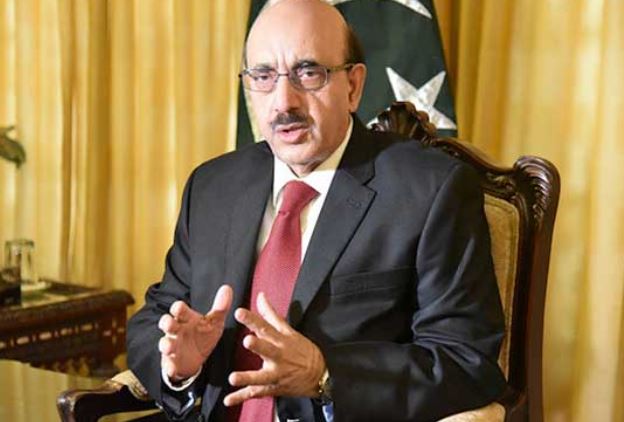
ISLAMABAD, MAY 1: Former Pakistani diplomat and former president of Azad Kashmir, Sardar Masood Khan on Friday cautioned that the evolving confrontation between the United States and Iran is entering a dangerously volatile phase, marked by military posturing, economic pressure, and strategic signaling from multiple global actors.


In a statement, Khan observed that while both Washington and Tehran are escalating pressure through military deployments and strong rhetoric, parallel efforts are underway to explore diplomatic off-ramps. “We are witnessing a dual-track approach—on one hand coercive strategies, and on the other, a search for a negotiated middle ground,” he stated.


Ambassador Khan underscored that Pakistan continues to play a pivotal and trusted role as a facilitator between the two sides. He noted that Pakistan’s engagement remains “consistent, discreet, and constructive,” with both parties recognizing its credibility as a neutral intermediary capable of bridging deep mistrust.

Referring to recent developments, he highlighted that U.S. military preparedness in the region, including deployment of aircraft carriers and amphibious forces, is aimed at exerting pressure rather than initiating full-scale war. “Even the United States does not appear to be seeking outright conflict, but rather leveraging military superiority to shape negotiation outcomes,” he added.

At the same time, he emphasized that Iran has demonstrated resilience despite sustained attacks and leadership losses. “Iran’s decentralized command structure and strategic depth have enabled it to maintain operational continuity,” he noted, while cautioning that vulnerabilities remain, particularly in critical infrastructure and economic stability.

Khan warned that any targeted strikes on Iranian assets could trigger a broader regional response, including threats to Gulf energy installations, maritime routes, and international shipping. He pointed out that thousands of vessels and seafarers remain stranded, signaling an emerging humanitarian and economic crisis.

Highlighting the broader geopolitical implications, he said that global markets, including energy and stock exchanges, are already under strain, increasing pressure on all stakeholders to de-escalate. He also noted shifting regional alignments and the risk of fragmentation within the Muslim world.

On diplomacy, he stressed that progress lies in identifying a “lowest common denominator,” including simultaneous easing of blockades, phased sanctions relief, and deferring contentious issues such as the nuclear programme for structured negotiations.

“Neither side can afford a win-lose outcome. The current trajectory is leading toward a lose-lose situation for all,” he concluded, urging immediate, coordinated international efforts to stabilize the situation and revive meaningful dialogue.

UAE Telecom giant Etisalat may exit Pakistan

UAE Telecom giant Etisalat may exit Pakistan

Ansar M Bhatti

ISLAMABAD: In a development that could significantly reshape Pakistan’s telecommunications landscape, UAE-based telecom giant Etisalat is reportedly considering an exit from Pakistan, potentially relinquishing control of Pakistan Telecommunication Company Limited (PTCL). While no formal announcement has been made, sources suggest that a combination of geopolitical tensions, unresolved financial disputes, and longstanding operational challenges has pushed relations to a breaking point.

At the heart of the issue lies a complex mix of regional politics and bilateral strain. The ongoing Iran-related conflict has had ripple effects across the region, placing Pakistan in a delicate diplomatic position. The UAE, which has taken a firm stance aligned with Western and regional allies, has reportedly grown uneasy with Pakistan’s posture. This divergence has contributed to a noticeable cooling of ties between Islamabad and Abu Dhabi.

Tensions escalated further when the UAE recently asked Pakistan to return over $3 billion in deposits held with the State Bank. Pakistan complied and returned the funds, but the move appears to have deepened mistrust rather than easing it. In a reciprocal development, Pakistani authorities have now pressed Etisalat to clear approximately $800 million that has remained unpaid since the privatization of PTCL in 2005.

Etisalat, however, has consistently maintained that the payment was withheld due to the Pakistani government’s failure to transfer certain properties and assets as per the original privatization agreement. Nearly two decades later, the dispute remains unresolved, symbolizing a broader pattern of friction that has defined the relationship.

When Etisalat took over PTCL in 2005, there were high expectations that the UAE firm would modernize and transform Pakistan’s state-run telecom giant into a competitive, efficient enterprise. The early days of the takeover did offer some promise, particularly under the leadership of Mohamed Bamakhrama, the first UAE national appointed as president of PTCL.

Bamakhrama earned a reputation as an upright and principled leader who sought to bring discipline and transparency to the organization. He made efforts to root out corruption, reduce political interference, and establish a merit-based culture. Among his bold steps were withdrawing official vehicles from influential figures, including the then IT and telecom minister, and removing politically appointed officials who were seen as underperforming.

However, his reformist agenda soon ran into resistance. Powerful interests, uncomfortable with the loss of privileges, reportedly mobilized against him. Eventually, Bamakhrama was removed from his position, marking a turning point that many insiders believe altered PTCL’s trajectory.

He was succeeded by Walid Irshaid, whose tenure is often described by critics as a period of decline. Known for a more lavish and accommodating management style, Irshaid allegedly fostered a culture of favoritism and entitlement. During this era, what insiders dubbed the “email and female” culture became prevalent, symbolizing a workplace environment driven more by personal connections than professional merit.

The consequences were significant. Experienced and hardworking employees began leaving the organization, disillusioned by the shifting priorities. Operational efficiency declined, and PTCL gradually started losing its competitive edge. Financial performance weakened, and the company’s reputation suffered.

Today, PTCL continues to struggle in an increasingly competitive telecom market. Customers frequently complain about poor after-sales service, slow complaint resolution, and outdated infrastructure. Many have shifted to private operators offering better reliability and customer support, leaving PTCL lagging behind.

Ironically, there is a growing sentiment among some industry observers that PTCL performed better when it was under government control. While it may not have been perfect, it was seen as more stable and aligned with national priorities. The privatization, once hailed as a milestone, is now viewed by some as a missed opportunity.

Against this backdrop, the possibility of Etisalat’s exit is being viewed with cautious optimism in certain quarters. Some believe that a change in ownership or management could provide a much-needed reset for PTCL. Others, however, warn that any transition must be carefully managed to avoid further disruption.

For now, uncertainty looms large. The combination of geopolitical tensions, unresolved financial disputes, and a troubled operational history has brought the Etisalat-PTCL relationship to a critical juncture. Whether this results in a complete exit or a renegotiation of terms remains to be seen.

What is clear, however, is that the outcome will have far-reaching implications—not just for PTCL, but for Pakistan’s broader telecom sector and its investment climate.

Govt extends fuel subsidy for motorcyclists, transporters for one month

Govt extends fuel subsidy for motorcyclists, transporters for one month

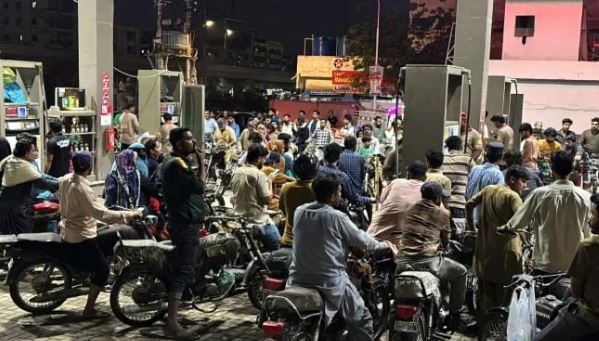
ISLAMABAD, APR 30: Prime Minister Shehbaz Sharif on Thursday approved a one-month extension in fuel subsidy for motorcyclists, public transport operators, and goods transporters to sustain relief measures amid economic pressures linked to the Middle East crisis.

The premier also directed that increases in passenger and freight transport fares be prevented, the PM’s Office said in a statement.


While approving the continuation of relief measures, the prime minister stated that effective monitoring of public welfare initiatives must be ensured to directly benefit deserving individuals.

He further said that the federal government, in collaboration with provincial governments, provided a national relief package worth billions for the public under difficult circumstances and will continue to extend possible support.

PM Shehbaz added that providing relief to the common man remains the government’s top priority, stressing that the public will not be left alone.

He also expressed hope that conditions in the region would improve soon, allowing for stability in petroleum product prices and easing economic pressure on the public.

Earlier this month, PM Shehbaz Sharif unveiled a fuel subsidy scheme for motorcycles, public transport, and freight vehicles, outlining targeted relief measures across key transport sectors.

Under the plan, motorcycle owners are set to receive a subsidy of Rs100 per litre on petrol, while small trucks will be provided a monthly subsidy of Rs70,000 to help offset rising operational costs.

The prime minister further announced that large trucks would receive Rs80,000 per month, while public transport operators would be granted Rs100,000 per month in support.

In addition, he said freight vehicles would also benefit from a Rs100 per litre fuel subsidy, aimed at reducing transportation costs and supporting goods movement across the country.

Stay Connected

64FansLike
60FollowersFollow

Latest Reviews

Exchange Rates

USD - United States Dollar
EUR
1.14
GBP
1.34
AUD
0.70
CAD
0.71