Home Blog Page 1600

Debunked Monetary Policy to shut industries

DNA

Islamabad: Pakistan’s industry in general and the steel sector in particular are fighting for sheer survival and are greatly concerned with the current economic situation that is getting worse day by day. The industry fears of more burden which is expected in the upcoming monetary policy of State Bank of Pakistan, due to be announced in its Monetary Policy Statement on August 22, 2022.

The key rate currently stands at 15%, which is highest since the last two decades last seen in April 1999. The industry experts believe that the unbearable benchmark interest rate of 15% is unsustainable for the industry. Comparing it with other regional countries, the benchmark interest rate in Malaysia was 2.25pc, Indonesia 3.5pc, China 3.7pc, Bangladesh 4.75pc and India 5.4pc

The upcoming Monetary Policy Statement will be disastrous and is set to shutdown industries of Pakistan and create unemployment if the interest rate is not reduced effective immediately.            

The SBP has raised rates in previous 7 meetings since September 2021, cumulatively increasing the interest rates by 800 basic points and is expected to hike further. Pakistan Association of Large Steel Producers (PALSP) notes that it is impossible for any businesses to plan expansions or working capital with such abrupt changes.

Secretary General PALSP, Wajid Bukhari, states, “Such fast hikes are a perfect recipe to shut down businesses. How can a business sustain if an interest rates doubles in only 8 months, whereas your regional peers are at around 2-5%?”

Industries are facing problems as Banks are not opening LCs for raw materials. Further exacerbating the situation, spare parts and even consumables falling under Chapter 84 and 85 have become impossible to seek approval from SBP, leading to shutdowns imminently. “Our members are complaining that SBP has become defunct and approvals are just not coming, whereas banks are hesitant to open LC’s for raw materials.”

The steel industry, which is capital intensive business and due to worsening economic condition is already facing severe liquidity crunch, whereas many small to mid-sized mills have already shutdown. This will structurally damage the Industry for decades to come.

Pakistan’s scrap imports amounted to 164,699 mt in May this year, the lowest since March 2014, decreasing by 47.6 percent compared to April and by 38.2 percent year on year. In the month of June, scrap imports ranged at around 210,000 MT, whereas July scrap imports are tentatively less than 100,000MT range, making it the lowest in the last two decades. Mills have started to shut down and supply chain shocks are only adding fuel to the fire.

The Govt set an inflation target at 11.5% for this fiscal year but the SBP has given an inflation range of 18% which is still very high considering falling oil prices, softening of commodities and revaluation of the rupee. Bukhari further noted, “With June and July core inflation clocking in at 11.5 and 12 percent, respectively, the range given by the MPC is absurd. Furthermore, they disastrously fail to comprehend that abnormally high policy rates cannot fix supply chain related issues. It has nothing to do with demand pull inflation so MPC is consciously making a flawed decision, resulting in closure of industries and increase of joblessness.”

Other countries have demand-based inflation whereas Pakistan pricing pressures are import related resulting in a depression of an already fragile economy by crushing the demand to a standstill. Cement sales in the month of July have fallen by 60%, whereas automobile sales have been crushed by 89%. PALSP stated, “the numbers are evident that MPC overreacted and crashed the already ailing economy to a standstill by hiking the key rate by 800bps to an all-time high for the last two decades. MPC states that they are independent, but they are not independent to the 220million population and must be held answerable to justify increasing crime and homicide rates, shutdown of businesses, and a record joblessness. The flawed MPC decisions shall have reverberations in investments and jobs for future generations. The current policy rate must be reduced if we want our country to survive.” Pakistan needs to create 4.5 million jobs over the next five years as per UNDP report. Right now, jobless rates are increasing at the fastest pace in the history of Pakistan.

If we take UK as an example, it doesn’t justify Pakistan to have higher rates than 10.35% as per SBP own inflation assumption of 18% today and comparing to UK which has real negative rate of 7.65%.  The United States currently has a negative real interest rate of 6% today. Bukhari concludes, “MPC has failed our Nation and the current policy rates do not make any logic other than a grand scheme to shut Pakistan down. The policy rates have to be in single digits in line with our regional countries.”
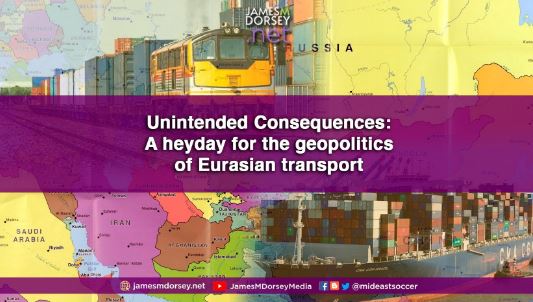
UNINTENDED CONSEQUENCES: A HEYDAY FOR THE GEOPOLITICS OF EURASIAN TRANSPORT

When Russia invaded Ukraine, it took itself off the map of Eurasian transport corridors linking China and Europe. At the same time, it breathed new life into moribund routes that would allow goods to travel across the Eurasian landmass without traversing Russia. It also opened the door to greater Russian connectivity with the Middle East and South and Southeast Asia.

Next month’s summit of the Shanghai Cooperation Organisation (SCO) in the Uzbek ancient Silk Road trading hub of Samarkand could provide a lynchpin for alternative routes.

The SCO, which groups China, Russia, India, Pakistan, Kyrgyzstan, Uzbekistan, Kazakhstan, and Tajikistan, is certain to set the scene for an expansion into the Middle East as well as agreement on the construction of a crucial Central Asian railroad.

The summit is expected to finalize Iranian SCO membership at a time when the Islamic republic stands to benefit from shifts in the geopolitics of Eurasian transportation.

The summit will further welcome Saudi Arabia, Qatar, Egypt, Bahrain, and the Maldives as dialogue partners and Azerbaijan and Armenia as observers. The United Arab Emirates has recently also expressed interest in an association with the group.

Kyrgyz officials believe that leaders of the Central Asian nation and China have agreed to sign an accord at the summit to build a 523-kilometre China-Kyrgyzstan-Uzbekistan railway that has been on the drawing board for 25 years. The railway would link the three countries with Turkey, Iran, and Central and Eastern Europe.

Lack of political will coupled with logistical and technical obstacles, particularly in mountainous Kyrgyzstan, and the high cost caused delays that now appear to be perceived as less problematic because of the fallout of the Russian invasion of Ukraine.

Uzbek President Shavkat Mirziyoyev predicted that the railway would “open new opportunities for transport corridors linking our region with markets in the Pacific Ocean area. The move will add to the widening of existing railway routes connecting East with West.”

Uzbekistan has long asserted that the railway would offer the shortest route from China to markets in the Middle East and Europe, while China sees it as a way of evading the risk of violating US and European sanctions that continued transport through Russia could invoke.

The new railway would feed into the rail line connecting Uzbekistan to Turkmenistan’s Turkmenbashi International Seaport on the Caspian Sea.

From there, it can feed into the Caucasus, Turkey, and the Black Sea via the Azerbaijani port of Baku or Iran, India, the Gulf, and East Africa through the International North-South Transportation Corridor (INSTC) that makes use of the Iranian port of Anzali and potentially Chabahar.

The Baku port agreed in July to let Turkey’s Albayrak group, which has close ties to President Recep Tayyip Erdogan, manage the facility, expand its cargo handling capacity, and build a terminal for fertilizers.

The INSTC, a 7,200-kilometre patchwork of independently operated railroads, highways, and maritime routes, also provides a corridor northward to Kazakhstan and Russia.

The patchwork could prove important to Kazakhstan, which has stood against the invasion of Ukraine despite its dependence on Russian food, fertilizer, petrochemical, and iron imports.

Kazakh President Kassym-Jomart Tokayev has explored diverting oil exports to Europe from traversing Russia to flowing through Iran and Turkey.

Adding fuel to the fire, Kazakhstan has also not shied away from seeking to turn sanctions against Russia to its advantage, including by offering an alternative to Western businesses leaving Russia.

Earlier this year, Iran and Qatar announced regular shipping lines between the two countries as part of the INSTC. Similarly, Iran’s Ports and Maritime Organization (PMO) announced the launch of shipping lines between Chabahar and Dubai’s Jebel Ali Port.

Chinese analysts expect that the railroad, which would start in Kashgar, will help transform the economy of Xinjiang, the Chinese troubled north-western province that is home to brutally repressed Turkic Muslims.

Moves to bolster Central Asia as a critical node in East-West and North-South transportation corridors come amid increased public discontent in the region and stepped-up jihadist activity.

In January, Kazakhstan invited the Russian-led Collective Security Treaty Organization (CSTO) to help restore law and order amid mass anti-government protests. Six months later, protests in Uzbekistan’s autonomous Karakalpakstan region turned violent.

Operating from Afghanistan, Islamic State militants vowed to wage a jihad in the region that would initially target Uzbekistan and Tajikistan.

Islamic State militants hailed rocket attacks in recent months against targets in the two countries as the “great jihad in Central Asia” that would unite the five former Soviet Central Asian republics with Afghanistan, Pakistan, and India in a caliphate.

A United Nations report warned in July that members of the East Turkistan Islamic Movement, a Uighur jihadist group that garnered notoriety in Syria, had defected to the Islamic State because Afghanistan’s Taliban leaders prevented them from launching cross-border attacks in Xinjiang.

“Although ETIM/TIP (Turkestan Islamic Party), like al-Qaeda, has been keeping a low profile for now, it is really a ticking time bomb for China in its neighbourhood,” said Faran Jeffery of Islamic Theology of Counter Terrorism, a UK-based Muslim counterterrorism group.

Dr. James M. Dorsey is an award-winning journalist and scholar, an Adjunct Senior Fellow at Nanyang Technological University’s S. Rajaratnam School of International Studies, and the author of the syndicated column and blog, The Turbulent World of Middle East Soccer.

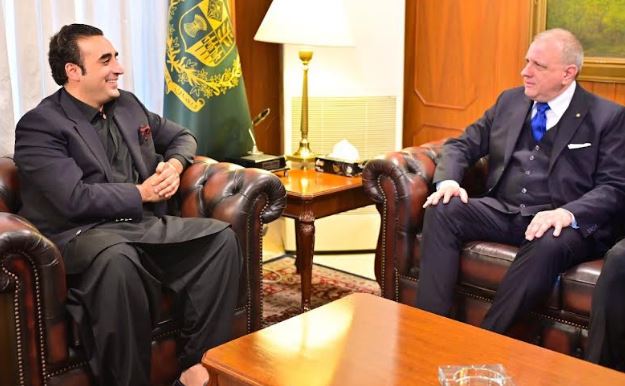
Italian ambassador meets Foreign Minister Bilawal

DNA

ISLAMABAD: Italian Ambassador Andreas Ferrarese met Foreign Minister Bilawal Bhutto Zardari in Islamabad on Friday, Both dignitaries discussed matters of bilateral interest during their meeting. DNA

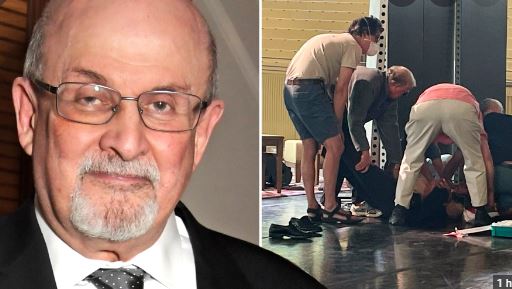
Controversial British-Indian author Salman Rushdie attacked on stage in New York

NEW YORK, Aug 12: Salman Rushdie, the controversial British author of Indian origin, whose book “The Satanic Verses” outraged the Muslim world for its blasphemous content and led to death threats from Iran in the 1980s, was reportedly stabbed Friday before giving a speech in Chautauqua, a town in western New York, according to media reports.

An Associated Press (of America) reporter witnessed a man storm the stage at the Chautauqua Institution and begin punching or stabbing Rushdie, 75,  as he was being introduced.

The author was taken or fell to the floor, and the man was restrained.

A bloodied Rushdie was quickly surrounded by a small group of people who held up his legs, presumably to send more blood to his chest, according to the American news agency.

In a press release, the New York State Police confirmed that a man rushed the stage and stabbed Rushdie in the neck.

“Rushdie suffered an apparent stab wound to the neck, and was transported by helicopter to an area hospital,” the press release said.

“His condition is not yet known.   The interviewer suffered a minor head injury.

“A State Trooper assigned to the event immediately took the suspect into custody. The Chautauqua County Sheriff’s Office assisted at the scene.”

 “The Satanic Verses” has been banned in many countries since 1988. A year later, Iran’s late supreme leader Ayatollah Ruhollah Khomeini issued a fatwa, or edict, calling for Rushdie’s death.

Iran has also offered over $3 million in reward for anyone who kills Rushdie.

Iran’s government has long since distanced itself from Khomeini’s fatwa, but anti-Rushdie sentiment lingered. Since then he remained out of the public eye, but kept writing books.

The Chautauqua Institution is a performing arts center from June through September that hosts artists related to the fields of visual arts, dance, theater, and music.

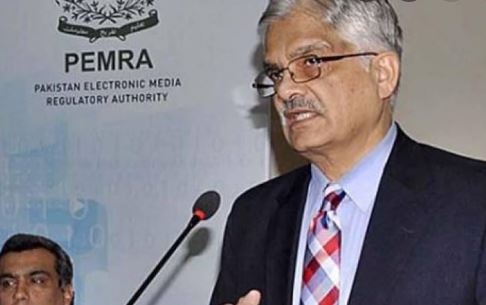
Saleem Baig reappointed as PEMRA chief

ISLAMABAD, AUG 12 (DNA) — President of Pakistan Dr Arif Alvi on Friday reappointed Muhammad Saleem Baig as Chairman Pakistan Electronic Media Regulatory Authority ( PEMRA).

He has been appointed Chairman PEMRA under MP-1 till he attains the age of 65, i e September 30, 2025, said a notification issued by the Cabinet Secretariat, Establishment Division. =DNA

First Lady Samina Alvi for equal rights for differently abled, eliminating their sense of deprivation

DNA

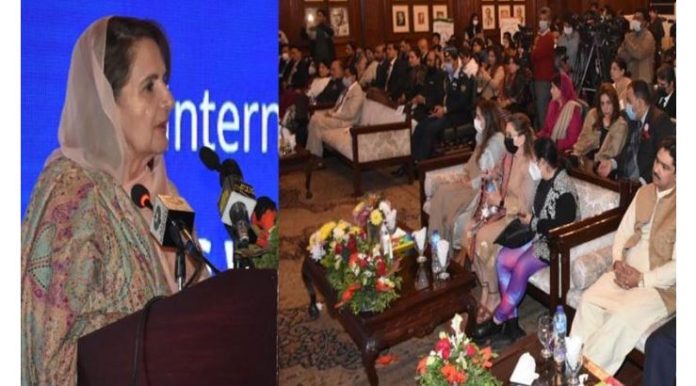
Lahore, AUG 12: First Lady Begum Samina Arif Alvi has emphasized on giving equal rights to differently abled persons in society and eliminating their sense of deprivation.She said this during her visit to Pakistan Society for Rehabilitation of Disabled (PSRD) on Friday in Lahore.
Samina Alvi also visited different sections of the PSRD which included its school,  vocational training centre.She appreciated the work and facilities of PSRD and said it was very pleasing to visit the center.
First Lady said it was a very good approach to make various facilities available for differently abled persons under one roof.She said that she and President Dr Arif Alvi wanted to make system inclusive where differently abled persons get facilities like other persons of the society.She further stressed upon the need to empower differently abled persons and to ensure maximum facilities for them.She said there should be ramps at public places to ease the mobility of differently abled persons as their movement was very essential for their development.
Efforts were also being made at government level to facilitate differently abled persons in maximum way, she added.She further said that education and vocational training were important for making differently abled persons useful citizens.Samina Alvi said that passion and commitment were required to facilitate and serve this segment of society in best possible way.She said, “The Allah Almighty has blessed differently abled persons with a lot of skills and people should understand that they are not less than anybody else in the society.”IT training was also also very important for differently abled persons as through this they could start their earning by sitting in their homes.She announced to give Rs 1 million to PSRD on her behalf.PSRD President Syed Shamsi and Chairperson Nighat Saeed also spoke on the ocassion.

Minar-e-Pakistan replica unveiled in Beijing

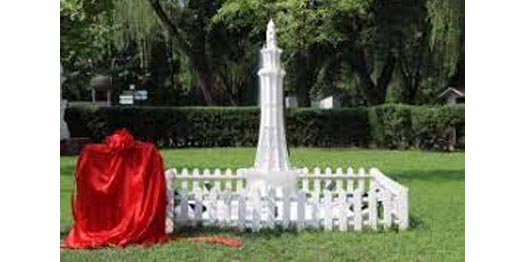
BEIJING, Aug. 12 (DNA): Pakistani Ambassador to China Moin Ul Haque unveiled the replica of Minar- e-Pakistan (monument of Pakistan) here at Chaoyang Park to further promote the all-weather friendship between China and Pakistan.
Addressing a gathering, the Ambassador said this is a very special national monument of Pakistan, according to China Economic Net (CEN).
“It reminds us of a very important day in the history of Pakistan, that is 23rd March 1940 when the Muslims of the subcontinent demanded through a resolution a separate homeland”, he added.
This monument is a symbol of the independence, freedom, and hope for the 220 million people of Pakistan. The Ambassador hopes that this replica would be cherished by the people of China and it would also serve as a symbol of friendship between China and Pakistan.
Speaking on the occasion, Chen Wei, Counsellor, Asia Department, China’s Ministry of Foreign Affairs said that China and Pakistan are all-weather strategic partners and enjoy deep-rooted friendship.
“This monument will further enhance awareness about Pakistan among the Chinese people”, he added.
This replica of Minar-e-Pakistan (Pakistan’s national monument) was installed at Chaoyang Park to commemorate the 70th anniversary of the establishment of diplomatic ties between Pakistan and China in 2021.
The ceremony was attended by senior diplomats, officials and a large number of Chinese and Pakistani community.

RCCI organises training session on exhibition and event management

DNA

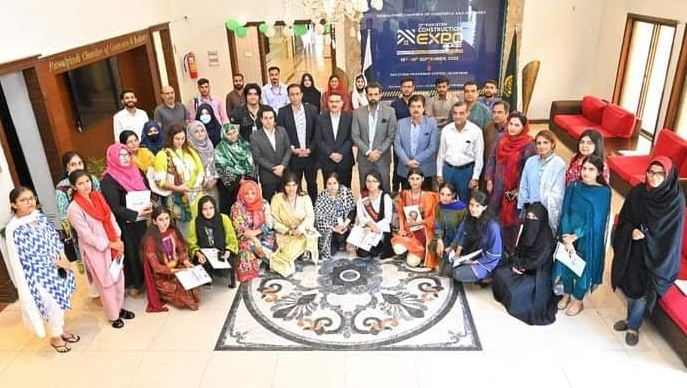
Rawalpindi: The Rawalpindi Chamber of Commerce and Industry (RCCI) in collaboration with Small and Medium Enterprises Development Authority (SMEDA)  organised a one-day training programme on “Exhibition and Event Management Skills for SME’s” at chamber house. The session was organized to extend non-financial advisory services to small and medium businesses. The training programme was aimed at providing information about general orientation, scope and nature of event management, developing the concept, physical and human resources, project logistics and marketing an event. The workshop also provides information of financial and risk management, staging the event and general sales leads. The session was attended by President RCCI Ch. Nadeem A Rauf, Senior Vice President Asim Malik, Vice President Tallat Mehmood Awan, Executive members, Regional Manager SMEDA M Asghar, among others, business owners and RCCI members and staff, emerging and existing entrepreneurs, and all those desirous of improving their knowledge on the subject. In his welcome address, RCCI president Nadeem Rauf appreciated the role of SMEDA in brining awareness and providing guidance for business community.
He pointed out that event management is one of the main driving key to run exhibitions and urged to equip with latest trends and tools for marketing the events.
The purpose of the session was to give an awareness about executing exhibitions, utilization of human resources, financing, risk management and other stages of event management were discussed.

President says he does not want or desire any controversy with institutions

President Dr Arif Alvi being briefed about the establishment of Fatima Jinnah Institute of Dental Sciences, in Lahore, on 12 August 2022.

DNA

Lahore, 12 August 2022: President Dr Arif Alvi has said that as President all institutions of the country are respected and dear to him and he does not believe in generating any controversy. 

While talking to the eminent media persons at Governor’s House, Lahore, today he said that the purpose of his media interaction with eminent media persons was to get a qualified input from them on the prevailing political and economic situation and discuss possible ways and means to bring down the political temperature in the country.

He said that he was given the responsibility by the people of Pakistan as President of Pakistan which rested upon him some important constitutional responsibilities.   As a President of the country, all institutions of the country are respectable and dear to him and he does not believe in generating any controversy, however, there are many avenues where improvement can be made through a consultative process, he added. 

He said that there was a need to initiate a consultative process to bring all important stakeholders on the table to listen to each other. However, the constitutional role of the President does not allow him officially to reach out to the stakeholders. He further said that it was the primary responsibility of the Executive and the opposition in the Assembly and outside the Assembly and the relevant institutions to deliberate upon defusing the polarization. 

While agreeing with the views of an eminent journalist, he said that the political parties and stakeholders needed to sit together and chalk out an agreed way forward, especially with regard to holding free and fair elections and developing a charter of economy that could help ease out the current political polarization and economic situation. 

The President further said that he believed that corruption was a major factor in the backwardness of any country. He said one of the best ways to counter corruption was to make all financial transactions through formal Banking channels especially by the political parties while receiving and managing donations. 

Replying to another question, he said stakeholders within Pakistan should only be involved in resolving the issues confronting the country without any involvement of any foreign persons or country. 

While replying to a question he said that social media is now here to stay but unfortunately, we are not used to it and that it is difficult to control. Therefore, we need to focus on social media and on what is happening on it. He said that 90% of the social media is good and provides lots of information while we should learn to deal with the remaining 10% by filtering out fake news and hearsay. 

He further said he had a very cordial relationship with the existing government and he accorded timely approval to all the summaries except four summaries which were delayed while remaining within the ambit of the constitution.

 He said that he was the main proponent of EVM since long even during the governments of the Pakistan People’s Party and later Mian Nawaz Sharif. It was he who convinced PTI for the use of Technology during elections. EVM provides extremely simple solutions to conduct free and fair elections. He emphasized the need for consensus on the use of the technology during the election process which, he said, would strengthen the democratic process in the country. 

While replying to a question, he said that through Mufti Taqi Usmani had offered the Afghan government to provide Distance Learning and Virtual Mode of education to Afghan students, especially female students. He said Mufti Taqi Usmani, during his talks with Pakistani Taliban, told them that out of all constitutions of the Muslim world, the closest constitution to Islam was the Constitution of the Islamic Republic of Pakistan.  

While commenting upon the recent reports of Taliban arrival in certain parts of the country, he said that he did not have any opinion on it, as according to reports the negotiations are underway. He said that he was of the opinion that any such negotiations should be mandated by the parliament and may be pursued in confidence to reach some amicable outcome. The result should be reported back to the parliament before making them public.  

France’s trade and development policies are expected to strengthen bilateral relations with Pakistan

Samra Athar Kakakhel

From its inception, Franco-Pakistan relations were warm; both countries had diplomatic ties shortly after Pakistan’s independence. France was one of the first non-Muslim states to recognize Pakistan, opening its embassy about 2 months after Pakistani independence.  We remember that the first French ambassador to Pakistan was appointed in December 1947, even though the first Pakistani ambassador to France was appointed in the early 1950s. Goodwill messages were exchanged between the leaders of the two countries, with Pakistan’s founder, Quaid e Azam Muhammad Ali Jinnah, honoring France. In 1948, he addressed the first French ambassador to Pakistan that “the rich history of your great country and its accomplishments are well known to the world”.

The government and people of Pakistan have greatlyappreciated ion respectfor the high democratic principles that underpin the magnificent state. As every scholar of international history is aware, the cry of liberty, fraternity, and equality which was raised during your Great Revolution and officially adopted by your great Republic had its repercussions throughout the world as is known to every student of history.  These ideals and principles are still keeping many victimized nations optimistic, and in a July 1948 message to the French president, he stated that France and Pakistan will collaborate together to re-establish stability and prosperity in today’s distracted world, but colonialism was at first used to keep the two countries away from each other.

France considered Pakistan as a “state deserving of attention” but was a major foreign supplier to the Pakistan Armed Forces. France had been an important partner in the early 1960s, particularly for the PAF and the Navy. We actually remember France delivering the first batch of Mirage jets as well as submarine technology to Pakistan. In early 1990, the PAF bought a batch of the used Mirage fighters, followed by the signing of a contract for 40 fighter aircraft. From 1967 to the 2000s, the Pakistan Air Force was France’s greatest customer, purchasing a large number of fighter and commercial aircraft. The Navy also has a long-standing defense relationship with France, which is best recognized for its purchase of the Daphne class and the submarine technology transfer of the Agosto class which was signed in 1994.

Pakistan desires the same degree of collaboration with France as it enjoyed in the 1990s. The Pakistani government aimed to produce a draft roadmap aimed at renewing and strengthening Pakistan-France bilateral ties in all domains, including politics, economics, education, culture, science and technology, and counter-terrorism. For friendly relations, there ought to be a proper strategic plan to team up with Pakistan and support initiatives for increased scientific and technological cooperation, particularly in the fields of environment, climate change, green technologies, information and communication commerce, digitalization of economies, Financial technology, and agriculture, engineering, medical sciences, humanities, social sciences, and management sciences.

In late 2000, France agreed to provide financial support to Pakistan’s development of nuclear power use. “France has promised to give Pakistan commercial nuclear technology. The French Foreign Ministry confirmed that the country was ready to “cooperate with Pakistan” in the domain of nuclear safety within the context of its international agreements. “This is to guarantee that Pakistan’s program develops in the safest and most secure settings possible,” France stated after the agreement “This is the beginning of a civil nuclear partnership, but cooperation limited to nuclear safety. Later, in order to ease Indian fears, France stopped selling heavy military equipment to Pakistan in 2011.

To continue development assistance in connection with Sustainability, we must encourage and follow the EU’s best practices and concepts. Recognize specific programs by having signed required agreements between academic institutions, higher education institutions, and industries in both countries, and also explore venues for training cooperation in the area of nuclear medicine. Boosting and formalizing links between academic and research institutions, universities, and think tanks, offering scholarships and programs of faculty and student exchange, and developing technical and vocational training capacity building, training of trainers, and expertise to raise the quality of technical and vocational Centers, quality assessment, exploring future possibilities.

Following post-doctoral training for Pakistani professors and researchers will encourage the growth of short-term visits to partner country institutions via Ph.D. and post-doc scholars studying in Pakistani or French institutions to work on research programs. To strengthen and advance linguistic and cultural ties, including via joint festivals, cultural weeks, education weeks, and the exchange of musicians, artists, cultural groups, and fashion industry entrepreneurs, as well as to motivate Pakistani culture professionals to visit France for programs run by the French Ministry of Culture, and to support young emerging creators and artists in Pakistan. Thus, the collaboration between two parties would encourage missions of institutions from both nations aimed at further developing cooperation in this domain and future cooperation.

Regular meetings with the Embassy must be held to coordinate and review progress on cultural and language collaboration, and to deepen cooperation between ministries, departments, and organ organizations on both sides in the sectors of heritage, archaeology, museums, and so on.

Pakistan and France already have warm and cordial relations these days, and both nations are working to strengthen bilateral cooperation in many domains, particularly increasing two-way commerce. All of these measures will pave the way for Pakistan and France to strengthen existing economic and trade ties. Such high tackle, combined with efforts for bilateral collaboration in numerous fields, would boost and strengthen Pakistan’s bilateral economic ties.

Stay Connected

64FansLike
60FollowersFollow

Latest Reviews

Exchange Rates

USD - United States Dollar
EUR
1.17
GBP
1.35
AUD
0.67
CAD
0.72