Home Blog Page 1596

Wheat production didn’t increase in eight years: Mian Zahid Hussain

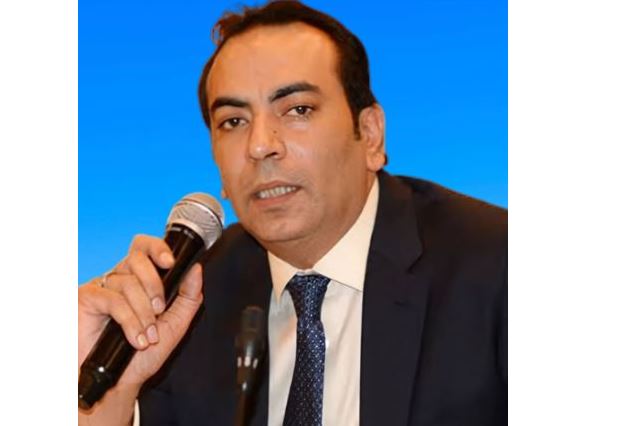
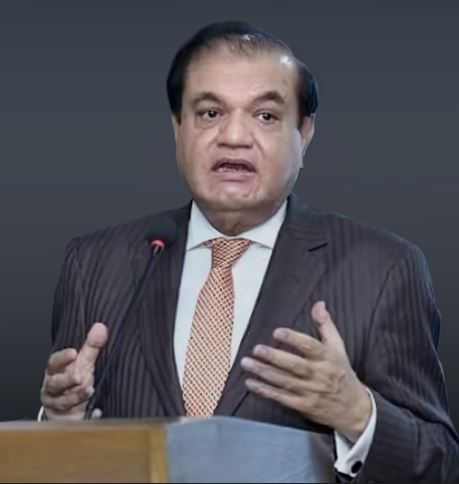
ISLAMABAD: /DNA/ – Chairman of National Business Group Pakistan, President Pakistan Businessmen and Intellectuals Forum, and All Karachi Industrial Alliance, and former provincial minister Mian Zahid Hussain on the poor state of the country’s most important sector is resulting in the economic downturn.

Despite the world’s best canal system and fertile land, agricultural imports are increasing at an alarming rate which is a drain on the exchequer, he said.

Mian Zahid Hussain said that during the last financial year, food items worth ten billion dollars, tea worth one billion dollars, cotton worth two billion dollars and palm oil worth four billion dollars were imported, which is worth Rs3400 billion.

Talking to the business community, the veteran business leader said that Pakistan would not only become fully self-sufficient in agriculture but would also become a notable exporter of agricultural products if investments are made along with favourable policies.

The summary of all previous agricultural policies of Pakistan is that one sector was given attention and the other was neglected, paving the way for its decline.

The business leader said that almost one-third of the country’s population is related to agriculture, its share in GDP is more than 22% and 70% of exports are also linked to this sector, but it was never the focus of policymakers.

Mian Zahid Hussain said that the condition of the agricultural sector improved somewhat in the sixties, after which it began to decline and the agricultural sector has not been able to perform satisfactorily for the past years due to mafia, non-promotion of corporate farming, lack of planning and research, and lack of capital.

Lack of water, steep rise in the prices of inputs and deterioration of land conditions have also contributed to the problem.

Mian Zahid Hussain said that thirty-four years ago, an expert prepared a report for solving the problems of agriculture and ensuring its development, which till now no one bothered to take seriously and follow the recommendations contained in it.

During this time, some attention was given to new types of seeds, which increased the production of many crops, but this was nothing compared to other countries in the region.

Currently, the level of underground water in Punjab is decreasing by one to three feet per year, which is a big threat to the future of the country, but nothing is being done in this regard.

In the last eight years, the population of the country has increased tremendously, but the production of wheat has not increased, while the production of cotton is continuously falling.

Billions of dollars are being spent on imports of wheat, cotton and palm oil which is unbearable for the country’s exchequer.

Art of Controlling

Dr. Abdus Sattar Abbasi

Generally our perception about controlling is to grasp someone firmly through different means to ensure compliance. This view further strengthened a couple of months back when I was invited by an organization to deliver a training session on controlling in day-to-day operations. I think organizers were expecting some stringent theories or concepts to facilitate their hierarchies to fortify their control over others. It was sheer surprise for most of the participants when I linked control with the goal/ objective. Success is linked with determination and commitment more than the ability and intellect. Having relevant capabilities and comprehension to perform is not uncommon. But it is the resolve and the promise which defines the success of an individual or an organization. Controlling as a function of management brings assurance and insistence in organizational operations.  

Controlling in modern-day organizations starts right from the first day on the project/ task starting as a feedforward control. Controlling has a positive and necessary role in the management process to keep entire operation on the track and to avoid depletion of both material and human resources. Controlling ensures that the right things happen, in the right way, at the right time and on the right scale. Controlling is the pivot for organizational learning providing information about entire operation for pre, concurrent and post action analysis for continuing corrective measures to remain focused on achieving the objective. A feedforward control is employed before a work activity begins to ascertain that objectives are clear.Napoleon Hill once said, “There is one quality that one must possess to win, and that is definiteness of purpose, the knowledge of what one wants, and a burning desire to possess it.” According to RemezSasson, “Clarity of purpose/ objective is vital for the achievement of success and for making dreams come true.It is one of the pillars of achieving plans and accomplishing success.It means knowing exactly what it is that you want. Not something unclear and vague, but a complete, clear and detailed goal. Only when you know exactly what you want you can get it.When there is clarity of purpose you know what steps to take.With clarity of purpose you focus on the goal, without wasting time or energy.”

A feedforward control, work inputs, establishes proper directions of the team to tell everyone how to complete the task or in which order to pursue the given objective. It also ensures that right resources are available.Significanceof right and appropriate resources to achieve objectives can’t be emphasized much because quality of resources help organizations get the most out of people, tools and equipment. Feedforward control focuses on quality of resources to avoid unnecessary delays, bring efficiency, strengthen planning and pre-empt bottlenecks well in advance.

Concurrent control, work throughputs, solves problems while they are occurring in the course of process when groups and organizations are implementing their strategies and plan of action to achieve set objectives. It is of prime importance to monitor ongoing operations, a manager or a leader can’t afford to leave things at the mercy of circumstances. It is his/ her responsibility to focus on day-to-day happenings within and outside the group or the organization to control or eliminate unacceptable events for both affective and efficient outcomes from people and mechanical recourses to save time and reduce wastages.

Feedback which we usually use even in our everyday routine to seek responses of relevant stakeholders about any activity is technically a source of critical information for any person, a group, a project or an organization to spot deficiencies, to mark deviations, to observe gaps and to ensure that final result or the product is up to the desired standards. Feedback control enables constant delivery of desired standard of performance and quality. It is the feedback which provides opportunity to reflect back to the entire process to eliminate mistakes from future course of actions. Feedback control is linked with the work output thus solves problem after they occur and provides useful information for improving future operations.

There are some other dimensions of controlling such as internal & external control and bureaucratic and clan control. People who have internal locus of control they exercise self-discipline to fulfil the job expectations and they form groups which set performance standards for themselves and realize dreams. External control occurs through personal supervision and the use of formal administrative systems which is a kind of bureaucratic controlthatinfluences behaviour through authority, policies, procedures, job descriptions, budgets, and day-to-day supervision. Probably the most important type of control is known as clan control which influences behaviour through norms and expectations set by the organizational culture. According to a website, “Clan control is an indirect form of control that uses shared expectations, values and social norms to encourage people to work toward organizational objectives. This form of control often links to company culture and helps the organization reach its goals by motivating the people.”  

There are four distinct steps in control process: step 1 — establishes objectives and standards, step 2 — measures actual performance, step 3 — compares results with objectives and standards, and step 4 — takes corrective action as needed.If our managers and leaders can master the art of controlling as a strategy to achieve objectives and maintain quality & standards then I think we can do wonders in every field from manufacturing to the service industry, from entertainment to the leisure, from health to the sports and from technology to the education sector by delivering excellence in each arena.

Dr. Abdus Sattar Abbasi

Associate Professor Management Sciences

Head, Center of Islamic Finance

COMSATS University (CUI) Lahore Campus

[email protected]

RCCI celebrates Independence Day

DNA

RAWALPINDI, AUG 15: RCCI President Nadeem Rauf hoisted flag along with Group Leader Mr. Sohail Altaf, Senior Vice President Asim Mahmood Malik, Former Presidents, Executive Committee Members  and Mr. Saif Anwar Japha, Additional Commissioner graced the event as Chief Guest at Chamber House and also Planted tree to mark the Independence Celebrations.

China supports Pakistan in geomatics technology upgrading

DNA

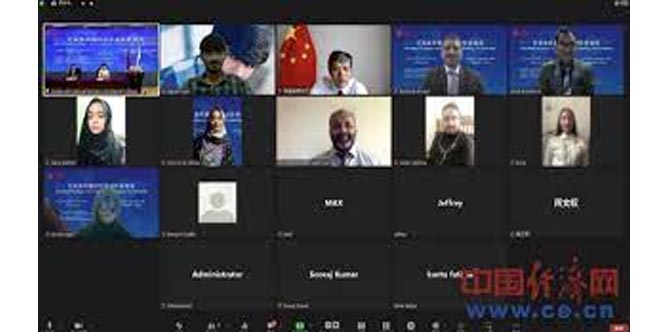
BEIJING, Aug. 15: The Advanced Seminar on Geomatics Technology for Pakistan sponsored by the Ministry of Commerce of China is ongoing online to help improve Pakistani scientists and officers’ expertise in geomatics, China Economic Net (CEN) reported on Monday.

It’s learned that a total of 19 Pakistani experts and officers from the Society of Engineering, National Institute of Computer Sciences, University of AJ & K Muzaffarabad, etc. attended this seminar.

According to the seminar’s organizer Hunan International Business Vocational College, the seminar is specifically designed to meet the actual needs of Pakistani geo-technical experts based on a series of investigation and research on the development of surveying and mapping technology in Pakistan. 

During the 20-day seminar, Chinese experts have been sharing the latest geomatics technology of data analysis, processing and application, and the successful experience and practice in the surveying and mapping industry in China with the Pakistani participants. 

The seminar is composed of classroom teaching, discussion on specific topics and visits to renowned Chinese enterprises, etc. Notably, cutting-edge equipment including VR drones has also been used for practice. 

“Through this seminar, Pakistani experts can learn about the updated development of geomatics technology in China, and the Sino-Pak cooperation potential in the field of surveying and geographic informatics has been fully discussed,” Zhong Huiqun from Hunan International Business Vocational College told CEN.

It’s learned that in recent years seminars on various subjects including automotive industry, engineering and business management have been organized by Hunan International Business Vocational College under the sponsorship of the Ministry of Commerce of China to help drive Pakistan’s industrial upgrading and enhance technical exchange between the two countries. 

Political struggle disturbing economic recovery

KARACHI, AUG 15: /DNA/ – FPCCI’s Presidential candidate Atif Ikram Sheikh on Monday said political tensions across the country will hamper the economic recovery.

The troubling political struggle may lead to another economic decline which will be unfortunate, he said.

The destiny of the country can be changed if the politicians give up petty interests and concentrate on a one-point agenda to restore the economy, he added.

Atif Ikram Sheikh said that the economy is going through tough times and the politicians have no option but to show a responsible attitude.

In a statement issued here today, the business leader said that if the political tensions continue, loans worth billions of dollars cannot revive the economy.

Political strains will also deprive the public of the appreciation in the value of the rupee, while a responsible attitude will change the situation for good as no one can stop nuclear power from becoming an economic power.

The UBG leader said that Saudi Arabia has renewed the three billion dollars kept in Pakistan, which will give relief to the government.

He said that because of the conflict between Russia and Ukraine, oil prices had increased to one hundred and twenty dollars per barrel, which increased the financial difficulties of all oil-importing countries including Pakistan, but now the oil prices have fallen below one hundred dollars.

Due to which the fall in oil prices, prices of gas and other commodities are also decreasing but the masses are not getting its benefit.

The decline in oil prices is because of Russia’s production not being affected despite the sanctions, the use of stored oil by Western countries and the threat of a global recession.

Revival of Value System Imperative for National Growth

DNA

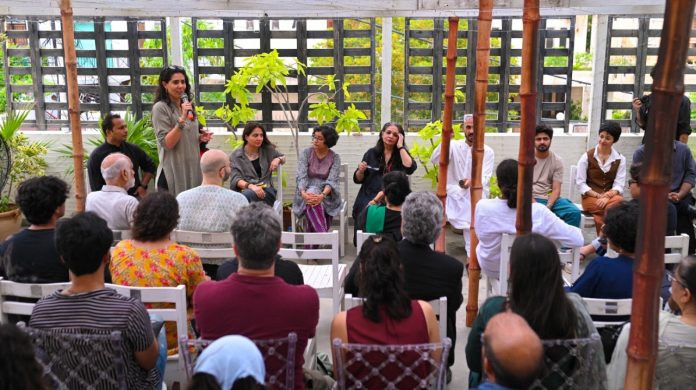
Islamabad: After three scores and fifteen years of independence, there was a serious need to revisit our national value system, agreed a group/cohort of youth. At a roundtable discussion titled “75 years of Pakistan—Reflections” held at the Institute of Regional Studies (IRS) here on Monday.

The event featured a diverse group of undergraduate and graduate level students from Lahore and Islamabad. The discussion was organized with the aim of bringing forth the voice of youth which was Pakistan’s biggest asset. The cohort agreed that while there had been major issues such as political turmoil, economic instability, religious disharmony, interprovincial discord and absence of nationalism, Pakistan’s resilience in the face of all that it had been through since its inception was commendable. Sincerity and loyalty to our motherland regardless of the challenges confronting the country was the need of the hour, said the Ambassador Nadeem Riyaz, President IRS.

The youth representatives expressed hope and optimism for Pakistan’s bright future on the basis of what Quaid-e-Azam said, i.e., Pakistan could never be undone. Only 75 years had passed since the birth of Pakistan and 75 years in the life span of nations, were in fact formative years. The reading on the wall about Pakistan’s future read ‘hope’ and ‘everything positive’ said Ms. Ayesha Zafar, an undergraduate student from National Defense University (NDU), Islamabad. Ms Fizza Bano and Mr Malik Saad, undergraduate students from NDU pertinently mentioned the challenges that Pakistan had to endure since birth in addition to highlighting its resolve in standing tall among the comity of nations. Ms Bano stated that as a young political scientist she saw lack of ownership among Pakistani nationals as extremely concerning. She added that it was imperative for our people to own their national identity and let it prevail beyond their sub-national and ethnic identities to emerge as a united nation that was capable of addressing troubling issues at home. 

Ambassador of Uzbekistan calls on the Prime Minister

DNA

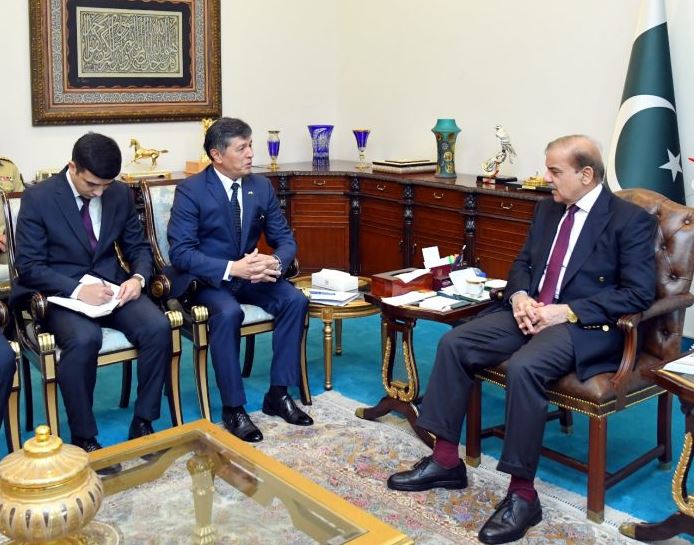
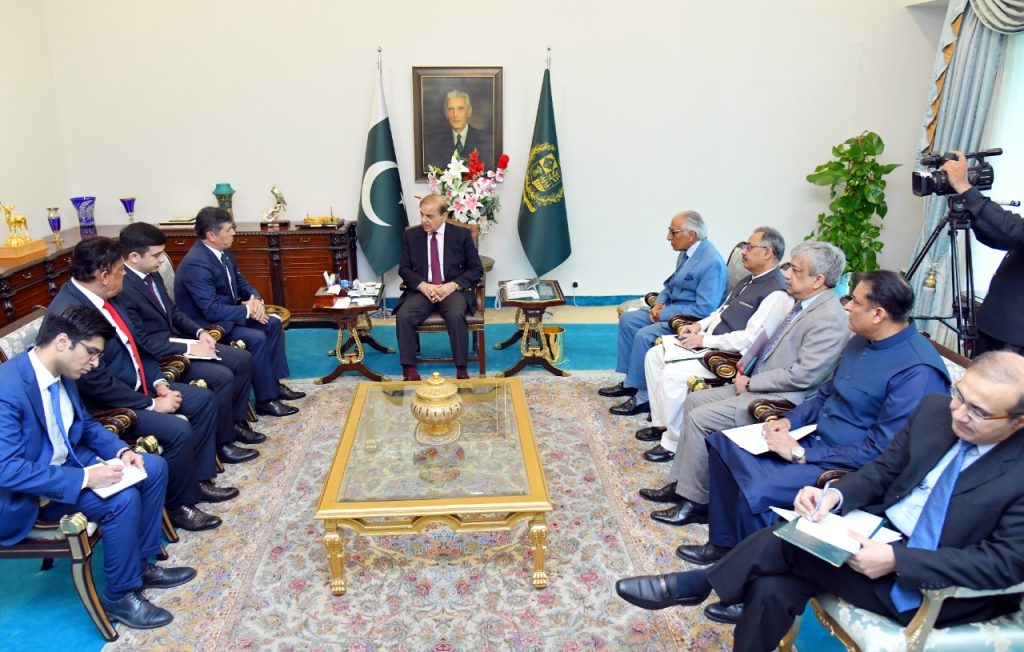
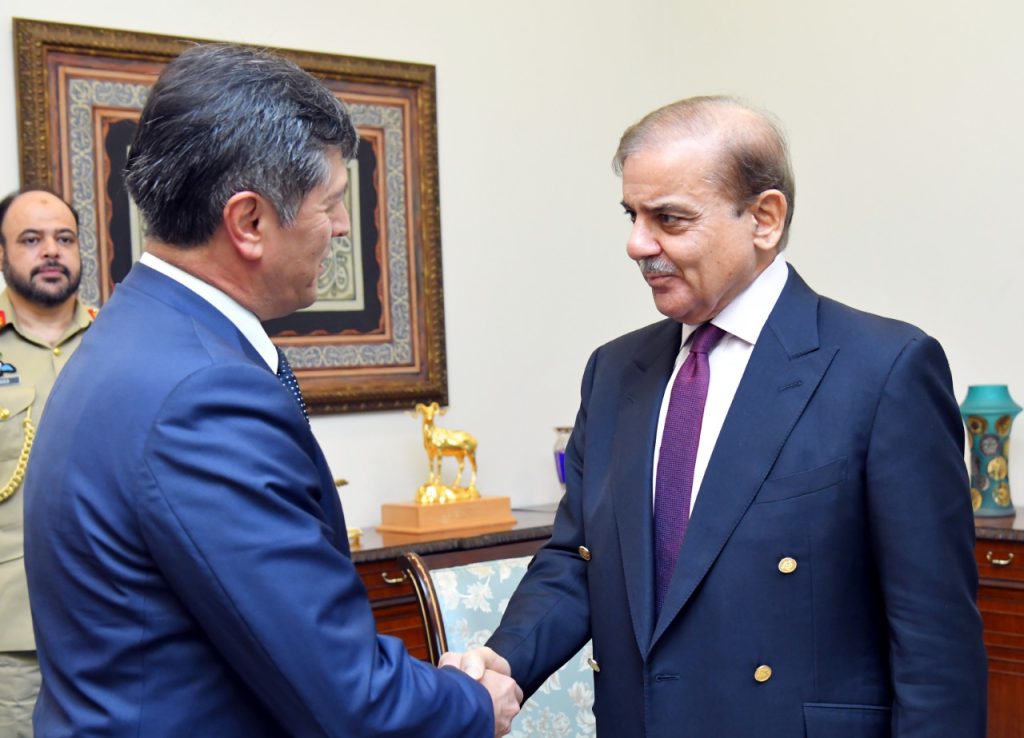
ISLAMABAD: The Ambassador of Uzbekistan, Mr. Oybek Usmanov, paid a courtesy call on the Prime Minister. The Ambassador conveyed warm greetings from the President of Uzbekistan for Prime Minister Muhammad Shehbaz Sharif and said that President Shavkat Mirziyeyov was looking forward to welcome the Prime Minister to the SCO Summit at Samarkand next month.

The Prime Minister highlighted Pakistan’s vision for deeper engagement with Central Asia and the important role of Uzbekistan in this regard. He expressed satisfaction at the level of close and fraternal relations between Pakistan and Uzbekistan and emphasized the importance of further deepening bilateral trade and economic ties.

The Prime Minister underlined the significance of Trans-Afghan Railway Project to advance the connectivity agenda and promote regional prosperity. He also invited Uzbek investments in Special Economic Zones (SEZs) of Pakistan, particularly in industrial, electronics and agricultural sectors, which would accrue mutual benefits.

Prime Minister Muhammad Shehbaz Sharif underscored the need to urgently operationalize the Transit Trade Agreement and Preferential Trade Agreement in order to fully unlock the immense bilateral economic potential. He also reiterated Pakistan’s commitment to provide transit access to Central Asian Republics to the ports of Karachi, Bin Qasim and Gwadar.

The Prime Minister stressed closer collaboration in education, tourism and cultural spheres to promote people-to-people contacts. He underlined the importance of direct air connectivity in this context and urged upon the respective national airlines to start operations at the earliest to facilitate the movement of businessmen, students and tourists between the two countries.

While highlighting convergent perspectives of Pakistan and Uzbekistan on regional issues, the Prime Minister reaffirmed Pakistan’s strong resolve for lasting peace, security and stability of Afghanistan.

Islamabad

PM, Saudi crown prince express resolve to further strengthening bilateral ties

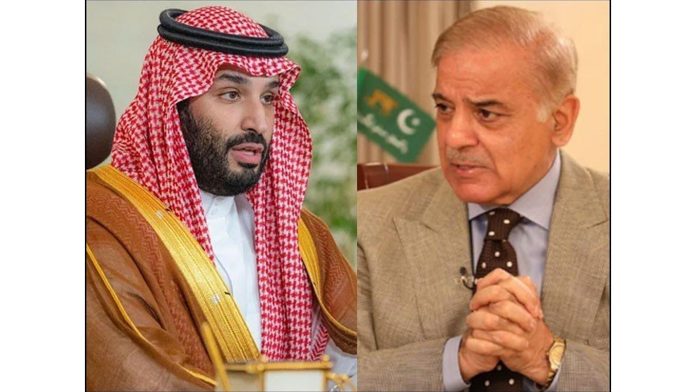
ISLAMABAD, Aug 15: Prime Minister Shehbaz Sharif and Saudi Arabia’s Crown Prince, Deputy Prime Minister and Defence Minister Prince Mohammed bin Salman bin Abdulaziz Al-Saud on Monday expressed the resolve to further strengthening the strong, longstanding Pakistan-Saudi Arabia fraternal ties.

The two leaders in a telephonic conversation also exchanged views on issues of mutual interest, the PM Office said in a statement.

PM Sharif conveyed his deep respects to the Custodian of the Two Holy Mosques, King Salman bin Abdulaziz. During the telephone call, the crown prince congratulated the prime minister and the people of Pakistan on 75th anniversary of Pakistan’s independence.

The crown prince also conveyed best wishes for the continued progress, prosperity and development of Pakistan. The prime minister and the crown prince reviewed the progress made on the decisions taken by the two sides during the visit of the prime minister in April 2022. They resolved to expedite the ongoing cooperation in investment, energy and trade fields. Recalling the historic support extended by the Kingdom of Saudi Arabia to Pakistan in times of need, the prime minister thanked the crown prince for the economic and development support provided to Pakistan in recent times.

The prime minister reiterated his cordial invitation to the crown prince for a state visit to Pakistan, which he graciously accepted.

British Council partners with Koel Gallery on Art for Climate Change

DNA

KARACHI: The British Council and Koel Gallery have partnered to launch the ‘Saahil Ki Kahaaniyan – Stories from the Coast’ project exhibition at the Koel Gallery in Karachi on Friday, 12 August. The exhibition which continues until 19 August features multidisciplinary works that aim to raise awareness of the impact of climate change on the coastal areas of Pakistan, particularly its fragile mangrove ecosystem, with a view to promoting sustainable coastal development.

The project is part of the British Council’s Pakistan-UK Season: New Perspectives programme to mark the 75th anniversary of Pakistan.

In February 2022, the project awarded grants to Pakistan-based artists exploring this theme through a variety of mediums, culminating in the curated exhibition close to Pakistan’s independence day. The British Council arranged a diverse selection committee, including experts from the UK, to review applications – a process that was quite intensive, given the large number of high-quality applications that were received. After a detailed vetting exercise, four creative teams were selected to work on this project.

Visual Artist, Curator and Director KOEL Gallery, Noorjehan Bilgrami said:“I am sincerely hoping that these projects through the common platform of ‘Saahil Ki Kahaaniyan’, amalgamating at KOEL Gallery, will begin the process of collective research that records, investigates and disseminates the awareness of our legacy that needs to be owned, protected and treasured. It is a beginning for this exciting work to continue”

Artist Mahera Omar presented a silent cinematic journey through a delicate wetland ecosystem on the shores of an industrial city, documenting the precious biodiversity which is in grave danger of being lost under her project titled, ‘Kabhi aisay bhi hota hai ke kinare doob jate hain…’. Marvi Mazhar, Abuzar Madhu &Swalay Muhammad presented ‘Milaap’, an exploration of the sacred geography of the urban/rural estuary where the river meets the coast, focusing on Khizr, the Darya Shah, whose coordinates are sometimes imaginary on liquid grounds in the form of astana, a promised space to protect the coast from climatic and human infrastructural ruptures. Taqi Shaheen& Sara Khan Pathan worked on ‘The Shape of Island’, a research project to design ‘Machi Wachi’ – a board game that acts as a storytelling interface for reflection and ecological understanding about scarcity of natural resources around Bhit Island. While, Zulfikar Ali Bhutto &Janan Sindhu presented ‘Bulhan Nameh’, a series of immersive installations of fabric and video that speak to the plight of one of Pakistan’s shyest animals, the Indus River Dolphin, as well as the communities that have been key to its conservation.

Director Arts, British Council Pakistan Laila Jamil said: “Saahil Ki Kahaaniyan’ has been a very exciting project for us – to have been a part of the selection of such wonderful artists and activists, to be able to see the variety of topics they have chosen, their sensitive approaches, deep research, and love of their respective areas of work – it has been a privilege to be part of their creative journey. We believe art has the potential to challenge and change mindsets for a more sustainable and inclusive future. We are grateful to Koel Gallery for showcasing this project and to the Rangoonwala Foundation for their ongoing support for the arts in Pakistan.”

Punjab CM announces free education up to graduation level in province

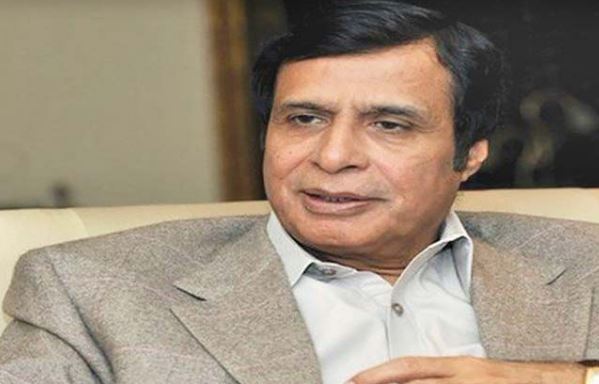
LAHORE, AUG 14: Punjab Chief Minister Chaudhry Pervaiz Elahi on Sunday announced free education up to graduation will be free in the province.

Punjab Chief Minister Elahi has announced Rs300,000 for disabled girls who sing the national anthem. He also announced Rs50,000 for the lead singer, while Rs 100,000 will be given to the police band and Rs200,000 to the scouts.

On this occasion, CM Elahi said, “Earlier we made education free up to matriculation, now it is time to make education free up to graduation.”

He further said that Army Chief General Qamar Javed Bajwa has made the country’s defence impregnable. He said that the services of Pak Army under the leadership of COAS Bajwa for eradicating terrorism from the country and establishing peace are commendable.

Stay Connected

64FansLike
60FollowersFollow

Latest Reviews

Exchange Rates

USD - United States Dollar
EUR
1.17
GBP
1.35
AUD
0.67
CAD
0.72