Home Blog Page 1533

Japan to provide emergency grant of US$ 7 mln as flood response to Pakistan

Islamabad, Sept 6 /DNA/ – HAYASHI Yoshimasa, Minister for Foreign Affairs of Japan, announced the Government of Japan’s plan to provide emergency assistance of USD 7 million to Pakistan, in response to the devastating flooding nationwide. The epochal levels of rain and flooding have wiped away over a thousand of precious lives, destroying critical infrastructure and disrupting the primary social institutions and livelihoods. Millions of people are left without homes and their hopes and dreams are shattered.

H.E. Mr. WADA Mitsuhiro, Ambassador of Japan to Pakistan, reaffirmed his commitment to support Pakistan; “I would like to assure that the Government of Japan stands ready to support the people of Pakistan. Given the rapidly rising scale of needs, we consider it critical to extend our best support and stand available to the affected. As part of the “2022 Floods Response Plan”, we will extend our assistance, ensuring collective and coordinated actions to respond to the national emergency”. In close partnership with the UN agencies, support will be provided for emergency needs, including health, food and nutrition, water and sanitation, and shelters.

The Government of Japan has already provided tents and plastic sheets as emergency relief goods through JICA, and these items are now being distributed to the people in need.

History of Family Planning and Role of ICFP 2022

Mansoor Qaisar

Family planning is “the ability of individuals and couples to anticipate and attain their desired number of children and the spacing and timing of their births. It is achieved through contraceptive methods and the treatment of involuntary infertility.” Family planning may involve consideration of the number of children a woman wishes to have, including the choice to have no children and the age at which she wishes to have them. These matters are influenced by external factors such as marital situation, career considerations, financial position, and any disabilities that may affect their ability to have children and raise them. If sexually active, family planning may involve using contraception and other techniques to control the timing of reproduction.

Family planning has been practiced since the 16th century by Djenné in West Africa. Physicians advised women to space their children, having them every three years rather than too many and too quickly. Other aspects of family planning include sex education, prevention, and management of sexually transmitted infections, pre-conception counseling and management, and infertility management. As defined by the United Nations and the World Health Organization, family planning encompasses services leading up to conception. Abortion is not typically recommended as a primary method of family planning, and access to contraception reduces the need for abortion.

 The International Conference on Family Planning has convened the global development community around a shared vision of universal access to family planning since 2009.

A network of advocates, researchers, scientists, community and government leaders, health practitioners, economists, conveners, civil society members, and young people will be part of the 2022 International Family Planning Conference in Pattaya. 

Every other year since 2009, the International Conference on Family Planning has brought together the family planning and SRHR communities to share best practices, celebrate successes, and chart a course toward universal access to Family Planning.

ICFP 2022 will take place from 14 to 17 November 2022, with pre-conference side events and site visits beginning on 12 November 2022.

For the first time, the world’s largest convening of family planning and SRHR experts will be hosted in person in Pattaya City, Thailand, as well as virtually around the world, making the 2022 ICFP our most extensive, the most inclusive, and accessible conference to date!

Since the first ICFP in Kampala, Uganda, in 2009, the International Conference on Family Planning (ICFP) has served as a strategic inflection point for the global reproductive health community, providing a global stage for countries, organizations, and individuals to make significant commitments and celebrate achievements as the world’s largest scientific conference on family planning and reproductive health.

 ICFP has become more than a conference – it has grown into a platform for researchers, advocates, governments, and communities; a movement towards achieving access to family planning for all; and a growing community guided by the spirit of partnership, inclusivity, innovation, and scientific rigor.

As the larger family planning community looks “beyond 2020” to realign our goals and reposition for the future of family planning, ICFP 2022 will be a strategic benchmark as the community prepares to recommit to a goal of universal access by 2030.

Pakistan’s population growth has continued since the 1940s due to reduced mortality and persistent high birth rates. The country’s population grew from nearly 33 Million in 1947 to about 220 Million, an increase of almost six times since independence. Continued rapid growth in population has ranked Pakistan sixth in the world and the third most significant contributor to world population growth. However, with a very young age structure, and a large number of people about to enter their reproductive years, the population has the potential to proliferate shortly, even though fertility is expected to fall substantially. The Population Welfare Programme is a social development activity aimed at reducing the population growth rate, which is necessary for developing countries like Pakistan.

In recognition of the 25th anniversary of the International Conference on Population and Development (ICPD) in 1994, governments reaffirmed the importance of the Programme of Action and its further implementation for achieving the Sustainable Development Goals (SDG). The emphasis on universal access to a full range of safe and reliable family planning methods, which help couples and individuals to realize their right to decide freely and responsibly on the number, spacing, and timing of births, remains as critical today as it did in 1994. The growing use of contraceptive methods in recent decades has resulted in improvements in health-related outcomes such as reduced unintended pregnancies, high-risk pregnancies, maternal mortality, and infant mortality but also in improvements in schooling and economic outcomes, especially for girls and women. Beyond the impacts of contraceptive use at the individual level, there are benefits at the population level. From a macroeconomic perspective, fertility reductions enhance economic growth due to reduced youth dependency and an increased number of women participating in paid labor. However, rapid population growth challenges achieving the 2030 Agenda for Sustainable Development, particularly in sub-Saharan Africa, where countries must provide healthcare services, education, and employment opportunities for growing children and young people. Moreover, trends in fertility primarily drive long-term global population trends. It is, therefore, essential to understanding the relationship between contraceptive use and fertility, especially in high-fertility contexts, because of the implications for triggering or speeding up the demographic transition and harnessing a demographic dividend.

 Despite the dramatic progress, enormous challenges remain: some 214 million women in developing countries lack safe and effective family planning methods. Most of these women live in the 69 poorest countries. Fulfilling their unmet demand would save lives by averting 67 million unintended pregnancies and reducing the estimated 303,000 annual maternal deaths by one-third.

Better reproductive health care, including voluntary family planning, can bolster economies and contribute to sustainable development by empowering women to complete their education, join the paid labor force, be more productive in their jobs, earn higher incomes and increase savings and investments. In addition, for each additional dollar spent on contraceptive services above the current level, the cost of pregnancy-related care is reduced by $2.30.

Investments in family planning help lead to prosperity for all. Family planning, therefore, is critical to achieving Sustainable Development Goal 1, to end poverty. It is also vital to achieving other Goals, such as ending hunger and promoting good health and gender equality.

The Author is a freelance journalist & a Family Planning Award Winner from the Gates Institute of Population and Reproductive Health, Washington, and associated with the Pakistan Institute of Development Economics (PIDE) as a Media & Communication Expert; and he tweets @MansorQaisar

Pakistan needs enhanced financing for disasters: ADB

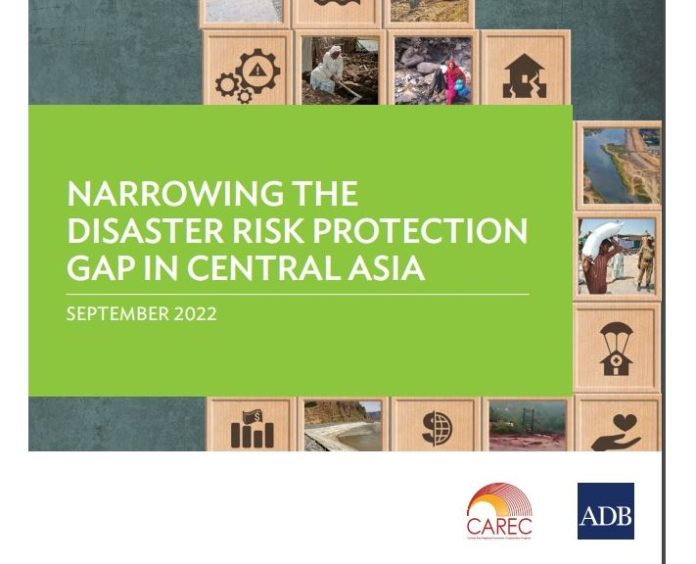
ISLAMABAD, Sep 6: Pakistan urgently needs to enhance the current disaster risk finance approach as risk retention mechanisms are insufficient to cover the losses associated with even the most frequent of flood and earthquake events, Asian Development Bank (ADB) said in a report on Tuesday.

The report titled “Narrowing the Disaster Risk Protection Gap in Central Asia” said the private insurance solutions to the natural disasters’ risks have achieved only minimal market penetration.

“These challenges are compounded by a challenging external financing context at the sovereign level, making it difficult to access debt quickly and cheaply after a disaster, and low levels of financial inclusion that exacerbate the vulnerability to disaster events of many in Pakistan”, it added.

Previous disaster events illustrate the challenges that Pakistan faces, for example, floods in 2010 and 2015 caused an estimated Pak Rs32.6 billion ($326 million) losses to farmers in Punjab.

To support the affected farmers, the Government of Pakistan provided Rs6.7 billion ($67 million), amounting to only 18.5% of the required amount, the report added.

There would appear to be a need to increase the coverage and depth of the existing risk retention instruments for high frequency events, through enhanced functioning of the national and provincial disaster management funds.

This could be complemented with the use of risk transfer instruments that might support either the emergency response cost and/or the support the reconstruction of assets damaged or destroyed by lower frequency, higher intensity events.

These actions are consistent with the identified work plan of the Disaster Risk Financing Unit of the National Disaster Risk Management Fund, the report said.

It said the National Disaster Management Act of 2010 established a National Disaster Management Fund and separate disaster management funds to be administered by each provincial government. These are intended to cover spending on items such as shelter, food, drinking water, medical cover, etc.

However, ADB reports that “significant work remains to be accomplished in operationalisation of the funds, adequate provision of financing mechanisms and standardization of procedures across provinces.”

It reports that the federal government typically only has limited contingency funding of around $15 million–$20 million to respond to national emergencies while a 2019 World Bank paper reports that the federal fund has $10.6 million.

With support from ADB, a disaster risk financing unit has been established under the National Disaster Risk Management Fund (note it is different from the National Disaster Management Fund discussed above). This unit is responsible for the improved management of natural hazard risks and has set itself three targets.

The AAL (direct losses only) from flood events is estimated at $1.5 billion and from earthquakes at $614 million. In terms of the extent to which insurance might cover these losses, the analysis assumes that 1% of the losses from flood events may be covered by insurance, in line with the ADB analysis.

It is assumed that a higher proportion of the losses from earthquakes might be covered by insurance based on market reports that 70% of property insurance policies cover earthquakes.

Mushahid, others pay respects Lance Naik Mehfooz Shaheed

DNA

Islamabad; 6 Sept: To commemorate the 57th Defence day on Tuesday, members of the Senate Standing Committee on Defence, comprising of Senators Shahzad Waseem, Waleed Iqbal, Rukhsana Zuberi and Zarqa Suharwardy,  headed by Senator Mushahid Hussain Sayed visited the mausoleum and home of martyr here in Islamabad and paid great reverence and honoured the supreme sacrifice of Lance Naik Mehfooz Shaheed Nishan e Haider for the Nation.

Senator Mushahid Hussain Sayed with other members marked the day with a visit to the mausoleum of Lance Naik Mehfooz Shaheed, Nishan-i-Haider, Pind Malkan, Islamabad. The Committee head along with other members of the Senate Defence committee paid homage to the courage and bravery of Lance Naik Mehfooz Shaheed NH. Senator Mushahid Hussain Sayed, Chairman of the Committee laid a floral wreath and offered Fateha at the mausoleum, and also met members of the martyr’s family.

Senator Mushahid Hussain, Chairman, Senate Defence committee while addressing a gathering at the mausoleum applauded the exemplary heroism of Shaheed and other brave sons of the soil who laid down their lives in Defence of the country. “We also salute the resilience and resolve of the mothers, fathers and families of our martyrs. The eternal sacrifices of the Pak Army for the homeland can never be forgotten. Pakistan army is a National Army and Pak Army is the guarantor of unity, territorial integrity, sovereignty and stability of the Motherland”, he remarked.

“The presence of representatives from all the provinces of Pakistan and all the political parties is a confirmation that the whole nation is united for national security above Party considerations”, he underlined. ‘If we are able to sleep peacefully today and live as free citizens of a free country, it is because of the Defenders of the Nation and supreme sacrifices of our brave soldiers”, he underscored. Senator Mushahid also lauded the Army role in flood relief, saving countless lives.

Leader of the Opposition in the Senate, Dr Shahzad Waseem and Senators Waleed Iqbal, Rukhsana Zuberi, and Zarqa Suharwardy also spoke on the occasion and commended the sacrifices of the Pakistan Army.

To pay rich tribute to the valiant martyr, Lance Naik Mehfooz Shaheed NH, who sacrificed his life for the motherland during the Indo-Pak War of 1971, Members of the Defence Committee later visited the family of Mehfooz shaheed. While talking to the family of shaheed, Mushahid Hussain Sayed stated that “Brave sons of the soil had thwarted the nefarious designs of enemy by sacrificing their lives for the nation. Sacrificing lives to protect the motherland was an honour of the nation and we salute his sacrifice and pay respect to his family , he added. A large crowd welcomed the Senators and shouted full-throated slogans of ‘Pakistan Zindabad and Pak Army Zindabad’.

Five soldier embrace shahadat in Waziristan

DNA

RAWALPINDI: Security Forces conducted an Intelligence Based Operation in general area Boyya, North Waziristan District today. During the conduct of the operation, intense fire exchange took place between own troops and terrorists. Own troops effectively engaged the terrorists’ location. Resultantly, 4 x terrorists were killed.

Weapon and ammunition was also recovered from the killed terrorists.

The killed terrorists remained actively involved in terrorist activities against security forces and killing of innocent citizens.

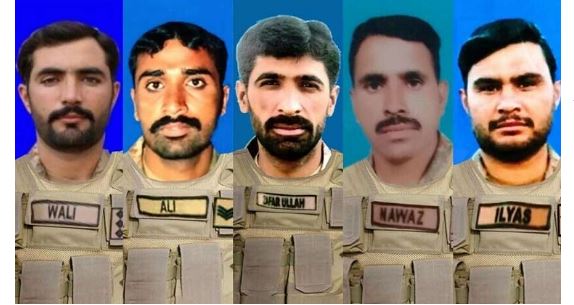
However, during intense exchange of fire, Captain Abdul Wali (age 26 years, resident of Wana / South Waziristan District), Naib Subedar Nawaz (age 45 years, resident of Abbottabad), Havaldar Ghulam Ali (age 34 years, resident of Sargodha), Lance Naik Ilyas (age 33 years, resident of Mianwali) and Sepoy Zafar Ullah (age 29 years, resident of Mianwali) having fought gallantly, embraced shahadat.

Sanitization of the area is being carried out to eliminate any other terrorists found in the area.

Pakistan Army is determined to eliminate the menace of terrorism and such sacrifices of our brave soldiers will not go unpunished.

Kazakh president believes in democratization of country

Ambassador Kistafin says early presidential election in autumn; director flights between Kazakhstan, Pakistan from November

Ansar M Bhatti

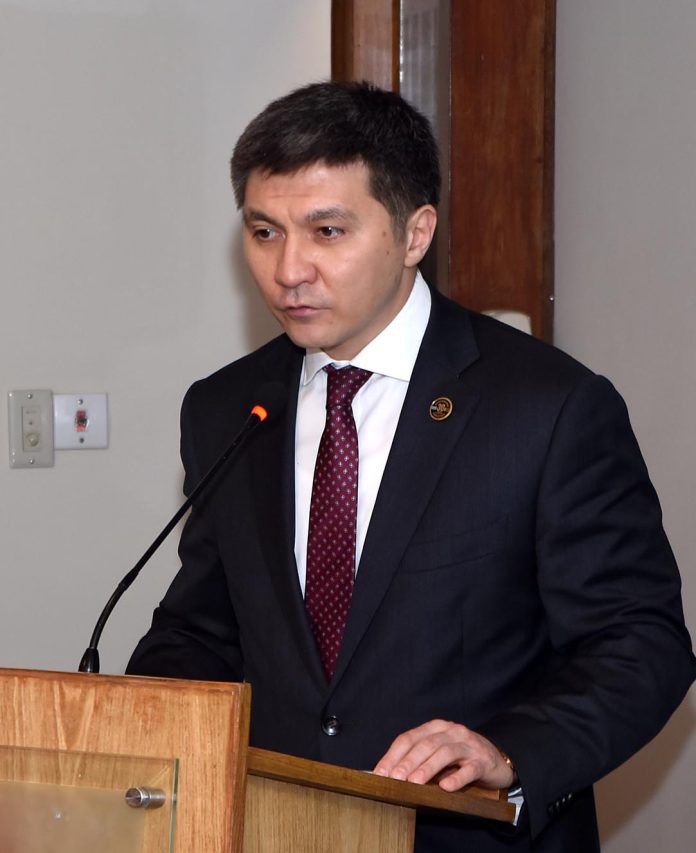
ISLAMABAD: Ambassador of Kazakhstan to Pakistan Yerzhan Kistafin has said to achieve the goal of democratization and better facilitation of the people of Kazakhstan President  Kassym-Jomart Tokayev has decided to call early elections this Autumn. The President has decided to limit the term of the President to one time only, which will be for seven years.

Ambassador Kistafin made these remarks while talking to media people, here on Monday.

The ambassador further said, during his address to the nation a few days ago the President of Kazakhstan made it clear that he wanted to make the country a democratic state where people have a say in the decision making processes.

He said that Kazakhstan is the world’s largest landlocked country and the biggest economy in Central Asia; hence, the potential for cooperation and development between both nations is enormous. 

Tokayev further called for the elections to the Mazhilis (lower house of Parliament) and Maslikhats (local representative bodies) to be held in the first half of 2023 if all relevant laws in the follow-up to the constitutional amendments approved in the June 5 national referendum are adopted by the end of 2022. Moreover, the role of Parliament, media, and civil society in Kazakhstan would be strengthened. 

Commenting on the rule of law, President Tokayev announced that the independence of the judiciary would be strengthened by systematically reducing administrative and government pressure on the legal system, principally by reforming the Supreme Court and increasing its power over judicial review.

He said that  direct flights between Kazakhstan and Pakistan shall be resumed in the month of November, 2022.

The flights would be operated from Kazakhstan’s city Nur-Sultan and Almaty to Pakistan’s major cities including Lahore and Karachi, adding that it will help out to bring the communities of both countries closer and create a better understanding of each other’s culture.

This initiative of flights will enhance people-to-people contacts and the exchange of delegations, ultimately bringing both the brotherly countries closer.

 Ambassador further said that President Kassym-Jomart Tokayev is also planning to visit in the first half of next year. This year both countries are also holding inter-governmental joint mission meetings to enhance further bilateral economic and regional cooperation. Moreover, both countries will also collaborate in media exchanges.

The ambassador further said that after the June referendum it has become easy for anybody to establish a political party and take part in the political process. Thus, parties have a chance now to promote their own agendas.

He added his country was keen to have access to the warm waters of Pakistan for which he would soon visit Gwadar and explore various business opportunities there. He said the Senate Chairman Sadiq Sanjrani has invited him to visit Gwadar and on his invitation he will soon go there.

He also mentioned the single country exhibition organized by Pakistani businessmen in Almaty, Kazakhstan adding that the exhibition went quite well and provided businessmen from both countries with an opportunity of exchanging views and exploring business potentials.

1 dead, 9 missing after plane crash in Washington state

Washington, Sept 5: One person was killed and rescue crews were searching for nine others after a small plane crashed along the coast of the US state of Washington on Sunday, the coast guard said.

The US Coast Guard said it received a report of the crash around 3:11 pm (2211 GMT) and dispatched helicopters and boats to scour the area. Local search and rescue officials were also on the scene.

“One deceased individual was recovered by crews on scene. Nine individuals remain unaccounted for, and a safety zone has been put into effect to help facilitate search efforts,” the coast guard said in a statement, adding that no cause for the crash had yet been determined.

Two ships will “remain on scene throughout the night searching for the 9 individuals on the seaplane,” the coast guard later said on Twitter.

The plane crashed while flying over the Pacific Ocean inlet of Puget Sound while on its way to Renton Municipal Airport near Seattle.

Flight tracking website Flight Radar 24 said it was monitoring reports of the crash, and that it had recorded the last signal from a 55-year-old de Havilland Canada DHC-3 Otter — a single-engine propeller plane — in the area at 3:08 pm local time at 100 feet (30.5 meters) of altitude.

Initially, the US Coast Guard’s Pacific Northwest division tweeted that eight adults and one child were on board. It later tweeted an update that they were searching for 10 passengers.

Two Russian embassy staff killed in Kabul bombing: foreign ministry

DNA

MOSCOW, Sept 5: Two employees of Russia’s embassy in the Afghan capital Kabul were killed Monday and several people wounded in an attack near the diplomatic mission, the foreign ministry in Moscow said.

“At 10:50 am Kabul time on September 5, an unidentified militant set off an explosive device in the immediate vicinity of the entrance to the consular section of the Russian embassy in Kabul,” the ministry said in a statement.

“As a result of the attack, two employees of the diplomatic mission were killed, and there are also Afghan citizens among the wounded.”

The Afghan interior ministry told AFP that a suicide attacker what shot dead by Taliban guards at the embassy.

“It was a suicide attack, but before the bomber could reach his target, he was targeted by our forces and eliminated,” Afghan interior ministry spokesman Abdul Nafy Takor told AFP.

Asked whether the target was the Russian embassy, Takor said: “Yes”.

An Afghan civilian was killed and several others were wounded in the attack, he said.

“Without any doubt, we are talking about a terrorist act, which is absolutely unacceptable,” Kremlin spokesman Dmitry Peskov told journalists.

Imran Khan attacked economy, defence institutions under inimical design: Khawaja

DNA

ISLAMABAD, Minister for Defence Khawaja Muhammad Asif on Tuesday accused the former prime minister and PTI Chairman Imran Khan for attacking the country’s economy and defence institutions under the inimical designs of the enemies of Pakistan.

Addressing the media briefing held here, the minister said after independence our perpetual enemy India had two main targets of economy and defence namely the armed forces to weaken Pakistan.

  Minister said, “Yesterday in Faisalabad Imran Khan made comments on COAS (Chief of Army Staff) appointment. If people like Khan will be made the focus of processions then they will harm the defence related interests of Pakistan. In the past few months Imran Khan clearly targeted these two areas.”

Asif added that the Pakistan Tehreek-e-Insaf (PTI) chairman during his tenure in October past year started making the matter of appointments in the armed forces as a topic of public discussion.

  “We passed the no confidence motion after his allies decided to leave him [Imran Khan]. But after that he started targeting forces and called them names like neutrals and animals,” he said. 

                Khawaja Asif emphasised that the pattern of past four months showed that he was targeting Pakistan’s economy and defence. “Yesterday, Khan alleged that the senior generals next in line to be COAS are going to provide illicit protection to the misappropriations of the Pakistan Democratic Movement (PDM) leadership.”

                He underscored that it was not the job of the armed forces rather they had sworn in to defend the masses and motherland. “There’s no commitment in their oath to defend the politicians if they do so then they will violate their own oath. Imran Khan is on record for saying that they cannot be neutral and he demanded protection from them.”

                The Minister lambasted Imran Khan for his accusations and said that it was not the PDM leadership rather he himself would need security for his corruption made in foreign funding case, Tosha Khana case, Malik Riaz gift case, and Bahria Foundation case whereas in the latter he had not denied the gifts received from Malik Riaz.

                “The Armed Forces will never do that and they will only defend the honour and security of the motherland for which they spill their blood. Imran Khan’s accusations are a disrespect of the sacrifices of the armed forces,” he maintained.

                The Defence Minister underscored that the armed forces of Pakistan had a long tradition of sacrifices where three star general and there only children embraced martyrdom in war against terrorism. 

                Recently, he said in the helicopter crash in Winder the martyrdom of three star general, two star general and other officials took place while serving nation in crisis, adding, “Our history has a great number of sacrifices. Our armed forces are playing lead role in disaster relief efforts. There are areas where civil administration cannot approach the armed forces have committed their all out resources for the affected population.”

                He regretted that the PTI Chairman was using helicopters for hours and people died waiting for five hours on stones after getting washed away by a deluge.

                He has no commitment for his own blood and had become a security threat for Pakistan, he added.

                After becoming nuclear power, the priority of India was to destroy Pakistan economically and PTI and it’s leadership were becoming their tools for that cause, he alleged.

                “The process of COAS appointment is three months later but it’s first time Imran Khan is making it controversial and his statements are enmity with the country that intend to tarnish the defence institution for political whims.”

                He mentioned that the politicians should resolve their conflicts in political arenas, however the relationship of certain institutions was linked to the national security which should not be weaken by making controversial statements.

                Responding to media queries, he said there would be elaborated legal actions against Imran Khan in the coming days but it would not have any cooked up cases for political victimization and would also not depict political vendetta or score settling on political grounds.

                He reiterated that the media and public must avoid making COAS appointment a public discourse topic as it was the prime minister’s prerogative.

                Replying to another question, he said no one denied the need for good ties with India but there certain barricades that needed to be resolved for a holistic dialogue and peace based on mutual respect and harmony.                     

                “There are flashpoints of massive human rights violations against Muslims like that in Palestine, Kashmir and inside India that will have to be resolved first.”

                He continued, “Salute to the courage of Kashmiris in Srinagar who celebrated Pakistan’s victory made fireworks and hoisted flags in jubilation despite Indian occupation. I wish all these barricades are crossed to create peace.”

Post-study work rights for international students to boost skills

DNA

CANBERRA: The Australian Government will increase the duration of post-study work rights of international students to strengthen the pipeline of skilled labour.

Post study work rights for select degrees in areas of verified skill shortages will be increased from:

  • Two years to four years for select Bachelor’s degrees
  • Three years to five years for select Masters degrees
  • Four years to six years for select PhDs.

A working group will be established to advise the Ministers for Home Affairs and Education on the development of this and other relevant issues.

Members of the working group will include representatives from the Council of International Education, the National Tertiary Education Union, Universities Australia, and the Departments of Home Affairs and Education.

The group will report to Ministers by 28 October 2022.

International education will also benefit from the $36.1 million the Government will invest in visa processing to support 500 surge staff over the next nine months.

Minister O’Neil also announced today that work hours for international students will be capped again in June next year following feedback from stakeholders.

The number of hours will be subject to consultation with a view to striking the right balance between work and study.

Quotes attributable to Minister for Education Jason Clare

At the moment, only 16 per cent of international students stay on after their studies end. 

This will mean they can stay on longer and use the skills they’ve gained in Australia to help fill some of the chronic skills shortages we have right now.

Quotes attributable to Minister for Home Affairs Clare O’Neil

International education is an important Australian industry that has been heavily impacted by the pandemic.

The outcomes from the Jobs and Skills Summit are geared towards supporting international education and giving the students who earn degrees in Australia the chance to contribute to the productivity of our economy.

Stay Connected

64FansLike
60FollowersFollow

Latest Reviews

Exchange Rates

USD - United States Dollar
EUR
1.17
GBP
1.34
AUD
0.67
CAD
0.73