Home Blog Page 1530

Top eight teams will compete in National Women’s Basketball C’ship 

AFZAL JAVED / DNA

ISLAMABAD: Top eight teams from around the country will be in action in the National Women’s Basketball Championship starting from October 3rd at Pakistan Sports Complex, Islamabad announced by Pakistan Basketball Federation (PBBF) on Monday.

According to the championship organizing secretary and Federal Basketball Association (FBBA)  General Secretary Ouj-e-Zahoor said that all arrangements have been completed for the successful five-day championship where top eight teams taking part in the event have been divided into two pools. . 

He said that Pool “A” comprises defending champion Pakistan Wapda, Karachi, Rawalpindi and Quetta while Pool “B” includes teams from Pakistan Army, Lahore, Islamabad and Peshawar.

Ouj-e- Zahoor said that four matches will be played on a daily basis in the championship to be played from October 3 to October 8 at Pakistan Sports Complex Islamabad. 

The opening match of the championship starting from October 3 will be played between the teams of Islamabad and Lahore, while defending champion Wapda and Quetta, Army and Peshawar, Karachi and Rawalpindi will compete on the first day. 

The semi-final round of the championship will be played on October 6 while the final will be played on October 7.

Schedule: 

October 3 (Day-1): Lahore vs Islamabad; Karachi vs Rawalpindi; Wapda vs Quetta; Army vs Peshawar.

October 4 (Day-2): Wapda vs Rawalpindi; Army vs Islamabad; Karachi vs Quetta; Lahore vs Peshawar.

October 5 (Day-3): Wapda vs Karachi; Rawalpindi vs Quetta; Islamabad vs Peshawar; Army vs Lahore.

October 6 (Day-4): Semi Finals 

October 7 (Day-5): Final

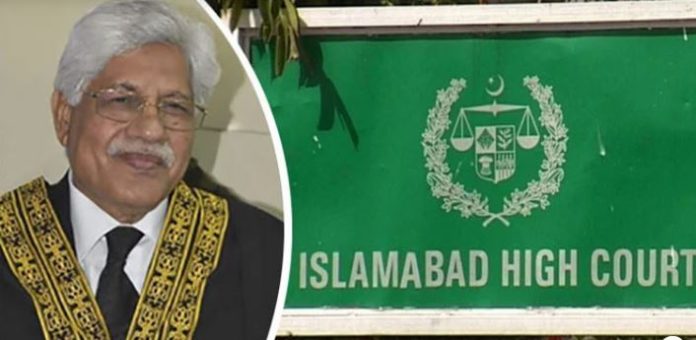
Rana Shamim tenders unconditional apology to IHC in contempt case

ISLAMABAD – Former Gilgit-Baltistan chief judge Dr Rana Muhammad Shamim on Monday has tendered an unconditional apology to Islamabad High Court (IHC) in contempt of court case.

In a surprising turn of events, Rana Shamim has submitted an unconditional apology after he alleged that former chief justice of Pakistan (CJP) Saqib Nasir attempted to influence a case against the Sharif family.

In the apology, the former chief judge noted that he mistakenly wrote down name of IHC’s judge.

I made this grave mistake, which I deeply regret now and unconditionally apologize for,” the ex-chief judge maintained.

In May, Rana Shamim had challenged his indictment in contempt of court case in the Islamabad High Court (IHC). 

Sehat Kahani makes it to the top 100 to watch companies in Asia

Islamabad: Sept 12: /DNA/ – Sehat Kahani is proud to announce its position in the “100 to watch companies in Asia” by Forbes. Forbes released its Asia 100 To Watch 2022 list this September. This list entails small, and medium-sized companies and startups in Asia addressing real-world challenges using modern innovation. 

Sehat Kahani made its way to this list in the category of biotechnology and healthcare. It is the only Pakistani company to mark its position in Forbes 100 to watch in Asia this year. Sehat Kahani is a women-led organization that is making Pakistan and especially women of Pakistan proud and empowered. 

Founded by Dr. Sara Saeed Khurram and Dr. Iffat Zafar Aga Sehat Kahani is a widely used Digital Health Care platform in Pakistan with the vision to democratize health care access for all using technology and a committed network of doctors with the commitment to enable flexible work opportunities for female doctors otherwise facing socio-cultural barriers to practice. 

Sehat Kahani’s platform is a mobile application for mass consumers and corporations and operates as e-clinics for low-income communities.

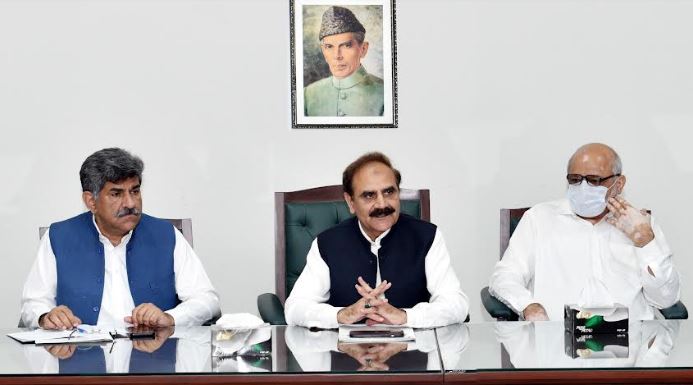
PARC convenes VEC meeting on oilseed crops

ISLAMABAD: /DNA/ – Pakistan Agricultural Research Council (PARC) Variety Evaluation Committee meeting on oilseed crops was held in two sessions. More than 30 candidate varieties/hybrids of canola, mustard and sunflower were selected. Proposals submitted for evaluation during the meeting session, 29 hybrids/varieties of local and imported origin were proposed for commercial cultivation according to their potential ecology. Out of these, 04 hybrids/varieties are Rapeseed/canola, 17 mustard varieties and 08 hybrids of sunflower. Senior Technical Representative of Ministry of National Food Security and Research, Heads of Provincial Seed Council, Provincial Head of Agriculture and Allied Research, DGNARC and representatives of private seed sector participated in the meeting.

Chairman of Pakistan Agricultural Research Council Dr. Ghulam Muhammad Ali has said that according to the instructions and vision of the Prime Minister, the work on alternative oil crops for the export of edible oil is going on rapidly and the successful experiments will lead to a record increase in production. In his opening remarks, Chairman PARC highlighted the importance of Variety Evaluation Committee and said that this forum ensures high production and availability of variety in the country by recommending different types of hybrids. He highlighted the importance of seeds of oilseeds and the efforts made to increase the domestic production of various oilseeds to ensure the availability of seeds. In this regard, he appreciated the efforts of PARC and NARS to introduce new types and hybrids of seeds in the country and said that local production of seeds of various species including oilseeds would help the government to import batches on an annual basis. There will be savings in terms of expenses incurred. Chairman PARC urged the concerned experts and scientists to focus on local production of seeds, especially oilseeds and production of hybrids. He further encouraged the public and private sector working together with PARC to develop the seed sector in Pakistan.

Dr. Imtiaz Hussain, Member, Plant Sciences Division, PARC, appreciated the role of public and private sector in providing hybrid varieties for oilseeds to farmers, which are helping to improve seed productivity in Pakistan.

ICCI’s three-days Property and Housing Expo ended on high note

Islamabad: /DNA/ – The 2nd edition of 3-days “ICCI Property, Housing and Construction Expo 22” has ended on a high note as it attracted huge footfall and produced very successful results for the exhibitors. The Expo was organized from September 9-11, 2022 at Pak-China Friendship Centre in which around 100 exhibitors put up their stalls to showcase the potential of their projects. Many features were added to this year’s edition of the Expo including a furniture pavilion, food court and kids’ arena, which remained the focus of attraction to the visitors. All allied industries including steel, marble, cement, construction machinery, sanitary ware, electrical work, paints, hardware, ceramic tiles & different items, solar systems, wood flooring, interior design products, kitchen accessories etc. also participated in the Expo and increased the brand exposure of their high quality products.

On the last day of the Expo, many dignitaries including Senator Seemee Ezdi, Tariq Mehmood Murtaza Chairman Rawalpindi Development Authority, H.E. Atadjan Movlamov Ambassador of Turkmenistan & Dean of the Diplomatic Corps with spouse and H.E. Adam M. Tugio Ambassador of Indonesia visited the Expo.

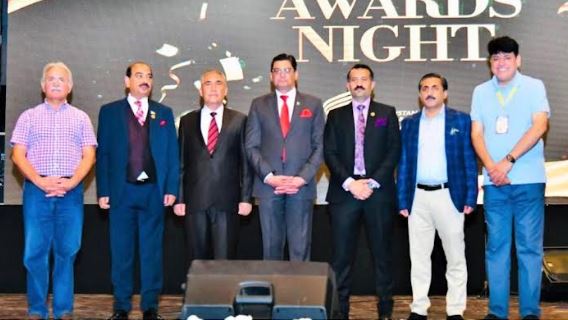
The Expo concluded with a Grand Awards Night in which awards were given to the exhibitors. Muhammad Shakeel Munir, President, Islamabad Chamber of Commerce and Industry was the Chief Guest of the closing ceremony. He distributed awards among the exhibitors.

Speaking at the occasion, Muhammad Shakeel Munir said that ICCI is working actively for the revival of economy to enhance the confidence of businessmen and investors. He said that as a first step, ICCI had organized an All Parties Conference for Revival of Economy which was well attended by the major political parties to discuss the future roadmap of the economy. He said that organizing Expo was the 2nd step for economic revival and it proved very successful for the exhibitors as it pulled huge crowds of people to their stalls. He expressed thanks and gratitude to Allah SWT & his parents for achieving this milestone. He thanked the Ministry of Housing & Works and Naya Pakistan Housing & Development Authority for supporting ICCI in the Expo. He also thanked Jamshaid Akhtar Sheikh Senior Vice President, Muhammad Faheem Khan Vice President ICCI, former Presidents, Executive Body, Sheikh Amir Waheed Convener Expo Committee & his team, Ch. Masood Convener ICCI Real Estate & Developers Committee & ICCI staff for their cooperation and support to organize the Expo successfully. He also thanked the exhibitors for their active participation in the Expo and making it very successful.

Sheikh Amir Waheed Convener ICCI Expo Committee & Ch. Masood Convener ICCI Real Estate & Developers Committee, Muhammad Naveed Malik former SVP ICCI and others also spoke at the occasion and said that ICCI Property, Housing and Construction Expo would be made an annual event and more features would be added to it to make it attractive and successful for the exhibitors and visitors. 

Sri Lanka crowned Asian champions for 6th time as profligate Pakistan collapse at final hurdle

DUBAI: A horror start to their run chase and laborious batting in the middle overs consigned Pakistan to a 23-run defeat at the hands of Sri Lanka in the final of the Asia Cup 2022 at the Dubai International Cricket Stadium on Sunday.

The Green Shirts had a brilliant start to their evening, having won the all-important toss and deciding to field first — a trick that had worked for them every single time in the tournament until tonight.

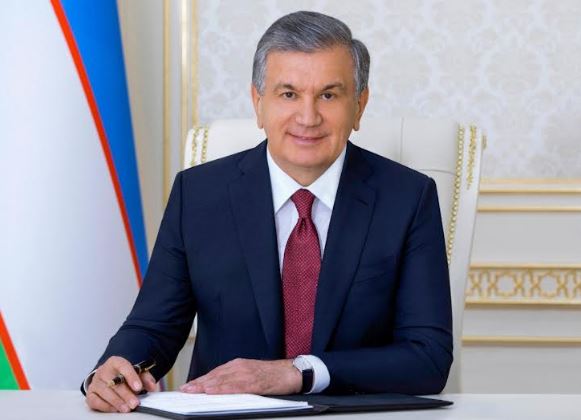
The SCO Samarkand Summit: Dialogue and Cooperation in an Interconnected World

Shavkat Mirziyoyev

Uzbekistan’s chairmanship in the SCO has fallen on a dynamic period, fraught with various events and trends – the period of the «historical rift», when one era comes to an end and another begins – thus far unpredictable and unknown.

The modern system of international cooperation, based on the universal principles and norms, begins to falter. One of the main reasons for this is a deep crisis of trust at the global level, which, in turn, provokes a geopolitical confrontation and the risk of reviving the bloc thinking stereotypes. This process of mutual alienation complicates the return of the world economy to its former course of development and the restoration of global supply chains.

The ongoing armed conflicts in different parts of the world destabilize trade and investment flows, exacerbate the problems of ensuring food

and energy security.

Along with this, global climate shocks, growing scarcity of natural and water resources, decline in biodiversity, spread of dangerous infectious diseases have exposed the vulnerability of our societies as never before. They lead to destruction of existential common goods, threatening the basis of people’s life and reducing sources of income.

In these circumstances, it is obvious that no country alone can hope to avoid or cope with these global risks and challenges.

There is only one way out of the dangerous spiral of problems in an interconnected world where we all live today – through a constructive dialogue and multilateral cooperation based on consideration and respect to the interests of everyone. It is exactly at the time of crisis, when all the countries – whether they are large, medium or small by size – must put aside their narrow interests and focus on such mutual interaction, unite and multiply the common efforts and possibilities to counter the threats and challenges to peace, security and sustainable development that are related to each of us.

The effective international cooperation makes the world more stable, predictable and prosperous. This is the most viable, accessible and closest way to solving common problems of our time as well as a universal insurance policy against the future challenges and shocks.

A Model for Successful Regional Cooperation

The international cooperation that lays in the interest of everyone is impossible without multilateral institutions. Despite the certain shortcomings, they continue to serve as the most important agents of interaction between the countries – at the regional and global levels. The international and regional organizations help countries to overcome the differences and strengthen mutual understanding, to develop political and economic cooperation, to expand trade and stimulate cultural and humanitarian exchanges.

These are the goals and objectives that are pursued by one of the youngest multilateral institutions – the Shanghai Cooperation Organization (SCO). In fact, it is a unique interstate structure that has managed to unite countries

with different cultural and civilizational codes, their own foreign policy guidelines and models of national development. In a relatively short historical period, the SCO has come a long way, becoming an integral element of the modern global political and economic world order.

Today, the SCO family is the world’s largest regional organization, which has united a huge geographical space and about a half of the population of our planet.

The basis for the SCO’s international attractiveness is its non-bloc status, openness, non-targeting against third countries or the international organizations, equality and respect for the sovereignty of all participants, refusal to interfere in the internal affairs, as well as prevention of political confrontation and unhealthy rivalry.

The SCO’s success concept is the promotion of multifaceted cooperation through ensuring regional security.

In fact, the Shanghai Cooperation Organization is called upon to become a pole of attraction without dividing lines, in the name of peace, cooperation and progress.

Therefore, the number of states that are ready to cooperate with the SCO is growing every year, and  this is especially noticeable in the context of the transformation of the modern system of international and regional relations.

The economic value of the SCO is enhanced by the self-sufficiency of its space, where there are dynamically developing economies of the world with huge human, intellectual and technological potential, and the existence of large volumes of unused natural resources.

Today, the total GDP of the SCO member states has reached about a quarter of the global figure. This is already a very solid contribution to the global sustainable development from a regional organization that has just crossed its 20-year threshold.

In a world with the new challenges and opportunities, the SCO has excellent prospects for transformation and growth, not only through quantitative replenishment, but also through the opening of new strategic vectors. These are transport and connectivity, energy, food and environmental security, innovations, digital transformation and green economy.

Uzbekistan’s Chairmanship: towards Common Success through Joint Development

Accepting responsible mission of Chairmanship in the SCO, the Republic of Uzbekistan has relied on the strategy of advancing the development of the Organization by opening up new horizons for cooperation and launching usage of untapped reserves that each of its members has.

Our slogan is «The SCO is strong if each of us is strong». Implementing this, we have made serious efforts to make the Organization even stronger from the inside and more attractive from the outside to our international partners.

At the platforms of more than eighty major events held during the year, a comprehensive agenda was formed for the SCO – starting from the issues of further expanding cooperation in the security, strengthening transport and economic connectivity and positioning the Organization in the international arena up to the search for new ways and points for development.

All these promising directions of cooperation for the SCO at the new stage of its historical development are reflected in more than thirty conceptual programs, agreements and decisions prepared during our chairmanship period.

I would say even more. Uzbekistan’s chairmanship in the SCO is a logical continuation of an active and open foreign policy course that has been pursued by our country in the last six years. This policy is embodied, above all, in Central Asia, the geographical core of SCO, where positive and irreversible processes of strengthening good-neighborliness and cooperation are now taking place.

All SCO member states are our closest neighbors, friends and strategic partners.

The Chairmanship has given us a good opportunity to further strengthen multilateral collaboration and expand bilateral cooperation with each of them, as well as set new targets for even deeper partnership. 

I am full of confidence that it is important and necessary for the SCO to share its success story with Afghanistan. This country is an integral part of the larger SCO space. The Afghan people need good neighbors and their support now more than ever. It is our moral obligation to extend a helping hand, to offer them effective ways of overcoming the years-long crisis by promoting socio-economic growth of the country, its integration into regional and global development processes. 

Afghanistan that has played for centuries the role of a buffer in the historical confrontations of global and regional powers, should try on a new peaceful mission of connecting Central and South Asia.

The construction of the trans-Afghan corridor could become a symbol of such mutually beneficial inter-regional cooperation. It is also important to understand that by implementing joint infrastructure projects such as the Termez – Mazar-i-Sharif – Kabul – Peshawar railroad we are not just solving socio-economic, transport and communication problems, but also making a significant contribution to ensuring regional security.

By bringing our positions closer to each other, together we can develop a new SCO agenda for a more peaceful, stable and prosperous Afghanistan. Only in this way can we create a truly stable and sustainable SCO space with an indivisible security.

 «Samarkand Spirit» – the Embodiment of Cooperation, Mutual Understanding and Friendship

After a three-year pandemic pause that has caused serious disruption in trade, economic and industrial ties, the countries and peoples of the SCO need to communicate directly.

The ancient city of Samarkand, the jewel of the Great Silk Road, is ready to welcome the leaders of fourteen countries with new breakthrough proposals and initiatives designed to serve for good and prosperity of the SCO and each of its members.

There is no doubt that this legendary city will open another chapter of the SCO success story. Glorious historical heritage of Samarkand will contribute to this. 

For many centuries, this city has been threading together countries from Europe to China, merging North and South, East and West into a single node.

Historically Samarkand has been a melting pot of ideas and knowledge, that was “cooking” a common goal of living better, being more successful and becoming happier. And everybody has known that the friendly neighbors are half of your wealth, you yourself are a blessing for them, because you know that cooperation, trade, oeuvre, science, art and the best ideas do good, enrich and bring nations together. 

These unique qualities of Samarkand, which today has a modern and dynamically developing infrastructure, turning it into the most suitable and demanded platform for joint discussions, searching for necessary responses to regional and global challenges.

The integrity and interconnectivity of mankind are such that most challenges require joint work not only at the regional level, but also at the global arena.

Relying on the experience of our many years of joint work, we are confident that the Samarkand SCO summit will set an example of how we can launch a new, inclusive dialogue based on the principles of mutual respect, trust and constructive cooperation for the sake of common security and prosperity.

Samarkand can become the platform that can unite and reconcile states with different foreign policy priorities.

Historically, the world looked upon from Samarkand has been seen as single and indivisible, rather than fragmented. This is indeed the essence of the unique phenomenon of the «Samarkand spirit», which can serve as the basis for a fundamentally new format of international interaction, including within the Shanghai Cooperation Organization.

The «Samarkand spirit» is designed to naturally complement the very «Shanghai spirit», thanks to which more than 20 years ago our countries decided to create a new and eagerly sought organization.

Therefore, we are confident that in Samarkand we shall witness the birth of a new stage in the life of SCO – the number of its members will grow, and its future agenda will be formed, and this is highly symbolic.

We are full of optimism and are convinced that the decisions of the upcoming summit of Shanghai Cooperation Organization will make a feasible contribution to strengthening the dialogue, mutual understanding and cooperation both at the regional level and on a global scale.

Shavkat Mirziyoyev is the President of the Republic of Uzbekistan

IPU President meets Chairman Senate Muhammad Sadiq Sanjrani

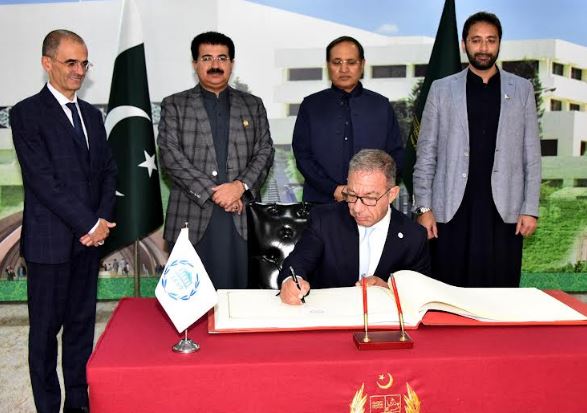
ISLAMABAD, SEP 11 /DNA/ – Chairman Senate Muhammad Sadiq Sanjrani Welcomed the Inter-Parliamentary Union President Duarte Pacheco at the Parliament House. IPU President is on his visit to Pakistan to express solidarity with Parliament, Government and People of Pakistan especially the flood affectees of Pakistan.

Chairman Senate called upon President IPU to use his good offices in order to garner support and appeal to all the member countries to come forward for Pakistan’s assistance.

The Chairman said that the floods caused tragic losses, and left millions homeless,  and shelterless, he also informed that crops worth millions were destroyed and the entire
infrastructure damaged.
After immediate relief work the complete rehabilitation of the flood affectees will be the main challenge” he added “huge funds will be required for the rehabilitation of the affectees”. He proposed that the IPU President should make contact with the IPU member countries, donors and other institutions in this regard so that the relief and rehabilitation works can be accelerated.

In the meeting, discussions were held on making the Inter-Parliamentary Union more dynamic and increasing institutional cooperation. Chairman Senate Muhammad Sadiq Sanjrani said that Pakistan is determined to promote peace, democracy, human rights, gender equality and sustainable development as per the mission of IPU.  Pakistan has high expectations from IPU and IPU has to play its role for resolution of Kashmir and Palestine issue.

The Chairman Senate said that amongst the problems faced at global level, Climate change is becoming very important. The climate change is affecting our economic, developmental and social aspects. The problem is of global nature and to control it, global efforts will have to be made.  The Chairman Senate said that the recent floods in Pakistan have made the world aware that climate change poses serious threats to the economy aswell. Chairman Senate also suggested to constitute a working group on climate change at IPU. Chairman Senate said that Pakistan is ready to provide all kinds of support to the proposed working group and to establish the secretariat of the same in Pakistan. President IPU appreciated the proposal and assured consideration.

Sanjrani said that the effects of climate change in Pakistan are severe and the recent floods are unprecedented in human history. People, civil societies and institutions are coming forward to contribute in the relief work.  

Chairman Senate said that we are grateful to the international community, but there is a need to speed up the relief work and Pakistan will continue to play its role for the promotion and development of peace at the global level.

Chairman senate also hosted a dinner in the honor of visiting delegate. Addresssing the gathering, both the leaders expressed their resolve to further boost institutional cooperation. Chairman Senste highlighted the importance of institutional cooperation at a time when Pakistan is bearing the brunt of Climate Change and its affects. IPU President assured his all out cooperation to generate much needed support for Pakistan in this hour of need.

PM expresses gratitude to UAE, Turkish leadership

Khayam Abbasi

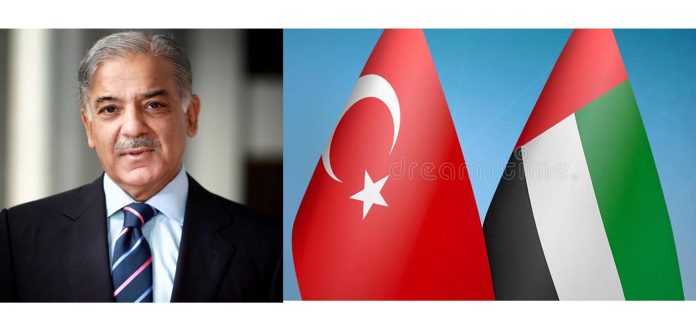
ISLAMABAD, Prime Minister Muhammad Shehbaz Sharif on Sunday thanked United Arab Emirates Minister for Culture, Youth and Community Development Sheikh Nahyan bin Mubarak Al Nahyan for his generous donation of $10 for the flood victims of Pakistan.

In a telephonic conversation, the prime minister said that the Pakistani nation would always remember his huge support as he had proved his immense affection for the people of Pakistan and expressed compassion for humanity.

On the individual level, so far, it was the biggest financial assistance provided by any person for the flood-affected people of Pakistan, PM Office Media Wing said in a press release.

The prime minister observed that the amount would be of great help in the rescue, relief and rehabilitation efforts.

He also informed the UAE minister about the historic devastation caused by the recent floods and the government’s steps in response to the natural disaster.

UAE minister Sheikh Nahyan expressed his grief over the human and financial losses and expressed his solidarity with Pakistan in this difficult situation.

Prime Minister Shehbaz Sharif also spoke to Turkish President Recep Tayyip Erdogan.

Expressing his gratitude to President Erdogan and the people of Türkiye for extending humanitarian relief assistance to Pakistan in form of immediate dispatch of tents, emergency food items, and medicines via 12 Turkish military aircraft, 04 ‘Goodness Trains’ and 02 Turkish Red Crescent Trucks, the Prime Minister exclaimed that this is in the truest tradition of Pakistan-Türkiye exemplary relationship.

He also expressed his gratitude for the visit undertaken on 1 September 2022, as a gesture of solidarity and support, by Hon. Suleyman Soylu, Minister of Interior, Hon. Murat Kurum, Minister for Environment and Urbanisation, the Head of AFAD and representatives of TOKI to see the devastation caused by flash floods for themselves.

Sensitising President Erdogan of the havoc caused by the riverine floods, the Prime Minister stated that as per initial estimates, the floods are likely to reduce Pakistan’s GDP by over 2 percentage points. He underlined that the ongoing floods have devastated millions of acres of standing crops, houses and critical infrastructure in the country. 

Prime Minister Sharif conveyed that Pakistan was grappling with the immediate challenge of averting an imminent food insecurity in the country as well as providing for rescue and rehabilitation of the victims of this climate-induced calamity.

The Prime Minister briefed President Erdogan about the ongoing relief activities by the Government, and expressed his intention to seek Türkiye’s assistance in overcoming the food shortage as well as in undertaking reconstruction and rehabilitation of the flood-affected areas. 

In the bilateral context, Prime Minister Sharif reaffirmed commitment to boost relations in all areas. 

BISP disburses over Rs. 23 billion among flood hit families in shortest time

ISLAMABAD, Sep 11 (DNA): Benazir Income Support Programme (BISP) has so
far disbursed over Rs. 23 billion among the flood-hit families in a
short span of time under the Flood Relief Cash Assistance, to mitigate
the sufferings of flood affected population.

Emerged as the most effective and reliable social protection
intervention during the recent floods devastation, the BISP is executing
the challenging task of disbursing cash relief of Rs. 25,000 per family
to the flood affected families in devastated areas.

The task of disbursing Flood Relief Cash Assistance among the flood-hit
people was assigned to the BISP by the Prime Minister, Shehbaz Sharif
which is being carrying out speedily.

Under the leadership of Federal Minister of Poverty Alleviation and
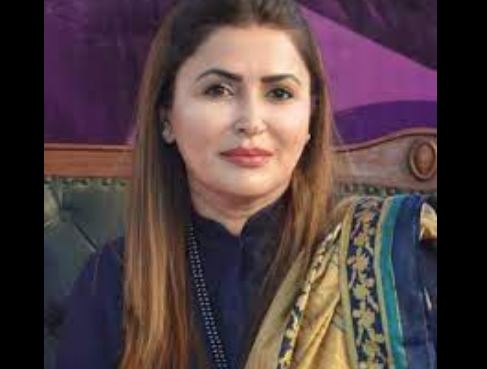
Social Safety and Chairperson BISP, Shazia Marri, BISP rolled out its
operations in the flood affected areas within no time and presently the
flood relief activities are operational in 69 districts by establishing
more than 400 payment sites.

Since August 19 till September 11 (Sunday) 3:00 pm, BISP has disbursed a
total amount of Rs. 23,063,125,000 has been disbursed among 922,525
affected families under this programme.

A total of 112,301 affected families have received Rs.2,807,525,000 in
Balochistan; 548,979 families have received Rs.13,724,475,000 in Sindh;
114,029 families have received Rs. 2,850,725,000 in Khyber Pakhtunkhwa
and 147,216 families have received Rs.3,680,400,000 in Punjab.

Azra Bibi from Qambary, Swabi said, “My husband is a factory worker. I
have seven children, four sons and three daughters. My house is made of
mud so rain is a big problem and whenever it rains, water gets inside
our house. Now my house has been destroyed due to the rains”

“I got a message from BISP to come and collect flood relief money from
their center. I borrowed some money for commute and reach BISP Center
where they checked my CNIC and got my biometric. After all the
clearance, they gave me the flood relief money of Rs. 25,000. With this
money, we will fulfill our basic needs as we don’t have the groceries at
home. I thank Benazir programme with all my heart; May Bless her”, she
said.

Razzaq Mehmood, Deputy Director BISP who is supervising the cash
disbursement process at Flood Relief Camp set up in Government Boys
School, Taunsa Sharif said the camp has been established on the
directions of Chairperson BISP, Shazia Marri to disburse Rs. 25,000
among the flood affected families.

He said that the payment process is going on smoothly and the staff is
vigilantly extending all possible support and guidance to the visitors.

Irfana, mother of two children visited the same camp for receiving her
payment said, “My husband is a piece rate worker. The recent flood has
completely destroyed our house and we have nothing to survive”.

She thanked the government and BISP for providing cash assistance of
Rs.25, 000 through which she intends to buy ration to feed her family.

Amina Bibi from Sukkur, said, “My house is made of mud and has been
destroyed due to the floods like other houses in surroundings. My
husband is suffering from illness. I thank BISP for providing Rs. 25,000
much-needed cash relief which I would spend on buying medicine of my
husband and ration”.

All the payment centers are kept open on holidays for the disbursement
of payment to the affectees. The administration of BISP has directed the
concerned staff present at the campsites to fully cooperate and
facilitate the people in their respective regions.

The affected families can send their CNIC number to 8171 for
registration in Flood Relief Cash Assistance program and upon receiving
payment message they can visit their nearby campsite to receive their
payment. A control Room has also been established at BISP headquarters
to ensure smooth payments.

It is also worth mentioning that the federal minister, Shazia Marri has
announced that the flood affected pregnant mothers and children will be
covered under the Benazir Nashonuma Programme in collaboration with
World Food Programme (WFP).

For this purpose, an additional amount of one billion rupees has been
allocated for the flood affected mothers and children apart from the
existing beneficiaries.

Prime Minister Shehbaz Sharif has also announced to increase the flood
relief assistance under BISP from the existing Rs. 28 billion to Rs. 70
billion in view of gross damages of lives, infrastructure and crops in
the wake of flash floods.

Stay Connected

64FansLike
60FollowersFollow

Latest Reviews

Exchange Rates

USD - United States Dollar
EUR
1.17
GBP
1.34
AUD
0.67
CAD
0.73