Home Blog Page 152

‘8-0’: Pakistan recalls downing Indian jets during May clash

Deputy Chief of Air Staff Projects Air Vice Marshal Tariq Ghazi on Wednesday said the Pakistan Air Force (PAF) achieved an “8-0” outcome against the Indian Air Force (IAF) during Marka-e-Haq, saying at least eight Indian jets were shot down during the clashes in May last year

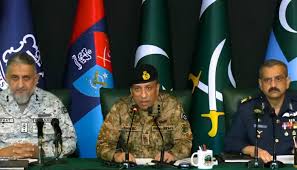
Ghazi provided a detailed rundown of the Marka-e-Haq operation on its first anniversary in a press conference alongside Inter-Services Public Relations Director General (ISPR DG) Lieutenant General Ahmed Sharif Chaudhry and Rear Admiral Shifaat Ali Khan.On May 6-7 last year, India launched an unprovoked attack on Pakistan on May 6, following an attack on tourists in the Indian Illegally Occupied Jammu and Kashmir’s Pahalgam town.

Pakistan, during the 87-hour conflict, downed eight Indian fighter jets, including French-made Rafale, and dozens of drones.The war between the two nuclear-armed nations ended on May 10 with a ceasefire agreement brokered by the US.

Ghazi said today’s briefing aimed to refresh memories regarding the operation, while mocking the “adversary” for changing its narrative because “they are trying to understand what has happened”.

He said PAF Chief Zaheer Ahmad Sidhu spearheaded the formulation of the operational response and later personally led the execution of the PAF strategy during the confrontation.

Speaking about the operation, Ghazi said the Pakistan Air Force immediately maintained a “defence and strong posture” alongside the highest level of alert with full-spectrum monitoring, including surveillance of enemy communications.”We adopted a strong air defence posture to thwart any hostile adventure through combat air patrols, scrambles, and eyes on the sky all the time,” he said during the press conference.

Ghazi said the PAF integrated and operationalised its multi-domain assets during the operation, describing it as the first such implementation in warfare by the force.

He said the PAF observed aggressive IAF deployments, including the positioning of key assets and offensive weapon systems across the country alongside concealed deployments.Ghazi said the PAF continuously monitored “each and every move” made by the IAF throughout the course of the confrontation.

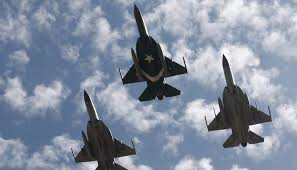
Providing details of the “8-0” outcome, Ghazi said Pakistan shot down eight Indian fighter jets — four Rafale jets, one Su-30 aircraft, one MiG-29 aircraft, one Mirage 2000 aircraft and one “expensive” multi-role unmanned aerial system.

He further added that several additional Indian aircraft sustained damage during the confrontation to such an extent that they could not be repaired afterwards.

‘Avatar’ hit with controversy as actress files lawsuit over Neytiri character

Q’orianka Kilcher, best known for playing Pocahontas in The New World, is now in a legal battle with James Cameron after claiming her recent claims.

The star said that her face was used as inspiration for a major character in Avatar without her permission.Kilcher added that the look of Neytiri, the famous character played by Zoe Saldana, was partly based on her appearance from the 2005 movie The New World, where she played Pocahontas.

As per to that lawsuit, Cameron’s team allegedly used her facial features during the design process but never told her or offered any payment.

Kilcher went on to add that the situation feels very upsetting to her now as as she believes that her identity was used in a way that crossed a line, especially because the film series often speaks about respecting Indigenous culture.

The lawsuit, however, also mentions a meeting that happened in 2010 after the first Avatar movie came out, where she claims that Cameron showed her a signed drawing of Neytiri and said that she was an inspiration for the character’s look.

A past interview clip that recently resurfaced online also reportedly pushed her to take legal action.

Q’orianka Kilcher is now asking for at least $1.5 million in damages. Moreover, Cameron and the studios involved have not publicly responded in detail just yet.

No space for war between nuclear neighbours, says military on Marka-e-Haq anniversary

Pakistan’s military said there was “no space for war” between two nuclear neighbours as the country marked the first anniversary of Marka-e-Haq, while reaffirming its commitment to peace, regional stability and national defence.

The remarks were made by Inter-Services Public Relations (ISPR) Director General Lieutenant General Ahmed Sharif Chaudhry as he addressed a press conference along with Rear Admiral Shifaat Ali Khan and Air Vice Marshal Tariq Ghazi.

On May 6-7 last year, India launched an unprovoked attack on Pakistan on May 6, following an attack on tourists in the Indian Illegally Occupied Jammu and Kashmir’s Pahalgam town.

Pakistan, during the 87-hour conflict, downed eight Indian fighter jets, including French-made Rafale, and dozens of drones.

The war between the two nuclear-armed nations ended on May 10 with a ceasefire agreement brokered by the US.

The more than 80-hour war eventually stopped on May 10 after intervention from the United States, which saw multiple Indian jets and drones being downed, and bolstering Pakistan’s image as a “net security stabiliser”.

“We welcome you to ISPR on this happy day,” Lt Gen Chaudhry said at the outset of the press conference.

He noted that Pakistan’s military had defeated an enemy “five times larger than itself,” and further described India as a “terrorist state”. 

“Today, we are not going to dwell a lot on what happened … We are going to spend more time from May 2025 to May 2026,” he said, adding that they would put in front of the nation “10 strategic consequences” of the conflict.

‘Strategic consequences’

First of the strategic consequences is, the ISPR DG said, the Indian narrative of painting Pakistan as a source of terrorism stood buried forever.

“International community, as a consequence of Marka-e-Haq, came to know and now fully understand that Pakistan, as alleged by Indians over a period of time, is not a perpetrator but a victim of Indian sponsored terrorism,” he noted.

Chaudhry noted that India attempted to portray, without evidence, that Pakistan had perpetrated terrorism in India. “It had been one year since the Pahalgam incident, yet the questions that Pakistan had asked remain unanswered,” he said.

“How come an FIR was registered within 15 minutes of the incident… Where is the evidence? The whole world, including sensible Indians, is asking who is behind the attack. Nobody buys this… You are the biggest terrorist. Nobody listens to them, nobody believes them,” he added.Moving on to the second consequence, he said that Marka-e-Haq consolidated Pakistan as the net security stabiliser in the region, “as per the vision of the founding father, and the vision was ‘peace within and without”.

He said that Marka-e-Haq showed who was controlling and dominating the escalation, adding that India escalated the conflict based on a “lie and fabricated drama” and how maturely Pakistan and its armed forces handled that. “The biggest ambassador of stability in the region was Pakistan and its leadership,” he added.

Referring to the third strategic consequence, Lt Gen Chaudhry said it was related to “our eastern neighbour,” saying it was the “politicisation of Indian military leadership and militarisation of Indian political leadership.”

“You heard their air chief marshal a few months after Marka-e-Haq saying ‘I got to know today that even we downed some planes’ […] That is politicisation of the military leadership … Why are you trying to make jokers out of your admirals, generals and marshals? Don’t do that.”

On the other hand, he said: “We have placed the facts as they are.”

Furthermore, he criticised the Indian politicians for appearing like “war mongers” and giving statements based on hatred. The DG ISPR noted that the politicisation of the military and militarisation of politics was “dangerous”.

Meanwhile, Chaudhry said that the fourth strategic consequence was the global acknowledgement of Indian efforts to externalise its internal problems and internalise its external problems while using terrorism as a “state tool”.

He pointed out that India’s internal problems included the repression of minorities and Kashmiris. “This comes from a false sense of entitlement and this hubristic attitude.”

“You do not want to resolve your internal problems, and you externalise them by levelling allegations that Pakistan was behind terrorism in the neighbouring country… You need to address them politically and internally,” he added. 

He pointed out that Kashmir is not India’s internal problem, but an internationally recognised dispute. “It’s not your internal problem for you to make demographic changes there … you cannot do that.”

He further said that “they [Indians] were even behind terrorism in their own country and would then accuse others”. However, he said, Marka-e-Haq changed the world recognised how they operated.

Moving on to the fifth strategic consequence, the ISPR DG said, Marka-e-Haq exposed the “true face of the Indian media and its discredited information operations”.

He criticised the Indian authorities for “shutting down Pakistani media and social media” during Marka-e-Haq and this practice was still ongoing. “It cannot solve the problem… There is only one advice to India, which is to speak the truth.”

“That’s what Pakistan did… The only thing that can survive in today’s information domain is truth. Tell people the truth. But somehow the Indians think they can work their way around lies. It doesn’t work anymore,” he added.

Chaudhry said that the sixth consequence was the “transformed character of warfare”, noting that this covered multi-domain operations, non-contact warfare, synergy, proxies and information.

He explained that warfare was not limited to borders anymore, adding that it is fought on land, in the sea, in the air, in cyberspace and it is cognitive as well.

“By God blessing, Pakistan’s armed forces were prepared to fight against India during Marka-e-Haq in all those domains. We were prepared back then, and we are prepared today as well,” he added.Furthermore, Lt Gen Chaudhry said that the seventh consequence was Pakistan’s proven potential and the resilience to combat multifaceted challenges. “That is another very important consequence that the nation has gone through… in simple words, it is the belief in ourselves,” he said.

Coming to the next, the ISPR DG said, the eighth was the loud and clear establishment of deterrence, reaffirmation of the fact that there is no space for war between two geographically contiguous nuclear states.

“Anyone who thinks there is space for war between two nuclear neighbours is crazy. That is madness. Only a madman can think about. You want to do it, then there should be no doubt about our resolve,” he added.

He added that the ninth consequence was the recognition of Pakistan as a “geopolitically significant and responsible middle power” at the global stage. “The politico-military leadership, politico-military diplomacy and respect are the strategic consequences of Marka-e-Haq,” he added.

He said that the last, but most important consequence, was the unshakeable synergy between the people, the government and the armed forces, “which we call the Bunyan-um-Marsoos effect”.

‘Pak-Saudi ties deep, multidimensional’

Speaking about Pakistan and Saudi Arabia ties, Lt Gen Chaudhry said that Islamabad and Riyadh share deep and multidimensional relations, while reaffirming Islamabad’s commitment to the kingdom’s security.

Replying to a question, the ISPR DG said Pakistan values its longstanding ties with Saudi Arabia and considers any threat to the kingdom a matter of concern for Pakistan as well.“Pakistan and Saudi Arabia’s relations are very deep and multidimensional. Any threat to Saudi Arabia is also a threat to us,” he added.

In September last year, Pakistan and Saudi Arabia signed a “Strategic Mutual Defence Agreement” in Riyadh, pledging that any attack on either nation would be treated as an act of aggression against both.

Last month, Pakistan sent fighter jets and other military forces to Saudi Arabia to boost security under a defence pact between the two countries, the Saudi defence ministry said in a statement.

‘Dialogue is politicians’ responsibility’

The chief military spokesperson, while responding to a question on internal politics, said that political dialogue is the responsibility of political parties, stressing that they must engage with each other to resolve issues.

He said the military is not a stakeholder in Pakistan’s political affairs and does not represent any particular sect, creed, language or political ideology.

“We are not a stakeholder in the politics of Pakistan, nor do we represent any specific creed, sect, language or political ideology,” Lt Gen Chaudhry said.

He added: “We come from the people of Pakistan and the people of Pakistan come from us.”

Encouraging political reconciliation, he said: “We say resolve your issues through dialogue. Who stops them? It is none of our business.”

‘Afghanistan not a rational player’

The ISPR DG highlighted Islamabad’s role in facilitating US-Iran talks aimed at ending the Middle East war, describing Pakistan as a “rational state”, while contrasting it with Afghanistan’s conduct.

Afghanistan does not act as a rational player or function like a state, he added.

Lt Gen Chaudhry questioned whether any rational actor makes terrorism the main source of a country’s income or denies its communities the right to equal development and expression.

The ISPR further said Operation Ghazab lil-Haq in Afghanistan is ongoing, adding it is linked to actions of the Afghan Taliban regime and not directed against Afghanistan or its people.

He said Pakistan’s operation is part of the national counter-terrorism response, noting a decline in incidents and an increase in militant fatalities.

‘Historic conflict’

Addressing the presser, Rear Admiral Ali described Marka-e-Haq as a “historic and memorable” conflict, saying India had long projected itself as a major naval power with a large defence budget and blue-water navy ambitions.

He questioned why the Indian Navy failed to confront Pakistan directly during the conflict.

He said India attempted to deploy naval vessels in the northern Arabian Sea to target Pakistan’s naval assets and disrupt maritime trade.However, he added that the Pakistan Navy’s strategy ensured ports, installations and sea routes remained fully operational.

Rear Admiral Ali recalled that the Pakistan Navy and PAF were prepared to target India’s aircraft carrier Vikrant.

‘8-0’

Speaking for his part, Deputy Chief of Air Staff Projects Air Vice Marshal Tariq Ghazi provided a brief rundown of the Marka-e-Haq to refresh the memories, resolving the mocking of the “adversary” for changing the storyline as “they are trying to understand what has happened”.

“PAF chief Zaheer Ahmad Sidhu spearheaded the formulation and later led its execution of PAF’s operational response,” he said.

Air Vice Marshal Ghazi said that eight Indian aircraft were shot down during Operation Bunyan-um-Marsoos.

Giving details, he said that four Rafale jets, one Su-30, one MiG-29, one Mirage 2000 and one “expensive” multi-role unmanned aerial system had been shot down. 

Speaking of the operation, he noted that the air force had to immediately maintain “defence and strong posture” alongside the highest level of alert with full spectrum monitoring that included the enemy’s communication.

“We adopted a strong air defence posture to thwart any hostile adventure through combat air patrols, scrambles, and eyes on the sky all the time,” he said, adding that the PAF, for the first time in warfare, integrated and operationalised its multi-domain assets.

“When we witnessed that the IAF [Indian Air Force] made aggressive deployment, which included deployment of key assets and offensive weapons systems all across the country and concealed its key assets,” he said, but added that the PAF was monitoring each and every move.

Trump reversed Hormuz ship escort plan after Saudi blocks US base, airspace access: report

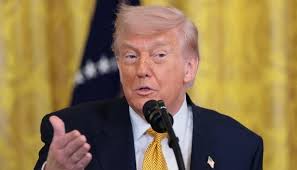
US President Donald Trump abruptly halted a naval operation, which he called “Project Freedom”, aimed at escorting ships through the Strait of Hormuz after Saudi Arabia suspended Washington’s access to key military bases and airspace needed for the mission, NBC News reported, citing two US officials.

According to the report, Trump announced the operation over the weekend as part of efforts to break Iran’s blockade of the strategic waterway, but the move reportedly angered Gulf allies, particularly Saudi Arabia, which was reportedly not consulted beforehand.NBC News reported that Riyadh responded by informing Washington it would no longer permit US military aircraft to operate from Prince Sultan Airbase or transit through Saudi airspace in support of the mission. The restrictions reportedly forced the White House to pause the operation to restore military access to the region.

Furthermore, the US officials told NBC that a call between Trump and Saudi Crown Prince Mohammed bin Salman did not resolve the issue, forcing the president to pause Project Freedom in order to restore US military access to the critical airspace.

The US military maintains fighter aircraft, refuelling tankers and air defences at Prince Sultan Airbase in Saudi Arabia.

Other Gulf allies, including Qatar, were also reportedly surprised by the announcement, with NBC reporting Doha was contacted only after the operation had already begun.

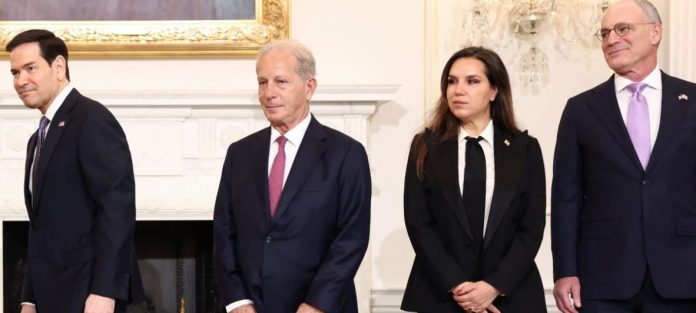
A Saudi source told NBC News that Trump and the crown prince “have been in touch regularly.” Saudi officials were also in touch with Trump, Vice President JD Vance, US Central Command and Secretary of State Marco Rubio, the source added.

The source also said Riyadh supported Pakistan’s diplomatic efforts aimed at brokering a deal between Iran and the United States to end the conflict.

Asked whether the announcement of Project Freedom caught the Saudi leaders by surprise, the Saudi source said: “The problem with that premise is that things are happening quickly in real time.”

NBC further reported that a White House official rejected suggestions that regional allies were blindsided, insisting they had been informed in advance.

A Middle Eastern diplomat also told NBC News that Oman was only consulted after Trump publicly announced the operation, though Muscat was “not upset or angry” over the matter.

According to the report, the US military had already begun preparing additional naval deployments in the Gulf before the operation was suspended roughly 36 hours after launch. US Central Command had earlier announced that two US-flagged vessels had successfully crossed the Strait of Hormuz under the initiative.

In his post, Trump said Project Freedom would be “paused for a short period of time to see whether or not” an agreement to resolve the war “can be finalized and signed.”

“Because of geography, you need cooperation from regional partners to utilise their airspace along their borders,” another US official told NBC, adding in some cases there is no other way around.

Trump called the emir of Qatar after Project Freedom began, and a Qatari official said in a statement that they discussed the ceasefire agreement and “implications for maritime security and global supply chains.” The statement said the emir emphasised the importance of de-escalation.

Taylor Swift snubs Met Gala amid Travis Kelce wedding delay

Taylor Swift may dominate award shows, stadiums, and streaming charts, but one red carpet continues to miss its favourite headline-maker: the Met Gala.

Despite weeks of speculation that Swift and fiancée Travis Kelce would finally make their big fashion-night debut together, the couple was nowhere to be seen Monday night at the Metropolitan Museum of Art.And yes, Swifties noticed immediately.

What made the absence even more surprising? Swift had plenty of reasons to attend.

Close friends Lena Dunham and Sabrina Carpenter were part of the host committee, while Beyoncé – whom Swift has publicly supported for years – served as one of the evening’s co-chairs.

Still, no Taylor. No Travis. No explanation.

Instead, fans were left replaying memories of Swift’s iconic Met Gala era, from her shimmering gold Badgley Mischka debut in 2008 to her unforgettable 2016 co-chair appearance in a silver Louis Vuitton minidress that practically broke Tumblr.

Kelce, meanwhile, has never attended the Met Gala despite his very public love of fashion.

“I went to an artsy, very multicultural school and community growing up,” the NFL star once shared on the Riggle’s Picks podcast. 

“Every day at my school, there was kids showing up in the latest, newest, hottest gear and sneakers and everything, and I just naturally kind of gravitated towards having fun with what I throw on.”

Now, attention has shifted from the Met stepas to the wedding aisle.

Rumours continue swirling that Swift and Kelce could tie the knot on July 3, 2026, in New York City – though neither star has confirmed a thing.

Until then, fans will keep refreshing for the next sighting.

Knicks hold their breath as OG Anunoby leaves Game 2 with injury scare

Knicks forward OG Anunoby leaves in the closing minutes of the Game 2 win over the Philadelphia 76ers with an injury scare.

Anunoby limps out late in Game 2 match which Knicks won 108-102 points on Wednesday, May 6, 2026Knicks forward Anunoby’s leg injury has put their team’s playoff journey to a surprise halt.

Anunoby left the court gently after a dunk attempt and then waved to the bench that he needed to exit the game at once after Mikal Bridges made a jump shot.

That jumper led the Knicks to 103-99 with 2:56 to go.

The Knicks, however, didn’t update on the latest injury scare of Anunoby, but Knicks head coach Mike Brown said, “It looked like he was hopping, but I don’t know anything.”

“They haven’t told me. I just know he left the game. Nobody said he was back. I haven’t talked to anybody yet.”

The Knicks team leader Jalen Brunson commented on Anunoby injury, saying, “I’ll cross that bridge when I get to it. I don’t know too much.”

Anunoby posted 24 points, five rebounds, four steals and a block in 37 minutes as the Knicks took control with a 2-0 series lead in the Eastern Conference semifinals.

Anunoby, if he remains unavailable for Game 3 that is set to be played on Friday, May 8, will be a major setback for the Knicks..

Tornado outbreak wreak havoc in Mississippi, damaging over 1,000 buildings

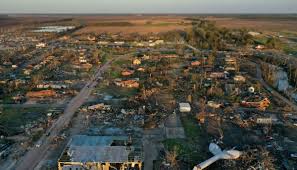
Powerful tornadoes followed by severe thunderstorms ripped through central and southern Mississippi on Wednesday, May 6.

The catastrophic storm left a trail of destruction, damaged more than 1,000 buildings, and injured four people.The most affected areas include Lamar, Franklin, and Lincoln counties, where officials report hundreds of structures have been wrecked.

Around 250 buildings were damaged in Lamar County alone, affecting a church and the county’s emergency management facility.

Several hours of southbound lane closures occurred along Interstate 55 due to the presence of debris. This was after the National Weather Service declared a “particularly dangerous situation” for some areas in southwestern Mississippi, which is an uncommon classification used only for the strongest tornadoes.

Around 14 tornadoes hit the region. Following the thunderstorms, more than 19,000 consumers got power outage early Thursday, May 7. Over 1,500 customers are reported to be still without power.

Four people got minor injuries, with one receiving stitches. Additionally, several residents trapped under debris were self-rescued.

The storm system has now moved to Alabama, where officials continue to monitor severe weather threats through early Thursday.

Iran’s top negotiator says US aiming to force Tehran’s ‘surrender’

Iran’s top negotiator says US aiming to force Tehran’s ‘surrender’

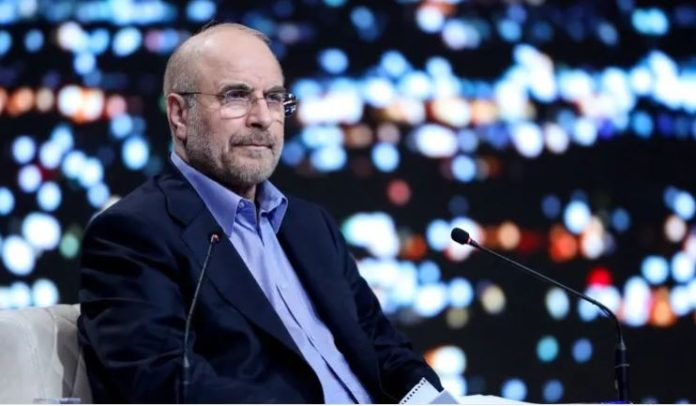
TEHRAN, MAY 6: Iran’s top negotiator Mohammad Bagher Ghalibaf said Wednesday that Washington was seeking Tehran’s surrender through various means, including a naval blockade.

“The enemy, in its new design, is seeking, through a naval blockade, economic pressure and media manipulation, to destroy the country’s cohesion in order to force us to surrender,” Ghalibaf said in a voice message published on his official Telegram channel.

The influential speaker of the Iranian parliament did not elaborate on the prospects for a peace plan with the United States, as Tehran continues to review elements of a US proposal.

Foreign ministry spokesman Esmaeil Baghaei said on Wednesday that Tehran would convey its position to key mediator Pakistan after “finalizing its views.”

Earlier in the day, US President Donald Trump had said he wanted the war to be “at an end,” while vowing more intense attacks on Iran if it did not agree to conditions set by Washington.

Islam’s true message of peace must be projected, says President

Islam’s true message of peace must be projected, says President

ISLAMABAD, MAY 6 /DNA/ – President Asif Ali Zardari on Wednesday urged religious scholars from across the Muslim world to play a proactive role in promoting unity, countering extremism, and projecting Islam’s true message of peace.

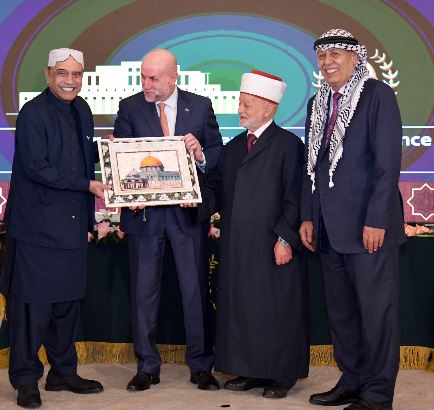
Addressing the concluding session of the Sixth International Paigham-e-Islam Conference 2026 here at the Presidency attended by former prime minister Raja Pervaiz Ashraf and Senator Saleem Mandviwalla among ulema, diplomats, and delegates from various countries, including Palestine and Saudi Arabia, the president said the Muslim world was facing multiple challenges, including conflicts, instability, and divisions that required collective wisdom and unity to overcome.

He observed that recent developments in West Asia had exposed deep fault lines affecting regional stability and economic conditions, while also distorting the global perception of Islam. He stressed that both external misrepresentation and internal sectarianism were contributing to these challenges.

President Zardari emphasized that Islam is a religion of peace, balance, and humanity, noting that the sanctity of human life lies at the core of its teachings. He called upon religious scholars to provide practical and intellectual guidance rooted in Islamic principles to promote harmony, tolerance, and coexistence.

Referring to Pakistan’s experience, he said the country had made significant sacrifices in the fight against extremism and remained committed to eliminating violence in all forms. He also reiterated Pakistan’s foreign policy stance, highlighting the need for peaceful resolution of disputes in South Asia, including Jammu and Kashmir.

The president reaffirmed Pakistan’s unwavering support for the Palestinian cause, calling for the establishment of an independent state of Palestine with Al-Quds Al-Sharif as its capital. He also stressed the importance of peace in Afghanistan, saying Afghan soil should not be used for terrorist activities against any country.

He appreciated the leadership of King Salman bin Abdulaziz Al Saud and Mohammed bin Salman for their efforts in promoting unity within the Muslim Ummah and addressing regional challenges.

Responding to general queries, the president emphasised the need to nullify misrepresentation of Islam and with the advent of modern technology understanding Islam and it’s glorious teachings have become easy to all.

Pakistanis are globally recognized as the nation of religious scholars, doctors and engineers, he said adding that the entire nation alongwith ummah will rise again to glory.

Chairman Pakistan Ulema Council, Maulana Tahir Ashrafi, said the conference, held at the Aiwan-e-Sadr, highlighted Islam as a religion of peace, love, tolerance, and interfaith harmony. He noted that the theme of this year’s conference focused on global dialogue and emphasized the role of Pakistan’s leadership in promoting unity and stability.

He also referred to Pakistan’s defence capabilities, stating that the country’s strategic strength was built through the efforts of leaders such as Shaheed Zulfiqar Ali Bhutto and Mohtarma Benazir Bhutto, and praised the leadership for safeguarding national interests.

Mufti-e-Azam of Palestine, Muhammad Ahmed Hussein, thanked Pakistan for hosting the conference and reiterated that the Palestine issue remained central to the Muslim Ummah. He appreciated Pakistan’s diplomatic efforts and expressed hope that cooperation between Pakistan and Saudi Arabia would help strengthen unity among Muslim countries.

He also acknowledged the role of Saudi leadership in supporting the Palestinian cause and expressed optimism for a peaceful future, praying for the day when such a conference could be held at Al-Aqsa Mosque.

Saudi Ambassador to Pakistan, Nawaf bin Saeed Al-Malki, said the Palestine issue held central importance for the Muslim world and emphasized the need for unity during challenging times. He appreciated Pakistan’s efforts in combating terrorism and reaffirmed Saudi Arabia’s commitment to a just resolution of the Palestinian issue in line with the aspirations of its people.

Federal Minister for Religious Affairs and Interfaith Harmony, Sardar Muhammad Yousaf, highlighted Pakistan’s commitment to strengthening ties with Muslim countries and promoting ideological unity within the Ummah. He underscored the important role of ulema in guiding society and promoting the true image of Islam globally.

He also paid tribute to Prime Minister Shehbaz Sharif and Field Marshal Syed Asim Munir for their leadership in ensuring national security, and acknowledged the contributions of past leaders in making Pakistan a strong strategic power.

The Saudi Ambassador, Chairman Pakistan Ulema Council, Adviser to Minister for Religious Affairs, Kingdom of Saudi Arabia presented souvenir to the president.

Moreover, the Mufti e Azam of Palestine, Qazi ul Quzza and the Palestinian Ambassador also presented souvenir to the president.

Third round of Israel-Lebanon talks to take place in US next week – report

Third round of Israel-Lebanon talks to take place in US next week - report

Lebanese Prime Minister Nawaf Salam assured reporters on Wednesday that Lebanon was not heading towards normalization but towards peace with Israel.

Beirut, MAY 6: The third round of Israeli-Lebanon peace talks could be held as soon as next week, Lebanese news network LBCI reported on Wednesday.

The talks are reportedly set to take place at the US State Department in Washington, DC, on either Wednesday and Thursday or Thursday and Friday next week.

The Lebanese delegation will include former ambassador to Washington Ambassador Simon Karam, current Ambassador to Washington Nada Hamadeh Moawad, Deputy Chief of Mission Consul Wissam Boutros, as well as representatives of the Lebanese army, according to the report.

In preparation for the talks, Moawad met with members of US Secretary of State Marco Rubio’s team on Monday and Tuesday. The upcoming meetings between Israel and Lebanon were discussed, and the ambassador gave the US officials a list of alleged Israeli violations of the agreement already in place, emphasizing the importance of a ceasefire, LBCI wrote.


Lebanese PM says Lebanon aiming for peace, not normalization
Lebanese Prime Minister Nawaf Salam assured reporters on Wednesday that Lebanon was not heading towards normalization, but towards peace with Israel, LBCI reported.

He reminded them that this was not the first time Lebanon had negotiated directly with Israel, referencing the talks facilitated by former US envoy Amos Hochstein, which led to a ceasefire agreement in October 2024.

He added that the meeting did not mean the Israel-Lebanon talks were completely divorced from those between the US and Israel.

“Lebanon succeeded in establishing that it is negotiating on its own behalf, but this does not mean the Lebanese track is completely separate from the negotiations track in Islamabad,” LBCI cited Salam as saying.

The goal of the upcoming meetings will be to secure a full Israeli withdrawal from southern Lebanon, the release of prisoners, the resolution of disputed border points, and the ability for all displaced residents to return.

In addition to talks with Israel, Salam stressed the need for internal negotiations to achieve full state authority and restrict weapons to state control.

“We need an international force in southern Lebanon for monitoring, reporting, documentation, and coordination on the ground, a peacekeeping and monitoring force with European participation that takes coordination with the mechanism into account,” Salam said.

Salam also denied any planned meeting with Prime Minister Benjamin Netanyahu, saying that such a meeting should be tied to an achievement in the negotiations and require significant preparation and careful timing.

Stay Connected

64FansLike
60FollowersFollow

Latest Reviews

Exchange Rates

USD - United States Dollar
EUR
1.14
GBP
1.34
AUD
0.70
CAD
0.71