Home Blog Page 1503

Minimum age for marriage of girls should be 18 years PODA conference concludes at Lok Virsa

DNA

ISLAMABAD, Observing International Rural Women’s Day (Saturday) the rural women from 123 districts present the 15th Annual Rural Women Conference by PODA-Pakistan here at Lok Virsa demanded to set minimum age for marriage for girls 18 years. They said that this age limit should be for all beyond race, ethnicity and creed.

The Three-Day Annual Rural Women Conference organized by PODA-Pakistan and supported for European Union Delegation to Pakistan, Election Commission of Pakistan, National Database Registration Authority (NADRA), GIZ and National Endowment for Democracy concluded today (Saturday) on passing a unanimously agreed resolutions highlighting rural women’s issues at the grassroots level to ensure their constitutional rights. PODA-Pakistan has been organizing the Annual Rural Women Conference since 2008 in Islamabad.

Urging the legislators, policy makers and parliamentarians to main the primary principle of gender equality enshrined in the Constitution of Pakistan to uphold women’s political, social and economic rights, the gathering passed a set of resolutions unanimously. The resolution focused mainly on the areas of health, education, women’s financial inclusion, climate change, access to basic social services, political participation and women’s constitutional and citizenship rights while highlighting the need to adhere and ensure the principle of equal representation of rural women at all levels, policy, planning and implementation.
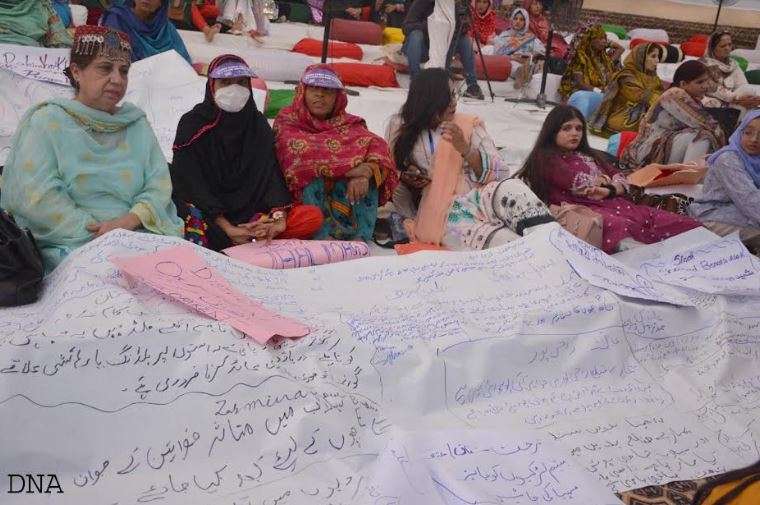
The conference participants of four provinces and regions of Azad Kashmir and Gilgit-Baltistan urged the provincial governments to adopt policies based on the concept of gender-equality which includes all segments of the society from person-with-disabilities, transgender persons, minorities, different ethnicities and indigenous communities to allocate resources for their development, while at the same time recognizing their contributions in the national development.  The conference participants reiterated their demand to recognize rural women as “farmers” so that equally to men they could be benefited from the government policies.

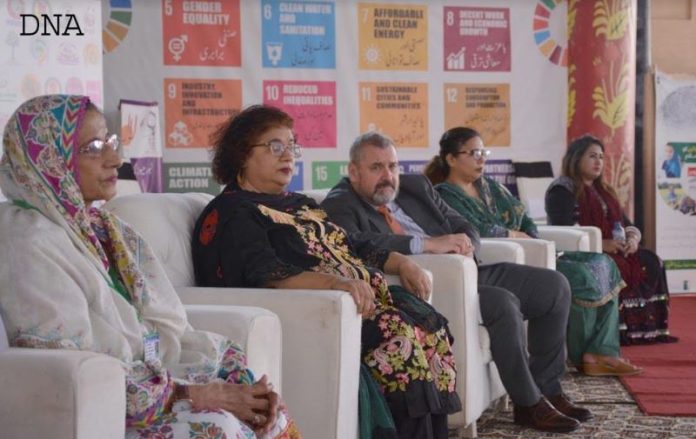
Reiterating European Union Delegation to Pakistan’s commitment for gender equality, present on the occasion, Thomas Seiler, Deputy Head said this conference is a “platform from where you make your voices heard collectively to tackle problems and challenges”.He also recommended the participants to take back their action plan in the form of conference resolutions with them to work on it at union level with their utmost resilience. He said that European Union Delegation to Pakistan has been working closely with the government of Pakistan and with other donors in assessing the needs for rebuilding the flood-hit areas and supporting future recovery efforts. “Women are among the most at risk in flood-affected areas. However, at the same they need to be on the frontline of relief plans ensuring their needs are treated on priority,” Thomas Seiler said.

Thomas Seiler also termed the conference an effective drive in connecting women’s demands raised from this platform with the steps taken and efforts initiated by the state institutions of ECP and NADRA for ensuring women’s equal participation in political processes.

Lauding the efforts of PODA, Farkhanda Naz, Provincial Ombudsperson Khyber Pakhtunkhwa for Protection against Harassment of Women at Workplace urged to extend harassment act to protect women working in informal sector. Earlier President, PODA Sameena Nazir presented an over view of the previous annual rural women conferences.

Nuzhat Shirin, Chairperson Sindh Commission on the Status of Women also spoke on the occasion terming conference a unique place for nurturing “a great sense of sisterhood” among women which was in itself a great accomplishment to celebrate.

Deputy Head of EUD to Pakistan, Thomas Seiler, awarded partner organizations and rural women for their contributions taking forward the conference’s agenda into their districts across Pakistan

The solidarity partners who received awards were: Nuzhat Shirin Chairperson Sindh Commission on the Status of Women, Rukhshanda Naz KP Ombudsperson for Protection against Harassment at Workplace, Shaheen Farooqi, Bhera Press Club, Zarina Salamat, member PODA board, eminent poet, Kishwar Naheed. Rural Women Leaders who were awarded included: Aqsa Noor, Mirpur, AJK, Shahida Irshad, Quetta,  Balochistan, Shazia Fida Gilgit, GB, Rukhsana Jahengir, Swat KPK, Mehwish Majeed, Layyah, Punjab and Azra Memon, Dadu, Sindh.

Chairperson National Commission on the Status of Women, Nilofer Bakhtiar, Reema Aftab, DG Inclusive Registration, NADRA, Moazzma Yousaf, Director Inclusive Registration and Zahid ur Rehman Assistant Director NADRA were also among the award recipients for their contributions to uplift the cause of rural women.
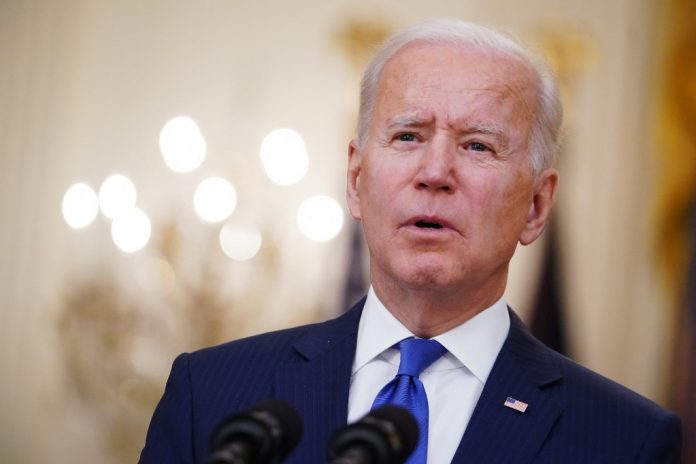
‘One of most dangerous countries’: Biden alleges Pakistan’s nuclear programme lack cohesion

US President Joe Biden speaks during International Women's Day in the East Room of the White House in Washington, DC on March 8, 2021. (Photo by MANDEL NGAN / AFP)

DNA

WASHINGTON: United States President Joe Biden has alleged that Pakistan’s nuclear programme lacks “cohesion” while he was speaking about the aggressive attitude of Russia and China.

The remark came during the US president’s address at a democratic congressional campaign committee reception, where he referred to Pakistan as “one of the most dangerous countries”.

“Did anybody think we would be in a situation where China is trying to figure out its role relative to Russia and relative to India and relative to Pakistan,” Biden said.

The US president said that he has spent more time with his Chinese counterpart Xi Jinping than any other head of state in the world, 68 hours of which was in person.

Referring to China President Jinping, Biden said that he “understands what he wants but has an enormous array of problems”.

“How do we handle that? How do we handle that relative to what’s going on in Russia? And what I think is maybe one of the most dangerous nations in the world: Pakistan. Nuclear weapons without any cohesion,” the US president said, adding that despite a lot going on, the US has a hunk of opportunities to change the dynamic in the second quarter of the 21st century.

Pakistan mulls response

Meanwhile, a virtual meeting is being held at the Foreign Office where the situation arising out of the US president’s controversial statement is being discussed to decide Islamabad’s official response, according to Geo News sources.

Foreign Minister Bilawal Bhutto Zardari, Minister of State for Foreign Affairs Hina Rabbani Khar, Foreign Secretary Sohail Mehmood, Additional Secretary Americas, Pakistan’s Ambassador to US Masood Khan and other officials are attending the huddle.

The sources said that FM Bilawal Bhutto will meet Prime Minister Shehbaz Sharif after the meeting and other stakeholders will also be consulted in this regard before giving a detailed official response.

While speaking to Geo News, a senior official of the Ministry of Foreign Affairs said that it is difficult to understand the context in which President Biden made these unnecessary remarks.

He said that several US presidents and the government has always declared the security of Pakistan’s nuclear programme and controls effective and according to international standards.

‘Baseless’

Minister for Power Khurram Dastgir Khan — a senior member of Prime Minister Shehbaz Sharif’s cabinet — has termed the US president’s statement about Pakistan’s nuclear programme “baseless”.

While answering a question about President Joe Biden’s comments regarding Pakistan during a press conference today, the former defence minister said, “Pakistan’s nuclear command and control system is absolutely safe which has been confirmed by international organisations many times”.

He said that the US president’s doubts about Pakistan’s nukes are “completely wrong and the statement is baseless”.

Priyanka under fire for supporting Iranian women but not Muslim women in India

LAHORE – Protests are sweeping Iran with calls of justice for Mahsa Amini, a young woman who died in the custody of Iranian morality police, and more and more people are expressing their support for the cause. But people aren’t on board for those who stay silent in the face of oppression at the hands of their own government showing support now notably French actors, Bollywood star Priyanka Chopra and Israeli women.

The Protests in Iran are against the government forcing women to cover their heads and inflicting violence on them in cases where the arbitrary dress codes are broken. As an act of resistance, many Iranian women are chopping off their hair and it’s led to token acts of support in the form of celebrities snipping off a lock of their hair on camera or posting about the protests. Chopra shared a picture and post about the movement but people were quick to point out that she has never spoken about the oppression of Muslim Women in India and India-occupied Jammu & Kashmir.

On Monday, she shared a photo on Instagram with her thoughts on Iranian women. “The voices that speak after ages of forced silence, will rightfully burst like a volcano! And they will not and MUST not be stemmed,” she wrote while expressing how she’s in awe of the courage and purpose.

The “Bajirao Mastani” actor added that it’s not easy to risk your life in order to “challenge the patriarchal establishment” while fighting for your rights. She also weighed in on the matter that people need to join in for their collective voiced to be heard as numbers matter. “I stand with you. Jin, jiyan , azaadi… Women, life, freedom,” she concluded.

But soon after her Instagram post, Chopra was called out on social media for not raising her voice for the Muslim women in her own country. One user said in the southern Indian state of Karnataka where Chopra is from Muslim women are fighting for their right to wear hijabs.

It’s not just Chopra though. People are pointing fingers at TV anchors in India trimming their hair in solidarity with Iranian women.

Journalists are questioning the hypocrisy in celebrities staying silent on women being denied their right to wear hijab in India but supporting the choice of Iranian women to not wear the hijab.

A journalist shared a video of BJP MP Parvesh Verma and called out Indian celebrities for “speaking about Iran” but looking the other way when “fascism and apartheid” is taking place in their home country.

The issue is not, of course, limited to Priyanka Chopra and India. When French actors trimmed their hair in solidarity, people were quick to call them out for staying silent on the treatment of Muslim women in France.

The issue is not and has never been about religion. The Iranian movement is based on women being forced to follow a dress code and oftentimes brutalised if they don’t. We should all be supporting Iranian women on their quest for freedom from oppression and the ability to choose what to wear but that doesn’t mean forgetting what’s happening in our own backyards.

The French actors were called out for their performative activism, and it makes sense how much weight does the support of someone have who cannot even support their own countrywomen. Why is it so easy for these celebrities to stand in support of other people but never in support of their own people?

This selective activism is dangerous and cruel and until we call these celebrities out, it’s never going to change. It gives the message that only some people matter. In this case, it says only some Muslim women matter. Both groups of women are fighting for their right to dress as they please and supporting one over the other isn’t right.

Iranian women deserve support. They deserve support from everyone but they don’t need the backing of people who are selective in their outrage and support.

Chopra, a National Ambassador to UNICEF India, has never spoken up for Muslim women in India, IoJK or even Palestine. Her post for the women of Iran reads insincere when she can’t even stick up for women in her own country.

Gold rates dip By Rs 800 per tola

ISLAMABAD, OCT 14 (DNA) — The per tola price of 24 karat gold witnessed a decrease of Rs 800 on Friday and was sold at Rs 147,300 against its sale at Rs148,100 the previous day.

The price of 10 gram 24 karat gold also decreased by Rs 686 to Rs126,286 against Rs 126,972 last day, and that of 10 gram 22 karat went down to Rs 115,762 from Rs 116,391, the All Sindh Sarafa Jewellers Association reported.

The price of per tola silver went down by Rs 10 to Rs 1560 whereas that of 10 gram silver declined by Rs 8.58 to Rs 1,337.44. The price of gold in the international market witnessed a decrease of $20 and was sold at $1,656 against its sale at $1676, the Association reported. =DNA

In Karachi visit, Imran Khan demands end to ‘reign of robbers’

KARACHI: In a veiled dig at Sindh’s ruling party PPP, PTI Chairman Imran Khan said Friday that the reign of “dacoits” in the province should come to an end.

Khan’s remarks came during his visit to Karachi as he rallies his party workers for the anti-government “Azadi March”, for which the date is yet to be announced. In a recent gathering, the PTI chairman told his workers to be ready as he could give the call for the march “at any time”.

In his address today, the PTI chairman said that in the next general elections, his party would form governments in Sindh and the Centre.

“Sindh’s resources are stolen, and they are siphoned out of the country,” the PTI chairman said.

Khan urged Karachi’s youth to come forward and partake in politics as political movements in the early days would begin from the metropolis.

“Had there not been violence in Karachi, it would have progressed more than Dubai,” Khan said as he vowed that now, things would change for the port city as “no power” could stop his party from getting its mayor elected in the upcoming local body elections.”After the local body elections, we will also emerge successful in the general elections,” he said.

‘Decisive time’

The PTI chairman also said that the incumbent government, which came into power through a “foreign conspiracy”, would not remain in office for long. “My nation has stood up for its future.”

Seperately, while speaking to lawyers in the metropolis, the former prime minister said that the nation is facing a “decisive time” as if “big thieves” keep getting NROs then the country would not have a future.

He said that lawyers understand the need for upholding the law and that is why they should support his cause.

“Powerful people steal money and launder it abroad. This is why, I am waging jihad and I want all of you to support me,” the ex-prime minister said.

Khawaja Asif slams Imran Khan’s rhetoric on army chief’s appointment

ISLAMABAD: Defence Minister Khawaja Muhammad Asif Friday criticised PTI Chairman Imran Khan for his incessant whining on the matter of the army chief’s appointment.

“Imran Khan has been using [abusive] language since his ouster. Before, Khan would say that he and the [establishment] are on the same page. During his time in power, his hugs would not end with them and now, he is abusing them,” Asif said.

Addressing a joint press conference with Minister for Information and Broadcasting Marriyum Aurangzeb, Planning Minister Ahsan Iqbal, Minister of State for Petroleum Musadik Malik and Special Assistants to the Prime Minister Tariq Fatemi and Attaullah Tarar, the defence minister added that the PTI chief’s only problem is regaining power. He added that Pakistan’s state cannot function at the behest of Khan’s personal wishes.

“Pakistan’s state is not subject to anyone’s wish; it [functions] under the law and Constitution,” Asif remarked.

The minister added that Imran Khan only “begs for, abuses, and holds meetings” for power.

“We (PML-N) do not believe in political victimisation,” the minister said, adding that his party believes in rule of law.”

He criticised Khan’s indifference to being accountable in multiple cases and recalled how Nawaz Sharif would appear in courts himself when summoned.

“Nawaz Sharif would himself appear in courts and [in front of] joint investigation team,” he said.

The minister slammed Khan for shutting down the accountability commission, along with cases pertaining to Bus Rapid Transit (BRT), Malam Jabba, and Billion Tree Tsunami.

“They are annoyed that the courts are providing relief to the PML-N,” the minister said, adding that Khan’s wishes have been ruined.

Khawaja said that Imran Khan would have completed five years in power had he not been “incompetent, corrupt, and arrogant”.

“Imran Khan loves money, but he will get tired after continuously crying,” he said.

Highlighting the sacrifices of the Pakistan Army during the press conference, Khawaja Asif said that 53 soldiers including officers have been martyred in the last three months.

“Soldiers of the armed forces are sacrificing their blood for the country’s security,” he said.

Berating the former PTI government, Khawaja Asif said that Pakistan’s diplomatic ties with the world were affected during Imran Khan’s tenure.

Referring to PTI’s criticism over the acquittal of PML-N leaders, Khawaja Asif said that the court issued its ruling on merit.

“Imran Khan Niazi and his followers have nothing to show for their performance,” he said and accused the past government of lodging false cases against the leaders of PML-N.

“A baseless money laundering case was registered against Shahbaz Sharif and Hamza Shahbaz,” he added.

“We proved by our words and actions that we stand with the judiciary,” said Khawaja Asif.

Indonesian Muslims gamble on problematic ties to Saudi government vehicle

Nahdlatul Ulama, arguably the world’s only Muslim mass movement propagating a genuinely moderate and pluralistic form of Islam, has forged an unlikely, albeit temporary, alliance with the Saudi-controlled Muslim World League.

The League is Saudi Crown Prince Mohammed bin Salman’s chief propagator of a socially less restrictive but autocratic interpretation of the faith that demands absolute obedience to the ruler.

In a bold but risky strategy, Nahdlatul Ulama, the world’s largest Muslim civil society movement with 90 million followers in Indonesia, the world’s largest Muslim majority-country and democracy, hopes that the alliance will undercut Saudi and League support for an Indonesian political party associated with the Muslim Brotherhood, the Prosperous Justice Party (PKS).

Against all odds, Nahdlatul Ulama also envisions its Humanitarian Islam philosophy rubbing off on the League as a result of cooperation with the Indonesian group.

The philosophy embraces religious and political pluralism, unambiguously endorses the Universal Declaration of Human Rights and advocates reform of what it terms “obsolete” elements of Islamic jurisprudence.

Persuading the League to endorse a genuinely moderate form of Islam would have enormous significance. It would lend the prestige of the Custodian of Islam’s two holiest cities, Mecca and Medina, to Nahdlatul Ulama’s effort to reform Islam. That, however, is a long shot, if not pie in the sky.

More likely, the League sees reputational benefit in its association with Nahdlatul Ulama. The League also probably hopes to co-opt the Indonesian movement to prevent it from becoming a serious competitor for hearts and minds in the Muslim world.

Neither group may succeed in fulfilling its aspirations.

Nahdlatul Ulama has a century-long history of fiercely defending its independence and charting its moderation course.

At the same time, there is little reason to believe that the League can embrace anything but what Mr. Bin Salman authorises.

If the last two months provide an indication, Mr. Bin Salman and his loyal lieutenant, League secretary general Mohammed al-Issa, can, at best, be expected to opportunistically pay lip service to Humanitarian Islam.

Moreover, the kingdom has long demonstrated its determination, often in cooperation with the United Arab Emirates, to stymie endeavours for political change across the Middle East.

Most recently, Saudi Arabia sentenced two women to respectively 34 and 45 years in prison for tweets that allegedly “cause public unrest and destabilise civil and national security” and “tear (Saudi Arabia’) social fabric.

Last week, a Saudi court committed to death row three members of the Howeitat tribe that was forcibly ejected to make way for Mr. Bin Salman’s US$500 billion science fiction Neom megacity on the Red Sea. The three men had resisted the ejection.

Adding fuel to the fire, Mr. Bin Salman reportedly appointed Awadh bin Ali bin Ayedh al-Mayshar al-Ahmari, a detective allegedly involved in the cover-up of the killing of journalist Jamal Khashoggi,  as president of the kingdom’s counter-terrorism court that handed down the recent harsh verdicts.

Moreover, Saudi Arabia has interpreted freedom of religion as inter-faith dialogue that does not stray beyond lofty statements and high-profile meetings and conferences rather than lifting a ban on non-Muslim houses of worship in the kingdom.

To be sure, Mr. Bin Salman has curbed the authority of the religious police, enhanced women’s rights and opportunities, and enabled Western-style entertainment, but that did not entail religious reform. Instead, it amounted to long overdue social change by decree.

As a result, Nahdlatul Ulama stands a better chance in loosening the ties between the League and the PKS than persuading Mr. Bin Salman that in addition to social change, genuine religious reform and good governance should be the legs of his efforts to diversify the Saudi economy.

One litmus test of the League’s relationship with Nahdlatul Ulama will be whether Hidayat Nur Wahid, a PKS luminary, remains a member of the League’s Supreme Council.

Mr. Wahid accompanied Mr. Al-Issa in 2020 to the secretary general’s initial meeting with Nahdlatul Ulama, the first in the League’s 60-year history. Yet, he refused to join Mr. Al-Issa in 2020 on his historic visit at the head of a delegation of Muslim scholars to Auschwitz, the Nazi extermination camp in Poland.

To be fair, Nahdlatul Ulama, while virulently opposed to political Islam, has demonstrated its democratic credentials by confronting the PKS politically but not disputing its right to compete in free and fair elections or being politically active within the legal confines of Indonesian democracy.

Sacrificing the PKS is a small price for the League to pay for what Nahdlatul Ulama offers.

The association has already paid off with no public indication that the League has met any of Nahdlatul Ulama’s aspirations. Instead, the League has milked its partnership with Nahdlatul Ulama for what it is worth on social media.

As the convener of the Religion Forum 20, a newly created official Group of 20 engagement group, Nahdlatul Ulama has invited the League to co-host next month’s summit of religious leaders in Bali in advance of a meeting of leaders of the G20 that groups the world’s largest economies. Indonesia is this year’s chairman of the group.

The faith summit aims to “help ensure that religion in the 21st-century functions as a genuine and dynamic source of solutions, rather than problems.”

Add to that Nahdlatul Ulama’s recognition of the League as a non-governmental organisation even though it is wholly government-controlled and primarily government funded.

The invitation was in recognition of the League’s break with its past as a major vehicle in the global spread of Saudi ultra-conservatism before the rise of Mr. Bin Salman in 2015. The invitation also followed an approach by the Saudi government to its Indonesian counterparts requesting that the League have a platform at the R20.

The approach “stroked with dynamics in the Indonesian government. There was a sort of feedback loop. In the end, Nahdlatul Ulama and the government reinforced each other,” said a well-placed source.

Nahdlatul Ulama’s National Awakening Party (PKB) has four ministers in Indonesian President Joko Widodo’s government, including Yaqut Cholil Qoumas, the religious affairs minister, and a brother of the movement’s General Chairman Yahya Cholil Staquf.

Mr. Widodo has embraced Nahdlatul Ulama’s push for a genuinely moderate Islam but, at the same time, has been willing to legitimize Saudi and Emirati efforts aimed at ensuring that moderation does not entail political liberalisation.

In contrast to Nahdlatul Ulama, the two Gulf states have steered clear of anchoring social change in jurisprudential reform of Islamic law.

The alliance with the League spotlights Nahdlatul Ulama’s difficulty balancing its domestic objectives with its effort to position itself internationally as the voice of a genuinely socially and religiously pluralistic and tolerant Islam.

Partnering with the League in the hope it will pay more than a domestic political dividend entails reputational risk, with the kingdom’s troubled human rights and freedom of religion track record potentially again moving centre stage due to increasingly strained US-Saudi relations.

Nahdlatul Ulama deserves credit for what is a daring strategy. The question is whether the group could have secured the domestic dividend without legitimising an autocrat’s toolkit and whether the reputational risk will prove worthwhile.

Dr. James M. Dorsey is an award-winning journalist and scholar, an Adjunct Senior Fellow at Nanyang Technological University’s S. Rajaratnam School of International Studies, and the author of the syndicated column and blog, The Turbulent World of Middle East Soccer.

Authorities urged to take steps for promotion of Afghan transit trade

From Our Correspondent 
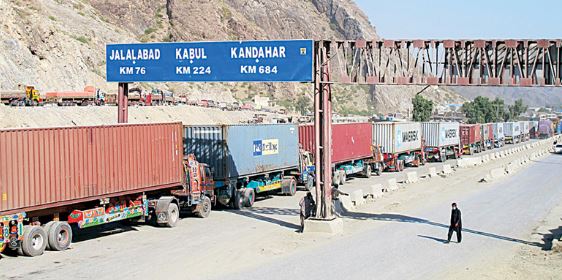
PESHAWAR, OCT 14 /DNA/ – President Frontier Custom Agents Association, Zia-ul-Haq Sarhadi Friday urged authorities to take steps for promotion of Afghan Transit Trade that was affected by recent floods.

He expressed these views in a meeting that was attended by Customs high ups, Pakistan and Afghan businessmen associated with transit trade. He said that concerns of business community relating to Afghan transit should be considered and steps should be taken for their addressal.

Director Transit Trade Peshawar, Arbab Qaisar Hamid who attended the meeting said that Afghan authorities have been requested to send transit documents at the earliest after updating their own system. 

Assuring cooperation to business community of both countries, he said that steps would be taken for their facilitation and hurdles in transit trade would be removed.

COMSTECH celebrates world food day, “Leave No One Behind”

Islamabad, Oct 14 /DNA/ : COMSTECH in partnership with UPSIGN, SAWIE, ICCFS, IFS & Pakistan Science Foundation (PSF) celebrated world food day. The slogan for world food day this year was “Leave No One Behind”.

To mark this year’s World Food Day, keynote talks and panel discussions were arranged with experts from all over the world with several years of experience in Agri-food research systems. The webinar discussed the key challenge faced by our food system from climate change and other threats.

The experts said that our food system is suffering from malnutrition and food security. The debate uncovered how sustainable use of natural resources could help to enhance productivity, soil health, water, and the role of biodiversity. The question of how can we address the food production crisis, protecting our soil microbes, plants, animals & natural capital, and produce healthy food to support a healthy life and a healthy planet was discussed.

The panelists also discussed the way forward to address the impact of COVID and recent floods in Pakistan on food security. They talked about how the research, and knowledge exchange of good practices could be translated to develop climate change adaptation strategies, mitigation, and what specific measures can be taken to support the climate crisis victims. The panelists pondered upon creating the resilient growth that does not leave anyone behind.

The experts noted that Pakistan is one of the top ten countries which are most vulnerable to the climate change crisis. They agreed that the climate change disaster has affected its food system with extreme heat, droughts, unpredicted rain patterns, and attacks from invasive species of pests & diseases.

COMSTECH the OIC Ministerial Standing Committee on Scientific and Technological Cooperation, joined hands with the leading research, academic & farming organizations from Pakistan and around the world for hosting the World Food Day celebration. These partners were UPSIGN, SAWIE, ICCFS, IFS & Pakistan Science Foundation (PSF). UPSIGN is an educational charity based in the UK supporting collaborations between UK & Pakistan. SAWIE is a digital platform based in the UK and Pakistan offering farm advisory & data insights. International Center for Climate Change, Food Security & Sustainability (ICCFS)/Consortium on Climate Change, Sustainability & Conservation (CCSC), The Islamia University Bahawalpur are leading research organizations. The International Foundation for Science, IFS, is an international, non-governmental organization.

Stay Connected

64FansLike
60FollowersFollow

Latest Reviews

Exchange Rates

USD - United States Dollar
EUR
1.17
GBP
1.35
AUD
0.67
CAD
0.72