Home Blog Page 1499

BCCI’s decision of not touring Pakistan can impact ICC events in India: PCB

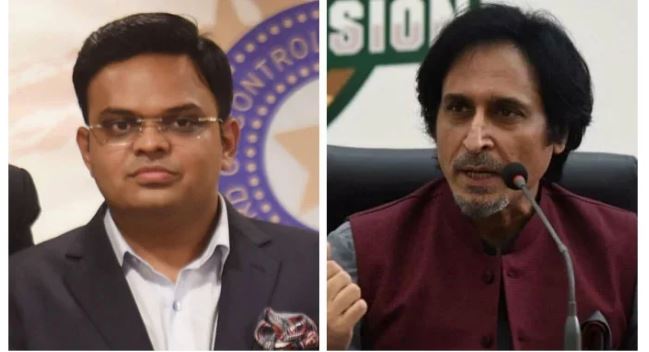
LAHORE: A day after the Indian cricket authorities declined to tour Pakistan for the Asia Cup, the Pakistan Cricket Board (PCB) said that Jay Shah’s statement has the “potential to split” Asian and international cricketing communities.

The PCB expressed disappointment and surprise at the Board of Control for Cricket in India (BCCI) and Asian Cricket Council (ACC) President Jay Shah’s statement on the shifting of the venue for the regional tournament.

“Neutral venue for the Asia Cup is not unprecedented, and we have decided that we will not travel to Pakistan,” Shah said following the 91st annual general meeting of the BCCI on Tuesday, triggering a strong reaction from cricket fans and former players.

In a statement issued today, the PCB said that the comments by the BCCI official were made without any discussion or consultation with the Board of the Asian Cricket Council or the Pakistan Cricket Board (event host) and without any thoughts towards their long-term consequences and implications.

The cricket’s governing body in Pakistan noted that Shah’s shifting of statement for the Asia Cup was unilateral as he had presided over the session in which Pakistan was awarded the rights to host the tournament with an “overwhelming support and response” from the board members.

PCB also noted that the move was “contrary to the philosophy and spirit” for which the Asian Cricket Council was formed in September 1983.

“The overall impact of such statements have the potential to split the Asian and international cricketing communities, and can impact Pakistan’s visit to India for the ICC Cricket World Cup 2023 and future ICC Events in India in the 2024-2031 cycle,” said the PCB.

However, it clarified that it has yet to receive “any official communication or clarification from the ACC” on Shah’s statement. It also said that the board has requested ACC to “convene an emergency meeting” as soon as “practically possible” to discuss the “important and sensitive matter”.

Pakistan and India only meet in global tournaments, the last being the Asia Cup 2022 in Dubai. India last hosted Pakistan in a bilateral series in 2013.

India have not toured Pakistan since 2008 due to strained relations between the two countries.

The last bilateral series between the arch-rivals took place in 2012, when Pakistan toured India for limited-overs matches.

Over the past few years, the two countries have only faced each other in ICC and ACC events.

Ministers appeal for ‘Truth and Reconciliation Commission’ to address Balochistan’s issues

ISLAMABAD: Federal ministers Khawaja Asif and Sherry Rehman on Tuesday suggested the formation of a “Truth and Reconciliation Commission” for the resolution of Balochistan’s issues after their ally Akhtar Mengal raised the issue of missing persons in the National Assembly.

“Balochistan’s issues must be resolved,” said Asif in the lower house after Mengal briefed the house on the problems facing the province.

The defence minister said that the “elites” of the country have made mistakes and admitted that some of the sins and crimes were committed by the rulers. He also lamented that politicians have spoken on the issue verbally just to get votes.

The minister shared that a battle for power has been ongoing in Pakistan and targeted his party’s arch-rival Imran Khan.

“[Last] government was removed via constitutional and legal way. The person whose government was removed is blackmailing the state,” said Asif. He urged that the battle for power can be fought later.

Asif also deplored that after one and a half years after independence, different opinions were not tolerated.

Khawaja Asif said the points raised by Akhtar Mengal regarding the Balochistan situation are genuine and there is a dire need to heal the wounds of the people of the province. 

He said the problems of Balochistan can be addressed by sitting together with the leaders and people of Balochistan.

On the other hand, Climate Change Minister Sherry Rehman said that a war is being fought in the name of religion but it was only a “war of power” — a reference to Imran Khan’s call terming his Azadi March as “jihad” against the government.

The PPP MNA said that they do not want terrorism to increase in the country as it is “ours” and have to save it.

“We should be taken into confidence about the operation that is going on,” said Rehman. She added that Pakistan has been able to wipe out al-Qaeda from its soil through successful operations but now the TTP was taking over.

“The problems of Balochistan should be heard to start reconciliation. We should also hear the bitter truth about the problems of Balochistan,” said Rehman. She also urged the courts to hear human rights cases.

As regards Balochistan, she proposed the formation of the Truth and Reconciliation Commission to take the situation towards improvement in the province.

Mohsin Dawar also supported the establishment of the Truth and Reconciliation Commission, saying it is imperative to take the country in the right direction.

China maintains growth engine of the world economy: Report 

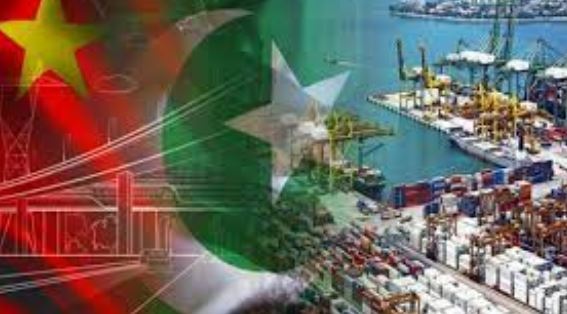
Islamabad, OCT 19 /DNA/ – Numerous reports of World Bank and IMF have clearly indicated that the Chinese macro-economy has been a driving force for further development and recovery from the global crisis since 2008, said Mehmood Ul Hassan Khan, Executive Director of the Center for South Asia & International Studies (CSAIS) in a report published by Gwadar Pro on Wednesday.

Moreover, its multidimensional role in the further development, recovery, stability and sustainability of the regional as well as global economies has been enhanced which is commendable.

In this connection, despite global gloomy & doomy economic conditions, financial crunch, widening energy & food crises, imposition of socio-economic sanctions against China by the US and punitive legislations against China and developing countries, China is now playing an increasingly important role in driving and consolidating global economic recovery which vividly reflects its increasing role in the global economy and governance alike during the last decade.

The most recently published report of the National Bureau of Statistics (NBS)upholds that China accounted for 18.5 percent of the global economy in 2021, 7.2 percent points higher than in 2012, remaining the world’s second-largest economy. Moreover, its GDP exceeded RMB 114 trillion (about $18.1 trillion) in 2021, registering an increase of 8.1 percent over the previous yeas.

The average growth rate of China’s GDP reached 6.6 percent from 2013 to 2021, higher than the world’s average growth rate of 2.6 percent and that of the developing economies at 3.7 percent. China’s per-capita GDP reached 80,976 yuan ($11,684) in 2021, up 69.7 percent from 2012 which rightly showcases its upward socio-economic prosperity and immense social development in the country catering to the basic needs and skills of its population.

 NBS further reveals that China’s per-capita disposable income reached 35,128 yuan ($4,903) in 2021, up 18,618 yuan ($2,599) from 2012. Moreover, from 2013 to late 2020, around 100 million poor rural residents were successfully lifted from absolute poverty.

The total value of China’s trade in goods and services reached $6.9 trillion in 2021 the report says. Imports and exports were both up from the previous year. Chinese companies have actively invested aboard. According to Sheng Qiuping, assistant minister of commerce, China, in the past eight years since the BRI was introduced, the overseas economic and trade cooperation zones set up by Chinese enterprises have paid a total of $6.6 billion in taxes and fees to host countries and created 392,000 local jobs.

According to the Ministry of Commerce, China’s emerging cross-border e-commerce platforms and logistics have promoted the introduction of global products into the Chinese market and sent domestic products and services abroad.

According to customs statistics from China, China’s cross-border e-commerce imports and exports have increased by nearly 10 times in the past five years, reaching 1.92 trillion yuan ($269 billion) in 2021, up 18.6 percent year on year. It means that China is the pioneer of e-commerce which has further strengthened global economic integration.

China’s average contribution to global economic growth exceeded 30 percent during 2013-2021, ranking first across the world, NBS data showed. Over the past decade, China has seen a better economic structure and more coordinated growth.

On the green development front, China’s renewable energy facilities and services have become a global leader during the last ten years. Now its cities are enjoying fruits of green energy in terms of qualitative air and environment. In 2021, the share of coal in China’s total energy consumption decreased from 72.4 percent in 2005 to 56 percent, and the share of non-fossil energy consumption increased to about 16.6 percent, which shows Chinese strong pledges towards climate change threats.

China’s accumulative afforestation area amounted to approximately 59.44 million hectares from 2013 to 2021. It is also the biggest wind turbine manufacturer and a major supplier of photovoltaic components in the world which demonstrates its constant persuasions towards green future and green technologies.

To conclude, China has successfully transformed itself from a poor agrarian country to a global economic titan today. During the last ten years, it has built technological giants, built modern infrastructure, brought free-market forces into its national economy, and become an integral part of the global supply chain.

China has been the world’s major growth engine. A report published the World Bank upholds that China’s share of global GDP has been sustainable i.e. 16.74%, 17.26%, 18.24%, 18.62 % respectively during 2018-2021 which is indeed a great achievement and recognition at international level for CCP, the report added.

SCODA Institutional Innovation to facilitate Pak-China Trade

BEIJING, Oct. 19 /DNA/ – Shanghai Cooperation Organization Demonstration Area (SCODA) institutional Innovation will facilitate Pak-China Trade, says a report published by Gwadar Pro on Wednesday.

A forum titled Shanghai Cooperation Organization Demonstration Area (SCODA) Institutional Innovation cases was held. At the press conference, 20 business cases were centrally released. 

SCODA has expressed cooperation intentions with Pakistan, Uzbekistan and other SCO countries to gradually promote mutual recognition of Authorized Economic Operator (AEO) with relevant SCO countries and deepen trade activities with SCO countries.

Authorized Economic Operator (AEO) qualification is a “green” pass for global trade. After signing a mutual recognition agreement between countries (regions), AEO enterprises can enjoy convenient treatment in customs clearance, which can effectively reduce the cost of port services, insurance, logistics, and improve their international competitiveness.
In addition to promoting trade development with AEO mutual recognition and cooperation with SCO countries, the conference also released innovative cases involving logistics and transportation, production capacity cooperation, transformation of scientific and technological achievements, free movement of people, and convenience of financial supply, providing solutions for promoting trade facilitation and raising the level of economic and trade cooperation among SCO countries.
“These cases are aimed at the problems existing in the economic and trade cooperation between the SCO and BRI countries,” Meng Qingsheng, Member of the Party Working Committee and Deputy Director of the Administrative Committee of SCODA, highlighted on the occasion that, “SCODA has cumulatively launched more than 50 cases of system innovation. 

A number of distinctive and influential achievements of institutional innovation have been formed, and various innovative systems have been upgraded. We will speed up the pilot project for the innovation of two-way investment and trade systems among SCO countries.”

Hina meets French president’s diplomatic advisor; discusses bilateral relations

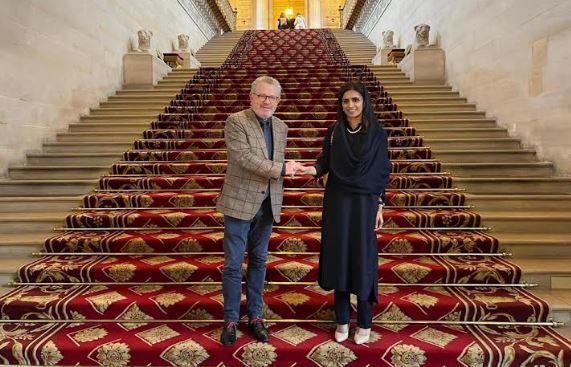
ISLAMABAD, Oct 19: /DNA/ – Minister of State for Foreign Affairs Hina Rabbani Khar on Tuesday met the Diplomatic Adviser to the French President Emmanuel Bonne and discussed the current status of Pakistan-France bilateral relations.

During the meeting held at Élysée, the official residence of the French president, they also exchanged views on important regional and global matters.

Khar also met today Mr. Bertrand Walckenaer, Additional Director General, French Development Agency (AFD) at Pakistan Embassy in Paris. She lauded AFD’s contribution in energy, sustainable urban development and climate resilience projects in Pakistan. Future cooperation areas also came under discussion.

In the evening, the Minister of State for Foreign Affairs held a meeting with Senator Pascal Allizard, President of France-Pakistan Friendship Group in the French Senate and Senator Madam Gisèle Jourda, member of the Group. The meeting was held at the historic building of the French Senate.

MoS appreciated the role played by Senator Allizard in furthering bilateral relations between Pakistan and France, especially in terms of parliamentary cooperation.

Both sides also discussed political, trade, investment, economic , cultural and education ties between the two countries as well as the situation of floods in Pakistan.

Reverse recognition of West Jerusalem

DNA

RAMALLAH:  The State of Palestine welcomes the assertion of the Australian Government and Secretary of State Senator Penny Wong that Jerusalem is a final status issue that must be resolved through negotiations between Palestine and Israel. 

Reversing the Morrison government’s recognition of West Jerusalem as the capital of Israel is a step in the right direction toward the effective implementation of the two-state solution and the achievement of a just and lasting peace in the Middle East.

 It should be noted in this context that East Jerusalem is an inseparable part of the occupied Palestinian territories, and Israel’s annexation of East Jerusalem in 1980 on the pretext that Jerusalem is “complete and united” as its capital is a flagrant violation of international law and has been condemned.

 As such through numerous UN General Assembly and Security Council resolutions.

We hope that the current Australian government will recognize the State of Palestine without further delay to salvage the two-state solution, in accordance with international law and relevant UN resolutions.

‘Azadi March’: SC to hear govt’s contempt plea against Imran Khan

ISLAMABAD: The Supreme Court Tuesday approved the federal government’s contempt of court petition against the PTI chief after he announced his long march to the capital.

A five-member larger bench of the apex court, headed by Chief Justice Umar Ata Banidal, will hear the case on Thursday. Justice Ijaz ul Ahsan, Justice Munib Akhtar, Justice Yahya Afridi, and Justice Sayyed Mazhar Ali Akbar Naqvi will be part of the bench.

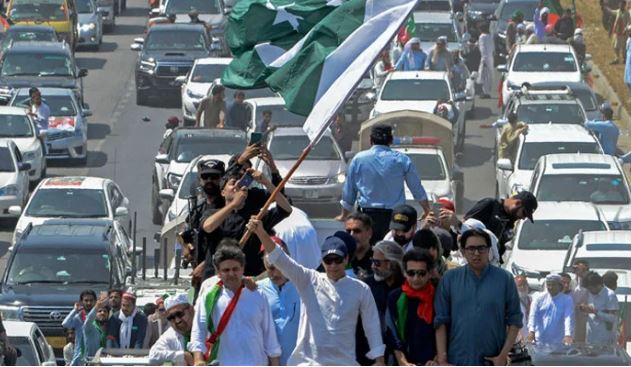
PTI Chairman Imran Khan has warned the government that he has given it “some time” to take a decision on announcing the date for the general elections, otherwise, he will move towards Islamabad — and the march will not be delayed beyond October.

But undeterred by the former prime minister’s repeated warnings, the federal government reprimanded Khan and warned him against marching to the capital.

A top government official told the PTI chairman that even if he has won the October 16 by-elections — in which he created history by winning six National Assembly seats simultaneously and called it a “referendum” on his popularity — it does not give him the right to march to the capital.

If the PTI holds another long march, then it would be the second time they would be coming to Islamabad. The last march was held on May 25 and ended with Khan abruptly calling off the march after reaching Islamabad.

The plea

The federal government last Thursday filed a contempt of court plea against the PTI chairman in the Supreme Court over his long march call to Islamabad.

In its petition, the federal government told the apex court that the PTI chief is making announcements of marching towards Islamabad, which was a violation of a court order.

“Imran Khan is making announcements to attack Islamabad,” says the plea. It urged the Supreme Court to direct the PTI chief to ensure the implementation of its orders related to protests and sit-ins.

The petition has been filed by the interior ministry on behalf of the federal government.

‘Some more time’

In a press conference on Monday, Khan said that his party’s anti-government “Azadi March” would not be delayed past October as they have completed their preparations.

The PTI chairman said: “My march will be held in October if the government does not announce the date for the next general election.”

The PTI chief warned the government that multitudes of people would take to the streets responding to his call to the nation for the anti-government march.

Khan said he was still cutting the government some slack so that they could decide on it. “I am actually giving them some more time before embarking on our long march protest.”

“[Interior Minister] Rana Sanaullah won’t even know what hit him, such is my preparation,” Khan warned the top minister, who recently claimed the government’s preparation was 10 times more as compared to May 25.

He said dialogue was out of the question with the ruling elite. “There’s no negotiation with criminals. You can hold reconciliation talks with Baloch or Sindhi nationalists, but not with the felons like them,” Khan added.

Minister’s warning

Sanaullah had warned that the government would multiply its May 25 policy by 10 if the PTI chairman announces another long march.

Speaking to the media in Faisalabad, the minister also offered an olive branch to the PTI saying that the government is ready for conditional talks with Khan but there would be no unconditional dialogue.

Sana added that it was unacceptable that anyone could come to occupy Islamabad whenever they wanted.

“If Imran Khan wants to hold a long march, he should apply for it. Under Section 144, no one is allowed to roam around with arms, but I found out that the president of the Faisalabad District Bar was roaming in NA-108 with armed people,” he said.

Cancer drug cooperation could save 1.5 mn lives a year: researchers

Around 1.5 million lives could be saved every year if the world worked together to more swiftly approve new cancer drugs, researchers said Tuesday.

The figure was based on how long it took two recent cancer drugs to be approved across the world after they were given the green light by the United States.

Pembrolizumab, an effective treatment for most lung cancers, was approved by the US Food and Drug Administration (FDA) in 2016.

More than 600,000 years of patients’ lives could have been saved if Brazil, Canada, China, India, Japan and the European Union had approved the drug at the same time, according to an analysis published in the Harvard Business Review, which is not peer-reviewed.

The authors, including US oncologist Bobby Daly, also looked at enzalutamide, which is used to treat prostate cancer.

Enzalutamide was approved by the FDA in 2012, but was not authorised in China for another seven years, partly due to a requirement for separate trials to be carried out there.

The analysis by members of the Bloomberg New Economy International Cancer Coalition found that 284,000 years of patient lives could have been saved if other countries had approved the drug alongside the FDA.

Extrapolating out from their findings, the researchers estimated that if each of the approximately seven cancer drugs approved by the FDA a year were authorised worldwide, it would reduce the number of cancer-related deaths by 10-20 percent.

That represents roughly 1.5 million of the around 10 million people who die of cancer every year.

‘CHALLENGING’ FOR DOCTORS

“In China alone an estimated 500,000 patient life-years could be saved through harmonisation of trial requirements that have delayed patient access to treatment,” former Australian prime minister Kevin Rudd, co-chair of the Bloomberg cancer coalition, said in a statement.

Mary Gospodarowicz, also a member of the coalition, said that it was “challenging” as an oncologist in Canada when a drug was approved in the US but would take years to be able to prescribe it to her patients.

The study assumed that the rest of the world had the infrastructure to diagnose and treat cancer as well as the US, which is not always the case, Gospodarowicz told AFP via phone from the World Cancer Congress in Geneva on Tuesday.

But it served as an example of how “removing the barriers to drug approval would be beneficial to patients around the world,” said the former president of the Union for International Cancer Control, which is holding the congress.

The authors of the analysis called on countries to embrace Project Orbis, a US-led framework aiming to get cancer drugs trialled and approved at the same time in multiple countries.

“The US has already made significant progress in setting up the regulatory infrastructure for cancer treatment with the Project Orbis initiative and the task ahead is to take that framework and internationalise it,” former New York mayor Michael Bloomberg said in a statement.

Will never accept weak government again, says Imran Khan

RAWALPINDI, OCT 18 – Pakistan Tehreek-e-Insaf (PTI) Chairman Imran Khan on Tuesday admitted to weakness within his government and said that he will never accept a weak government again.

These views were expressed by the PTI chief [Imran Khan] while meeting the delegation of the Rawalpindi-Islamabad Union of Journalists (RIUJ) and National Press Club Islamabad. During the meeting, the former premier said, for the last 26 years, he has been doing politics of justice for the sake of democracy and people. Talking about his long march, Imran Khan reiterated that the party’s long march for actual freedom (real freedom) will take place this month.

Talking about the country’s development back in the 1960s, Imran went on to say that in the 60s, Pakistan was economically ahead of Singapore and South Korea, now Singapore’s per capita income is $70,000, while Pakistan’s per capita income is only $2,000. The PTI chief added that Singapore developed on the basis of transparency and justice.

“When our government came, Pakistan was bankrupt, the incumbent government has bankrupted Pakistan in six months. When our government was overthrown, the growth rate in Pakistan was 6 per cent. I had only five days off, that too when I contracted the coronavirus”, said the former prime minister [Imran Khan].

Taking a swipe at PM Shehbaz Sharif, Imran Khan said, “After coming to power, he [Shehbaz Sharif] was acquitted of the cases. When I was in government, the pressure on me increased. NAB and courts were not under my control. Now, the mafias took over the system in Pakistan. They are trying their best to disqualify me, that’s why they are filing cases against me.”

Reiterating that early and transparent elections are the only way out of the current political and economic crisis, Imran said that preparations should be made to carry the movement to its logical conclusion vigorously within the framework of the constitution and law.

The PTI chairman, Imran Khan further said that the political struggle of the PTI is for the supremacy of the constitution and the law, adding that it is impossible to create a prosperous society without the rule of law and justice.

Talking about PTI leader and Senator Azam Swati, Imran said that the culture of lawlessness has flourished and the shameful tradition of violence against Senator Azam Swati and other political activists for mere expression has been revived.

General Qamar Javed Bajwa Tenure and Security Challenges

By: Shakeel Ahmad Ramay

The role of Pakistan Army in combating terrorism and other security issues faced to the country for the last three decades is evident from every inch of the soil. The current peace perspective is witness to it. Undoubtedly, it was not possible without the continued and popular support of our successive governments. Though the operation, Zarb-e-Azb was launched during the tenure of General Raheel Shareef, his successor Gen. Qamar Javed Bajwa made it a long-lasting success through his institution’s combined endeavors. Gen Bajwa, who is on way to complete his term as the army chief, assumed this office 6 years ago. During his tenure, he led Pakistan to fight at many fronts including terrorism, hybrid warfare and secure the CPEC.

Thus, it is right time to analysis his tenure in the context of security challenges. It will help to understand his contribution to secure the interests of the country or how his programs can be further refined or is there any shortcoming in his policies. Although, there is a long list of interventions, but I will focus on four most important interventions.

First, Pakistan Army under his command launched a comprehensive anti-terrorism operation with the name of Radd-ul-Fasaad. It is intelligence-based operation, which is going since 2017. Pakistan Army and law enforcement agencies are working hand in hand and in close collaboration with common citizens.Major elements of the program are,right of the use of power rests with the State, securing the western frontiers under WBMR, eliminationsafe heavens of terrorists, ending of violent extremism, and welfare initiatives in terror-hit areas.

Military and LEA conducted over 3 lakh IBOs operation, confiscated illegal weapons and ammunition. Army also captured a decent number of terrorist and ensured the conviction of terrorists. It was estimated that conviction rate of the terrorists was 70%. Pakistan Army also trained almost 40 thousand police official to enhance their capacity in fight against terrorism. The operation created a sense of security among the citizens. Better security environment also helped to build the trust of international community, especially of investors and businessmen. It helped to attract foreign direct investment, which was direly needed at that time.

Second, army started to build capacity and capabilities to fight theFifth Generation Warfare (FGW) or hybrid warfare (HWF). First stage was to put in place infrastructure to counter the hostile elements of FGW/HWF. Second, stage was to train human resource to effectively take lead in the fight. Third stage was to deploy the resources and make human resource familiar with ground realities and engage in real-time fight. It was required, rather urgently required, because Pakistan was/is one of the worst victims of FGW/HWF. The enemies of Pakistan have unleashed the all-around cyber ware and sabotage activities against Pakistan. Launch of China-Pakistan Economic Corridor (CPEC) further antagonized the opponents and enemies of Pakistan and China. Thus, they accelerated the propaganda, cyber war and sabotage activities. Fortunately, Pakistan was able to counter the propaganda and cyber warfare due to well-placed and functional system of FGW/HWF.

Third, sudden withdrawal of US forces from Afghanistan created a difficult situation for the region. Pakistan being frontline ally was put at greater risk. The enemies and opponents of Pakistan considered it a good opportunity to create law and order situation in Pakistan. It was propagated by them that a new wave of terrorism will engulf Pakistan. However, timely measures and well-functional anti-terrorism system and initiatives like Radd-ul-Fasaadhelped Pakistan to control the situation. In addition to that fencing of 2600Km border with Afghanistan (which was completed by Pakistan armed forces in 4-years) also helped to control the free movement of terrorist across the border. Although, Pakistan witnessed some incidents of terrorism, but at large situation remained under control. Now Pakistan is trying to further strengthen the mechanisms of anti-terrorism in accordance with new needs and requirement.

Fourth, Pakistan armed forces also played a leading role in the implementation of National Action Plan. Armed forces implemented all actions (9 actions), which were assigned to them. Army also played a leading role to strengthen mechanisms of de-radicalization.  Paigham e Pakistan is another excellent initiative, which helped to bring down the radicalization. 

Fifth, CPEC is huge program, which can transform the economic and social landscape of Pakistan. It brought enormous investment to Pakistan, at a time when Pakistan strangled in multiple problems and our friends, especially allies of war terror left us. Rather, they were running campaigns against investment in Pakistan. In this context, China invested in Pakistan. It was bad news for the opponents of Pakistan, and they launched numerous programs/actions to sabotage CPEC. Pakistan armed forces, by realizing the importance of CPEC and security needs stepped forward and erected a comprehensive framework of security. Owning to security framework, armed forces and LEA successfully defended the CPEC related investment during the first phase of CPEC.

Despite, such huge success, there are certain areas, which further need to be refined. Thus, the new leadership will have to focused attention on those areas. For example, now CPEC has entered second phase, which is entirely different from first phase of CPEC. Thus, there is need to refine the security framework according to needs of second phase of CPEC. Moreover, global dynamics are also changing very fast, and many major players are not in favor of CPEC. Russia-Ukraine crisis is further worsening the situation. USA departure from Afghanistan is also aggravating the regional situation. In this context, there is need to redefine the security arrangements for CPEC. 

Continued—-

Stay Connected

64FansLike
60FollowersFollow

Latest Reviews

Exchange Rates

USD - United States Dollar
EUR
1.17
GBP
1.35
AUD
0.67
CAD
0.72