Home Blog Page 146

Tehran warns Europe against undermining moves

Tehran warns Europe against undermining moves

DNA

TEHRAN/BEIJING: Amid ongoing regional tensions following the US-Israeli conflict with Iran, Tehran has issued fresh warnings to European nations while expressing concern over the treatment of its citizens in the United Arab Emirates.

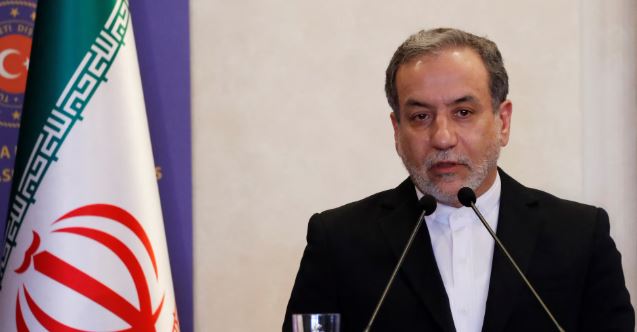
China, meanwhile, has strongly opposed new US sanctions linked to Iran. Iran’s Foreign Ministry urged European countries to “refrain from making any move that would undermine their interests,” according to reports citing recent statements. The warning comes as speculation grows about possible European involvement in maritime operations in the region, including potential warship deployments. Tehran described such actions as unethical and counterproductive.

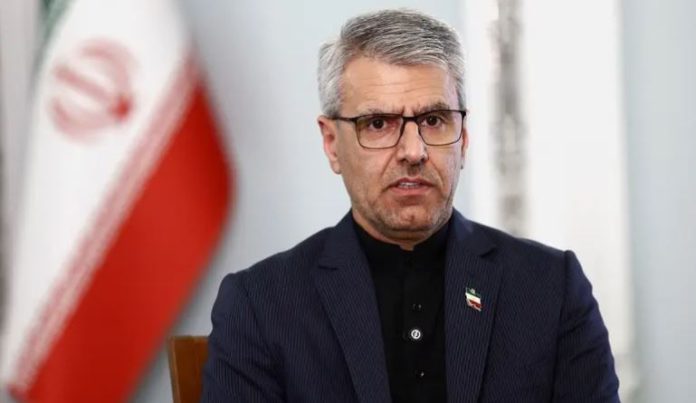
In a related development, Iranian Foreign Ministry Spokesperson Esmaeil Baqaei stated that Tehran is closely monitoring the situation of Iranian citizens in the UAE.

Baqaei said authorities are aware of reports that some Iranians were “harassed” in the Emirates over the past week. “We have handed down clear instructions to our embassies and consulates… and here we are closely monitoring the situation,” he added, pledging to take all necessary actions to protect Iranian nationals.

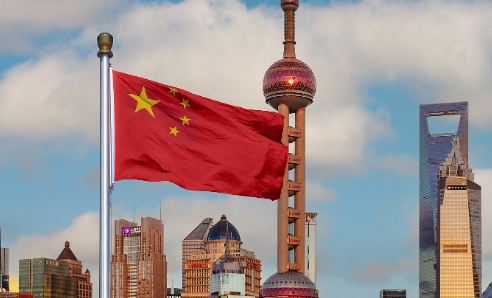
Separately, China has escalated its resistance to US sanctions targeting entities involved in Iranian oil trade. Beijing’s Commerce Ministry ordered Chinese firms not to comply with US blacklisting of several refineries, invoking its anti-foreign sanctions law. China described the US measures as unilateral, illegal, and lacking UN authorization, reaffirming its consistent opposition to such extraterritorial actions.

These developments highlight the complex international fallout from the recent Iran-related conflict, with Tehran seeking to exploit divisions between the US and Europe, while major powers like China push back against Washington’s maximum pressure campaign.

The statements reflect heightened sensitivities around diaspora protections, maritime security, and global sanctions enforcement as diplomatic efforts continue to stabilize the region.

Iran says demanded end to war, release of assets in its response to US

Iran says demanded end to war, release of assets in its response to US

TEHRAN, MAY 11: Iran’s foreign ministry said Monday it had called for an end to the war across the region and the release of frozen assets abroad in its response to the latest US proposal.

“We did not demand any concessions. The only thing we demanded was Iran’s legitimate rights,” said ministry spokesman Esmaeil Baqaei in a weekly press briefing.

For all the latest headlines, follow our Google News channel online or via the app.

He said Iran’s demands included “an end to the war in the region,” ending the US naval blockade, and the “release of assets belonging to the Iranian people, which have for years been unjustly trapped in foreign banks.”

US President Donald Trump said Sunday he has rejected Iran’s response to a US proposal for ending the war, slamming it as “TOTALLY UNACCEPTABLE!”

Baqaei also said Tehran has warned European countries against involvement in “a crisis that would certainly bring them no benefit,” referring to the ongoing tensions in the Gulf.

He said “any interference in the Strait of Hormuz would further complicate the situation.”

Britain and France are leading efforts to create an international coalition to secure the Strait of Hormuz, but only after a peace deal between the US and Iran is secured.

On Friday, US Secretary of State Marco Rubio urged Europeans to help secure the key waterway, after concluding a two-day visit to Rome.

During the briefing Monday, Baqaei denied claims on alleged oil leakage in the Gulf after satellite images appeared to show an oil slick spreading off the coast of Iran’s Kharg island.

“The claims made regarding oil slicks and similar matters are entirely fabricated,” he said, adding that Tehran was “very concerned about environmental harm” in the Gulf, which he blamed on US presence in the region.

Plot to coerce girl into carrying out terrorist attack

Plot to coerce girl into carrying out terrorist attack

The Balochistan CM said the girl perhaps did not know that Islamabad was the target and was to be told at the last minute, commending the intelligence agencies for foiling a major plan

DNA

QUETTA: Balochistan Chief Minister Sarfraz Bugti said on Monday that a plot to coerce a girl into carrying out a terrorist attack in Islamabad had been thwarted by intelligence agencies.

The girl, who was reportedly arrested before she could carry out a suicide bombing, will be released to her father under supervision instead of facing trial, he said.

The chief minister, in a press conference alongside the suspect, emphatically denounced the perpetrators of exploitation against Baloch women and girls. He stressed that their actions had no connection at all to Baloch tradition or history.

“We are faithful to our tradition,” he said, adding, “These people have no connection to Balochiyat, and the way they are using our women in this war is shameful. I am so ashamed that I cannot even tell the media the details.”

According to details shared by Bugti, the girl’s name had initially appeared on social media as a missing person, but an investigation by intelligence agencies ascertained that she was allegedly training at a terrorist camp.

Terming the investigation’s results as “very unfortunate”, Bugti noted that the method of exploitation by the terrorists involved “honeytrapping” women, then blackmailing them. In this case, by threatening to kill the girl’s father if she did not comply with their orders, the chief minister added.

“The plan was to perform a suicide attack in Islamabad,” the chief minister said.

He contended that the objective of the attack, which he alleged was orchestrated by agents of India’s intelligence agency Research and Analysis Wing (RAW), was to sabotage the improved reputation Pakistan was currently enjoying on the international stage.

The Balochistan CM said the girl perhaps did not know that Islamabad was the target and was to be told at the last minute, commending the intelligence agencies for foiling a major plan.

In addition, he stressed that the girl had been exploited in an egregious way and slammed those who were responsible for it, asking, “They would exploit their own Baloch girls? Their own daughters, their own sisters … and to please international masters? Can you conceive of it?”

“Then they say, ‘We are Baloch and these are Baloch traditions and a Baloch cause’ — there is no cause, no Balochiyat. It is a curse on this Balochiyat.”

Bugti said the girl’s story had caused him great pain and was a cause for shame, asserting that it showed the difference between the state and the terrorists: “I always say we should be opening doors to Oxford and Harvard for these girls, and they want to exploit them and put them in suicide jackets.”

He also denounced that the terrorists would proceed to upload video clips of such women and girls to social media as propaganda, calling it “heroism”, to recruit more women for their plans. He challenged the notion presented by the terrorists that women were “a part of this war”.

Pakistan summons Afghan envoy on Bannu attack

Pakistan summons Afghan envoy over deadly attack

Reiterating Pakistan’s grave concern over the continued use of Afghan soil for terrorist attacks against Pakistan, it was impressed upon the Afghan side that Pakistan reserves the right to respond decisively against the perpetrators of this barbaric act

Saifullah Ansar

ISLAMABAD: The Afghan Chargé d’Affaires was summoned to the Ministry of Foreign Affairs to deliver a strong demarche regarding the cowardly vehicle-borne IED attack carried out by terrorists of Fitna-al-Khawarij on the Fateh Khel Police Post in Khyber Pakhtunkhwa’s Bannu District on 9 May 2026. The attack resulted in the martyrdom of 15 police constables and injuries to four others, including a civilian.

The Ministry conveyed that a detailed investigation into the incident, along with evidence collected and technical intelligence, indicates that the attack was masterminded by terrorists residing in Afghanistan.

Reiterating Pakistan’s grave concern over the continued use of Afghan soil for terrorist attacks against Pakistan, it was impressed upon the Afghan side that Pakistan reserves the right to respond decisively against the perpetrators of this barbaric act.

It was further highlighted that the continued presence of various terrorist organizations on Afghan soil, and the permissive environment enabling their operations, have been well documented in reports by the UN Monitoring Team and other international organizations. The fight against terrorism is a common cause, and the Afghan Taliban must honour their commitment not to allow their territory to be used for terrorism against other countries.

Pakistan has repeatedly urged the Afghan Taliban regime to take concrete and verifiable action against Fitna-al-Khawarij, Fitna-al-Hindustan, and ISKP/Daesh elements operating from Afghan soil.

Pakistan has also constructively engaged with the Afghan Taliban regime through several rounds of talks mediated by brotherly and friendly countries. However, the Afghan Taliban have consistently failed to commit to, or deliver, meaningful and verifiable action against these terrorist outfits.

The Afghan Taliban regime has also been categorically informed that, if it continues to harbour these terrorist organizations, Pakistan will not compromise on its national security or on the safety and protection of its citizens.

China seeks ‘more stability’ as it confirms Trump-Xi meet

China to make greater contributions to healthy development of international human rights

DNA

BEIJING: US President Donald Trump will visit China from May 13 to 15, Beijing confirmed on Monday, with the US leader expected to discuss Iran and trade with his Chinese counterpart.

Washington and Beijing have been at loggerheads over key issues ranging from trade tariffs to the Middle East war and Taiwan, which China claims as part of its territory.

Trump was originally meant to visit in late March or early April, but postponed his trip to focus on the war against Iran.

“At the invitation of President Xi Jinping, President of the United States of America Donald J Trump will pay a state visit to China from May 13 to 15,” a Chinese foreign ministry spokesperson said.

Trump is expected to push Xi on Iran while aiming to ease trade tensions, according to US officials.

China is a key customer for Iranian oil, mainly through independent “teapot” refineries that rely on discounted crude from the Islamic republic.

“This will be a visit of tremendous symbolic significance,” US Principal Deputy Press Secretary Anna Kelly told reporters on a call.

“But of course, President Trump never travels for symbolism alone. The American people can expect the president to deliver more good deals on behalf of our country.”

Trump’s first trip to China in his second term will feature pomp and ceremony including a tour of the Temple of Heaven in Beijing and a lavish state banquet, the White House said.

This is the first visit by a US president to China since 2017.

Pakistan summons Afghan envoy over deadly attack

Pakistan summons Afghan envoy over deadly attack

ISLAMABAD, MAY 11 /DNA/ – The Afghan Chargé d’Affaires was summoned to the Ministry of Foreign Affairs today to deliver a strong demarche regarding the cowardly vehicle-borne IED attack carried out by terrorists of Fitna-al-Khawarij on the Fateh Khel Police Post in Khyber Pakhtunkhwa’s Bannu District on 9 May 2026. The attack resulted in the martyrdom of 15 police constables and injuries to four others, including a civilian.

The Ministry conveyed that a detailed investigation into the incident, along with evidence collected and technical intelligence, indicates that the attack was masterminded by terrorists residing in Afghanistan.

Reiterating Pakistan’s grave concern over the continued use of Afghan soil for terrorist attacks against Pakistan, it was impressed upon the Afghan side that Pakistan reserves the right to respond decisively against the perpetrators of this barbaric act.

It was further highlighted that the continued presence of various terrorist organizations on Afghan soil, and the permissive environment enabling their operations, have been well documented in reports by the UN Monitoring Team and other international organizations. The fight against terrorism is a common cause, and the Afghan Taliban must honour their commitment not to allow their territory to be used for terrorism against other countries.

Pakistan has repeatedly urged the Afghan Taliban regime to take concrete and verifiable action against Fitna-al-Khawarij, Fitna-al-Hindustan, and ISKP/Daesh elements operating from Afghan soil.

Pakistan has also constructively engaged with the Afghan Taliban regime through several rounds of talks mediated by brotherly and friendly countries. However, the Afghan Taliban have consistently failed to commit to, or deliver, meaningful and verifiable action against these terrorist outfits.

The Afghan Taliban regime has also been categorically informed that, if it continues to harbour these terrorist organizations, Pakistan will not compromise on its national security or on the safety and protection of its citizens.

US envoy, Dar discuss evolving regional situation

US envoy, Dar discuss evolving regional situation

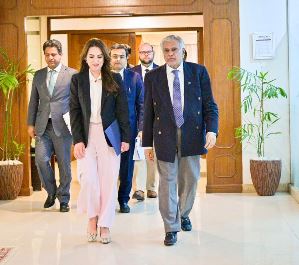
ISLAMABAD, MAY 11 /DNA/ – U.S. Chargé d’Affaires Ms. Natalie A. Baker called on Deputy Prime Minister/Foreign Minister Senator Mohammad Ishaq Dar @MIshaqDar50 today to discuss the evolving regional situation and the broader Pakistan-U.S. bilateral relationship.

DPM/FM highlighted Pakistan’s role in facilitating communication between US and Iran, while expressing hope that ongoing diplomatic efforts would contribute to peace and stability in the region and beyond. He also appreciated ongoing U.S. assistance in the repatriation of Pakistani and Iranian seafarers through Singapore.

HEC, 20 Pakistani varsities begin series of education expos in Bangladesh

HEC, 20 Pakistani varsities begin series of education expos in Bangladesh

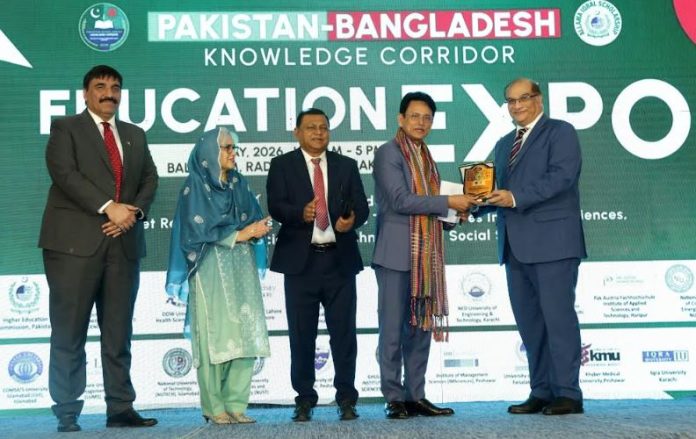
ISLAMABAD/DHAKA, MAY 11 /DNA/ – The Higher Education Commission (HEC) Pakistan has begun the second series of Pakistan Higher Education Expos to showcase the higher education opportunities for the Bangladeshi students under the Pakistan-Bangladesh Knowledge Corridor. The first exhibition of the series was held in Dhaka.     

The academic showcasing activity, wherein 20 prestigious Pakistani universities are participating, will also be held in other cities of Bangladesh – including Barishal, Rajshahi, Sylhet, Chittagong, and Rangpur – over the next 10 days. The expos aim to promote academic exchange, research collaboration, and stronger institutional linkages between the two countries under the Pakistan-Bangladesh Knowledge Corridor.

Minister for Education (Bangladesh) Dr. A. N. M. Ehsanul Hoque Milon inaugurated the Education Expo in Dhaka, while High Commissioner of Pakistan to Bangladesh Mr. Imran Haider, Director General Scholarships HEC Ms. Aayesha Ikram, Mr. Jahanzeb Khan Project Director and other notables were also present on this occasion.

Addressing the inaugural ceremony, Dr. Ehsanul Hoque Milon appreciated the efforts of HEC Pakistan and the Pakistan High Commission in Bangladesh for execution of the Pakistan-Bangladesh Knowledge Corridor in letter and spirit. He noted that the Pakistan-Bangladesh Knowledge Corridor is promoting academic collaboration between Pakistan and Bangladesh by offering opportunities for students, faculty, and academic institutions. He affirmed that such engagements will further strengthen bilateral educational relations and people-to-people connection. He urged the Bangladeshi students to actively apply for the Allama Muhammad Iqbal Scholarships, describing the initiative as a valuable opportunity for talented. students.

Mr. Imran Haider highlighted Pakistan’s excellence in higher education and emerging fields such as Artificial Intelligence, Data Sciences and Aviation. He underlined the features of Pakistan-Bangladesh Knowledge Corridor, asserting that the series of exhibitions over the next 10 days will pave the way for greater collaboration between the two countries by highlighting the avenues of research partnerships, joint programmes, and academic exchanges, in addition to the scholarship opportunities.

In her welcome remarks earlier, Ms. Aayesha Ikram presented a detailed overview of the Pakistan-Bangladesh Knowledge Corridor initiative, the Allama Muhammad Iqbal Scholarships for Bangladeshi students, and the wide range of academic opportunities available at leading Pakistani universities. She reiterated HEC’s commitment to strengthening educational cooperation between Pakistan and Bangladesh through scholarships, academic exchanges, and institutional collaborations.

It is pertinent to mention here that HEC organised the first series of its exhibitions in Bangladeshi cities under the Pakistan-Bangladesh Knowledge Corridor in 2025. Under this initiative, the Government of Pakistan, through HEC, is offering 500 fully-funded Allama Muhammad Iqbal Scholarships for Bangladeshi students to pursue higher education at leading Pakistani universities. Besides, the initiative also aims to provide training to civil servants of Bangladesh. The first batch of 74 Bangladeshi students has already commenced their academic journey at various universities across Pakistan, marking a significant milestone in strengthening bilateral educational cooperation between Pakistan and Bangladesh. The students are currently enrolled in diverse disciplines, including Engineering, Medical Sciences, Computer Science, Cyber Security, and Biological Sciences.

Al-Shifa Trust helps 140 children beat eye cancer

Al-Shifa Trust helps 140 children beat eye cancer

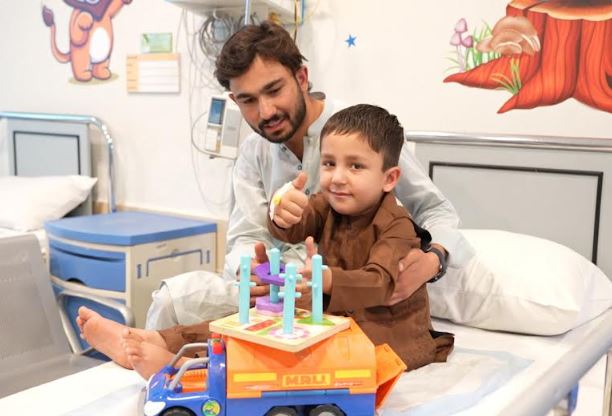
ISLAMABAD, MAY 11: /DNA/ – For hundreds of families bringing their children to Al-Shifa Trust Eye Hospital, the biggest fear is not only cancer, but whether delayed treatment has reduced the chances of saving their child’s eyesight and recovery.

Doctors at the hospital’s Cancer Unit said nearly 140 children treated over the past three years are now free of cancer, a milestone they described as significant in a country where childhood eye cancer is often diagnosed at advanced stages.

The hospital said it has registered 620 cancer patients and conducted 3,952 chemotherapy sessions since the unit became operational. Many patients came from low-income and rural families where awareness, transport costs and delayed referrals remain major barriers to treatment.

Pediatric oncologist Dr Tanzeela Farah said many parents fail to recognise early warning signs of eye cancer, including a white glow in a child’s eye in photographs or poor eye contact. “If detected early, many children can survive and even retain their vision,” she told reporters.

She advised parents to use a mobile phone torch to check newborns and infants for unusual white reflections in the pupil, medically known as leukocoria, which can indicate retinoblastoma, the most common eye cancer in children.

Doctors at the hospital also warned that cousin marriages can contribute to inherited eye diseases and some childhood cancers in Pakistan, where consanguineous marriages remain common.

Studies show many retinoblastoma patients reach hospitals in advanced stages because of delayed diagnosis, lack of awareness and financial hardship.

Global data shows survival rates for retinoblastoma exceed 99% in high-income countries with early screening and specialised care, but can fall to nearly 50% in poorer countries because children arrive late for treatment.

To reduce costs for poor families, Al-Shifa said it partnered with institutions including the Armed Forces Institute of Pathology and Combined Military Hospital for diagnostic tests and radiotherapy support. Several deserving patients also received radiotherapy free of cost.

For many families, doctors said, timely treatment meant saving both eyesight and life. “Eye cancer in children is treatable,” Dr Tanzeela said. “The real danger is delayed diagnosis.”

Al-Shifa Trust runs seven hospitals across Rawalpindi, Sukkur, Kohat, Muzaffarabad, Chakwal, Gilgit, and Haveli Lakha while Asia’s biggest eye hospital is being constructed at Lahore.

Punjab Government and Governance

Punjab Government and Governance

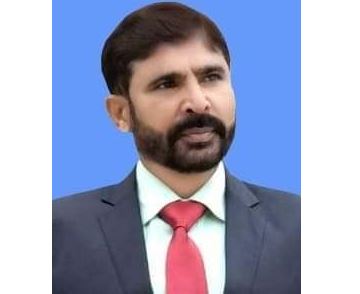
Dr. Muhammad Akram Zaheer

In Pakistan’s evolving political landscape, governance is no longer judged merely by rhetoric or electoral success. It is increasingly measured by outcomes service delivery, institutional performance and public trust. Nowhere is this more evident than in Punjab, the country’s most populous and politically decisive province. The contrasting administrative approaches of Usman Buzdar and Maryam Nawaz Sharif offer a revealing lens through which to examine the state of governance in the province.

The concept of good governance, long championed by global institutions and local reformists alike, rests on a set of core principles: transparency, accountability, efficiency and responsiveness. Yet, in practice, these ideals often collide with political realities. Punjab’s recent administrative history reflects this tension, shaped by shifting political priorities, bureaucratic inertia and the enduring challenge of translating policy into practice.

The tenure of Usman Buzdar, spanning from 2018 to 2022, unfolded under a political environment defined by centralised decision-making and a strong reliance on bureaucratic structures. Critics frequently described his administration as one where the civil service assumed an outsized role in governance, often at the expense of political direction. Supporters, however, argued that this reliance ensured continuity and stability in administrative processes. Under Buzdar, several initiatives were introduced with the stated aim of improving service delivery, particularly in health and local government. Yet, the broader perception of his tenure remained mixed. Questions were raised about the pace of decision-making, the clarity of policy direction and the overall effectiveness of governance mechanisms. The absence of a strong political narrative often left the administration appearing reactive rather than proactive, a perception that proved difficult to dispel.

In contrast, the current administration led by Maryam Nawaz Sharif presents a markedly different style of governance. Her leadership reflects a more assertive political approach, characterised by visible engagement, frequent public messaging and a focus on high-impact initiatives. This shift underscores the role of political leadership in shaping governance outcomes a factor often underestimated in administrative analyses. Maryam Nawaz’s governance model appears to prioritise visibility and responsiveness. From public outreach campaigns to targeted policy interventions, her administration has sought to project an image of active and engaged leadership. This approach resonates with a broader trend in contemporary politics, where public perception and communication are integral to governance itself. However, visibility alone does not equate to effectiveness and the long-term impact of such an approach remains to be seen.

The comparison between these two administrations highlights a fundamental question: what constitutes good governance in Punjab’s context? Is it the steady, if unremarkable, functioning of bureaucratic systems, or the dynamic, politically driven pursuit of reform? The answer likely lies somewhere in between. Effective governance requires both administrative competence and political vision—an equilibrium that has often proved elusive. One area where this contrast is particularly evident is service delivery. Under Buzdar, efforts to streamline administrative processes yielded incremental improvements in certain sectors. However, these gains were often overshadowed by broader concerns about governance capacity. In the current administration, there is a greater emphasis on flagship projects and visible reforms. While such initiatives can generate momentum, they also raise questions about sustainability and institutionalisation.

Transparency and accountability present another dimension of comparison. The extent to which decision-making processes are open and subject to scrutiny remains a critical indicator of governance quality. Both administrations have faced challenges in this regard, reflecting systemic issues that extend beyond individual leadership. Strengthening accountability mechanisms requires not only political will but also institutional reform a task that demands sustained commitment. The role of the bureaucracy further complicates this picture. In Punjab, as in much of Pakistan, the civil service remains a central pillar of governance. Its effectiveness, however, is contingent upon the clarity of political direction and the consistency of policy frameworks. During Buzdar’s tenure, the perceived dominance of bureaucratic actors raised concerns about accountability and responsiveness. Under Maryam Nawaz, the relationship appears more politically driven, though it is too early to assess its long-term implications.

It is also important to situate this comparison within the broader structural context. Governance in Punjab is shaped by a complex interplay of factors, including fiscal constraints, institutional capacity and socio-economic disparities. No administration operates in a vacuum and the challenges faced by both Buzdar and Maryam Nawaz reflect deeper systemic issues. Addressing these challenges requires more than administrative adjustments; it demands a comprehensive rethinking of governance frameworks. The question of sustainability looms large in this discussion. Short-term gains, whether achieved through bureaucratic efficiency or political activism, must be translated into long-term institutional improvements. This requires a shift from personality-driven governance to system-driven reform—a transition that has historically proved difficult in Pakistan’s political context.

Public trust, arguably the most intangible yet critical element of governance, also hinges on this transition. Citizens are less concerned with the mechanics of governance than with its outcomes: access to quality education, reliable healthcare and economic opportunity. The ability of any administration to deliver on these expectations ultimately determines its legitimacy. The comparative study of Usman Buzdar and Maryam Nawaz Sharif thus offers more than a political narrative; it provides insights into the evolving nature of governance in Punjab. It underscores the importance of balancing administrative efficiency with political leadership, of aligning short-term initiatives with long-term goals and of prioritising institutional strength over individual authority.

As Punjab moves forward, the lessons from these contrasting approaches will be crucial. Governance is not a static concept; it evolves with changing political, social and economic realities. The challenge for policymakers is to adapt to these changes while remaining anchored in the principles of good governance. The test of governance in Punjab is not merely about comparing past and present administrations. It is about charting a path forward—one that combines the strengths of both approaches while addressing their limitations. Whether this path can be realised will depend on the willingness of political leaders to move beyond short-term considerations and invest in the long-term institutional development of the province.

Stay Connected

64FansLike
60FollowersFollow

Latest Reviews

Exchange Rates

USD - United States Dollar
EUR
1.14
GBP
1.34
AUD
0.70
CAD
0.71