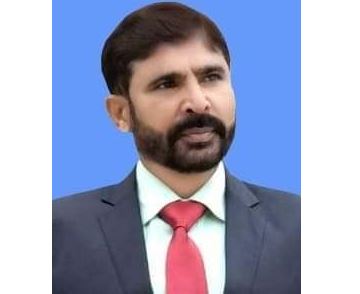
Dr. Muhammad Akram Zaheer
In Pakistan’s evolving political landscape, governance is no longer judged merely by rhetoric or electoral success. It is increasingly measured by outcomes service delivery, institutional performance and public trust. Nowhere is this more evident than in Punjab, the country’s most populous and politically decisive province. The contrasting administrative approaches of Usman Buzdar and Maryam Nawaz Sharif offer a revealing lens through which to examine the state of governance in the province.
The concept of good governance, long championed by global institutions and local reformists alike, rests on a set of core principles: transparency, accountability, efficiency and responsiveness. Yet, in practice, these ideals often collide with political realities. Punjab’s recent administrative history reflects this tension, shaped by shifting political priorities, bureaucratic inertia and the enduring challenge of translating policy into practice.
The tenure of Usman Buzdar, spanning from 2018 to 2022, unfolded under a political environment defined by centralised decision-making and a strong reliance on bureaucratic structures. Critics frequently described his administration as one where the civil service assumed an outsized role in governance, often at the expense of political direction. Supporters, however, argued that this reliance ensured continuity and stability in administrative processes. Under Buzdar, several initiatives were introduced with the stated aim of improving service delivery, particularly in health and local government. Yet, the broader perception of his tenure remained mixed. Questions were raised about the pace of decision-making, the clarity of policy direction and the overall effectiveness of governance mechanisms. The absence of a strong political narrative often left the administration appearing reactive rather than proactive, a perception that proved difficult to dispel.
In contrast, the current administration led by Maryam Nawaz Sharif presents a markedly different style of governance. Her leadership reflects a more assertive political approach, characterised by visible engagement, frequent public messaging and a focus on high-impact initiatives. This shift underscores the role of political leadership in shaping governance outcomes a factor often underestimated in administrative analyses. Maryam Nawaz’s governance model appears to prioritise visibility and responsiveness. From public outreach campaigns to targeted policy interventions, her administration has sought to project an image of active and engaged leadership. This approach resonates with a broader trend in contemporary politics, where public perception and communication are integral to governance itself. However, visibility alone does not equate to effectiveness and the long-term impact of such an approach remains to be seen.
The comparison between these two administrations highlights a fundamental question: what constitutes good governance in Punjab’s context? Is it the steady, if unremarkable, functioning of bureaucratic systems, or the dynamic, politically driven pursuit of reform? The answer likely lies somewhere in between. Effective governance requires both administrative competence and political vision—an equilibrium that has often proved elusive. One area where this contrast is particularly evident is service delivery. Under Buzdar, efforts to streamline administrative processes yielded incremental improvements in certain sectors. However, these gains were often overshadowed by broader concerns about governance capacity. In the current administration, there is a greater emphasis on flagship projects and visible reforms. While such initiatives can generate momentum, they also raise questions about sustainability and institutionalisation.
Transparency and accountability present another dimension of comparison. The extent to which decision-making processes are open and subject to scrutiny remains a critical indicator of governance quality. Both administrations have faced challenges in this regard, reflecting systemic issues that extend beyond individual leadership. Strengthening accountability mechanisms requires not only political will but also institutional reform a task that demands sustained commitment. The role of the bureaucracy further complicates this picture. In Punjab, as in much of Pakistan, the civil service remains a central pillar of governance. Its effectiveness, however, is contingent upon the clarity of political direction and the consistency of policy frameworks. During Buzdar’s tenure, the perceived dominance of bureaucratic actors raised concerns about accountability and responsiveness. Under Maryam Nawaz, the relationship appears more politically driven, though it is too early to assess its long-term implications.
It is also important to situate this comparison within the broader structural context. Governance in Punjab is shaped by a complex interplay of factors, including fiscal constraints, institutional capacity and socio-economic disparities. No administration operates in a vacuum and the challenges faced by both Buzdar and Maryam Nawaz reflect deeper systemic issues. Addressing these challenges requires more than administrative adjustments; it demands a comprehensive rethinking of governance frameworks. The question of sustainability looms large in this discussion. Short-term gains, whether achieved through bureaucratic efficiency or political activism, must be translated into long-term institutional improvements. This requires a shift from personality-driven governance to system-driven reform—a transition that has historically proved difficult in Pakistan’s political context.
Public trust, arguably the most intangible yet critical element of governance, also hinges on this transition. Citizens are less concerned with the mechanics of governance than with its outcomes: access to quality education, reliable healthcare and economic opportunity. The ability of any administration to deliver on these expectations ultimately determines its legitimacy. The comparative study of Usman Buzdar and Maryam Nawaz Sharif thus offers more than a political narrative; it provides insights into the evolving nature of governance in Punjab. It underscores the importance of balancing administrative efficiency with political leadership, of aligning short-term initiatives with long-term goals and of prioritising institutional strength over individual authority.
As Punjab moves forward, the lessons from these contrasting approaches will be crucial. Governance is not a static concept; it evolves with changing political, social and economic realities. The challenge for policymakers is to adapt to these changes while remaining anchored in the principles of good governance. The test of governance in Punjab is not merely about comparing past and present administrations. It is about charting a path forward—one that combines the strengths of both approaches while addressing their limitations. Whether this path can be realised will depend on the willingness of political leaders to move beyond short-term considerations and invest in the long-term institutional development of the province.