Home Blog Page 1433

Artisans-at-work attracting large number of visitors at Lok Mela

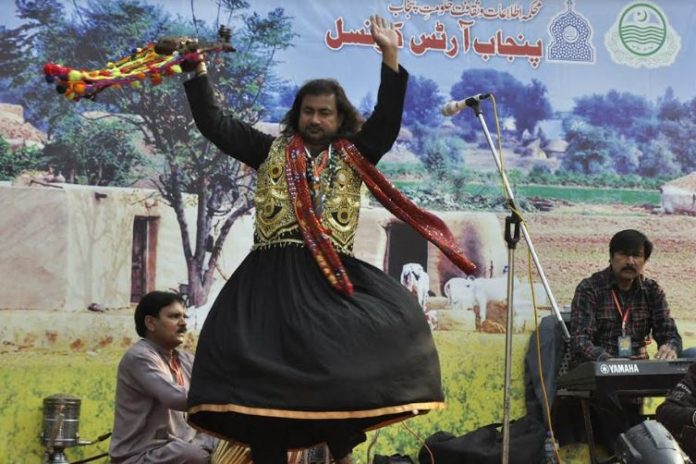
ISLAMABAD, /DNA/ – The ten-day ongoing ‘Lok Mela’ (Lok festival) is attracting a large number of people, especially the exhibition of artisans-at-work has proven to be a major attraction for visitors. 

Over 500 craftspeople are seen actively demonstrating their work in artistically designed cultural pavilions, putting their creativity into arts and crafts, to mesmerise spectators with their unique work at Lok Virsa.

The crafts on display are embroidery (including Multani, Bahawalpuri, Hazara, Swati, Balochi and Sindhi embroidery) block printing, lacquer work, Khussa making, pottery, tie and dye, doll making, khaddar weaving, truck art, wood carving, woodwork, papier mache, namda and gabba, metal work, shawl weaving, zari work, motikari, traditional carpets, blue pottery, Ajrak, wax printing, stonework, wooden spoon making, pattu weaving and many others.

Being a prime institution dealing with Pakistani folk culture, Lok Virsa was cognizant of the need for gender equality which is seen in each event that it holds from time to time, because in this way both male and female practitioners afford equal opportunity of showcasing their talent and getting due recognition thereof, said the organizers.

In the present event too, one can see a number of female artisans demonstrating their skills. The most prominent among them are Kaneez Fatima and Shakar Bibi from Balochistan. They practice Balochi embroidery and have carried on this centuries-old tradition from their mothers and devoted 30 to 35 years of their life to this profession. They stand out not only for their excellence but also for their tireless propagation of this art by imparting it to future generations.

Another craftswoman Pari Bibi, a 70-years old artisan, hailing from Badin, Sindh weaves ‘Farasi’ [traditional rug] and has expertise in the art of weaving since her childhood.

Male artisans are also equally good at showing their artwork. Muhammad Waseem, lacquer work from Khyber Pakhtunkhwa is showcasing an excellent display. His father was also an accomplished master craftsman of lacquer art who received a pride of performance award in recognition of his talent.

Ameer Bukhsh is an expert in natural dyes from Kahror Pucca. The ancient art of wooden block making has its centres in the lower Indus valley encompassing southern Punjab and all of Sindh. He has not only trained his family members but also imparted training to many artisans in other crafts of textiles.

Hajira Bibi from Bahawalpur is an accomplished artisan in basketry. She makes colourful baskets Changair and decorate items from fibroin plants.

Pakistan with its rich and varied heritage has a craft tradition of more than 9,000 years dating back to the Mehergarh civilization in Balochistan, which reveals the earliest evidence of pottery production.

The Indus Valley civilization of Mohenjo-Daro in Sindh and Harappa civilization in Punjab (5,000 B.C) indicates impressions of woven cloth production from cotton and wool. The historical influence still to be seen in the form, design and colour of Pakistani handicrafts is essentially Islamic, a fusion of Turkish, Arab, Persian and indigenous Mughal traditions.

The crafts represent a valuable material heritage, which forms a tangible part of our historical and contemporary culture. Unlike the west, most traditional crafts in Pakistan are neither a profession nor a hobby, but an essential component of the diverse cultural patterns—a product of the ethnic and communal attitudes and practices, the organizers highlighted.

As such, crafts have meanings and definite social context in traditional society. However, the rise of the industrial age is erasing this craft heritage, even in rural areas. But there is a recent trend towards the use of crafts as art objects in urban homes. Historic forms and designs are being revived both by the increasing number of trained craftsmen and by designers for the tourist and export trade.
Federal minister rules out general elections before August next year

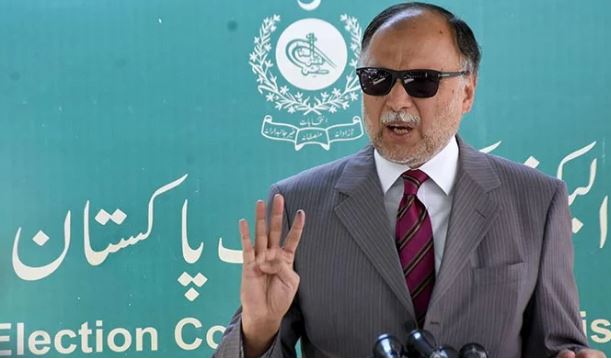
ISLAMABAD, NOV 27: Federal Minister for Planning, Development, and Special Initiatives Ahsan Iqbal Sunday ruled out the possibility of general elections in Pakistan before August 2023 after PTI Chairman Imran Khan decided his party and allies would quit assemblies.

The former prime minister has called off his long march to Islamabad and instead announced that his party would soon be resigning from the country’s assemblies — including Khyber Pakhtunkhwa and Punjab, where the party rules.

“As far as elections are concerned, even PTI knows that early elections aren’t possible in the country as it will take around 6-8 months for rehabilitation works to complete in Sindh and Balochistan — the provinces hit hard by floods,” the minister said while speaking on Geo News’ programme “Naya Pakistan”.

Iqbal said amid all the destruction, the government can’t force the country into snap polls as this will not be a mere election of a district in Mianwali — Khan’s home place.

Flooding across Pakistan left one-third of the country under water, destroyed around two million homes and business premises, washed away 7,000 kilometres (4,500 miles) of roads, and collapsed 500 bridges — while water is still stagnant in several parts of the country.

“Also, in March or April, the results of the new census will be released. The Sindh government and the [people of the] province have a clear stance: next elections will be held on the basis of the new census.”

In case the new census is out by March or April, then the Election Commission of Pakistan (ECP) will take at least four to five months for delimitation and the country will ultimately move towards polls in August.

“This is an administrative and natural timetable that might not change,” the minister said as he strongly opposed holding country-wide elections.

Iqbal hinted that the elections could be held in October as it is a Constitutional requirement to hold them during a stipulated time frame.

The federal minister asked the PTI chief to put an end to his “negative politics”, return to the Parliament, and hold negotiations with the coalition government.

“Imran Khan should partake in the [meetings of the committee for electoral reforms] if he wants to ensure that the next elections aren’t controversial,” the minister noted.

Interior Minister Rana Sanaullah — before Khan called off his march — had also asked the PTI chief to return to the assembly as democracy could not flourish if the opposition decides against holding talks.

Iqbal’s statement came after Khan — who has ended the long march — told a charged rally in Pindi that his party had decided that they would not remain a part of the “corrupt political system”, and quit all the assemblies.

Khan has called off his long march to Islamabad, but has not announced when will he quit the assemblies. Although, the PTI chief said that he would hold consultations on the date later on.

The PTI began its long march toward the federal capital on October 28 in an attempt to force the coalition government to early elections. The march was abruptly stopped on November 3 after Khan was wounded in an assassination bid.

It was later resumed from the same point but led by PTI leader Shah Mahmood Qureshi. Khan then joined his supporters a day earlier, when he called off the march.

Following Khan’s announcement to call off the march, leaders from the ruling coalition — including Foreign Minister and PPP Chairman Bilawal Bhutto-Zardari, Sanaullah, and Iqbal — criticised the entire campaign and termed it a “flop show”.

Clashes in Shanghai as Covid protests flare across China

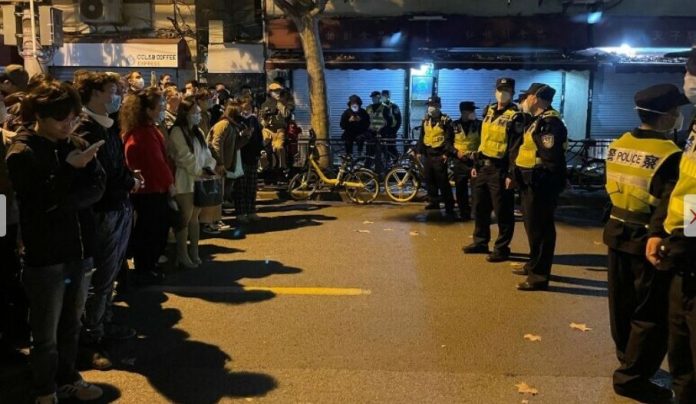
Shanghai: Hundreds of demonstrators and police clashed in Shanghai on Sunday night as protests over China’s stringent Covid restrictions flared for the third day and spread to several cities in the wake of a deadly apartment fire in the country’s far west.

The wave of civil disobedience is unprecedented in mainland China since President Xi Jinping assumed power a decade ago, as frustration mounts over his signature zero-Covid policy nearly three years into the pandemic. The Covid measures are also exacting a heavy toll on the world’s second-largest economy.

“I’m here because I love my country, but I don’t love my government … I want to be able to go out freely, but I can’t. Our Covid-19 policy is a game and is not based on science or reality,” said a protester in the financial hub named Shaun Xiao.

Protesters also took to the streets in the cities of Wuhan and Chengdu on Sunday. In Beijing, small gatherings held peaceful vigils, while students on numerous university campuses around China gathered to demonstrate over the weekend.

A fire on Thursday at a residential high-rise building in the city of Urumqi, capital of the Xinjiang region, triggered protests after videos of the incident posted on social media led to accusations that lockdowns were a factor in the blaze that killed 10 people.

Urumqi officials abruptly held a news conference in the early hours of Saturday to deny Covid measures had hampered escape and rescue efforts. Many of Urumqi’s four million residents have been under some of the country’s longest lockdowns, barred from leaving their homes for as long as 100 days.

On Sunday in Shanghai, police kept a heavy presence on Wulumuqi Road, which is named after Urumqi, where a candlelight vigil the day before turned into protests.

“We just want our basic human rights. We can’t leave our homes without getting a test. It was the accident in Xinjiang that pushed people too far,” said a 26-year-old protester in Shanghai who declined to be identified given the sensitivity of the matter.

“The people here aren’t violent, but the police are arresting them for no reason. They tried to grab me but the people all around me grabbed my arms so hard and pulled me back so I could escape.”

By Sunday evening, hundreds of people gathered in the area. Some jostled with police trying to disperse them. People held up blank sheets of paper as an expression of protest.

Reuters witness saw police escorting people onto a bus which was later driven away through the crowd with a few dozen people on board.

On Saturday, the vigil in Shanghai for victims of the apartment fire turned into a protest against Covid curbs, with the crowd chanting calls for lockdowns to be lifted.

“Down with the Chinese Communist Party, down with Xi Jinping”, one large group chanted in the early hours of Sunday, according to witnesses and videos posted on social media, in a rare public protest against the country’s leadership.

Pakistan concerned over BJP leadership’s involvement in Gujrat riots

DNA

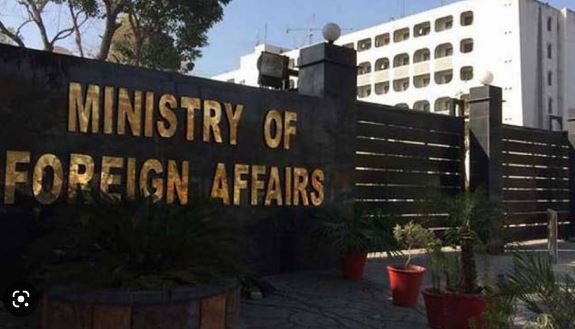
ISLAMABAD, Pakistan on Sunday expressed grave concern over the confirmation of BJP leadership’s direct involvement in anti-Muslim violence during the horrific Gujarat riots of 2002 that led to the killing of over two thousand Muslims.

Pakistan also urged India to immediately constitute an independent commission of inquiry to bring the culprits of the horrific Godhra incident, as well as the Gujarat riots, to justice.

 “The recent statement by the former Chief Minister of Gujarat, Shankersinh Vaghela, has confirmed Pakistan’s long-standing assertion that the BJP-led government under the incumbent Prime Minister — who was the Chief Minister of Gujarat at the time of anti-Muslim riots in Godhra — was directly responsible for fomenting violence and massacre of Muslims,” Foreign Office Spokesperson said in a press release.

This has been further corroborated indirectly by the Indian Home Minister, who recently claimed that those responsible for the Gujarat riots had been “taught a lesson” and “permanent peace” had been established in Gujarat by BJP’s decisive actions.

Pakistan also stressed upon the international community, particularly human rights activists and defenders to take serious note of the aggravating situation of Islamophobia in India; and called on the Indian government to ensure that the rights of minorities in India, especially Muslims, were safeguarded and their lives protected, it was added.

The spokesperson said “It is most deplorable that the crimes against humanity, targeting Muslims, were perpetrated solely for BJP’s political gains. Regrettably, the BJP once again seeks to cash in on its divisive policies two decades after the Gujarat tragedy.”

Under BJP rule, India’s treatment of its minorities, especially Indian Muslims, had been discriminatory, degrading, and full of hate and violence.

In June this year, the Supreme Court of India handed a clean chit to the current Prime Minister, the then CM of Gujarat, for his role in the 2002 Gujarat riots.

The Supreme Court shut down as many as 11 petitions, including one filed by the National Human Rights Commission (NHRC) of India, seeking an independent probe into the 2002 Gujarat riots cases.

“It is an undeniable fact that India’s incumbent Prime Minister had been banned from entering countries such as the United States till 2014, because of his abysmal human rights record as Chief Minister of the Gujarat state,” the spokesperson said.

Sadly, the entire Indian legal and administrative machinery was blindly pursuing the Hindutva-driven agenda of the ruling BJP-RSS nexus, where perpetrators of hate and violence were protected by law and enjoyed exalted status, whereas religious minorities were constantly threatened and denied the freedom to practice their faith without fear, while their lives, property and places of worship remained under threat of violation.

PM urges Pak-Turkiye joint research, resources pooling to face emerging threats

Agencies

ISLAMABAD, Prime Minister Shehbaz Sharif said that in wake of the common challenges and emerging threats facing both countries, Pakistan and Turkiye should work together through collective research and pooling of resources.

“We believe that Pakistan and Turkiye should work together and deepen their partnership through collective research and joint development and pooling of resources,” Prime Minister Shehbaz told Turkish Anadolu Agency in an exclusive interview, published on Sunday, during his two-day visit to the country from November 25-26 to jointly inaugurate the third of four MILGEM corvette ships manufactured by Turkiye for the Pakistani Navy.

He said the “exemplary,” Pak-Turkiye relations were “grounded firmly in common religious, cultural, and linguistic links and transcend political changes on either side.” Over the past seven and a half decades, the prime minister said, the two sides have always “stood by each other in the face of all changes.”

“Pakistan and Turkiye support each other on all issues of core national interests — whether it is Jammu and Kashmir or Northern Cyprus. I would like to take this opportunity to thank Turkiye, particularly its leadership, for its principled support on Jammu and Kashmir dispute,” he said.

“Confronted by common challenges and new and emerging threats, Pakistan and Turkiye have deepened their cooperation across various spheres, particularly in defense,” Shehbaz Sharif said, lauding the Turkish defense industry which has “achieved spectacular success under the leadership of President Erdogan, defying all odds and challenges in the past two decades.”

“Pakistan is Turkiye’s largest defense customer,” the prime minister underlined, adding that their collaboration on the construction of the MILGEM-class warships, not only has a “unique value” for the Pakistani Navy’s capability enhancements but also “prominently stands out as a defining moment to further cement the bonds of friendship between our two nations and our two navies.”

To a question, the prime minister said Pakistan’s economy “was facing multiple global and domestic challenges” and was “on the verge of financial collapse” when he assumed charge.

“The economic policies of the previous government were not pro-growth and led the economy to multiple challenges,” he said. However, the prime minister said his government had adopted a “mix of policies to tackle the economic downturn by accepting the fact that we have a very short time to step back from the edge of bankruptcy and financial collapse.”

“No doubt, some of our policy options, like the withdrawal of untargeted subsidies, had added to the cost to the economy in the short term. But, most of our policies are more likely to offer benefits in the longer term,” he remarked.

“We are also aware of the fact that our current course of action is hurting the most vulnerable and marginalized in society but we are taking care of them by announcing targeted subsidies and other relief measures,” the prime minister said.

He said the revival of the IMF programme and “active engagement with bilateral and multilateral partners” had eased the pressure.

To tackle the economy, he noted that his government took measures to reduce the import bill, current account deficit, and pressure on the Pakistani rupee.

The prime minister said the massive floods that hit Pakistan early this year “caused a great deal of suffering.” The recently announced packages by the government for farmers and businessmen will help stimulate economic activities, he added.

Coming to the issue of climate change, Prime Minister Shehbaz said, while Pakistan contributed less than 1% of the global carbon footprint, it “is facing the brunt of natural calamities in the form of heat waves, glacial outbursts, droughts, torrential rains, and unprecedented monsoons.”

“There is an urgent need for the industrialized countries to meet their climate finance commitments, with a balanced focus on adaptation and mitigation,” he said, welcoming a deal to establish a “loss and damage fund” to compensate developing countries most severely impacted by climate change.

He also suggested that the international community explore the possibilities of “debt swaps for climate action, particularly adaptation.”

About his government’s efforts to respond to the flood situation, the prime minister said the country “mounted coordinated rescue and relief operations mobilizing all possible resources and capacities.”

A dedicated National Flood Response and Coordination Centre (NFRCC) has been set up to effectively coordinate rescue and relief operations, he noted.

While discussing his government’s foreign policy, he said Pakistan’s “longstanding and broad-based relationship” with the US was “committed to deepen and widen.”

“In recent months, engagement between both countries has been quite productive and substantial. Our interactions at various levels have intensified, which manifests in that the relationship is strengthening.”

Recalling a recent interaction with US President Joe Biden in New York, he said there had been “several high-level visits including congressional delegations and by members of the (US) administration.”

“These interactions have yielded positive results and further solidified our ties,” he said, thanking Washington for its $97 million of support for Pakistani flood victims.

FIFA World Cup 2022: In another upset, Morocco beat Belgium 2-0 courtesy Sabiri, Aboukhlal goals

DOHA, NOV 27: Substitutes Abdelhamid Sabiri and Zakaria Aboukhlal earned Morocco their first World Cup victory in 24 years as they upset a hugely disappointing Belgium side 2-0 in World Cup Group ‘F’ on Sunday.

Abdelhamid Sabiri had been on the pitch for a mere five minutes when Morocco won a free kick wide on the left, pretty close to the corner flag, against Belgium here at the Al Thumama Stadium on Sunday afternoon. The goal was at the acutest of angles but no one was stopping him from having a go.

Sabiri wrapped his right foot around the ball, curling it at pace and catching Thibaut Courtois out of surprise. The Belgium goalkeeper saw the shot go under him and into the back of the net. Sabiri’s teammates gathered around him and sank to the ground in prostration, the largely pro-Moroccan at the 44,000-capacity venue, its circular design reflecting the traditional woven cap worn by Arab men and boys, wild with joy.

Morocco have won just twice at the World Cup; their last victory came in 1998.

Leading 1-0, they now had 16 minutes to close out a famous win against a Belgium side, ranked second only to Brazil in the world. Belgium had opened their campaign in Qatar with a barely-deserved 1-0 win over Canada and knew a victory would take them through. Now they were fighting for a draw.

Roberto Martinez summoned Romelu Lukaku from his bench to turn the tide in his side’s favour. Instead, it was Morocco who scored to seal a historic win for their side in the second minute of time added on.

A long ball from goalkeeper Monir Mohamedi caught out the Belgians and found its way to Hakim Ziyech. Ziyech ran into the space on the right before squaring it for Zakaria Aboukhlal, who had come onto the pitch just before the first goal. Aboukhlal had timed his run perfectly and shot it the first time into the roof of the net.

Morocco had opened with a goalless draw against Croatia and the 2-0 win here sent them top of Group ‘F’, a point ahead of Belgium. A draw against Canada will take them through to the last 16 for the first time since 1986. This win, though, will live long in the memory.

Belgium had dominated possession for most of the first half. But they were largely sterile, the well-organised Moroccans closing down the avenues for the likes of Kevin de Bruyne and Eden Hazard to influence the game.

Morocco and Ziyech had thought their moment had arrived right before half-time.

The Chelsea winger hadn’t been part of the Morocco side that had secured qualification for the World Cup. His recall came after Vahid Halilhodzic, the coach who had led them to Qatar, had been fired by the Royal Moroccan Football Federation over differences in preparations for the tournament, most notably for sidelining Ziyech due to a lack of discipline.

The incoming Walid Regragui, a former Morocco international, had restored Ziyech and here he was standing over a free-kick on the right, preparing to curl his left foot around it.

The shot was pinpoint, hitting the midriff of Courtois before nestling into the back of the net. Ziyech raised his arms to celebrate, his team-mate Achraf Hakimi running to embrace him. But the Belgians were protesting. Courtois seemed to have been unsighted by the onrushing Romain Saiss and the VAR found that the Moroccan captain was fractionally offside.

It only served to intensify the atmosphere and a stirring second half was in store with the game opening up for both sides. First Hazard weaved into the box and saw a rasping shot saved by Monir Mohamedi while at the other end, Soufiane Boufal cut inside from the left and shot narrowly wide. Dries Mertens, brought on to give Belgium more bite, saw a shot saved by Mohamedi.

But then came the goal that changed the game.

Tennis star Sania Mirza stuns in aubergine-hued desi outfit

ISLAMABAD, NOV 27: Indian tennis star Sania Mirza, who is known for keeping her fans engaged with her stunning pictures, has once again posted her snapshots on Instagram.

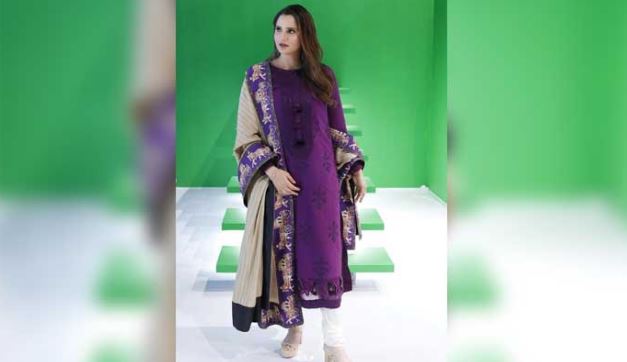
Taking to the photo and video-sharing app, Sania posted her pictures dressed up in an aubergine-hued, embroidered, and sequined desi outfit.

“My perpetual face of ‘Are we not done yet?'” she captioned the picture.

The pro tennis player was dressed to the nines as she paired her outfit with strapless nude heels to match with her beige dupatta adorned by a strikingly-printed border.

Sania looked gorgeous with her hair let down in what appeared to be a talk show.

Apart from stunning her fans with her everyday glam looks, the athlete also shows them a glimpse of her life in the gym as she shares an after-gym story for her followers on Instagram. The 35-year-old shared her photo after a “great gym” session but looked rather worn out following what seemed like a rigorous workout.

SpaceX Dragon cargo carrier docks with ISS over Pacific

SpaceX Dragon supply craft has docked with the International Space Station (ISS) carrying almost 3,500 kilograms of freight, including food and scientific equipment, the US space agency NASA reported on Sunday.

The docking took place while the ISS was travelling over the Pacific Ocean, NASA said.

The supply mission is the 26th conducted by SpaceX in combination with NASA. “After Dragon spends about one month attached to the space station, the spacecraft will return to Earth with cargo and research,” NASA reported on its website.

Among the supplies delivered were solar panels, a special variety of tomato to improve the diet available to space crew on long missions and Moon Microscopes.

The latter is “a kit for in-flight medical diagnosis that includes a portable hand-held microscope and a small self-contained blood sample staining device,” NASA said.

Ice cream was included in the cargo as a surprise. The first SpaceX supply mission to the ISS was in 2012.

Won’t ‘wait a minute’ to dissolve assembly if Imran Khan orders, CM Punjab vows

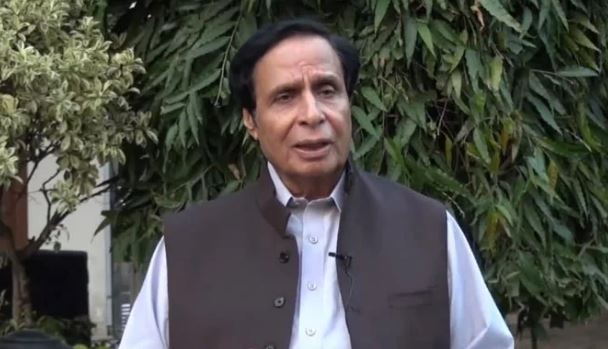
LAHORE, NOV 27: Chief Minister Punjab Chaudhry Pervez Elahi said Sunday he won’t “wait for a minute” to dissolve the provincial assembly if PTI Chairman Imran Khan asks him to.

“Imran Khan entrusted the Punjab government to [me]. We stand with those whom we support,” the chief minister — whose party, PML-Q, is an ally of the PTI — said in a video statement.

The chief minister of Pakistan’s biggest province warned the Shehbaz Sharif-led coalition government in the Centre that in case PTI and its exit the country’s assemblies, then their “government, which expands over a mere 27kms, won’t last for the next 27 hours”. The PML-Q’s senior leader added that Khan’s plan entered its “decisive round” during the Rawalpindi jalsa on Saturday and that once the PTI and its allies start resigning from the assemblies, the Pakistan Democratic Movement’s (PDM) government would start falling on its own.

Elahi’s statement came after Khan — who has ended the long march — told a charged rally in Pindi that his party had decided that they would not remain a part of the “corrupt political system”, and quit all the assemblies.

“Instead of destruction and ransacking, we have decided to quit the assemblies and come out of the corrupt system, wherein the powerful and billionaires get their cases are written off and the poor rot in jail,” he said.

Moving on, Elahi came down hard on the PML-N “show-offs” and warned them that once country-wide elections are held, they would receive unprecedented defeat that would be remembered for generations to come.

The Punjab chief minister claimed that Pakistan would be ruled in line with Islam and that with every passing day, his government would ensure that it undertakes projects to benefit the common people. Khan has called off his long march to Islamabad, but has not announced when will he quit the assemblies. Although, the PTI chief said that he would hold consultations on the date later on.

The PTI began its long march toward the federal capital on October 28 in an attempt to force the coalition government to early elections. The march was abruptly stopped on November 3 after Khan was wounded in an assassination bid.

It was later resumed from the same point but led by PTI leader Shah Mahmood Qureshi. Khan then joined his supporters a day earlier, when he called off the march.

Taking to Twitter earlier today, the PTI chief said: “I want to thank all the people who came in such huge numbers from across Pakistan to our Rawalpindi Azadi March yesterday.”

“Our Tehreek will continue until we establish rule of law and real freedom,” he added.

‘Flop show’

In response to Khan’s threat, Interior Minister Rana Sanaullah said the PTI chairman “cannot dissolve both [Khyber Pakhtunkhwa and Punjab] assemblies”.

“Khan will not be able to decide about dissolving the assemblies,” he said during Geo News programme “Naya Pakistan”.

The PML-N stalwart added that the PTI cannot do so if a no-confidence motion is moved.

“Do they think the opposition will sit watch?” the interior minister questioned, adding that elections should be held on time and assemblies should remain intact.

Sanaullah also said that Khan’s decision to dissolve assemblies is his “announcement of defeat”.

Meanwhile, Foreign Minister and PPP Chairman Bilawal Bhutto-Zardari called PTI’s march a “facesaving flop show” as he claimed that the former premier was unable to attract his supporters in large numbers. “Unable to pull revolution crowds, failed at undermining appointments of new chiefs, frustrated, resorts to resignation drama. Imran demand from pindi is not azadi but to be reselected. How long will KP&Punjab be used as political props?” he wrote.

Ambassador Sajjad Haider participates in Int’l Investment Forum in Mogilev City, Belarus

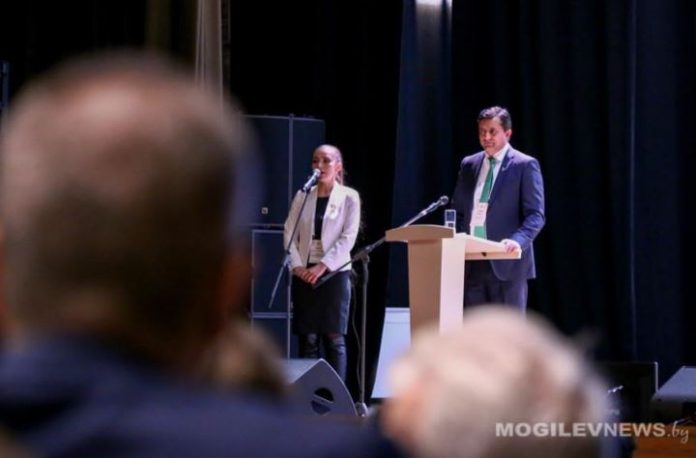
Mogilev City, NOV 27 /DNA/ – Ambassador Sajjad Haider Khan participated in the XIII International Investment Forum “Mill of Success” held in the city of Mogilev. The Deputy Minister of Economy of Belarus and Deputy Chairman of Mogilev Regional Executive Committee were amongst the keynote speakers. The representatives of around 15 countries, including government bodies, businesspersons, investors and members of the diplomatic corps attended the event. The Ambassador also visited the exhibition of the enterprises of Mogilev region held on the side lines of the Investment Forum. 
Addressing the businesspersons during the plenary session of the Investment Forum, the Ambassador expressed his gratitude for the invitation and the visits to JSC “Shagovita”, a leading footwear manufacturer and JSC “Mogilevliftmash”, largest manufacturer of lifts/elevators and components as part of the visit and appreciated the quality of products being manufactured.
The Ambassador also highlighted the developing friendly ties between the two countries and invited the participants to benefit from the trade & investment opportunities between the two countries. Highlighting the boom in the construction sector of Pakistan, the Ambassador invited the Belarusian companies to participate in one of the construction exhibitions held in Pakistan to explore further opportunities.

Stay Connected

64FansLike
60FollowersFollow

Latest Reviews

Exchange Rates

USD - United States Dollar
EUR
1.16
GBP
1.34
AUD
0.67
CAD
0.72