Home Blog Page 1428

Chinese Economic Diplomacy in 21st Century

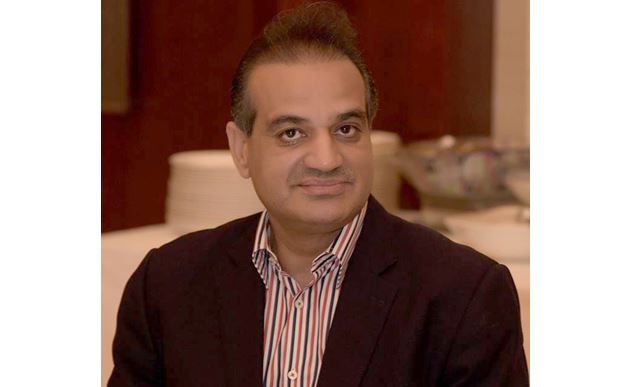
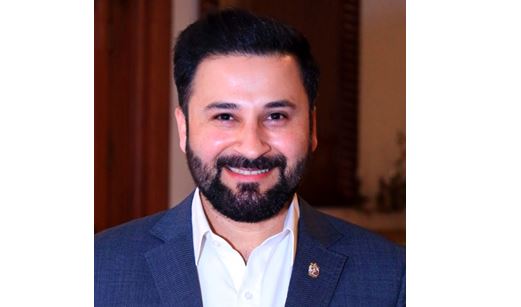
Engr. Qaiser Nawab

Traveling from Shanghai to Beijing in an economy class from medium speed China rail services was my intentional decision to meet the common Chinese people and to know their perception regarding Chinese developmental expansion around the globe. I and my traveling colleague were the only two foreigners in the economy class cabin. Throughout the trip, I observed one thing that common Chinese people want to know about the world.  BRI is an opportunity to integrate Chinese to other parts of the world. I came across the famous statement in China, “China is a sleeping giant. Let her lie and sleep; for when she awakens, she will astonish the world.” Traveling inside China and other parts of the world, I came to know that China has a huge potential of integrating the global order due to its acceptability of diversity and plurality.

In the 21st century, the world saw the awakening of the sleeping giant and building its significance in the international system through its economic success, military modernization, and soft power influence. From a nascent consumer market to the most influential economy, China is ranked among the most major and powerful economies in the world. With its long-term strategic measures to modernize its society, China has successfully transformed into a high-tech industry economy and become a nation of global influence. The economic policies and goals to boost domestic consumption, accelerate technological development, and lure global investment have made China a dominant power in the global economy.

The Asian giant’s military might have also been expanding at an astounding pace and scope. Since the 1990s, the military strategy of China has focused more on fighting and winning a high-tech war against a modern foe rather than waging a people’s war. China has been modernizing its military forces by putting great stress on the significance of maritime security, cyber operations, offensive operations, and mobility operations, to strategically dominate contemporary warfare. The increasing size of China’s military and economy is indicative of the trend that she is now emerging as a new superpower, or rather, has already emerged as a global superpower.

In the age of global information, success not only depends on whose military wins but also on whose narrative wins. Therefore, the practice of “soft power” works as an attractive policy option to win the hearts of global nations. China’s traditional culture has always been appealing, but now it is entering the realm of popular culture around the world. The foreign policy of China has also shifted from one of internal development to one of external influence, not only economically but also militarily, diplomatically, and normatively, most notably through a systematic discourse and smart power strategy.

China is efficiently portraying its soft image by investing heavily in its domestic infrastructure and, subsequently, in global infrastructure as well. China’s worldwide infrastructure development project known as the “Belt and Road Initiative (BRI)” has tremendously boosted trade, encouraged economic growth, and enhanced regional integration. From being a simple regional project to connect Asia, Africa, and Europe, via land and sea networks, BRI has become entirely global and extended into every field imaginable, including infrastructure, culture, finance, people-to-people interactions, education, and interstate politics. BRI has largely been successful not in terms of concrete projects only but in ways that have helped China strengthen its diplomatic and economic ties with 140 partner nations and position itself as the champion of globalization, leading to a new world order where it would be the potential hegemon.

Since the rise of China, its broader and integrative geo-economic agenda is seeking to enhance its reach into distant markets and trade enterprises. The mega project of the Belt and Road Initiative is an expression of China’s geo-economic strategy that is embedded in the historical trends of globalization and the neoliberal order. In the international political landscape, geo-economic, strategic, and geopolitical areas are deeply intertwined due to the complex multi-layered foundation of international political realities. Unprecedented developments such as BRI are not without certain areas of opportunities as well as challenges.

Through its Belt and Road Initiative, China has intended to achieve mutual progress, shared prosperity, and win-win cooperation throughout the region with the goal of fostering infrastructure development and socioeconomic uplift. The country has also been assisting the BRI partner nations to accelerate technological advancement, fight extreme poverty, and achieve high-quality growth. The Chinese investment policies are also set to encourage the development of high technology in nations such as Pakistan.

China and Pakistan’s bilateral relations are in the historical milieu of cooperation, shared geo-political outlook, strategic partnership, and economic interdependence. The bilateral engagement has successfully evolved into concrete commitments and pragmatic considerations of interests and values. The entrenched commitments between the two neighboring states have developed further by prospects of consolidation as a consequence of Pakistan being an essential actor in BRI’s development.

The BRI initiative has brought forth many positive and long-lasting results for both China and Pakistan. Through the promotion of bilateral connectivity, logistics, construction projects, and economic and trade opportunities, the strategic project has been contributing to the improvement of people’s lives in both nations.

China has opened its doors to sharing high-tech technology with Pakistan. Furthermore, it has encouraged widespread cooperation in a variety of fields, including academia, research, government, industry, and the arts. Pakistan, on the other hand, is devoted to embracing the same technology and providing a stable environment for the development of projects that will promote the rejuvenation of the economy.

Although China’s Belt and Road Initiative has successfully depicted its softer image as a global and responsible force that seeks to assist the entire globe through economic development and foreign investment while enhancing its political capital and influence, the western ideology propagates the projects under BRI is expanded with China’s sole strategy to have an influence over the government of other countries and put a global footprint.

In an effort to counter Western propaganda, China must convey BRI’s open, green, and clean core strength to the regional and international mass media and get more sustainable achievements with high construction standards among all member nations. Strategically speaking, BRI is representative of a new era of Chinese economic diplomacy and promotes a network of Free Trade Areas (FTAs) and other forms of economic cooperation among its member nations, which will serve to increase regional cooperation and mark the rise of China in the world.

Engr. Qaiser Nawab currently serving at Commission on Science and Technology for Sustainable Development in the South – COMSATS, is an international expert on Belt and Road Initiative (BRI). He can be reached at [email protected]
AKRSP commemorates 40 years of community service

DNA

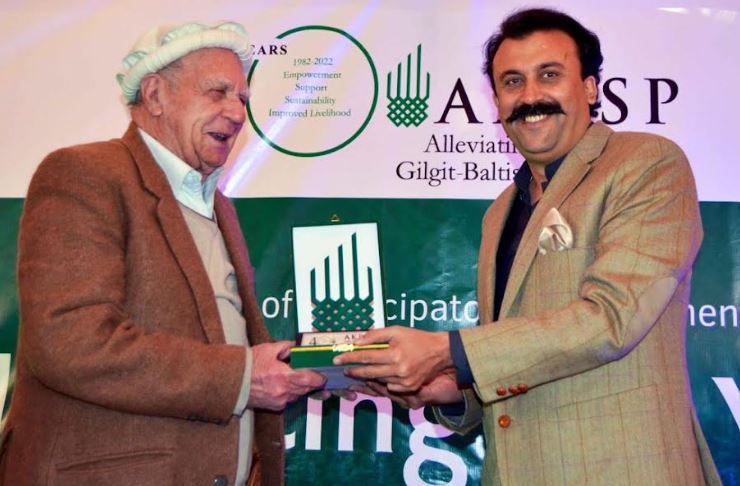
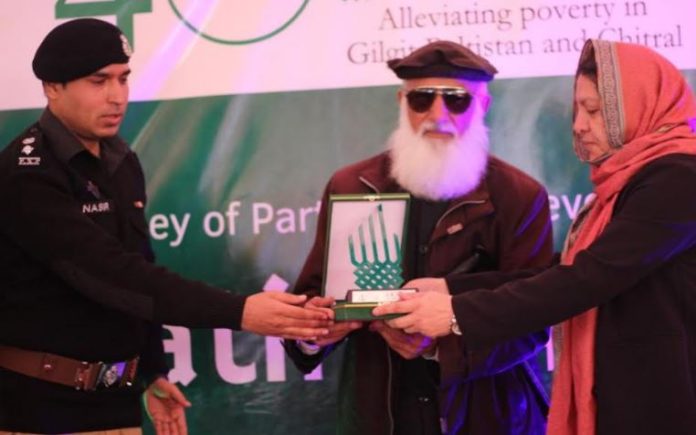
Chitral, 22: The Aga Khan Rural Support Programme (AKRSP) is commemorating 40 years of empowering communities in Gilgit-Baltistan and Chitral. The inaugural ceremony of the three-day event in Chitral under the theme ‘Celebrating 40 years of New Localism’ began by recognising the commendable services of community members.

A pictorial exhibition along with documentaries on AKRSP’s early evolution highlighted key achievements of AKRSP in major thematic areas, including climate resilience, civil society, agriculture and food security,early childhood development (ECD),education, social organisations, natural resource management, community infrastructure development, credit and savings, enterprise promotion and women economic empowerment. Around 27 stalls showcased the work of local artisans and micro-enterprises including traditional dresses, herbal products, gemstones, musical instruments, food items, and dry fruits.

The event’s chief guest Mr. Anwar ul Haq, Deputy Commissioner, Lower Chitral acknowledged that “AKRSP is the only non-governmental organisation working more than any other organisation in the region. The AKRSP model is sustainable and pro-people.” He felicitated AKRSP for completing 40 years, and applauded AKRSP’s role in building resilient communities in Gilgit-Baltistan and Chitral.

AKRSP’s development approach is based on the belief that local communities have tremendous potential to plan and manage their own development, once they are organized and provided access to necessary skills and capital. Since its inception, AKRSP has trained over 126,000 women and men in different technical and vocational fields, completed 4,706 community infrastructure projects benefiting more than 380,000 households, and planted tens of millions of trees. It has helped establish and mobilise 5,249 Village and Women’s Organisations representing more than 78% of the households in Gilgit-Baltistan and Chitral. These organisations have saved more than PKR 500 million, and disbursed PKR 2 billion as loans.

Mr. Jamil ud Din, General Manager, AKRSP, highlighted that AKRSP’s 40 years of community service would not have been effective without the continuous support of the local communities. He applauded the role of local communities in empowering themselves through organisation, skill-building,and savings – the three fundamental principles taught by AKRSP.

AKRSP’s former board members, community members, poets, writers, and other dignitaries also expressed their views at the inaugural event and appreciated AKRSP’s efforts in the development of Chitral.

Vital Aid leaves UK for Pakistan

Virgin Atlantic joins hands with Bestway Group to deliver medicines to the victims of humanitarian crisis

DNA

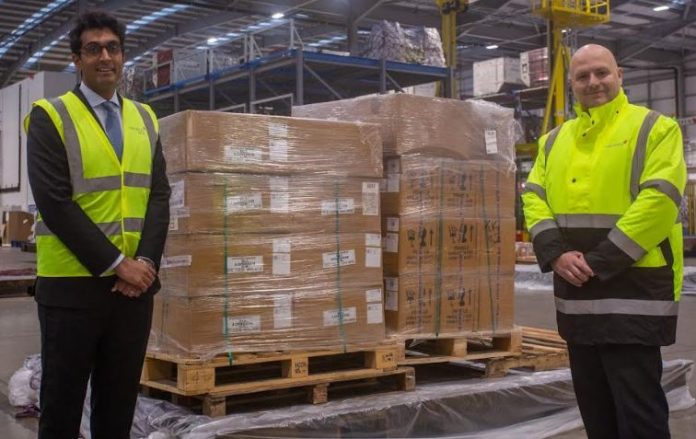
ISLAMABAD: Over 20 tonnes of vital medicines, has left the UK heading for Pakistan where it will be distributed to victims of the recent flooding disaster and resulting humanitarian disaster.

The medicines, donated by Bestway Groupis being flown to Islamabad by Virgin Atlantic Cargo who is transporting the medication. 

The medicines will be landing on the ground tomorrow (24.11.22), to help the 3.2million people who have lost their homes and livelihoods and been displaced by the flooding which left more than a third of the country under water, and damaged more than 4million acres of crops.  Ongoing heavy rains are continuing to complicate rescue and recovery efforts and disease has been widespread as the humanitarian disaster increases.

Bestway Group is one of the largest privately owned businesses in the UK and the leading overseas investor in Pakistan. Haider Choudrey, Chief Financial Officer of Bestway Group, says:

“Our teams are on the ground in Pakistan and are seeing first-hand how desperately these medicines are needed to help combat disease that has taken hold where fresh water supplies have been destroyed and families have lost their homes along with everything they own. 

“We would like to thank the team at Virgin Atlantic Cargo who has helped us make this happen and are transporting what is a sizeable cargo of medicines out to where it is needed the most”.

Virgin Atlantic Cargo is one of the leading players in the global cargo industry and played a vital role in the airline’s survival following the Covid-19 pandemic, keeping global supply chains running and transporting essential goods around the world. On 21st March 2020, the first ever cargo only flight in Virgin Atlantic’s history took to the skies and over the next 12 months, the airline’s cargo business went from strength to strength operating over 5,000 cargo-only sectors, launching 12 new routes as well as carrying over 8.5 million kilos of PPE and essential equipment for the NHS.

Now, the airline’s essential assistance will facilitate the delivery of the much-needed aid to the most vulnerable with the onset of the winter season in Pakistan.

Virgin Atlanticdedicated special climate control vehicles for the collection and delivery of the medicines to its cargo handling facility at London Heathrow.

PM Office receives summary of COAS, CJCSC appointments

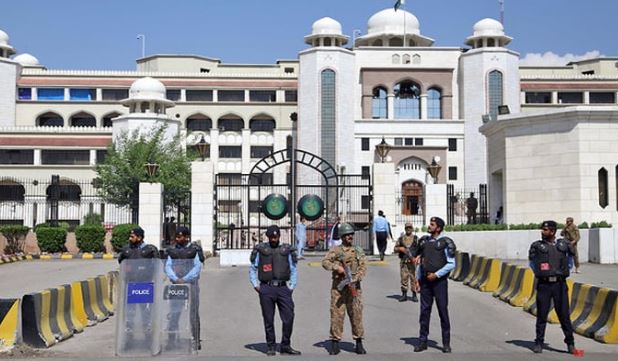
ISLAMABAD: The Prime Minister’s Office Wednesday morning confirmed receiving a summary for the appointment of the army’s top posts from the Ministry of Defence.

In a statement, the PM’s Office said it had received the summary with a panel of names for the appointment of chairman joint chiefs of staff committee and the chief of the army staff.

“Prime Minister [Shehbaz Sharif] will take a decision on the appointments as per the laid down procedure,” the brief statement read, after there were speculations overnight.

Government officials, including Defence Minister Khawaja Asif and Information Minister Marriyum Aurangzeb, continued to reject late-night reports that the PMO had received the summary.

The picture was cleared only after Inter-Services Public Relations (ISPR) issued a statement confirming the development late last night.

“GHQ has forwarded the summary for selection of CJCSC and COAS, containing names of 6 senior most Lt Gens, to MoD,” said the ISPR in its tweet. After an hour of the ISPR’s tweet, the defence minister also confirmed that the PM’s Office had received the summary.

Earlier, sources had told The News that the summary contains the names of Lt Gen Asim Munir, Lieutenant General Sahir Shamshad Mirza, Lieutenant General Azhar Abbas, Lieutenant General Nauman Mehmood, Lieutenant General Faiz Hamid and Lieutenant General Mohammad Amir as candidates for the army chief and chairman joint chiefs of staff committee posts, said the well-placed sources.

Bushra Rehman, Malik Sohail visit SCCI

DNA

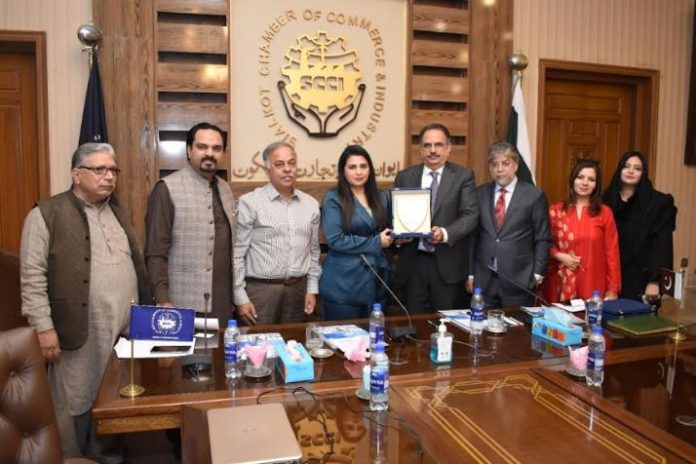
ISLAMABAD, NOV 23: Madam Bushra Rehman President & Malik Sohail Hussain Secretary General Pakistan-Western Canada Trade Association PWCTA visited Sialkot Chamber of Commerce and Industry and had a great and successful meeting with President Sialkot chamber of commerce and Industry, Abdul Ghafoor Malik & Acting President Sialkot Women Chamber Mrs Waqas Malik Awan and members of Sialkot Chamber.-DNA

Pak Army determined to eliminate the menace of terrorism

DNA

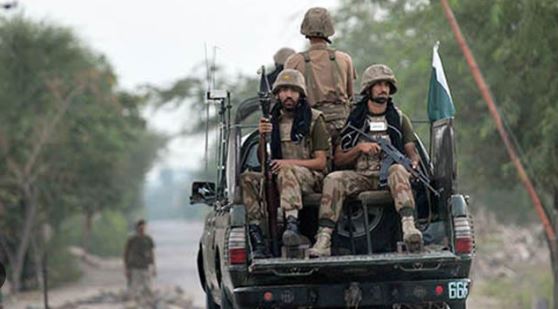
Rawalpindi: On 22 Nov Fire exchange took place between own troops and terrorists, in general area Sararogha, South Waziristan District.
Own troops effectively engaged the terrorist’s location. During intense exchange of fire, Havaldar Umer Hayat (age 39 years, resident of Lachi, Kohat) having fought gallantly, embraced Shahadat.
Sanitization of the area is being carried out to eliminate any terrorists found in the area.
Pakistan Army is determined to eliminate the menace of terrorism and such sacrifices of our brave soldiers further strengthen our resolve.

The ‘key appointment’ and deepening economic crisis

Comment

Ansar M Bhatti

Comment

Ansar M Bhatti

While everybody seems obsessed with the key appointment of the army chief, the country continues to slide towards economic crises that are getting deeper and deeper with the each passing day. Inflation has crossed 30 per cent mark while foreign exchange reserves have squeezed to all time low. Out of total $ eight billion reserves, half of them belong to friendly countries, which means if things does not go well as per the wishes of these friendly countries, including the ‘ key appointment’ Pakistan’s foreign reserves may witness a deadly blow.

 Probably that is the reasons the key appointment got delayed. This is perhaps for the first time that this appointment has become center of attraction for all and sundry. Even the foreign diplomats based in Pakistan are seen so much curious about who is going to be the next chief of the army staff.

The situation ostensibly does not augur well in terms of reputation and credibility of the armed forces of Pakistan. Given the fact that Pakistan Army happens to be the most organized and disciplined force, people expect smooth transition of power. It is therefore hoped that once this process is completed the institution would carry out a thorough and inclusive soul searching drill in order to avoid such situations in future.

As regards the present imbroglio, the Prime Minister on Monday sent a letter to the Defence Ministry seeking a list of candidates for the post of the army chief. The Defence Ministry then forwarded that letter to the General Headquarters (GHQ). As reports suggest the prime minister received the summary from the Defence Ministry on Tuesday night. The summary includes names of six senior most candidates including Lt. Gen Asim Munir, Lt. Gen Sahir Shamshad,  Lt. Gen Azhar Abbas, Lt. Gen Nauman, Lt. Gen Faiz Hameed and Lt. Gen Amir.

While the summary has already landed at the PM office, conspiracy theories that the GHQ may not send the summary before Nov 27 have subsided.  Since the summary also includes name of Lt. Gen Asim Munir so legal experts are of the view that in order to appoint him as army chief the government has to first extend his term, which is expiring on November 22. There is yet another view that the government does not need to do so.

It may also be mentioned here that the government was not bound to make its decision on the basis of the summary. The prime minister could do it even if there was no summary but there was no such precedent before therefore probably the government wanted to avoid that situation and waited for the summary to arrive before making any decision.

There is a general perception that those generals who have a longer tenure of service left and qualify to be the army chief should be given priority. The three other strong contenders Lt General Sahir Shamshad, Lt General Azhar Abbas and Lt. Gen Nauman will otherwise retire next year. It is also a possibility that if they are not considered for this post then they might call it a day, as per the previous practice.

In the backdrop of these developments, Imran Khan’s announcement to reach Rawalpindi on November 26 carries significance. He certainly has a tip off about what would happen during this week. Since the government has made up its mind whom it intends to appoint as army chief therefore its (govt) desperation to get the summary sooner rather than later was quite understandable.

The role of the President is also being discussed when it comes to the appointment of the army chief. The prime minister after making his decision will send the advice to the President, under Article 48 of the Constitution has the prerogative to return the summary to the prime minister for a review. If the prime minister re-sends the same summary then it becomes binding on the president to approve it.

Summing up, it is in the interest of Pakistan that the stakeholders are able to develop a consensus on this issue. The country, as mentioned earlier, cannot afford to have any further instability. Economy is indeed in a bad shape thus taking a heavy toll on the hapless people. To make their both ends meet appears to be a daunting challenge for the majority of people. Pakistan has literally become a laughing stock in the eyes of many, especially our adversaries.

 The situation therefore demands better sense to prevail. The leading political parties’ i.e PTI and PML N need to rise to the occasion. They have to shelve their personal liking and disliking for the greater interest of Pakistan. They must keep in mind that they would not get anything if things go out of control and non-political forces are left with no option but to make an immediate intervention. 

Azerbaijan exempts Pak rice from customs duty

DNA

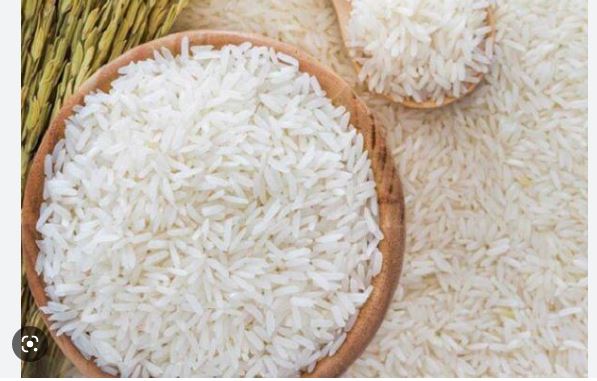
BAKU: Rice imported from the Islamic Republic of Pakistan to Azerbaijan is exempted from a 15 percent import customs duty, Azerbaijani media reported on Tuesday.

The Cabinet of Ministers adopted the relevant decision in this regard. Rice from the Islamic Republic of Pakistan with the same origin is exempted from import customs duty until December 31, 2027.

Both Pakistan and Azerbaijan enjoy excellent brotherly relations. Both countries support each other on various regional as well international forums.

Ambassador of Azerbaijan to Pakistan Khazar Farhadov in his Tweet termed the decision very important. He said  it would give considerable boost to trade and economic activity between the  two countries. 

People behind leak of COAS General Qamar Javed Bajwa’s income tax records identified: Ishaq Dar

  • Ishaq Dar assures the matter will reach its “logical conclusion”.
  • Law does not allow release of army chief or anyone else’s tax returns without a court order.
  • If “illegal work” is allowed or a blind eye is turned towards it then a person will not be fulfilling their duty.

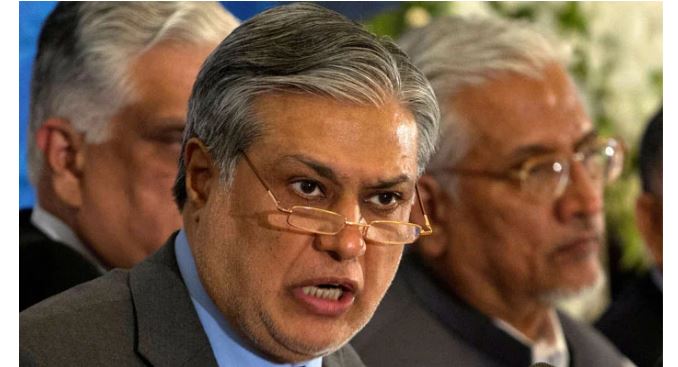
ISLAMABAD: Finance Minister Ishaq Dar shared on Tuesday that he has received the interim report related to the leak of Army chief General Qamar Javed Bajwa’s income tax records, adding that they have traced some people involved in the act.

In an interview during Geo News programme ‘Capital Talk’, Dar repeated that leaking army chief’s income tax returns was “illegal”.

“I have seen the interim report. I hope to receive the final report today,” Dar told the host. He added that the government has found a few people behind the leak and the issue will reach its logical conclusion.

The finance czar shared that one person involved in the leak is from Lahore and another from Rawalpindi.

However, he added that there is a possibility that some of the individuals involved may have the authorisation to look at the income tax records as there a “circle” in Rawalpindi where assessments take place.

“These people are authorised to access [data] for their assessment,” said Dar.

The finance minister was of the view that if “illegal work” is allowed or a blind eye is turned towards it then a person will not be fulfilling their duty.

“The law does not allow the release of army chief or anyone else’s income tax returns without a court order,” said the finance minister.

Dar orders probe into ‘illegal, unwarranted’ leak of COAS Bajwa’s family tax records

A day earlier, Finance Minister Ishaq Dar took notice of the “illegal and unwarranted” leakage of tax information of Gen Bajwa’s family members.

“This is clearly a violation of the complete confidentiality of tax information that the law provides,” a statement from the Finance Division read. An immediate investigation into the violation of tax law and breach of Federal Board of Revenue (FBR) data will be carried out, said the statement.

In view of this serious lapse on the part of to-date unknown functionaries, Dar had directed Special Assistant to the Prime Minister on Revenue Tariq Mehmood Pasha to personally lead the probe, affix responsibility, and submit a report within 24 hours, it added.

Transparent elections only solution to country’s issues: IK

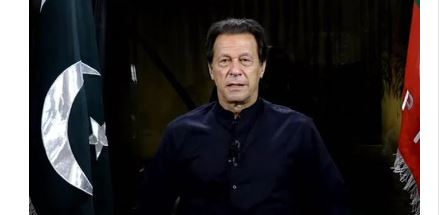
KARACHI, NOV 22 (DNA) — Former prime minister and Pakistan Tehreek-e-Insaf (PTI) chairman Imran Khan has said that the only solution to the issues facing the country is free and transparent election and the government that comes with the majority should establish the rule of law.

Addressing a seminar in Karachi through video link on Tuesday, he said that the country’s situation was not good when his party came into power and the biggest his government faced was current account deficit.

He said no government in the past has focused on increasing exports and the situation would have worsened had the Saudi Arabia, China and United Arab Emirates did not help.

“Coronavirus was the biggest crisis during PTI government’s tenure and I was facing alot of pressure to impose lockdown,” Imran Khan said adding that he was criticized for not imposing lockdown but the people would have died of hunger, if his government had imposed a lockdown.

He went on to say that no one knows where we would be standing in a month but according to the Gallup survey, 88 percent of Pakistan s direction is not correct, adding that the country will not be stable unless elections are held.

On Monday, In an interview with a British newspaper The Telegraph, former PM and PTI chairman Imran Khan said that he would try to establish strong ties with neighbouring India, Afghanistan, Iran, China and the US if he is again elected as the prime minister.

He said that good relations are impossible in India as long as Bharatiya Janata Party (BJP) remains in power, but I want better relations with News Delhi.

Khan said that the potential economic benefits that establishing trade between the two arch rivals would bring but said these would never be realised until Delhi changes its stance on the disputed region of Indian-administered Kashmir.

“The benefits would be enormous. But, we are stuck on this issue and we need a strong roadmap to resolve it. I think it’s possible but the BJP government is so hardline, they have a nationalistic stance on issues,” he said.

The former prime minister said that the benefits from trade would be huge but Indian stand on Occupied Kashmir is the main obstacle because the attitude of the Indian ruling party is hardline, the BJP incites nationalist sentiments, causing the situation to spiral out of control.

“We want to solve the problem of Kashmir, for which there should be a road map,” he said and added we do not accept that Kashmiris are not given rights. When India ended the special status of Occupied Kashmir, the relations between the two countries became cold.

The PTI chairman said, “We really need a relationship with both countries. What I do not want is another Cold War situation when we are in blocks, like in the last Cold War we were allied with the United States.”

He said: “The whole of Central Asia, Afghanistan, became out of our orbit. My main concern for Pakistan is how to lift 120 million out of poverty and the best way to do that is if we can have a relationship with everyone, to trade with everyone, so we can help our population.” =DNA

Stay Connected

64FansLike
60FollowersFollow

Latest Reviews

Exchange Rates

USD - United States Dollar
EUR
1.18
GBP
1.35
AUD
0.67
CAD
0.73