Home Blog Page 1427

Couple gives birth to ‘oldest babies’ from embryos frozen 30 years ago

In what is believed to be a new record for the longest-frozen embryos and “the oldest babies born”, twin babies were born in Tennessee, United States after being frozen at the embryonic stage three decades ago.

The embryos were stored 30 years ago, being frozen at around -128C (-200F) in liquid nitrogen on 22 April 1992, reported the BBC.

The father of the twins Philip Ridgeway said he was shocked at the “mind-boggling” event after Rachel Ridgeway, now a mother of six gave birth to the infants on October 31.

The Ridgeway family from Oregon named their twins Lydia Ann and Timothy Ronald Ridgeway. The National Embryo Donation Center (NEDC), which is a private organisation that has assisted over 1,200 births from donated embryos, believes that Lydia and Timothy have set a new record.

The previous record-holder is no less shocking. Molly Gibson, who was born in 2020, had been stored and frozen as an embryo for 27 years.

The medical professional who transferred the embryo to Dr John David Gordon said that these twins should be an example for other people who are sceptical about adopting frozen embryos.

“The decision… to adopt these embryos should reassure patients who wonder if anyone would be willing to adopt the embryos that they created 5, 10, 20 years ago,” the BBC quoted him as saying.

“That answer is a resounding yes!”

The NEDC said in a statement that it hoped that this would “encourage others to experience the blessings of embryo adoption for themselves”.

Thirty years ago, twin embryos had been developed for a married couple via in-vitro fertilisation (IVF). Later in 2007, the couple decided to donate the embryos to the faith-based organisation. 

At the time the couple got the embryos created, the man was in his 50s and the embryos were stored in a fertility lab on the US west coast. 

Once the twins reached the NEDC in Knoxville, Tennessee for another couple to use them, they were kept safe there. 

Earlier this year, experts from NEDC and partner clinic Southeastern Fertility transferred the twins to Mrs Ridgeway’s uterus.

The Ridgeways had four children prior to the twins. Other children are aged between one and eight. This is the first time the couple gave birth through IVF and donors.

“I was five years old when God gave life to Lydia and Timothy, and he’s been preserving that life ever since,” Philip Ridgeway told CNN.

“In a sense, they’re our oldest children, even though they’re our smallest children.”

“There is something mind-boggling about it,” he remarked.

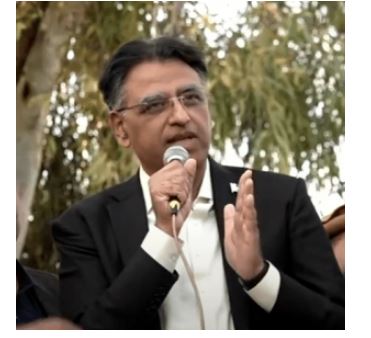
No doubt that there is immense threat to Imran’s life: Asad Umar

Tells Pindi residents to “get ready” for Imran’s arrival, and confirms that the venue will be Murree Road.

ISSI, IPIS hold annual bilateral dialogue

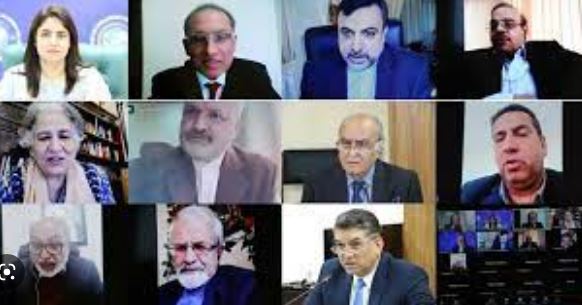
ISLAMABAD, NOV 23 (DNA) — The Institute of Strategic Studies Islamabad (ISSI) and Institute for Political and International Studies (IPIS), Iran held their annual dialogue on bilateral and regional issues.

 The Dialogue was facilitated by the Centre for Afghanistan, Middle East & Africa (CAMEA) at ISSI. The dialogue was divided into two sessions. The first session was titled Pakistan-Iran Bilateral Relations and was moderated by Ms. Amina Khan, Director CAMEA.

The second session was on the ‘Regional Developments: with a focus on current developments in Afghanistan and changing dynamics in the Middle East’ and was moderated by Dr Hossein Moulla Abdoullahi, Director for Asian Studies, IPIS. The welcome remarks were given by Ambassador Aizaz Ahmad Chaudhry, Director General ISSI and Dr. Mohammad Hassan Sheikholeslami, President, IPIS.

The distinguished speakers included Ambassador Hossein Ebrahim Khani, Senior Research Fellow, IPIS; Ambassador Khalid Mahmood,Chairman BOG ISSI and former Ambassador of Pakistan to Iran;  Dr Hossein Moulla Abdoullahi, Director for Asian Studies, IPIS; Ms. Amina Khan, Director, Center for Afghanistan, Middle East and Africa (CAMEA), ISSI;  Ambassador Javed Hafeez, Former Pakistani Diplomat and Dr Alireza Miryousefi, Senior Research Fellow, IPIS. =DNA

US ambassador highlights broad partnership with people of Balochistan

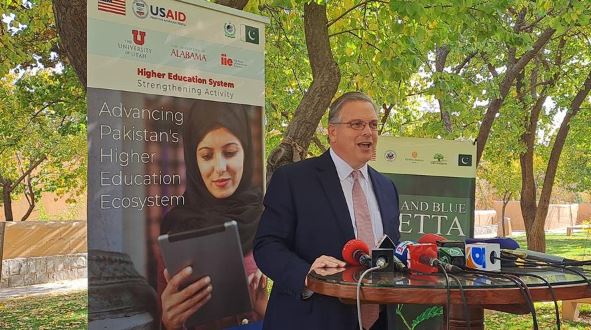
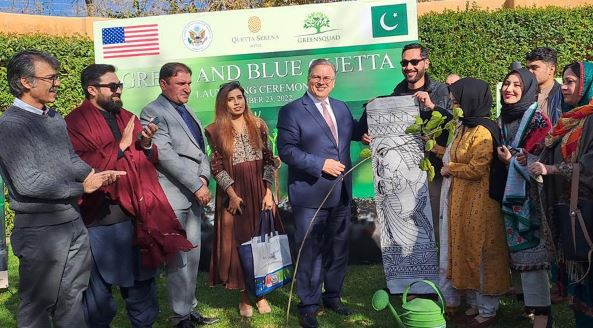
Islamabad, NOV 23: U.S. Ambassador Donald Blome visited Quetta, Balochistan, on November 23 to meet with Chief Minister Abdul Quddus Bizenjo, local partners working to advance climate change adaptation, representatives of higher education institutions, leaders of local NGOs, and Afghan refugees.  During his visit, Ambassador Blome discussed U.S. efforts to combat the effects of climate change through a Green Alliance with diverse partners in Pakistan and underscored the strong cooperation between the United States and Pakistan on promoting economic development through higher education and women’s empowerment.    

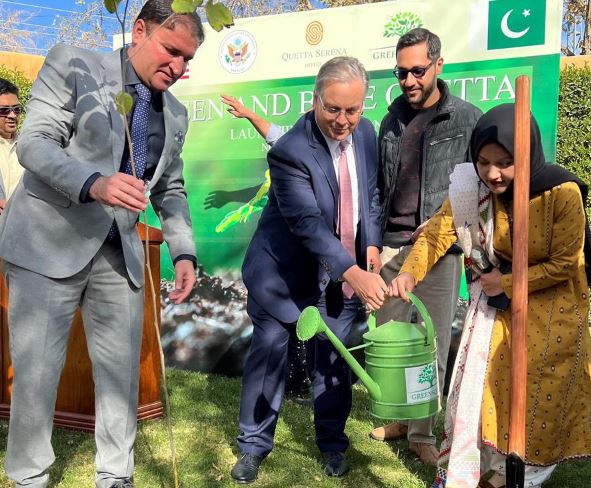
Ambassador Blome participated in a community tree planting drive that will become part of a larger project to develop an urban forest in the city of Quetta.  The project, led by youth activists, aims to advance climate change adaptation, raise climate risk awareness, and increase community resilience to climate change by providing a platform to bring diverse groups together for collective societal benefit.

At the event, the ambassador highlighted that the U.S. government has provided more than 97 million dollars in flood-related assistance to Pakistan this year, including to individuals and communities in need in Balochistan.  “But we know that the effects of the flooding are far from over, and every nation faces the threat of climate change. So, we’re working with diverse partners to increase Pakistan’s resilience to climate change through a Green Alliance,” he said.

During the trip, Ambassador Blome also met with leadership from the Balochistan University of Information Technology, Engineering and Management Sciences and the Sardar Bahadur Khan Women’s University to discuss how U.S. government support has helped them respond to local economic development needs in their academic programs.  The United States, through the U.S. Agency for International Development (USAID), has provided scholarships to almost 300 students—56 percent of them women—to pursue higher education at the institutions and further their communities’ economic development.

In remarks at the launch event of “Entrepowered—Women Can Do,” a program that will provide $350,000 of seed funding to women entrepreneurs in Balochistan, Ambassador Blome said, “The United States believes that empowering women is a strategic investment in the future for both private citizens and the global economy.  By working together on projects like Entrepowered, we can advance women’s equality in the business sector and unleash a vast potential that will help bring prosperity to Quetta and Balochistan.”  

The United States is also proud to support the United Nations High Commissioner for Refugees’ (UNHCR) livelihoods program in Quetta, which fosters economic development for Afghan refugees and local artisans.   Since 2009, UNHCR, with U.S. funding, has implemented 251 projects in Balochistan to provide infrastructure upgrades to schools, water and sanitation improvements, and health facility upgrades for both Afghan refugees and Pakistani host communities.

Ambassador Blome also visited the Command and Staff College in Quetta and met with Commandant Major General Amer Ahsan Nawaz, XII Corps Commander Lieutenant General Asif Ghafoor and mid-career army officers to discuss the long history of U.S.-Pakistan relations in diverse areas and to emphasize opportunities to work together today, including to build a Green Alliance to support Pakistan’s transition to cleaner and sustainable forms of energy, and to advance our shared interests in trade, investment, health security, climate change, inclusive governance and regional security. 

The United States has a broad, deep, and long-term partnership with the people of Balochistan Province spanning the education, economic, health, and rule of law sectors and beyond.  We look forward to continuing to deepen and expand these relationships over the coming years.  Together we can promote a more stable, secure, and prosperous future for both our nations. 

Chairman PRCS condolence message for earthquake affectees of Turkiye

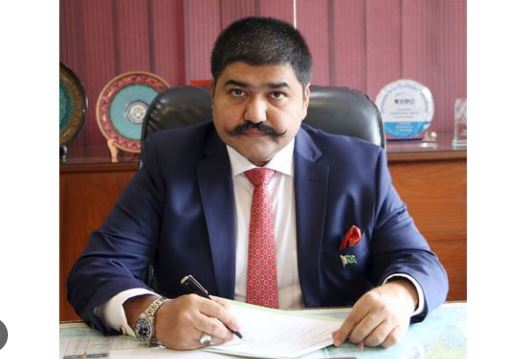
Islamabad, NOV 23: /DNA/ – The Chairman of Pakistan Red Crescent Society ,Sardar Shahid Ahmad Laghari, expressed heartfelt condolence to the people of Turkiye as a result of the earthquake in the northwest (Duzce) of Türkiye, on 23 Nov 2022.

Chairman PRCS Said, The People of Pakistan, are deeply aggrieved over the sufferings of our Turkish brethren.He further added, we can easily relate to the sufferings and trauma of the people as Pakistan in recent years, has also suffered from a number of disasters. Although natural calamities are beyond our control, we can still mitigate the effects by providing assistance and psycho-social support. 

The Pakistan Red Crescent Society conveys its deep commiseration and sympathy to the people of Turkiye through the Turkish Red Crescent.

Our patience has a limit: Army Chief

Says army has decided to stay away from politics; rubbishes any conspiracy in PTI govt removal; urges unity for country’s sake

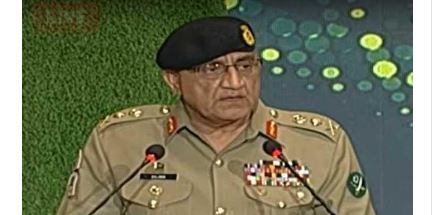
RAWALPINDI, NOV 23 /DNA/ – Chief of Army Staff General Qamar Javed Bajwa Wednesday paid tribute to the martyrs of the armed forces and assured their families that the Pakistan Army will never leave the bereaved alone.

At the start of his last address as the army chief during the Defence and Martyrs’ day ceremony at the General Headquarters in Rawalpindi, General Bajwa apologised for the delay in the Defence and Martyrs’ day ceremony due to the floods.

“Firstly, I would like to pay tribute to the martyrs who are the pride of Pakistan while acknowledging the patience of their bereaved families,” he said, reassuring that the army will continue to fulfill their financial needs.

“I feel proud to have served as the commander of this great army for six years,” General Bajwa said adding that the peace in cities and villages is accredited to the sacrifices of its martyrs.

Touching upon history during his address, the outgoing army chief said that he wanted to “correct” some facts regarding the events of 1971.

“1971 was not a military, but a political failure. Our army fought courageously in East Pakistan,” the COAS highlighted.

General Bajwa, during his address, said that the basic job of the armed forces is to protect the geographical boundaries.

Defence and Martyrs’ Day ceremony

The ceremony was postponed in September due to the catastrophic floods across Pakistan following heavy monsoon rains.

At the outset of the ceremony, a video highlighting the devastations caused by floods in Pakistan was played. The military soldiers, who contributed toward relief, rescue and rehabilitation efforts during the flooding, were paid tribute through the video.

A documentary titled Falah-o-Behbood was also played during the ceremony which was attended by serving and retired military officials at the GHQ. The documentary shed light on the military’s efforts for the welfare of its soldiers and their families.

This will be General Bajwa’s last Defence and Martyrs’ day ceremony as Pakistan’s COAS and comes just six days before he is set to retire from the post of Pakistan’s army chief on November 29.

He was appointed army chief in 2016 for a three-year tenure, which was extended by three years in after parliament legislated on the tenures of services chiefs on the orders of the Supreme Court.

Yasmin Qureshi assures to play role for improving Pakistan-UK trade ties

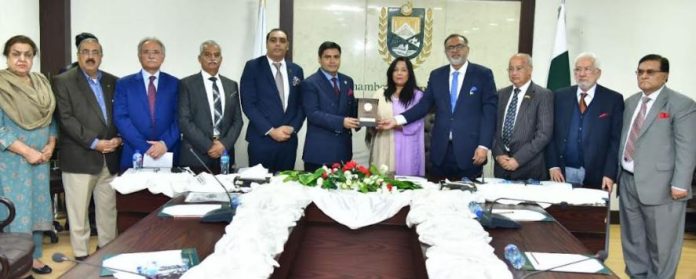
Islamabad, NOV 23 /DNA/ – Yasmin Qureshi, Member, UK Parliament assured that she would play a role to further improve bilateral trade and economic ties between Pakistan and UK. She said that Pakistan has great potential for business and investment, which should be properly projected to attract the attention of foreign investors. She said that a lot of construction projects are going on in Pakistan, which shows its economic potential and added that a stable Pakistan would attract more investment. She said this while addressing the business community during her visit to Islamabad Chamber of Commerce & Industry (ICCI). Raja Najabat Hussain, Founding Chairman, Jammu & Kashmir Self-Determination Movement also accompanied her on the occasion.

Yasmin Qureshi said that Pakistani entrepreneurs should take advantage of the latest technology and machinery to control the wastage of food and fruits in order to improve their exports. She said that Pakistan’s economy has suffered great losses due to being a frontline state against the war on terrorism and added that the security situation in Pakistan is now much better that is important for the growth of business and economic activities. She said that the UK has cut overseas aid and is now providing aid for capacity building that can be beneficial for Pakistan. She stressed that the business community should play a role for promoting education in youth that would also provide an educated and skilled workforce to the business and industry. She assured that she would continue to play a role in promoting the business interests of Pakistan in the UK.  

Speaking at the occasion, Ahsan Zafar Bakhtawari, President, Islamabad Chamber of Commerce and Industry lauded the services of Yasmin Qureshi as MP in UK Parliament. He said that UK’s annual imports are over £200 billion and exports over £180 billion, but Pakistan-UK bilateral trade up to the 2nd quarter of 2022 was just around £3.5 billion, which is far less than the actual potential of both countries. He said that as a member of All-Party Parliamentary Group on Britain-Pakistan Trade and Tourism, Yasmin Qureshi should cooperate in promoting collaboration between Pakistan and UK in trade, tourism, investment and other sectors. He said that ICCI would try to form a delegation for the UK and hoped that Yasmin Qureshi would help in connecting it with right partners in the UK. He said that many sectors of Pakistan’s economy are offering great opportunities for joint ventures and investment and emphasized that more UK companies including the Pakistani diaspora should be motivated to take benefit of them by doing business in Pakistan.  

Faad Waheed Senior Vice President, Muhammad Azhar ul Islam Vice President ICCI, Raja Najabat Hussain, Founding Chairman, Jammu & Kashmir Self-Determination Movement, Khalid Iqbal Malik Group Leader, Zafar Bakhtawari, Zubair Ahmed Malik, Muhammad Ejaz Abbasi, Mian Shaukat Masud and others also spoke at the occasion and shared useful ideas for further enhancing bilateral trade and economic relations between Pakistan and UK. 

Public Borrowing in Islam

Dr. AbdusSattarAbbasi

Demise of Dr. Muhammad NejatullahSiddiqi saddened Muslims from around the world particularly those who are trying to explore modern-day implications of Islamic finance and economics. A few decades ago it was generally accepted that there is probably no alternative to current banking and finance to comply with Shariah principles. However, dedication and hard work of likes of Dr. Siddiqi opened the door to think creatively to find solutions for economic and financial systems to meet Shariah requirements. On banking front there is significant progress in the Muslim world from processes and procedures to product development and investments. Islamic banks in Pakistan have emerged from niche to the mainstream now being rated with their conventional counterparts while securing top slots in the ranking which is the outcome of intellectual contributions of such scholars.

It is clearly evident that lack of scholarliness in most of the contemporary disciplines led to the decline of Islamic civilization leaving current generations into complete confusion that how one can adhere to Shariah principles in advance and sophisticated subjects. There are several factors to blame for the departure of Muslim societies from scientific developments including overall lethargy to probably religious taboos which restricted progress of aspiring scholars. However, in economics and finance every endeavor is driven by the motivation to eliminate the curse of usury from the society. Despite significant progress on banking side there is a lot to do to streamline public finance according to Shariah principles which is responsible to manage country’s revenue, expenditures and debt load through various means. Today, tax collection, budget, expenditure, deficit/ surplus, and national debt collectively shape overall structure of public finance. But tracing practices of public finance particularly public borrowing back to more than fourteen hundred years of Islamic history remains a daunting task which Dr. Siddiqi attempted and brought forth some important instances from early Islamic history to consider for recent needs of public borrowing.

He raised questions such as; did the Islamic state in the past borrow? If so, why and on what terms? Were there any alternatives to borrowing?Dr. Siddiqi argued, “With these and related questions one can explore the historical records of the many governments, spanning vast regions of the globe over the long period of fourteen hundred years.Yet another problem is the Islamic authenticity of what the Muslim rulers have been doing all these centuries in all these regions. Authenticity naturallybelongs to the decisions and actions of the Prophet (PBUH). The consensus of the community hasextended this authenticity to the period of the four pious Caliphs”. But the problem is that during the reign of four pious Caliphs there wasn’t any need for public borrowing because revenues from zakah, ushr, fai, khiraj as well as spoils of war were steadily rising throughout the period which were sufficient to meet all public expenditures.

Nevertheless, we can find a few instances of public borrowing from the life of Prophet (PBUH) in the difficult early years in Medina. According to Dr. Saddiqi, “Prophet (PBUH) borrowed as the leader of all Muslims and the head of the state he established at Medina. It is not at all difficult to distinguish between the Prophet’s personal borrowing and his borrowing for public purposes since the texts themselves facilitate such a distinction.”

According to Hazrat Bilal (R.A.), “It was the practice of Prophet (PBUH) that when a man came to him as a Muslim and he saw him in need of clothes he would order me and I would go and borrow and buy a cloak for him, clothe him and feed him. When there are resources available, the Prophet (PBUH) told me `cheer up, Allah has sent what you can pay back your loan with!”.

In another instance, Hazrat Abu Saeed al-Khudhri (R.A) reported that a Bedouin came to the Prophet (PBUH) asking for repayment of a debt owed by him.Hesent a message to Khawla, daughter of Qais, that if she had some dates she should lend it to him till his own dates arrived out of which he could pay back to her.Inthis case the lender was a Muslim. The second lender whose lending made possible the repayment to the first lender was also a Muslim.

Prophet (PBUH) once said to Safwan bin Umayya“O Abu Umayyalend us your weapons so that we can face our enemy tomorrow with their help”. Safwn asked, `O Muhammad do you want to confiscate them?” He said, ‘No I want them temporarily with their return guaranteed till we bring them to you.’ He said, there is no harm in (doing) this. So he gave him one hundred coats of arms with the accompanying weapons.”

It is important to ponder on an interesting incidence reported byAbu Rafi’ (R.A.)that the Prophet (PBUH) borrowed a small camel from a man. Then some camels from out of those collected as zakah came to him and he asked Abu Rafi’ to pay back the man the camel (owed to him). Abu Rafi’ came back and said he could find only better camels (older in age) who had their four teeth grown. He (the Prophet PBUH) said, ‘give it to him. The best among people are those who are good at paying back’.

From cases such as above, Dr. Siddiqiconcluded, “Borrowing, when there is a need, is a legitimate activity even if it is from non-Muslims. Fulfilling needs is one genuine reason justifying borrowing, while defense is another. While early history does not present any record of borrowing for financing economic development, it does provide an indirect justification of the same in an age in which economic development has become a sine qua non for need fulfillment as well as for defense.State must repay what it borrows even it doing so necessitates further borrowing.” I slightly disagree with Dr. Siddiqi’s one of the conclusions that since the lender receives no worldly return, public borrowing presumes the lender being motivated by moral and religious consideration to extend qard-e-hassan. During contemporary times qard-e-hassan may not be able to finance huge economic activities. Second, now there are several instruments for Shariah compliant public borrowing.

He also traced instances from fourth century of Islam when governments borrowed on suftajah, a kind of letter of credit and even interest bearing loans which referred to as gross mismanagement of the financial affairs of an otherwise prosperous regime as well as the compulsions of circumstances created by the maintenance of a large force of mercenaries in the capital cities; but determining Shariah compliance of such borrowings needs further research. However, work of Dr. Siddiqi will continue to serve as a guideline for future researchers in the field of public finance particularly for those who are exploring options for Shariah compliant public borrowing. May Almighty (SWT) rest his soul in eternal peace!

Dr. AbdusSattarAbbasi

Associate Professor Management Sciences

Head, Center of Islamic Finance

COMSATS University (CUI) Lahore Campus

[email protected]

Tweets @drabdussattar

Chinese Economic Diplomacy in 21st Century

Engr. Qaiser Nawab

Traveling from Shanghai to Beijing in an economy class from medium speed China rail services was my intentional decision to meet the common Chinese people and to know their perception regarding Chinese developmental expansion around the globe. I and my traveling colleague were the only two foreigners in the economy class cabin. Throughout the trip, I observed one thing that common Chinese people want to know about the world.  BRI is an opportunity to integrate Chinese to other parts of the world. I came across the famous statement in China, “China is a sleeping giant. Let her lie and sleep; for when she awakens, she will astonish the world.” Traveling inside China and other parts of the world, I came to know that China has a huge potential of integrating the global order due to its acceptability of diversity and plurality.

In the 21st century, the world saw the awakening of the sleeping giant and building its significance in the international system through its economic success, military modernization, and soft power influence. From a nascent consumer market to the most influential economy, China is ranked among the most major and powerful economies in the world. With its long-term strategic measures to modernize its society, China has successfully transformed into a high-tech industry economy and become a nation of global influence. The economic policies and goals to boost domestic consumption, accelerate technological development, and lure global investment have made China a dominant power in the global economy.

The Asian giant’s military might have also been expanding at an astounding pace and scope. Since the 1990s, the military strategy of China has focused more on fighting and winning a high-tech war against a modern foe rather than waging a people’s war. China has been modernizing its military forces by putting great stress on the significance of maritime security, cyber operations, offensive operations, and mobility operations, to strategically dominate contemporary warfare. The increasing size of China’s military and economy is indicative of the trend that she is now emerging as a new superpower, or rather, has already emerged as a global superpower.

In the age of global information, success not only depends on whose military wins but also on whose narrative wins. Therefore, the practice of “soft power” works as an attractive policy option to win the hearts of global nations. China’s traditional culture has always been appealing, but now it is entering the realm of popular culture around the world. The foreign policy of China has also shifted from one of internal development to one of external influence, not only economically but also militarily, diplomatically, and normatively, most notably through a systematic discourse and smart power strategy.

China is efficiently portraying its soft image by investing heavily in its domestic infrastructure and, subsequently, in global infrastructure as well. China’s worldwide infrastructure development project known as the “Belt and Road Initiative (BRI)” has tremendously boosted trade, encouraged economic growth, and enhanced regional integration. From being a simple regional project to connect Asia, Africa, and Europe, via land and sea networks, BRI has become entirely global and extended into every field imaginable, including infrastructure, culture, finance, people-to-people interactions, education, and interstate politics. BRI has largely been successful not in terms of concrete projects only but in ways that have helped China strengthen its diplomatic and economic ties with 140 partner nations and position itself as the champion of globalization, leading to a new world order where it would be the potential hegemon.

Since the rise of China, its broader and integrative geo-economic agenda is seeking to enhance its reach into distant markets and trade enterprises. The mega project of the Belt and Road Initiative is an expression of China’s geo-economic strategy that is embedded in the historical trends of globalization and the neoliberal order. In the international political landscape, geo-economic, strategic, and geopolitical areas are deeply intertwined due to the complex multi-layered foundation of international political realities. Unprecedented developments such as BRI are not without certain areas of opportunities as well as challenges.

Through its Belt and Road Initiative, China has intended to achieve mutual progress, shared prosperity, and win-win cooperation throughout the region with the goal of fostering infrastructure development and socioeconomic uplift. The country has also been assisting the BRI partner nations to accelerate technological advancement, fight extreme poverty, and achieve high-quality growth. The Chinese investment policies are also set to encourage the development of high technology in nations such as Pakistan.

China and Pakistan’s bilateral relations are in the historical milieu of cooperation, shared geo-political outlook, strategic partnership, and economic interdependence. The bilateral engagement has successfully evolved into concrete commitments and pragmatic considerations of interests and values. The entrenched commitments between the two neighboring states have developed further by prospects of consolidation as a consequence of Pakistan being an essential actor in BRI’s development.

The BRI initiative has brought forth many positive and long-lasting results for both China and Pakistan. Through the promotion of bilateral connectivity, logistics, construction projects, and economic and trade opportunities, the strategic project has been contributing to the improvement of people’s lives in both nations.

China has opened its doors to sharing high-tech technology with Pakistan. Furthermore, it has encouraged widespread cooperation in a variety of fields, including academia, research, government, industry, and the arts. Pakistan, on the other hand, is devoted to embracing the same technology and providing a stable environment for the development of projects that will promote the rejuvenation of the economy.

Although China’s Belt and Road Initiative has successfully depicted its softer image as a global and responsible force that seeks to assist the entire globe through economic development and foreign investment while enhancing its political capital and influence, the western ideology propagates the projects under BRI is expanded with China’s sole strategy to have an influence over the government of other countries and put a global footprint.

In an effort to counter Western propaganda, China must convey BRI’s open, green, and clean core strength to the regional and international mass media and get more sustainable achievements with high construction standards among all member nations. Strategically speaking, BRI is representative of a new era of Chinese economic diplomacy and promotes a network of Free Trade Areas (FTAs) and other forms of economic cooperation among its member nations, which will serve to increase regional cooperation and mark the rise of China in the world.

Engr. Qaiser Nawab currently serving at Commission on Science and Technology for Sustainable Development in the South – COMSATS, is an international expert on Belt and Road Initiative (BRI). He can be reached at [email protected]

AKRSP commemorates 40 years of community service

DNA

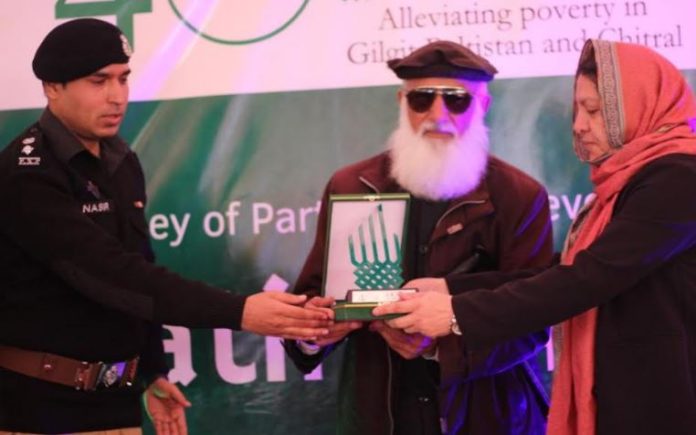
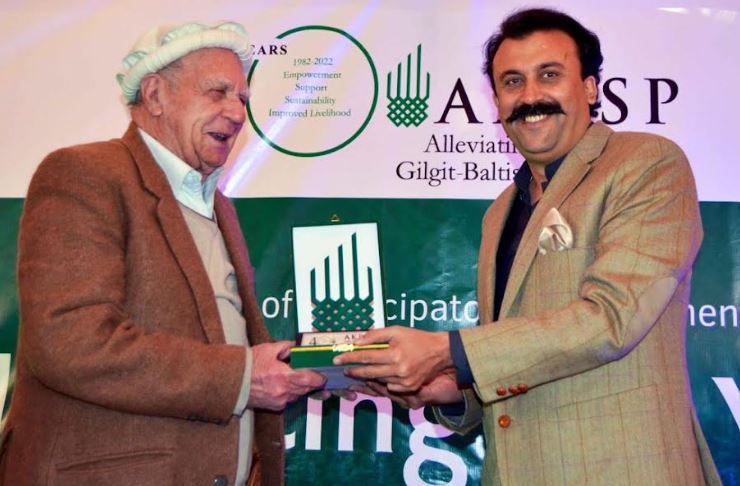
Chitral, 22: The Aga Khan Rural Support Programme (AKRSP) is commemorating 40 years of empowering communities in Gilgit-Baltistan and Chitral. The inaugural ceremony of the three-day event in Chitral under the theme ‘Celebrating 40 years of New Localism’ began by recognising the commendable services of community members.

A pictorial exhibition along with documentaries on AKRSP’s early evolution highlighted key achievements of AKRSP in major thematic areas, including climate resilience, civil society, agriculture and food security,early childhood development (ECD),education, social organisations, natural resource management, community infrastructure development, credit and savings, enterprise promotion and women economic empowerment. Around 27 stalls showcased the work of local artisans and micro-enterprises including traditional dresses, herbal products, gemstones, musical instruments, food items, and dry fruits.

The event’s chief guest Mr. Anwar ul Haq, Deputy Commissioner, Lower Chitral acknowledged that “AKRSP is the only non-governmental organisation working more than any other organisation in the region. The AKRSP model is sustainable and pro-people.” He felicitated AKRSP for completing 40 years, and applauded AKRSP’s role in building resilient communities in Gilgit-Baltistan and Chitral.

AKRSP’s development approach is based on the belief that local communities have tremendous potential to plan and manage their own development, once they are organized and provided access to necessary skills and capital. Since its inception, AKRSP has trained over 126,000 women and men in different technical and vocational fields, completed 4,706 community infrastructure projects benefiting more than 380,000 households, and planted tens of millions of trees. It has helped establish and mobilise 5,249 Village and Women’s Organisations representing more than 78% of the households in Gilgit-Baltistan and Chitral. These organisations have saved more than PKR 500 million, and disbursed PKR 2 billion as loans.

Mr. Jamil ud Din, General Manager, AKRSP, highlighted that AKRSP’s 40 years of community service would not have been effective without the continuous support of the local communities. He applauded the role of local communities in empowering themselves through organisation, skill-building,and savings – the three fundamental principles taught by AKRSP.

AKRSP’s former board members, community members, poets, writers, and other dignitaries also expressed their views at the inaugural event and appreciated AKRSP’s efforts in the development of Chitral.

Stay Connected

64FansLike
60FollowersFollow

Latest Reviews

Exchange Rates

USD - United States Dollar
EUR
1.17
GBP
1.34
AUD
0.67
CAD
0.73