Home Blog Page 1411

ECP was never opposed to use of EVMs as ‘widely propagated’: CEC Raja

ISLAMABAD, DEC 7: Chief Election Commissioner Sikander Sultan Raja on Wednesday said the Election Commission of Pakistan (ECP) faced “unwarranted criticism” for allegedly opposing the use of electronic voting machines and balloting rights for overseas Pakistanis, saying the electoral watchdog was never opposed to them as was “widely propagated”.

The remarks from the ECP chief comes in reference to the criticism from the PTI, particularly its chief Imran Khan, who has on multiple occasions called out the commission on various occasions for allegedly scuttling the introduction of EVMs in support of his political rivals — a claim it denies.

“I challenge all critics to show one instance where the ECP opposed electronic voting machines or voting rights for overseas Pakistanis, but there should be a procedure,” he said during his address in Islamabad, while insisting one should avoid raising slogans in favour of EVMs without considering the overall mechanism that would eventually make the entire election process “suspicious”.

He said local government elections in Punjab will take place in the last week of April. “We are conducting de-limitations again and the provincial government has been asked to ensure polls are held by the stipulated time.”

Raja said the ECP had already informed the Punjab government that the commission would make use of previous laws under Article 283 of the Constitution, if the administration attempted to again amend the local government law.

He underlined that the commission was in support of the use of technology in elections, saying, however, it must be backed by all stakeholders.

He elaborated that by-elections on 17 National Assembly seats and 34 Punjab Assembly elections were held in 2020-21 and 2021-22. “Of them, 35 by-polls were won by then opposition and 16 by the government, which proves the transparency of the electoral process,” he added.

The ECP chief blamed the Punjab government for delay in LG polls due to repeated changes in laws. “We need at least three to four months for delimitations.”

Raja said the ECP was also not provided funds at the time of [by-elections], adding some funds were released later while many of them were still in the pipeline.

He emphasised that the local government polls held the utmost importance in the country.

He said the federal government had been conveyed that the ECP needed seven to eight months for delimitations. “We are confident once the census is completed to the core, we will be ready to hold general elections.”

COAS Gen. Syed Asim Munir visits Quaid’s mausoleum

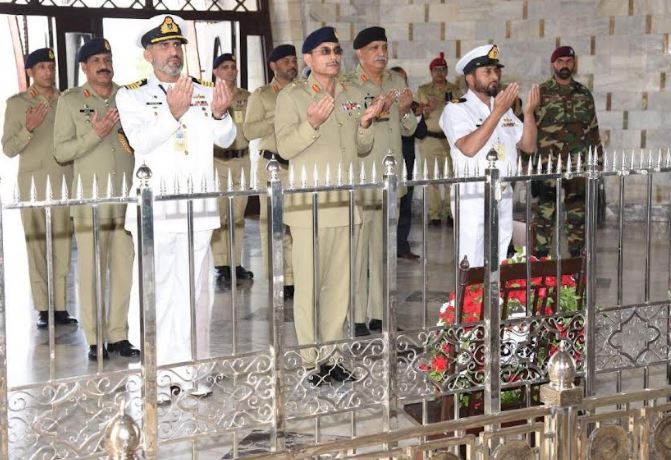
KARACHI: /DNA/ – Chief of Army Staff, General Syed Asim Munir visited the mausoleum of Quaid- e -Azam Muhammad Ali Jinnah today, to pay homage to the Nation’s founder. COAS laid a floral wreath and offered Fateha.


Later, COAS visited Corps Headquarters Karachi . COAS was briefed on Operational, Security and other matters of the formation including assistance to civil administration during recent natural calamity in Sindh particularly interior Sindh. COAS appreciated Army and Ranger’s troops for operational preparedness and reaching out to people of Sindh during recent unprecedented floods in the country. 

COAS praised formation, allied organisations and law enforcement agencies for maintaining safe and secure environment in the province particularly megalopolitan city of Karachi.
Earlier, on arrival at Karachi, COAS was received by Lieutenant General Muhammad Saeed Corps Commander Karachi.

Ethiopian Envoy praises Pakistan for ‘Engage Africa Policy’

DNA

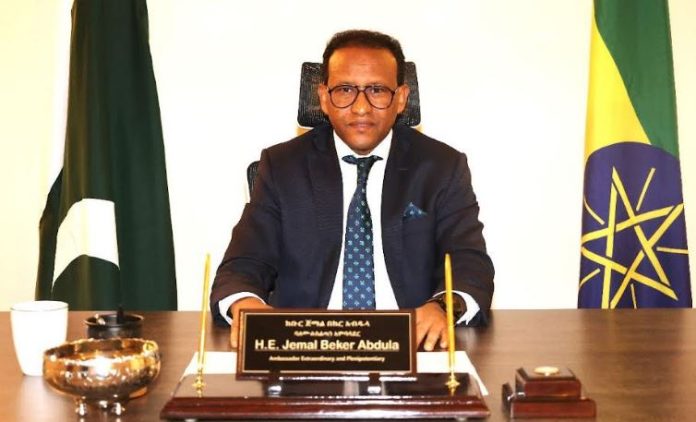
ISLAMABAD, DEC 7: Ambassador Extraordinary and Plenipotentiary of the Federal Democratic Republic of Ethiopia to the Islamic Republic of Pakistan Jemal Beker Abdula on Wednesday appreciated the government of Pakistan for timely rolling out its “Engage Africa Policy’ to explore areas of mutual economic interest within the African continent through robust economic development and trade.

“It is my firm belief that the current century belongs to Africa which is emerging as a major destination for all the big investors around the world due to rapid pace of development and progress there,” the ambassador said while speaking at the Islamabad Conclave 2022.

“Gone are the days when Africa was portrayed by the world as a gloomy and underdeveloped place, marred by civil wars and backwardness,” he said, adding the situation had been changed in the continent altogether.

He said Africa had undergone a lot of transformation shaping its own destiny and emerging as a land of opportunities.

Since the beginning of 21st century, he said there had been a remarkable improvement in the governance style of African countries and political stability had become a hallmark of the continent with more democratic accountability and transparency within the governments.

He said by 2050, a quarter of the world’s populations would be in Africa which would shape the planet earth’s future. “Africa’s unprecedented population growth will have impact on geopolitics, global trade, work force, and other dominant prospects,” he added.

Giving some recommendations for reaping the fruits of “Engage Africa Policy”, he called for establishing the institutional linkages between Pakistan and the African countries to boost bilateral, regional and multilateral cooperation for strengthening political, security, economic, social, and cultural ties.

“It is also imperative for the Pakistani government to strengthen its relations with Ethiopia which is a gate way to Africa and connect the former with the latter,” he remarked.

He said Ethiopia was playing a leading role in pan-Africa since the colonial period and still had a strong legacy in shaping the political, socio-economic and regional integration while striving to achieve agenda 2063 of the Africa Union.

 Ethiopia, he said, was the founding member of the League of Nations, UN, OAU, African intercontinental free trade agreement and promoting free movement of people, goods and services across the continent. He said his country also owned the largest Pan-Africa Airlines with the name of Ethiopian Airlines. 

 He said Ethiopia attached great importance to advancing the bilateral relationship with Pakistan, and “opening of our mission in Islamabad reflects our commitment in this regard.”

He said both Ethiopia and Pakistan shared similarities in many ways as both were heirs of ancient civilizations, influential diaspora and share social, cultural and political values. It had a federal system like that of Pakistan which held elections at regular intervals.

He said Ethiopia was on upward trajectory registering a double-digit economy which had transformed the livelihood and well-being of its citizens. It had developed a home-grown economy as a result of the reforms initiated in 2018 led by Prime Minister of Ethiopia H.E. Dr, Abiy Ahmed, who envisioned to make the country a beacon of Africa’s Prosperity.

“Currently, the bilateral trade between the two countries is minimal and amounts to 78 million US dollars, however, my target is to take it to 200 million US dollars by the end of 2023,” he vowed.

He said his country was powering its progress through cheap, clean and environment-friendly energy which was also being exported to other countries in the continent including Djibouti, Kenya and Sudan, connecting regional integration through energy.

“My country has almost completed the Ethiopian Grand Renaissance Dam which is being built on the Nile River and set to produce 6,500 MW of clean electricity that can be sold at cheap price to neighboring countries and other regions.

He said a one-window facility was on the cards where the investors would have all the facilities for import and export under one roof.

Ethiopia has been offering multiple incentives to the investors who would be exporting the products to other destinations after ensuring their manufacturing in the country, he added.

‘Women Move Mountains’ art exhibition kicks off

DNA

Rawalpindi – As many as 57 paintings in oil on canvas by the students of twin cities were put on display at Rawalpindi Art Gallery in collaboration with the Punjab Arts Council Rawalpindi on Wednesday. Devcom-Pakistan (Development Communications Network) organized the exhibition of artwork, culminated at a live painting competition on the theme “Women Move Mountains” organized at the Fine Arts Department of the Fatima Jinnah Women University.  

This is the fourth event of the two-week long 12th Pakistan Mountain Festival, an annual flagship event of Devcom-Pakistan, to commemorate the UN’s International Mountains Day (IMD) that falls on December 11. The artwork on display is by the students from Fatima Jinnah Women University, National College of the Arts (NCA), Rawalpindi Women University, Westminster Academy, Foundation University Islamabad campus, SZABIST University, International Islamic University, FG College for Women Kashmir Road, Islamabad Model College for Girls and National Textile Institute.

Mostly the paintings depict the struggle of mountain women for environmental conservation, socioeconomic development, working in the fields while taking care of their families and children. Some of the paintings reflect the landscape of mighty mountains, water resources, natural habitats, and women’s plight of glaciers melting and degradation of mountains as it affects their life and livelihood. The artworks highlight the women’s struggle in combating real-life challenges in the changing climate, women in mountain ecosystem conservation, and cultural heritage from the northern parts of Pakistan. They depicted the impact of climate change on life in mountains besides the aesthetic value.

PAC Rawalpindi Director Waqar Ahmed appreciated the students work saying the thematic work will educate them about the challenges confronting mountains. Visual arts have more potential to reflect emotions and feelings to touch the hearts than words. Punjab Arts Council Rawalpindi always encourages youth to explore its potential in creative arts.       

Speaking on the occasion, Devcom-Pakistan Executive Director and founder of Pakistan Mountain Festival Munir Ahmed said: “Art plays a central role in educating people about the present day challenges confronting us. The colours and forms touch our hearts and souls. The exhibits highlight mountain women’s role in environmental protection and social and economic development in mountain areas. Both women and mountains are the neglected ones in our society. Women are often the primary managers of mountain resources, guardians of biodiversity, keepers of traditional knowledge, custodians of local culture and experts in traditional medicine. Somehow, mountain women’s potential and contribution to conservation is undermined. Mountain women’s climate resilience shall be the focus to empower them to face the emerging challenges.”

First prize winner Muhammad Adullah of National College of Arts (NCA) Rawalpindi in his conceptual work painted in black and white acrylic on canvas a woman holding a crescent in her hands but her head is chopped off, and her blood flowing from top to bottom of mountains.

Wisal Khan won second prize for his work in oil on canvas. The eye-catching mountains and a woman climber in shades of light with rationally reflected contours of mountains in the glimmering tones. The proportionate treatment to the surface made him successful.

Other prize winners included Amna Ayyaz from NCA Rawalpindi, Aqsa Nawaz from Fatima Jinnah Women University, and the two students of Rawalpindi Women University Zeerak Fatima and Mahzaib Gillani.  

Head of Art and Design at the Westminster Academy Riffat Ara Baig said that they have been engaged with students of different age groups for the last two decades to sensitize them about the environment and conservation of natural resources. The educational institutions shall consistently engage their students and their parents to raise awareness about rational use of resources around us.

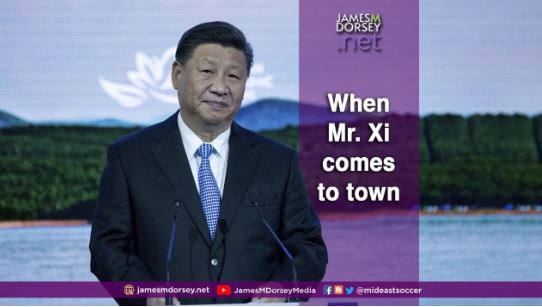
When Mr. Xi comes to town

Pomp and circumstance are important.

So are multiple agreements to be signed during Chinese President Xi Jinping’s visit to Saudi Arabia this week, his first venture beyond East and Central Asia in three years.

No doubt, Mr. Xi’s reception will be on par with the welcoming of Donald J. Trump when he headed to Saudi Arabia in 2017 on his first overseas trip as US president. At the same time, it will contrast starkly with the more downbeat response to Joe Biden’s hat-in-hand pilgrimage to the kingdom in July.

Mr. Xi Jinping and Saudi Crown Prince Mohammed Bin Salman’s timing is perfect.

The visit allows Gulf states, with Saudi Arabia in the lead, to further diversify their foreign relationships and hedge their bets as the world moves from a unipolar to a bipolar, if not multipolar, order.

In addition, Mr. Xi’s visit boosts the positioning of Mr. Bin Salman and his kingdom as undisputed leaders of the Muslim world.

Like when Mr. Trump was in town five years ago, Mr. Bin Salman has ensured that Mr. Xi’s visit will involve bilateral talks and multilateral gatherings with Gulf and Arab leaders.

Even though Mr. Xi and Gulf leaders project the Chinese president’s visit as a milestone rather than the latest of regular high-level gatherings, neither seeks to fundamentally alter the region’s security architecture with the United States as its guarantor.

On the contrary.

While eager to strengthen and expand relations with China, Gulf states see Mr. Xi’s visit as a vehicle to pressure the United States to spell out and formalize its security commitment to the region at a time when America has made China and the Indo-Pacific its main strategic concern and has not lived up to the region’s expectations.

Speaking three weeks before the Chinese leader’s visit, Anwar Gargash, the diplomatic adviser of United Arab Emirates President Mohammed bin Zayed, insisted that “our primary strategic security relationship remains unequivocally with the United States… Yet, it is vital that we find a way to ensure that we can rely on this relationship for decades to come through clear, codified, and unambivalent commitments.”

Mr. Xi has no problem with that. On the contrary, China is not interested and perhaps incapable of replacing the United States militarily in the Gulf. So while it may want the United States out of East Asia, the same need not be valid for the Middle East.

That allows Mr. Xi and his Saudi and Arab counterparts to focus on the nuts and bolts of their meetings.

High on Mr. Xi’s agenda is the export of its model of authoritarianism, involving one-person rule, a surveillance state, and the ringfencing of the Internet. It’s a model that appeals to men like Mr. Bin Salman and UAE and Egyptian presidents Mr. Bin Zayed and Abdel Fattah Al-Sisi.

The appeal remains, even if Mr. Xi’s proposition has lost some of its shine as a result of his faltering zero-tolerance Covid-19 policy that has slowed economic growth, hindered the country’s private sector that is also hobbled by punitive state interventions, and sparked an anti-government protest that has forced the Chinese leader to abandon core elements of his effort to control the pandemic.

Moreover, Middle Eastern leaders will have noticed that China’s firewall failed to prevent Internet users from discovering that a majority of spectators at World Cup matches in Qatar were unmasked. Nor were Chinese censors able to prevent an avalanche of video clips of nationwide protests against strict Covid-19 rules from flooding the country’s tightly policed social media.

In addition, Gulf efforts to diversify their economies and reduce dependence on fossil fuel exports centre on a free-market economy and a private sector driven by innovation and creativity rather than the kind of state-controlled capitalism envisioned by Mr. Xi.

That has not prevented China from advancing its control and governance systems with investments and partnerships in Middle Eastern telecoms, corporate communication systems, cybersecurity, and smart cities in countries stretching from Morocco to the Gulf.

Chinese involvement runs the gamut from building 5G systems and data centres to providing cloud services and developing artificial intelligence systems.

Investments in technology and knowledge transfers enable Arab autocracies to enhance their surveillance capabilities and Internet control.

Furthermore, countries like Egypt, Saudi Arabia, and the UAE have looked for inspiration in China’s restrictive cybersecurity legislation.

Days before Mr. Xi’s visit to Saudi Arabia, China’s foreign ministry released a report on ‘Sino-Arab Cooperation in a New Era’ that, according to Chinese media, misleadingly asserted that China “never seeks any geopolitical self-interest.”

China probably meant to say that it is not seeking to challenge the US position in the Gulf any time soon but intends to be the region’s major partner economically and in terms of technology, a focal point of US-Chinese rivalry.

Speaking last month at a regional security conference, senior Pentagon official Colin Kahl spelt out limits to Gulf-China technological Cooperation that the United States would seek to impose.

“If our closest allies and partners cooperate too deeply with China on the security side, it’ll create security risks for us. Getting into certain networks that create real cyber vulnerabilities and risks for us. Infrastructure that generates real intelligence risks for us, and networks that touch our military networks that create real risk for us, or a presence in certain countries that allow surveillance of our forces and what we’re doing in ways that presents a threat to us,” Mr. Kahl said.

Although Chinese 5G projects in Saudi Arabia, the UAE and elsewhere in the region have progressed despite US objections, Mr. Kahl left unaddressed whether they threatened to cross his threshold.

The Chinese foreign ministry report identified technology, agriculture, and investment as focal points of Chinese-Arab economic cooperation.

During his visit, Mr. Xi was likely to also angle for construction contracts for Mr. Bin Salman’s US$500 billion futuristic Red Sea city of Neom, as well as involvement in developing a Saudi defense and automotive industry.

For its part, Saudi Arabia will want to attract Chinese investment in its mining sector. Khalid Al Mudaifer, the kingdom’s deputy mining minister, said he is seeking US$170 billion by 2030.

In a bid to exploit strains in Saudi- and potentially UAE-US relations and uncertainty about America’s reliability as a security partner, the Chinese report asserted that “China has always believed that there is no such thing as a ‘power vacuum’ in the Middle East and that the people of the Middle East are the masters of the future and destiny of the region.”

Mr. Xi arrived in the kingdom as a US district court in Washington dismissed a lawsuit against Mr. Bin Salman and 20 others for the 2028 killing of journalist Jamal Khashoggi. The court based its decision on a finding by the US government that Mr. Bin Salman enjoyed sovereign immunity.

On another note, the Chinese report predicted that China and the Arab world would continue to support each other’s counterterrorism and deradicalisation policies.

In stressing counterterrorism and deradicalisation, the report suggested that Gulf silence, and in the case of Saudi Arabia, endorsement of Mr. Xi’s brutal crackdown on Turkic Muslims in the north-western Chinese province of Xinjiang, reflected a more complex balance of power in the Chinese-Gulf relationship.

In other words, Gulf acquiescence is more than simply wanting to ensure that the region stays on China’s right side or seeking to shield autocracy from criticism as the preferred political system in both parts of the world.

Because the crackdown targets Islam as a faith, not just Turkic Muslims as a minority, Gulf support offers China badly needed Muslim endorsement, particularly from Saudi Arabia, the custodian of Islam’s two holiest cities, Mecca and Medina. In doing so, the support enhances Gulf leverage in relations with China.

At the same time, China’s framing of the crackdown as a fight against extremism, terrorism, and separatism legitmises the clampdown by Saudi Arabia and the UAE on any expression of political Islam.

For Mr. Gargash, the UAE diplomatic advisor, the Gulf’s ties to the United States and China fit neatly into a box. “Our trade relations increasingly look to the East, while our primary security and investment relations are in the West,” Mr. Gargash said.

The official did not mention increasingly close political ties to China, like in the case of Xinjiang or the Russian invasion of Ukraine, and that is where things potentially get messy.

Thank you to all who have demonstrated their appreciation for my column by becoming paid subscribers. This allows me to ensure that it continues to have maximum impact. Maintaining free distributions means that news website, blogs, and newsletters across the globe can republish it. I launched my column, The Turbulent World of Middle East Soccer, 12 years ago. To borrow a phrase from an early proprietor of The Observer, it offers readers, listeners, and viewers ‘the scoop of interpretation.’ If you are able and willing to support the column, please become a paid subscriber by clicking on Substack on the subscription button and choosing one of the subscription options.

Dr. James M. Dorsey is an award-winning journalist and scholar, an Adjunct Senior Fellow at Nanyang Technological University’s S. Rajaratnam School of International Studies, and the author of the syndicated column and blog, The Turbulent World of Middle East Soccer.

SC directs govt to form ‘independent’ JIT to probe Arshad Sharif murder

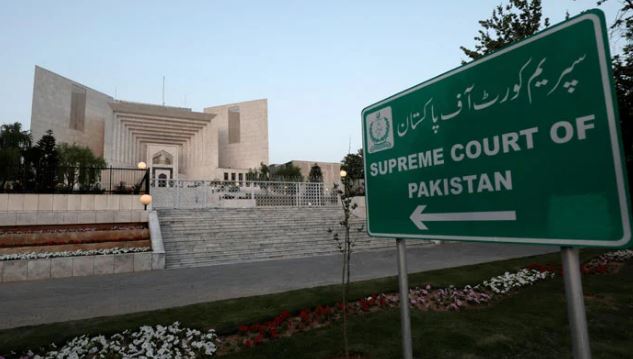
ISLAMABAD: Hours after the government established a joint investigation team (JIT) to probe Arshad Sharif’s murder, the Supreme Court rejected it and asked a new “independent” body to be formed.

“Federal government should immediately form a new investigation team. The court wants an independent team to investigate the issue,” remarked Chief Justice of Pakistan Umar Ata Bandial as the Supreme Court resumed the hearing of the suo motu case of Sharif’s murder.

The CJP added that the court does not want any member to have connections with any influential person.

Earlier today, the government had formed a five-member JIT to probe Sharif’s murder following the registration of the first information report on the court’s order.

The IG Islamabad constituted the JIT today to investigate Arshad Sharif’s murder and named DIG headquarters as its chairman.

Today’s hearing

At the outset of today’s hearing, Chief Justice Bandial said that the court would hear the slain journalist’s mother. However, journalist Hassan Ayub came to the rostrum and informed the court that she was not present as there were no lifts in the court.

The journalist also told the court about the police’s attitude towards the slain journalist’s family.

CJP Bandial apologised for the lift and assured the journalist that they will also look into the police’s conduct.

Following this, Additional Attorney General Amir Rehman read the fact-finding committee’s report on the murder. He added that the report has been provided to Sharif’s family. The government lawyer also told the court that the Foreign Ministry was cooperating as much as it could in this case.

At this, Justice Ijaz Ul Ahsan asked whether the alleged shooter was a member of the Kenyan police. While Justice Muhammad Ali Mazhar questioned why the interviews of three police officers were not included in the report.

AAG Rehman told the bench that the investigative team took information from the Kenyan officials, adding that the three cops in question were introduced by them. He added that the fourth cop could not be interviewed as he was injured.

“We are trying to contact the relevant minister and cabinet secretary in Kenya. The Pakistan High Commission in Kenya is in touch with the relevant authorities,” he told the judges. He also informed the court that a case has been registered.

At this, Justice Ahsan once again asked the government lawyer who the shooters were in this incident. “They were Kenyan police officers,” the AAG said.

Meanwhile, Justice Bandial shared that report has been provided to the court at 1:00am.

The CJP remarked that the journalist was brutally murdered, and asked the government to seek the Kenyan government’s cooperation. He also added that some witnesses of the case were in Pakistan.

The chief justice then asked whether anyone from the police department was present or the people who wrote the report were in the courtroom.

The AAG informed the CJP that IG Islamabad and the director general of the Federal Investigation Agency (FIA) were present in the court. Meanwhile, Justice Sayyed Mazahar Ali Akbar Naqvi observed that the Kenyan police officers who had shot at Sharif were not mentioned in the report. He also asked why a case was not registered against the Kenyan cops.

At this, AAG Rehman said that there is a need to review if a case can be registered against foreigners. He added that the report was part of the record.

“This is a very serious matter. I’m warning the government to take this matter seriously. The court is not here to only listen to you,” remarked Justice Naqvi at the AAG’s response.

The mother of the slain journalist got emotional as she appeared in court to witness the proceedings.

“We request you for justice in the case,” Sharif’s mother asked CJP Bandial. She added that her son was forced to leave Pakistan and was not even spared abroad.

“We apologise for the unfortunate incident,” the CJP said. He also assured the mother that the investigative team will work without any pressure.

“Mrs Alvi is the mother of two martyrs. Would Arshad Sharif’s mother like to say anything else,” said the CJP. He assured the mother that the FIR has been registered and her statement will be recorded.

Meanwhile, Justice Jamal Khan Mandokhail observed that an activist was killed last year in Canada, adding that if that had been investigated then such an incident would not have happened with a Pakistani expat.

“It is very sad that we spring into action after the incident, not before,” observed Justice Mandokhail.

The court then issued directives to the Foreign Ministry to cooperate with the JIT, adding that if cooperation is required from the United Nations or other international bodies then it must be sought.

The court then adjourned the hearing till tomorrow (Thursday).

US continues to assist Pakistan in fight against covid-19-related illnesses

ISLAMABAD, DEC 7: /DNA/ – The U.S. government, through the U.S. Agency for International Development (USAID), donated $7.5 million worth of medical oxygen supplies to the Ministry of National Health Services, Regulations and Coordination.  The support will also provide training to 163 hospitals throughout Pakistan to increase their capability to treat patients suffering from severe COVID-19 and other lung conditions. 

This U.S. government support was received by the Federal Health Minister, Mr. Abdul Qadir Patel, in a ceremony at the Ministry of National Health Services in Islamabad.  In his remarks, Mr. Patel said, “We are thankful to the U.S. government for their continued support during COVID-19 and especially during the recent floods.”  He also expressed that these efforts reflect the strong bilateral relations between the two countries.

Addressing the Ministry of Health officials at the ceremony, Ambassador Donald Blome remarked, “Today’s donation is not just about COVID-19.  It is an investment into Pakistan’s long-term health system. This assistance ­– that started at the very outset of COVID, continued throughout the pandemic, and is now addressing the lasting effects of the floods on health – is a prime example of the long history of U.S. assistance to Pakistan.  The United States were there at the beginning, and we will continue to find ways to support Pakistan as it recovers and rebuilds from disasters – whether that is a global pandemic like COVID-19 or a flooding disaster like Pakistan has just experienced.” 

The U.S. government donation provides thousands of essential supplies and equipment for oxygen therapy that the Ministry of Health requested.  The U.S. government will also develop a web-based information system that will allow real-time surveillance of patient oxygen levels, as well as strengthen Pakistan’s medical oxygen systems, while technical assistance provided will train public-sector staff working at intensive-care units on how to effectively use the equipment. 

The U.S. government has provided more than 79 million doses of COVID-19 vaccines to Pakistan including 16 million pediatric doses, one million COVID-19 rapid diagnostic tests, and critical health supplies and training to health workers.  These efforts are supported by the more than $80 million the U.S. government has provided to assist the Pakistani people in the fight against COVID-19.    

Japan provides a grant of USD 38.9 million to Pakistan for flood victims

ISLAMABAD, Dec 7: /DNA/ – On December 2, the Government of Japan announced its plan to provide grant assistance of USD 38.9 million to Pakistan as part of Japan’s supplementary budget to deliver life-saving aid to the flood victims. The unprecedented levels of flooding have triggered a multi-dimensional humanitarian crisis, leaving the affected population with increased health risks and food insecurity, insecure livelihoods, and heightened vulnerabilities to gender-based violence.

The Government of Japan will support the affected population in various social and economic dimensions in partnership with WHO, UNFPA, FAO, UNDP, UNICEF, WFP, UNWOMEN, UNHCR, and IPPF in Sindh, Khyber Pakhtunkhwa, Balochistan, and Punjab provinces, as well as the Islamabad Capital Territory. For the total grant assistance of USD 34.2 million, the proposed areas of support include emergency medical assistance, food distribution, agriculture and livestock restoration, livelihood recreation, and gender-based violence risk mitigation and response. In order to ensure the rapid rollout to reach the most vulnerable, these projects will commence in January 2023.

The Government of Japan will also provide support through JICA, equivalent to USD 4.7 million, for recovery from the floods in health, agriculture, education, gender, and resilient disaster management, thereby contributing to “Build Back Better” in Pakistan.

The Government of Japan provided USD 7 million as an emergency grant to address the immediate impact of the floods in September 2022. The Government of Japan, with a long-standing partnership with Pakistan, stands ready to support the people of Pakistan to overcome the ongoing humanitarian crisis.

Historic action of Hangor

Asaf Humayn

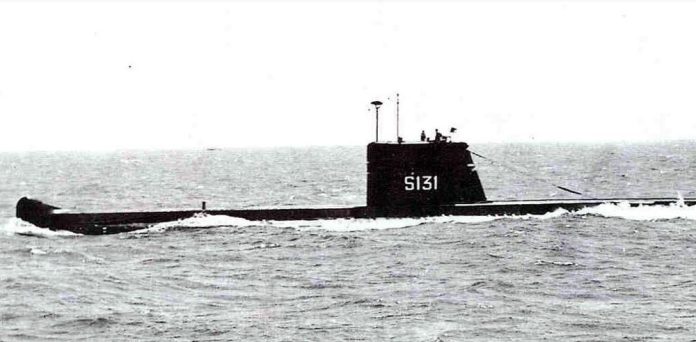
Dark nights at sea can be scary.  When you see a light closing in, you are not sure whether it is a menacing warship, a harmless fishing boat or a benign merchant ship. If it is wartime, many dangers lurk hidden in the cloak of darkness. On 9th Dec 1971, a similar situation existed.  The moon was to rise after 9:30 pm and it was pitch dark.  Pakistan and India had been at war since 3rd Dec. Two Indian Navy anti-submarine frigates KHUKRI and KIRPAN were patrolling near Diu Head searching for their prey, the Pakistan Navy submarines.

Submarines and naval ships are old adversaries.  This rivalry was joined by aircraft as a potent weapon to kill submarines in World War I.  World War II saw many epic battles between submarines and submarine-hunters. The war at sea in the Atlantic was characterised by U-boats playing havoc with the allied supply lines. In the Pacific, Allied and Japanese submarines made their name. Admiral “Bull” Halsey of the United States Navy speaking well after the war, observed, “If I had to give credit to the instruments and machines that won us the war in the Pacific, I would rank them in this order; submarines first, radar second, planes third, and bulldozers fourth.” As compared to the United States, Royal, Japanese, and German navies of WW II, Pakistan Navy is a small force.  In 1971, the Indian Navy was 5 times bigger than Pakistan Navy. Nevertheless, we can proudly claim a similar feat by our small submarine forceduring the 1971 Indo-Pak war.

On this night, the time was 8:19 PM.  A massive explosion under the Indian Navy Ship KHUKRI doomed the anti-submarine frigate and sent her to a watery grave.  An E-15 acoustic homing torpedo fired by HANGOR found its markand hit the ship’s magazine full of explosives. PNS HANGOR’s daring action etched the fateful moment in the annals of naval warfare.

World War II saw U-boats; Japanese and Allied submarines sinkingmany warships.  HANGOR’s historic action took place about 26 years and 6 months after submarine attacks in the closing stages of World War. We can recall 2 successful actions by submarines.  On 29th April 1945, at about 10 PM, the U-boat U-286 hit anti-submarine frigate HMS Goodall (K 479) with a Gnat (German Naval Acoustic Torpedo) in the entrance to the Kola Inlet near Murmansk (Russia). The magazine exploded, blowing away the forepart of the vessel and killing the commander. One hundred twelve crew members died. The abandoned ship had to be scuttled by gunfire. This was the last confirmed U-boat success in the North Atlantictheatre. The war in the Pacific continued awhile longer.At 00:15 AM on 30thJuly, the USS Indianapolis (CA 35) Heavy Cruiser was torpedoed by the Imperial Japanese Navy submarine I-58 and sank in 12 minutes. The cruiser was heading for the Philippines after delivering parts of the nuclear bomb that was dropped on Hiroshima on 9th August. The ship was struck by 2 straight running torpedoes. Of 1,195 crewmen aboard, approximately 300 went down with the ship. Like the sinking of KHUKRI, both these sinkings occurred in the dark of the night.

PN Submarine HANGOR had arrived in Pakistan in December 1970.  PN Dockyard, Karachi, only had only rudimentary repair and logistic support for these newly acquired platforms. A similar state existed in PN Torpedo Depot that supplied the submarines’ main weapon – torpedoes.  However, the gathering war clouds after March 1971 urged all-around dedication, zeal, and application. Everyone in the logistics chain rose to the task at hand.  All the Daphne class submarines – HANGOR, SHUSHUK and MANGRO – remained fully operational and war-ready.  PNS HANGOR carried out a reconnaissance patrol off the Indian coast during August 1971, thus, gathering valuable experience and data.

India unleashed an undeclared war on the eastern front on 21 Nov 1971.  Within 24 hours of this aggression, PN submarine HANGOR sailed from Karachi.  Despiteserious machinery defects, she continued to pursue her mission.  The courageous commanding officer Commander Ahmad Tasnim SJ was leading a motivated and brave crew of 53 officers and men.  In the face of daunting risks, they repaired their submarine close to the enemy waters. During this perilous period, HANGOR dodged several enemy hunters both surface ships as well as aircraft. When the war was declared on 3rdDec, HANGOR was ready in her assigned area near Bombay. Pakistan government had only permitted attacks on men of war and not on unarmed merchant ships. (This was in stark contrast to the Indian Navy’s policy of attacks even on unarmed merchant vessels). HANGOR signalled the deployment of the Indian Navy units to Naval Headquarters.  After intercepting this radio communication, the Indians were alerted, evaded this position and deployed anti-submarine forces to find the Pakistani submarines.The vigilant attack team of HANGOR soon realised that the enemy warships were not anywhere near.  So, they requested Pakistan Navy Headquarters to shift their patrol area, to seek battle with the enemy.

By 8thDec, HANGOR was patrolling in her assigned area.The re-deployment proved fruitful and HANGOR started to track enemy ships.After the sunset at 6 PM on 9th Dec, Commander Ahmad Tasnim started steering to intercept the enemy frigates. The submarine crew was full of confidencethat their desire to seek battle with the enemy would soon be fulfilled. In less than 2 hours, the enemy frigates came within torpedo range, and the attack team of HANGOR, on their commander’s order launched the first torpedo at 7:57 PM.  This torpedo did not find its target.  The Indians claim that KHUKRI and KIRPAN were alerted by this torpedo and KHUKRI started to search for and attack the prowling submarine. However, this manoeuvre brought the ship within HANGOR’storpedo range again. HANGOR fired a second E-15 homing torpedo on the approaching KHUKRI at 8:14 PM and the rest is memorable history. Within 5 minutes the torpedo homed on to its target and broke KHUKRI in two parts.  The ship sank within 2 minutes.One hundredand ninety-four of her crew including her commanding officer Captain M N Mulla perished.  Most of them had no time to escape the sinking ship. As per normal tactics, HANGOR should have started her withdrawal from the battle because her position was now well-known.  Not the redoubtable HANGOR; her valiant commanding officer and the crew continued their attack and fired a third torpedo which hit KIRPAN at considerable range. After this debacle, the Indian Navy did not dare repeat its attacks on Karachi or Pakistani naval forces. Thus, HANGOR’s action thwarted the Indian Navy‘s further aggressive designs.

After getting rid of the two Indian Navy anti-submarine frigates, HANGOR came under repeated counterattacks by aircraft and ships. The crew of HANGOR counted 156 attacks during the next 72 hours. However, she evaded the enemy.  Commander Tasnim who was decorated with a second Sitara-e-Jurrat (SJ bar) dedicated his award to all members of his gallant crew. 

HANGOR’s attack was not a one-sided affair. The Indian Navy, which did not venture out at sea in the 1965 war due to the fear of PN submarine GHAZI, had bolstered her anti-submarine by the 1971 war.  The Indian Navy inducted anti-submarine patrol aircraft Super-Constellation and the French Alizé. She had acquired 5 Petya class anti-submarine corvettes. She had also improved her sonar and anti-submarine weapons.  However, the proficient crew of HANGOR delivered a deadly attack using her sonar and passive ranging equipment giving no chance to the 2 anti-submarine frigates. The Pakistan Navy submarines during the 1971 war reported many close encounters with the Indian Navy anti-submarine aircraft. Nevertheless, the training and alertness of PN submarine crews saved them from any unfortunate mishap.

The memorable success of HANGOR lifted the prestige of the Pakistan Navy as a professional force. When CaptainAhmad Tasnim (SJ and Bar) used to visit naval bases in France as Defence and Naval Attaché, the French navy officers and men revered him and greeted him as a hero. HANGOR now rests as a museum piece in Pakistan Maritime Museum, Karachi.  The 51st anniversary of this remarkable achievement will renew the interest of the Pakistani nation in HANGOR. This momentous victory will continue to motivate Pakistan Navy’s manpower and especially its submariners to achieve and match this triumph.  They will carry the battle honours of HANGOR in the forthcoming HANGOR class submarines and maintain anintimidatinglegacy, In Sha Allah.

Fate of Punjab and KP assemblies

The PTI Chairman Imran Khan has hinted at dissolving the assemblies in December in order to pave way for the general elections. Earlier he had offered the government to engage in talks with the PTI in order to determine a date for the elections however according to the former prime minister his offer was misunderstood by the government benches and construed as if the PTI were afraid of dissolution of the provincial assemblies. Therefore Imran Khan now has asserted that December was the deadline and if there were no agreement then he would call it a day.

Realistically speaking Punjab and KP governments have turned out to be heavens for those who want to make money therefore these vested interests would never like Imran Khan to dissolve assemblies. If the country has reached the verge of default and foreign exchange reserves have squeezed to record low levels it is not because the country is not producing anything or exports have slumped to minimal levels. The key reason that has brought us to such a pass happens to be the increased level of corruption and bad governance. It has been my consistent view that corruption and absence of rule of law are responsible for all our economic as well as political and social woes. Interestingly, there is no single department in Pakistan which we can say is corruption- free. Money makes the mere go dictum perhaps has been coined for this country.

Even during the rule of champions of Riasat-e- Madina, the PTI, corruption used to be the order of the day. The situation was even worse as the corruption rate had sky-rocketed during that time. Bad governance was yet another feather in PTI cap at that time. But, as Imran Khan would put it, their hands were tied and the epicenter of power rested somewhere else. He has openly admitted now that to give an extension to former army chief General Bajwa was his biggest mistake adding he would do away with the extension system if he comes to power again.  

The three and half year tenure of the PTI proved to be an absolute disappointment even for the die-hard PTI workers.  But then the Cipher issue appeared on the scene which instilled a new life into the PTI and the party once again turns out be the only option people believe can set things in order. And frankly, the way this coalition government has ruled this country in past eight months, PTI men ostensibly appear to be the angles.

Country’s economy would continue to reel under stress if this dispensation both at the provinces and federal level continues to hold ground simply because pulling the country out of crises has never been its priority ever since taking charge of the respective governments. When politicians take charge of the governments, both at the provincial and federal level, their immediate concern is how to secure the next elections. And we all know contesting elections in Pakistan is not every body’s job. It needs hell of connections and money as well.

Undoubtedly, Imran Khan has played a master stroke by announcing the dissolution of the provincial assemblies. It was an unexpected move for the government alliance. Once taunting the PTI chairman for not dissolving the assemblies if he really wanted general elections in the country, the government and its allies now are literally begging him not to do so. Govt stance unequivocally shows its weakness and its unwillingness to go to the elections fearing possible defeat.

Imran Khan and PTI need to keep in mind that PML N and PPP both are extremely good at political wheeling – dealing. There may be severe consequences if the PTI leadership delays dissolution of assemblies. If it really wants to do it then it has to do it sooner rather than later. As the insiders would reveal, Punajb Chief Minister Pervaiz Elahi and KP Chief Minister Mahmood Khan too want these assemblies to remain intact. Both of them perhaps know it very well that this is their last stint as the chief ministers. Especially Pervaiz Elahi is quite unpredictable. He is well known for changing loyalties at the eleventh hour. He has already hinted at continuing with his office at least till March 2023.

As regards PTI-Establishment relationship the PTI chairman has called upon his workers not to talk about any military official with a view to mending fences. Nevertheless, keeping in mind Imran’s temperament it is difficult to say that he will remain steadfast in his stance towards the establishment.

Stay Connected

64FansLike
60FollowersFollow

Latest Reviews

Exchange Rates

USD - United States Dollar
EUR
1.16
GBP
1.34
AUD
0.67
CAD
0.72