Home Blog Page 139

Pakistan High Commission Singapore marks first anniversary of Marka-e-Haq

Pakistan High Commission Singapore marks first anniversary of Marka-e-Haq

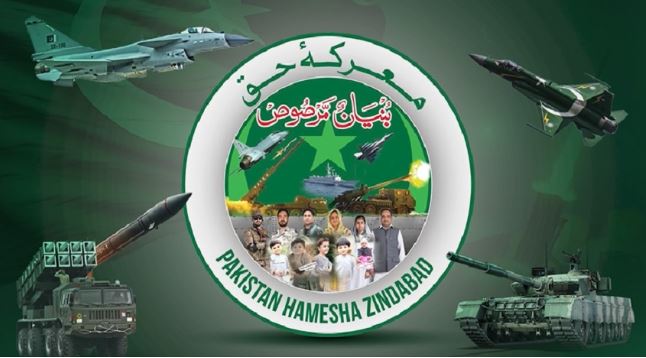
SINGAPORE, May 15: The Pakistan High Commission Singapore on Friday commemorated the first anniversary of Marka-e-Haq with a dignified ceremony attended by members of the Pakistani community, friends of Pakistan, and officials of the High Commission.

Speaking at the event, High Commissioner Rabia Shafiq said that Marka-e-Haq symbolizes Pakistan’s unwavering resolve, resilience, and determination in the face of aggression. She stated that Pakistan’s response during the challenging period demonstrated not only the professionalism and preparedness of its Armed Forces, but also the unity, patriotism, and strength of the Pakistani nation. Messages from the President of Pakistan and the Prime Minister on the occasion also resonated with the same spirit.

The High Commissioner noted that Pakistan remained fully capable of defending its sovereignty, territorial integrity and national interests against all threats, while continuing to uphold its commitment to peace, restraint, diplomacy, and regional stability.

“We believe in dialogue, in diplomacy and in resolving disputes through justice and mutual respect. At the same time, we reaffirm that any threat to our homeland will be met with national unity, unshakeable resolve, and strength through all means available”, she added.

High Commissioner Rabia Shafiq also acknowledged the valuable contributions of the Pakistani community in Singapore in promoting Pakistan’s positive image abroad, noting that this year marks the 60th anniversary of diplomatic relations between Pakistan and Singapore.

The ceremony concluded with prayers for the peace, stability and prosperity of Pakistan.

Pakistan High Commission Singapore marks first anniversary of Marka-e-Haq

Pakistan High Commission Singapore marks first anniversary of Marka-e-Haq

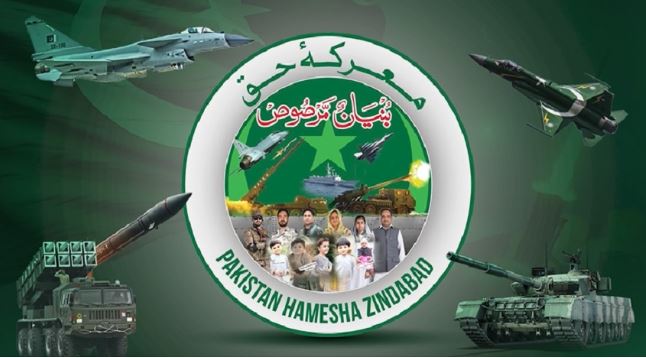
SINGAPORE, May 15: The Pakistan High Commission Singapore on Friday commemorated the first anniversary of Marka-e-Haq with a dignified ceremony attended by members of the Pakistani community, friends of Pakistan, and officials of the High Commission.

Speaking at the event, High Commissioner Rabia Shafiq said that Marka-e-Haq symbolizes Pakistan’s unwavering resolve, resilience, and determination in the face of aggression. She stated that Pakistan’s response during the challenging period demonstrated not only the professionalism and preparedness of its Armed Forces, but also the unity, patriotism, and strength of the Pakistani nation. Messages from the President of Pakistan and the Prime Minister on the occasion also resonated with the same spirit.

The High Commissioner noted that Pakistan remained fully capable of defending its sovereignty, territorial integrity and national interests against all threats, while continuing to uphold its commitment to peace, restraint, diplomacy, and regional stability.

“We believe in dialogue, in diplomacy and in resolving disputes through justice and mutual respect. At the same time, we reaffirm that any threat to our homeland will be met with national unity, unshakeable resolve, and strength through all means available”, she added.

High Commissioner Rabia Shafiq also acknowledged the valuable contributions of the Pakistani community in Singapore in promoting Pakistan’s positive image abroad, noting that this year marks the 60th anniversary of diplomatic relations between Pakistan and Singapore.

The ceremony concluded with prayers for the peace, stability and prosperity of Pakistan.

PIDE conference bridges evidence, governance, and national transformation

PIDE conference bridges evidence, governance, and national transformation

ISLAMABAD, MAY 15 /DNA/ – The Pakistan Institute of Development Economics (PIDE) today inaugurated the “6th RASTA–PIDE Conference” in a virtual ceremony. The three-day virtual conference, organised under the RASTA–PIDE and Planning Commission Competitive Research Grants Programme, is running from May 15 to 17, 2026. The conference is bringing together scholars, practitioners, government officials, and development experts from across Pakistan and abroad to deliberate on evidence-based solutions to the country’s most pressing economic and social challenges.

Professor Ahsan Iqbal (NI), Federal Minister for Planning, Development and Special Initiatives, Deputy Chairman of the Planning Commission, and Chancellor of PIDE, delivered the keynote address as the Chief Guest. He opened with a diagnosis of Pakistan’s development predicament, observing that for too long, research and policymaking in the country have travelled on parallel tracks where researchers were producing papers while policymakers managed crises, and that valuable evidence has remained confined to conferences and journals while implementation has suffered from weak feedback and limited engagement with ground realities. He declared that this disconnect between knowledge and governance has been one of the silent structural weaknesses of Pakistan’s development journey, and that the time to change it is now.

Setting out the scale of national ambition, the Minister articulated Pakistan’s aspiration to transform into a trillion-dollar economy by 2035 and a three-trillion-dollar economy by 2047. He was clear, however, that such a transformation cannot emerge from slogans alone; it requires a new development mindset rooted in evidence, innovation, execution, and institutional coordination. He identified URAAN Pakistan (the National Economic Transformation Plan 2024–29) as the expression of that mindset. Built around the 5Es framework of Exports, E-Pakistan, Environment, Energy, and Equity, URAAN Pakistan is, in the Minister’s words, not merely another planning document but an attempt to create a whole-of-government and whole-of-society approach to national transformation. Economic transformation, he argued, is never produced by isolated interventions; it happens when institutions, incentives, policies, and intellectual capital begin moving in the same direction.

While addressing the Pakistani research community, the Minister suggested that the country does not simply need more research, but more relevant, more courageous, and more implementable research. The best policy insights, he said, are rarely born in isolation; they emerge when evidence meets lived experience. He called for the next generation of Pakistani policy research to become more field-informed, stakeholder-driven, and solution-oriented, and for scholars to answer the practical questions that actually matter to governance: how reforms can be implemented, what institutional bottlenecks stand in the way, how federal and provincial coordination can improve, and how policy can become simpler, smarter, and more citizen-focused. He praised PIDE and RASTA for their efforts to connect academia with policymaking and address local issues through solutions. He also commended the Research Advisory Committee for encouraging diverse viewpoints and appreciated the virtual conference format, which was necessary due to government austerity measures. He stressed that intellectual engagement and policy dialogue should persist despite resource limitations.

“Pakistan needs more relevant research, more courageous research, more implementable research. The countries that rise in the twenty-first century will be those that can convert knowledge into productivity, innovation into competitiveness, and research into national capability. I hope this conference becomes not only a platform for presenting papers, but a platform for shaping solutions — solutions that are practical, implementable, and transformative.”  —  Prof. Ahsan Iqbal (NI), Federal Minister for Planning, Development, and Special Initiatives

Delivering the welcome address, Dr Nadeem Javaid (SI), Vice Chancellor of PIDE and Chairman of the Research Advisory Committee, RASTA, described PIDE as an institution that has evolved into a national knowledge and policy hub, one whose ambition extends well beyond the production of academic research. He noted that PIDE’s engagement today extends to the Prime Minister’s Office, federal ministries, provincial governments, and local administrations, with initiatives such as RASTA and the Centre of Excellence for CPEC reflecting the institution’s commitment to evidence-informed policymaking. Dr Javaid drew particular attention to the RASTA Sludge Series as one of the most impactful recent examples of research converting into real governance change. The findings, compiled into three comprehensive volumes, were subsequently adopted by the Board of Investment, the Capital Development Authority, and the Ministry of Interior in their institutional reform efforts. He further outlined the structural reforms introduced in the latest cycle of the Competitive Grants Programme: a shift to a Research Idea call that saw applications rise from 471 to more than 1,700 in CGP 8.0; a structured capacity-building programme engaging more than 850 researchers; and a multi-stage review process, including rigorous double-blind assessment before an expanded Research Advisory Committee that now includes senior practitioners alongside academics.

“Pakistan has no shortage of talent. What we need are stronger platforms, better mentoring, and more credible pathways that connect ideas to policymaking. The Sludge Series should not remain an isolated success story — it should become the standard for policy research in Pakistan.”  — Dr. Nadeem Javaid (SI), Vice Chancellor, PIDE & RAC Chairman, RASTA

Mr. Awais Manzoor Sumra, Secretary of the Ministry of Planning, Development and Special Initiatives, spoke on behalf of the federal government, which established and continues to fund RASTA under the Public Sector Development Programme. He described the Ministry as sitting at the centre of Pakistan’s national development architecture, and underscored that effective planning today requires evidence, analysis, forecasting, and continuous policy learning rather than administrative process alone. The Secretary highlighted the Demand-Driven Research mechanism as one of RASTA’s most significant institutional innovations, noting that eleven DDR studies had been commissioned at the Ministry’s recommendation — of which three have been completed and eight are currently ongoing — each addressing issues of direct policy relevance at federal and provincial levels. He called for research findings to be presented within decision-making forums, including DDWP and CDWP meetings and sectoral policy consultations, rather than remaining confined to reports and conferences. The Secretary placed on record the Ministry’s appreciation for PIDE’s responsiveness, transparency, and institutional commitment, and reaffirmed the government’s continued support for strengthening Pakistan’s policy research ecosystem.

“Evidence-based policymaking is no longer optional — it is essential for effective governance and sustainable development. Policy-oriented research should not remain confined to reports and conferences. It should directly inform development decisions, project design, implementation frameworks, and public investment priorities.”  — Awais Manzoor Sumra, Secretary, Ministry of Planning, Development & Special Initiatives

Dr. Faheem Jehangir Khan, Dean of Policy Advocacy at PIDE and Project Director of RASTA, presented the RASTA Progress Report. Sharing some stats, Dr Khan shared that RASTA has evolved into one of Pakistan’s largest and most competitive policy research platforms. Over eight rounds of the Competitive Grants Programme (CGP), the initiative has received 3,376 research applications involving more than 9,300 applicants and 7,339 unique identities. To ensure academic rigour and transparency, over 12,000 double-blind reviews have been conducted alongside 576 review presentations, 17 review workshops, and 64 review meetings. To date, RASTA has awarded 161 CGP projects and 46 Demand-Driven Research (DDR) projects, maintaining an impressive 98 percent completion rate. Beyond grants, RASTA has built a vibrant national and international research network comprising 6,735 members, including scholars and practitioners from more than 360 universities and institutes, 211 government organizations, 162 think tanks and consultancy firms, and 194 foreign universities and institutions. Through conferences, workshops, and research events, RASTA continues to strengthen Pakistan’s evidence-based policymaking ecosystem and research culture.

“The measure of success will not be the number of papers produced. The real measure will be whether this research helps create jobs, improve governance, strengthen exports, enhance productivity, reduce inequality, and improve the daily lives of the people of Pakistan.”  — Dr. Faheem Jehangir Khan, Dean, Policy Advocacy, PIDE & Project Director, RASTA

Providing an overview of the Conference, Dr Khan shared that it is being held virtually over three days, bringing together researchers, policymakers, academics, and practitioners from Pakistan and abroad to deliberate on critical development challenges facing the country. The Conference features six thematic technical sessions covering Policy & Programme Evaluations, Human Capital & Social Outcomes, Climate Risks & Economic Resilience, Governance & Political Economy, Urban Governance & Social Protection, and Investment, Commerce & Economic Reform. A total of 30 completed research papers funded under the RASTA Competitive Grants Programme, along with four RASTA Showcase Studies, are being presented during the Conference. The event serves as a national platform for disseminating evidence-based research, promoting informed policy dialogue, and translating academic knowledge into practical policy solutions aligned with Pakistan’s development priorities and economic transformation agenda.

The Conference remains open for participation to researchers, students, policymakers, practitioners, and all individuals interested in evidence-based public policy dialogue until May 17, 2026. Participants may join the sessions online via Zoom (Meeting ID: 825 1833 1615, Passcode: 988095). The detailed Conference program and research papers are available at rasta.pide.org.pk.

High Commissioner says remittances from Australia growing steadily, expected to cross US$1b this year

High Commissioner says remittances from Australia growing steadily, expected to cross US$1b this year

SYDNEY, May 15: High Commission and Consulate General in Sydney, Irfan Shaukat on Friday underscored that remittances from Australia were growing steadily and was expected to cross US$1 billion this year.

The High Commission and Consulate General organized a webinar on the growing role of Roshan Digital Accounts (RDA) in strengthening financial connectivity between the two countries.

The High Commissioner appreciated the important role of Pakistani diaspora in promoting economic and people-to-people linkages between the two countries.

The webinar brought together members of Pakistani diaspora and representatives from State Bank of Pakistan, UBL, Pakistan Banks Association, Bank Alfalah, Bank of Punjab, Aussie Forex, and Australian Remittance and Currency Provider Association.

The speakers highlighted the opportunities to enhance cooperation in financial services for sending remittances through offical channels . Participants welcomed the expanded scope of RDAs allowing foreign nationals and companies in addition yo non-resident Pakistanis to open RDAs in Australian dollars.

Top admiral says US achieved all military goals against Iran, used Ukraine advice

Top admiral says US achieved all military goals against Iran, used Ukraine advice

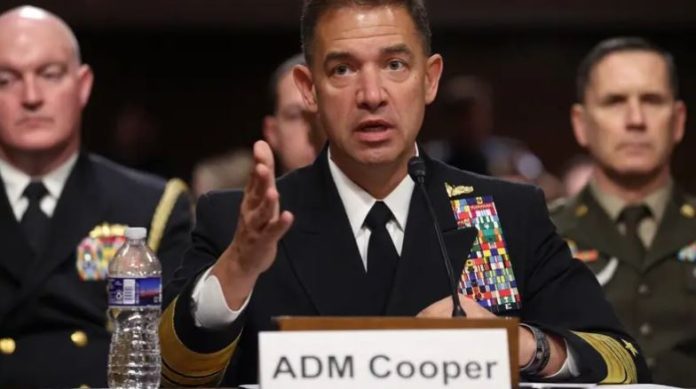
WASHINGTON, MAY 15: The US military achieved all of its objectives in Iran in less than 40 days, including significantly degrading Tehran’s ability to project power across the Middle East, the top US commander for the region said Thursday.

“Today, Iran can no longer attack with [its previous] mass and scale,” US Central Command (CENTCOM) chief Adm. Brad Cooper said. “Further, with 90 percent of its defense industrial base destroyed, Iran won’t be able to reconstitute for years,” he added.

In addition to severely degrading Iran’s military power and capabilities, Cooper said the country’s main regional proxies in Hamas, Hezbollah, and the Houthis had been cut off from Tehran’s weapons supply and support.

Speaking to lawmakers during a Senate Armed Services Committee (SASC) hearing, Cooper lauded support from Washington’s Arab and Middle Eastern allies.

He highlighted the UAE, Bahrain, Qatar, Kuwait, Saudi Arabia, Jordan and Israel for their help and their capabilities to defend their own nations.

“But there were a couple” of regional countries that were “less than stellar,” he said, without elaborating.

As the war went on and Iran deployed swarms of cheap but effective drones, Washington turned to Ukraine for help. The US military adopted a “large number of tactics, techniques, and procedures” shared by Ukraine to help defend against such Iranian attacks, the CENTCOM commander said.

When asked about the war itself and threats emanating from Iran, Cooper said the US began to see an increase in Iran’s capability and intent to produce more ballistic missiles last November and December. This presented a “very significant risk both to partners and ourselves,” he said.

Cooper also took the opportunity to remind lawmakers and the public of Iran’s track record against the US. “Iran’s hostile, lethal track record against the US is well documented. But I don’t know that it is well understood. In 30 months prior to Epic Fury, Iranian-supported terror groups attacked US troops and diplomats more than 350 times,” he said.

He was asked about recent reports that Iran currently has between 70 and 75 percent of its missiles and launchers available. Without getting into specifics, Cooper said these numbers were not accurate.

HEC, Pakistani universities engage Bangladeshi students at expo in Rajshahi

HEC, Pakistani universities engage Bangladeshi students at expo in Rajshahi

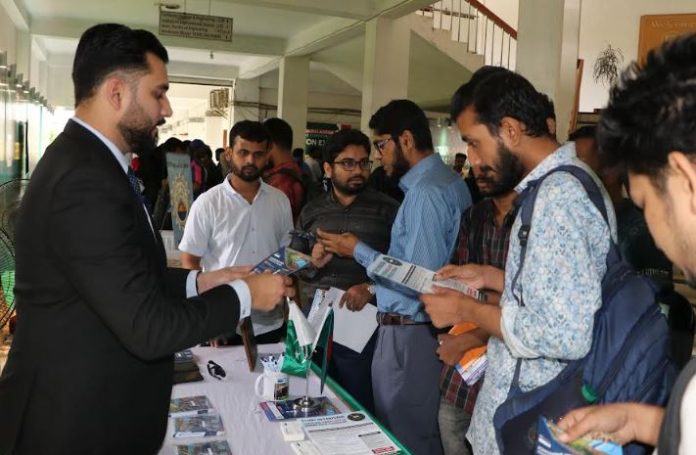
ISLAMABAD/RAJSHAHI, MAY 15, /DNA/ – The Higher Education Commission (HEC) Pakistan held Pakistan Higher Education Expo in Rajshahi, Bangladesh, under the Pakistan-Bangladesh Knowledge Corridor, following successful exhibitions in Dhaka and Barishal aimed at promoting academic collaboration and scholarship opportunities for Bangladeshi students.     

As many as 20 prestigious Pakistani universities are taking part in the exhibition series, highlighting the 500 Allama Muhammad Iqbal Scholarships for the Bangladeshi youth.

The University of Rajshahi hosted a detailed orientation session, conducted by HEC as part of the Pakistan Higher Education Expo. A huge number of students, parents, and general public visited the stalls, where HEC and university representatives welcomed and guided them about the Pakistan-Bangladesh Knowledge Corridor and its various components.

Pro-Vice Chancellor of University of Rajshahi Prof. Mohammad Main Uddin, who attended the session as chief guest, appreciated the initiative to strengthen academic collaboration between Pakistan and Bangladesh. He encouraged students to apply for scholarships offered by Pakistani universities and highlighted the importance of education, academic exchange, and research collaboration in promoting mutual understanding between the two countries.

Deputy High Commissioner of Pakistan in Bangladesh Mr. Muhammad Wasif also addressed the orientation session and highlighted the importance of Pakistan-Bangladesh relations. He informed participants about the launch of the second phase of scholarship opportunities for Bangladeshi students and invited them to pursue higher education in Pakistan.

Speaking on the occasion, Director General (Scholarship) HEC Mrs. Aayesha Ikram encouraged Bangladeshi students to take advantage of scholarship opportunities and apply for admission in diverse academic disciplines in Pakistan.

Project Director Allama Iqbal Scholarships Programme Mr. Jehanzeb Khan briefed the participants on the scholarship opportunities, admission procedures, and academic facilities available for Bangladeshi students in Pakistan.

Under the Pakistan-Bangladesh Knowledge Corridor initiative, HEC Pakistan is offering 500 fully funded Allama Muhammad Iqbal Scholarships for Bangladeshi students. The first batch of 74 students has already started studies in Pakistan across various disciplines, marking a key milestone in bilateral educational cooperation.

A great leap forward in Spanish-Saudi relations

A great leap forward in Spanish-Saudi relations

Javier M. Carbajosa

Saudi Arabia and Spain culminated a long process in Madrid on Wednesday. It will be consequential for the future of bilateral relations between our two countries. The visit of Saudi Foreign Minister Prince Faisal bin Farhan constitutes a major milestone in the long-standing relationship between Spain and the Kingdom, based on friendship, cultural and historical bonds, political proximity, and the determination of both governments to address future challenges together.

Prince Faisal’s visit serves several purposes. The first and most relevant is the establishment of a Strategic Partnership Council, representing the culmination of our excellent relations, which have been taken to the highest diplomatic level. The council will be the mechanism aimed at promoting coordination in areas such as political and security matters, defense, transport, economy and commerce, energy, and culture.

In addition, Prince Faisal and Spanish Foreign Minister Jose Manuel Albares signed an agreement on reciprocal visa exemptions for holders of diplomatic, special and service passports, aimed at facilitating institutional exchanges and further strengthening bilateral ties.

The meeting was also a very timely opportunity for both sides to address a number of other bilateral and regional issues of mutual interest, including the ample possibilities of EU-Gulf Cooperation Council relations.

On the bilateral agenda, we need to note that significant progress has been made in areas such as security and defense, trade and investment, and cultural cooperation — let us not forget that Saudi Arabia is Spain’s first commercial partner in the region. Most importantly, the meeting provided Spain with a new opportunity to convey our solidarity with Saudi Arabia after the unacceptable Iranian attacks on its territory.

From a regional perspective, both Saudi Arabia and Spain are staunch defenders of multilateralism, international law and the UN Charter. More than ever, we need to stand up for these values. This is the time for de-escalating, for negotiations and for dialogue, not for war or violence, be it in Gaza, Lebanon or the Gulf.

Spain considers Saudi Arabia a leading force for peace, stability and security in the region and beyond.

Spain considers Saudi Arabia a leading force for peace, stability and security in the region and beyond. In our view, the Kingdom plays a crucial role in matters such as the Palestinian issue. Saudi Arabia and Spain are active members of the Global Alliance for the Implementation of the Two-State solution and Spain recognized the state of Palestine in May 2024.

Saudi Arabia’s role is also relevant in terms of issues such as Lebanon, Yemen and the future of the Strait of Hormuz, with both countries supporting the need to guarantee freedom of navigation in this strategic chokepoint for global energy and trade flows.

From a different angle, it is hard not to mention our admiration for the Kingdom’s Vision 2030 modernization process under the leadership of Crown Prince Mohammed bin Salman. Saudi Arabia is indeed undergoing a stunning transformation and Spanish firms operating in the Kingdom are willing to continue their participation in this process.

Finally, Spain has reaffirmed its support for Expo 2030 in Riyadh. As Spanish Prime Minister Pedro Sanchez did last year, Foreign Minister Albares reaffirmed this commitment on Wednesday and expressed his hope that our presence at this major event will meet the expectations of the Saudi hosts.

We do not know what the future will bring, but let us walk this road together.

Javier M. Carbajosa is the Ambassador of Spain to the Kingdom of Saudi Arabia. Ambassador Javier has also served in Pakistan as the Spanish Ambassador.

Victoria Schofield urges inclusive Kashmir dialogue for peace

Victoria Schofield urges inclusive Kashmir dialogue for peace

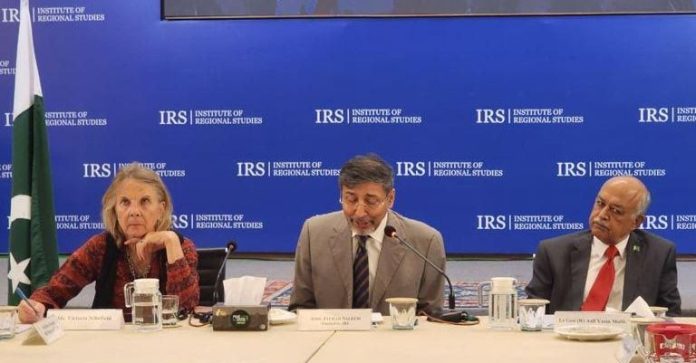
ISLAMABAD, MAY 15 /DNA/ – Victoria Schofield, a renowned British historian was speaking at a high-level policy discussion titled “Jammu and Kashmir Dispute: Navigating Pathways to Peace” organized by Institute of Regional Studies, in collaboration with Youth Forum for Kashmir.  Addressing the constitutional developments of 5 August 2019, Ms. Schofield observed that the revocation of Jammu and Kashmir’s special status, combined with heavy militarization and communication restrictions, had intensified alienation in the Kashmir Valley and reinforced demands for self-determination. She stressed for an inclusive political process involving the genuine representation of the people of Jammu and Kashmir.

While referring to prospects of peace in the region she remarked that “the future is not in the rigidity of nation states, but the fluidity of cross-cultural and regional communication. To achieve peace in Jammu and Kashmir, dialogue must replace hostility”. She stressed that any durable resolution of the dispute must be grounded in on-ground realities rather than rigid cartographic claims. She highlighted the strategic implications of the China dimension, particularly regarding Aksai Chin and the legacy of the 1962 Sino-Indian conflict, emphasizing that excluding China from analytical and diplomatic considerations would weaken any meaningful settlement framework.

Tracing the historical evolution of the dispute from the 1948–49 war to the post-Simla Agreement Line of Control, Ms. Schofield noted that while territorial realities have remained largely static, the strategic environment has transformed significantly due to nuclearization, technological developments, and geopolitical competition. She warned that rapid military mobilization, misinformation, and escalatory rhetoric in a nuclearized environment increase the risk of miscalculation and wider regional confrontation.

Ambassador Jauhar Saleem, President Institute of Regional Studies, while acknowledging fragility of ‘ceasefire’ between India and Pakistan, reaffirmed Pakistan unwavering commitment to the Kashmir cause, grounded in the principles of justice, human rights, and the right to self-determination,

The discussion also featured remarks from Senator Zarqa Suharwardy Taimur, who emphasized that Pakistan and India, bound by geography and history, cannot remain perpetual adversaries. She called for peaceful coexistence, warning that another war between two nuclear-armed states would have catastrophic consequences for South Asia.

Lt Gen Asif Yasin Malik described Kashmir as the central issue driving tensions between Pakistan and India, arguing that sustainable peace is impossible without addressing the core dispute. Prominent Kashmiri voices at the event emphasized the importance of self-determination, narrative-building, and inclusive peace processes. Participants also highlighted the growing importance of information warfare, strategic communication, and media narratives in shaping international perceptions of Kashmir. Several speakers called for stronger intellectual and diplomatic engagement to counter misinformation and ensure that the lived experiences of Kashmiris are not marginalized.

Islamabad opens first dedicated market for women entrepreneurs

Islamabad opens first dedicated market for women entrepreneurs

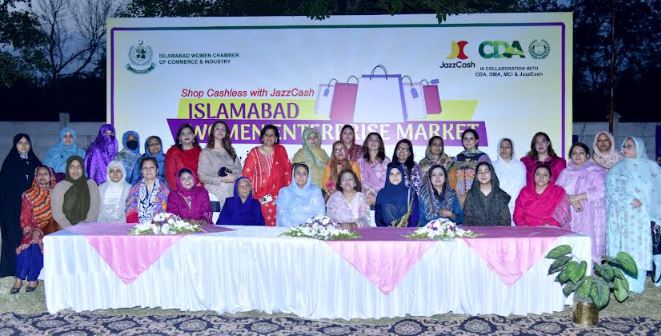
ISLAMABAD, MAY 15 /DNA/ – Islamabad inaugurated its first marketplace in G-11 dedicated exclusively to women entrepreneurs, a step aimed at reducing gender gap in business participation, where only 1 percent of women are entrepreneurs compared to 21 percent of men.

The Women Enterprise Market was inaugurated by Farah Naz Akbar, MNA and Parliamentary Secretary, at an event organised by the Islamabad Women Chamber of Commerce and Industry (IWCCI) in collaboration with the Capital Development Authority, Metropolitan Corporation Islamabad, and JazzCash.

Samina Fazil, IWCCI Founder President, described the project as a historic first for the capital, saying Islamabad had never before offered a dedicated commercial space built around women-led businesses. Naima Ansari, former Vice President of the FPCCI, said marketplaces supporting scalable and sustainable growth for women entrepreneurs were long overdue.

The market has been designed as a fully cashless commercial space, a significant move in a country where women’s financial inclusion is below average. Imtiaz Ali, Senior Deputy Chief Manager at the SBP, said the digital payment model would help women entrepreneurs build practical financial skills and improve access to formal banking channels.

JazzCash joined the initiative as technology partner, aligning with the SBP’s 2024-2028 financial inclusion strategy, which seeks to reduce the banking access gender gap from 30 percent to 25 percent.

The initiative comes against a backdrop of limited financing access for women-owned businesses. The 2025 WECON Policy Report found that only 3.2 percent of SME loans in 2022 went to women-led firms, while 91 percent of women remained reluctant to use institutional financing channels. SBP data shows women own only 8 percent of Pakistan’s more than 5 million SMEs.

Farooq Mirza, President of 4th Pillar, said such initiatives could help women-owned businesses grow into established brands and eventually enter export markets. Ms Fazil said the market could create new income opportunities in a country where female labour force participation remains low.

Farah Naz Akbar emphasized that the government is deeply committed to transitioning women-led businesses into the formal economy. Ensuring women have equal access to the legal, financial, and institutional support is necessary for national development.

Lauding the move, she also pledged continued cooperation between IWCCI and the government.

Vacation dreams shattered as NDMA warns of monsoon first phase

Vacation dreams shattered as NDMA warns of monsoon first phase

ISLAMABAD, MAY 15 (DNA): Warning of severe weather threats, expert of National Disaster Management Authority (NDMA) Dr. Tayyab Shah on Friday urged tourists in summer verifications to stay away from vulnerable northern areas during the upcoming monsoon phase from June 25 to July 30, as heavy rains, flooding and glacier melting are expected to trigger dangerous conditions across the country.

In an exclusive interview with a local media outlet, he highlighted the sharp regional weather contrast across the country and urged tourists planning summer vacations in northern areas to remain extremely cautious, warning that the first phase of the monsoon carries significant risks of hazardous conditions.

He cautioned that the monsoon first phase is expected to bring potentially dangerous weather impacts, including aggressive rainfall, strong winds, thunderstorms, flood, glacier melts and rising flood threats across vulnerable

regions.

He further explained that the unusual delay in snowfall from February to March had disrupted the natural seasonal cycle, contributing to accelerated glacier melt and increasing water flow in streams and rivers across northern regions.

He also issued a Glacial Lake Outburst Floods (GLOFs) alert for northern areas, citing rising temperatures and rapid glacier melting and warned that glacier-prone regions could face sudden flash floods and landslides in the coming

days.

He further stated that an extreme heatwave also alert had been issued for southern Pakistan, with lower Sindh, southern Punjab and eastern Balochistan expected to be the most severely affected regions.

He advised the citizens in these areas to take strict precautionary measures, avoid unnecessary outdoor exposure during peak daytime hours, stay hydrated and follow official advisories to reduce the risk of heat-related health complications.

Responding to a query, he said the second phase of the monsoon is expected to be less severe compared to the first phase, with comparatively reduced intensity of rainfall and associated hazards.

He added that tourists may plan visits during the second phase, however they should still remain cautious and keep themselves updated with weather advisories before traveling to northern areas.

In his remarks, he explained the overall weather patterns and informed about the strong regional contrast in climatic conditions across the country, where different areas are simultaneously affected by varying intensities of heat, rainfall, and storm activity.

He noted that these shifting patterns were influencing weather impacts unevenly, increasing risks in some regions while creating contrasting conditions elsewhere and stressed the importance of public awareness and timely precautions to reduce potential hazards.

He also issued an alert regarding the risk of overflow in the Ravi River, warning that increased water releases from upstream across the border could raise water levels and create flood-like conditions in adjoining areas.

He advised the authorities and local communities to remain vigilant, closely monitor river levels and take precautionary measures to reduce potential risks in low-lying settlements near the riverbanks.

Stay Connected

64FansLike
60FollowersFollow

Latest Reviews

Exchange Rates

USD - United States Dollar
EUR
1.14
GBP
1.34
AUD
0.70
CAD
0.71