Home Blog Page 133

HEC welcomes Bangladeshi academic delegation for week-long engagement

HEC welcomes Bangladeshi academic delegation for week-long engagement

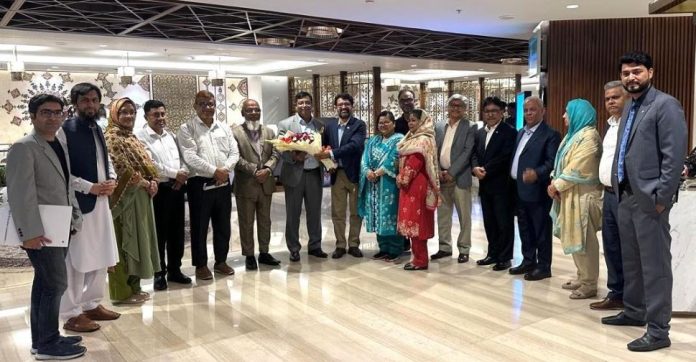
ISLAMABAD, MAY 18 /DNA/ – The Higher Education Commission (HEC) Pakistan welcomed a high-level delegation of senior Bangladeshi academicians in Islamabad for a week-long academic engagement programme.

The delegation is led by Chairman University Grants Commission (UGC) Bangladesh Prof. Dr. Mamun Ahmed and comprises 13 distinguished members, including eight Vice Chancellors from leading Bangladeshi universities.

The visit aims to strengthen academic cooperation, enhance institutional linkages, and promote knowledge exchange between Pakistan and Bangladesh in the fields of higher education and academic leadership. The initiative is expected to foster future partnerships, faculty and student exchanges, and greater collaboration between academic institutions of both countries.

On the first day of the visit, the delegation visited the Pak-Austria Fachhochschule Institute of Applied Sciences and Technology (PAF-IAST) Haripur, where the dignitaries were briefed on the PAF-IAST’s structure, success story, quality assurance practices, faculty and student mobility, research commercialisation initiatives, prototypes, ORIC achievements, and international collaborations with Austria, Germany, and other countries. During the visit, a Memorendum of Understanding was signed between North South University (NSU), Bangladesh, and PAF-IAST.

The delegation visited the UNESCO heritage site, Jaulian, located in Taxila. The delegation also visited the Islamabad campus of the National University of Computer and Emerging Sciences (FAST-NUCES). A detailed presentation was given on the university’s achievements, quality enhancement practices, international linkages, student exchange programmes, and global academic collaborations. The visit also featured the signing of two MoUs between FAST University and Daffodil International University Bangladesh, and the University of Rajshahi Bangladesh.     

The signing of three MoUs on the very first day marked a highly productive and constructive start to the visit, reflecting the strong educational ties and growing academic cooperation between the two brotherly countries.

Talks with US continue with Pakistani mediation: Iranian FM spokesperson

Talks with US continue with Pakistani mediation: Iranian FM spokesperson

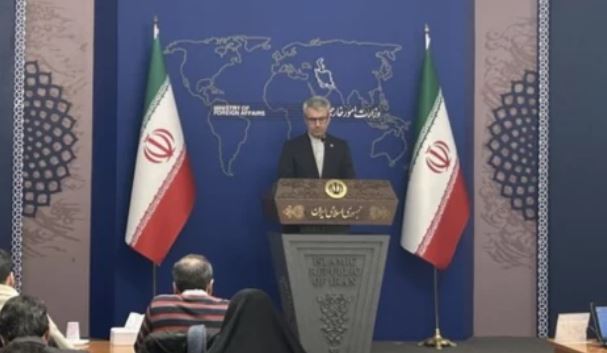
TEHRAN, MAY 18: Iran’s Foreign Ministry spokesperson Esmaeil Baghaei said on Monday that talks with the United States continue through Pakistan’s mediation, as per Iran’s semi-official Tasnim news agency on X.

“They raised speculations regarding enrichment and uranium materials, which we stated have no basis.”

In a separate post on X, the spokesperson has been quoted to say that Iran has “no enmity with any country in the region; the countries of the region must learn from the recent events.”

“They saw that the presence of America does not bring security and causes insecurity for everyone,” the post read.

Un, other countries condemn drone attacks targeting Saudi Arabia

Kuwait and Qatar have issued separate statements strongly denouncing drone attacks targeting Saudi Arabia that officials said originated from Iraqi airspace, according to Al Jazeera.

Kuwait said the incursion violates UN Security Council Resolution 2817, passed in March to protect Gulf infrastructure and affirmed its support for Saudi security measures. Qatar labelled the incident a “rejected aggression” and a direct violation of Saudi sovereignty.

Both nations expressed full solidarity with Riyadh, backing any measures taken to protect Saudi territory and citizens.

The statement follows Saudi Arabia’s announcement that its air defences intercepted and destroyed three hostile drones that entered its airspace from Iraq.

Oman has also condemned the drone attack that caused a fire at the UAE’s Barakah Nuclear Energy Plant, reaffirming its rejection of “all hostile and escalatory acts” in the region, according to Al Jazeera.

The Omani Foreign Ministry expressed its solidarity with the UAE over measures taken for its security and territorial safety, and called for dialogue to address regional challenges.

It also urged respect for international law, good neighbourliness, and noninterference in the internal affairs of states.

The United Nations spokesperson account on X stated that UN Secretary General Antonio Guiterres was “deeply alarmed” by reports of fires at an electrical generator near Barakh nuclear plant caused by drone strikes.

“I have consistently warned against any further escalation of the conflict in the Middle East, and this incident provides yet another reason for all sides to halt the fighting completely.”

He said that “there must be no further attacks near civilian infrastructure, including nuclear power plants” and “attacks to nuclear installations are totally unacceptable, a violation of international law and must be condemned.”

Former US congresswoman calls for ‘political revolution’ over Iran war

Former US congresswoman Marjorie Taylor Greene wrote on X on Monday that if US troops would be sent into Iran, “there is going to be a political revolution in America.”

“We said no more foreign wars and we meant it.”

She claimed that the “coalition will unite” and “be unstoppable,” adding that she would “make sure” this would happen.

“End this war. It’s stupid.”

Iran will turn Gulf of Oman into ‘graveyard’ for ships if US doesn’t end blockade

Iran vowed on Sunday to confront the US over its naval blockade, with a top military adviser to the country’s supreme leader warning that the Sea of Oman could become a “graveyard” for US ships if tensions continue to escalate.

“My advice to the US militarily is to back off before the Gulf of Oman turns into a graveyard for your ships. Otherwise, our understanding is that a naval blockade is an act of war, and responding to it is our natural right, Major General Mohsen Rezaei, a member of Iran’s Expediency Discernment Council, said in remarks carried Sunday by Iranian state television.

Rezaei added that Iran’s restraint should not be interpreted as acceptance of pressure or threats.

“If we’ve been patient until now, it doesn’t mean we have accepted it,” he said.

He also questioned the rationale behind the continued US military presence in the Gulf, arguing that Washington no longer had the justifications it once used to maintain its role in the region.

Read: Pakistan pushes diplomacy amid renewed war fears

“America comes here and brings its warships. Who is its enemy? At one time, they said they came to confront the Soviet Union. The Soviet Union no longer exists,” he said.

Rezaei said the Strait of Hormuz had always remained open to trade and argued that what was being rejected was foreign military campaigns rather than commercial movement.

“The Strait of Hormuz is open to trade, but it will be closed to military buildups and any attempts to destabilise security,” he said.

Regional tensions have escalated since the US and Israel launched strikes on Iran on February 28, prompting retaliatory attacks by Tehran and disruptions in the Strait of Hormuz.

A ceasefire took effect on April 8 through Pakistani mediation, but talks in Islamabad failed to secure a lasting agreement. The truce was later extended by US President Donald Trump without a specified deadline.

Since April 13, the US has enforced a naval blockade targeting Iranian maritime traffic in the strategic waterway.

Additionally, Israel’s Channel 13 is reporting that dozens of US cargo planes carrying ammunition from bases in Germany have landed in Tel Aviv in the past 24 hours, according to Al Jazeera.

The Israeli broadcaster said these were part of preparations to resume the war on Iran.

Israel built 2 secret military bases in Iraq for Iran operations

Israel built two covert military sites in Iraq’s western desert to support operations against Iran, according to a report Sunday by the New York Times.

The newspaper, citing Iraqi and regional officials, said a newly disclosed site was one of two covert facilities used intermittently by Israel inside Iraq for more than a year.

The officials said the sites were used for air support, refuelling, and medical services and later played a role during the 12-day war against Iran in June 2025.

Read more: ‘The clock is ticking’: Trump warns Iran to ‘get moving fast’ as deal talks stall

One of the sites came to light after Iraqi shepherd Awad al-Shammari encountered unusual military activity near al-Nukhaib in March and alerted local authorities after seeing helicopters, tents and what appeared to be a makeshift landing strip, according to the Times.

The report said that 29-year-old Al-Shammari later disappeared and was found dead, while Iraqi forces sent to investigate the area also came under fire, leaving one soldier dead and two others wounded.

Earlier this month, The Wall Street Journal reported that Israel had established a secret military site in Iraq’s western desert to support operations against Iran.

In remarks to Anadolu following the Wall Street Journal report, a senior Iraqi security official dismissed claims of Israeli military activity in Iraq’s western desert as “false.”

The official said Iraqi forces had confronted a “mysterious” airborne operation in the al-Nukhaib desert area in March and that the incident had been handled at the time.

Iraq says it will not be a launchpad for regional attacks

Iraq will not allow its territory to become a passageway or launchpad for attacks against other countries, a military spokesman said Sunday.

Speaking to the Iraqi News Agency (INA), Sabah al-Numan, a spokesperson for the commander-in-chief of the armed forces, said Baghdad’s policy was based on avoiding regional and international conflicts to preserve domestic stability.

He said restricting weapons to state control remained a key pillar of the government’s security strategy and a necessary step toward ending armed activity outside the legal framework.

Al-Numan also stressed that Iraq would not allow other countries to interfere in its internal affairs, saying the country seeks to protect itself from the security and political fallout of regional crises.

Prime Minister Ali Al-Zaidi pledged Thursday to place all weapons under state control as part of a broader reform program after winning parliament’s confidence.

Israel’s military on alert and ready to join US attacks on Iran, media reports say

Israeli media report that the military is preparing for renewed hostilities with Iran, with public broadcaster Kan citing an unnamed security official as saying that Israel would join any new US strikes and target Iranian energy infrastructure, Al Jazeera reported.

The report followed a call between Trump and Netanyahu on Sunday that lasted for more than half an hour, in which Kan said the two leaders discussed the prospect of renewed fighting.

The Channel 12 broadcaster also described the conversation as taking place “in the shadow of preparations for renewed fighting in Iran” and reported that the Israeli military has been placed on high alert.

It said Israel expects to be notified by the US ahead of any strike, though it does not know the exact timing of a potential decision.

Channel 12 also noted that Trump is facing significant pressure, including from China, not to enter a new confrontation with Iran and to pursue a negotiated settlement instead.

Oil touches 2-week high after drone attack on UAE nuclear power plant

Oil prices extended gains on Monday as efforts to end the US-Israeli war on Iran appeared to have stalled, after a nuclear power plant in the United Arab Emirates came under attack and as US ​President Donald Trump is expected to discuss military options on Iran.

Brent crude futures climbed $2.03, or 1.86%, ​to $111.29 a barrel by 0720 PKT, after touching $112 earlier, the highest since May 5.

US West ⁠Texas Intermediate crude was at $107.73 a barrel, up $2.31, or 2.19%, following a rise to $108.70, its highest level since April ​30. The front-month June contract expires on Tuesday.

Both contracts gained more than 7% last week as hopes ​of a peace deal that would end ship attacks and seizures around the Strait of Hormuz dimmed. Last week’s talks between Trump and Chinese President Xi Jinping ended without an indication from the world’s top oil importer that it ​would help resolve the conflict.

“The longer the conflict with Iran persists, the greater the risk of protracted ​oil price scarring, which could keep interest rates higher for longer,” Prestige Economics’ Jason Schenker said in a note.

“This ‌could ⁠also present persistent downside risks to growth.”

Drone attacks on the UAE and Saudi Arabia and rhetoric from the US and Iran raised concerns of an escalation in the conflict.

Saudi Arabia says it intercepted three drones that entered from Iraqi airspace

Saudi ​Arabia on Sunday ‌said it intercepted three drones after they ​entered its territory ​from Iraqi airspace.

The kingdom’s ⁠defence ministry said ​it would take the ​necessary operational measures to respond to any attempt ​to violate its ​sovereignty and security.

While hostilities during ‌the ⁠Iran conflict have largely been scaled down since a ceasefire ​came into ​effect ⁠in April, drones have been ​launched from Iraq ​towards ⁠Gulf countries, including Saudi Arabia and ⁠Kuwait.

After provinces, Centre lifts austerity-driven business-hour curbs until May 31

After provinces, Centre lifts austerity-driven business-hour curbs until May 31

ISLAMABAD: Prime Minister Shehbaz Sharif on Monday approved the exemption of business closure timings across the country until May 31, effectively allowing commercial centres to operate without the previously imposed restrictions.

According to a notification issued by the Cabinet Division, all shops, departmental stores, bazaars, markets and shopping malls will remain open on all days of the week without restriction on closing hours.

The exemption also applies to bakeries, tandoors, restaurants and grocery stores, which have been allowed to continue operations beyond the earlier fixed timings.

The decision comes after provincial governments had already relaxed business-hour restrictions. The Punjab government had earlier extended relaxed operating hours for markets and commercial centres until June 1, while suspending the mandatory 8pm closure rule.

Similarly, the Sindh government had on May 16 announced relief for traders and citizens, exempting markets, shopping malls, restaurants, hotels and marriage halls from fixed closing times in a bid to support economic activity.

Meanwhile, the Khyber Pakhtunkhwa and Balochistan governments also followed suit, announcing the end of smart lockdown measures across the province and lifting restrictions on market timings and business hours.

Business hours were curtailed across the country last month as part of energy conservation measures introduced amid a sharp increase in domestic fuel prices, triggered by the conflict in the Middle East.

The measures, which formed part of the federal government’s broader austerity and fuel-conservation plan, were aimed at reducing energy consumption following the surge in fuel prices.

FPCCI delegation meets finance minister on budget proposals

FPCCI delegation meets finance minister on budget proposals

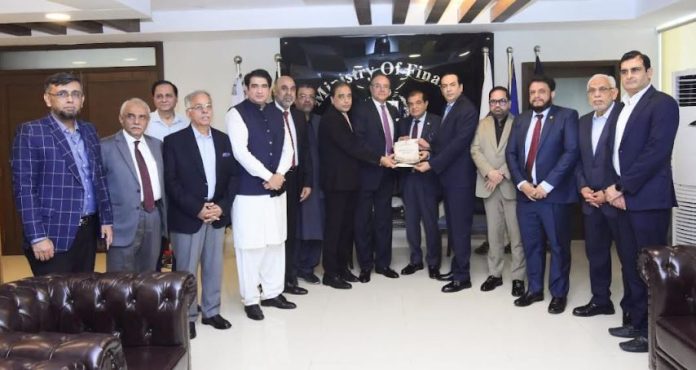
ISLAMABAD, MAY 18 /DNA/ – A delegation from the Federation of Pakistan Chambers of Commerce and Industry (FPCCI), led by Mr. Atif Ikram Sheikh, President FPCCI, ECO CCI, Senior Vice President SAARC CCI and Vice President CACCI met with the Federal Minister for Finance Mr. Muhammad Orangzaib at Finance Division Islamabad.

The delegation compreisd by Senior Vice President FPCCI Mr. Saqib Fayyaz Magoon, Vice Presidents Mr. Tariq Jadoon, Mr. Asif Sakhi, and Aman Paracha, Chairman FPCCI Policy Advisory Board Mian Zahid Hussain, Chairman PVMA Mr. Umer Rehan Sheikh, Former President FPCCI Mr. Ghazanfar Bilour, Incharge FPCCI Capital Office Mr. Karim Aziz Malik, Chairman Coordination Capital Office Malik Sohail Hussain, Chairman Pakistan Cotton Ginner’s Association Sham Lal Manglani and others.

During the meeting, the delegation highlighted critical issues faced by the business community. Discussions focused on the Final Tax Regime, super tax, income tax and sales tax refunds, further tax, the POS system, and concerns regarding the powers of field formations. The representatives also briefed the minister on specific challenges impacting the cotton and edible oil sectors.

President FPCCI Atif Ikram Sheikh present the FPCCI budget proposals to Federal Minister Finance and described the budget proposals as a comprehensive and viable roadmap designed to address Pakistan’s ongoing economic challenges. He urged the government to give serious consideration to the FPCCI recommendations and to integrate them directly into the upcoming budget planning. He then provided the Finance Minister with a detailed briefing on the specific proposals included in the document.

The Finance Minister commended the FPCCI President and his team for their efforts in preparing the proposals, describing the business community’s feedback as highly positive. The minister stated that the government firmly believes in meaningful consultation and assured the delegation that the federation’s recommendations would serve as a valuable guide in the preparation of the federal budget.

Iranians are ‘dying’ to sign a deal: Trump

Iranians are ‘dying’ to sign a deal: Trump

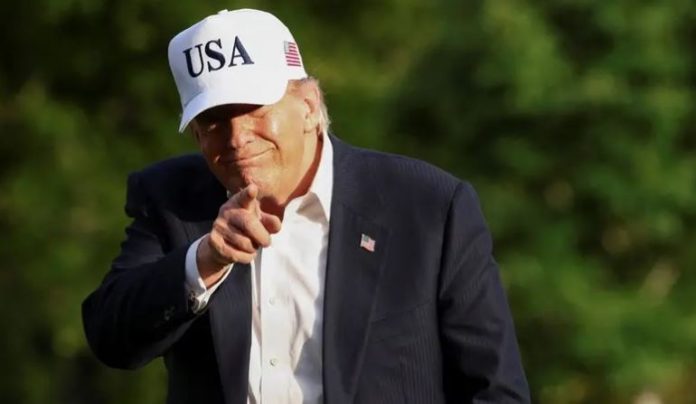
WASHINGTON, MAY 18: US President Donald Trump said in a interview published on Monday that the Iranians were “dying” to sign a deal. “I can tell you one thing—they’re dying to sign [a deal],” Trump told Fortune magazine. Nevertheless, he also expressed frustration with the Iranian side.

“But they make a deal, and then they send you a paper that has no relationship to the deal you made. I say, ‘Are you people crazy?’”

A Pakistani source told Reuters on Monday that Pakistan has shared with the US a revised proposal from Iran to end the conflict in the Middle East.

“We don’t have much time,” the source said, when asked if it would take time to close gaps, adding that both countries “keep changing their goalposts.”

Reimagining CSS III: Transparency and the Metrics of Merit

Reimagining CSS III: Transparency and the Metrics of Merit

S Shujahat Ali

While working as a consultant, I was once told about an educationist that “You get what you test for.” But in the case of CSS, a more troubling question emerges: do we even know what is being tested? Memory, perhaps?

At present, the system operates with a level of opacity that would be unacceptable in most modern evaluation systems. Yes, examiner reports are published, but these are generic, post-hoc summaries that neither capture the diversity of 10,000 candidates nor provide actionable insight to an individual who has failed. A candidate is left guessing: was it weak argumentation, poor structure, factual gaps, or simply harsh marking? You never get to know.

The opacity deepens further. MCQs and their correct answers are not consistently released. Full solved papers by examiners are unavailable. Rechecking mechanisms are limited to superficial recounting rather than substantive review. In effect, candidates are evaluated by a system that reveals neither its rubric nor its reasoning.

Contrast this with global best practices. The UK’s Civil Service Fast Stream provides detailed feedback to candidates, including performance across competencies such as analysis, communication, and decision-making. Similarly, the US’s Educational Testing Service, which administers exams like the GRE, publishes percentile distributions, scoring guides, and even sample high scoring responses. Candidates are not left in the dark; they are guided throughout all the process.

Even within Pakistan, transparency is not an alien concept. Many Boards of Intermediate and Secondary Education such as BISE Lahore routinely publish answer sheets of topper. This practice demystifies excellence, allowing students to calibrate their preparation against real benchmarks rather than hearsay.

CSS, by contrast, withholds precisely the information that would make preparation more rational and equitable. And, would cut out academies.

A modern examination system should publish, at minimum, core statistical metrics: mean scores, medians, and standard deviations for each paper. These are not academic luxuries; they are essential signals. A paper with an average score of 35 tells a very different story from one with an average of 65. Without such context, candidates cannot distinguish between personal failure and systemic harshness.

Equally important is the publication of scoring patterns. Are certain questions consistently underperformed? Do some subjects exhibit extreme variance year to year? Are evaluators aligned in their marking standards? These are questions that data can answer but only if the data is made public.

Reforms here are straightforward but powerful. First, release official solved papers written by examiners to establish a gold standard. Second, publish anonymized top-performing scripts across subjects. Third, introduce a robust rechecking system that allows candidates to understand, not just recount, their marks. Finally, institutionalize the release of statistical summaries for every paper.

Transparency is not merely about fairness; it is also about efficiency. When candidates understand the rules of the game, they prepare better. When evaluators are held to visible standards, they grade more consistently. And when the system communicates clearly, it builds trust.

Opacity, by contrast, breeds speculation, coaching myths, and wasted effort.

If CSS is to select the best minds for public service, it must first demonstrate a basic principle of governance: that power, whether administrative or evaluative, must be accountable.

Because in the end, a system that cannot explain its decisions cannot claim legitimacy for them.


S Shujahat Ali
Fulbright Scholar and Civil Servant

Pakistan strongly condemns drone attack on UAE nuclear energy plant

Pakistan strongly condemns drone attack on UAE nuclear energy plant

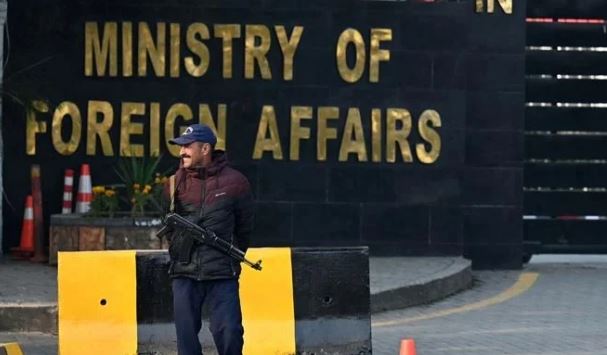
ISLAMABAD, MAY 18: Pakistan has strongly condemned the drone attack on the Barakah Nuclear Energy Plant in the United Arab Emirates (UAE) that took place on Sunday, reiterating its full solidarity with the Emirati people and the government.

“Any deliberate targeting of nuclear facilities constituted a grave violation of international law, including international humanitarian law, the United Nations Charter, and the fundamental principles of nuclear safety and security enshrined in the Statute and resolutions of the International Atomic Energy Agency (IAEA),” the Foreign Office said in a statement on Monday.

A day earlier, a drone strike caused a fire at the nuclear power plant in the United Arab Emirates, reporting no injuries or impact on radiation levels, according to the UAE defence ministry.

The defence ministry said two other drones had been “successfully” dealt with, and that the drones had been launched from the “western border”. It did not elaborate.

The drone that got through the UAE defences hit an electrical generator outside the inner perimeter of the Barakah Nuclear Power Plant, the Abu Dhabi Media Office said.

Radiological safety levels were unaffected, and there were no injuries, it said. UAE’s Federal Authority for Nuclear Regulation later confirmed that the plant remained safe, with no radioactive material released from the strike.

During the war that began with US and Israeli strikes against Iran on February 28, Iran has repeatedly targeted the UAE and other Gulf states that host US military bases, hitting sites that include civilian and energy infrastructure.

In the statement, the FO noted that nuclear installations must never be targeted under any circumstances. “Such reckless actions carry potentially catastrophic and irreversible consequences for human life, the environment, and regional as well as global peace and security,” it remarked.

The spokesperson further said that the inviolability of civilian nuclear infrastructure was a well-established international norm and must be upheld without exception.

The FO reiterated Pakistan’s call for all parties to exercise maximum restraint, fulfil their obligations under international law and international humanitarian law, and avoid any actions that could further escalate tensions with consequences extending far beyond the region.

“Dialogue and diplomacy, consistent with the principles and purposes of the United Nations Charter, remain the only viable path toward lasting peace, stability, and de-escalation in the region,” the spokesperson added.

Bangladesh extend lead to 249 against Pakistan in second Test

Bangladesh extend lead to 249 against Pakistan in second Test

SYLHET: Bangladesh reached 203-4 at lunch on day three of the second Test against Pakistan, extending their overall lead to 249 runs to remain firmly in control at the Sylhet International Cricket Stadium on Monday.

Resuming their innings at 110-3 in 26.4 overs, Bangladesh lost just one wicket during the opening session and reached 203-4 in 53 overs, taking a commanding lead of 249 runs.


The Tigers lost skipper Najmul Hossain Shanto after pacer Khurram Shahzad trapped him lbw to claim his third wicket. Shanto scored 15 off 46 deliveries, including one boundary.

Mushfiqur Rahim and Litton Das then combined sensibly to stabilise the innings with a 50-run partnership, helping the team’s total surpass the 150-run mark.

The duo continued to build steadily, aiming to add crucial runs and push the total beyond 200 to further pressure the opposition. By the end of the opening session, Das remained unbeaten on 48 off 66 deliveries, while Rahim was not out on 39.

On day two of the final Test, Bangladesh got off to a poor start by losing the wicket of Tanzid Hasan on the third delivery of the fourth over and scored four off seven deliveries after hitting a boundary.

After the early setback, Joy and Haque stabilised the innings by scoring crucial runs from the start notching up 50-run stand and helping the team’s total past the 50-run mark as well.

Mahmudul Hasan was in dominant form with the bat as he brought up his sixth Test fifty, reaching the milestone off 58 deliveries, as he led his side’s charge towards a strong total against Pakistan.

However, the 76-run stand was broken after Mohammad Abbas struck and dismissed Mahmudul after contributing 52 off 64 deliveries after hitting 10 fours.

Shanto and Haque kept the score board ticking which helped them take the team’s total past the 100-run mark and extend the lead to over 150 runs.

But it was Khurram Shahzad with the ball who claimed his second wicket, dismissing Mominul Haque for 30 off 60 deliveries, an innings that included three boundaries.

In the first innings, Pakistan were bowled out for 232 in 57.4 overs, handing the hosts a 46-run lead courtesy of a dominant bowling performance by Bangladesh.

Babar Azam top-scored with a fighting 68 off 84 deliveries, hitting 10 fours before being dismissed by Nahid Rana, while Sajid Khan contributed valuable runs down the order, scoring 38 off 28 balls with two fours and four sixes.

Skipper Shan Masood and Salman Ali Agha chipped in with 21 runs each, while opener Azan Awais and Mohammad Rizwan added 13 runs apiece.

Pacer Nahid Rana and spinner Taijul Islam led the Bangladesh attack with three wickets each, while Taskin Ahmed and Mehidy Hasan Miraz claimed two wickets apiece.

Earlier, put into bat first, Bangladesh were bowled out for 278 despite slipping to 116/6 shortly after lunch, largely due to a composed and commanding innings from Litton Das, who held the innings together and guided the lower order.

The right-handed batter top-scored with a magnificent 126 off 159 deliveries, decorated with 16 fours and two sixes.

Skipper Najmul Hossain Shanto contributed 29 off 74 deliveries, including three fours, while Tanzid Hasan made 26 off 34 balls, striking three boundaries. Mominul Haque scored 22 off 41 deliveries with three fours, and Mushfiqur Rahim added 23 off 64 balls, including two boundaries.

Litton Das received strong support from the lower order, with Taijul Islam (16) and Shoriful Islam (12 not out), as he shared crucial partnerships of over 60 runs with both.

For Pakistan, Khurram Shahzad was the standout bowler, finishing with four wickets for 81 runs in 17 overs. Mohammad Abbas took three wickets, while Hasan Ali claimed two. Spinner Sajid Khan also chipped in with a wicket.

5.2-magnitude quake kills two in south China

5.2-magnitude quake kills two in south China

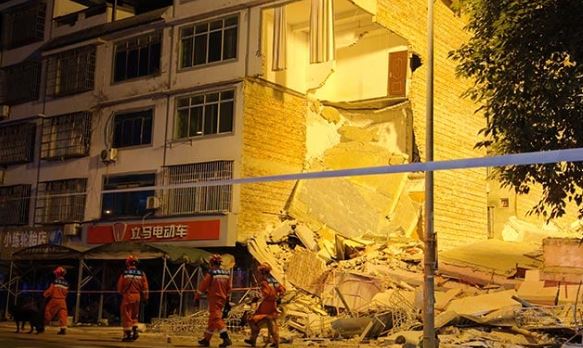
GUANGXI, MAY 18: A 5.2-magnitude earthquake struck south China’s Guangxi region on Monday, killing two people and causing 13 buildings to collapse, state media reported.

The quake hit Guangxi’s Liuzhou city at 12.21am (1621 GMT), state news agency Xinhua said, adding that one person remained missing as of the morning.

State broadcaster CCTV identified the deceased as a couple — a 63-year-old man and a 53-year-old woman — and said search and rescue efforts for the missing person were ongoing.

Authorities had evacuated over 7,000 people from the area, it added.

Videos published by CCTV showed people fleeing high-rise buildings and piles of rubble next to destroyed homes.

Rescue workers were seen trudging through the debris, while their dogs tried to sniff out signs of life.

Emergency workers wearing helmets were also seen using earthmovers to clear the wreckage.

Earthquakes in China are relatively common.

Last January, a devastating quake in the remote Tibet region killed at least 126 people and damaged thousands of buildings.

Calm After Storm: Assessing the Outcomes of the Presidential Visit to China

Calm After Storm: Assessing the Outcomes of the Presidential Visit to China

by Muhammad Mohsin Iqbal

The President of the United States, Donald Trump, has returned to the White House after concluding a two-day official visit to China, an engagement that drew the gaze of capitals worldwide and revived memories of an earlier era in Sino-American diplomacy. Accompanied by a formidable delegation that included senior cabinet ministers and a striking array of America’s leading business tycoons from sectors spanning agriculture, aviation, technology, and energy, the President’s journey to Beijing unfolded against a backdrop of global unease. From the troubled waters of the Gulf to the persistent frictions of trade and the delicate strategic balance between the world’s foremost powers, the conversations in Zhongnanhai touched upon matters of profound consequence for the international order.

In the measured exchanges between President Trump and Chinese leader Xi Jinping, several pressing issues rose to the fore. The volatile situation in the Gulf, where disruptions linked to the conflict involving Iran have imperiled the free flow of oil through the Strait of Hormuz, commanded serious attention. Both sides, according to accounts from those present, affirmed the imperative of keeping vital sea lanes open to commerce, lest higher energy prices and supply shortages inflict fresh wounds upon the world economy. There appeared to be a shared understanding that no single actor should be permitted to acquire nuclear capabilities capable of further inflaming the region, a stance that may help ease immediate pressures on global markets even as underlying tensions linger.

Trade and economic cooperation, long a source of both opportunity and contention, formed another pillar of the discussions. President Trump spoke warmly of “fantastic trade deals” beneficial to both nations, with indications that China may move forward with substantial purchases of American agricultural goods such as soybeans and beef, alongside commitments for around two hundred Boeing aircraft. New mechanisms, including proposed boards for trade and investment, were discussed as avenues for sustained dialogue, offering hope for incremental progress in market access and supply chain stability. Yet observers noted the absence of sweeping tariff resolutions or transformative agreements on technology and rare earth minerals, suggesting a preference for pragmatic stabilization over bold resets. The presence of billionaire executives underscored the administration’s desire to embed commercial realism more deeply into diplomatic efforts, weaving together the interests of state and enterprise.

On the enduring question of Taiwan, the tone remained characteristically cautious. Chinese leaders reiterated with firmness that the matter represents a core interest, cautioning that any misstep—particularly concerning American arms sales—could lead to dangerous clashes. For the American side, emphasis was placed on the value of peace and stability across the strait, with President Trump indicating that decisions on pending defense packages would be weighed carefully in the coming weeks. No breakthroughs were announced, but the very fact of candid exchange may serve to manage differences and prevent escalation, preserving the delicate equilibrium that has thus far averted outright crisis.

Beyond these specific concerns, the visit carried broader significance for the relationship between the two great powers. Formal meetings were complemented by symbolic gestures: a banquet marked by mutual expressions of respect, a visit to the Temple of Heaven that evoked cultural appreciation, and an invitation extended by President Trump for President Xi to visit the White House in September. Such personal diplomacy, while sometimes viewed through a skeptical lens, can foster the personal rapport that eases future negotiations amid inevitable rivalry. Analyses in respected journals and established newspapers portray the summit as one of cautious optimism—modest steps toward predictability rather than a grand reconciliation.

In the days since the President’s return, commentators have sifted through the signals for clues to the future. On the economic front, the groundwork laid for increased purchases and dialogue mechanisms may yield tangible gains for American farmers, manufacturers, and exporters, provided political momentum endures. In the Gulf, coordinated diplomatic efforts could help restore more reliable energy flows, offering relief to consumers and industries burdened by recent uncertainties. Strategic competition, particularly in technology and the Indo-Pacific, will likely continue along familiar lines of guarded engagement, where both nations pursue their interests with resolve yet seek to avoid outright confrontation.

History reminds us that relations between such formidable powers are seldom altered in a single stroke. This visit, though rich in symbolism and modest in concrete outcomes, represents an important chapter in an ongoing narrative shaped as much by interdependence as by competition. As Washington and Beijing chart their courses in the months ahead, the world will watch closely to see whether the understandings reached in Beijing translate into enduring stability. For the present, the prevailing view among seasoned diplomats and analysts is one of measured hope: a temporary calming of waters in a relationship that remains as consequential as any in our time, with the harder labor of sustained cooperation still lying before both nations. In the grand arena of global affairs, such deliberate and careful steps may ultimately prove more lasting than dramatic but ephemeral gestures.

Stay Connected

64FansLike
60FollowersFollow

Latest Reviews

Exchange Rates

USD - United States Dollar
EUR
1.14
GBP
1.34
AUD
0.70
CAD
0.71