Home Blog Page 124

First Gaza flotilla activists arrive in Turkey after Israel deportation

First Gaza flotilla activists arrive in Turkey after Israel deportation

ANKARAC, MAY 22: Israel said on Thursday it had deported all the foreign activists seized by its forces from a Gaza-bound flotilla, as the first group arrived in Turkey following global outcry over their treatment in custody.

Hundreds of activists from countries around the world were placed in detention in Israel after they were intercepted at sea Monday while making the latest in a string of attempts to break the blockade of the Palestinian territory.

Turkish foreign ministry sources said 422 activists, including 85 Turkish nationals, were flown from southern Israel on three planes chartered by Ankara.

Those deportation flights were confirmed by the Freedom Flotilla Coalition, which said several other activists had been deported to their home countries directly.

A first group of arrivals were seen inside the VIP terminal at Istanbul airport, as a crowd of supporters carrying Palestinian flags gathered to welcome them, an AFP correspondent said.

Israeli forces “attacked us. Each of us was beaten, women and men… It’s what Palestinians experience all the time,” said Turkish national Bulal Kitay, after he got off the plane.

Israel’s far-right National Security Minister Itamar Ben-Gvir sparked widespread condemnation and a diplomatic backlash Wednesday by posting a video showing the detained activists with their hands tied and foreheads on the ground.

Israel’s foreign ministry spokesman, Oren Marmorstein, said Thursday that “all foreign activists from the PR flotilla have been deported from Israel.

“Israel will not permit any breach of the lawful naval blockade on Gaza,” he added.

Upon arrival at Istanbul airport, one of the activists shouted “the Palestinian people are not alone!” as he emerged from the terminal.

“We’ve been tortured, we’ve been beaten, we’ve been arrested in international waters, but we won’t give up. We will return. Palestine will be free from the river to the sea,” he said to cheers from the crowd.

Adalah, the legal center representing the flotilla members, said earlier on Thursday that the majority were “en route for deportation” from Ramon Airport in Israel’s far south.

It said they had been held at Israel’s Ktziot prison, in the Negev Desert near Gaza.

A spokesman for Adalah said activists from Egypt had been transferred to Taba at Egypt’s border with Israel, while those from Jordan had been transferred to Aqaba.

The Freedom Flotilla Coalition said that two South Korean nationals had also been sent back to their home country, and an Israeli citizen had been released in Israel.

‘Inflammatory video’
Around 50 vessels under the Global Sumud Flotilla set sail from Turkey last week in the latest attempt by activists to breach Israel’s blockade of Gaza, after Israeli forces intercepted a previous convoy last month.

The deportations came after footage posted by Ben-Gvir, captioned “Welcome to Israel” and showing the minister heckling and waving an Israeli flag among the detained activists, sparked resounding condemnation by governments around the world, from Italy to Spain and Australia to Canada.

He was also criticized at home by Prime Minister Benjamin Netanyahu and Foreign Minister Gideon Saar, as well as by US ambassador to Israel Mike Huckabee.

Italy and Spain have called on the European Union to sanction Ben Gvir, with Italian Foreign Minister Antonio Tajani and Spanish Prime Minister Pedro Sanchez calling the treatment of the activists “unacceptable.”

In Ireland, a leaked letter revealed Prime Minister Micheal Martin urging the EU chief for “further action” against Israel over their treatment, including a ban on settlement goods and suspension “of parts if not all” of the EU’s Association Agreement with Israel.

The United Kingdom announced it had summoned Israel’s most senior diplomat in Britain following “the inflammatory video.”

‘They kicked us’
Adalah’s legal director Suhad Bishara told AFP on Wednesday that the group’s lawyers had given legal counsel to “many” of the activists, though she added others had faced court hearings without legal assistance.

“We know of at least two participants who were hospitalized… both of them were shot by rubber bullets,” Bishara said, adding that others said they feared they had broken ribs.

Alessandro Mantovani, an Italian journalist detained with the flotilla activists and deported before the others, told reporters in Italy on Thursday that he and others were “taken to Ben Gurion airport in handcuffs and with chains on our feet and put on a flight to Athens.”

“They beat us up. They kicked us and punched us and shouted, ‘Welcome to Israel,’” he said of his treatment by Israeli security forces.

Israel controls all entry points into Gaza, under blockade since 2007.

Since the start of the Gaza war, sparked by Hamas’s October 7, 2023 attack on Israel, the territory has suffered severe shortages of food, medicine and other essential supplies, with Israel at times halting aid deliveries entirely.
Atif Sheikh demands FTR reinstatement for exporters

Atif Sheikh demands FTR reinstatement for exporters

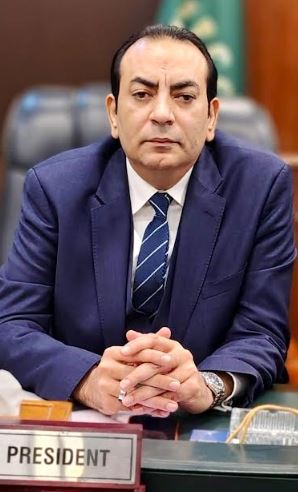
ISLAMABAD, MAY 22 /DNA/ – Atif Ikram Sheikh, President of the Federation of Pakistan Chambers of Commerce & Industry (FPCCI), has officially, as part of the Proposals for the Federal Budget 2026-2027, strongly advocated for the immediate reinstatement of the Final Tax Regime (FTR) for exporters of goods. The apex trade body, in its budget proposals, has highlighted that the previous withdrawal of the FTR has severely hindered the export sector by introducing critical operational bottlenecks, he added.

Mr. Atif Ikram Sheikh stressed that the removal of FTR has resulted in a significant increase in compliance requirements and extensive documentation for exporters. Furthermore, this policy shift has fueled tax-related uncertainty and led to a rise in audit harassment – diminishing the ease of doing business for the export community.

Mr. Atif Ikram Sheikh emphasized the urgent need for a policy reversal to protect the nation’s economic recovery. The withdrawal of the Final Tax Regime for exporters of goods has significantly increased compliance requirements, documentation, tax-related uncertainty and excessive audit hassles. It is our core recommendation to reinstate the FTR for exporters as a full and final liability to reduce this severe compliance burden on the business community, he added.

Mr. Atif Ikram Sheikh elaborated on the collaborative approach the government must take to ensure long-term stability. While we strongly recommend reinstating the Final Tax Regime to ease the burden on our exporters, we also propose that the exact rate of the final tax may be negotiated with relevant stakeholders to ensure a balanced, growth-oriented revenue model, he added.

Mr. Saquib Fayyaz Magoon, SVP FPCCI, has explained the necessity for incentivization and flexibility in taxation frameworks for exporters. To truly boost our national exports, an option may be provided in the upcoming budget to individual exporters to opt between the Final Tax Regime (FTR) or the Normal Tax Regime (NTR) as per their convenience and business structure, he added.

Mr. Abdul Mohamin Khan, VP & Regional Chairman Sindh, FPCCI, stated that FPCCI maintains that facilitating exporters through rationalized tax frameworks like the FTR is vital for sustainable economic growth, expanding the export base and improving Pakistan’s international competitiveness in the export markets vis-a-vis regional competitors.

ICCI hosts Philippines ambassador to promote business linkages

ICCI hosts Philippines ambassador to promote business linkages

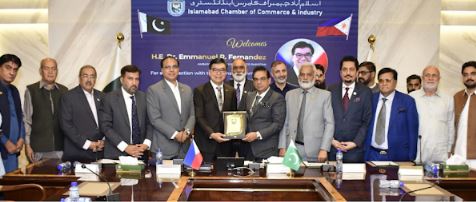
ISLAMABAD, MAY 22 /DNA/ – Ambassador of the Republic of the Philippines to Pakistan, Dr. Emmanuel R. Fernandez, visited the Islamabad Chamber of Commerce and Industry (ICCI) and held an interactive session with the business community to discuss opportunities for enhancing bilateral trade, investment and economic cooperation between Pakistan and the Philippines.

The Ambassador described the Philippines as an attractive investment destination and an important gateway to ASEAN markets due to its strategic location in Asia. Through a detailed presentation, he highlighted the Philippines’ economic strengths, stating that the country serves as an important entry point to the ASEAN region due to its strategic location in the heart of Asia. He noted that the Philippines offers access to one of the world’s largest consumer markets and provides extensive opportunities for foreign investors.

 He highlighted investment opportunities in manufacturing, renewable energy, agribusiness, IT, healthcare, tourism, real estate and construction sectors. He informed participants that the Philippines offers incentives including income tax holidays of up to seven years, duty-free imports and VAT exemptions.

The Ambassador particularly emphasized the potential for joint ventures in Halal food products for ASEAN markets and stressed the importance of stronger business-to-business contacts, exchange of trade delegations and cooperation in multiple sectors. He assured the business community of the Embassy’s full support and facilitation, especially for ICCI members for the purpose.

Earlier, President Islamabad Chamber of Commerce and Industry, Sardar Tahir Mahmood, welcomed the Ambassador and said that Pakistan and the Philippines have vast untapped potential to enhance bilateral trade and economic relations. He noted that Pakistan exports textiles, pharmaceuticals, rice, leather products, sports goods and surgical instruments to the Philippines, while imports include electronic equipment, machinery, chemicals and processed food products.

Sardar Tahir Mahmood observed that despite strong diplomatic ties, bilateral trade remains below potential. He stressed the need for improved connectivity, exchange of business delegations and organization of single-country exhibitions to promote trade and investment cooperation. He reaffirmed ICCI’s commitment to strengthening commercial linkages with the Philippines.

Senior Vice President ICCI Tahir Ayub highlighted the importance of private-sector collaboration and called for joint ventures and technology transfer between the two countries.

Former President ICCI and Chairman Standing Committee on Diplomatic Affairs Zafar Bakhtawari termed ASEAN a successful model of regional cooperation and emphasized greater collaboration in value-added sectors.

Chairman ICCI Standing Committee on ASEAN Ch. Muhammad Ali said that stronger engagement with the Philippines would improve Pakistan’s access to ASEAN markets and stressed the importance of direct flights between the two countries.

Former President ICCI Mian Shaukat Masood emphasized cooperation between IT companies of both countries for mutual benefit.

Chairman and Editor-in-Chief of Daily Pakistan Observer, Faisal Zahid Malik, who also attended the session, termed the ICCI initiative a significant step toward strengthening Pakistan’s relations with ASEAN states.

Among others present on the occasion were Ms. Rain R. Mendoza, Third Secretary and Vice Consul at the Embassy of the Philippines, ICCI Vice President Irfan Chaudhry, Executive Members Waseem Chaudhry, Zulqurnain Abbasi, Rohail Anwar Butt and Ishaq Sial, former Senior Vice President Khalid Chaudhry, senior member Israr Mishwani and a large number of business leaders.

Saudi outlet publishes unapproved ‘final draft’ of US-Iran deal, claims it could be announced within hours

Saudi outlet publishes unapproved ‘final draft’ of US-Iran deal, claims it could be announced within hours

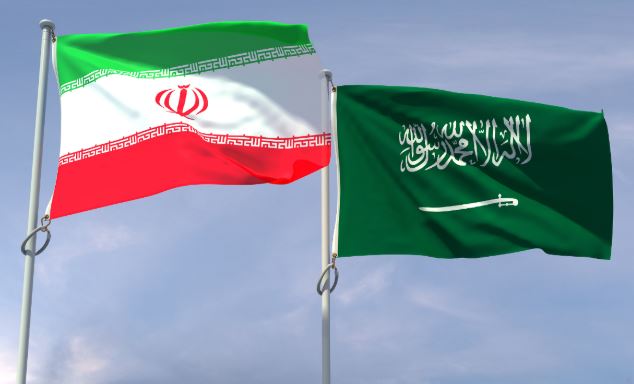
RIYADH, MAY 22: Saudi network al-Arabiya publishes what it claims is the “final draft” of a Pakistani-mediated “possible” US-Iran agreement to end the war. It says the deal could be announced within hours, but also acknowledges it is “pending approval” by both sides.

The agreement would take effect immediately it is officially announced by both sides, the report says, citing unnamed sources.

The reported draft agreement does not explicitly mention key US demands, including the dismantling of Iran’s nuclear program and export of its stockpile of 60%-enriched uranium, limiting its ballistic missiles and ending its support for terrorist proxies. It provides for negotiations on unspecified “outstanding issues” to begin within seven days of the agreement taking effect.

The nine-point deal is said to provide for:

  • An immediate, comprehensive, unconditional ceasefire on all fronts, including land, sea, air
  • A mutual commitment not to target military, civilian, or economic infrastructure
  • An end to military operations and a halt to the media war
  • Commitments to respect sovereignty, territorial integrity and non-interference in internal affairs
  • Guaranteed freedom of navigation in the Arabian Gulf, the Strait of Hormuz and the Gulf of Oman
  • A joint mechanism to monitor implementation and resolve disputes
  • Negotiations on outstanding issues to begin within seven days
  • The gradual lifting of US sanctions in exchange for Iran’s commitment to the terms of the agreement
  • Reaffirmed compliance with international law and the UN Charter

PM Shehbaz to visit China from May 23 to 26, confirms FO

PM Shehbaz to visit China from May 23 to 26, confirms FO

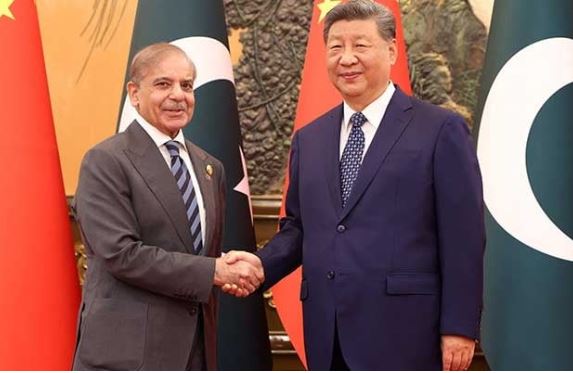
ISLAMABAD, MAY 22: Prime Minister Shehbaz Sharif will undertake an official visit to China from May 23-26, Foreign Office spokesperson Tahir Hussain Andrabi said on Friday.

Addressing a weekly press briefing, the spokesperson said the premier is visiting the brotherly country at the invitation of the Government of the People’s Republic of China.

During the visit, PM Shehbaz will hold key meetings with Chinese leadership, including President Xi Jinping and Premier Li Qiang, Andrabi added.

The prime minister will also chair a Pakistan-China Business-to-Business Conference and attend a reception ceremony in Beijing.

Andrabi said that the visit will play an important role in further strengthening the strategic partnership between the two countries.

“The visit will provide an opportunity to reaffirm the abiding strength of the Pakistan-China all-weather strategic partnership and advance a shared vision of building an even closer Pakistan-China community of a shared future,” Andrabi said.

“The two sides will review bilateral relations, cooperation in political, economic, and strategic domains,” the spokesman added.

He said that Pakistan and China have recently marked the completion of 75 years of diplomatic relations with official-level celebrations. Andrabi added that both countries have supported each other in every difficult time over the past 75 years.

The spokesperson said that the relationship has expanded beyond diplomacy into strong partnerships in trade, industry, education, and people-to-people contacts.

Andrabi said that on the occasion of 75 years of diplomatic relations, Pakistan and China are reaffirming their “everlasting friendship” and commitment to further strengthening bilateral cooperation.

A day earlier, PM Shehbaz said that China has consistently stood with Pakistan with steadfast support through thick and thin, and the friendship between the two countries has grown stronger over time.

“China has stood like a rock with Pakistan in every difficult time,” said PM Shehbaz while addressing in Islamabad held on Thursday to mark the 75th anniversary of Pakistan-China diplomatic relations.

He recalled that Pakistan was the first Islamic country to recognise China, adding that the event celebrating Chinese friendship was a source of great joy.

Separately, the government has decided to issue a commemorative Rs75 coin to mark the 75th anniversary. The coin will be available to the public from May 25 through exchange counters at the field offices of the SBP Banking Services Corporation. Pakistan and China formally established diplomatic relations on May 21, 1951.

HEC evaluates NSCT 2026 outcomes, mulls future measures

HEC evaluates NSCT 2026 outcomes, mulls future measures

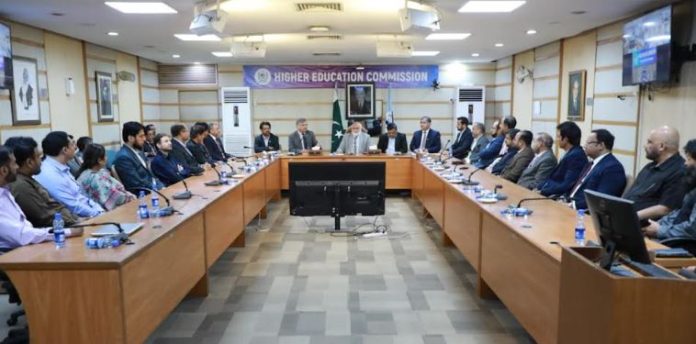
ISLAMABAD, MAY 22 /DNA/ – The Higher Education Commission (HEC) Pakistan held a meeting with the members of the National Curriculum Review Committee (NCRC) in the discipline of Computer Science here at the Commission Secretariat.  

The meeting aimed to review outcomes of the National Skills Competency Test (NSCT) 2026 and discuss future interventions required to futher strengthen the Computing Education in Pakistan.

It is pertinent to mention here that HEC conducted NSCT nationwide on April 4-5, 2026 in collaboration with the Ministry of Information Technology and Telecommunication (MoITT), Pakistan Software Export Board (PSEB), Pakistan Software Houses Association (P@SHA), and the Virtual University of Pakistan. More than 33,000 students from higher education institutions across the country participated in the test.

The meeting participants held detailed deliberation on the key findings of NSCT, the gaps identified in Computing Education, and the measures required to align academic curricula with emerging industry requirements and national priorities.

Following the meeting, a Certificate Distribution Ceremony was held to acknowledge and appreciate the valuable contributions of stakeholders, committee members, and collaborating institutions towards the successful conduct of NSCT 2026.

Chairman UGC, academicians from Bangladesh Explore HEC, NUST

Chairman UGC, academicians from Bangladesh Explore HEC, NUST

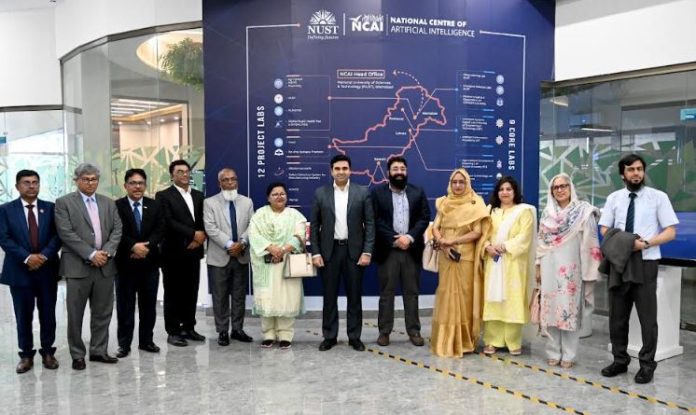
ISLAMABAD, MAY 22 /DNA/ – A 13-member delegation of academia from Bangladesh, led by Chairman University Grants Commission (UGC) Bangladesh Prof. Dr. Mamun Ahmed, visited the Higher Education Commission (HEC) Secretariat as part of an ongoing academic engagement programme between Pakistan and Bangladesh.

Chairman HEC Dr. Niaz Ahmad Akhtar and other senior officers of HEC warmly welcomed the distinguished delegates.

In a comprehensive session, the delegation was briefed on the mandate, achievements, and strategic initiatives of HEC Pakistan. On the occasion, senior HEC officers delivered detailed presentations on various aspects of Pakistan’s higher education system.

The Coordination Division presented an overview of HEC’s organisational framework and strategic functions, while the Academics & Accreditation Division briefed the delegation on the higher education landscape, access and expansion of higher education institutions, establishment of campuses, and recent policy reforms. The Quality Assurance Division shared insights into Pakistan’s Quality Assurance Framework and accreditation mechanisms, whereas the Information Technology Division highlighted initiatives related to digitisation and automation in higher education.

An interactive discussion was also held, during which both sides exchanged views on higher education governance, quality enhancement, research collaboration, digital transformation, and opportunities for future institutional partnerships between universities of Pakistan and Bangladesh.

Later, the delegation visited National University of Sciences and Technology (NUST), Islamabad, where a guided tour of key academic and innovation facilities, including the Centre for International Peace and Stability (CIPS) and the National Science and Technology Park (NSTP) was arranged. The university officials briefed the delegation on NUST’s contributions to research, innovation, entrepreneurship, industry-academia collaboration, and technological advancement.

The engagement provided an opportunity for both sides to further strengthen academic relations and explore avenues for future collaboration in higher education, research, faculty development, and student engagement between Pakistan and Bangladesh.

The visit reflects the shared commitment of both countries to promoting academic diplomacy, faculty collaboration, student exchange initiatives, and mutual learning in the higher education sector. It marks an important step towards deepening educational cooperation and enhancing people-to-people connectivity between the two brotherly countries.

Pakistan, Turkey air chiefs bolster defense ties

Pakistan, Turkey air chiefs bolster defense ties

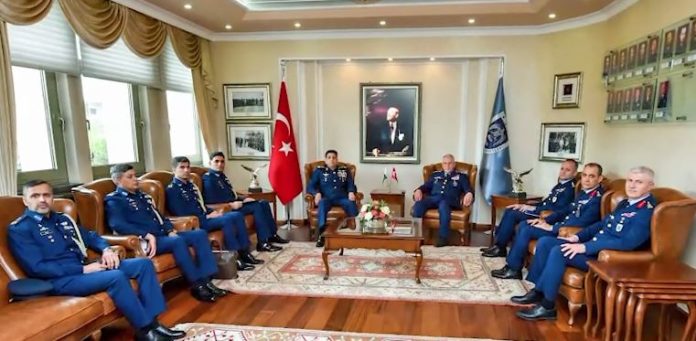
RAWALPINDI, MAY 22 /DNA/ – Air Chief Marshal Zaheer Ahmed Baber Sidhu, NI (M), HJ, Chief of the Air Staff, Pakistan Air Force, during an official visit to the Republic of Turkiye, held high-level meetings with General Ziya Cemal Kadıoglu, Commander Turkish Air Force, H.E. Yasar Guler, Minister of National Defence, and Mr. Selcuk Bayraktar, Chief Technology Officer Baykar Technologies, reaffirming the growing strategic convergence and shared commitment of both nations towards enhanced collaboration in defence, aerospace innovation and emerging technologies.

At Turkish Air Force Headquarters, he received a Guard of Honour and discussed enhancing interoperability through joint exercises, training programmes, and professional exchanges. The Turkish Air Chief appreciated Pakistan Air Force’s support in training Turkish pilots.

During his meeting with Defence Minister Yasar Guler, both sides reaffirmed the strong historical and strategic ties between Pakistan and Türkiye, while exploring deeper cooperation in training, capacity building, and aerospace collaboration.

In yet another significant engagement, Chief of the Air Staff met with Mr. Selcuk Bayraktar, Chief Technology Officer of Baykar Technologies. The interaction focused on advancements in aerospace innovation, unmanned aerial systems and emerging technologies, reflecting the shared vision of both sides to pursue greater collaboration in next-generation defence technologies.

Jordan ambassador attends CIPS-NUST training program

Jordan ambassador attends CIPS-NUST training program

The event marked the successful completion of the training programme aimed at strengthening knowledge and skills related to the protection of civilians in conflict and peacekeeping environments

DNA

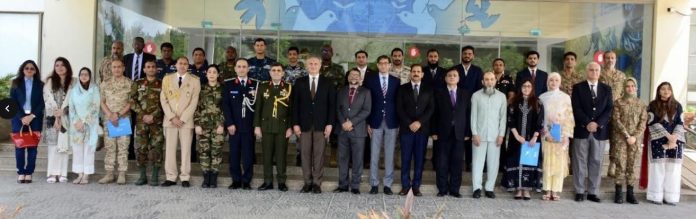
ISLAMABAD: Ambassador of Jordan to Pakistan, Dr. Maen Khreasat attended as Chief Guest at the closing ceremony of the United Nations Comprehensive Protection of Civilians Course held at the Centre for International Peace and Stability (CIPS), part of the National University of Sciences and Technology (NUST).

The event marked the successful completion of the training programme aimed at strengthening knowledge and skills related to the protection of civilians in conflict and peacekeeping environments. Dr. Khreasat congratulated the participants on their achievement and commended the efforts of the organisers in promoting peace and stability through specialized training initiatives.

Participants and dignitaries, including representatives from diplomatic and academic circles, attended the ceremony.

EU-funded ‘Deliver Justice Project’ Celebrates Five Years of Impact in Pakistan

EU-funded ‘Deliver Justice Project’ Celebrates Five Years of Impact in Pakistan

DNA

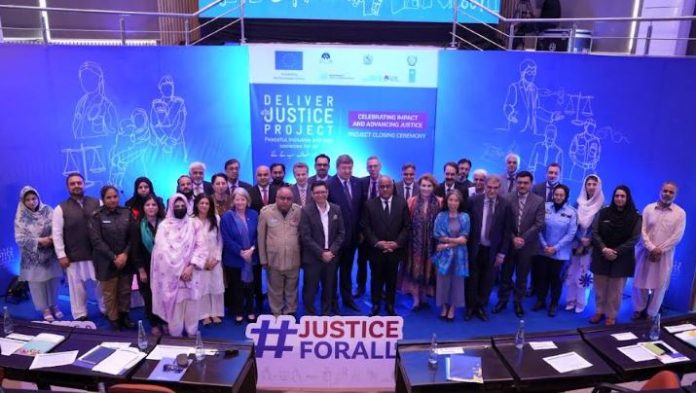
ISLAMABAD:  The European Union (EU)-funded ‘Deliver Justice Project’ concluded in Islamabad, marking five years of strengthening access to justice, improving people-centred justice services, and advancing rule of law reforms across Pakistan.

Jointly implemented by the United Nations Development Programme (UNDP), the United Nations Office on Drugs and Crime (UNODC), and the United Nations Entity for Gender Equality and the Empowerment of Women (UN Women), the project worked across Islamabad, Balochistan, and Khyber Pakhtunkhwa (KP) to support justice and security institutions, civil society, and local communities.

The closing event brought together representatives from the Supreme Court of Pakistan, the Ministry of Economic Affairs, provincial justice and security institutions, civil society, media, and communities to reflect on the project’s impact and the partnerships that made it possible. Champions of justice from KP and Balochistan were also recognized for their contributions to promoting more accessible and inclusive justice services.

On the occasion, H.E. Mr. Raimundas Karoblis, Ambassador of the European Union to Pakistan, said, “The EU is committed to helping Pakistan provide an improved, more efficient, safer, and more accessible justice system to its citizens.  Through this project, we’ve been able to support the justice sector in Khyber Pakhtunkhwa and Balochistan.”

The event highlighted the project’s impact through testimonials and conversations with women lawyers, women police officers, and community members who benefited from legal awareness, legal aid, and justice services under the initiative. An interactive Impact Hub showcased achievements, research, and personal stories from across the project areas.

Honourable Justice Shahid Waheed, Judge, Supreme Court of Pakistan, attended the event as the Chief Guest. In his remarks, he noted, “The justice sector across the world is undergoing profound transformation. Courts and justice institutions are increasingly expected not only to decide disputes, but also to deliver justice that is accessible, inclusive, efficient, transparent, and responsive to the needs of society. In developing democracies, particularly, justice institutions carry an even greater responsibility: to reinforce public trust, protect constitutional rights, and ensure that no individual or community is left behind.”

A panel discussion on the future of the rule of law in Pakistan explored how sustained collaboration can help make justice systems more responsive, inclusive, and accessible for all. Moderated by Ms. Shahzada Ahmad, Programme Manager, UNDP Pakistan, the discussion featured insights from Judge Muhammad Amir Munir, Director, Federal Judicial Academy; Ms. Munizae Jehangir, Senior Journalist; Mr. Muhammad Mudassar Javed, CEO, SHARP; and Ms. Huma Akhtar Chughtai, Member of the National Assembly.

“We have much to be proud of,” said Ms. Van Nguyen, Officer-in-Charge, UNDP Pakistan. “Over the past five years, the Deliver Justice project has reminded us that behind every policy reform or institutional improvement are real people – women accessing legal aid, police offers serving communities with greater confidence, and citizens better able to understand and claim their rights. Ultimately, justice matters only when people can experience it in their everyday lives with fairness, protection, and dignity. That is the true measure of progress.”

At the occasion, Mr. Troels Vester, Representative UNODC Pakistan, said, “The Deliver Justice Project (DJP) reflects what can be achieved through strong partnerships, institutional ownership, and long-term commitment to rule of law reforms. Over the past five years, the DJP has strengthened criminal justice institutions across Balochistan and Khyber Pakhtunkhwa through legislative reforms, digital transformation, citizen-centric policing, prison modernisation, and enhanced access to justice. Most importantly, these reforms are now being sustained and institutionalised by the Government, ensuring that the impact of this partnership will continue well beyond the project lifecycle.

To highlight the link between the rule of law, rehabilitation, and economic empowerment, prison industries from KP presented handmade handicrafts, furniture, and artwork produced by inmates as part of their vocational training. The dedicated marketplace underscored how skills development can support dignity, rehabilitation, and future livelihoods.

Mr. Jamshed M. Kazi, Country Representative, UN Women Pakistan, remarked: “Delivering justice means ensuring that every woman and girl, especially those facing multiple forms of discrimination, can access safe, responsive, and gender-sensitive justice services. Through this partnership, we have worked closely with institutions, communities, and women leaders to strengthen pathways to justice, amplify women’s voices, and promote accountability. The progress achieved under the Deliver Justice Project demonstrates the power of collaborative action in advancing gender equality and upholding the rights and dignity of all. The momentum should continue to serve women and girls in Pakistan.”

The 20-million-Euro Deliver Justice Project was funded by the European Union.

Stay Connected

64FansLike
60FollowersFollow

Latest Reviews

Exchange Rates

USD - United States Dollar
EUR
1.14
GBP
1.34
AUD
0.70
CAD
0.71