Home Blog Page 123

Pakistan, Uzbekistan strengthen cultural ties

Pakistan, Uzbekistan strengthen cultural ties

Ambassador of Uzbekistan to Pakistan, Alisher Tukhtaev, emphasized that the two nations are bound by enduring religious, civilizational, and cultural connections

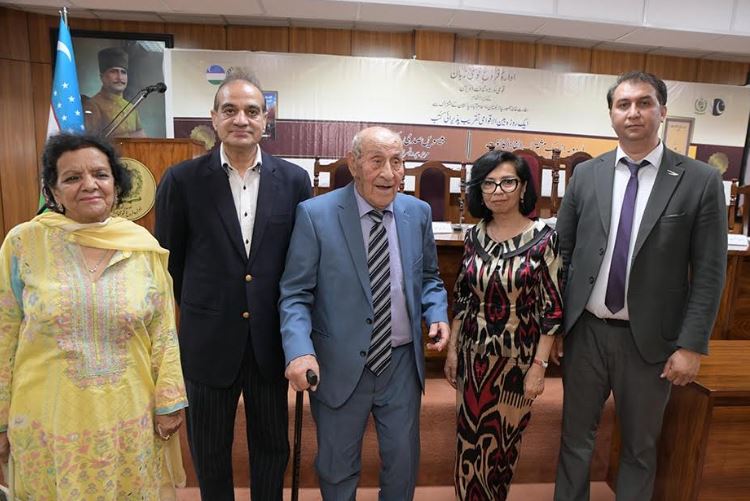
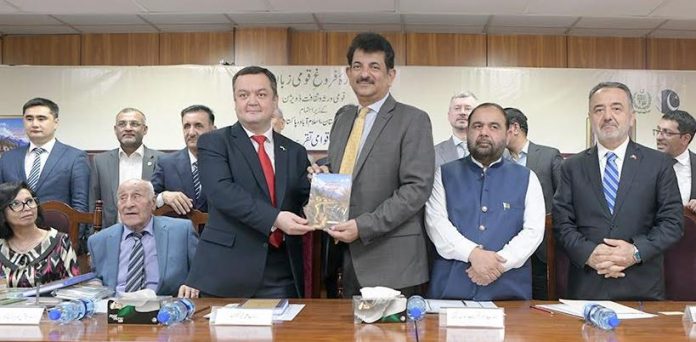
ISLAMABAD, MAY 23 (DNA) — The deep-rooted, centuries-old bilateral ties between Pakistan and Uzbekistan reached a new milestone on Thursday with the official launch of two significant literary works: the Urdu-Uzbek Dictionary of Common Words and 20th Century Fictions.

The prestigious launch event, held at the National Language Promotion Authority (NLPA), was organized in collaboration with the Embassy of the Republic of Uzbekistan. It drew a large gathering of prominent academic, literary, and cultural figures.

A Foundation Built on Shared Heritage

In his welcome address, the Ambassador of Uzbekistan to Pakistan, H.E. Alisher Tukhtaev, emphasized that the two nations are bound by enduring religious, civilizational, and cultural connections. He noted that literary and cultural initiatives of this nature play a pivotal role in fostering mutual affection, brotherhood, and academic collaboration between the peoples of both countries.

Federal Minister for National Heritage and Culture Division, Aurangzeb Khan Khichi, commended the authors for their constructive contribution toward strengthening bilateral relations. Expressing hope for the continuity of such academic endeavors, the Minister proposed making the newly launched Uzbek dictionary available online to maximize public accessibility and convenience.

Echoing these sentiments, Federal Secretary for National Heritage and Culture Division, Asad Rehman Gilani, remarked that the event was a practical manifestation of a lasting friendship. He highlighted that the relationship extends beyond culture into shared historical, scientific, and civilizational foundations. Gilani also noted that the Urdu language’s incorporation of diverse global words is a testament to its universality and breadth, before extending his congratulations to the authors and the NLPA.

Speaking at the event, Professor Mahiya Abdul Rahmanova expressed her gratitude to Ambassador Tukhtaev and lauded the monumental effort behind the project, comparing the rigorous process of compiling a dictionary to “digging a well with a needle.” She offered her heartfelt congratulations to Dr. Tash Mirza on the completion of the work.

Representing her father, author Dr. Tash Mirza Khalmirzayev, Adil Mirza expressed gratitude to the attendees. She highlighted that physical and cultural proximity have grown hand-in-hand, pointing out that the newly launched flight service from Lahore to Tashkent has significantly boosted people-to-people contacts. “It is now possible to reach historic Samarkand and Bukhara in just two hours,” she added.

A Vibrant Cultural Showcase

The cultural flavor of Uzbekistan was on full display throughout the venue. The hall was beautifully adorned with traditional paintings, caps, and diverse styles of Uzbek gowns. The event’s moderator, Tourism Ambassador Hamid Mehboob, caught the attention of attendees by donning a striking, traditional black Uzbek gown embellished with intricate golden embroidery.

US intelligence chief Tulsi Gabbard resigns

US intelligence chief Tulsi Gabbard resigns

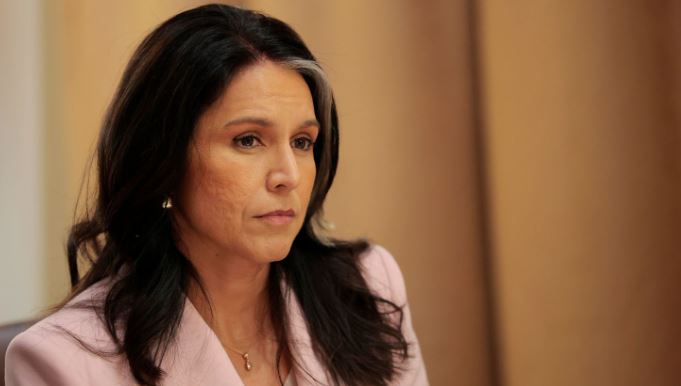
WASHINGTON, MAY 22: US intelligence chief Tulsi Gabbard announced her resignation on Friday, ending the tenure of a long-term contrarian who appeared to be at odds with President Donald Trump over the Iran war.

Gabbard said in a letter to Trump posted on X that she was quitting as Director of National Intelligence to look after her husband following his diagnosis with an “extremely rare form of bone cancer.”

Qatari negotiating team in Tehran to try to help secure US-Iran deal to end war

Qatari negotiating team in Tehran to help secure US-Iran deal to end war, says source

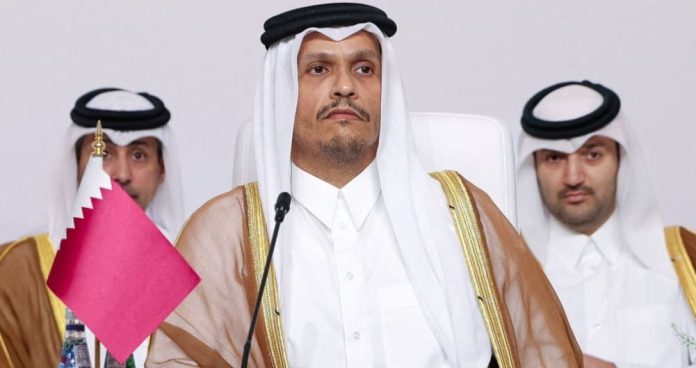
TEHRAN/DOHA, MAY 22: A Qatari negotiating team arrived in Tehran on Friday in coordination with the United States to try to help secure a deal to end the war with Iran and resolve outstanding issues, a source with knowledge of the matter told Reuters on Friday.

Doha, which has worked as a mediator in the Gaza war and other areas of international tension, had till now distanced itself from playing a mediation role in the Iran war after it came under attack from Iranian missiles and drones during the latest conflict.

“A Qatari negotiation team is in Tehran on Friday,” the source said, adding that the team had traveled in coordination with the United States and was there to help “reach a final deal that would end the war and address outstanding issues with Iran.”

Promoted: Hadassah, Preparing For What’s Next
Keep Watching

The Qatari Ministry of Foreign Affairs did not immediately respond to a request for comment.

While Pakistan has served as the official mediator since fighting began, Qatar’s re-engagement reflects its longstanding role as a US ally in the region and a trusted back-channel between Washington and Tehran.

A shaky ceasefire is in place in the war that began with US-Israeli strikes on Iran on February 28, but there has been no major breakthrough, with a US blockade of Iranian ports and Tehran’s effective closure of the Strait of Hormuz complicating negotiations.

A senior Iranian source told Reuters on Thursday that no deal had been reached, but gaps have been narrowed, with Iran’s uranium enrichment and its control over the strait among the remaining sticking points.

A bride and groom hold a rose as they pose for pictures during a mass wedding ceremony for participants in the “Janfada” (“Sacrifice for Iran”) pro-government campaign in Tehran, Iran, May 18, 2026. (AP Photo/Vahid Salemi)
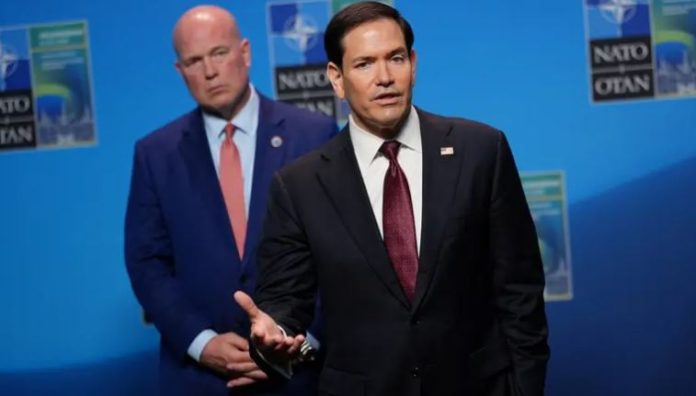
US Secretary of State Marco Rubio noted some progress on Friday but added that more work is required.

Iran’s foreign minister met his Pakistani counterpart on Friday to discuss proposals to end the war, Iranian media reported.

“There’s been some progress. I wouldn’t exaggerate it. I wouldn’t diminish it,” Rubio told reporters after a meeting of NATO ministers in Sweden. “There’s more work to be done. We’re not there yet. I hope we get there.”

Asked about the Qatari team in Iran, Rubio told reporters that Pakistan was the primary interlocutor in the Iran talks and they had done an “admirable job.”

He added: “Obviously, other countries have interests, because especially Gulf countries that are, you know, in the middle of all this — they have their own situation going. And we talk to all of them. I would just say that the primary country we’ve been working with on all of this is Pakistan, and that remains the case.”

Doha’s re-engagement comes despite Iran having pounded Qatar with hundreds of missiles and drones, targeting civilian infrastructure and its vital liquefied natural gas (LNG) production facility at Ras Laffan. That attack wiped out roughly 17 percent of Qatar’s LNG export capacity. The country had already halted LNG production on March 2 following Iranian strikes.

Before the war, about 20% of global LNG trade transited the Strait of Hormuz, primarily from Qatar — Iran’s effective closure of the strait has cut off virtually all of its LNG export capacity.

Motorbikes and cars pass through an intersection in downtown Tehran, Iran, May 17, 2026. (AP/Vahid Salemi)
Qatar is a designated major non-NATO ally of the United States and hosts Al Udeid Air Base, the largest US military installation in the Middle East.

Rubio reiterated comments made on Thursday that Iran’s plans for a tolling system for the strait were “unacceptable.”

“We’re dealing with a very difficult group of people, and if it doesn’t change, then the president’s been clear he has other options,” Rubio said.

He also said the US had not asked the NATO military alliance for help on the Strait of Hormuz but that there needed to be a Plan B if Iran refuses to reopen the waterway.

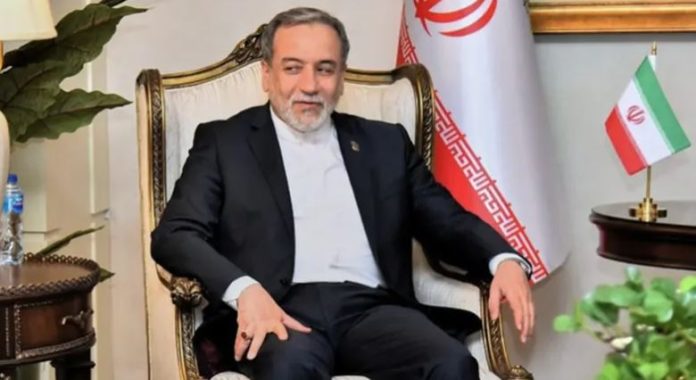
Two days after presenting the Iranians with the latest US message in the negotiations, Pakistani Interior Minister Syed Mohsin Naqvi held another round of talks with Iranian Foreign Minister Abbas Araqchi in Tehran, the semi-official Tasnim news agency reported.

Uncertainty fuels oil price hikes
The war has wreaked havoc on the global economy, with the surge in oil prices stoking fears of rampant inflation.

The US dollar was near its highest level in six weeks on Friday amid the uncertainty over peace talks, while oil prices climbed as investors doubted the prospects of a breakthrough.

“We’re coming to the end of week 12, we’re six weeks in the ceasefire, and I’m just not really that convinced we’re any closer to a resolution between the US and Iran,” Tony Sycamore, a market analyst at IG, said of the Middle East war.

US President Donald Trump said the US would eventually recover Iran’s stockpile of highly enriched uranium — which Washington believes is destined for a nuclear weapon. Tehran says it is intended purely for peaceful purposes, but uranium enriched to such levels has no peaceful applications.

Two senior Iranian sources told Reuters before Trump’s comments that Iranian Supreme Leader Ayatollah Mojtaba Khamenei had issued a directive that the uranium should not be sent abroad.

Trump faces domestic pressure ahead of November midterm elections, with Americans angry over the surge in fuel prices and his approval rating near its lowest level since he returned to the White House last year.

Tehran submitted its latest offer to the US earlier this week.

Iran’s descriptions suggest it largely repeats terms Trump previously rejected, including demands for control of the Strait of Hormuz, compensation for war damage, lifting of sanctions, release of frozen assets and the withdrawal of US troops.

Traffic through the strait has fallen to a trickle compared with 125 to 140 daily passages before the war.

Iran has said it aims to reopen the strait to friendly countries that abide by its terms, which could potentially include fees.

In the past 24 hours, 35 tankers, cargo and other commercial vessels passed through the Strait of Hormuz after obtaining permission from the Revolutionary Guards Navy, its public relations division said.

The US and Israel say their war aims are to curb Iran’s support for regional militias, dismantle its nuclear program, destroy its missile capabilities and make it easier for Iranians to topple their rulers.

But Iran has so far retained its stockpile of near-weapons-grade enriched uranium, and its ability to threaten neighbors with missiles, drones and proxy militias.

Field Marshal Munir arrives Tehran for mediation efforts

Field Marshal Munir arrives Tehran for mediation efforts

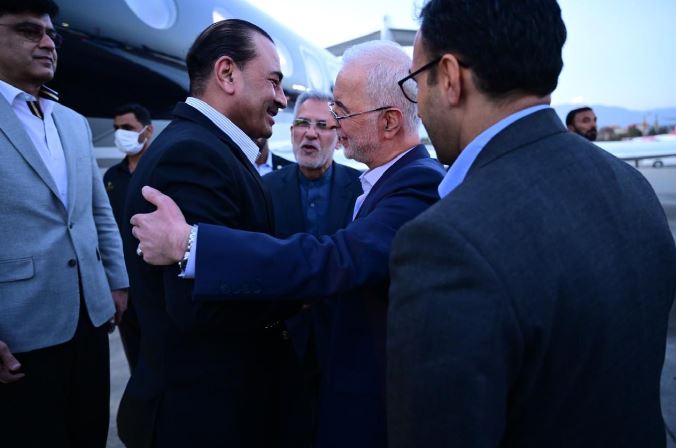
TEHRAN/RAWALPINDI, MAY 22: Field Marshal Syed Asim Munir, NI (M), HI (M), Chief of Army Staff (COAS) and Chief of Defence Staff (CDF), arrived in Tehran as part of ongoing mediation efforts.

On arrival, he was received and warmly welcomed by Iranian Minister for Interior Eskandar Momeni. Federal Minister for Interior, Mr Mohsin Naqvi was also present at the reception.

Rubio cites some progress on Iran talks but “we’re not there yet”

Rubio cites some progress on Iran talks but “we’re not there yet”

WASHINGTON, MAY 22: The United States has seen some progress in talks with Iran and is in constant communication with the Pakistani mediators, but there is more work to be done, Secretary of State Marco Rubio said on Friday.

“There’s been some progress. I wouldn’t exaggerate it. I wouldn’t diminish it,” Rubio told reporters after a NATO ministers meeting in Sweden.

“There’s more work to be done,” he added. “We’re not there yet. I hope we get there.”

President Donald Trump would prefer to do a good deal, Rubio said. The core concern remains that Iran cannot have a nuclear weapon and the issue of future uranium enrichment needs to be discussed as well as reopening the Strait of Hormuz, he said.

“We’re dealing with a very difficult group of people, and if it doesn’t change, then the president’s been clear he has other options,” Rubio said.

“He prefers the negotiated option and having a good deal, but he himself has expressed concern that maybe that’s not possible. But we’re going to keep trying.”

Rubio said the United States was in constant communication with the Pakistanis who are facilitating the talks with Iran.

There was no specific ask from the US on Friday for help from NATO on the strait but there needs to be a Plan B if Iran refuses to reopen the supply route, Rubio said after the close of the NATO meeting.

Bilawal seeks Karachi’s role in Pakistan’s defence production sector

Bilawal seeks Karachi's role in Pakistan's defence production sector

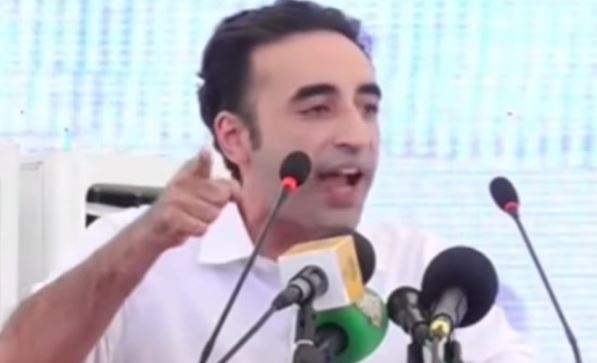
KARACH, MAY 22: Pakistan Peoples Party (PPP) Chairman Bilawal Bhutto-Zardari on Friday pushed for Karachi’s increased participation in “Made in Pakistan” defence production sector, citing growing international demand for locally manufactured military equipment.

Addressing a ceremony after inaugurating Karachi’s Shahrah-e-Bhutto, the former foreign minister said that demand for Pakistan’s defence products had witnessed a historic increase after the country’s victory over India in the May 2025 war.


Several countries have shown interest in purchasing defence equipment from Pakistan, he said, adding that nations around the world preferred battle-tested military hardware.

“We want Karachi to contribute to Made in Pakistan defence production as well,” the PPP chief said.

The four-day war between the two nuclear-armed nations erupted on May 7 last year after India launched an unprovoked attack on Pakistan, following an attack on tourists in the Indian Illegally Occupied Jammu and Kashmir.

Pakistan — in its response to the illegal aggression — downed eight Indian fighter jets, including French-made Rafale, and dozens of drones.

Following Islamabad’s military success over India, several countries, including Iran, Bangladesh and Libya, reportedly expressed interest in purchasing Pakistan’s military equipment.

In January, Minister for Defence Production Raza Hayat Haraj confirmed that the country was in talks with several countries over potential agreements to sell JF-17 Thunder fighter jets, The News reported quoting BBC.

The victory in the May 2025 war also solidified Pakistan’s position on the global stage, with Islamabad emerging as a key mediator between the United States and Iran to resolve their disputes.

Meanwhile, the PPP chairman said that the burden of the Middle East conflict was being borne by poor citizens, who were already struggling with rising electricity and gas bills.

Bilawal said that peace in the region would help reduce economic difficulties, warning that continued conflict could further aggravate economic conditions.

“If the war does not end, the economic situation will become more serious,” he said.

The war in the Middle East erupted on February 28 after the US and Israel launched coordinated strikes on Iran.

Tehran responded by targeting Israel and US bases across the region, while effectively closing the Strait of Hormuz, resulting in a sharp increase in global oil prices.

Qatari negotiating team in Tehran to help secure US-Iran deal to end war, says source

Qatari negotiating team in Tehran to help secure US-Iran deal to end war, says source

TEHRAN/DOHA, MAY 22: A Qatari negotiating team arrived in Tehran on Friday in coordination with the United States to try to help secure a deal to end the war with Iran and resolve outstanding issues, a source with knowledge of the matter told Reuters on Friday.

Doha, which has worked as a mediator in the Gaza war and other areas of international tension, had till now distanced itself from playing a mediation role in the Iran war after it came under attack from Iranian missiles and drones during the latest conflict.

“A Qatari negotiation team is in Tehran on Friday,” the source said, adding that the team had traveled in coordination with the United States and was there to help “reach a final deal that would end the war and address outstanding issues with Iran.”

Advertisement

The Qatari Ministry of Foreign Affairs did not immediately respond to a request for comment.

Qatar’s role as trusted back-channel between Washington, Tehran
While Pakistan has served as the official mediator since fighting began, Qatar’s re-engagement reflects its longstanding role as a US ally in the region and a trusted back-channel between Washington and Tehran.

Vessels sail through the Strait of Hormuz, Musandam, Oman, May 20, 2026.
Vessels sail through the Strait of Hormuz, Musandam, Oman, May 20, 2026. (credit: REUTERS/STRINGER)
A shaky ceasefire is in place in the war that began with US-Israeli strikes on Iran on February 28, but there has been no major breakthrough, with a US blockade of Iranian ports and Tehran’s effective closure of the Strait of Hormuz complicating negotiations.

A senior Iranian source told Reuters on Thursday that no deal had been reached, but gaps have been narrowed, with Iran’s uranium enrichment and its control over the strait among the remaining sticking points.

US Secretary of State notes progress towards US-Iran deal
US Secretary of State Marco Rubio noted some progress on Thursday: “There’s some good signs,” he said. “I don’t want to be overly optimistic … So, let’s see what happens over the next few days.”

Asked on Friday about the Qatari team in Iran, Rubio told reporters on the sidelines of a gathering of NATO foreign ministers in Sweden that Pakistan was the primary interlocutor in the Iran talks and they had done an “admirable job.”

Advertisement

He added: “Obviously other countries have interests, because especially Gulf countries that are, you know, in the middle of all this – they have their own situation going. And we talk to all of them. I would just say that the primary country we’ve been working with on all of this, is Pakistan, and that remains the case.”

Doha’s re-engagement comes despite Iran having pounded Qatar with hundreds of missiles and drones, targeting civilian infrastructure and its vital liquefied natural gas (LNG) production facility at Ras Laffan. That attack wiped out roughly 17 percent of Qatar’s LNG export capacity. The country had already halted LNG production on March 2 following Iranian strikes.

Before the war, about 20% of global LNG trade transited the Strait of Hormuz, primarily from Qatar. Iran’s effective closure of the strait has cut off virtually all of its LNG export capacity.

Qatar is a designated major non-NATO ally of the United States and hosts Al Udeid Air Base, the largest US military installation in the Middle East.

Murree activates smart monitoring system

Murree activates smart monitoring system

ISLAMABAD, 22 MAY (DNA) —    Ahead of the Eid al-Adha rush, Murree authorities have unveiled extraordinary security and crowd-management measures, including the launch of the “Safe Tourism Murree” mobile app and the deployment of hundreds of officials across the hill station.

District Police Officer (DPO) Murree, Dr Muhammad Raza Tanveer while speaking to a local media channel said that comprehensive security and traffic management arrangements have been finalized to facilitate tourists during Eid al-Adha as we anticipated a heavy influx of tourists during the Eid holidays, expecting a significant surge in visitor numbers across Murree.

He added that more than 700 police and security personnel will be deployed across key locations, while entry to busy areas like Mall Road will be restricted to families only to prevent overcrowding and ensure public safety. He further stated that the newly launched “Safe Tourism Murree” mobile application will provide real-time traffic updates, emergency assistance, and help maintain smooth tourist flow throughout the holiday period.

DPO Murree further said that special checkpoints and diversion plans have been put in place at all major entry and exit points of the hill station to manage heavy tourist influx during Eid.  He emphasized that law enforcement teams will remain on high alert to ensure smooth traffic flow, prevent congestion, and respond quickly to any emergency situation. He also urged visitors to follow traffic advisories and cooperate with police instructions for their own safety and convenience.

He added that citizens are strongly encouraged to use the “Safe Tourism Murree” mobile application for real-time traffic updates, route guidance and emergency support services. He noted that the app will help tourists stay informed about road conditions and restricted zones, and asked the public to immediately contact authorities through the application in case of any assistance or incident during their visit.

 DPO stated that Section 144 has been enforced across Murree and will remain in place until 31 May 2026, adding that all forms of aerial firing and public display of weapons are strictly banned during this period to maintain law and order and ensure the safety of visitors and residents. Tourists will also have the facility to reach the District Police Officer directly via the “Text to DPO” feature for quick assistance and communication. — DNA

Pakistan’s interior minister meets Iran FM again in push to resolve disputes

Pakistan’s interior minister meets Iran FM again in push to resolve disputes

TEHRAN, MAY 22: As Pakistan continues its efforts to bring viewpoints closer and narrow the gaps between Iran and the United States, Pakistani Interior Minister Mohsin Naqvi met again with Iranian Foreign Minister Abbas Araghchi in Tehran.

The meeting discussed ways to examine proposals aimed at resolving differences between the Iranian and American sides, two days after Naqvi delivered the latest US message to the Iranians, Iranian media reported on Friday.

Munir’s visit postponed
The meeting came as Pakistani army chief Asim Munir had been expected to visit Tehran on Thursday if a breakthrough had been reached, which has not happened so far.

It also came as informed sources confirmed to Al Arabiya that the disputes between the two sides remain focused on the issue of transferring highly enriched uranium out of Iran, and control over the Strait of Hormuz.

The United States has insisted on rejecting any arrangement that would keep uranium inside Iran or allow Tehran to impose any control over Hormuz, through which one-fifth of global oil and gas shipments pass.

US President Donald Trump stressed on Thursday evening that Washington would not accept uranium remaining in Iran or Tehran possessing a nuclear weapon.

Meanwhile, two Iranian sources told Reuters that Iran’s supreme leader, Mojtaba Khamenei, has insisted on keeping highly enriched uranium inside the country.

The two sources also said senior Iranian officials believe moving the material abroad would make the country more vulnerable to future US and Israeli attacks.

Iran currently holds around 440 kilograms of uranium enriched to 60 percent, theoretically enough to produce about six to 10 nuclear bombs if enrichment is raised to 90 percent, according to estimates by the International Atomic Energy Agency.

A first round of direct talks had been held in Islamabad between the Iranian and American delegations, but it did not produce results. Since then, Pakistan has continued its efforts to overcome obstacles and reach an agreement that would end the war that erupted on February 28 between Iran on one side and the United States and Israel on the other.

Babar returns as Pakistan name squad for Australia ODIs

Babar returns as Pakistan name squad for Australia ODIs

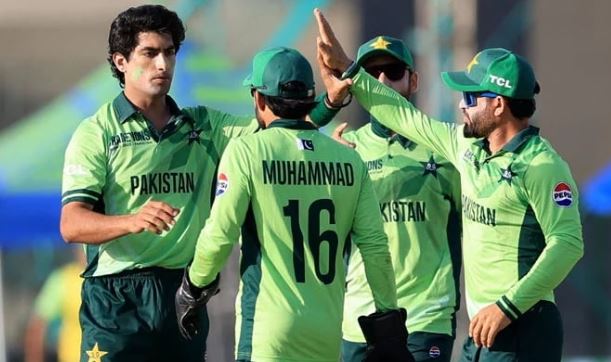
ISLAMABAD, MAY 22: The Pakistan Cricket Board (PCB) has named a 16-member squad for the upcoming three-match ODI series against Australia, scheduled from 30 May to 4 June in Rawalpindi and Lahore.

The national selection committee confirmed that the squad will be led by captain Shaheen Shah Afridi, with Salman Ali Agha serving as vice-captain.

Star batter Babar Azam and pacers Haris Rauf and Naseem Shah have been recalled after missing the previous away series against Bangladesh. Mohammad Rizwan has been left out, with wicketkeeping options now including Muhammad Ghazi Ghori and uncapped Rohail Nazir.

Besides Nazir, the squad includes two more uncapped players, Ahmed Daniyal and Arafat Minhas. Fakhar Zaman and Saim Ayub remain unavailable due to injuries and are undergoing rehabilitation under the PCB medical panel, according to the PCB.

The 16-member squad will assemble in Islamabad later tonight and will train under the coaching staff from Saturday, 23 May. The media advisory regarding the camp will be shared in due course.

Australia men’s team will arrive in Islamabad on 23 May. They will also take part in training sessions at the Rawalpindi Cricket Stadium, details of which will be announced in due course.

The ODI series opener will be played on 30 May at Rawalpindi Cricket Stadium, followed by matches on 2 and 4 June at Gaddafi Stadium, Lahore.

Squad
Shaheen Shah Afridi (captain), Salman Ali Agha (vice-captain), Abdul Samad, Abrar Ahmed, Ahmed Daniyal, Arafat Minhas, Babar Azam, Haris Rauf, Maaz Sadaqat, Muhammad Ghazi Ghori (wk), Naseem Shah, Rohail Nazir (wk), Sahibzada Farhan, Shadab Khan, Shamyl Hussain, Sufyan Moqim.

Team management:
Naveed Akram Cheema (manager), Mike Hesson (head coach), Ashley Noffke (bowling coach), Hanif Malik (batting coach), Shane McDermott (fielding coach), and support staff including medical, fitness, analysis, and security units.

Stay Connected

64FansLike
60FollowersFollow

Latest Reviews

Exchange Rates

USD - United States Dollar
EUR
1.14
GBP
1.34
AUD
0.70
CAD
0.71