Home Blog Page 1228

President, PM attend funeral of martyr brigadier

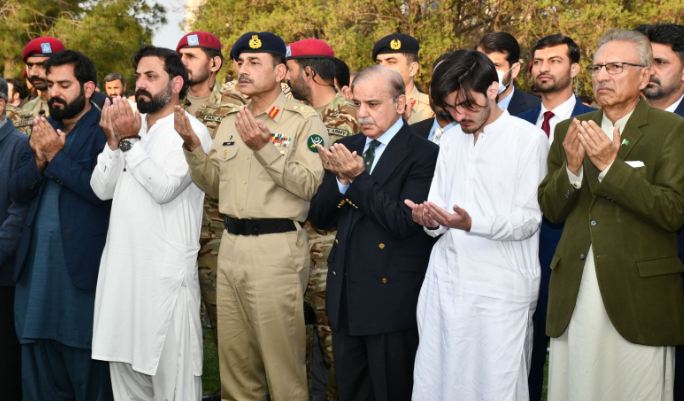
RAWALPINDI, MAR 22 /DNA/ – Funeral prayers of Brigadier Mustafa Kamal Barki who embraced martyrdom during an encounter with hardcore terrorists in Angoor Adda, South Waziristan yesterday was performed at Race Course Rawalpindi today.

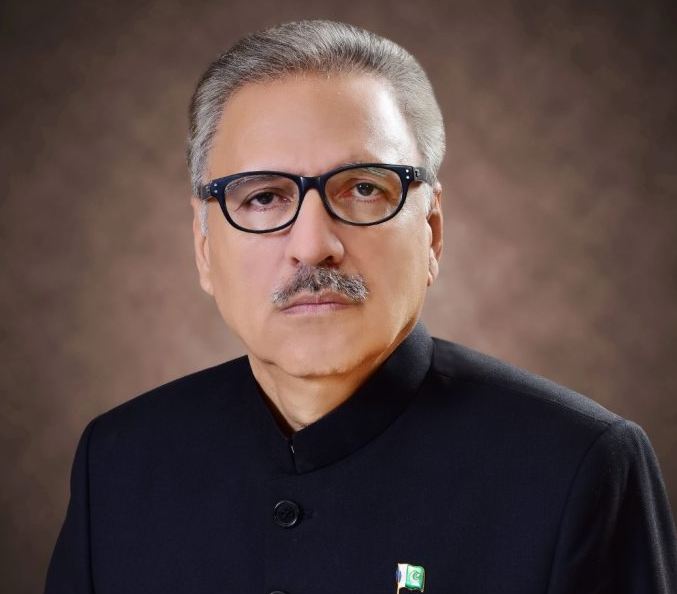
Honourable President Islamic Republic of Pakistan Dr Arif Alvi, Honourable Prime Minister Mian Muhammad Shehbaz Sharif, Chairman Joint Chiefs of Staff Committee (CJCSC) General Sahir Shamshad Mirza, Chief of Army Staff (COAS) General Syed Asim Munir, DG Inter Services Iintelligence (ISI) Lieutenant General Nadeem Ahmed Anjum and large number of serving and retired military officers & soldiers, government officials, Parliamentarians and public attended the funeral. The officer was buried at Army Graveyard with full military honours in acknowledgment of his services to the nation.


Throughout his military career, Brigadier Barki remained involved in active counter terrorism operations and successfully dismantled numerous terrorist networks in KPK and Balochistan. He was monumental in neutralizing the terrorist networks involved in APS attack 2016.


The nation recognizes his meritorious services in life and supreme sacrifice offered for Pakistan. Armed Forces of Pakistan & Intelligence Agencies stand resilient against terrorism and reaffirm the resolve to eradicate this menace of terrorism at all costs.

Imran claims another ‘operation’ to take place outside Zaman Park in bid to assassinate him

Lahore, MAR 22: PTI Chairman Imran Khan on Wednesday alleged that another “operation” would take place outside Lahore’s Zaman Park either today or tomorrow in an attempt to kill him.

On Saturday, hours-long clashes were reported between PTI workers and the capital police after the former prime minister arrived at the Federal Judicial Complex (FJC) to attend a hearing in the Toshakhana case. As Imran left his Za­­man Park residence to appear before the judge, a heavy contingent of police also launched a search operation at his house.

“What is happening here is beyond my understanding,” the PTI chief said in today’s video address.

Referring to the attempt on his life in Wazirabad, he reiterated that he had predicted it earlier in his rallies. He alleged that the evidence of the incident was being erased, adding that the record of the joint investigation team (JIT) was also being destroyed.

“Now another plan has been hatched. I am telling everyone, the judiciary [and] especially Punjab police.”

He alleged that the police chiefs of Islamabad and Punjab, and their “handlers” had planned another operation outside Zaman Park.

“What is the plan? That there is another operation outside Zaman Park either today or tomorrow […] They have made two squads […] who will mix among our people, and then shoot and kill four to five police officials.”

He said that this would then prompt an attack from the other side which would open fire. He said that PTI workers would be killed in a Model Town-like situation before he would be killed in a manner similar to the assassination of Murtaza Bhutto.

“This is the plan. This will happen either today or tomorrow. I want to tell everyone. I want to tell the Punjab police that they will kill five of your people just for an excuse to attack.”

Addressing his party workers, Imran called on them to not take part in any violence. “Whatever they do, we will not do anything […] This time if they try to provoke you, you will not give any kind of reaction.”

Imran said he was ready to go to jail but did not want bloodshed. “That is why I am again telling workers to not participate in any violence.”

Imran decries arrests of PTI workers
The ex-premier began his address by saying that he was going to talk about something “very important”. He said that a “meeting” would be held today where “a minority will try to take the majority out of the race”.

“Meaning what they will try to do is that the PTI is somehow not allowed to contest polls or they are somehow taken out of the election race.”

He said that the incumbent government was well aware of the fact that their days in politics would end if they went ahead with polls.

“But what I want to talk about is more important than this. Today, our workers are being rounded up,” he said, adding that he had not seen this happen before in any democratic setup.

He said that workers were being picked up in Lahore, Rawalpindi, Islamabad and Faisalabad. “It is as if PTI is such a big, scary party. A party of criminals that [workers] are being rounded up and put in jails,” he said.

The PTI chief said that he had gotten to know that 143 cases had been registered against him. He lamented that the majority of the cases registered against him were on charges of terrorism.

“I don’t care about my cases but the way our people are being arrested on false cases, we are now writing to all international human rights organisations” in this regard, he said.

Imran said that he wanted the judiciary to protect the party’s fundamental rights. He said that on one hand elections had been announced, yet there was a crackdown was initiated against PTI workers. “We try to take out a rally [but] we are attacked and cases were also registered against us only.”

Imran says plan to assassinate him was in place at FJC
Talking about the party’s powershow at Minar-i-Pakistan, he said that the PTI had wanted to hold it before Ramazan began but said that permission was denied. He said that now the court had granted permission and it would be held on Saturday (March 25).

“This will be a rally Pakistan will remember because the whole country will see where the nation stands. It will be a kind of referendum.”

Talking about last week’s clashes at the FJC, he said no other prime minister had been treated in this manner. “It took me five hours to get from the toll plaza on the Islamabad motorway to get to the judicial complex […] They had virtually closed down the motorway for just one man.”

He said that the workers accompanying him were held back at police checkpoints. “I was mentally prepared that they will arrest me that day.”

He said that the police deployed at the scene kept increasing and suddenly his convoy was teargassed in an attempt to “spread anarchy”. Imran said he reached the doors of the FJC with “great difficulty” when police officials started pelting him with stones.

The PTI chairman said he stood outside the FJC for 40 minutes to try and get in somehow. He also showed a video of the people gathered inside the complex, saying that a “plan” was in place to assassinate him in a scenario similar to what happened to Murtaza Bhutto.

Imran said that police officials later told him that na maloom afraad (unknown people) were present at the scene in Counterterrorism Department uniforms. He alleged that the footage from CCTV cameras was erased.

“The nation knows me for the past 50 years. How many times have I broken the law? A whole plan was made to murder me.”

ISE RMC appeals all stakeholders to turn the country out of crises

ISLAMABAD, MAR 22 /DNA/ – The Board of Directors of ISE Towers REIT Management Company Limited met here on March 22, 2023 and shown its deep concern over economic meltdown in the country. The depleting economic condition coupled with tense political conditions has been fueling the uncertainty, hopelessness and frustration in the business community and the masses.

The Board of Directors urged all the stakeholders to sit together and carve out a strategy to take the country out of this situation in the best interest of the country. It is believed that if timely actions were not taken, the situation will spiral out of control.

ISE Towers REIT Management Company will continue to play its due role in betterment of the economy of Pakistan.

Two brothers shot dead over marriage dispute

FROM QAZI SHOAIB KHAN
DNA
ATTOCK (MARCH-22): In Attock two bothers were shot dead over marriage dispute within the purview ofHassanabdal Police Station on Wednesday. Police said, Farhad Ali- uncle of the deceased has reported that the victims identified as Muhammad Arif and Muhammad Ismail hailing from Charsada (KPK) presently living in the area who were runningtheir milk dairy business. On the day of occurrence of the unfortunate incident, they were coming back after attending a reconciliatory session to settle their marriage dispute held by the elders of their family when the alleged killer Mansoor Khan along with two other accomplices riding on motorcycle intercepted them and riddled them with bullets which resultanted their instant death on the spot. The police on getting information rushed to collect important evidence on the crime scene. Later on, Police handed over the bodies to their real heirs after getting autopsy at THQ hospitalHassanabdal and registered a double murder case against the nominated accused besides launching further investigations. However, police could not find the clue of the target killers till filing of this story.

HEC hosts Inter-University Declamation Competition on Constitution’s 50 Years

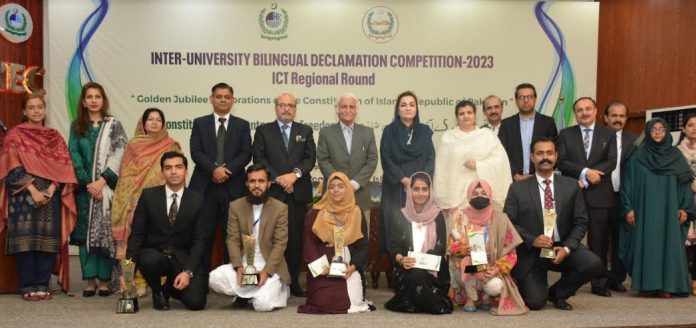
Islamabad, MAR 22 /DNA/ – Higher Education Commission (HEC) is hosting the Inter-University Bilingual Declamation Competition 2023 in commemoration of the Golden Jubilee of the Constitution of Islamic Republic of Pakistan, as advised by the honourable Speaker of the National Assembly of Pakistan, Mr. Raja Pervez Ashraf.

For ICT round, students from Islamabad, Rawalpindi, Taxila, AJK and Gilgit Baltistan participated in the competition held at HEC Secretariat Islamabad on Wednesday, while regional rounds for Balochistan, Sindh, Khyber Pakhtunkhwa and Punjab were held in the provincial capitals on Tuesday.

The aim of this competition is to encourage young people across the country to engage with the Constitution and to reflect on its importance. The final winners of this competition would be invited to make their winning speeches at the Parliamentary Convention in Islamabad, an opportunity to showcase their talent. In addition, cash prizes for the top three finalists will also be awarded by the National Assembly of Pakistan.

The theme of the Declamation Competition is “My Constitution-Guarantee of My Freedoms” in English language and “Mera Aien – Meri Azadiyon ki Zamanat” in Urdu language.

ICT regional round in Islamabad was graced by Senator Mr. Farhatullah Babar and Member National Assembly Ms. Mehnaz Akber Aziz. Adviser (Academics, Curriculum & NAHE) HEC, Engr. Muhammad Raza Chohan, Adviser (Global Engagement) HEC, Mr. Awais Ahmad and a large number of students attended the event.

The panel of judges included Dr. Muhammad Ahmad Munir from International Islamic University, Dr. Humaira Aslam from University of Peshawar, Dr. Fehmeeda Tabassum from Federal Urdu University and Mr. Muhammad Arslan from PTV World.

In his address, Senator Farhatullah Babar thanked HEC for celebrating the golden jubilee of the constitution of Pakistan and appreciated all student participants for their dedication and hard work. He said that our constitution is the foundation of our country. “The preamble reminds us that we, the people of Pakistan, are the sovereign people of this nation, and no one can breach our fundamental rights.”

He also emphasised that Article 16 gives us the freedom of association, which is crucial for any democratic society. However, there are still some impediments that we need to overcome, and we must work together to ensure that all citizens are provided their due rights.

Member National Assembly Ms. Mehnaz Akber Aziz appreciated HEC for organizing this competition as an effort to promote awareness about the constitution. She hoped that this competition will inspire more young people to engage with our constitution and become active citizens in building a brighter future for Pakistan. She further added that one issue we face is the lack of institutionalization of the constitution. We need to make it easily and readily available, readable, and understandable for all citizens. This will encourage more people to engage with the constitution and understand their rights and responsibilities as citizens of Pakistan. On this occasion, she also announced the opportunity of internship for the Regional Round winners.

Engr. Muhammad Raza Chohan, in his welcoming remarks, said that our constitution is the fundamental document that gives us rules and regulations for governing our country. It is essential that we understand the constitution and its provisions, as it is the real basis of our democracy.

After a rigorous evaluation process in the ICT regional round of Inter-University Bilingual Declamation Competition 2023, Abdullah Khan, Quaid-i-Azam University Islamabad won the first position in the English contest, Uzair Javed, Mohi-ud-Din Islamic Medical College secured second position and Reemal Imtiaz, COMSATS Wah Campus won the third prize.

In Urdu Speech, Minahil Hijab, HITEC University secured the first position, Muhammad Munib Asghar, Institute of Space Technology won the second position and Gul Rukh, University of Wah won the third position. The first position holder won cash prizes of Rs. 30,000, while the second and third position holders received Rs. 20,000 and Rs. 15,000 respectively both in English and Urdu speeches.

The National and Final Round of the Competition is scheduled for 3rd May, 2023 at HEC Auditorium Islamabad, where all the winners of regional rounds will compete to be declared as national winners of this event.

Forging a New Partnership: Understanding the Importance of Pakistan-Russia Relations

Masuood Ahmad

With the split of USSR in 1991, a massive shift emerged in the nature of global politics with new principles becoming dominant factors in determining the strength of bonhomie between different nation-states. Pakistan’s relationship with USSR changed from cool to hostile. In its initial years of tremendous difficulties, Pakistan received two invitation letters from the United States of America and Soviet Union but the then Prime Minister of the country preferred to go to U.S. and thus sending an unfriendly gesture to Soviet Union which later resulted in increasing Soviet tilt towards India. This was the time when two countries developed cooperation in various fields with India started actively buying weapons from the USSR and thus becoming a threat to Pakistan. Defense experts still believe that Pakistan had an opportunity to maneuver and numerous policy options on the table that it failed to utilize. Pakistan becoming a member of US-led military alliances in the 1950’s further deteriorated the relationship with the USSR and diminished any possibility of the two countries becoming strategic partners in the Central Asian region.  However, in the late 1950s and early 1960s the two countries moved closer, concluding several trade agreements that would provide a solid basis for increasing cooperation in the security, industrial and energy sectors, setting the stage for the two countries to become significant players in the region.However, with the invasion of Afghanistan by the Soviet Union in the 1970s and the beginning of the Soviet-Western confrontation, there was one of the most unpleasant turns in relations between the former superpower and Pakistan.

With the disintegration of USSR in 1991, a new world order emerged with different nation-states accelerating their mission to strengthen their defense systems and improve economic conditions with new national policies. The end of the cold war provided an opportunity for a new beginning in Islamabad-Moscow relations. Building on Pakistan’s experience of international cooperation with other countries after 9/11, the reverberations of which can still be heard throughout the region, Pakistan and Russia should adopt a practical approach in building a healthy and mutually beneficial relations rather than being beholden to the superpowers in pursuit of their national interests. The changing contours of strategic interests at regional and international levels demand a relationship of cooperation and understanding which the two countries have taken up despite their past differences. The forging of closer relations between the two has significant importance for promoting stability and enhancing economic cooperation in the region. In Central and South Asia, Russia tries to balance its relations and establish mutually beneficial cooperation with each country, taking into account their goodwill and independence. Pakistan has fallen on hard times, but is a significant player in geopolitics and a responsible partner.With its advantageous geophysical location, developing energy, trade and transport potential, and significant influence in the Islamic world, Pakistan can have a favourable impact on the region and the world at large.

One of the key areas of cooperation between Pakistan and Russia is in the field of defense. The two countries have signed multiple agreements on defense cooperation, including the sale of Russian military equipment to Pakistan. This partnership has helped Pakistan to diversify its sources of military hardware and reduce its reliance on Western countries for defense supplies. The constant threats from archrival India and its increasing military posture across Line of Control (LOC) and inside the disputed territory of Jammu and Kashmir are strong reasons that should force the Pakistani intelligentsia to revisit its policies. A strong military alliance and agreements on defense cooperation between the two countries will inevitably strengthen the defense mechanisms and pave way for a strong power bloc in the region that could act as a deterrent against Western hegemony. In addition to defense, Pakistan and Russia have also been cooperating on energy projects. Pakistan is a significant energy consumer and has been looking to diversify its sources of energy. Russia, with its vast energy sources, can provide an important source of energy to Pakistan. Although the two countries have signed several agreements on energy cooperation, there is a need to further strengthen these agreements and devise plans for more robust pacts based on mutual trust. Besides having significant implications for regional stability, improved relations between Pakistan, Russia, and Afghanistan has important implications for global politics.

The huge shifts in the international system have provided Islamabad and Moscow with a common reason to reevaluate their relations. Moscow is finding new opportunities in the region as the U.S. has withdrawn from Afghanistan while Pakistan on the other hand is gradually trying to revisit its weary relations with Washington that has, to a great extent, given rise to unprecedented homegrown extremism in the country resulting in an economic meltdown and rising security threats. As our enemies demonstrate an offensive mode of destabilizing Pakistan, the demands on national security continue to grow. Improved relations between the two countries with common interests could enhance stability, enhance economic cooperation and change the balance of power in the region, especially against the US and its Eurasian allies. And we have real opportunities to do so. There are mechanisms of interaction within the framework of the Shanghai Cooperation Organization and other international associations, which are gaining new significance in the present reality.

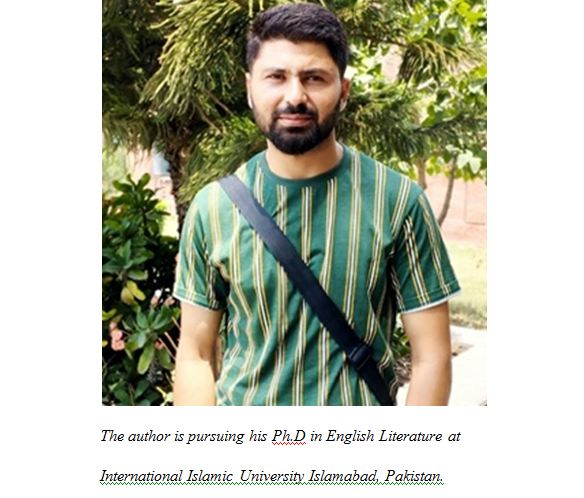
The author is pursuing his Ph.D in English Literature at International Islamic University Islamabad, Pakistan.

President approves remission for prisoners on Pakistan Day

ISLAMABAD, Mar 22 (APP): President Arif Alvi on Wednesday approved a remission for the prisoners on the occasion of Pakistan Day annually observed on March 23.

The president granted a remission of 90 days in sentences exercising his powers under Article 45 of the Constitution.

However, the remission would not be applicable on the prisoners involved in murder, espionage and anti-state activities.

Besides, the prisoners involved in rape, theft, robbery, kidnapping, terrorism and financial crimes, would also be ineligible for the remission.

The reduction in sentences will be applicable on the male prisoners over 65 years age and female prisoners of over 60 years age, who had completed one-third of the sentence.

The juvenile prisoners, who had completed one third of their sentence will also be entitled for the remission.

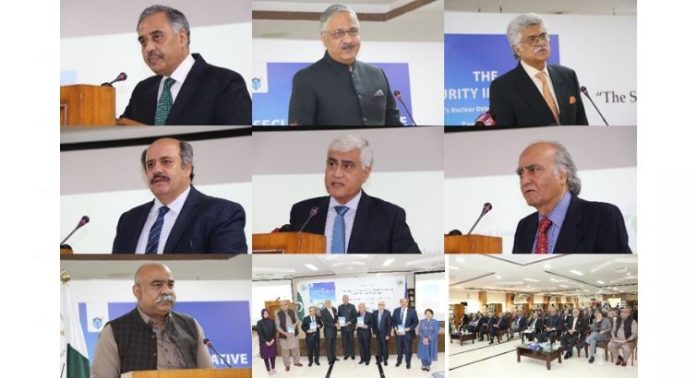
Book Title: The Security Imperative – Pakistan`s Nuclear Deterrence and Diplomacy

ACDC-ISSI Book Launch

Book Title: The Security Imperative – Pakistan`s Nuclear Deterrence and Diplomacy

Author: Ambassador Zamir Akram, Advisor SPD

The Arms Control & Disarmament Centre (ACDC) at the Institute of Strategic Studies (ISSI) hosted the launch of the book titled The Security Imperative – Pakistan`s Nuclear Deterrence and Diplomacy authored by Ambassador Zamir Akram.

The keynote address was delivered by General (R) Zubair Mahmood Hayat, former Chairman of the Joint Chiefs of Staff Committee (CJCSC). There was a large attendance of academics, former and serving Pakistani diplomats, experts from think tanks and members of the foreign diplomatic corps in Pakistan at the event. 

In his welcome remarks, DG ISSI Ambassador Sohail Mahmood lauded Ambassador Zamir Akram for his valuable contributions to the field of nuclear diplomacy throughout a diplomatic career spanning over 38 years. While highlighting the importance of the theme, he said that building nuclear deterrence was Pakistan`s indispensable response to the existential threat posed by India`s nuclearisation.

Meanwhile, Pakistan`s nuclear diplomacy has remained sharp, tenacious and imaginative; it has illustrated to the world the country’s India-specific rationale for the development of nuclear deterrent, reinforced efforts to maintain strategic stability in South Asia, opposed unfair and discriminatory approaches; and continuously countered the smear against Pakistan’s nuclear weapons programme.

 Ambassador Sohail Mahmood added that the conceptual framework underpinning Ambassador Zamir Akram’s book is clear and unambiguous; it is the security imperative that singularly drives Pakistan`s pursuit of nuclear deterrence. He also underlined that the book illustrates the contributions of Pakistan’s diplomats and offers a distinctively Pakistani perspective on this important subject. 

In his keynote address, General (R) Zubair Mahmood Hayat said that for Pakistan, the security threat is both real and existential, which was further intensified by the Indian quest for war, domination and hegemony as so-called ‘net security provider’ in the region. India is the biggest nuclear ‘black hole’ in the world that introduced nuclear weapons in South Asia and the Indian Ocean.

 The NSG waiver by the US, the Indian acquisition of BMD, and ASAT capabilities are the most destabilising factors in South Asia. Furthermore, narrative building is a core component of every aspect of the nuclear deterrence spectrum and Ambassador Zamir Akram has put forward Pakistan`s narrative in an effective manner. The essence of this book is how diplomacy transcends into nuclear diplomacy to support the national policy and posture, he said.

Earlier in his introductory remarks, Malik Qasim Mustafa, Director ACDC-ISSI, said that the book starts its journey by revisiting important questions like what was Pakistan’s security imperative to pursue the development of nuclear weapons, how it acquired this technology and the formulation of nuclear doctrine with emerging realities. The author explains how the inherited legacy of disputes and hostility between India and Pakistan and geography are the main security imperatives. He argues that the country achieved deterrence exclusively for deterrence against a nuclear-armed India and to prevent war, as “a full-scale war ceased to be an option for either country.”

Dr. Zafar Nawaz Jaspal, Director, School of Politics and International Relations (SPIR) at Quaid-i-Azam University (QAU), Islamabad, in his comments said that the author sounds nuclear optimist while describing Pakistan`s reasons for developing a nuclear programme. Ambassador Akram meticulously narrated Pakistan`s nuclear history, separating facts from fiction. As a first-hand diplomatic account of Pakistan`s nuclear programme set in the broader geopolitical context, this book is a distinctive addition to the existing literature in the field.

Major General (R) Ausaf Ali, Advisor Strategic Plans Division (SPD), said that this book elucidates almost all facets of Pakistan`s nuclear programme. It highlights the technical, financial and security challenges faced by Pakistani engineers and scientists. Above all, this book is a narration of how our skilled diplomats quietly but successfully contested, protected and determined Pakistan`s nuclear future at key capitals and various multilateral forums in an unfriendly environment.

In the author`s roundup, Ambassador Zamir Akram highlighted the biased and unfair treatment towards Pakistan in the nuclear realm. He stressed that Pakistan had repeatedly made clear that the development of its nuclear programme was a ‘security imperative’ and India-specific. The failure of security alliances to protect Pakistan`s territorial integrity and sovereignty in 1965 and 1971, contributed to engendering the determination to acquire nuclear weapon capabilities.

The 1998 testing was the finest hour in the history of Pakistan. These tests brought about a paradigm shift in the historic correlation of power between Pakistan and India and replaced it with a new security calculus between India and Pakistan. He also said that credible deterrence does not remain static because of changes in technology and policy. Therefore, Pakistan should be vigilant and continuously evolve its conventional and nuclear capabilities to avoid nuclear ‘blackmail’ from India.

In his concluding remarks, Ambassador Khalid Mahmood, Chairman BoG ISSI, stated that this book launch is significant because Pakistan`s narrative on nuclear deterrence is coming from an experienced diplomat. The book provides a comprehensive overview of the nuclear saga in South Asia – drivers, motivations and double standards of the international community.

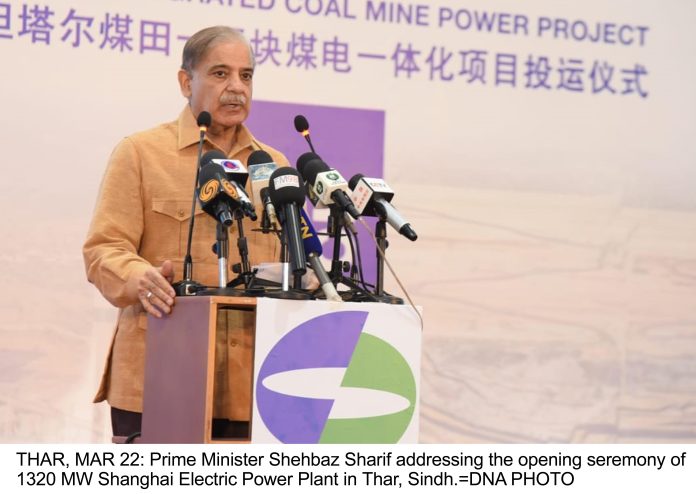
‘Desert to see economic boom’: PM Shehbaz inaugurates 1,650MW coal-fired power plants in Thar

THAR, MAR 22: Prime Minister Shehbaz Sharif addressing the opening seremony of 1320 MW Shanghai Electric Power Plant in Thar, Sindh.=DNA PHOTO

Thar, MAR 22: Prime Minister Shehbaz Sharif on Wednesday inaugurated two coal-fired power plants in Tharparker with a capacity of 1,650 megawatts (MW) of electricity generation, saying that the projects would turn the desert into an “economic hub”.

The projects, including the 1,320MW Shanghai Electric power plant and 330MW Thal Nova power plant, will annually generate 11.24 billion units of low-cost electricity. Through the direct investment of $3.53bn into these projects, the production of coal-based electricity in Thar will increase up to 3,300MW.

Addressing the launch event at Thar’s Islamkot area, the prime minister said it was a “moment of celebration” for the country that the Tharparkar desert was getting a “source of basic facilities for life”.

He dismissed the criticism by certain people against Thar’s coal, terming it a blessing with immense potential for power resources that needed to be untapped.

“The journey of progress will spread across the country and will strengthen the national economy,” PM Shehbaz said, adding that projects which were abandoned during the last four years were being made operational again.

Shehbaz said that by April 30, power turbines would be installed at the projects to generate electricity, which would be supplied to the rest of the country through transmission lines.

He expressed gratitude to the Chinese government for extending support to Pakistan in carrying out development projects under the China-Pakistan Economic Corridor (CPEC).

PM Shehbaz vowed that the coalition government would put in all efforts to materialise CPEC projects, with the agriculture sector as its next phase.

The prime minister also announced a hospital for the people of Tharparkar to provide them with medical facilities at their doorsteps.

PM Shehbaz also condemned Tuesday’s terrorist incident that targeted military personnel and said the “malicious agenda” of the nation’s enemies would be foiled.

“No one is above the law and will not be allowed to support terrorists and use them as shields.”

Meanwhile, Foreign Minister Bilawal Bhutto Zardari said the power projects could be materialised as the federal government and the Sindh government “worked in harmony to facilitate the masses”.

He expressed satisfaction over the level of cooperation between Pakistan and China on carrying out development projects, which he said, had resulted in the “improvement of health and educational facilities”.

Power Minister Khurram Dastagir said the government was “committed to providing civic amenities to the people across the country”.

He said under CPEC, the development of indigenous resources was a “big step towards self-reliance” and was also valuable for foreign exchange reserves.

Sindh Chief Minister Murad Ali Shah said the political and economic interests of Pakistan and China were aligned for the benefit of the two nations. He termed the completion of the Thar Coal project a “success for all stakeholders” from both countries.

Chinese Charge d’Affaires Pang Chunxue said the commercial operation of the Thar coal project ranked high among other coal-fired power plants. She assured all possible cooperation by China in the field of development and progress.

Shanghai Electric Power Company Limited is the executing agency of the projects, while the Ministry of Energy (Power Division) is the coordinating ministry and Private Power and Infrastructure Board is the supervising agency.

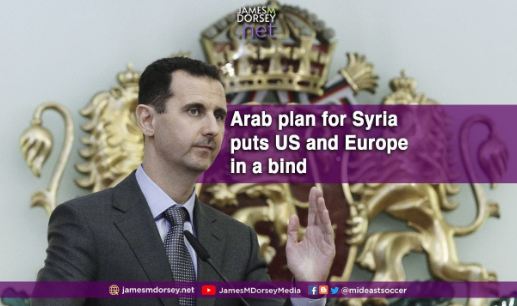
Arab plan for Syria puts US and Europe in a bind

A push by Arab allies of the United States to bring Syria in from the cold highlights the limits of a Chinese-mediated rapprochement between the Middle East’s archrivals, Saudi Arabia and Iran.

The effort spearheaded by the United Arab Emirates, and supported by Saudi Arabia, Egypt, and Jordan, demonstrates that the expected restoration of diplomatic relations between the kingdom and the Islamic republic has done nothing to reduce geopolitical jockeying and rebuild trust.

At best, the Chinese-mediated agreement establishes guardrails to prevent regional rivalries from spinning out of control, a principle of Chinese policy towards the Middle East.

The Saudi-Iran agreement also is an exercise in regime survival.

It potentially allows the two countries to pursue their economic goals unfettered by regional tensions.

For Saudi Arabia, that means diversification and restructuring of the kingdom’s economy, while Iran seeks to offset the impact of harsh US sanctions.

The goal of countering Iran in Syria is upfront in the Arab proposal for returning Syrian President Bashar al-Assad to the Arab and international fold.

If accepted by Syria, the United States, and Europe, it would initiate a political process that could produce a less sympathetic Syrian government to Iran.

It would also establish an Arab military presence in Syria designed to prevent Iran from extending its influence under the guise of securing the return of refugees.

For Mr. Al-Assad, the carrot is tens of billions of dollars needed to rebuild his war-ravaged country and alleviate the humanitarian fallout of last month’s devastating earthquakes in northern Syria.

Hampered by sanctions, Mr. Al-Assad’s Russian and Iranian backers don’t have the economic or political wherewithal to foot the bill.

Nevertheless, potential Gulf investment is likely to encounter obstacles. The US sanctions that hamper Russia and Iran, also erect barriers for Saudi Arabia and the UAE that will limit the degree to which they want to be seen as sanctions busters.

Moreover, countering Iranian influence in Syria would have to go beyond trade and investment in physical reconstruction. Iran has over the years garnered substantial soft power by focusing on embedding itself in Syrian culture and education, providing social services, and religious proselytization.

Meanwhile, China has made clear that its interests are commercial and further limited to aspects of Syrian reconstruction that serve its geopolitical and geoeconomic goals.

Mr. Al-Assad was in Moscow this week to discuss trade and humanitarian aid.

The Syrian president’s rejection of a Russian request that he meets his Turkish counterpart, Recep Tayyip Erdogan, suggests that Mr. Al-Assad will be equally opposed to key elements of the Arab proposal.

The Syrian president said he would only meet Mr. Erdogan once Turkey withdraws its troops from rebel-held areas of northern Syria.

Even so, the Arab push potentially offers the United States and Europe the ability to strike a reasonable balance between their lofty moral, ethical, and human rights principles and the less savory contingencies of realpolitik.

The terms of the Arab proposal to allow Syria back into the international fold after a decade of brutal civil war that killed some 600,000 people, displaced millions more, and significantly enhanced Iran’s regional footprint appears to take that into account.

According to The Wall Street Journal, the proposal offers something for everyone but also contains elements that are likely to be difficult to swallow for various parties.

While Mr. Al-Assad rejects the principle of political reform and the presence of more foreign troops on Syrian territory, legitimizing the regime of a man accused of war crimes, including using chemical weapons against civilians, is a hard pill to swallow for the United States and Europe.

However, it is easy to claim the moral high ground on the backs of thousands trying to pick up the pieces in the wake of the earthquakes.

The same is true for the plight of the millions of refugees from the war whose presence in Turkey and elsewhere is increasingly precarious because of mounting anti-migrant sentiment.

That is not to say that Mr. Al-Assad should go scot-free.

Nonetheless, the failure to defeat the Syrian regime, after 12 years in which it brutally prosecuted a war with the backing of Russia and Iran, suggests the time has come to think out of the box.

The alternative is maintaining a status quo that can claim the moral high ground but holds out no prospect of change or alleviation of the plight of millions of innocent people.

To be sure, morality is not a concern of Arab regimes seeking to bring Mr. Al-Assad in from the cold. However, countering Iran and managing regional conflicts to prevent them from spinning out of control is.

Even so, the Arab proposition potentially opens a way out of a quagmire.

It would enhance the leverage of the United States and Europe to ensure that political reform is the cornerstone of Mr. Al-Assad’s engagement with elements of the Syrian opposition.

In other words, rather than rejecting any solution that does not involve Mr. Al-Assad’s removal from power, the United States and Europe could lift sanctions contingent on agreement and implementation of reforms.

Similarly, the US and Europe could make sanctions relief contingent on a safe, uninhibited, and orderly return of refugees.

However, there would be questions about the ability and willingness of Arab forces loyal to autocratic regimes to safeguard that process impartially.

US and European engagement with Arab proponents of dealing with Mr. Al-Assad would potentially also give them a seat on a train that has already left the station despite their objections.

Ali Shamkani, the Iranian national security official who negotiated the deal with Saudi Arabia in Beijing, was in the UAE this week to meet President Mohammed bin Zayed. There is little doubt that Syria was on the two men’s agenda.

Mr. Al-Assad met this weekend in Abu Dhabi with Mr. Bin Zayed for the second time in a year and traveled to Oman for talks with Sultan Haitham bin Tariq last month.

The Jordanian and Egyptian foreign ministers recently trekked separately to Damascus for the first time since the civil war in Syria erupted in 2011.

Perhaps, the most fundamental obstacle to the Arab proposition is not the fact that Syria, the United States, and Europe would have to swallow bitter pills.

The prime obstacle is likely to be the Arab proponents of the plan. The UAE, Saudi Arabia, Egypt, and Jordan are unlikely to stick to their guns in presenting the plan as a package.

Having taken the lead in cozying up to Mr. Al-Assad, the UAE has since last year demonstrated that it is willing to coax the Syrian leader to back away from Iran at whatever cost to prospects for reform or alleviation of the plight of his victims.

Saudi Arabia, like Qatar and several other Arab countries, initially opposed reconciliation but the kingdom has since embraced the notion of rehabilitation of Mr. Al-Assad.

In early March, Saudi Foreign Minister Faisal bin Farhan Al Saud noted “that there is a consensus building in the Arab world, that the status quo is not tenable. And that means we have to find a way to move beyond that status quo.”

Mr, Al-Saud insisted, however, that it was “too early” to discuss Syria’s return to the Arab League that groups the Middle East’s 22 Arab states. The League suspended Syrian membership in 2011 because of Mr. Al-Assad’s prosecution of the civil war.

Even so, this puts the ball in the US and European courts.

Much of the Arab proposition is about enticing the United States and Europe to be more accommodating and more inclined to a conditioned lifting of sanctions.

The problem is that Mr. Al-Assad is likely to call the Arab states’ bluff in the knowledge that Iran is his trump card.

A speedy in principle US and European embrace of the Arab proposition would hold Emirati and Saudi feet to the fire and put Mr. Al-Assad on the back foot.

Thank you for joining me today. I hope you enjoyed the newsletter and/or podcast. Diplomats, policymakers, investors, executives, journalists and academics listen to my twice-weekly podcast and/or read my syndicated newsletter that is republished by media across the globe. Maintaining free distribution ensures that the podcast and newsletter have maximum impact Paid subscribers help me cover the monthly cost of producing the newsletter and podcast. Please consider becoming a paid subscriber. You can do so by clicking on Substack on the subscription button at www.jamesmdorsey.substack.com and choosing one of the subscription options or support me on Patreon at www.patreon.com/mideastsoccer. Please join me for my next podcast in the coming days. Thank you, take care and best wishes.

Dr. James M. Dorsey is an award-winning journalist and scholar, an Adjunct Senior Fellow at Nanyang Technological University’s S. Rajaratnam School of International Studies, and the author of the syndicated column and podcast, The Turbulent World with James M. Dorsey.

Stay Connected

64FansLike
60FollowersFollow

Latest Reviews

Exchange Rates

USD - United States Dollar
EUR
1.16
GBP
1.34
AUD
0.67
CAD
0.72