Home Blog Page 1226

Is every politician by nature a fascist?

By Qamar Bashir

Our country, which is currently experiencing the worst period of its troubled history, is besieged by perils, difficulties, and hardships which unfortunately do not apply to the politicians, judiciary, civil and military bureaucracy, who on the one hand enjoy fat salaries and massive perks and perquisites while amassing filthy wealth through the use or misuse of their authorities and usurpation of state resources through legal and illegal means at their disposal. These hardships are for the unfortunate people of Pakistan who, while providing these monsters with their blood and sweat, are humiliated, tortured, and mercilessly fleeced of their wealth, right to live with dignity and honor, and subjected to the worst forms of slavery in one form or another. As a result, while they enjoy every privilege under the sun, half of school-aged children are unable to attend, more than 40% are stunted, women are reduced to domestic animals, millions are jobless, the death rate is among the highest in the world and the the region, and yet all elements of power, whether politicians, civil or military bureaucracy, parliamentarians, or the judiciary, are fighting tooth and nail to seize as much kinetic power as possible. Despite the dire financial and economic situation, bureaucrats succeeded in squeezing executive allowances one and a half times of their basic salaries, while judges succeeded in getting exorbitant salary raise even though their monthly salaries are invariably more than one million rupees, not to mention their perks and perquisites, which are in the millions. They argue that it is difficult for them to run their kitchen due to hyperinflation and price hike and that in order to make ends meet, they desperately need salary increases. But how long this looting and plunder will last is anyone’s guess. In the current extreme political polarization, the people of Pakistan will be the ultimate losers, while all rulers will walk away with even more booty than they could in normal times.

Given the country’s worst political polarization and economic and financial hardships, our political parties have shown no signs of slowing down their rhetoric and pledging to annihilate each other. Each of them refers to the opposition party’s leaders as fascists and their party as a fascist party. In almost every public speech, press conference, or media interview, Maryam Nawaz refers to Imran Khan as a fascist leader and a fitna, and expresses her desire to completely demolish both Imran and his party. Mr. Sanahullah, who is also our interior minister, is the custodian of law and order in the country and is obligated to treat every political party or its leader on an equal footing, vowing to eliminate and exterminate Imran Khan to whom he affectionately called fitnah and fascist from the country’s politics. Recently, Mr. Ehsan Iqbal, who, unlike all other Muslim League leaders, seemed to have little bit of sanity left in him joined the bandwagon and labeled Imran Khan a dangerous phenomenon, a fascist leader who poses an imminent threat to the country and must be eliminated and uprooted as soon as possible. The game of blaming does not end here. At one point or another, all political parties, certain members of the judiciary, and the media have labeled the establishment or the deep state as fascist, claiming that it is using brute state kinetic power to abduct, arrest, torture, humiliate, and harrass all those it deems appropriate, whether politicians, judges, media persons, political activists, businessmen, or any other person or institution that they perceive as a threat to their vested interests. But who, in reality, is a fascist? It is Maryam who does not hold any government portfolio but wields all state power and has elevated herself above all state institutions. Is it Imran Khan who is attempting to save his dear life from perceived threats to life, having been named in over 90 FIRs and expected to appear in courts of different parts of the country at the same time, or is his party Fascist who allegedly, is fighting tooth and nail to protect their leader from threats to his life posed by the government and state institutions?

The term “fascist” is a highly charged and politically loaded term, and its definition varies depending on the context and speaker’s perspective. Fascism is a far-right political ideology that is distinguished by authoritarianism, nationalism, and totalitarianism. Fascists believe in the supremacy of the state over the individual and frequently use violence and propaganda to achieve their objectives. Fascism as a political system appeared in Europe in the early twentieth century, characterized by a centralized government, a dictator, and a corporate economy. Fascists emphasize extreme nationalism and frequently use the military force and suppress individual liberties for the greater good. Fascists frequently rely on fear and propaganda to gain support and oppose democracy, liberalism, and other forms of pluralism. It emphasizes hierarchy, order, and discipline and believes that society should be organized around a strong leader with the authority to make decisions on the people’s behalf. Benito Mussolini, the Italian fascist leader who ruled as Prime Minister from 1922 to 1943, Adolf Hitler, the leader of the Nazi Party in Germany, who ruled as Chancellor and then as dictator from 1933 until his death in 1945, Francisco Franco, the leader of the Nationalist forces in the Spanish Civil War, who ruled Spain as a fascist dictatorship from 1939 until his death in 1975, National Front in France, a far-right political party founded in 1972 that espouses nationalist and anti-immigrant views are the few examples of fascists parties and leaders.

Fascist movements often have charismatic leaders who are able to mobilize large numbers of supporters through their rhetoric, charisma, and propaganda whereas Fascist governments are characterized by highly centralized and authoritarian, with power concentrated in the hands of a single leader who uses force, propaganda, and intimidation to maintain their grip on power. They may use surveillance, censorship, and indoctrination to maintain social control and suppress dissent, reject democratic principles and values, such as individual rights, free speech, and the rule of law and suppress opposition parties and restrict freedom of the press.

According to the definitions and explanations, the majority of our political parties and civilian leaders except by sheer dint of definition, TLP and Jamat Islami being far right parties fall under this definition whereas as all other leaders have streaks of fascism in their makeup, behavior or acts. In our system, the military establishment is an important part of national discourse which however, by virtue of its DNA is authoritarian, totalitarian and autocratic and therefore the constitution exclusively assigned it the role of defense of the motherland against foreign aggression. Its training and education is meant to control, guide and lead a disciplined force which are modeled to accept and obey orders of their command without asking questions or showing any hesitation. Moreover, military bureaucracy operates under military law and is subject to different standards of conduct and discipline than civilian officials. That is why the military disciplines are strictly forbidden to involve in civilian affairs. Once however, the military, willingly or unwillingly, is dragged into civilian affairs it acts as per their DNA, expect all civilian disciplines to obey their command and in doing so set aside democratic values, human rights and civilian liberties and act like a fascist force which should not be a surprise. One should only be naive to expect any other behavior other than this. Throughout my 30 years of service and having the opportunity to work closely with many ministers, prime ministers, and two Presidents, invariably each one of them at times complained about their helplessness in making sometimes minor and most of the time major decisions in every sector of statehood. It is widely assumed, rightly or wrongly, that the civilian leadership, both political and bureaucratic, is subservient to the deep state, which enjoys total hegemony as the final and ultimate force to approve or disapprove the civilian leadership’s decisions or impose them on them certain decisions, armed twist them to own them, accept the responsibility for their failure whereas it things goes right give credit to the establishment. The most recent example of vetoing civilian government’s decision was witnessed when former Army Chief Qamar Javaid Bajwa, disregarding stated national policy, condemned Russian evasion with total impunity in one of his speeches.

Even now the helplessness and powerlessness of the government and the political leaders is manifested in their different speeches and statements. Ministers in the cabinets in their various speeches and statements have been bickering openly that their hands are tied to take any major decision. Imran Khan refuses to talk to politicians of the country but is willing to talk with the new army chief to discuss wayforward for holding the next general election as according to him it is where decisions are made while terming the government as a stooge. Maryam Nawaz who by virtue of her own merit and also being a daughter of the PML(N) supremo, although is enjoying full powers but still is demanding the establishment in her various speeches to create a level playing field for everyone and only then would she give her consent for holding early general elections. This reflects where it is perceived rests the power base in the country.

During our informal talks with colleagues, journalists and politicians, we always discussed the difference between civilian and military bureaucracy. A civilian bureaucrat is vulnerable for arm twisting both by the politicians and establishment, while the military bureaucracy remains out of the purview of the civilian government. Each civil servant needs clearance from the agencies specially ISI for every posting and every promotion and they can be removed or installed in any posting by the government without even having the right to protest or agitate. On the other hand, the army is over and above any law of the land. They are governed by Army Act 1958 which makes them immune from any government influence. They themselves are responsible for reward and punishment without any say of the civilian government in their posting or transfer or promotion. None of the civilian departments is involved in vetting of their credentials or qualification and therefore they are totally out of government control except in the case of appointment of armed forces chiefs.

The prime responsibility of Pakistan’s government and leaders is to lead the people and country out of its current quagmire, but the million dollar question is how. The solution is to adopt universal values such as operating within the framework of the law, upholding the principles of fairness and justice, and ensuring that laws are applied fairly and consistently to all citizens, regardless of background or social status. Protect its citizens’ fundamental rights and freedoms, such as freedom of expression, religion, and assembly, and

the right to a fair trial, privacy, and due process. It should be transparent and open in its operations, open to criticism and feedback from the public, and responsive to the needs and concerns of its people. They should also ensure that elections are free and fair, that citizens have equal access to the political process, and that election results are respected. They must respect the diversity of their citizens, work to promote inclusivity and equality, be sensitive to the needs and concerns of various groups, and work to ensure that all citizens can participate fully in society.

Of course, democracy is not a perfect system, and democratic government takes many forms. However, it is frequently viewed as the polar opposite of fascism because it promotes values such as individual freedom, equality, and tolerance, which are opposed to fascism’s authoritarian, nationalist, and anti-democratic values. Are our politicians prepared to usher in true democracy in our country?

Perhaps now is the time for politicians to seize the once-in-a-lifetime opportunity presented by the army’s pledge to stay out of politics. They should play politics within universally accepted principles, treat each other with respect and civility, even if they disagree on policy or ideology, as this is necessary for the functioning of a democratic system as well as healthy debate and the exchange of ideas. They must respect the rule of law, refrain from illegal or unethical behavior, engage in civil discourse, avoid personal attacks or character assassination, and present their arguments in a respectful and constructive manner. They should compete fairly and openly, collaborate and cooperate when it is in the best interests of the country, and work together to address common challenges and find solutions to complex problems. They should respect election results, accept people’s will and refrain from undermining the legitimacy of the electoral process.. Fascism is not a solution, but rather a part of the problem; democracy, while not perfect, is the only solution.

The writer is the Former Press Secretary to the President

Former Press Minister to the Embassy of Pakistan to France
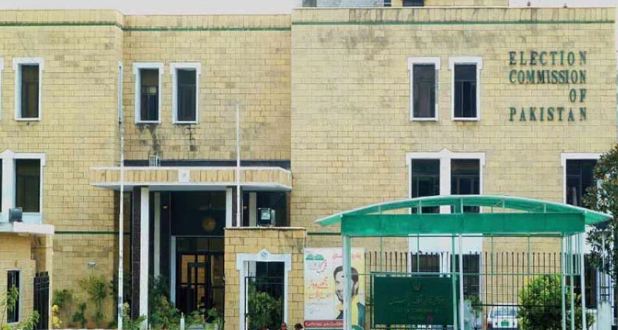
ECP postpones elections in Punjab

ISLAMABAD, MAR 22: In a surprise development, the Election Commission of Pakistan (ECP) on Wednesday announced the postponement of the upcoming elections in Punjab — initially scheduled to be held on April 30 — citing security reasons as the major cause behind their change in plan.

The general elections in Punjab were scheduled to be held on April 30.

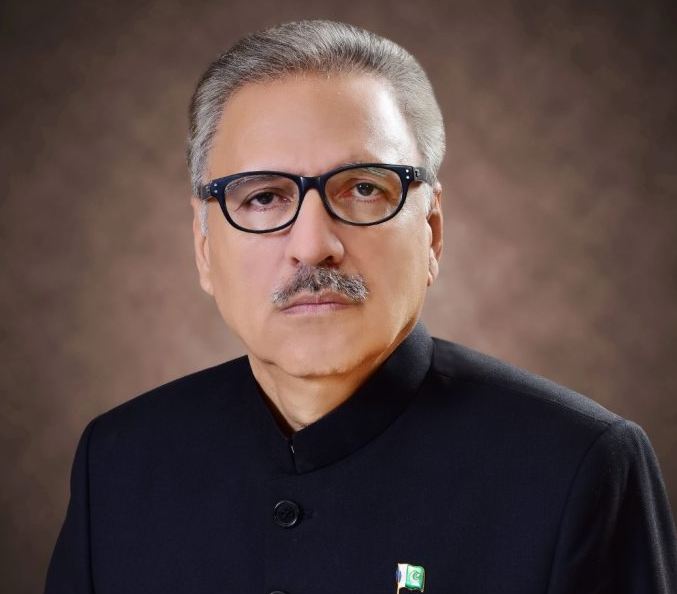
In light of the Supreme Court’s split ruling last month, President Arif Alvi announced the date for the Punjab polls after consulting the Election Commission of Pakistan (ECP).

Alvi greets President and people of Azerbaijan on Novruz holiday

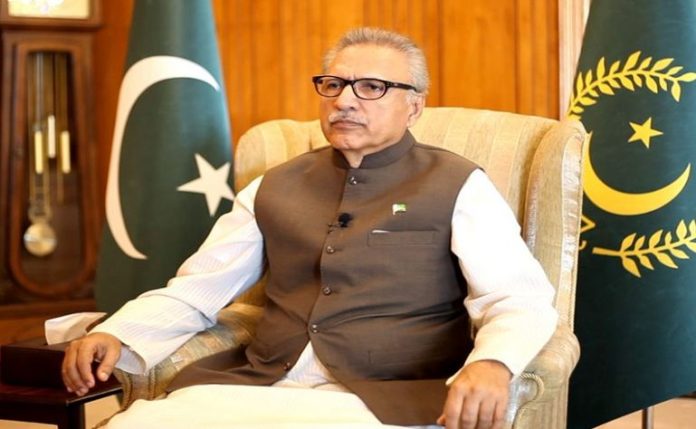
ISLAMABAD, MAR 22: President of the Islamic Republic of Pakistan Arif Alvi has congratulated the President of the Republic of Azerbaijan Ilham Aliyev and the people of the country on the occasion of the Novruz holiday.

“On behalf of people of Pakistan and on my own behalf, I wish my brother President of the Republic of Azerbaijan Ilham Aliyev and the people of Azerbaijan Happy Novruz! May it bring peace and prosperity,” President of Pakistan Arif Alvi said on Twitter.

President, PM attend funeral of martyr brigadier

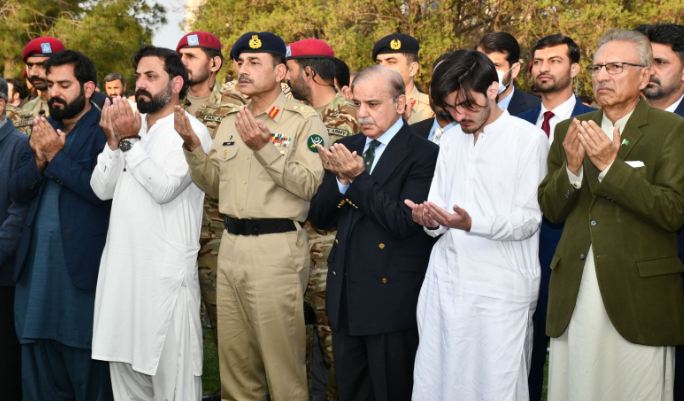
RAWALPINDI, MAR 22 /DNA/ – Funeral prayers of Brigadier Mustafa Kamal Barki who embraced martyrdom during an encounter with hardcore terrorists in Angoor Adda, South Waziristan yesterday was performed at Race Course Rawalpindi today.

Honourable President Islamic Republic of Pakistan Dr Arif Alvi, Honourable Prime Minister Mian Muhammad Shehbaz Sharif, Chairman Joint Chiefs of Staff Committee (CJCSC) General Sahir Shamshad Mirza, Chief of Army Staff (COAS) General Syed Asim Munir, DG Inter Services Iintelligence (ISI) Lieutenant General Nadeem Ahmed Anjum and large number of serving and retired military officers & soldiers, government officials, Parliamentarians and public attended the funeral. The officer was buried at Army Graveyard with full military honours in acknowledgment of his services to the nation.


Throughout his military career, Brigadier Barki remained involved in active counter terrorism operations and successfully dismantled numerous terrorist networks in KPK and Balochistan. He was monumental in neutralizing the terrorist networks involved in APS attack 2016.


The nation recognizes his meritorious services in life and supreme sacrifice offered for Pakistan. Armed Forces of Pakistan & Intelligence Agencies stand resilient against terrorism and reaffirm the resolve to eradicate this menace of terrorism at all costs.

Imran claims another ‘operation’ to take place outside Zaman Park in bid to assassinate him

Lahore, MAR 22: PTI Chairman Imran Khan on Wednesday alleged that another “operation” would take place outside Lahore’s Zaman Park either today or tomorrow in an attempt to kill him.

On Saturday, hours-long clashes were reported between PTI workers and the capital police after the former prime minister arrived at the Federal Judicial Complex (FJC) to attend a hearing in the Toshakhana case. As Imran left his Za­­man Park residence to appear before the judge, a heavy contingent of police also launched a search operation at his house.

“What is happening here is beyond my understanding,” the PTI chief said in today’s video address.

Referring to the attempt on his life in Wazirabad, he reiterated that he had predicted it earlier in his rallies. He alleged that the evidence of the incident was being erased, adding that the record of the joint investigation team (JIT) was also being destroyed.

“Now another plan has been hatched. I am telling everyone, the judiciary [and] especially Punjab police.”

He alleged that the police chiefs of Islamabad and Punjab, and their “handlers” had planned another operation outside Zaman Park.

“What is the plan? That there is another operation outside Zaman Park either today or tomorrow […] They have made two squads […] who will mix among our people, and then shoot and kill four to five police officials.”

He said that this would then prompt an attack from the other side which would open fire. He said that PTI workers would be killed in a Model Town-like situation before he would be killed in a manner similar to the assassination of Murtaza Bhutto.

“This is the plan. This will happen either today or tomorrow. I want to tell everyone. I want to tell the Punjab police that they will kill five of your people just for an excuse to attack.”

Addressing his party workers, Imran called on them to not take part in any violence. “Whatever they do, we will not do anything […] This time if they try to provoke you, you will not give any kind of reaction.”

Imran said he was ready to go to jail but did not want bloodshed. “That is why I am again telling workers to not participate in any violence.”

Imran decries arrests of PTI workers
The ex-premier began his address by saying that he was going to talk about something “very important”. He said that a “meeting” would be held today where “a minority will try to take the majority out of the race”.

“Meaning what they will try to do is that the PTI is somehow not allowed to contest polls or they are somehow taken out of the election race.”

He said that the incumbent government was well aware of the fact that their days in politics would end if they went ahead with polls.

“But what I want to talk about is more important than this. Today, our workers are being rounded up,” he said, adding that he had not seen this happen before in any democratic setup.

He said that workers were being picked up in Lahore, Rawalpindi, Islamabad and Faisalabad. “It is as if PTI is such a big, scary party. A party of criminals that [workers] are being rounded up and put in jails,” he said.

The PTI chief said that he had gotten to know that 143 cases had been registered against him. He lamented that the majority of the cases registered against him were on charges of terrorism.

“I don’t care about my cases but the way our people are being arrested on false cases, we are now writing to all international human rights organisations” in this regard, he said.

Imran said that he wanted the judiciary to protect the party’s fundamental rights. He said that on one hand elections had been announced, yet there was a crackdown was initiated against PTI workers. “We try to take out a rally [but] we are attacked and cases were also registered against us only.”

Imran says plan to assassinate him was in place at FJC
Talking about the party’s powershow at Minar-i-Pakistan, he said that the PTI had wanted to hold it before Ramazan began but said that permission was denied. He said that now the court had granted permission and it would be held on Saturday (March 25).

“This will be a rally Pakistan will remember because the whole country will see where the nation stands. It will be a kind of referendum.”

Talking about last week’s clashes at the FJC, he said no other prime minister had been treated in this manner. “It took me five hours to get from the toll plaza on the Islamabad motorway to get to the judicial complex […] They had virtually closed down the motorway for just one man.”

He said that the workers accompanying him were held back at police checkpoints. “I was mentally prepared that they will arrest me that day.”

He said that the police deployed at the scene kept increasing and suddenly his convoy was teargassed in an attempt to “spread anarchy”. Imran said he reached the doors of the FJC with “great difficulty” when police officials started pelting him with stones.

The PTI chairman said he stood outside the FJC for 40 minutes to try and get in somehow. He also showed a video of the people gathered inside the complex, saying that a “plan” was in place to assassinate him in a scenario similar to what happened to Murtaza Bhutto.

Imran said that police officials later told him that na maloom afraad (unknown people) were present at the scene in Counterterrorism Department uniforms. He alleged that the footage from CCTV cameras was erased.

“The nation knows me for the past 50 years. How many times have I broken the law? A whole plan was made to murder me.”

ISE RMC appeals all stakeholders to turn the country out of crises

ISLAMABAD, MAR 22 /DNA/ – The Board of Directors of ISE Towers REIT Management Company Limited met here on March 22, 2023 and shown its deep concern over economic meltdown in the country. The depleting economic condition coupled with tense political conditions has been fueling the uncertainty, hopelessness and frustration in the business community and the masses.

The Board of Directors urged all the stakeholders to sit together and carve out a strategy to take the country out of this situation in the best interest of the country. It is believed that if timely actions were not taken, the situation will spiral out of control.

ISE Towers REIT Management Company will continue to play its due role in betterment of the economy of Pakistan.

Two brothers shot dead over marriage dispute

FROM QAZI SHOAIB KHAN
DNA
ATTOCK (MARCH-22): In Attock two bothers were shot dead over marriage dispute within the purview ofHassanabdal Police Station on Wednesday. Police said, Farhad Ali- uncle of the deceased has reported that the victims identified as Muhammad Arif and Muhammad Ismail hailing from Charsada (KPK) presently living in the area who were runningtheir milk dairy business. On the day of occurrence of the unfortunate incident, they were coming back after attending a reconciliatory session to settle their marriage dispute held by the elders of their family when the alleged killer Mansoor Khan along with two other accomplices riding on motorcycle intercepted them and riddled them with bullets which resultanted their instant death on the spot. The police on getting information rushed to collect important evidence on the crime scene. Later on, Police handed over the bodies to their real heirs after getting autopsy at THQ hospitalHassanabdal and registered a double murder case against the nominated accused besides launching further investigations. However, police could not find the clue of the target killers till filing of this story.

HEC hosts Inter-University Declamation Competition on Constitution’s 50 Years

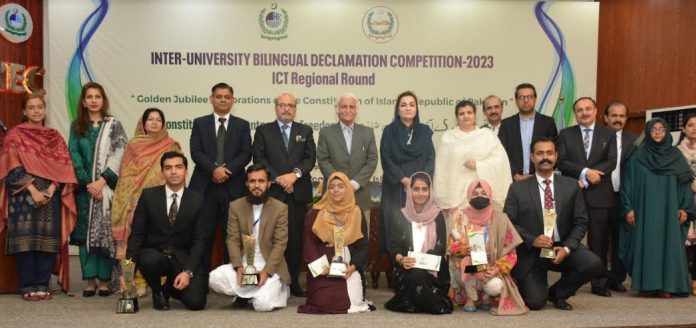
Islamabad, MAR 22 /DNA/ – Higher Education Commission (HEC) is hosting the Inter-University Bilingual Declamation Competition 2023 in commemoration of the Golden Jubilee of the Constitution of Islamic Republic of Pakistan, as advised by the honourable Speaker of the National Assembly of Pakistan, Mr. Raja Pervez Ashraf.

For ICT round, students from Islamabad, Rawalpindi, Taxila, AJK and Gilgit Baltistan participated in the competition held at HEC Secretariat Islamabad on Wednesday, while regional rounds for Balochistan, Sindh, Khyber Pakhtunkhwa and Punjab were held in the provincial capitals on Tuesday.

The aim of this competition is to encourage young people across the country to engage with the Constitution and to reflect on its importance. The final winners of this competition would be invited to make their winning speeches at the Parliamentary Convention in Islamabad, an opportunity to showcase their talent. In addition, cash prizes for the top three finalists will also be awarded by the National Assembly of Pakistan.

The theme of the Declamation Competition is “My Constitution-Guarantee of My Freedoms” in English language and “Mera Aien – Meri Azadiyon ki Zamanat” in Urdu language.

ICT regional round in Islamabad was graced by Senator Mr. Farhatullah Babar and Member National Assembly Ms. Mehnaz Akber Aziz. Adviser (Academics, Curriculum & NAHE) HEC, Engr. Muhammad Raza Chohan, Adviser (Global Engagement) HEC, Mr. Awais Ahmad and a large number of students attended the event.

The panel of judges included Dr. Muhammad Ahmad Munir from International Islamic University, Dr. Humaira Aslam from University of Peshawar, Dr. Fehmeeda Tabassum from Federal Urdu University and Mr. Muhammad Arslan from PTV World.

In his address, Senator Farhatullah Babar thanked HEC for celebrating the golden jubilee of the constitution of Pakistan and appreciated all student participants for their dedication and hard work. He said that our constitution is the foundation of our country. “The preamble reminds us that we, the people of Pakistan, are the sovereign people of this nation, and no one can breach our fundamental rights.”

He also emphasised that Article 16 gives us the freedom of association, which is crucial for any democratic society. However, there are still some impediments that we need to overcome, and we must work together to ensure that all citizens are provided their due rights.

Member National Assembly Ms. Mehnaz Akber Aziz appreciated HEC for organizing this competition as an effort to promote awareness about the constitution. She hoped that this competition will inspire more young people to engage with our constitution and become active citizens in building a brighter future for Pakistan. She further added that one issue we face is the lack of institutionalization of the constitution. We need to make it easily and readily available, readable, and understandable for all citizens. This will encourage more people to engage with the constitution and understand their rights and responsibilities as citizens of Pakistan. On this occasion, she also announced the opportunity of internship for the Regional Round winners.

Engr. Muhammad Raza Chohan, in his welcoming remarks, said that our constitution is the fundamental document that gives us rules and regulations for governing our country. It is essential that we understand the constitution and its provisions, as it is the real basis of our democracy.

After a rigorous evaluation process in the ICT regional round of Inter-University Bilingual Declamation Competition 2023, Abdullah Khan, Quaid-i-Azam University Islamabad won the first position in the English contest, Uzair Javed, Mohi-ud-Din Islamic Medical College secured second position and Reemal Imtiaz, COMSATS Wah Campus won the third prize.

In Urdu Speech, Minahil Hijab, HITEC University secured the first position, Muhammad Munib Asghar, Institute of Space Technology won the second position and Gul Rukh, University of Wah won the third position. The first position holder won cash prizes of Rs. 30,000, while the second and third position holders received Rs. 20,000 and Rs. 15,000 respectively both in English and Urdu speeches.

The National and Final Round of the Competition is scheduled for 3rd May, 2023 at HEC Auditorium Islamabad, where all the winners of regional rounds will compete to be declared as national winners of this event.

Forging a New Partnership: Understanding the Importance of Pakistan-Russia Relations

Masuood Ahmad

With the split of USSR in 1991, a massive shift emerged in the nature of global politics with new principles becoming dominant factors in determining the strength of bonhomie between different nation-states. Pakistan’s relationship with USSR changed from cool to hostile. In its initial years of tremendous difficulties, Pakistan received two invitation letters from the United States of America and Soviet Union but the then Prime Minister of the country preferred to go to U.S. and thus sending an unfriendly gesture to Soviet Union which later resulted in increasing Soviet tilt towards India. This was the time when two countries developed cooperation in various fields with India started actively buying weapons from the USSR and thus becoming a threat to Pakistan. Defense experts still believe that Pakistan had an opportunity to maneuver and numerous policy options on the table that it failed to utilize. Pakistan becoming a member of US-led military alliances in the 1950’s further deteriorated the relationship with the USSR and diminished any possibility of the two countries becoming strategic partners in the Central Asian region.  However, in the late 1950s and early 1960s the two countries moved closer, concluding several trade agreements that would provide a solid basis for increasing cooperation in the security, industrial and energy sectors, setting the stage for the two countries to become significant players in the region.However, with the invasion of Afghanistan by the Soviet Union in the 1970s and the beginning of the Soviet-Western confrontation, there was one of the most unpleasant turns in relations between the former superpower and Pakistan.

With the disintegration of USSR in 1991, a new world order emerged with different nation-states accelerating their mission to strengthen their defense systems and improve economic conditions with new national policies. The end of the cold war provided an opportunity for a new beginning in Islamabad-Moscow relations. Building on Pakistan’s experience of international cooperation with other countries after 9/11, the reverberations of which can still be heard throughout the region, Pakistan and Russia should adopt a practical approach in building a healthy and mutually beneficial relations rather than being beholden to the superpowers in pursuit of their national interests. The changing contours of strategic interests at regional and international levels demand a relationship of cooperation and understanding which the two countries have taken up despite their past differences. The forging of closer relations between the two has significant importance for promoting stability and enhancing economic cooperation in the region. In Central and South Asia, Russia tries to balance its relations and establish mutually beneficial cooperation with each country, taking into account their goodwill and independence. Pakistan has fallen on hard times, but is a significant player in geopolitics and a responsible partner.With its advantageous geophysical location, developing energy, trade and transport potential, and significant influence in the Islamic world, Pakistan can have a favourable impact on the region and the world at large.

One of the key areas of cooperation between Pakistan and Russia is in the field of defense. The two countries have signed multiple agreements on defense cooperation, including the sale of Russian military equipment to Pakistan. This partnership has helped Pakistan to diversify its sources of military hardware and reduce its reliance on Western countries for defense supplies. The constant threats from archrival India and its increasing military posture across Line of Control (LOC) and inside the disputed territory of Jammu and Kashmir are strong reasons that should force the Pakistani intelligentsia to revisit its policies. A strong military alliance and agreements on defense cooperation between the two countries will inevitably strengthen the defense mechanisms and pave way for a strong power bloc in the region that could act as a deterrent against Western hegemony. In addition to defense, Pakistan and Russia have also been cooperating on energy projects. Pakistan is a significant energy consumer and has been looking to diversify its sources of energy. Russia, with its vast energy sources, can provide an important source of energy to Pakistan. Although the two countries have signed several agreements on energy cooperation, there is a need to further strengthen these agreements and devise plans for more robust pacts based on mutual trust. Besides having significant implications for regional stability, improved relations between Pakistan, Russia, and Afghanistan has important implications for global politics.

The huge shifts in the international system have provided Islamabad and Moscow with a common reason to reevaluate their relations. Moscow is finding new opportunities in the region as the U.S. has withdrawn from Afghanistan while Pakistan on the other hand is gradually trying to revisit its weary relations with Washington that has, to a great extent, given rise to unprecedented homegrown extremism in the country resulting in an economic meltdown and rising security threats. As our enemies demonstrate an offensive mode of destabilizing Pakistan, the demands on national security continue to grow. Improved relations between the two countries with common interests could enhance stability, enhance economic cooperation and change the balance of power in the region, especially against the US and its Eurasian allies. And we have real opportunities to do so. There are mechanisms of interaction within the framework of the Shanghai Cooperation Organization and other international associations, which are gaining new significance in the present reality.

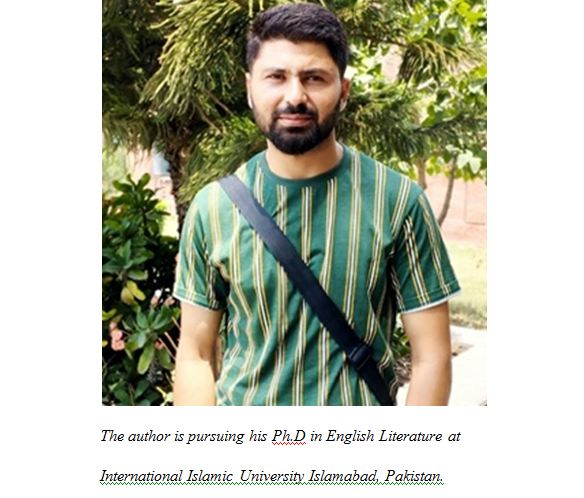
The author is pursuing his Ph.D in English Literature at International Islamic University Islamabad, Pakistan.

President approves remission for prisoners on Pakistan Day

ISLAMABAD, Mar 22 (APP): President Arif Alvi on Wednesday approved a remission for the prisoners on the occasion of Pakistan Day annually observed on March 23.

The president granted a remission of 90 days in sentences exercising his powers under Article 45 of the Constitution.

However, the remission would not be applicable on the prisoners involved in murder, espionage and anti-state activities.

Besides, the prisoners involved in rape, theft, robbery, kidnapping, terrorism and financial crimes, would also be ineligible for the remission.

The reduction in sentences will be applicable on the male prisoners over 65 years age and female prisoners of over 60 years age, who had completed one-third of the sentence.

The juvenile prisoners, who had completed one third of their sentence will also be entitled for the remission.

Stay Connected

64FansLike
60FollowersFollow

Latest Reviews

Exchange Rates

USD - United States Dollar
EUR
1.16
GBP
1.34
AUD
0.67
CAD
0.72